DITOSH 9-Cup Stainless Moka Pot — Durable Induction & Camping

Why equipment choice matters for stovetop espresso-style brewing
Selecting the right stovetop espresso maker shapes daily brew outcomes, ritual complexity, and long-term value for home and portable brewing. For households and small groups, a nine-cup stainless steel moka pot balances serving flexibility and compact storage while relying on manual heat management rather than pump-driven pressure. Buyers seeking consistent stovetop extraction should weigh materials, thread and gasket fit, safety features, and whether the pot is compatible with induction or open flame. Heat conductivity, internal surface finish, and included filtration components directly affect extraction rate and clarity of cup flavors. For camping and travel, portability and ease of maintenance are critical; durability and tolerance for varied heat sources determine whether a single unit serves both home and outdoor needs. This review focuses on how the DITOSH 9-cup stainless steel moka pot’s specifications and design principles align with brewing goals such as extraction control, serving size, and routine cleaning.
Quick Overview
| Feature | Details |
|---|---|
| Product category | Stovetop espresso maker (moka pot) |
| Brewing method | Steam/pressure-driven percolation (stovetop) |
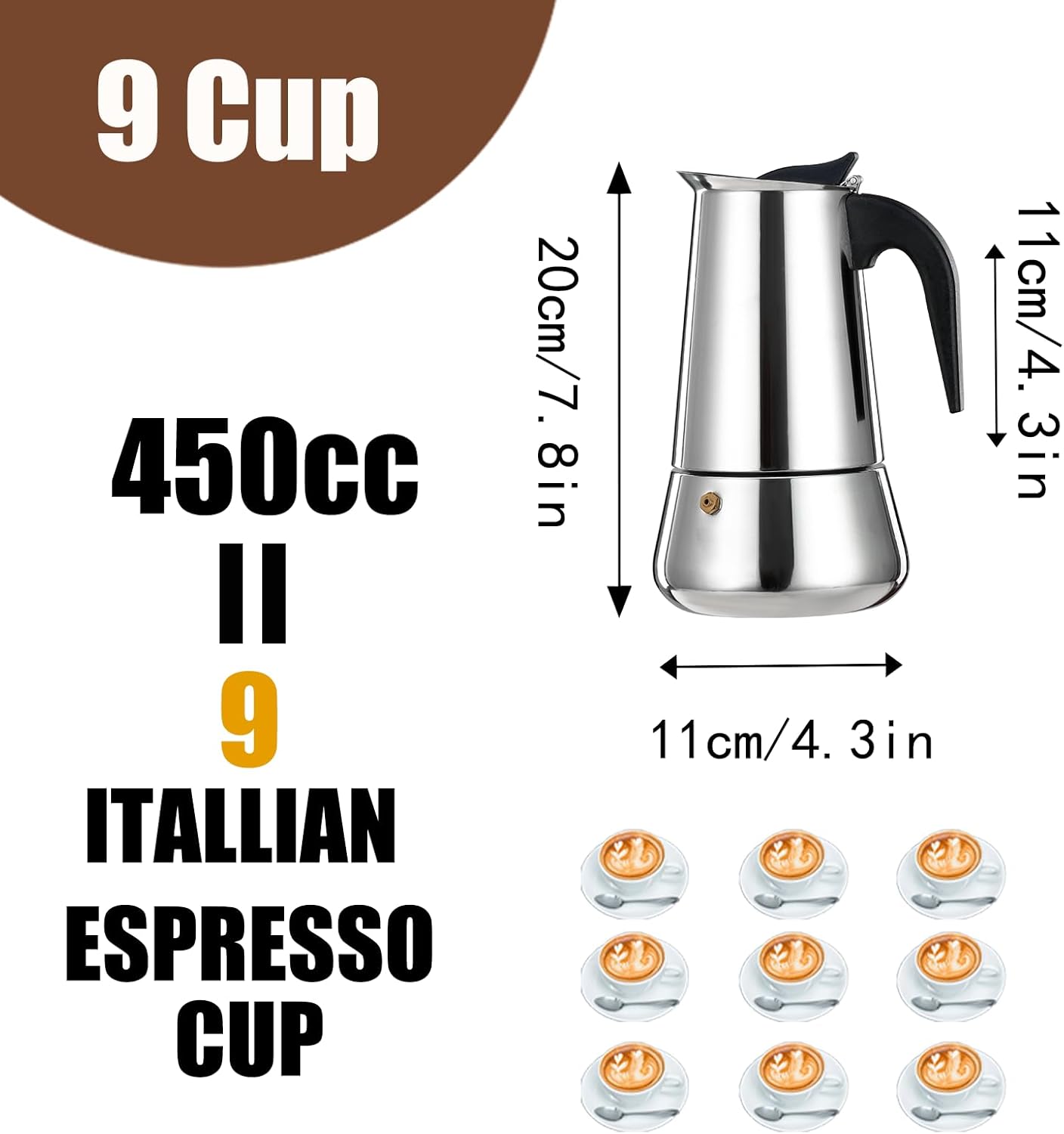
| Capacity | 9 cups (industry reference) — 450 ml total output |
| Materials | Polished stainless steel exterior; sandblasted/frosted interior |
| Heating system compatibility | Gas, electric, ceramic, induction, alcohol and propane camping stoves |
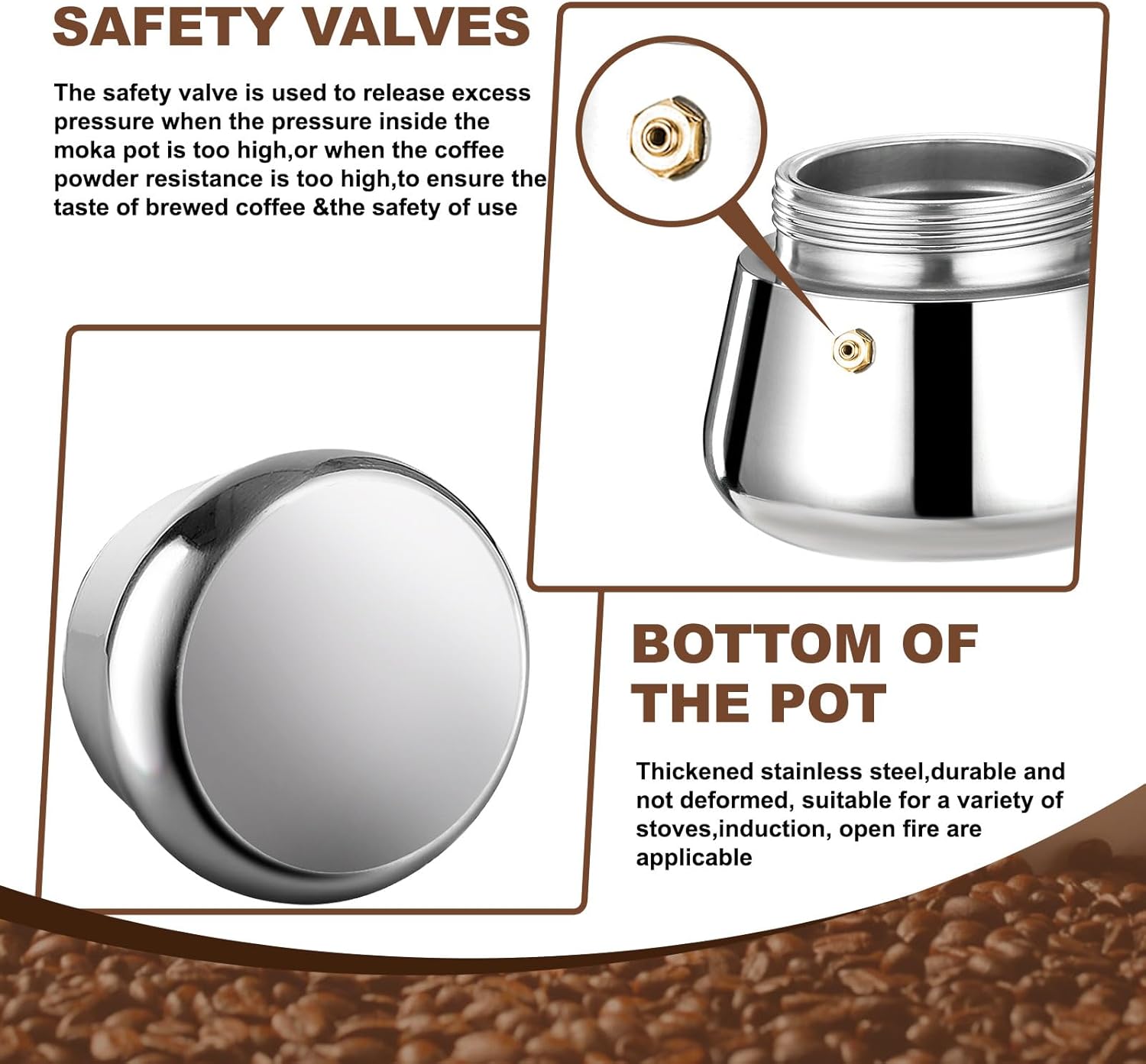
| Safety features | High-performance pressure-resistant safety valve; three-ring precision threads |
| Grind compatibility | Ground coffee (medium-fine to fine, not espresso pump grind) |
| Best suited users | Small households, campers, manual-brewing enthusiasts |
| Included components | Body, filter, funnel, gasket |
| Portability & use cases | Home kitchens, camping, travel; manual operation |
The table summarizes core product attributes that influence brewing behavior and usability. Material choice and induction compatibility determine heat transfer and stove options; capacity affects batch size and brew ratio planning; included components and safety valve design influence maintenance needs and pressure management during extraction.

Brewing method compatibility and serving flexibility
The DITOSH 9-cup moka pot is positioned to serve both home kitchens and outdoor settings because its stainless steel construction and magnetic base make it compatible with induction, gas, electric, ceramic, and camping stoves. Capacity is listed as 9 cups or roughly 450 milliliters — an industry reference reflecting small espresso-style servings rather than standard coffee cups — which suits households of two to four people when drinks are served in 50–75 ml portions. Compatibility with multiple heat sources expands use cases, but capacity and per-brew yield require attention to desired brew ratios and serving sizes; users adapting café-style milk drinks should plan batch sizes and reheating strategies accordingly to avoid heat-loss and quality degradation between pours.

How stovetop compatibility affects brewing workflow
Multiple stove compatibility means the same moka pot can be used for morning routines on induction cooktops and for camp stoves outdoors, but heat source characteristics change extraction dynamics. Open flame and gas provide rapid, visible heat control while induction heats the base more evenly and often faster; ceramic and electric coil elements typically ramp slower. These differences influence the time to reach the brew phase and the rate at which steam pressure builds, so brew time guidance should be adjusted per stove type. Managing fire size and removing the pot promptly at the gurgle stage reduces the risk of over-extraction and dry burning. The ability to use a single device across environments increases utility for travelers and multi-stove households.
Batch size, serving flexibility, and brew ratios
The 450 ml maximum output should be treated as a reference rather than a strict cup count; actual yield depends on the water fill line, grind compaction in the funnel, and personal cup sizes. For moka preparations, common water-to-coffee ratios range roughly from 1:7 to 1:10 by weight, depending on desired intensity. For a 450 ml output, that translates into substantial ground coffee in the filter basket and requires attention to packing: too tight a tamp-like compression can impede flow and increase pressure, while too loose a dose reduces extraction yield. Planning batches for milk-based drinks or multiple small servings helps maintain cup temperature and extraction consistency across pours.
Induction performance and base design considerations
Stainless steel bodies compatible with induction typically include a magnetic base or are made from ferritic stainless grades; this model advertises induction compatibility, which implies a magnetic bottom or construction suited for modern stovetops. Stainless steel heats differently than aluminum: it generally heats slower but resists warping and corrosion better. That slower ramp requires mindful heat control to avoid prolonged low-heat extraction that can under-extract solubles or, conversely, excessive heat that produces rapid over-extraction and bitter notes. Users should adopt a measured heat increase and listen for the characteristic gurgle to time removal from heat accurately.
Temperature control, heat stability, and materials
Temperature behavior in stovetop moka brewing is governed by thermal conductivity of the pot material, stove responsiveness, and operator technique. Stainless steel offers robust corrosion resistance and compatibility with induction but has lower thermal conductivity than aluminum, which affects how quickly the lower chamber boils and how evenly heat transfers through the unit. The product’s polished exterior and sandblasted interior are design choices that impact durability and, to a small degree, heat transfer surface characteristics. The manufacturer recommends monitoring fire size and brewing time to prevent bottom overheating and bottom discoloration; these guidance points reflect the need for active heat management to maintain stable extraction temperatures and to minimize off-flavors associated with burnt metal or scorched coffee.
Thermal conductivity and extraction implications
Lower thermal conductivity means the stainless steel moka pot will typically require slightly longer ramp to reach the boiling point in the lower chamber compared with aluminum pots. That affects the onset of pressure-driven flow through the coffee bed and can lengthen pre-infusion time. Longer heating ramps can favor more even wetting of the coffee but can also prolong contact time, risking over-extraction if heat control is not tightened when liquid starts to emerge. Managing flame or induction power so the upper chamber receives a steady, controlled flow ensures a balanced extraction of soluble compounds rather than a rapid gush or sputter that concentrates bitter solids.
Heat retention and serving temperature management
Stainless steel retains heat well after removal from the stove, which is beneficial for keeping brewed coffee warm during short service intervals but may also continue extraction if hot grounds and residual steam remain in contact with the beverage. Because moka pots do not have thermostatic controls, removing the unit at the audible gurgle and decanting into pre-warmed cups helps preserve ideal serving temperature while arresting further extraction. For milk-based drinks, batch preparation strategies such as steaming milk after brewing or preparing smaller moka batches are recommended to keep milk textures and temperatures in balance with the stovetop brew.
Safety valve and pressure considerations
The DITOSH design includes a high-performance pressure-resistant safety valve and three-ring precision threads to reduce leakage and misalignment. Moka pots operate at substantially lower pressures than pump espresso machines — typically around 1–2 bars depending on heat and grind — so the safety valve and secure thread machining are primary safety elements rather than pressure enhancers. Proper gasket seating, routine inspection of the valve, and adherence to manufacturer water-fill recommendations are necessary to maintain safe operation. The valve prevents excessive pressure build-up, while precision threads help maintain a consistent seal during brewing cycles.
Grind compatibility and extraction consistency
Extraction quality in moka brewing depends heavily on grind distribution, particle size, and dose consistency. The DITOSH moka pot is specified for ground coffee input; industry practice suggests a medium-fine grind that is finer than drip but coarser than pump-espresso fine. Grind too fine and the filter may clog, increasing backpressure and prolonging extraction time to the point of channeling or bitterness. Grind too coarse reduces surface area, under-extracting flavor precursors. Consistency of particle size from a burr grinder yields more predictable flow rates and extraction; users pairing this moka pot with a conical or flat burr grinder obtain better repeatability than with blade-ground coffee.
Dose control and tamping misconceptions
Moka brewing does not require the compact tamp used in espresso machines; pressing grounds tightly can impede flow and raise harmful pressure. The funnel should be filled level with the rim and lightly leveled without compression. Dose control by weight provides predictable solubles extraction: for moka, many practitioners target brew ratios between 1:7 and 1:10 by weight (coffee:water) for balanced intensity. For a 450 ml target yield, consistent dosing ensures that the filter basket fills and drains at a steady rate, avoiding early gurgling that signals rapid vaporization or delayed flow indicating blockage.
Filter geometry, gasket integrity, and flow control
Included components — body, filter, funnel, and gasket — form a system where small changes affect flow resistance and throughput. The integrity of the gasket and tightness of the three-ring threads ensure the lower chamber pressure forces water upward through the coffee bed rather than leaking around seals. Over time, gaskets can harden or warp, and filters can clog with fine particulates; scheduled inspection and replacement of these parts maintain consistent flow rates and extraction quality. Precision machining of mating threads reduces micro-misalignment, improving seal uniformity across successive brews.
Ease of use, maintenance, and long-term reliability
Manual stovetop moka pots emphasize simplicity, but ease of use depends on design tolerances, component accessibility, and cleaning procedures. The DITOSH unit ships with basic components and a sandblasted interior finish that the manufacturer describes as non-aluminum and treated for durability. Initial odor removal is advised, and routine rinsing after brewing is recommended. For long-term reliability, stainless steel construction typically resists corrosion and deformation better than aluminum but requires mindful drying and part replacement schedules; gaskets and safety valves are wear items. Portability and manual operation make the pot suitable for camping, but users should factor in a maintenance routine for valve inspection and gasket condition when used frequently in outdoor conditions.

Cleaning practices and interior finish considerations
The manufacturer notes a recommended initial cleaning step to remove manufacturing odors, including washing and using mild agents like detergent, tea, or citrus. After normal use, rinsing with hot water and drying components prevents mineral buildup and odor retention. Sandblasted interior surfaces increase surface area and may retain oils more than polished interiors, so periodic deep cleaning using soaking and mechanical removal of residue may be necessary. Dishwashing is not universally recommended for stovetop pots; following manufacturer guidance and avoiding abrasive pads on polished exteriors preserves finish and thread fit.
Replacement parts and maintenance lifecycle
Long-term performance depends on replacing consumable parts such as the gasket and filter plate when signs of wear appear: hardening, cracking, or leakage around the thread/handle area. The product includes a standard gasket and funnel, but sourcing compatible spares from aftermarket vendors or the manufacturer enables continued use. Stainless-steel bodies resist pitting and electrochemical issues better than aluminum in varied water chemistries, which can extend service life when the pot is cared for and not exposed to sustained aggressive cleaning agents.
Durability trade-offs for portability
A portable, induction-compatible stainless moka pot offers an attractive durability profile for travel and camping, but portability introduces exposure to variable heat sources, greater risk of rough handling, and more frequent cleaning cycles. The weight (approximately 1.36 pounds) and compact dimensions make it reasonably packable, yet threaded fittings and gasket seats can be stressed by repeated knocks. Users should store the pot dry and disassembled when transporting to reduce wear on the gasket and safety valve, and inspect the valve after extended outdoor use to ensure safe pressure relief performance.

Pros & Cons
Pros
- Durable stainless steel construction that supports induction, gas, electric, and camping stoves. Stainless materials resist corrosion and deformation better than aluminum, expanding use cases across home and outdoor environments.
- 450 ml nominal capacity provides flexible batch size for small households and multi-cup serving needs. The 9-cup industry reference suits espresso-style small pours and group service when planned with appropriate brew ratios.
- Precision three-ring threads and a high-performance safety valve enhance sealing and pressure safety. These features reduce leakage risks and provide a safety path for excess pressure during stovetop use.
- Sandblasted/frosted interior finish avoids aluminum interiors and may improve perceived durability. This interior treatment can increase surface robustness and reduce susceptibility to denting.
- Compatible with a range of stoves, including induction and propane camping stoves, making the unit versatile for home, travel, and outdoor use. This flexibility suits users who want one tool for multiple environments.
- Included components (funnel, gasket, filter plate) allow immediate use and straightforward field replacement. Standardized parts ease sourcing replacements and routine maintenance.
Cons
- Stainless steel heats more slowly than aluminum, requiring active heat management to avoid under- or over-extraction. Users unfamiliar with stovetop timing must learn to adjust flame or power to control brew timing.
- Sandblasted interior surfaces can retain oils and odors longer than smooth finishes, increasing cleaning frequency or effort. Periodic deep cleaning may be necessary to prevent flavor carryover.
- Industry “cup” labeling may overstate perceptual serving counts; actual yield depends on brew ratios and cup sizes. This can lead to mismatch between expectations and actual beverage volumes without planning.
- Consumable parts such as gaskets and safety valves will require replacement over time, and specific replacement sourcing may be necessary for prolonged heavy use. Outdoor or frequent use accelerates wear on seals and filter plates.
Final Verdict: Who This Product Is Best For (and Who Should Skip It)
The DITOSH 9-cup stainless moka pot is well suited to buyers seeking a durable, induction-compatible stovetop brewer that bridges home and outdoor brewing needs. Ideal users include small households that prefer manual espresso-style brewing, travelers and campers who need a single durable unit across varied stoves, and manual brewing enthusiasts comfortable managing heat and grind adjustments to tune extraction. The stainless construction and safety valve support repeated use while offering the portability required for weekend trips.
This moka pot is not recommended for espresso purists requiring pump-driven, high-pressure extraction above 9 bar, nor for users who prioritize fully automated temperature control and shot-by-shot consistency. Those seeking one-touch convenience, integrated milk steaming, or commercial-style pressure profiles should consider pump espresso machines instead. For its category in 2026, the DITOSH unit offers a balanced blend of durability, multi-stove compatibility, and practical capacity for users who value manual control and portability.

Frequently Asked Questions (FAQs)
Can this moka pot be used on an induction cooktop?
Yes. The DITOSH 9-cup moka pot is specified as compatible with induction, gas, ceramic, and electric stovetops. Induction compatibility indicates a magnetic base or construction suitable for induction fields, allowing reliable heat transfer on modern cooktops. Because stainless steel heats differently from aluminum, induction users should monitor heat to avoid excessively rapid boil-off and should remove the pot when the characteristic gurgling indicates brew completion.
What grind size works best for a 9-cup moka pot?
A medium-fine grind is typically recommended for stovetop moka pots — finer than drip coffee but coarser than pump-espresso grind. This balance promotes steady flow through the filter while avoiding clogging that increases backpressure. Consistent particle size from a burr grinder improves extraction predictability; pressing the grounds tightly is not advised because it can impede flow and cause uneven extraction or excessive pressure.
How much coffee and water should be used for the 450 ml capacity?
Capacity labeling is an industry reference; actual yield varies with fill level and cup sizes. For moka-style brewing, common brew ratios range roughly from 1:7 to 1:10 coffee to water by weight. For a 450 ml output, dose calculations should account for desired strength — using weight-based measurement yields consistent results. Filling the lower chamber to the safety valve and avoiding compression of grounds in the funnel helps maintain intended flow rates.
How should the moka pot be cleaned and maintained?
Initial cleaning to remove manufacturing odors is recommended, followed by routine rinsing with hot water after each brew. The manufacturer notes that detergent or mild cleaning agents can be used for odor removal. Sandblasted interiors may retain oils and require occasional deeper cleaning; avoid abrasive pads on polished surfaces. Inspect and replace consumables like the gasket and filter plate when wear appears, and dry components thoroughly to prevent mineral buildup or corrosion.
Is the pressure produced by a moka pot the same as an espresso machine?
No. Moka pots operate at substantially lower pressures than pump-driven espresso machines. Typical pressure in moka brewing is around 1–2 bars depending on heat and grind, whereas pump espresso machines target around 9 bars of pressure. The moka method relies on steam pressure to force water through the coffee bed, producing a concentrated brew that is espresso-like in intensity but not equivalent in crema or pressure-extraction profile.
What safety features does the DITOSH moka pot include?
This model includes a high-performance pressure-resistant safety valve and precision three-ring threading for improved seal integrity. The safety valve provides a pressure-relief path in the event of excessive pressure buildup, while precise thread machining helps minimize leakage around the joint. Regular inspection of the valve and gasket is recommended to ensure continued safe operation.
Who should avoid buying a stovetop moka pot like this one?
Buyers seeking automated shot timing, integrated milk steaming, or true pump-pressure espresso should avoid moka pots. Consumers who prefer one-touch convenience or require consistent, programmable temperature and pressure control will find manual stovetop brewing less suitable. Additionally, those unwilling to perform routine maintenance on gaskets and valves or to adjust heat management may prefer alternative brewing appliances that automate these factors.