Replacement #12 Meat Grinder Blade — Fit & Durability Guide
Why the Right Grinder Blade Matters
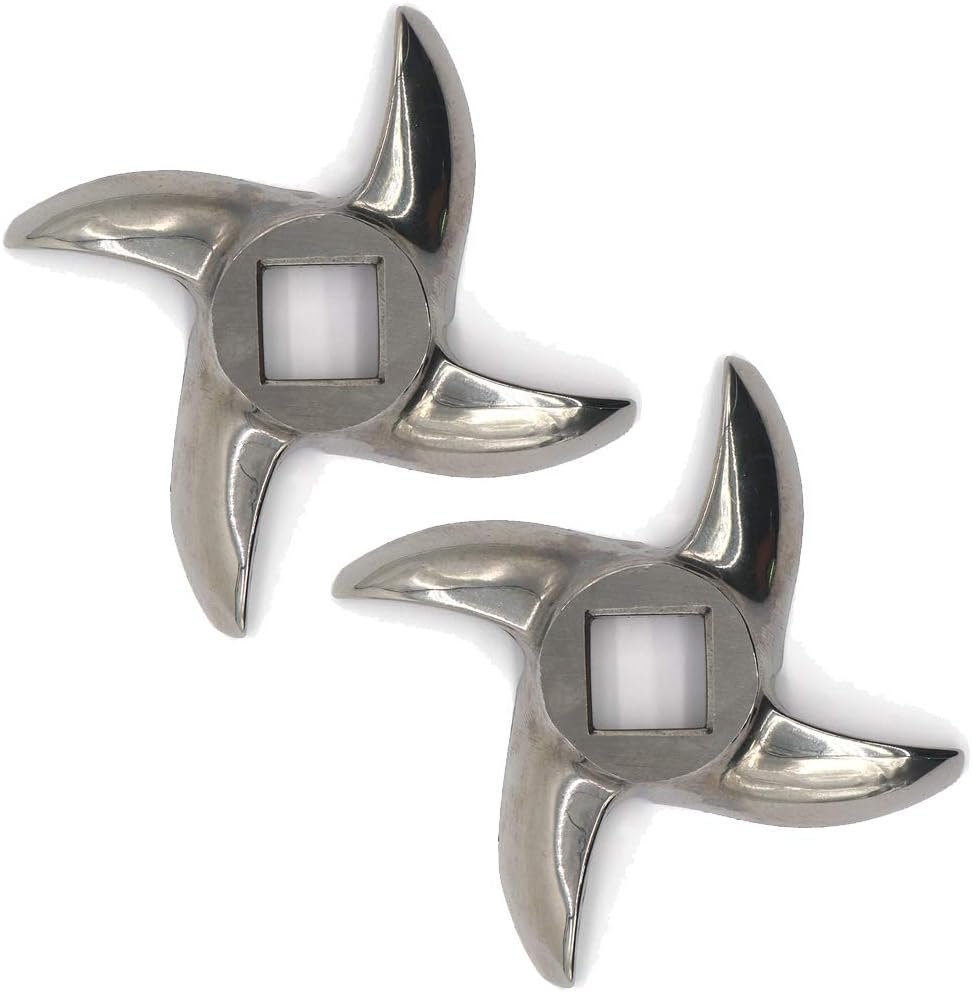
Choosing the correct replacement blade for a #12 meat grinder matters for more than simple compatibility. Blade geometry, material properties, and dimensional tolerances directly affect cut quality, particle-size distribution, and throughput — all of which influence final texture and product performance in sausages, burgers, and coarse or fine minces. Intended users include home cooks repairing household units, hobbyist charcutiers, and small-scale food processors who rely on consistent blade-to-plate fit. Because this item is an aftermarket SS420 stainless steel cutter with a 12mm square drive and a 61mm diagonal, fit verification and awareness of material trade-offs (hardness versus brittleness) are especially important. The non-original status, fragility warnings, and known incompatibility list underscore that purchasing this blade requires careful measurement and expectation management rather than assuming universal fit.
Quick Overview
| Feature | Details |
|---|---|
| Product category | Aftermarket #12 meat grinder/mincer replacement blade (2-piece pack) |
| Drive and dimensions | Square hole size: 12mm (nominal), diagonal length: 61mm (approx.) |
| Material and construction | SS420 stainless steel cutter, stamped/ground finish, aftermarket manufacturing tolerances |
| Heating/pressure system | Not applicable (mechanical cutting component) |
| Grind compatibility | Designed for common #12 spiral auger systems; not compatible with several named models (see details) |
| Best suited users | Home cooks, hobby processors, small-scale kitchens needing replacement parts |
| Intended use cases | Replacing worn blades for meat mincing, sausage preparation, and small batch processing |
| Warranty/returns | No manufacturer warranty specified; seller return/refund policy may allow refunds without return in some cases |
This blade’s geometry and material influence cut performance and maintenance. A precisely sized square drive and true blade-to-plate contact produce cleaner shears and more uniform particle size, while SS420 offers corrosion resistance but can be harder and more brittle than higher-grade stainless steels. Because this part is aftermarket and flagged as fragile, fit checks and careful handling affect installation success and longevity.

Compatibility and Fit Considerations
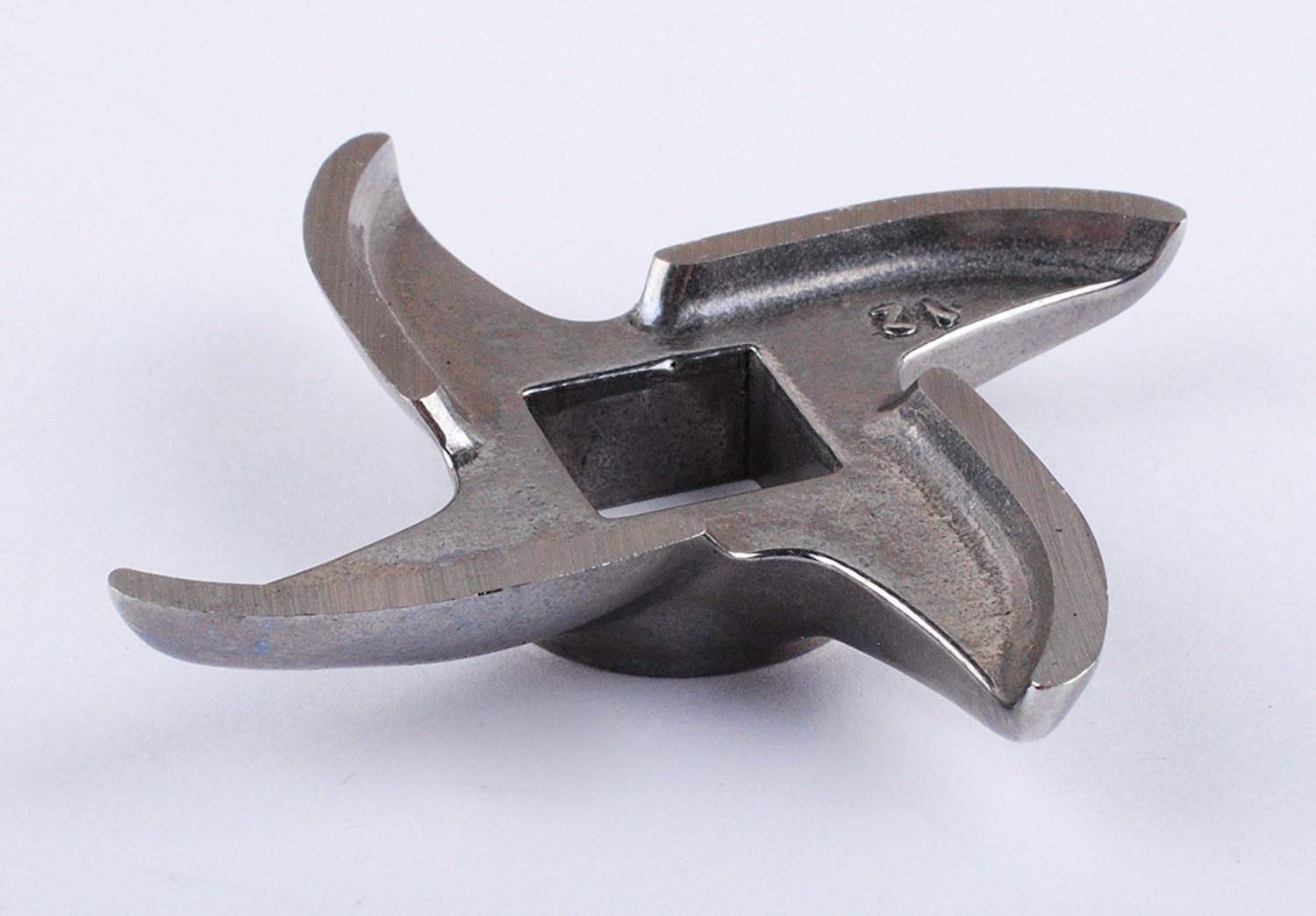
Compatibility hinges on precise dimensional match between the blade’s square drive, the auger/spiral shaft, and the chosen plate. The nominal 12mm square hole and 61mm diagonal length are starting points, but production tolerances of up to a few tenths of a millimeter can change whether the cutter seats properly. Proper seating ensures symmetrical contact with the cutting plate and consistent rotation without wobble, which preserves blade life and reduces vibration. Buyers should measure the auger square cross-section and check plate-to-blade clearances; a slight mismatch can prevent installation, produce uneven cutting, or accelerate wear. The product’s stated list of incompatible models (including certain well-known brands) highlights that #12 labeling is not universal and that model-specific differences matter when sourcing an aftermarket part.
How to Verify Fit with Common #12 Systems
Measurement-based verification focuses on three dimensions: the square drive width (nominal 12mm), the blade diagonal length (61mm), and the blade thickness relative to the plate opening. The square drive must slide onto the auger shaft with minimal play while still allowing rotation; excessive play creates misalignment and uneven cutting. The diagonal length influences cutting edge reach and how the blade interfaces with standard #12 plates. Because aftermarket tolerance ranges are noted, a micrometer or calipers provide the clearest confirmation. When the machine model is not explicitly supported, documenting the auger profile and plate inner diameter and consulting schematic parts lists for the grinder reduces installation risk.
Models and Manufacturer Exceptions to Expect
Some legacy and branded grinder models use proprietary shaft profiles or nonstandard plate/knife geometries. The product explicitly lists incompatibilities with kitchen aid sausage makers and several LEM and other branded #12 units; those exceptions suggest that identical nominal sizing does not guarantee interchangeability. Model-specific features may include chamfered drives, keyed shafts, or thicker blade stacks that require different blades. For small commercial or heavy-duty home units, factory-specified parts are often recommended to preserve safety and performance. When the seller flags returns without a return requirement, it indicates frequent mismatches and signals that buyer diligence is necessary before ordering.
Material, Durability, and Heat Behavior
SS420 stainless steel is a martensitic stainless alloy commonly used for cutting applications because it balances hardness and corrosion resistance after heat treatment. In a cutting role, higher hardness helps maintain edge retention against abrasive contact with plates, but increased hardness can come with reduced toughness and higher susceptibility to impact-related chipping. Heat buildup during prolonged grinding comes mainly from friction between blade, plate, and meat; SS420 has moderate thermal conductivity and will transfer heat away from the cutting edge but will also heat along with the rest of the assembly under sustained load. For intermittent home use, SS420 provides acceptable corrosion resistance and edge life, but handling precautions and attention to run-time can mitigate brittleness-related failure modes.

SS420 Properties and Corrosion Resistance
SS420 contains relatively high carbon and chromium levels for martensitic stainless steels, enabling hardening through tempering. Corrosion resistance is serviceable for food environments if surfaces are finished and cleaned, but it is typically lower than that of austenitic stainless steels like 304/316. In contact with salty meat or acidic marinades, prompt cleaning and drying preserve metallurgy. The stamped or ground finish used on aftermarket blades affects how quickly surface patinas develop; a finer finish reduces corrosion initiation points. For operators prioritizing long-term corrosion resistance, selecting blades with higher-grade stainless or OEM-specified metallurgy may be advisable.
Fragility and Impact Sensitivity During Use
The seller’s fragility warning aligns with the trade-off between edge hardness and brittleness. Sudden impacts — for example, from bones, gristle, or foreign metal fragments — increase the chance of chipping or cracking in a hard SS420 blade. In practice, this means inspecting incoming meat for hard inclusions, using appropriate plate sizes for intended cuts, and avoiding heavy throughput pushes that overload the cutter. Handling and storage also matter: dropping a blade on a hard surface can introduce microfractures. Buyers should understand that durability depends on both alloy choice and operational care rather than being solely a function of stainless labeling.
Cut Geometry, Grind Consistency, and Product Texture
Blade geometry and its relationship to the cutting plate determine particle-size distribution and texture control. A sharp, properly seated square cutter shears meat cleanly across the plate openings, producing predictable particle shapes and a narrower size distribution. Variations in blade edge angle, thickness, and radial symmetry influence how much tearing versus clean shearing occurs; these factors matter when aiming for specific product outcomes like emulsified sausage or coarsely ground burger. Inconsistent blade-to-plate alignment increases fines and irregular particles, which impacts binding and mouthfeel. Buyers focused on textural consistency should prioritize blades that match OEM geometry and ensure secure, vibration-free installation.

How Blade-to-Plate Interaction Affects Final Product
The interaction between the rotating blade and stationary plate is a shear-based cutting process; contact angle and clearance dictate cutting efficiency. Too tight a clearance risks galling and rapid wear; too loose a clearance produces tearing and inconsistent particle sizes. For emulsified products, a fine plate plus a sharp cutter produce consistent emulsions, whereas for chunkier preparations, a coarser plate and robust cutter preserve muscle fiber structure. Even small variances in blade dimensions or plate wear contribute to measurable differences in particle distribution, making dimensional accuracy and material condition critical for predictable results.
Throughput, Feed Rate, and Consistency under Load
Throughput and feed rate impact temperature rise and shear dynamics. Faster feed rates increase the load on the cutter and plate, which can cause slightly more tearing if the blade dulls or seating is imperfect. In small-batch home settings, intermittent operation helps preserve edge quality and reduce heat buildup; in continuous small-commercial use, monitoring blade wear and swapping to a fresh cutter prevents progressive texture degradation. Blade material and stability against deformation under load maintain consistent clearances, which preserves uniformity across batches.
Installation Workflow and Ease of Use
Installation ease depends primarily on dimensional match and simple mechanical seating. The nominal square hole and compact blade form factor mean straightforward alignment when dimensions match, but aftermarket tolerance variability can introduce friction fits or clearance. Instructions for similar parts emphasize gentle seating, avoiding forced hammering, and verifying rotation by hand before powering the machine. Because the pack is a two-piece set, keeping an extra blade on hand can reduce downtime, but the non-original nature means spares might differ between batches. Users should plan brief verification steps — measuring shafts, test-fitting, and ensuring the plate stacks correctly — to avoid installation loops that disrupt workflow.
Practical Steps for Safe Installation and Alignment
Safe installation includes removing power, disassembling the head per the grinder’s manual, inspecting the auger drive for burrs, sliding the blade onto the square shaft with the sharp edge oriented toward the plate, and confirming plate alignment. If any resistance beyond light friction is present, measurements should be checked before applying force. Proper hand-rotation before power-up detects binding, and listening for unusual vibration at first run confirms seating. Because the seller notes a direct-refund policy if size mismatches occur, documenting auger and plate dimensions beforehand speeds resolution and reduces machine downtime.
Maintenance Workflow and Expected Service Life
Maintenance expectations include routine cleaning, drying, and inspection for edge chips or deformation. SS420 blades hold an edge well under moderate use but require periodic sharpening or replacement under heavier workloads. The product’s fragility note implies that edge failure tends to be brittle rather than progressive, so visual inspection for hairline cracks after impacts or drops is prudent. Storing blades separately from plates and avoiding contact with hard surfaces extends service life. For high-frequency operations, maintaining a stock rotation helps preserve continuous performance.
Cleaning, Food Safety, and Regulatory Considerations
Food-contact components must be cleaned to prevent cross-contamination and corrosion-related degradation. SS420 is suitable for food contact when cleaned and sanitized per standard protocols, but the alloy’s lower corrosion resistance relative to higher-grade stainless requires attention to drying and avoiding prolonged exposure to salt. Disassembly-friendly designs aid thorough sanitation; however, aftermarket blades must be verified to seat and release cleanly to avoid trap points where debris can accumulate. Operators should follow established cleaning-in-place or disassembly cleaning regimes and inspect blades for pitting or wear that could create hygiene risks.
Recommended Cleaning Practices for SS420 Cutters
Recommended practices include disassembling the head after use, rinsing gross solids, using a food-safe detergent with mechanical scrubbing to remove oils, sanitizing with an approved sanitizer, and drying thoroughly before storage. Avoid using highly chlorinated solutions for extended exposure unless the alloy’s compatibility is confirmed, and keep abrasive cleaners to a minimum to prevent surface roughening that accelerates corrosion. Regular inspection cycles for micro-pitting or edge damage allow retirement of compromised blades before they affect product safety or quality.
Regulatory and Commercial Considerations for Small Producers
Small-scale processors should be aware that component traceability and food-contact certification can matter for regulatory compliance, especially when selling products commercially. Aftermarket parts may lack manufacturer traceability or documented material certificates; operators subject to audit or regulatory review should document supplier information and consider sourcing OEM parts with certification when required. For occasional home use, these documentation issues are less critical, but awareness of material provenance and cleaning efficacy remains an important part of safe operation.
Pros & Cons
Pros
- Clear dimensional labeling: The listing provides a nominal square hole size (12mm) and diagonal length (61mm), which allows buyers to measure and match the blade to their auger and plate. Clear dimensions reduce guesswork and facilitate compatibility checks prior to purchase.
- SS420 material for edge retention: SS420 offers hardness that helps maintain a sharp edge under normal home use, leading to consistent cutting performance until scheduled replacement.
- Two-piece pack reduces downtime: Including two cutters in one package provides an immediate backup and reduces interruption during cleaning or sharpening cycles.
- Aftermarket availability: As a non-original replacement, the blade increases options for users whose original manufacturer parts are unavailable or discontinued.
- Compact form factor and standard #12 designation: Fits the widespread #12 class of grinders where dimensional standards are met, making it broadly applicable for household and hobbyist needs.
- Seller refund policy for mismatch: The stated policy to refund when sizing issues occur reduces financial risk if the blade does not fit due to batch variance.
Cons
- Aftermarket tolerances and fragility: SS420 hardness combined with aftermarket production can mean increased brittleness and a higher risk of chipping, especially if the part is dropped or impacted.
- Known model incompatibilities: The product lists several popular branded models as incompatible; this indicates that “#12” does not equal universal fit and adds complexity to purchasing decisions.
- Limited material certification: No material certification or manufacturer warranty is specified, which can be a concern for commercial operators who need traceability or certified food-contact materials.
- Potential dimensional variance between batches: The seller warns of deviations between batches; this increases the need for pre-purchase measurement and may lead to returns if the blade does not seat correctly.
- Not intended for heavy commercial throughput: The combination of material choice and aftermarket status suggests the blade is optimized for home or light-duty use rather than sustained commercial production.
Final Verdict: Who This Product Is Best For (and Who Should Skip It)
This #12 SS420 replacement meat grinder blade is a pragmatic option for home cooks, hobbyist charcutiers, and small-scale processors seeking an affordable aftermarket replacement with reasonable edge retention. It suits users who can verify square-drive and blade dimensions with calipers, who perform intermittent grinding rather than continuous heavy-duty production, and who understand the trade-offs of SS420 metallurgy—moderate corrosion resistance and good hardness at the cost of potential brittleness under impact. The included two-piece pack is valuable for reducing downtime and enabling quick swaps during routine maintenance.
This blade is less appropriate for operators requiring OEM traceability, certified food-contact material documentation, or for those using branded grinder models listed as incompatible. High-throughput commercial kitchens and processors that need long-term durability under sustained load should prefer factory-specified parts or higher-grade stainless alloys with documented properties. Buyers who cannot or will not measure their auger and plate dimensions prior to purchase should avoid this aftermarket option due to batch variance and compatibility risk.
Frequently Asked Questions (FAQs)
How can a buyer confirm this #12 blade will fit their grinder?
Confirm fit by measuring the auger square cross-section (nominally 12mm) and the blade’s diagonal length (about 61mm). Use calipers to measure the shaft and compare to the blade’s square hole dimensions. Also check plate inner diameter and overall blade thickness. If the grinder model is listed among known incompatibilities, refer to the machine’s parts diagram or OEM parts list before purchasing.
Is SS420 stainless steel suitable for food-contact cutting blades?
SS420 is used for cutting tools due to its ability to harden and retain an edge. It provides reasonable corrosion resistance for food-contact use when cleaned and dried properly, but it is less corrosion-resistant than higher-grade austenitic stainless steels. Regular sanitation and drying help prevent surface issues; commercial operators requiring material certificates should seek OEM parts with documented metallurgy.
What maintenance extends the service life of an aftermarket cutter?
Routine maintenance includes disassembling and thoroughly cleaning after each use, removing debris, sanitizing per food-safety protocols, drying completely, and inspecting for nicks, chips, or hairline cracks. Rotate spare blades to avoid continuous use of a single cutter and avoid grinding bones or hard foreign objects that can chip the edge. Proper storage in protective cases reduces accidental impact damage.
Can this blade be sharpened if it dulls?
Yes; hardened SS420 blades can typically be sharpened using appropriate sharpening stones or professional sharpening services. However, repeated sharpening removes material and can change edge geometry and thickness, possibly altering clearance with the plate. For consistent performance, replacement is often preferred when wear becomes noticeable.
What are the risks of using a blade that does not perfectly match the grinder?
A mismatched blade can cause uneven cutting, increased vibration, accelerated wear on plates and the blade, and possible binding or jam conditions. Excessive play leads to irregular particle sizes, while too-tight fits risk galling or inability to assemble. Poor fit also raises the chance of blade failure under load, so verifying dimensions before use is important.
Is this product suitable for commercial continuous-use grinders?
This aftermarket SS420 cutter is best suited for home and light-duty small-scale use. For continuous commercial operation, factory-specified blades or higher-grade alloys with documented toughness and corrosion resistance are recommended because they are designed for sustained loads, have certified materials, and often come with warranty or replacement support.
What should be done if the blade arrives damaged or does not fit?
The seller indicates a refund policy for sizing or fit issues without requiring return in some cases. Document the dimensions and any visible damage, and contact the seller with model details and measurements per their instructions. Because aftermarket batches can vary, providing clear measurements accelerates resolution and reduces the need for returns processing.