De’Longhi Stilosa Review: Compact Espresso for Home Use
Choosing the right home espresso machine matters
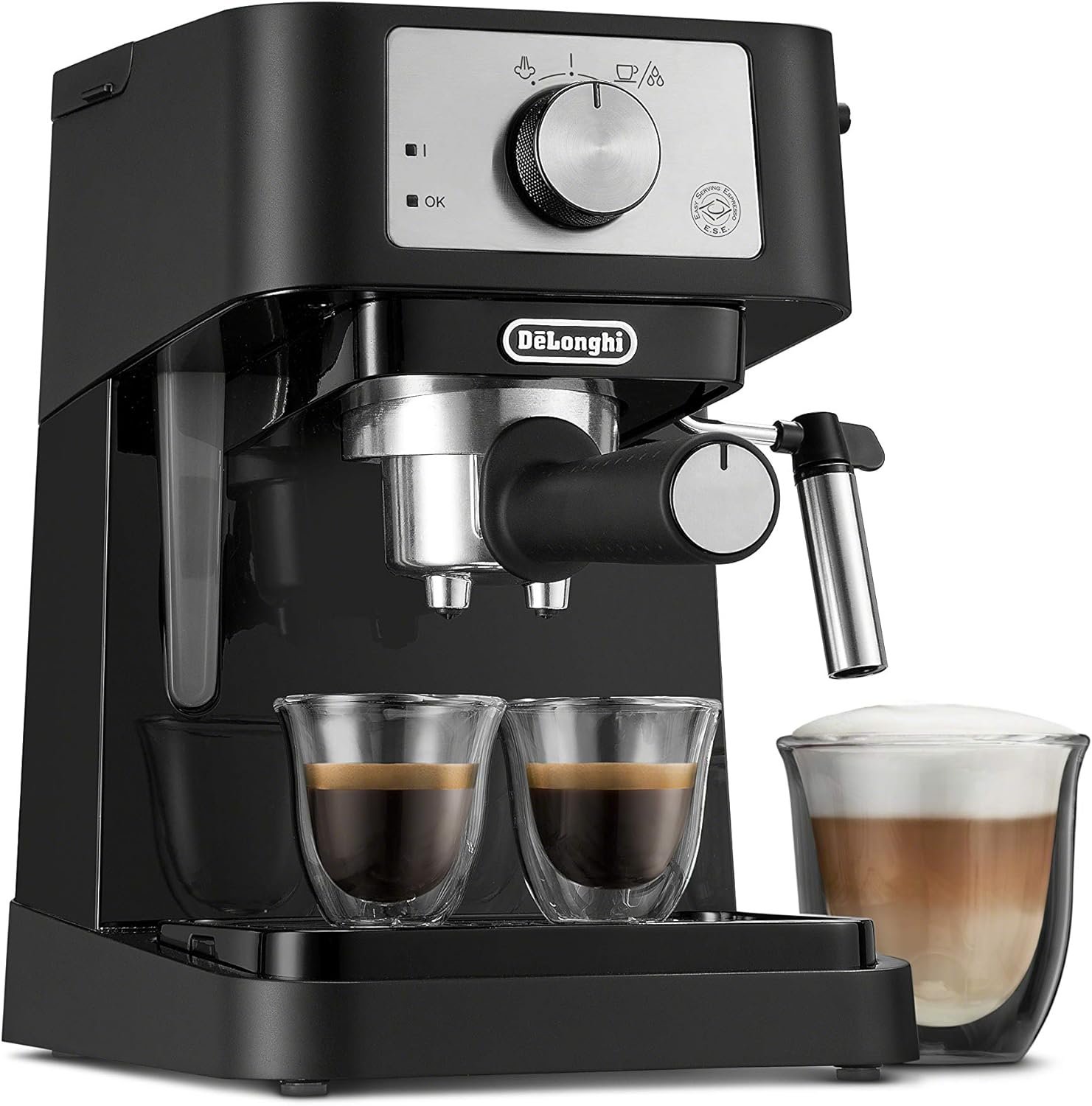
Selecting an espresso machine shapes daily brewing outcomes and long-term satisfaction for home operators. Equipment choice influences extraction consistency, milk-texturing capability, workflow speed, and maintenance time—parameters that directly affect flavor balance and serviceability in a domestic setting. The De’Longhi Stilosa is positioned as an entry-level manual espresso machine with a 15-bar pump, stainless-steel boiler, manual steam wand, and single/double filter baskets. That specification set targets beginners and households that value a compact footprint and milk-based drinks without the complexity or footprint of prosumer gear. For shoppers prioritizing consistent extraction, attention to grind quality and tamping technique will be necessary; for those prioritizing ease of use, the manual controls and simple interface reduce automation but increase hands-on control. Heat stability, material choices, and parts availability are relevant for long-term reliability when evaluating suitability for daily lattes, cappuccinos, or occasional straight espresso shots.
Quick Overview
| Feature | Details |
|---|---|
| Product category and brewing method | Manual semi-automatic espresso machine using ground coffee and portafilter extraction |
| Capacity and output | 1000 milliliters (33.8 fl.oz) removable water tank; single and double espresso options |
| Materials and construction | Steel and plastic housing with stainless-steel boiler and stainless accents |
| Heating/pressure system | 15-bar electric pump with stainless-steel boiler |
| Grind/filter compatibility | Ground coffee; includes single- and double-shot filter baskets in portafilter |
| Best suited users | Beginners, small households, milk-drink focused users |
| Intended use cases | Single/double espresso shots, milk-based drinks using manual steam wand |
| Warranty and support | Manufacturer 1-year warranty; EU spare parts availability listed for 5 years |
The above specifications translate to practical constraints and capabilities: the 15-bar pump and portafilter offer conventional espresso extraction when paired with appropriate grind size and tamping technique, while the stainless-steel boiler supports repeated milk steaming in short bursts. The compact footprint and removable water tank favor kitchens with limited counter space, and the inclusion of single/double baskets and a tamper gives basic dosing control. Cleaning expectations are moderate because the machine is not dishwasher-safe and uses manual components that require regular backflushing, descaling, and steam wand maintenance.

Brewing method compatibility and extraction quality
The Stilosa’s design centers on traditional portafilter extraction using ground coffee and full immersion of coffee puck by pressurized water. Compatibility with established espresso brewing techniques depends on grind consistency, dose control, and tamping evenness; the included single- and double-shot baskets and tamper provide the mechanical tools to deliver those variables. The 15-bar pump rating indicates peak pump capability, but actual extraction pressure during a shot follows fluid dynamics and resistance of the tamped puck; optimal extraction results from 8–10 bars of sustained pressure across the puck when the grind and dose are matched. For users focused on crema, balance, and repeatability, consistent burr grinding, measured dosing, and careful tamping are essential because the machine lacks automated pressure profiling or volumetric dosing.

Portafilter, filter baskets, and dosing implications
The ergonomically designed portafilter and included single/double filters enable standard dosing workflows and create the interface between coffee and machine. Because the unit accepts ground coffee rather than pods, grind uniformity is critical: finer, consistent particles increase resistance and promote fuller extraction, while over-fine grind risks channeling and excessive pressure. The supplied tamper helps achieve even puck compression, but tamping technique influences extraction uniformity—level tamping and consistent force reduce preferential flow. The portafilter diameter and basket depth are typical of compact home machines, which favors 7–12 gram single doses and 14–18 gram double doses depending on basket volume and puck density. Achieving repeatable extraction will rely on a matched burr grinder and scale-based dosing.
15-bar pump and extraction principles
A 15-bar pump rating reflects maximum pump output rather than the steady extraction pressure through the coffee puck; extraction quality depends on the pressure drop across the compact puck and flow rate. During a shot, the effective pressure at the puck typically stabilizes near 8–10 bars when grind resistance is appropriate, which supports proper solubles extraction without excessive bitterness. Flow rate and temperature stability also affect solubles yield: too-fast flow under-extracts and yields sour or thin taste, while too-slow flow over-extracts and yields bitter compounds. Because this machine lacks active pressure profiling or pre-infusion features, achieving target extraction requires manual control over grind size, dose, and tamping, and an awareness of the relationship between puck resistance and flow under the pump’s capacity.
Ease of use, workflow complexity, and daily operation
The Stilosa presents a manual workflow that reduces automation in exchange for hands-on control, which suits users who prefer artisan involvement but may increase the learning curve for newcomers. Button-based controls and a simple interface streamline start-up and shot activation; however, the machine does not include programmed volumetric shot control, meaning users must manually stop extraction to obtain desired shot volumes or use external timing. The manual steam wand requires technique to create microfoam and texture milk, and milk steaming will momentarily affect boiler temperature and recovery time. Overall workflow involves grinding to the correct fineness, dosing and tamping in the portafilter, manual extraction monitoring, and manual steaming—an approach that supports skill growth but requires more time and attention than fully automatic machines.
Controls, indicators, and user feedback
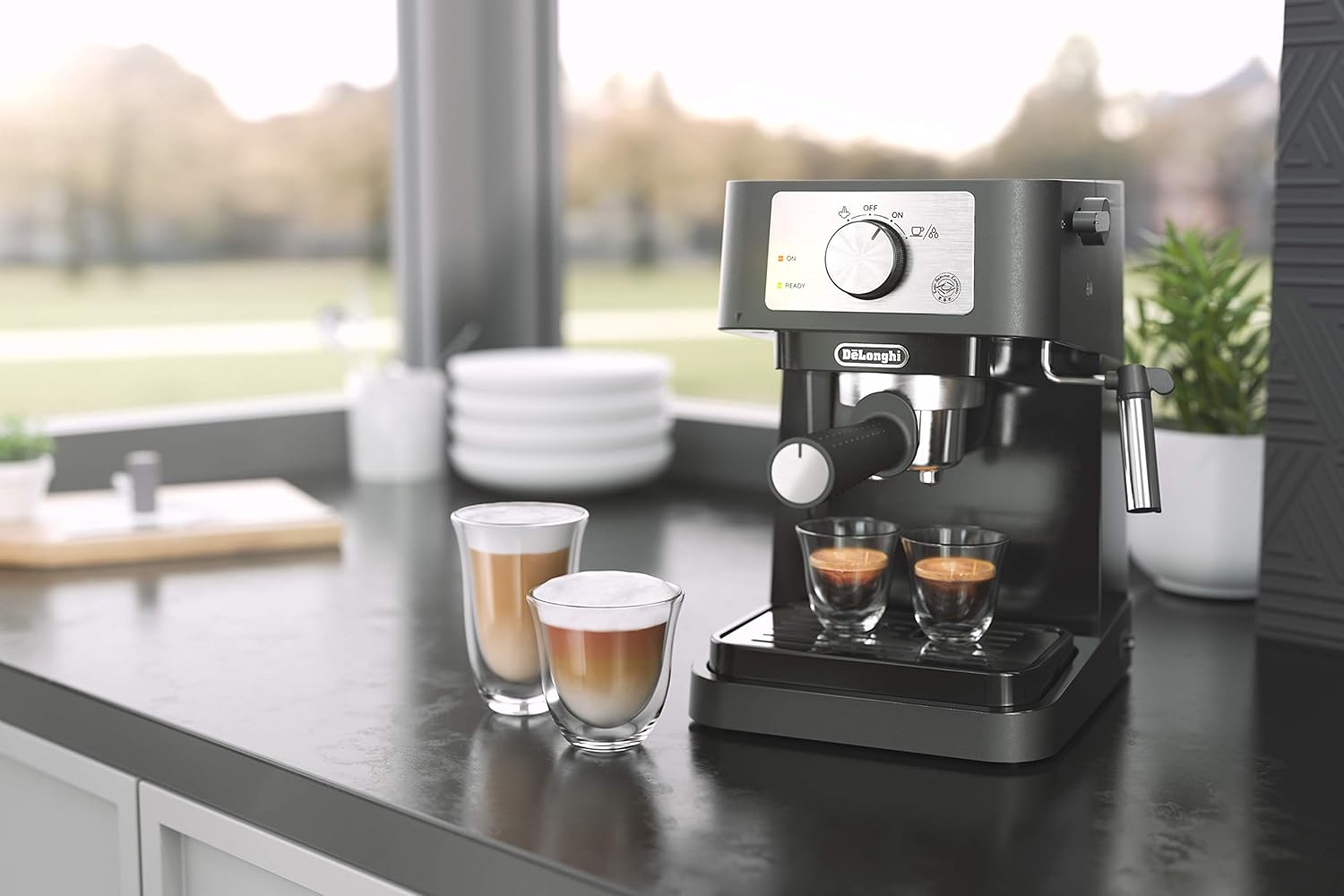
Button controls and basic indicator lights provide simple status feedback like power and heat readiness, but lack of a digital display or precise temperature readout limits instant data on boiler state. Users relying on visual cues and pressure-signal timing develop consistent workflows, such as calibrating grind setting and tamping to reach a target 25–30 second extraction window for a standard double dose. The absence of volumetric programming means shot length is operator-controlled; this supports flexible recipes but requires either a scale or a timer for repeatability. For beginners, clear labeling and included quick-start documentation reduce setup friction, yet users seeking plug-and-play consistency may find the manual stopping workflow less straightforward.
Milk steaming workflow and skill demands
The manual steam wand provides direct steam control and a traditional technique for achieving textured milk, which is central to lattes and cappuccinos. Steam wand operation requires controlled steam pressure application, pitcher positioning, and careful temperature monitoring; beginners should expect a learning curve to produce stable microfoam. Steam application draws thermal energy from the boiler, creating a short recovery period before the next shot or steam cycle; users preparing multiple milk drinks in sequence should account for recovery time. The steam wand’s manual nature allows nuanced texture control when operated competently, yet it also demands more attention and practice than automatic frothing systems.
Temperature control, heat stability, and boiler design
Temperature stability is a key contributor to extraction consistency and milk steaming performance. The Stilosa features a stainless-steel boiler, which is more durable than thermoblock designs and offers better thermal mass, helping moderate temperature swings during consecutive shots and steam cycles. Boiler capacity and heat recovery rate determine how quickly the system can maintain target brew temperature and provide adequate steam pressure for frothing. Without PID temperature control or electronic temperature readouts, the machine relies on internal thermostats and thermal inertia of the stainless-steel boiler; this creates adequate stability for household use, although tight temperature precision and advanced profiling are not available on this model.

Stainless-steel boiler characteristics and thermal mass
A stainless-steel boiler increases component longevity and provides thermal mass that helps buffer temperature drops during steam wand use or multiple extractions. Thermal mass moderates rapid temperature fluctuations, contributing to steadier brew water temperature during a shot—important for consistent solubles extraction and flavor clarity. However, stainless-steel lacks the rapid heating response of smaller thermoblocks, meaning initial heat-up and recovery between heavy steam cycles may be slower. For single-serve or small household usage patterns, the trade-off favors durability and smoother heat retention, while high-volume scenarios may reveal recovery limitations compared with larger commercial boilers or machines with dedicated dual boilers.
Practical implications for shot-to-shot consistency
Shot-to-shot consistency depends on both thermal stability and repeatable pre-shot variables like dose, grind, and tamp. The boiler’s thermal inertia reduces momentary temperature variation, helping avoid abrupt changes that could shift extraction balance. Still, without an adjustable temperature control system or active PID regulation, observed temperature will be influenced by ambient conditions and frequency of steam wand use. For consistent espresso results, operators should adopt a routine that allows the boiler to recover after steaming and use consistent pre-infusion or timing techniques to minimize variability between shots.
Capacity, serving flexibility, and countertop fit
The 1000 milliliter removable water tank and compact dimensions (approximately 8″D x 13.5″W x 11.2″H) position the Stilosa for small kitchens and households that typically prepare one to two milk-based drinks per session. The two-level cup platform supports a range of cup heights, from standard espresso demitasses to taller latte glasses. Portafilter baskets for single and double shots allow dosing flexibility, but the manual workflow means that making multiple drinks in sequence requires repeated grinding, dosing, and tamping—adding time compared with machines that offer twin boilers or automatic milk systems. The machine’s compact footprint benefits space-constrained counters, while the removable tank eases refills and occasional cleaning.

Water tank size, refilling cadence, and practicality
A 1000 milliliter tank suits households preparing a few beverages daily; it will typically support several single-espresso shots or a couple of milk drinks before refilling, depending on drink size. Removability simplifies refills, and having a transparent or labeled reservoir helps monitor water level. For small gatherings or office environments where sustained output is required, the tank size may necessitate frequent refills and extend service time. Users who regularly make multiple drinks in succession should account for downtime caused by both water refilling and boiler recovery after steaming.
Portafilter and cup clearance considerations
The included ergonomically designed portafilter and two basket sizes enable single and double-shot preparation, which supports a range of recipes and serving sizes. The two-level cup platform accommodates taller cups for lattes and flat whites while allowing espresso cups to sit closer to the spout to preserve crema and reduce splashing. Compact portafilter dimensions align with the machine’s overall small footprint, but the smaller basket volumes common in compact machines limit maximum double-dose capacity compared with larger prosumer groups. This balances countertop space savings with slightly lower throughput for high-volume use.
Cleaning, maintenance expectations, and durability
Maintenance routines affect both performance consistency and component longevity. The Stilosa’s stainless-steel boiler and metal portafilter are durable choices, while exterior plastics and internal pumps require periodic care. Regular cleaning practices should include backflushing with appropriate detergents for any machine that supports it (subject to manufacturer recommendations), daily removal and rinsing of the portafilter and baskets, steam wand purge and wipe-down after each use, and periodic descaling to prevent mineral buildup in the boiler and pathways. Parts availability listed for 5 years in the EU indicates manufacturer support for replacement components, which supports mid-term repairability and reduces the risk of premature obsolescence.
Daily and periodic cleaning tasks
Daily maintenance involves rinsing the portafilter and baskets, wiping the steam wand after each use and purging steam to clear milk residues, and emptying and rinsing the drip tray and water tank. Weekly tasks may include deeper cleaning of the portafilter and group head area, while monthly or as-needed descaling prevents scale buildup affecting thermal transfer and pump performance. Because the machine is not dishwasher-safe, manual cleaning is necessary for most components. Adherence to a scheduled cleaning routine preserves extraction quality and steam performance and reduces wear on seals and moving parts.
Materials, serviceability, and longevity signals
Stainless-steel elements, notably the boiler, suggest a focus on durability relative to common thermoblock systems. Metal portafilter and brass or steel contacts typically outlast plastic counterparts in heavy use. The manufacturer’s warranty and documented spare part availability are positive indicators for serviceability; however, the machine’s internal pump, valves, and gaskets remain wearable items that require periodic replacement depending on water hardness and usage. Regular descaling and preventive maintenance extend service life, while replacement part access supports cost-effective repairs versus full-unit replacement.
Pros & Cons
Pros
- Compact footprint with removable 1000 ml water tank supports fitting in small kitchens while enabling several drinks between refills. The removable tank simplifies refilling and reduces countertop disruption.
- 15-bar pump and traditional portafilter allow conventional espresso extraction when paired with proper grind and tamping technique. This architecture supports crema development and manual control over shot variables.
- Stainless-steel boiler provides greater thermal mass and durability compared with typical thermoblock designs, contributing to steadier temperature during steam and extraction cycles.
- Includes single and double filter baskets plus a tamper, supplying basic dosing tools that help beginners learn dose control and tamping fundamentals without extra purchases.
- Manual steam wand offers full control for milk texturing, enabling microfoam production for lattes and cappuccinos when operated with appropriate technique.
- Ergonomic portafilter and two-level cup platform increase compatibility with a range of cup sizes and improve user ergonomics for pouring and steaming workflows.
- Simple button-based interface reduces complexity for users who prefer minimal controls while preserving hands-on involvement in the brewing process.
- Manufacturer support with a one-year warranty and multi-year spare parts availability improves mid-term serviceability and repair options.
Cons
- Manual operation and absence of volumetric programming require user attention to stop shots manually, increasing the learning curve for beginners seeking consistent, repeatable volumes.
- No PID temperature control or digital temperature readout limits precise temperature adjustment and advanced profiling, which may affect repeatable extraction in variable ambient conditions.
- Steam wand operation draws boiler heat and requires recovery time, which reduces throughput for multiple milk drinks in quick succession and demands skill for consistent microfoam.
- Smaller basket volumes and compact portafilter dimensions limit maximum double-dose capacity compared with larger prosumer machines, reducing suitability for higher-volume environments.
- Not dishwasher-safe and requiring manual cleaning for most components increases maintenance time compared with machines that have dishwasher-friendly accessories.
Final Verdict: Who This Product Is Best For (and Who Should Skip It)
The De’Longhi Stilosa aligns with home users who prioritize a compact, traditional espresso workflow and intend to learn fundamental barista skills. It suits beginners willing to invest time in mastering grind, dose, and tamp, and small households that prepare one to three milk-based drinks per session. The stainless-steel boiler and included accessories deliver a balance of durability and basic dosing control, making the machine a practical choice for users focused on lattes, cappuccinos, and occasional straight espressos without requiring professional-level throughput or automation.
This machine is not ideal for users who require high-volume service, precise temperature profiling, or plug-and-play automation. Those seeking volumetric dosing, dual-boiler steam-throughput, or advanced temperature control for consistent multi-cup service should consider higher-tier models with PID control or dual boilers. Additionally, users unwilling to perform routine manual maintenance or those who prefer fully automatic milk frothing may find the Stilosa’s manual workflow and maintenance demands less suitable compared with automatic or super-automatic alternatives.
Frequently Asked Questions (FAQs)
Is the De’Longhi Stilosa compatible with pre-ground coffee only or does it work with an external grinder?
The Stilosa accepts ground coffee used in the portafilter and is designed to work with an external grinder. Consistent grind size from a quality burr grinder supports proper puck resistance and extraction. For best results, match grind fineness to the included single or double basket volumes and adjust dose and tamping to achieve the target flow rate and extraction time.
How does the 15-bar pump rating affect espresso extraction quality?
A 15-bar pump rating describes maximum pump output, but actual extraction pressure at the coffee puck stabilizes lower—typically around 8–10 bars—when a correctly sized grind and dose create appropriate resistance. Consistent extraction depends on grind uniformity, dosing, and tamping, as the pump supplies pressure while puck resistance determines flow and solubles yield.
Can the Stilosa produce reliable milk microfoam for lattes and cappuccinos?
The manual steam wand can produce microfoam and textured milk when operated with proper technique. Steam wand performance depends on pitcher depth, wand position, and steaming time. The stainless-steel boiler supplies steam pressure, but operators should expect a learning curve to produce consistent microfoam, and boiler recovery time between steaming cycles should be considered for multiple drinks.
What cleaning and maintenance are required to keep the machine performing well?
Regular maintenance includes rinsing and cleaning the portafilter and baskets after use, purging and wiping the steam wand after each milk steam, emptying and rinsing the drip tray and water tank, and performing periodic descaling per manufacturer guidance. The machine is not dishwasher-safe, so manual cleaning maintains extraction quality and prolongs the life of seals, gaskets, and the boiler.
Is the stainless-steel boiler superior to thermoblock designs for home use?
A stainless-steel boiler offers greater thermal mass and material durability compared with many thermoblock systems, which helps stabilize brew temperature during consecutive shots and steam cycles. While stainless steel may have slower heat-up and recovery than some rapid-heating thermoblocks, it generally provides steadier temperature behavior beneficial for consistent extraction in typical household use.
Who should consider alternative machines instead of the Stilosa?
Users who need automatic volumetric dosing, dual-boiler steam throughput for high-volume milk drinks, or precise PID temperature control may prefer alternatives. Also, buyers looking for fully automatic milk frothing or minimal manual maintenance should consider super-automatic or higher-tier semi-automatic machines that offer those specific features.