
Choosing the Right Super-Automatic for Home Espresso and Milk Drinks
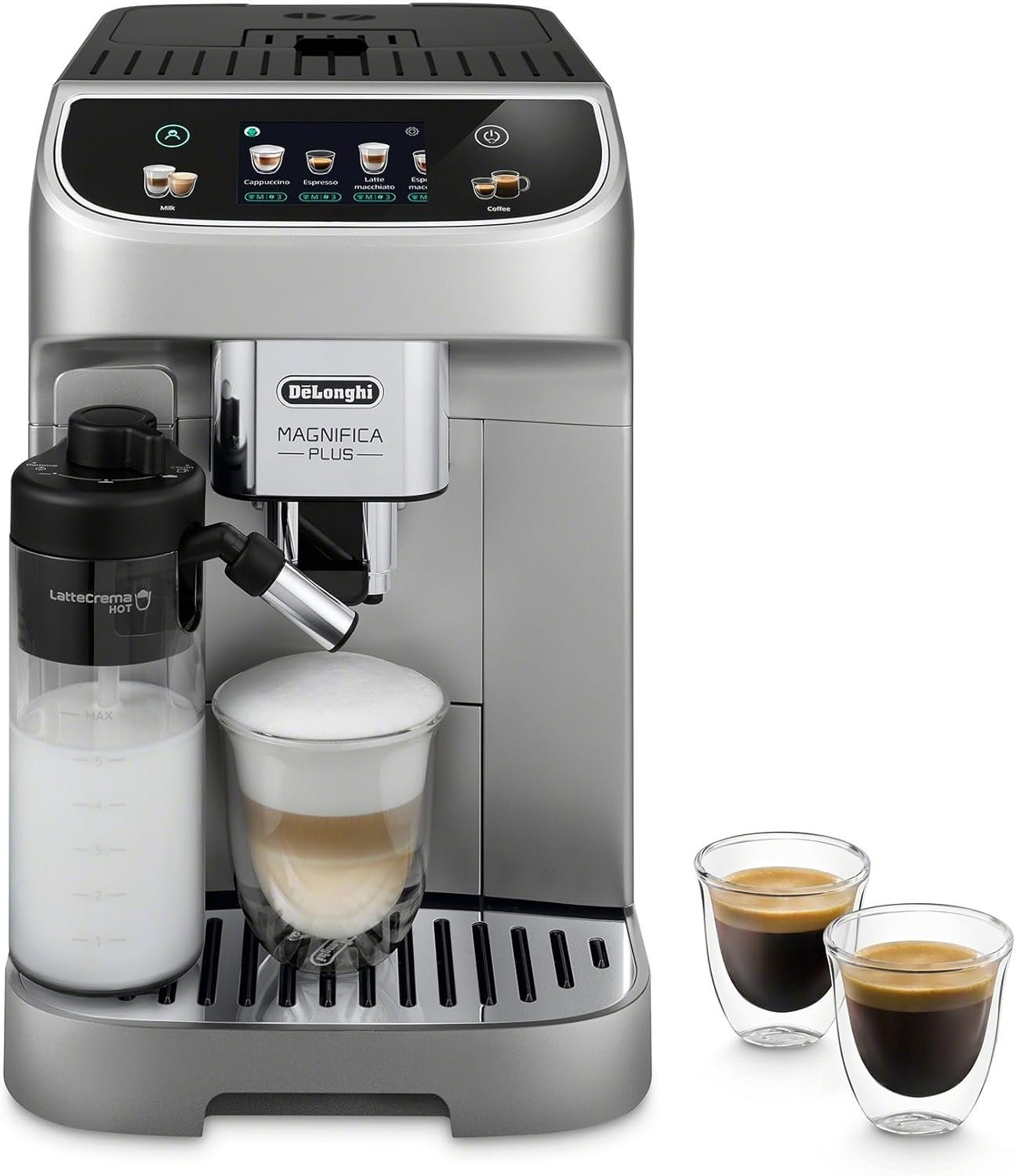
Selecting an espresso appliance shapes daily brewing routines, countertop workflow, and cup-to-cup consistency for home users. For households seeking a largely automated path from whole bean to milk-textured beverage, machine attributes such as an integrated burr grinder, programmable recipes, temperature management, and a reliable milk system are decisive. The De’Longhi Magnifica Plus is positioned for home consumers who want broad one-touch drink variety while preserving control over grind settings, beverage size, and intensity. Key considerations for purchase include how the machine handles bean-to-cup extraction, the degree of customization available through user profiles, the mechanics of milk frothing for milk-based drinks, and the practical implications of routine cleaning and part replacement. Equipment choice should align with household beverage volume, desired complexity of manual intervention, and tolerance for maintenance tasks associated with super-automatic espresso machines.
Quick Overview
| Feature | Details |
|---|---|
| Product type | Super-automatic espresso machine (fully automatic bean-to-cup) |
| Brewing method | Espresso extraction with integrated grinder and automatic milk frothing |
| Water reservoir capacity | 60 fluid ounces |
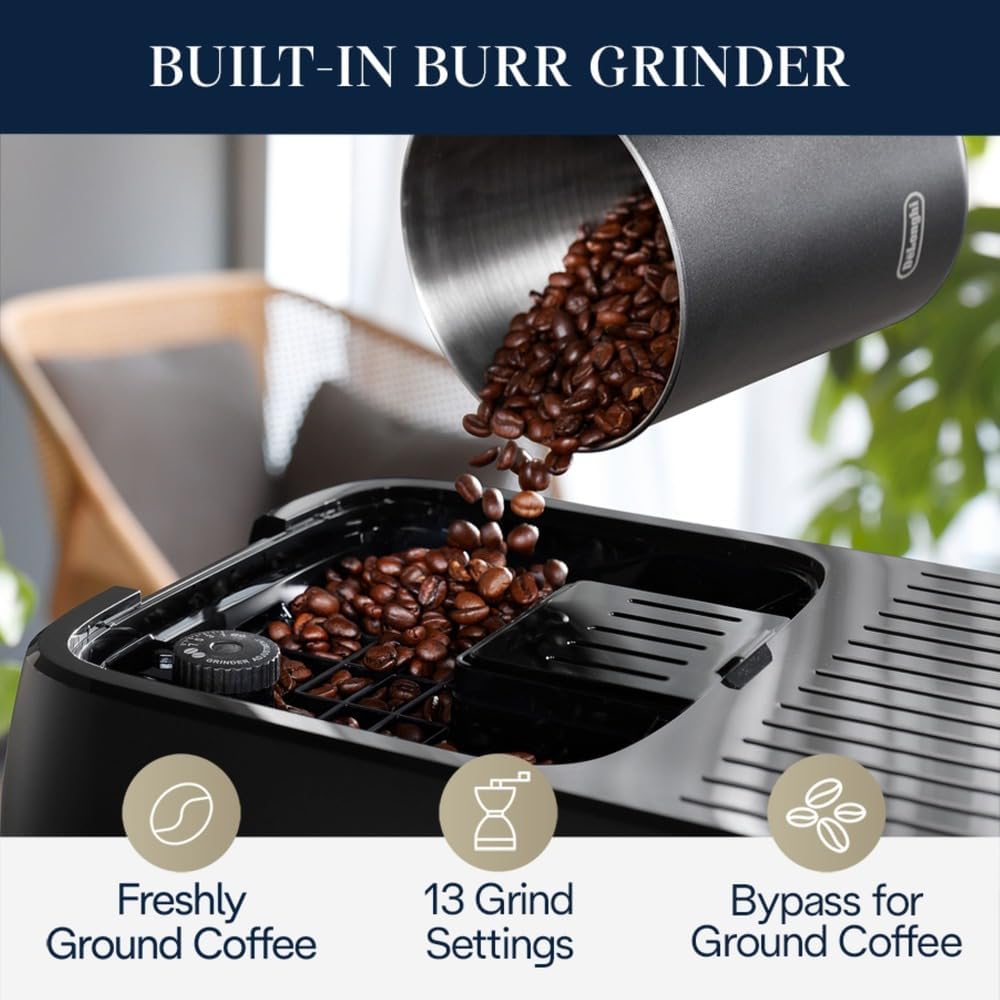
| Grinder | Built-in conical burr grinder with 13 settings |
| Milk system | De’Longhi LatteCrema hot system (automatic milk frothing) |
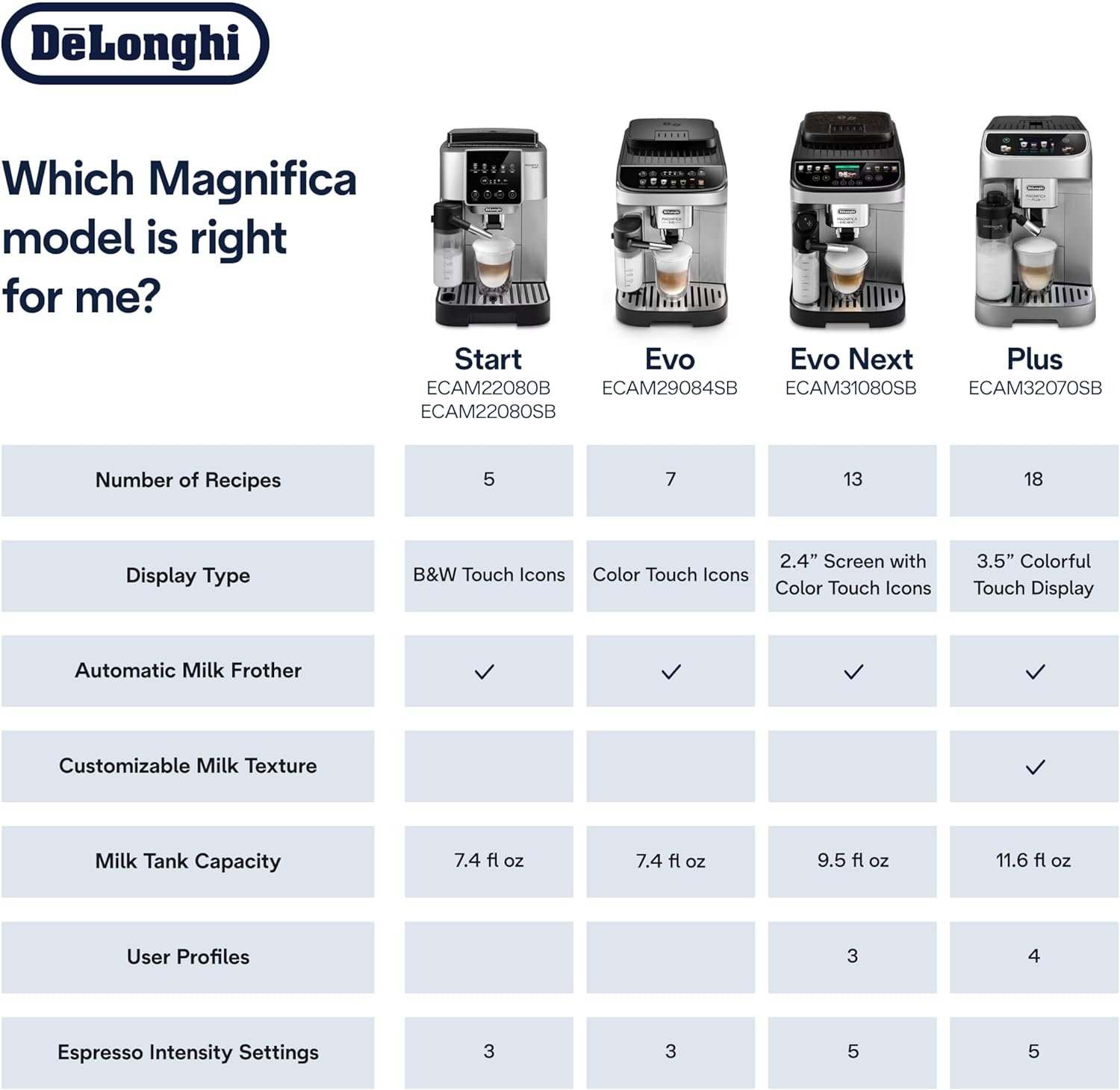
| Controls & display | 3.5″ TFT full-touch color display with soft-touch buttons; 4 user profiles |
| Drink programs | 18 one-touch recipes; 4 sizes and 5 intensity levels |
| Maintenance features | Removable dishwasher-safe parts and auto-clean functions |
| Physical specs | 17.5″ D x 9.5″ W x 14″ H; approximately 21.2 lb; silver finish |
| Electrical | 120 volts |
The table highlights core hardware and software elements that determine extraction behavior and user workflow. Integrated conical burr grinding, programmable recipes, and an automatic milk system shorten the path from beans to finished beverage while the water capacity and user profiles affect serving flexibility and multi-user households. Removable, dishwasher-safe parts and auto-clean functions reduce hands-on maintenance time but require routine attention to maintain consistent performance.

Brewing compatibility, grind control, and extraction quality
The machine combines a built-in conical burr grinder with a programmable brew cycle aimed at extracting espresso-style shots suitable for a range of drinks. Grind consistency and particle size distribution are primary determinants of extraction rate and flavor balance; the 13 grinder settings provide a stepped range for dialing coarser or finer output, which helps match roast level and desired brew intensity. Dose control and tamping are automated inside the brew unit, so extraction depends on grind setting, bean freshness, and programmed intensity. Because water temperature and flow interact with particle size to determine soluble extraction, matching grind adjustments to strength and drink selection is essential for predictable results across the 18 one-touch recipes and manual customizations.

How the 13-step conical burr grinder affects brewing
A conical burr design favors slower rotation and lower heat transfer to the beans compared with some high-speed flat burr configurations; this helps preserve volatile aromatics during grinding. The 13-step mechanical adjustment offers incremental changes to particle size that can influence contact time and extraction yield in the machine’s fixed brewing cycle. In a super-automatic context, finer settings generally increase perceived body and extraction but can amplify channeling or over-extraction risks if not balanced with intensity and drink-size settings. For users seeking greater control, adjusting grind in coordination with the machine’s intensity and cup-volume options will yield the most consistent outcomes.
Extraction considerations for different recipes
Extraction quality varies by recipe because brew ratios and dilution differ across espressos, Americanos, and milk-based beverages. Short recipes (espresso, ristretto-style) rely on concentrated extraction where grind fineness and dose are most influential, while longer recipes (Americano, iced coffee) depend more on water volume and dilution after extraction. The machine’s automated dosing and programmed recipes standardize many variables, but achieving desired clarity, sweetness, or acidity still requires iterative adjustment of grinder settings and intensity levels based on bean roast and freshness.
Compatibility with different coffee inputs
The unit accepts whole beans for the integrated grinder and also supports ground coffee inputs, which can be useful for pre-ground single shots, decaf, or pods if a compatible adapter is available. Using pre-ground coffee removes the grinder variable and can simplify workflow for occasional users, but it also reduces freshness-related flavor advantages. For best extraction consistency, whole-bean use paired with routine grinder adjustment for roast level and beverage type is recommended.
Ease of use, interface, and workflow for multi-user households
The Magnifica Plus emphasizes one-touch convenience combined with programmable profiles to streamline repeated beverage production across multiple users. A 3.5″ color TFT touchscreen and soft-touch buttons present recipes and customization options, while up to four user profiles allow individualized defaults for size and intensity. Smart One-Touch intelligence that lists frequently selected drinks first reduces menu navigation for habitual choices. Workflow considerations include bean loading, water refilling, milk carafe attachment and removal, and clearing the drip tray and grounds container; these steps are typical for super-automatic machines and influence how quickly a household can move from one drink to the next without interruption.

User profiles and recipe personalization
Four programmable user profiles store preferred drink size, strength, and frothing level, enabling quick access to personalized settings for multiple household members. Saving profile preferences reduces repetitive adjustments and helps maintain consistency between preparations. When multiple users share a machine, the ability to quickly switch profiles shortens brew times and mitigates the need to manually change grinder or froth settings for each drink, which is beneficial for families or small offices with differing taste preferences.
Menu navigation and Smart One-Touch behavior
The TFT touchscreen presents 18 one-touch recipes in a visual format; Smart One-Touch intelligence prioritizes most frequently chosen drinks to the top of the menu, shortening selection time for popular beverages. The touchscreen simplifies customization steps such as adjusting volume and strength per recipe. For users who prefer tactile buttons, soft-touch controls provide a hybrid feel, but those who value rapid visual selection will find the display’s clarity important for efficient operation.
Typical workflow steps and time considerations
Common workflow steps include filling the water reservoir, topping the bean hopper, selecting a user profile or recipe, attaching the milk carafe (for milk drinks), and triggering auto-clean cycles as needed. The 60-ounce reservoir reduces refill frequency in moderate-use environments, but milk attachment and milk-system cleaning add time between beverages. Workflow efficiency improves when users maintain supplies and perform scheduled cleaning; for households with multiple users or back-to-back drink orders, planning for milk-system cycles and emptying grounds containers shapes daily usability.
Milk steaming, LatteCrema performance, and temperature stability
De’Longhi’s LatteCrema hot system is designed to produce textured milk for lattes, cappuccinos, and other milk-based drinks with three froth settings: light, creamy, and dense. Automated milk frothing in a closed carafe system reduces user skill requirements compared with manual steam wands and standardizes foam density across preparations. Temperature stability during extraction and milk heating influences crema formation, mouthfeel, and overall balance; while the machine includes built-in temperature management as part of its heating system, consistent results depend on initial water temperature, milk type, and volume. Milk alternatives with different fat and protein compositions will behave differently under the LatteCrema cycle, so users should expect variation in foam structure depending on milk selection.
Controlling foam density and texture
Three froth settings enable targeted foam levels for varying recipes: denser foam for cappuccinos, creamier microfoam for lattes and flat whites, and lighter foam for more delicate milk layering. The automated routine meters milk, injects air, and heats to a preset level based on the chosen setting; this reduces the need for manual technique. As with any automatic frothing system, final texture remains dependent on variables such as milk temperature, freshness, fat content, and how full the carafe is at the start of the cycle, so some experimentation with milk types and quantities will help reach preferred textures.
Milk alternatives and expected behavior
Non-dairy milks (oat, almond, soy, etc.) exhibit different foaming properties because of varying protein and fat profiles; oat and soy often produce stable foam closer to dairy when heated with automated systems, whereas almond and some low-protein alternatives can yield thinner foam. The LatteCrema hot system’s three settings provide a range of mechanical frothing approaches, but users should anticipate needing to test settings with their chosen milk alternative to determine the best froth outcome and serving temperature.
Temperature stability during extraction and steaming
Extraction temperature stability impacts solubility and flavor clarity, while steaming temperature affects milk sweetness and texture. Super-automatic machines rely on internal heating systems and thermostatic control to approximate stable temperatures across cycles, yet successive high-volume use can influence boiler equilibrium. Allowing short recovery intervals between consecutive milk-heavy preparations helps maintain stable steaming temperatures and consistent milk texture, particularly in multi-drink scenarios.
Capacity, maintenance, durability expectations, and who should avoid this machine
Capacity and maintenance are practical buying factors: the 60-ounce water reservoir and automated milk carafe support multiple drinks before refill, while a built-in grinder and internal brew unit centralize functions. Routine maintenance includes emptying and rinsing the drip tray, grounds container, and milk carafe, descaling according to water hardness, and cleaning removable components that are dishwasher-safe. Durability expectations for super-automatic machines hinge on materials used in the burrs, brew group, and milk system; the conical burr grinder and removable brew unit are industry-standard parts that perform reliably when cleaned regularly. Certain users should avoid super-automatic machines: those who prefer manual espresso control, minimal maintenance tolerance, or a very compact footprint may find alternative machine types better suited to their needs.

Water and bean capacity relative to household needs
A 60-ounce reservoir reduces the frequency of water refills for small-to-medium households, and the built-in hopper accommodates a typical home supply of beans. For larger gatherings or frequent back-to-back brewing, the reservoir size may require refills more often than large-capacity commercial machines. Users who prioritize uninterrupted serving for many consecutive drinks should evaluate refill cadence and consider whether a plumbed or larger-capacity unit better matches their needs.
Maintenance cadence and cleaning expectations
Regular tasks include rinsing the milk carafe after each use, emptying the grounds container and drip tray when indicated, and following the manufacturer’s descaling schedule based on local water hardness. Removable and dishwasher-safe parts simplify cleaning routines, but the internal brew unit and milk lines require periodic attention to prevent buildup. Adhering to scheduled maintenance preserves extraction consistency and prolongs component life.
Durability markers and component replacement considerations
Durability depends on build materials, frequency of use, and maintenance diligence. Conical burrs typically provide long service life if cleaned of oils and grind residue; the internal brew unit and milk system have wear points that may need attention over several years. Availability of replacement parts and service options in the U.S. market affects long-term upkeep; prospective buyers should confirm local service and part availability as part of purchasing decisions.
Pros & Cons
Pros
- Integrated Conical Burr Grinder with 13 Settings: The built-in grinder provides stepped adjustments that help match grind size to roast and drink type, supporting better extraction control without a separate grinder. The conical burr design reduces heat transfer during grinding, which helps preserve bean aromatics.
- Wide Recipe Selection and User Profiles: Eighteen one-touch recipes and four programmable user profiles enable personalized defaults and quick access to commonly brewed drinks, which simplifies multi-user households and accelerates repeatable brewing.
- Automated LatteCrema Milk System: The proprietary milk frothing system offers three froth densities and automates milk texturing, reducing the skill required to produce consistent cappuccinos and lattes at home.
- Intuitive Touchscreen Interface: A 3.5″ TFT full-color touchscreen with soft-touch buttons supports straightforward navigation, customization, and Smart One-Touch behavior that prioritizes frequently used drinks.
- Generous Water Reservoir and Compact Footprint: The 60-ounce reservoir lowers refill frequency for moderate home use while the overall footprint remains suitable for many kitchen counters.
- Removable, Dishwasher-Safe Components: Parts that are dishwasher-safe and an auto-clean function reduce manual cleaning time and simplify maintenance routines.
Cons
- Maintenance Requirements Typical of Super-Automatics: Regular cleaning of milk circuits, the brew unit, and descaling are required to maintain flavor and operational reliability, which may be perceived as frequent by users seeking low-maintenance devices.
- Limited Manual Control Compared to Semi-Autos: Automation of dose and tamping constrains manual espresso technique, so users desiring full manual control over tamp and pressure profiles may find the machine less flexible.
- Variable Milk Alternative Performance: While the LatteCrema system offers multiple froth settings, milk alternatives differ in protein and fat content, producing variable foam results that require experimentation.
- Noise During Grinding: Integrated grinders in this class typically produce noticeable noise during operation; customers sensitive to grinding noise should account for this in use settings.
- Internal Component Wear Over Time: As with many fully integrated units, parts such as the brew group and milk lines are subject to wear and require replacement or service over multi-year ownership.
Final Verdict: Who This Product Is Best For (and Who Should Skip It)
The De’Longhi Magnifica Plus fits households and small offices seeking a feature-rich, fully automatic bean-to-cup solution that balances convenience with customization. It is well suited for users who want reliable one-touch access to a broad range of espresso and milk-based beverages, appreciate onboard grind adjustment, and prefer programmable user profiles to streamline multi-user environments. The LatteCrema system addresses the common desire for consistent milk texture without manual steaming skills, making it attractive for latte- and cappuccino-focused households.
This machine is less appropriate for experienced baristas or manual espresso purists who require full control over tamp, shot pressure, and manual steaming techniques. Buyers seeking minimal upkeep may find the routine cleaning, descaling, and occasional part servicing more involved than simpler drip or capsule machines. For prospective owners in 2026, comparing this unit with other super-automatics on serviceability, local parts availability, and long-term maintenance expectations will clarify its fit for specific household needs.
Frequently Asked Questions (FAQs)
How does the built-in grinder affect espresso extraction?
An integrated conical burr grinder provides stepped grind-size adjustments that change particle distribution and extraction rate. Finer settings increase surface area and extraction but can increase the risk of over-extraction if not balanced with intensity and volume settings. Consistent dosing from the built-in grinder simplifies workflow, but optimal extraction requires matching grind size to roast level and the machine’s programmed brew parameters.
Can the machine use pre-ground coffee instead of whole beans?
Yes, the machine supports ground coffee input for single-shot or specialty uses. Using pre-ground coffee bypasses the grinder and can be convenient for decaf or specific blends, but it sacrifices freshness advantages associated with grinding immediately before extraction. For best flavor and consistency, whole-bean use with appropriate grinder settings is recommended.
How often should the milk system and brew unit be cleaned?
Routine cleaning of the milk carafe and external milk lines should occur after each use to prevent residue buildup, while the drip tray and grounds container should be emptied as indicated by the machine. Descaling frequency depends on local water hardness and usage patterns; following the manufacturer’s schedule preserves flow and temperature performance. Periodic inspection of the brew unit is advised to maintain consistent extraction.
Will plant-based milks froth well with the LatteCrema system?
Plant-based milks vary in protein and fat content, so their frothing behavior differs. Oat and soy milks often produce more stable foam with automated frothers, while almond and lower-protein alternatives may yield thinner foam. The LatteCrema system’s multiple froth settings can help optimize results, but testing with specific milk brands and settings is usually necessary to find the best texture.
Is the water reservoir size sufficient for family use?
A 60-ounce water reservoir reduces refill frequency for small-to-medium households and typical morning routines. For larger households or frequent consecutive drink preparation, the reservoir will require refills more often compared with larger-capacity or plumbed machines. Assess intended daily drink volume to determine if the reservoir capacity aligns with household usage patterns.
Does the machine allow temperature adjustments for brewing?
The machine includes internal temperature management as part of its heating and extraction system designed to approximate stable brewing and steaming temperatures. While specific user-accessible temperature setpoints may be limited compared with semi-automatic machines, consistent preheating, water quality, and machine warm-up routines influence extraction temperature stability and cup results.
What are common troubleshooting steps for inconsistent extraction?
Common causes of inconsistent extraction include grind size mismatch, stale beans, clogged grinder or brew unit, and inadequate cleaning of the brew path. Addressing these factors—adjusting grinder settings, using fresh beans, cleaning the grinder chute and brew unit, and ensuring proper water hardness and descaling—typically improves extraction consistency.
Who should consider an alternative to a super-automatic espresso machine?
Buyers who prioritize full manual control over tamping, pressure profiling, and manual steaming or those wanting minimal maintenance may prefer semi-automatic or capsule systems. Also, users requiring a very compact footprint or those unwilling to perform routine cleaning and descaling tasks should evaluate alternative espresso or coffee solutions.