
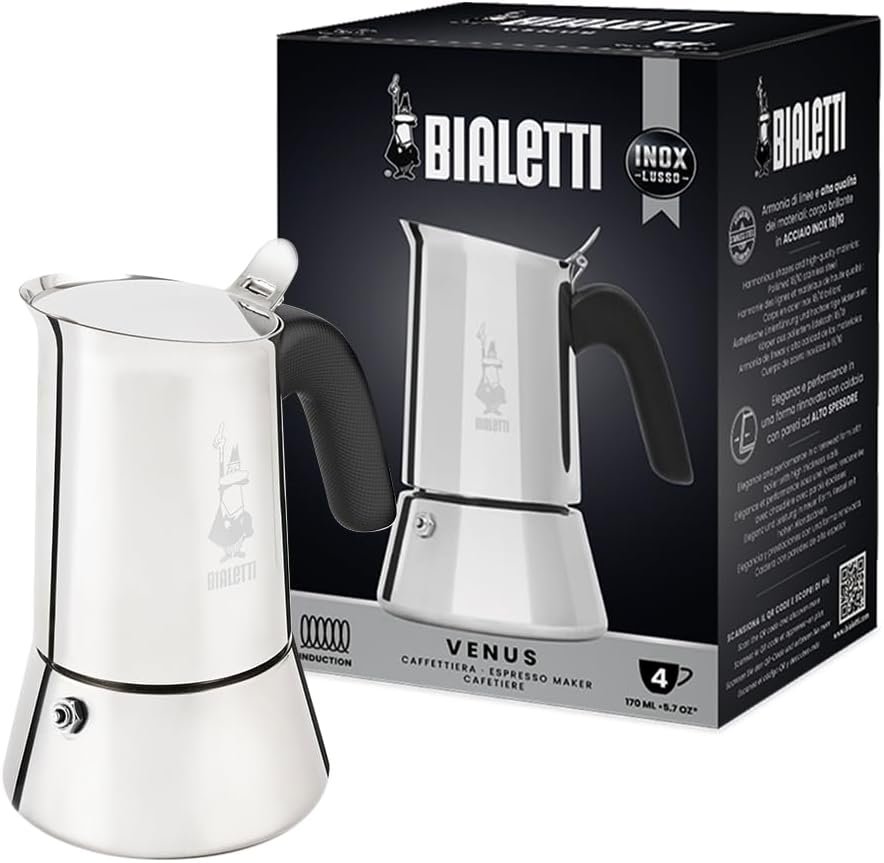
Introduction: Why stovetop choice matters for daily espresso-style brewing
Selecting stovetop coffee equipment affects flavor clarity, extraction consistency, and routine efficiency for home brewers and small households. Stovetop moka pots occupy a specific niche between manual filter methods and pump-driven espresso machines: they rely on steam-driven pressure, simple geometry, and thermal transfer through the boiler to produce concentrated, espresso-style coffee. For users prioritizing compact footprint, low operating complexity, and stovetop flexibility—including induction hobs—the Bialetti New Venus Induction positions itself as an option to evaluate. Considerations such as material thermal conductivity, gasket and valve serviceability, grind size compatibility, and the pour workflow determine whether a stainless steel induction-ready moka pot will meet daily needs. Decision factors covered here include hob compatibility, heat management and extraction dynamics, capacity versus serving habits, cleaning expectations, and long-term reliability. This review synthesizes manufacturer specifications, design principles, and common buyer feedback to present a practical assessment useful for buyers comparing stovetop alternatives and small-batch brewing approaches.
Quick Overview
| Feature | Details |
|---|---|
| Product category and brewing method | Stovetop moka pot / espresso-style stovetop brewer |
| Capacity and output | 4 Cups (5.7 oz total espresso-style output) |
| Materials and construction | 18/10 stainless steel body and components |
| Heating or pressure system | Steam-driven pressure; compatible with gas, electric, ceramic and induction hobs |
| Grind or filter compatibility | Ground coffee (medium-fine to fine, no paper filters) |
| Best suited users | Home brewers, small households, office use |
| Intended use cases | Short concentrated servings; espresso-style beverages; kitchen countertops |
| Warranty and spare parts | EU spare part availability duration: 2 years |
The table highlights how core specifications influence brewing outcomes and user workflows. The stainless 18/10 construction supports induction use and corrosion resistance, while the 4-cup capacity fits one to two short servings per brew. The steam-driven pressure system and lack of a paper filter shape extraction characteristics and require attention to grind size, water level, and stovetop heat to achieve repeatable results.

Brewing method compatibility and hob types
The New Venus Induction is explicitly designed to work across a broad range of hobs, including magnetic induction, gas, electric coil, and ceramic glass cooktops. Compatibility is achieved by using 18/10 stainless steel construction paired with a flat base that promotes stable contact and effective magnetic coupling on induction surfaces. For buyers, this means verification of base flatness and hob power is important: low-power or uneven surfaces will alter heat transfer and prolong extraction time. Grind and dose selection must be adapted to the moka pot’s low-pressure extraction mechanics rather than being treated like pump-driven espresso. Ultimately, stovetop type interacts with boil-up rate and gurgle timing, so users should anticipate small workflow adjustments when switching between hob technologies.

Induction, gas, electric and ceramic stovetop differences
Induction hobs transfer energy directly to the stainless-steel base, often producing faster, more controllable heat than gas or electric coil options. Faster heat-up can reduce pre-extraction time but also requires close attention to reduce rapid over-pressurization and scalding. Gas provides visible flame control and can produce more uneven base heating, potentially causing longer brew tails if the flame overhangs. Electric coil and ceramic glass surfaces heat the base more slowly; this slower ramp can lengthen extraction and reduce the rate of gurgling that signals brew completion. Each surface requires temperature adjustments and monitoring of the brew’s audible cues to achieve consistent results.
Grind compatibility and dosing for moka extraction
Moka-style extraction favors a medium-fine grind that is finer than drip but coarser than pump espresso to balance flow and pressure. The New Venus accepts ground coffee only; no paper filters or portafilter baskets are involved. Dose should match the basket capacity without tamping—tamping compresses the bed and can dangerously restrict flow. Overly fine grind or overfilling can cause slow flow, excessive back pressure, and prolonged contact that leads to over-extraction and bitterness. Conversely, too coarse a grind yields thin, under-extracted cups. Consistent dosing aligned with grind adjustments is essential for predictable extraction from a steam-driven stove-top brewer.
Limitations compared to pump espresso machines and manual brewers
Moka pots produce a concentrated, espresso-style beverage but do not reach the high, stable pressures of pump espresso machines, limiting crema formation and the same level of solute extraction. Compared with pour-over methods, moka extraction is less transparent for fine-tuning flavor because pressure and temperature change dynamically during brewing. Manual brewers allow more precise flow control and temperature profiling; moka pots are simpler but trade off some control. Buyers seeking authentic, high-pressure espresso, microfoam steaming, or precise temperature profiling may prefer pump machines or dedicated tea kettles with variable temperature, while moka pots remain a compact, low-complexity option for concentrated stovetop coffee.
Heat management, temperature control and extraction quality
Heat transfer behavior and extraction quality are central to moka pot performance since steam pressure, water boiling, and temperature dynamics interact to determine solubles extracted. The New Venus uses full stainless steel construction to facilitate even heating and magnetic induction compatibility; however, stainless steel has a different heat conductivity profile than aluminum, which changes heat-up speed and thermal inertia. Users should account for boil-up pace: a rapid, high flame or high induction power setting pushes water to boiling faster, increasing steam pressure and shortening contact time, while low heat lengthens the extraction window and can under-extract. Achieving consistent cups requires attention to water volume, heat ramp, and audible gurgle timing, as these are the main feedback mechanisms for temperature and extraction control in a stovetop system.

Heat transfer and the role of stainless steel
18/10 stainless steel provides durability and induction compatibility but conducts heat less rapidly than aluminum; this results in a gentler temperature ramp and greater thermal mass. The slower ramp can help avoid sudden scorching but may require slightly higher stovetop power to reach the same brew cadence familiar to aluminum moka pot users. Flat base contact on induction hobs optimizes energy transfer; conversely, warped bases or mismatched burner sizes will reduce efficiency. The stainless construction also resists pitting and corrosion over time when maintained properly, which supports consistent thermal performance across many cycles if the safety valve and sealing surfaces remain intact.
Temperature stability, extraction window, and audible cues
Moka brewing relies on the sequence of water boiling, steam generation, and coffee channeling signaled by a gurgling sound when liquid rises into the upper chamber. Stable temperature during this final push helps preserve desirable volatile compounds without excessive bitterness. Because temperature control is manual, reliance on brewer cues—such as the intensity and timing of gurgle, steam escape, and flow rate—is essential. Adjusting hob power immediately after the first steady flow, or pulling the pot off heat as the gurgling becomes intermittent, helps reduce late-stage overheating. These adjustments are part of the expected workflow for obtaining repeatable extraction in stovetop brewing.
Pressure characteristics and extraction implications
Moka pots generate low but meaningful pressure—typically below 2 bars—produced by steam expansion rather than mechanical pumps. This lower-pressure environment extracts rapidly soluble compounds and produces a concentrated cup but lacks the high-pressure emulsification that creates thick crema and finer extraction gradients in espresso machines. As a result, extraction emphasis is on balancing soluble yield versus bitterness by controlling grind size, water temperature, and brew duration. The New Venus’s stainless steel body does not alter pressure mechanics but influences the thermal ramp that affects the pressure curve; understanding that relationship is key for users looking to dial in flavor consistency.
Capacity, workflow complexity, and cleaning expectations
Capacity decisions depend on serving size and frequency: the 4-cup New Venus outputs approximately 5.7 ounces, typically yielding one to two short espresso-style servings per brew. Workflow for moka pots is procedural but straightforward—fill the lower chamber with water to the safety-valve level, add properly dosed ground coffee to the filter basket without tamping, assemble, and heat until the gurgle indicates completion. Cleaning is intentionally minimal: rinse components with water only and avoid detergents, as manufacturer guidance warns against dishwasher use and cleaners that can leave residues affecting flavor. Regular inspection of the gasket and safety valve is advisable; these wear items influence sealing performance and extraction repeatability over time.

Capacity and serving flexibility in daily use
The four-cup capacity suits single users who prefer multiple concentrated shots or couples sharing short servings, but it is small for larger households or entertaining. Because each cycle produces a modest volume, users who require more servings will either brew multiple consecutive batches—adding to workflow time—or choose a larger model. The compact size supports quick storage and is energy efficient for small quantities, but it reduces flexibility for milk-based drinks intended for multiple cups unless pre-measured batching is acceptable. Buyers should align cup counts and serving habits with the 5.7-ounce output to determine if the model meets daily needs.
Workflow complexity: assembly, brewing, and heat-off timing
Assembly is simple: the lower water chamber, coffee basket, and upper collector screw together. The absence of complex parts minimizes setup time, but precise water level and grind discipline are required for consistent results. Monitoring the brew’s audible gurgle and reducing heat or removing the pot at the right moment are essential manual steps. Those who prefer push-button automation or pre-programmed schedules will find moka pots more hands-on; conversely, users comfortable with manual cues can achieve predictable cups with a consistent routine and a basic kitchen timer or visual markers for repeatability.
Cleaning, maintenance and recommended care
Manufacturer instructions emphasize rinsing with water only and avoiding detergents and dishwashers to protect stainless surfaces and preserve coffee flavor. The gasket and safety valve are consumable items that require periodic inspection and replacement to maintain a proper seal and safety function; spare part availability is documented for two years in EU channels. Regular drying of components reduces mineral buildup, and occasional descaling of the lower chamber with food-safe agents helps when using hard water. Proper post-brew care ensures flavor neutrality and extends the usable life of sealing components.
Materials, construction quality and long-term reliability
Material choice drives both functional performance and longevity: 18/10 stainless steel resists rust and provides a neutral surface that is less reactive than aluminum, helping preserve flavor integrity over time when cleaned properly. Build quality factors such as base flatness, weld quality, handle attachment, and gasket fit determine how well the pot maintains a seal and thermal coupling. The New Venus emphasizes a Made-in-Italy design language and stainless construction, which aligns with buyer expectations for durability. Still, long-term reliability hinges on correct use—avoiding excessive heat, following cleaning guidelines, and replacing wear items—which collectively affect safety valve function, gasket elasticity, and sustained brew consistency.

18/10 stainless steel: benefits and thermal trade-offs
18/10 stainless steel offers corrosion resistance and magnetic response for induction use, making it suitable for modern kitchen stovetops. Compared to aluminum, stainless steel has lower thermal conductivity, so heat-up and cooldown are slower, providing a different user experience that may be perceived as gentler on flavor but requiring slight adjustments to heat settings. The material reduces risk of metallic off-notes if surfaces remain clean and non-pitted. For buyers prioritizing longevity and induction compatibility, stainless steel is a logical choice that trades rapid thermal response for robustness.
Design elements: handle, lid, valve and gasket considerations
Ergonomic and safety details influence everyday usability. A secure, heat-resistant handle and lid hinge prevent accidental contact during pouring, while a properly seated gasket ensures a reliable seal between chambers for consistent pressure. The safety valve is essential for controlled steam release; accessibility for routine inspection and the availability of spare valves or replacement gaskets affect long-term maintenance costs. Buyers should confirm that handle attachment points are riveted or welded securely and that gasket sizing matches commonly available replacements to simplify future servicing.
Spare parts, repairability and expected service life
Documented spare part availability for two years in EU channels indicates manufacturer attention to maintenance, but long-term service life depends on user care and the broader availability of gaskets and valves beyond that window. Repairability is higher for metal-bodied moka pots where common parts can be replaced without specialized tools, whereas integral or proprietary assemblies can complicate servicing. With routine replacement of consumables and adherence to cleaning guidance, stainless models like the New Venus typically maintain consistent performance across multiple years in domestic use.

Pros & Cons
Pros
- Induction-compatible stainless steel construction supports use on modern cooktops and resists corrosion when maintained properly. The 18/10 alloy couples with magnetic hobs and avoids common aluminum reactivity concerns. This makes the unit suitable for households with induction ranges.
- Compact 4-cup output matches single-serve and small household needs, producing concentrated espresso-style servings without requiring a large appliance footprint. It allows quick brewing for short drinks and is energy efficient for small volumes.
- Simple mechanical design reduces points of failure and makes assembly straightforward for routine use. Fewer moving parts means fewer mechanical issues over time, assuming proper care of seals and valves.
- Manufacturer guidance on cleaning and spare-part availability supports predictable maintenance cycles and long-term flavor neutrality. Availability of replacement gaskets and valves aids repairability.
- Stainless steel body provides durability and modern aesthetics that integrate with kitchen surfaces. The finish is more resistant to dents and corrosion than thinner metals.
- Clear auditory brewing cues (boil and gurgle) provide practical feedback for manual temperature control and brew timing without instrumentation. Users can rely on sound to manage extraction end-point.
- Compatible with a wide range of hobs (gas, electric, ceramic, induction), offering flexibility for different kitchen setups. This reduces compatibility concerns when upgrading kitchen appliances.
Cons
- Lower-pressure extraction inherent to moka pots limits crema formation and the same extraction profile as pump espresso machines, which may disappoint users seeking authentic high-pressure espresso. The flavor profile will differ from machine-pulled espresso shots.
- Requires manual heat management and close attention during brewing; inconsistent hob settings or inattentive operation can produce over-extracted or bitter cups. Repeatability depends on disciplined routine rather than automation.
- Small 5.7-ounce output is insufficient for larger households or multiple milk-based drinks without multiple brew cycles, increasing total preparation time for several servings. Users who serve multiple guests may find the capacity limiting.
- Manufacturer cleaning guidance forbids detergents and dishwashers; while this protects flavor, it demands more hands-on rinsing and drying and may be inconvenient for users preferring low-maintenance dishwasher-safe appliances.
Final Verdict: Who this product is best for (and who should skip it)
The Bialetti New Venus Induction is best suited for home brewers and small households seeking a compact, induction-compatible stove-top option for concentrated, espresso-style coffee without the footprint or cost of an espresso machine. Its 18/10 stainless steel construction and flat induction-ready base make it a practical choice for kitchens with magnetic cooktops and for users who appreciate durable materials and straightforward maintenance. The unit aligns well with buyers who are comfortable with manual heat control, attentive brewing rituals, and occasional replacement of gaskets and valves to preserve consistent extraction.
This model is not ideal for users who require high-pressure espresso with thick crema, automated temperature profiling, or large-volume output for frequent entertaining. Those who prefer push-button convenience, integrated milk steaming, or dishwasher cleaning should consider alternative appliance categories in 2026. For its category, the New Venus offers a balanced combination of induction compatibility, durability, and compact output that rewards disciplined technique and routine maintenance for reliable stovetop espresso-style brewing.

Frequently Asked Questions (FAQs)
Can the Bialetti New Venus be used safely on induction cooktops?
Yes. The New Venus is constructed from 18/10 stainless steel and features a flat base optimized for magnetic coupling, enabling induction compatibility. Effective heat transfer on induction depends on full contact between the pot’s base and the hob, so a flat, undamaged base and an appropriately sized cooking zone will yield the most consistent results.
What grind size and dosing work best with a moka pot like the New Venus?
Moka pots perform best with a medium-fine grind that is finer than drip but coarser than pump espresso. The basket should be filled to capacity without tamping; compacting the grounds can restrict flow and increase back pressure. Adjust grind and dose incrementally to balance flow rate and flavor, aiming for steady delivery and ending the brew as audible gurgling becomes intermittent.
How should the New Venus be cleaned to avoid affecting coffee flavor?
Manufacturer guidance recommends rinsing all components with plain water and avoiding detergents and dishwasher cycles. Detergents and high-temperature dishwasher cycles can leave residues or accelerate wear on sealing components. After rinsing, components should be dried to minimize mineral buildup; periodic inspection and replacement of the gasket and safety valve help maintain flavor neutrality and safety.
Does the New Venus produce true espresso like pump machines?
No. Moka pots produce a concentrated, espresso-style beverage using low steam-driven pressure rather than the high, stable pressures of pump-based espresso machines. This results in a rich, concentrated cup but typically less crema and a different extraction profile compared with machine-pulled espresso. Users seeking authentic high-pressure espresso should consider pump espresso machines.
What maintenance is required to ensure long-term reliability?
Routine maintenance includes inspecting and replacing the rubber gasket and safety valve as needed, rinsing components after each use without detergents, and drying to prevent mineral deposits. Proper storage and avoidance of excessive heat help preserve handle and seal integrity. Availability of spare parts for at least two years in some regions supports repairability; sourcing replacements beyond that period should be considered for long-term use.
Is the four-cup capacity suitable for entertaining or multi-cup drinks?
The four-cup (approximately 5.7-ounce) output is best for single users or small households; it yields one to two short espresso-style servings per cycle. For entertaining or preparing multiple milk-based beverages simultaneously, multiple brew cycles or a larger model will be necessary, which increases total preparation time compared to larger or automated machines.
Are there safety considerations when using the New Venus on high heat?
Yes. Overly high heat can accelerate steam generation and increase back pressure, which may lead to rapid, uncontrolled flow or overheating of the coffee and components. The recommended approach is to monitor the brew, reduce power as the flow becomes steady, and to follow the water-fill level indicated by the safety valve. Regular checks of the safety valve’s condition are important for safe operation.