
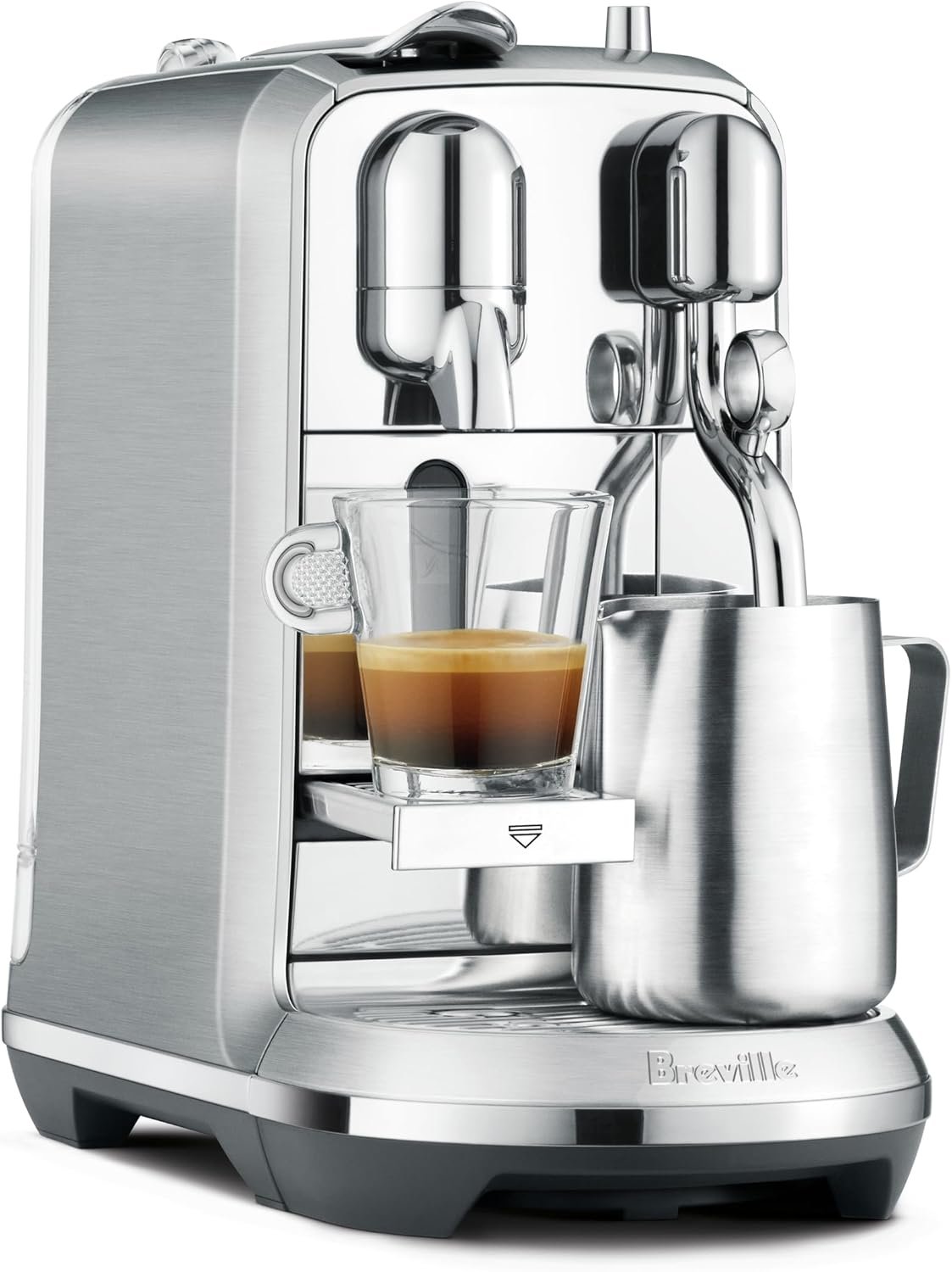
Why equipment choice matters for home espresso
Choosing the right espresso and milk-texturing appliance shapes daily brewing outcomes, kitchen workflow, and long-term satisfaction for home users. For households seeking consistent single-serve espresso with integrated milk steaming, equipment selection centers on temperature stability, pressure delivery, milk-texturing versatility, and maintenance overhead. The Nespresso Creatista Plus, offered in Brushed Stainless Steel by Breville Nespresso, is a capsule-based, fully automatic system that pairs a high-pressure pump espresso module with an automated steam wand and a stainless-steel milk jug. This combination targets users who want espresso-based milk drinks without separate grinders or manual steam wands. Suitability depends on priorities: those valuing quick, repeatable beverage preparation with programmable cup sizes and multiple milk presets will find the platform aligned to those needs, while purists wanting full control over grind and dose should note the capsule limitation. Attention to capacity and serviceability also matters: removable water tank, capsule containment, and routine descaling influence how the appliance fits into a household’s brewing cadence.
Quick Overview
| Feature | Details |
|---|---|
| Product category and brewing method | Capsule espresso machine (Nespresso Original system), single-serve, fully automatic |
| Capacity and output | 50 oz / 1.5 L removable water tank; 3 programmable cup sizes (0.84, 1.35, 3.72 oz) |
| Materials and construction | Stainless steel exterior finish; included stainless-steel milk jug |
| Heating or pressure system | High-pressure espresso pump (manufacturer disclosure: 19-bar system used on Nespresso Original platforms) and integrated steam wand with automated texture settings |
| Grind or filter compatibility | Uses prefilled Nespresso Original capsules (no grinding required) |
| Best suited users | Home users seeking fast single-serve espresso and automated milk drinks; those prioritizing countertop durability and simple workflow |
| Intended use cases | Espresso, ristretto, lungo, milk-based drinks (latte, cappuccino); hot and iced capsule options available |
| Warranty and operation | Manufacturer-supported product (Breville Nespresso); fully automatic button operation; voltage 120V |
The Creatista Plus’ specification mix impacts real-world brewing and usability: capsule-based extraction delivers consistent dose and grind uniformity while limiting customization; the integrated steam wand and milk jug add convenience for milk drinks but introduce cleaning and maintenance considerations; programmable shot sizes and a removable water tank offer household flexibility while the compact footprint balances counter space and service access.
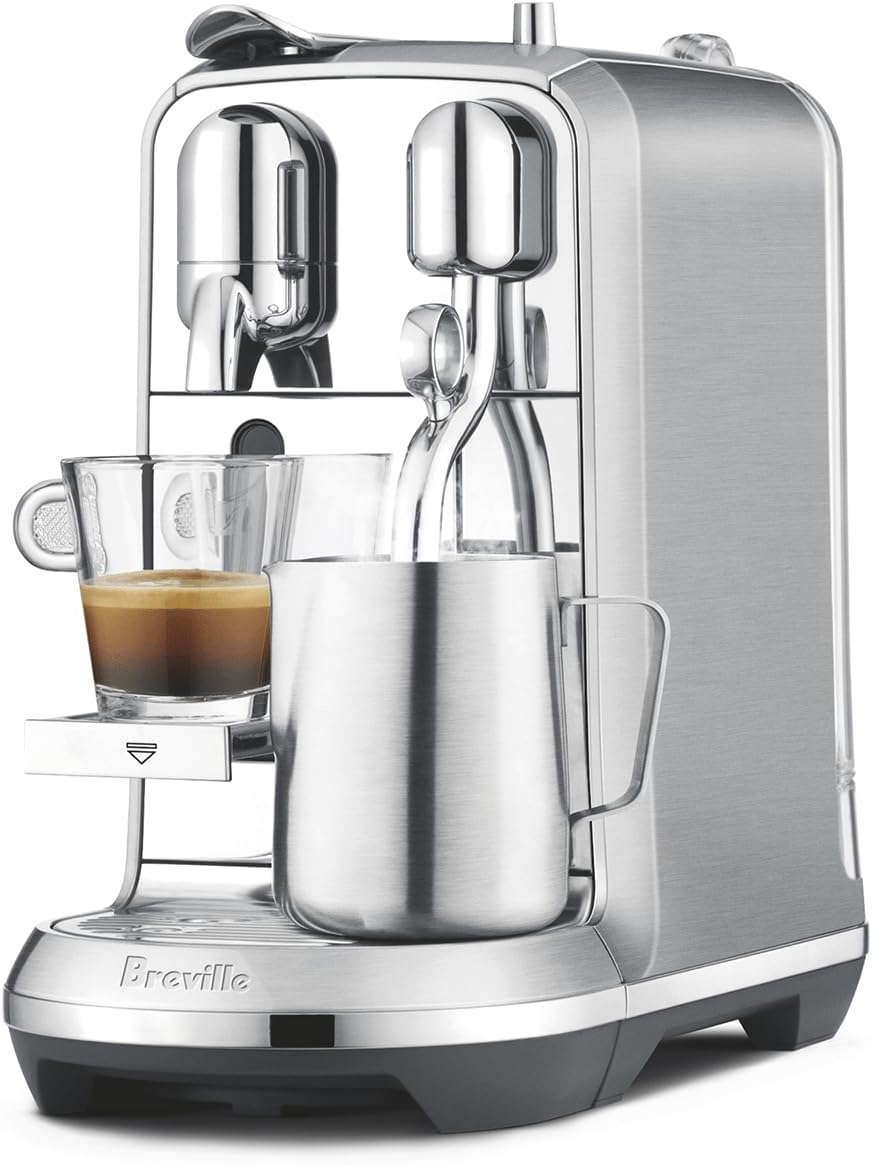
Brewing compatibility and capsule system
The Creatista Plus is built around the Nespresso Original capsule ecosystem, which standardizes dose and grind to deliver repeatable extraction within the machine’s pressure and temperature window. Capsule compatibility simplifies the brewing method: there is no grinder, dosing, or tamping, and extraction variables are mostly fixed by capsule fill and machine pressure. This makes the platform well-suited to users prioritizing convenience and consistent single-serve output. The trade-off is limited control over grind size and dose, meaning advanced brewing techniques like modifying extraction by grind or manual pressure profiling are not achievable. For households that want a broad espresso-based beverage range with minimal manual intervention and predictable cup-to-cup consistency, the capsule system is efficient; for those desiring hands-on espresso craft, a grinder-equipped espresso setup remains the more flexible option.

Capsule compatibility and brew method implications
Using Nespresso Original capsules means each portion arrives preground and premeasured, which removes variability introduced by grinders and dosing. The machine’s internal pump and brew chamber are engineered around this consistent input, so extraction consistency across different capsules largely depends on capsule design and roast profile rather than user adjustments. This arrangement supports quick beverage preparation and a lower technical learning curve. It also defines supply considerations and ongoing cost structures tied to capsule procurement. For consumers prioritizing repeatability, the capsule method reduces the variables that influence crema, body, and solubles extraction; however, it limits experimentation with grind distribution, dose weight, and manual pressure control.
Beverage range and iced options
The Creatista Plus supports multiple milk-based beverages through programmable cup sizes and automated steam settings, and it can use capsule lines formulated for hot and iced coffee. The machine’s cup size presets (ranging from ristretto to lungo volumes) enable extraction profiles aligned to specific capsule strengths and roast approaches. For iced beverages, capsule blends engineered for cold or iced brewing will deliver different solubles yield and flavor perception compared with hot extraction. The capsule-based approach simplifies switching between hot and iced recipes but constrains extraction adjustments to shot volume and capsule selection rather than grind or brew time manipulations. Users seeking a variety of hot and cold espresso-derived drinks will find this platform responsive to those use cases within the limits of predefined capsule and machine settings.
Ease of use and workflow complexity
Operational simplicity is central to the Creatista Plus design: button-based controls, three programmable cup sizes, and automated milk-texturing presets refine the workflow for routine use. The integrated stainless-steel milk jug with eight texture levels and eleven milk temperatures automates milk steaming, reducing the need for manual frothing technique. Filling the removable 50 oz water tank and inserting a capsule are the primary user steps before selecting a drink. Workflow complexity increases slightly for milk drinks due to cleaning and rinsing the milk jug and steam wand components after use; however, the automated presets aim to minimize user adjustment during steaming. For multi-user households, programmable settings can streamline repeatability, while users prioritizing one-touch simplicity will benefit from the fully automatic operation. Countertop setup and space planning affect accessibility to the water tank and used-capsule container and should be considered in workflow design.

Controls, programming, and daily operation
The machine’s human interface uses buttons to trigger espresso extraction and access programmable cup sizes; programming can be adjusted through button sequences to set preferred shot volumes. This mode of operation reduces the learning curve compared with manual lever or PID-driven machines. The inclusion of three standard programmable cup sizes covers the most common espresso formats while the milk steam presets handle milk texture and temperature without manual steaming skill. Daily operation is dominated by loading capsules, refilling the water tank, and selecting presets. For households that value standardized beverage output and fast prep, the control scheme supports a low-effort routine. Users who want deeper customization of pump pressure, temperature profiling, or advanced shot tweaking will find the interface intentionally limited to maintain simplicity.
Milk-texturing workflow and accessibility
Automated milk-texturing via the included stainless-steel jug is a focal convenience for those who prefer lattes and cappuccinos without learning a steam wand technique. The Creatista Plus’s eight texture levels and eleven temperature settings enable selection of microfoam density and serving temperature through presets that drive the steam wand behavior. This reduces the skill barrier for consistent milk-based drinks but requires routine cleaning of the jug and internal milk pathways to prevent residue buildup. The stainless-steel jug material supports heat transfer and steam interaction while being dishwasher-safe in most cases, according to manufacturer guidance. For users preparing multiple milk drinks in succession, the speed of texturing cycles and the need to purge or rinse between uses affect throughput and practicality during higher-volume serving scenarios.
Temperature control and heat stability
Temperature control matters for both espresso extraction and milk steaming; the Creatista Plus pairs a high-pressure pump extraction system with an integrated steam heater designed to reach milk-texturing temperatures across multiple presets. Manufacturer documentation indicates a rapid heat-up to operational temperature, supporting quick transitions from cold start to extraction and steaming. The machine’s temperature stability during extraction influences solubles dissolution and flavor balance, while steam heater stability affects reproducible milk temperature and foam quality. Programmable milk-temperature options allow users to match serving needs (warmer lattes versus cooler milk-based drinks) and reduce post-pour heat loss. As with many single-boiler or thermoblock designs, there is an inherent trade-off between compact footprint and thermal mass: smaller heating systems warm quickly but can require short recovery intervals when alternating repeatedly between steam and extraction modes.

Boiler, heat system, and start-up profile
The Creatista Plus uses a compact heating architecture compatible with the Nespresso Original platform, delivering rapid readiness for extraction and steam. A thermoblock or small boiler approach provides fast heat-up times and energy efficiency compared with larger boiler systems, which benefits intermittent home use. The trade-off is lower thermal inertia: sustained back-to-back steaming sequences can require brief recovery pauses to maintain target milk temperatures and texture. For typical household use—preparing one or a few milk-based drinks per session—the heat system supports reliable temperature attainment. For scenarios demanding continuous steaming for multiple drinks in a short period, users should anticipate slower recovery compared with commercial multi-boiler machines.
Milk presets and temperature repeatability
The availability of eleven distinct milk-temperature settings and eight texture levels enables fine-grained selection to match drink profiles and personal preference. These presets standardize the steam wand output and temperature endpoint, which supports repeatability between sessions. Temperature repeatability depends on factors including starting milk temperature, milk type (fat content and protein affect foamability), jug volume, and ambient conditions. The Creatista Plus’s automated control reduces user variability, but milk composition and volume will still influence final temperature and foam structure. For consistent results, users should standardize milk type and fill level when saving or using presets to minimize variability across pours.
Brew consistency and extraction quality
Extraction quality on a capsule-based platform rests on the machine’s pressure profile, temperature stability, and capsule construction. The Creatista Plus leverages the Nespresso Original capsule format and a high-pressure pump to create espresso-style extraction with crema and soluble yield optimized by capsule engineering. Programmable cup sizes (ristretto, espresso, lungo) adjust the water volume passing through the capsule and thus modulate strength and extraction yield. Consistency is largely achieved by fixed dose and grind inside the capsules, meaning the machine’s role focuses on delivering stable pressure and consistent water temperature and flow. For drinkers prioritizing crema stability, predictable intensity, and low shot-to-shot variance, the capsule approach limits many variables that otherwise require active management in grind-based systems.

Pressure profile and crema formation
Nespresso Original machines typically use a high-pressure pump system compatible with capsule geometry to create sufficient pressure for crema formation and rapid extraction. The machine’s internal pump and brew chamber are calibrated to the capsule’s resistance characteristics to balance flow and pressure. Crema and body depend on capsule formulation, roast level, and the integrity of capsule sealing as much as machine pressure. While the machine provides the mechanical pressure, final cup characteristics are a function of the capsule design and the thermal profile during extraction. This architecture yields repeatable crema and espresso-like concentrates suited for single-serve consumption and milk-based drinks.
Shot volume programming and extraction control
Three programmable cup sizes give functional control over extraction yield by altering water volume and contact time with the capsule. Smaller volumes (ristretto) concentrate solubles and emphasize body and intensity, while larger programmed volumes (lungo) increase extraction yield and can highlight different flavor components. Because grind and dose are fixed by the capsule, shot volume is the primary user-adjustable variable to influence extraction balance. For users who prefer to tailor body, strength, and perceived acidity, manipulating cup size in combination with capsule selection offers a practical pathway to varied flavor profiles without altering physical grind or tamping parameters.
Capacity, cleaning, and maintenance expectations
Capacity and maintenance considerations affect daily usability and long-term ownership. The Creatista Plus includes a 50 oz (1.5 L) removable water tank, a used-capsule container rated for approximately 8–12 capsules, and a stainless-steel milk jug that interfaces with the steam system. These capacities suit moderate household use, allowing multiple drinks between refills and capsule emptying, but frequent entertaining or heavy use will require more frequent tank refills and capsule disposal. Cleaning routines will center on rinsing or washing the milk jug and steam paths after each milk-based drink, emptying the capsule container, and following scheduled descaling per manufacturer guidance to maintain flow and heating efficiency. Accessibility of removable parts and clear descaling indicators influence perceived maintenance overhead and long-term performance stability.

Water tank, capsule container, and serving flexibility
The 50 oz removable water tank provides a balance between compact footprint and serving capacity. It supports several drinks before refilling in typical household scenarios. The used-capsule container capacity (around 8–12 capsules) is sufficient for occasional use but may require frequent emptying during gatherings or high-volume mornings. Programmable cup sizes and quick heat-up enable flexible serving of different espresso styles, but throughput for consecutive milk drinks depends on steam recovery times and the need to clean milk pathways between uses. Planning counter placement for easy tank refill and capsule disposal will streamline workflow and reduce interruption during peak use.
Cleaning, descaling, and durability expectations
Routine maintenance includes daily or per-use rinsing of milk components, periodic rinsing of removable drip tray elements, and scheduled descaling to prevent scale buildup in heating and flow components. Stainless-steel exterior and jug materials support durability and resist staining from milk and water, while internal plumbing and seals require proper care to maintain performance. Manufacturer-recommended descaling intervals depend on local water hardness and use patterns; adhering to these guidelines preserves temperature stability and pump longevity. Aggregated user feedback commonly cites straightforward daily cleaning for milk elements and occasional descaling as part of standard upkeep, with long-term reliability tied to adherence to maintenance routines.

Pros & Cons
Pros
- Automated milk texturing with multiple presets supports consistent lattes and cappuccinos without manual steaming technique. This reduces the skill barrier for milk-based drinks and standardizes cup temperature and foam density across sessions.
- Capsule-based extraction delivers repeatable dosing and grind uniformity, minimizing shot-to-shot variability related to user technique. This supports predictable crema and flavor balance tuned to capsule design.
- Compact stainless-steel construction provides a durable countertop presence and a premium finish that resists staining and wear. Included stainless-steel milk jug offers thermal properties conducive to microfoam generation.
- Removable 50 oz water tank and programmable cup sizes offer household flexibility for several servings between refills and tailored extraction volumes for ristretto, espresso, and lungo formats.
- Fully automatic operation with button controls simplifies daily workflow and lowers the learning curve compared with manual espresso machines. Programming options allow users to save preferred shot volumes.
- Compatibility with the broad Nespresso Original capsule ecosystem grants access to a wide range of blends, intensities, and limited-edition capsules, expanding beverage options without equipment changes.
Cons
- Capsule system limits grind and dose control, preventing hands-on adjustments that advanced espresso enthusiasts may require. This constrains experimentation with extraction via grind or tamping.
- Used-capsule container capacity (about 8–12 capsules) and the 50 oz water tank may require frequent attention during heavy use or entertaining, affecting convenience during high-throughput scenarios.
- Integrated milk system and steam pathways require routine cleaning and occasional descaling; failure to maintain these items can impact steam performance and hygiene over time.
- Compact heating architecture favors rapid heat-up but can necessitate brief recovery intervals for sustained back-to-back steaming, reducing throughput for continuous service compared with larger multi-boiler units.
Final Verdict: Who This Product Is Best For (and Who Should Skip It)
The Nespresso Creatista Plus fits home users seeking a streamlined route to espresso-based milk drinks without the complexity of a grinder and manual steam wand. Ideal users include small households and beverage drinkers who value predictable single-serve extraction, programmable shot sizes, and automated milk-texturing presets to create lattes, cappuccinos, and espresso-style beverages quickly. The stainless-steel construction and included milk jug enhance durability and milk-handling convenience, while the removable 50 oz water tank balances footprint and capacity for typical domestic use. In 2026, the Creatista Plus remains relevant among capsule-based machines for those prioritizing ease, consistency, and a compact design.
This product is less suitable for advanced espresso enthusiasts who require full control over grind size, dose, and manual pressure profiling, or for high-volume serving environments where continuous steaming throughput is critical. Households that prefer open-ended customization or anticipate heavy back-to-back milk drink production should consider alternative grinder-equipped or multi-boiler machines. For users seeking consistent, low-fuss milk drinks and capsule convenience, the Creatista Plus presents a compelling balance of automation and beverage versatility within the constraints inherent to the capsule ecosystem.
Frequently Asked Questions (FAQs)
What capsules are compatible with the Nespresso Creatista Plus?
The Creatista Plus uses the Nespresso Original capsule format. This compatibility provides access to a wide range of permanent, seasonal, and limited-edition Original-line pods from Nespresso and select third-party suppliers designed for the Original system. Capsule selection, rather than machine adjustment, is the primary way to change flavor profile, intensity, and roast characteristics with this platform.
How does the Creatista Plus handle milk steaming and temperature control?
The machine includes an integrated steam system paired with a stainless-steel milk jug and offers multiple texture levels and temperature presets. These automated settings control steam flow and endpoint temperature to produce consistent foam density and heat. Final results will still vary with milk type, jug fill level, and starting milk temperature, so standardizing those variables helps achieve repeatable outcomes.
How often does the Creatista Plus need descaling and maintenance?
Descaling intervals depend on local water hardness and usage patterns; manufacturers recommend following the provided descaling guidance to preserve heating efficiency and flow. Routine maintenance also includes daily rinsing or washing of milk-contact parts, emptying the used-capsule container regularly, and cleaning removable drip-tray components. Adhering to these practices supports temperature stability and long-term reliability.
Can the Creatista Plus make iced espresso drinks?
Yes. The machine can extract espresso for iced recipes, and the Nespresso Original capsule line includes blends intended for hot and iced consumption. The principal variables for iced drinks are capsule selection, shot volume (programmable), and post-extraction cooling or dilution technique. Because extraction parameters are governed by capsule design and shot size, iced results are achieved by choosing appropriate capsule types and adjusting final preparation steps.
What serving capacity should be expected from the water tank and capsule container?
The removable water tank holds roughly 50 ounces (1.5 liters), sufficient for several single-serve drinks between refills depending on chosen cup sizes. The used-capsule container holds about 8–12 capsules before requiring emptying. For higher-volume use, these components will need more frequent servicing; planning for refill and disposal access improves workflow during busy periods.
Does the Creatista Plus allow manual control of extraction pressure and grind?
No. The Creatista Plus is a capsule-based, fully automatic system that relies on prefilled Nespresso Original capsules for grind, dose, and sealing. While the machine provides the mechanical pressure and temperature control necessary for extraction, manual adjustments to grind size, dose weight, or tamping are not part of the platform. Shot volume is the primary user-adjustable extraction variable.
Is the milk jug dishwasher-safe and how should milk components be cleaned?
The stainless-steel milk jug is designed for easy cleaning and is typically safe to wash by hand or in the dishwasher according to manufacturer instructions. Milk-contact surfaces in the steam system should be rinsed after each use to prevent residue buildup, and periodic deep cleaning of milk pathways is recommended. Following the machine’s care guidelines minimizes hygiene risks and preserves steam performance.