SHARDOR Silent Blade Coffee Grinder Review — Home Use Guide
Choosing the Right Grinder Matters for Home Brewing
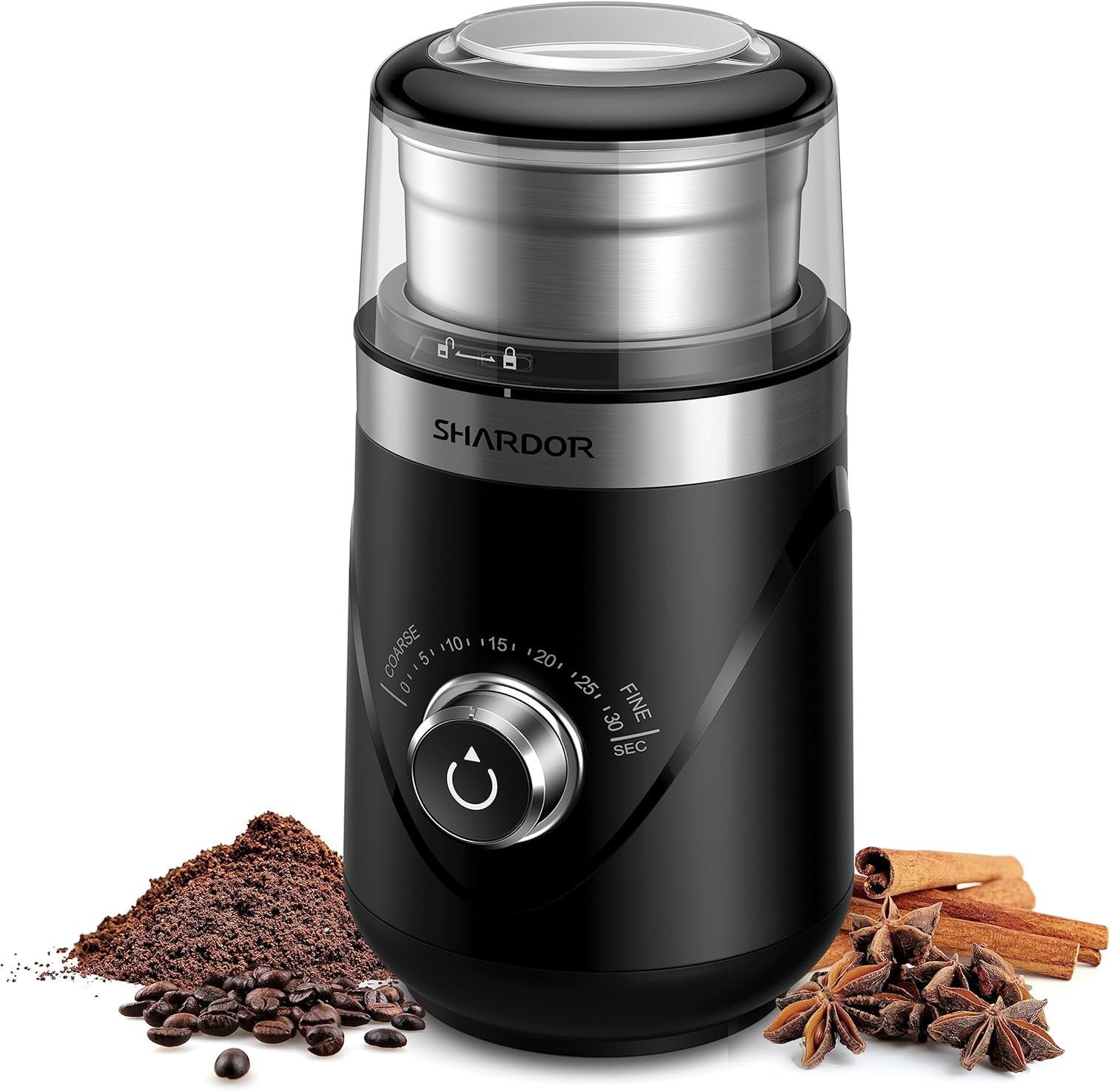
Selecting the correct grinder is a foundational decision for any home brewer, because particle size distribution and heat management directly affect extraction, flavor clarity, and brewing consistency. This review focuses on an electric blade grinder intended for household use and small batches, with a timed rotary control and a removable stainless steel bowl. The target user profile includes casual home brewers who prioritize convenience, multi-use capability (dry spices and grains), and compact storage. Important considerations for this product class are grind uniformity versus speed, how heat and friction during grinding influence volatile oils, and whether the capacity and noise profile fit typical morning routines. Matching grinder style to brewing method—drip, French press, cold brew, or espresso—remains a practical way to set expectations for extraction quality and workflow complexity.
Quick Overview
| Feature | Details |
|---|---|
| Product category and method | Electric blade coffee grinder (timed operation) |
| Capacity and output | 2.5 oz bean capacity, stated yield up to 10 cups (dependent on brew ratio) |
| Materials and construction | Removable stainless steel grinding cup; ABS and metal housing in black finish |
| Control and settings | Rotary timed grind knob with second marks for coarse to fine adjustments |
| Noise and operation | Manufacturer-stated average noise 63 dB; compact motorized unit |
| Voltage and power | 110 Volts rated for standard household outlets |
| Intended uses | Coffee beans, spices, herbs, seeds, and small dry ingredients |
| Best-suited users | Households, casual home brewers, multi-use kitchen appliance seekers |
| Warranty | 2-year manufacturer warranty |
The table summarizes functional specs that influence brewing results and workflow: the blade mechanism enables fast particle reduction but produces broader particle distribution than burr grinders, the timed rotary control provides repeatable duration-based dosing, and the removable stainless bowl simplifies transfer and storage. Capacity is suitable for single- to small-group brewing, while the quieter operation and compact footprint align with routine morning usage and multi-purpose kitchen tasks.

Grinding Performance and Extraction Impact
The grinder’s blade design and timed control shape the core performance characteristics relevant to extraction and flavor clarity. Blade grinders use high-speed blades to chop beans, which typically yields a wider particle size distribution compared with burr grinders; this heterogeneity affects extraction rates, as fines extract faster and larger particles extract slower. The timed rotary knob gives a consistent duration for repeatable dosing, but the lack of stepped, calibrated grind settings means adjusting for specific brew methods requires short trial-and-error runs. Heat from friction can increase bean temperature during extended grinding intervals, potentially mobilizing oils and volatile aromatics; keeping grind durations brief mitigates this effect. For consumer use, loaf-style consistency and speed are balanced against limitations for espresso-grade uniformity.

Blade Mechanics vs. Burr Consistency
Blade grinders rely on blade speed and grinding duration to reduce beans, producing a mix of fine particles and larger fragments. This mixed particle size distribution creates uneven extraction in steeped and brewed methods: fines contribute to quicker extraction and can lead to over-extraction or bitterness if present in high proportion, while coarse fragments can under-extract, producing sour or thin notes. Burr grinders, by contrast, produce a narrower particle distribution that yields more predictable extraction across brew methods. For home brewers using drip or French press, blade grinders can still be serviceable when grind times are kept short and brew recipes account for particle variability through adjusted ratios and contact time.
Timed Grind Control: Practicality and Precision
A rotary timed knob with second marks delivers a simple, repeatable way to control dose by time rather than grind size setting. Time-based control is convenient for consistent batch-to-batch volume, but it does not directly equate to a calibrated particle size setting; bean type, roast level, and load size change how quickly particles are reduced. Users seeking precise dialing-in for specialty extraction will find the approach less granular than stepped burr adjustments. For everyday routines—measuring seconds for coarser or finer targets—the timed knob supports predictable dosing when combined with a consistent bean weight and short bursts to limit heat buildup.
Noise, Heat, and Aroma Preservation
The manufacturer-stated average noise level of 63 dB positions this grinder as quieter than many blade units, which benefits early-morning use in shared living spaces. Noise levels correlate with motor speed and housing design rather than grind quality, but quieter operation often indicates reduced vibration and user comfort. Thermal transfer from the motor and blade assembly during extended runs may warm beans; elevated temperatures can accelerate loss of delicate aromatics and alter oil flow. Short, pulsed grinding cycles reduce frictional heating and help preserve volatile compounds. The removable stainless cup aids in quick transfer away from the motor area after grinding to limit carryover heat effects.
Capacity, Workflow, and Serving Flexibility
Capacity and workflow influence whether the grinder aligns with single-serve, family, or small-host brewing. With a stated 2.5 ounce bean capacity and a claimed yield of up to 10 cups (dependent on brew ratio), the grinder suits single to moderate household usage. Small-capacity grinders require repeated cycles for larger batches, introducing incremental heat exposure and variable particle distribution across sequential runs. The removable stainless steel cup simplifies measured transfers to brew devices but limits simultaneous batch processing. For households that alternate between coffee and spices, the multi-function design supports quick transitions but necessitates thorough cleaning between ingredient types to avoid flavor cross-contamination. Workflow considerations include measuring beans by weight, timing short grind bursts, and immediate transfer to brewing equipment to maintain freshness.

Single-Serve to Small-Batch Practicalities
A 2.5 ounce capacity typically covers single-serve to small-group needs, depending on brew ratio—commonly 1:15 to 1:18 for drip methods and higher mass for French press. For larger groups, multiple grind cycles will be necessary; each cycle can introduce variance in particle distribution, so batching all beans in one run (within capacity limits) provides more consistent output. The size encourages home brewers to grind per-brew, which preserves volatile aromatics. Those routinely preparing larger quantities should consider the trade-off between convenience and the need for repeated grinding sequences.
Multi-Use Capabilities and Cross-Contamination Risks
Multi-function usage for spices, herbs, and seeds increases the unit’s utility but raises the risk of flavor carryover. Oils and aromatic compounds from spices can adhere to stainless surfaces and the blade, transferring flavors to subsequent coffee grinds if not cleaned thoroughly. Hand washing the removable cup and wiping the blade area after each different use helps minimize residual flavors. For dedicated coffee-only workflows, occasional spice use is possible with careful cleaning; for users seeking pure coffee flavor without cross-notes, keeping a separate grinder or strictly separating duties is the preferred option.
Workflow Steps for Consistent Results
For repeatable results, a recommended workflow with time-based blade grinders includes measuring beans by weight, setting a short timed interval, pulsing rather than continuous grinding to control heat, transferring grounds promptly to the brew vessel, and calibrating brew ratios to account for particle variability. This approach addresses the core limitations of time-only control by standardizing inputs: consistent bean mass, consistent pulse timing, and attentive transfer reduce variables that affect extraction and cup quality. Using scales and written timing references enables users to reproduce outcomes despite the inherent variability of blade grinding.
Ease of Use, Controls, and User Experience
User interaction with the grinder centers on the rotary timed knob, a removable stainless cup, and a single-button or lid-press activation mechanism typical for this class. The simplicity of an on/off/timed control reduces the learning curve for casual users who prioritize speed and minimal setup. Lack of graduated burr settings and the reliance on seconds-based timing means that fine-tuning for specific brew devices requires iterative adjustments, but the straightforward interface supports quick daily use. The compact footprint and 110 Volt compatibility fit standard kitchen environments. Ergonomic factors—such as lid fit, rotary knob tactile feedback, and the ease of removing and reinstalling the cup—contribute to overall convenience in routine operation.

Control Simplicity vs. Granular Adjustment
A single rotary timing control is intuitive and enables repeatable durations, but it does not offer the granularity of stepped grind size dials found on burr grinders. Users must infer coarse-to-fine gradations through time and pulsing. This simplicity favors speed and ease over exacting particle calibration, aligning with the needs of those who value a no-fuss morning routine. For precise extraction adjustments, especially for espresso or pour-over experimentation, the lack of direct particle-size settings is a practical limitation.
Design Considerations for Daily Handling
The removable stainless steel cup facilitates quick dumping of grounds and straightforward hand washing. An ABS housing and compact profile support counter storage and portability. The tactile quality of the rotary knob, lid stability, and the fit between cup and housing affect user confidence during operation. Safety interlocks or lid-sensing switches, when present, prevent accidental operation while the cup is removed, but users should always follow recommended handling precautions. Overall, the design emphasizes low-complexity operation suitable for routine household use.
Noise, Speed, and Kitchen Routine Compatibility
An average operational noise of 63 dB positions the grinder as relatively quiet among motorized blade models, allowing earlier use without significant household disturbance. Noise level impacts perceived convenience: quieter appliances integrate more easily into shared living situations. Speed of grind contributes to time savings in morning routines but must be balanced with pulse techniques to limit thermal transfer and preserve aroma. The combination of modest noise and rapid grinding offers a favorable balance for users prioritizing efficient daily workflows.
Cleaning, Durability, and Long-Term Reliability
Cleaning, material choices, and component robustness determine long-term practicality. The removable stainless steel bowl is a positive design choice for hygiene and longevity, since stainless resists staining and odor retention better than many plastics. Hand-wash recommendations imply that submersion and gentle detergent cleaning are suitable for the cup, while the motor housing must be wiped clean and kept dry. Blade wear, motor lifespan, and lid seal durability are the primary durability concerns in blade grinders; these components are subject to abrasion and mechanical stress over time. A two-year manufacturer warranty provides a baseline of support. Aggregated customer feedback and specification analysis suggest that regular maintenance—cleaning after spice use, avoiding abrasive overloads, and respecting load capacity—supports reliable performance over years of household use.

Cleaning Best Practices and Flavor Maintenance
To prevent flavor transfer and maintain hygienic operation, the removable cup should be washed after each use involving spices or oils, and the blade area should be brushed and wiped to remove residue. Avoid soaking the motor housing and use a soft brush to dislodge fines lodged near the blade base. Drying thoroughly before reassembly prevents moisture-related issues. Periodic deep cleaning removes trapped particles that may affect grind uniformity and odor. These maintenance steps are straightforward but essential when alternating between ingredients in a multi-use grinder.
Component Wear and Expected Lifecycle
Blade grinders experience progressive blade dulling, which reduces cutting efficiency and can increase grind time and heat generation. Motor stress may increase if the grinder is habitually overloaded or used for dense seeds and grains beyond intended design. The removable stainless cup reduces direct wear on housing components and simplifies replacement if necessary. Observed longevity in comparable units depends on usage patterns; light household use focused on coffee beans and occasional spice grinding tends to preserve component life, while heavy-duty multi-ingredient grinding accelerates wear.
Warranty and Aftercare Support
A two-year manufacturer warranty covers defects in materials or workmanship within typical consumer use parameters. Warranty terms usually exclude misuse, damage from grinding non-dry materials, or failure due to inadequate cleaning. Access to replacement parts, customer support responsiveness, and the ease of servicing non-electrical components contribute to long-term value. Consumers should retain proof of purchase and review warranty specifics before making a claim.
Pros & Cons
Pros
- Compact, convenient size with a removable stainless steel cup that simplifies transfer and hand washing. The stainless surface resists staining and odor retention compared with many plastic cups, aiding flavor neutrality between uses.
- Timed rotary control with second markings enables repeatable dose timing that fits consistent daily routines. Time-based dosing helps reproduce grind volume when bean mass and pulse technique are kept constant.
- Manufacturer-stated noise level of 63 dB is relatively low for blade grinders, supporting early-morning or shared-space use with reduced disturbance and improved kitchen compatibility.
- Multi-purpose capability supports grinding coffee beans, spices, herbs, and small dry ingredients, increasing kitchen utility beyond coffee-only functions when cleaned between uses to avoid flavor carryover.
- Removable cup capacity of 2.5 ounces accommodates single-serve to small-batch needs and is sufficient for routine household brewing without taking large counter space.
- Simple controls and minimal setup reduce workflow complexity, making the unit approachable for casual home brewers who prioritize speed and ease of operation.
- A two-year manufacturer warranty provides a baseline of aftercare protection for typical home use scenarios and purchase confidence regarding defects.
Cons
- Blade grinding yields a broader particle size distribution than burr grinders, which can produce uneven extraction and limit the ability to achieve espresso-grade uniformity or highly consistent pour-over clarity.
- Time-based control lacks direct calibration to particle size; grind fineness must be inferred through trial and timing, which is less precise than stepped burr adjustments for specialty brewing.
- Heat and friction during extended or repeated grinding cycles can warm beans and affect volatile aromatics; pulsed short bursts are required to mitigate thermal impact.
- Multi-use functionality increases the risk of flavor cross-contamination; thorough cleaning after spices or oily seeds is necessary to avoid residual flavors in coffee grounds.
Final Verdict: Who This Product Is Best For (and Who Should Skip It)
This electric blade grinder is well-suited to home brewers who prioritize convenience, compactness, and multi-use kitchen functionality. Users who commonly prepare drip coffee, French press, or other coarse-to-medium brew methods and who prefer a simple, repeatable timed dosing workflow will find the product aligns with household routines. The removable stainless steel cup and relatively quiet operation support early-morning grinding and quick transitions between uses, provided careful cleaning is observed when switching between coffee and spices.
This grinder is less appropriate for those seeking high-precision particle consistency required for espresso or advanced pour-over dialing. Enthusiast home baristas aiming for tight particle distributions and micro-adjustments should consider a burr grinder with stepped grind settings. Similarly, households that need single large-batch capacity or strict flavor separation for coffee-only use may prefer a dedicated burr grinder or a larger-capacity burr mill. For casual to moderate home use in 2026, the unit represents a practical, space-efficient option when its design characteristics and limitations are matched to user priorities.
Frequently Asked Questions (FAQs)
Is a blade grinder suitable for French press or drip coffee?
A blade grinder can work for French press and drip coffee when managed thoughtfully. Blade grinding produces a wider particle size distribution, so using short, pulsed grind intervals and adjusting brew ratios or contact time helps compensate for uneven extraction. French press is more forgiving of larger particles, while drip brewing benefits from consistent medium grind and careful recipe adjustments.
How does timed grinding affect grind repeatability?
Timed grinding provides repeatable dosing by controlling the duration of grinding rather than directly setting particle size. Consistency improves when bean mass, pulse technique, and load size are standardized. Because different beans and roast levels grind at different rates, the timed approach requires brief calibration runs to match target extraction characteristics.
Will the grinder retain spice flavors if used for both coffee and spices?
Flavor carryover is possible when a grinder is used for both coffee and aromatic spices. Oils and volatile compounds can adhere to the blade and stainless cup. Thorough cleaning of the removable cup and wiping the blade area after spice use significantly reduces residual flavors; users prioritizing pure coffee flavors may opt for a dedicated coffee-only grinder.
Does blade grinding generate heat that affects coffee flavors?
Blade grinding can generate heat through friction, particularly during longer or continuous grinding cycles. Elevated temperatures may accelerate the release of volatile aromatics and oils, potentially altering perceived flavor. To limit thermal effects, use short pulses, avoid overloading the cup, and transfer grounds promptly to the brewer.
How many cups of coffee can be ground at once with a 2.5 ounce capacity?
A 2.5 ounce bean capacity typically covers single-serve to small-group needs, depending on the chosen brew ratio. For example, lighter brew ratios require fewer grams of coffee per cup. Preparing larger groups will require multiple grinding cycles, which can introduce variability unless careful pulsing and consistent measurement are used for each cycle.
Is this grinder quiet enough for early-morning use in shared living spaces?
The manufacturer-stated average noise level of 63 dB indicates relatively quiet operation among blade grinders, making it suitable for earlier use in shared spaces. Noise perception varies by environment, but a 63 dB rating typically reduces disturbance compared with louder motorized units.
How should the grinder be cleaned to maintain performance?
Cleaning involves hand washing the removable stainless steel cup with warm soapy water and wiping the blade area with a soft brush or cloth to remove trapped fines. Avoid submerging the motor housing, and ensure all parts are dry before reassembly. Regular cleaning prevents flavor buildup and preserves grind consistency.
Who should avoid buying a blade grinder and choose a burr grinder instead?
Consumers who require highly uniform particle size for espresso or precise pour-over dialing should consider a burr grinder instead. Burr mills provide calibrated, repeatable grind settings and a narrower particle distribution, which yield more predictable extraction for specialty brewing techniques.