

Why equipment choice matters for home espresso and milk drinks
Selecting the right espresso appliance affects extraction quality, milk texturing, and daily workflow for home brewers and enthusiasts. Machines that combine stable temperature control, repeatable pressure, and efficient steam systems enable extraction that approaches optimal soluble solids yield and consistent crema formation, while also supporting reliable milk microfoam for lattes and cappuccinos. For small households and aspiring home baristas, considerations include compatible brewing inputs (ground only in this model), ease of reaching and maintaining brew temperature, and the ergonomic flow of dosing, tamping, and steaming. Material choices such as stainless steel and thermal-ceramics influence heat retention and durability, while a compact footprint affects counter placement and routine cleaning. Understanding how pump pressure, pre-infusion, PID control, and steam switching translate into cup quality helps narrow selection to machines that match skill level, beverage preferences, and time constraints without overreliance on marketing claims.
Quick Overview
| Feature | Details |
|---|---|
| Product category and brewing method | Semi-automatic espresso machine for ground coffee only (not compatible with pods) |
| Capacity and output | Removable water tank; manufacturer lists a capacity value of 2.1 pounds (spec sheet) and weighs 8.38 pounds overall |
| Materials and construction | Stainless steel exterior components with thermal-ceramics used in the heating path; 51mm portafilter included |
| Heating and pressure system | Flashheat fast-heating system with PID temperature control; turbocharged steam with 3-second steam switching; 20-bar pump and pre-infusion function |
| Grind and filter compatibility | Designed for pre-ground or freshly ground coffee; includes 51mm single and double shot filters and permanent filter option |
| Best suited users and use cases | Milk-forward home baristas, small households, users seeking rapid heat-up and compact footprint |
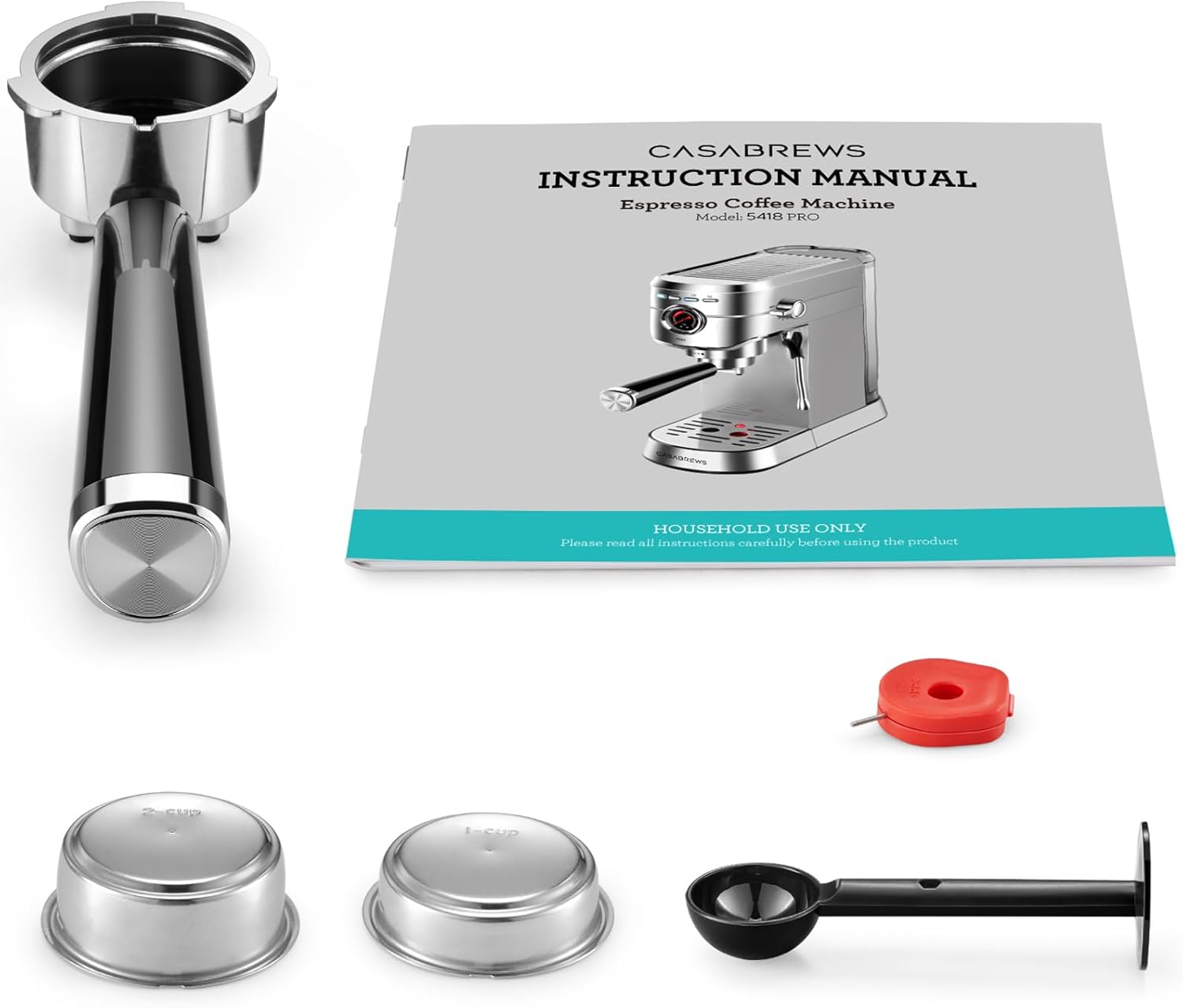
| Accessories and included components | 51mm portafilter, single/double filters, tamper with spoon, cleaning needle, instruction manual |
The table summarizes hardware and functional details that affect brewing results and usability. Features such as a 20-bar pump with pre-infusion and PID control support balanced extraction when paired with consistent grind size and dosing. Rapid heat and fast steam switching reduce idle time between brewing and texturing, while stainless and thermal-ceramic components influence heat distribution and cleaning frequency.
Brewing performance and extraction control
The combination of a 20-bar pump, pre-infusion capability, and a 51mm portafilter positions the 5418 PRO to deliver espresso extraction profiles that depend heavily on grind consistency and dosing precision. Pre-infusion soaks allow more even saturation of the puck before full pump pressure is applied, which can reduce channeling when tamping and grind are consistent. The 51mm group and included single and double-shot baskets are typical for home semi-automatic machines and can perform well with 7–18 gram doses depending on puck depth and grind. Extraction results will vary by grind distribution, roast level, and brew ratio; a uniform burr grinder and attention to tamping pressure remain essential. For home users, the hardware enables controlled extraction but is only as consistent as the upstream variables supplied by the user.

Pressure system and pre-infusion effects on extraction
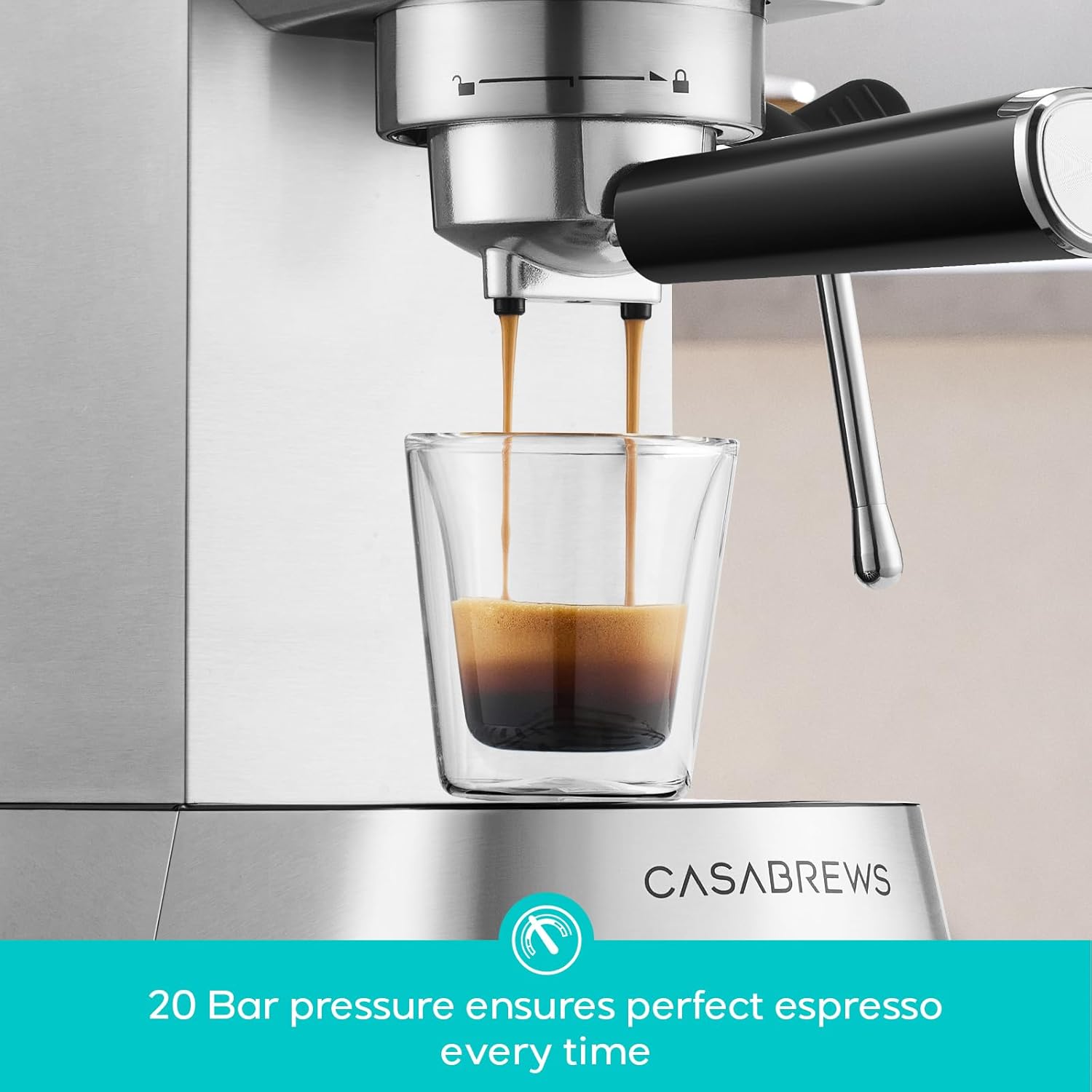
A 20-bar pump is commonly specified in consumer machines; industry-standard extraction for espresso relies on a stable 9–11 bar range at the puck during most of the shot. The presence of a pressure gauge and pre-infusion function on the 5418 PRO allows monitoring and gentle initial saturation before ramping to full pressure, which helps with even extraction for medium and dark roasts and some lighter roasts. Careful interpretation of the gauge and adjustment of dose and grind are needed to target desired flow rates and yield. Users should expect that pump-rated bars are maximum capabilities and that actual brew pressure at the puck will be influenced by flow, head geometry, and basket resistance.
Grind compatibility and basket size considerations
The 51mm portafilter and included single/double shot filters require a consistent, fine espresso grind for optimum extraction. Finer particle distributions increase contact area and extraction speed, but excessively fine or uneven grinds can cause overpressure or channeling. Since the machine accepts only ground coffee (pre-ground or freshly ground), pairing with a quality burr grinder is essential. The permanent filter offers convenience but can alter flow profile compared with precision baskets; for repeatable results, the included metal baskets are preferable when dose and tamp consistency are priorities.
Shot-to-shot consistency and crema expectations
Shot consistency will depend on maintenance of stable temperature and pressure as well as repeatable dosing and tamping routines. With PID-assisted control and pre-infusion, the 5418 PRO has design elements that support repeatability, but users should not expect commercial-level automation. Crema formation benefits from correct roast level, fresh beans, and proper pressure profile—this machine’s pump and pre-infusion can produce crema when those upstream variables are controlled. For home users, achieving consistent shots will require attention to grind retention, portafilter cleanliness, and routine calibration of grind size to ambient conditions.
Temperature control, heat system, and steam performance
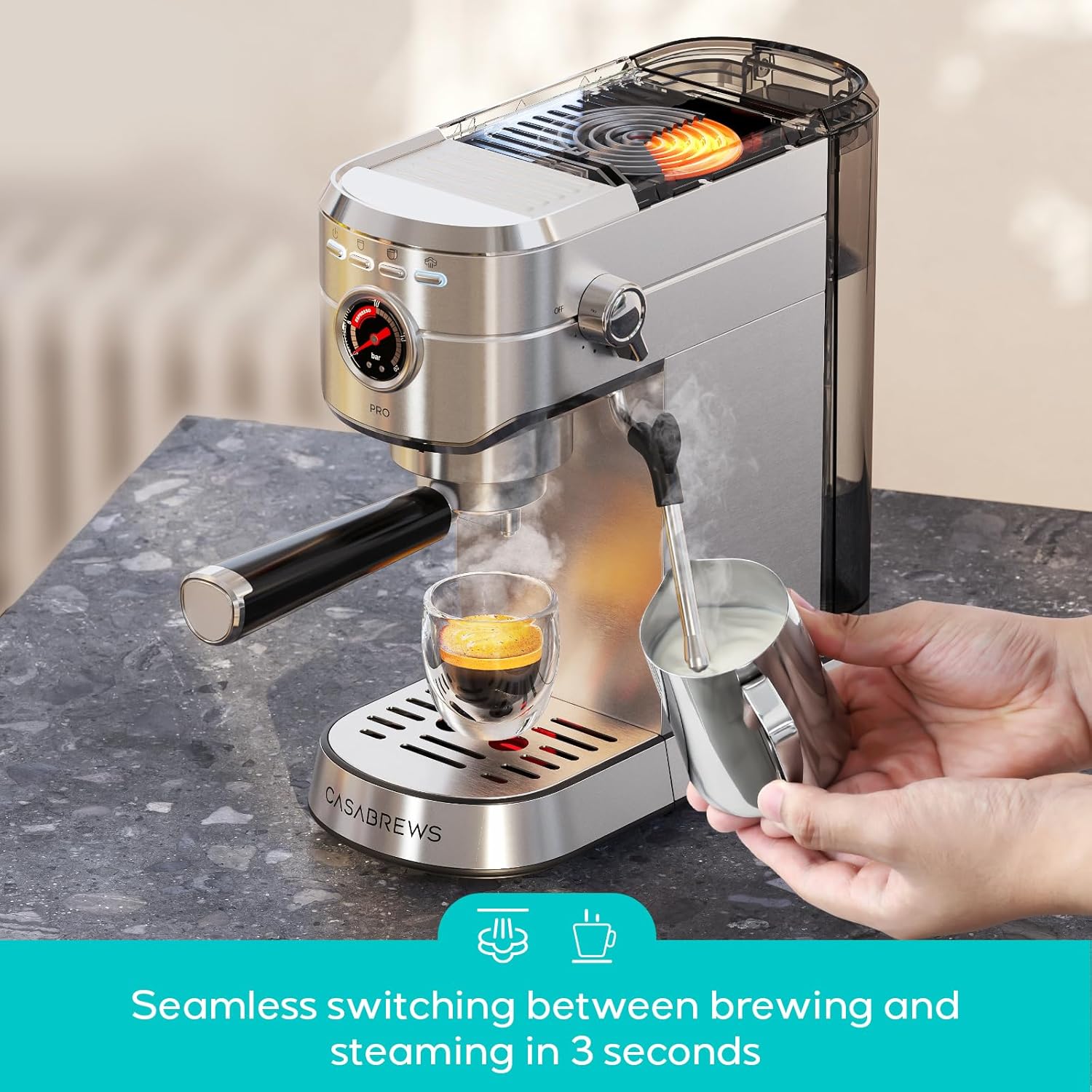
Temperature stability and rapid steam readiness are key determinants of shot quality and milk texturing potential. The 5418 PRO’s Flashheat system and thermal-ceramics are disclosed to enable sub-five-second initial heat and rapid transitions between brewing and steaming. PID control provides electronic regulation of boiler or thermoblock setpoints, improving repeatable brew temperatures and reducing thermal drift between shots. Fast steam switching—reported as three-second transition—minimizes downtime when going from shot to milk texturing, which is relevant for milk-forward drinks. However, rapid switching demands adequate heat capacity and heat recovery; performance for extended steaming sessions depends on thermal design and boiler or thermoblock mass. Users seeking microfoam for latte art will benefit from steady steam pressure, consistent temperature at the wand, and technique aligned with steam behavior.

Flashheat and thermal-ceramics: how rapid heating affects brewing
Flashheat and thermal-ceramic elements prioritize quick ramp to target temperatures and even distribution across the brewing path. Fast heat-up reduces waiting time and can lower energy use for short session use, but true temperature stability during a shot is governed by control algorithms and thermal mass. Thermal ceramics contribute to even heat transfer and can reduce hotspots, which helps preserve target temperature at the group head. For extraction-sensitive beans, stable brew temperature reduces variance in solubility and can improve flavor clarity when paired with correct grind and dose.
PID control, setpoints, and temperature stability implications
PID controllers maintain setpoint by calculating small heater adjustments and preventing wide temperature swings. In home espresso machines, PID-equipped systems reduce shot-to-shot temperature fluctuations compared with simple on/off thermostats. This machine’s PID is positioned to help maintain extraction temperatures in the optimal range for espresso, which affects acidity, sweetness, and body. Users should still allow brief stabilization periods between heavy steam cycles and successive shots to ensure the PID compensates for thermal load changes.
Steam switching and milk texturing considerations
A three-second steam transition reduces interruption when preparing milk-based drinks and supports a more continuous workflow. Rapid availability of steam enables quicker steaming cycles and less heat loss from the wand and boiler components. High steam performance combined with a good steam tip and user technique enables microfoam production; however, extended texturing for multiple drinks requires thermal recovery capacity, which is constrained by the small-form boiler or thermoblock typical of compact machines. For best milk texturing, steaming smaller volumes per cycle and allowing brief recovery can improve steam consistency.
Workflow, user interface, and capacity for households
Workflow efficiency includes the sequence of filling the tank, dosing and tamping, pulling shots, and steaming milk. The 5418 PRO’s semi-automatic operation and compact footprint support common home workflows, but users should plan for manual dosing and tamping with the included tamper. The removable water tank simplifies refill and can be positioned for accessibility in small kitchens. The absence of pod compatibility narrows inputs to ground coffee and emphasizes the need for a reliable grinder. Cup-warming is not built in, so preheating cups via the brewing system or warm water is recommended to maintain shot temperature. For single-serve and small household needs, the machine balances space-saving design with the elements required to produce espresso and milk drinks in short cycles.
User interface, controls, and semi-automatic operation
Semi-automatic operation implies manual control over shot start and stop, allowing operators to tailor shot length and extraction yield. Buttons and switches that control brew and steam should be straightforward for users comfortable with manual timing or using a scale and stopwatch. The included pressure gauge provides feedback on brew pressure, which can guide adjustments to grind or dose. For users seeking automated volumetrics or programmable dosing, a semi-automatic platform requires the adoption of simple routines and measurement tools to achieve repeatability.
Capacity, serving flexibility, and small household suitability
The machine’s compact dimensions and moderate water tank capacity suit small kitchens and households that prepare one to two milk-forward drinks per cycle. The manufacturer notes a 2.1-pound capacity value in the overview, which appears in the spec sheet; actual served beverages per fill depend on cup sizes and steaming demand. For households hosting larger groups or sustained back-to-back steaming, a larger commercial boiler or dual-boiler machine offers better thermal recovery. The 5418 PRO is optimized for compact, intermittent home use rather than high-throughput service.
Accessories, portafilter size, and compatibility with grinders
The 51mm portafilter and included single and double-shot baskets match a range of consumer grinders that can reach espresso fines. Since the machine accepts ground coffee only, pairing with a reliable burr grinder is an essential part of the system. The supply of a tamper, cleaning needle, and basic accessories simplifies initial setup; however, upgrading to a calibrated tamper or a distribution tool can improve puck consistency. Users should be mindful that aftermarket baskets and precision espresso tools designed for the 51mm diameter can further enhance extraction control.
Cleaning, maintenance, build quality, and durability expectations
Materials and accessible components drive cleaning frequency and long-term reliability. The stainless steel surfaces resist staining and offer structural durability, while thermal-ceramics in the heating path are intended to improve heat transfer and reduce scale accumulation. A removable water tank, permanent filter option, and included cleaning needle facilitate routine maintenance, but regular backflushing (where applicable) and descaling schedules are necessary to prevent scale-related degradation in heating performance. Small, semi-automatic machines typically require attention to group head seals, steam wand purge, and portafilter gasket wear over time. Durability expectations align with build materials and user maintenance practices, and recurring customer themes point to the importance of care to preserve performance.
Materials, construction, and expected life-cycle considerations
Stainless steel exteriors and key internal components contribute to corrosion resistance and surface longevity under normal household use. Thermal-ceramic elements are chosen for stability in the heating circuit and can reduce thermal shock. Components such as the portafilter, baskets, and steam wand are wear points that benefit from routine cleaning and occasional part replacement. For long-term reliability, attention to water quality, descaling intervals, and avoiding overpressure during blocked basket events will extend component life.
Routine cleaning tasks and maintenance schedule
Routine maintenance includes daily purge and wipe-down of the steam wand, rinsing and drying of the portafilter and baskets, weekly checking of group head and gasket condition, and periodic descaling based on local water hardness. The removable tank reduces scale accumulation compared with fixed tanks, and a permanent filter option simplifies paper waste but requires more frequent cleaning. Following manufacturer-recommended cleaning procedures and using approved descalers preserves PID accuracy and heating efficiency.
Common failure modes, parts availability, and serviceability notes
Typical issues in compact espresso machines include scale buildup affecting heating elements, wear to gaskets and seals, and occasional pump noise or failure with prolonged heavy use. Serviceability depends on replaceable components such as valves, gaskets, and heating elements; user-accessible parts and clear documentation reduce downtime. Since warranty terms were not specified in the public spec list, potential buyers should confirm service and spare-parts access with the manufacturer or authorized service partners prior to purchase to align expectations for long-term ownership.

Pros & Cons
Pros
- Fast heat-up and quick steam switching. The Flashheat system combined with thermal-ceramic components is designed to minimize waiting time between powering on and brewing, and the 3-second steam transition accelerates milk preparation workflows.
- PID temperature control. Electronic PID control supports tighter temperature regulation during extraction than simple thermostatic systems, which improves repeatability when paired with consistent dosing and grind.
- 20-bar pump with pre-infusion and pressure gauge. The specified pump and pre-infusion function allow users to manage saturation and observe pressure behavior, useful for dialing in espresso extraction.
- Compact stainless-steel construction. A small footprint and stainless exterior suit limited counter space while offering corrosion-resistant surfaces that are typical of durable home appliances.
- Includes essential accessories. The package includes a 51mm portafilter, single and double-shot baskets, tamper, and cleaning tools, enabling immediate setup for ground coffee preparation.
- Focus on milk drinks. Turbocharged steam and microfoam-focused design elements make the machine suitable for milk-forward beverages like lattes and cappuccinos.
Cons
- Ground-coffee only; no pod compatibility. Lack of pod or capsule support restricts inputs to ground coffee, requiring an external grinder or pre-ground purchase for operation.
- Small thermal mass may limit extended steam recovery. Rapid steam switching helps single servings, but sustained back-to-back steaming may show thermal recovery limits typical of compact thermoblock or small boiler designs.
- 51mm portafilter size less common than 58mm. While adequate for home use, the 51mm size limits compatibility with many professional accessories and aftermarket baskets designed for larger diameters.
- Unspecified warranty details in public specs. No clear warranty length was provided in the specification list, so buyers should verify support and parts availability before purchase.
Final Verdict: Who This Product Is Best For (and Who Should Skip It)
The CASABREWS 5418 PRO aligns with home baristas and small households that prioritize rapid heat-up, compact design, and strong steam performance for milk-based drinks. Its PID temperature control, pre-infusion capability, and pressure gauge provide the control levers that enthusiasts need to refine extraction when combined with a reliable grinder and disciplined dosing. The machine is well suited for users who accept a semi-automatic workflow and prefer manual control over shot timing and milk texturing, and for those who value quick transitions between brewing and steaming during single- or dual-cup preparation.
This model is less appropriate for buyers who rely on pod systems, require heavy-duty throughput for frequent group serving, or who prefer commercial 58mm portafilter ecosystems. It is also a marginal fit for users who expect extended steam recovery without pauses between multiple drinks; a larger dual-boiler or commercial machine is a better match for high-volume demands. Prospective buyers should weigh the need for a separate burr grinder and confirm service and parts support to ensure long-term satisfaction.

Frequently Asked Questions (FAQs)
Can the CASABREWS 5418 PRO use coffee pods or capsules?
No. The 5418 PRO is designed exclusively for ground coffee—either pre-ground or freshly ground—and does not accept pods or capsules. Users should pair the machine with a compatible burr grinder or purchase pre-ground espresso for operation. The included 51mm portafilter and metal baskets are intended for manual dosing and tamping workflows.
How does the machine’s 20-bar pump affect espresso extraction?
The 20-bar pump rating indicates maximum capability; in practice, extraction relies on achieving stable pressure at the puck, typically in the 9–11 bar range during flow. The presence of a pressure gauge and pre-infusion assists users in managing saturation and observing pressure behavior. Actual puck pressure will depend on grind, dose, and basket resistance.
What role does PID temperature control play in shot consistency?
PID control continuously adjusts heater output to maintain the target temperature, reducing wide thermal swings compared with simple on/off thermostats. This stabilization helps produce more repeatable extractions across successive shots, assuming grind, dose, and tamp remain consistent.
Is the rapid steam switching suitable for preparing multiple milk drinks back-to-back?
Rapid steam switching (three seconds) reduces transition time between brewing and steaming for single or occasional double-serves. However, thermal recovery during extended, back-to-back steaming depends on boiler or thermoblock mass; compact machines may require brief recovery pauses during high-volume steaming sessions to maintain consistent steam pressure and temperature.
What maintenance is required to keep the 5418 PRO operating reliably?
Routine tasks include daily purge and wipe of the steam wand, rinsing portafilter and baskets after each use, periodic descaling based on local water hardness, and inspection or replacement of gaskets as they wear. The removable water tank and included cleaning tools simplify upkeep, but adherence to a maintenance schedule preserves heating and pump performance.
Which user profile is best matched to this espresso machine?
The machine suits home baristas and small households focused on milk-forward beverages who want rapid heat-up and semi-automatic control. It is less ideal for users requiring pod compatibility, very high throughput, or those who need the broader accessory ecosystem associated with larger commercial portafilter diameters.