Breville Oracle Jet Review: Pro-Level Espresso & Milk Control Guide

Why Equipment Choice Matters for Home Espresso
Selecting the right espresso machine shapes both daily workflow and final cup quality for home brewers and household kitchens. Equipment determines grind-to-cup consistency, temperature stability during extraction, and the ability to produce stable microfoam for milk-based beverages. For serious home baristas who prioritize café-style shots, an integrated grinder, commercial-size 58 mm portafilter, and precise temperature control are central. For busy households, features such as automated dosing, hands-free milk steaming, and fast heat-up cut preparation time while still aiming for repeatable extraction. Assessing materials, heating architecture, and user interface helps match a machine to brewing goals—whether focused on single-origin clarity, consistent espresso for milk drinks, or flexible presets for cold and iced preparations. The Breville Oracle Jet positions itself around automation and pro-style components intended to bridge high-quality extraction with streamlined daily use.
Quick Overview
| Feature | Details |
|---|---|
| Product category & brewing method | Semi-automatic espresso machine with integrated grinder, uses portafilter extraction for espresso and milk-based drinks |
| Water capacity | 77 fluid ounce removable reservoir suitable for multiple drinks between refills |
| Materials & construction | Brushed stainless steel exterior, 58 mm professional-style portafilter, stainless milk jug included |
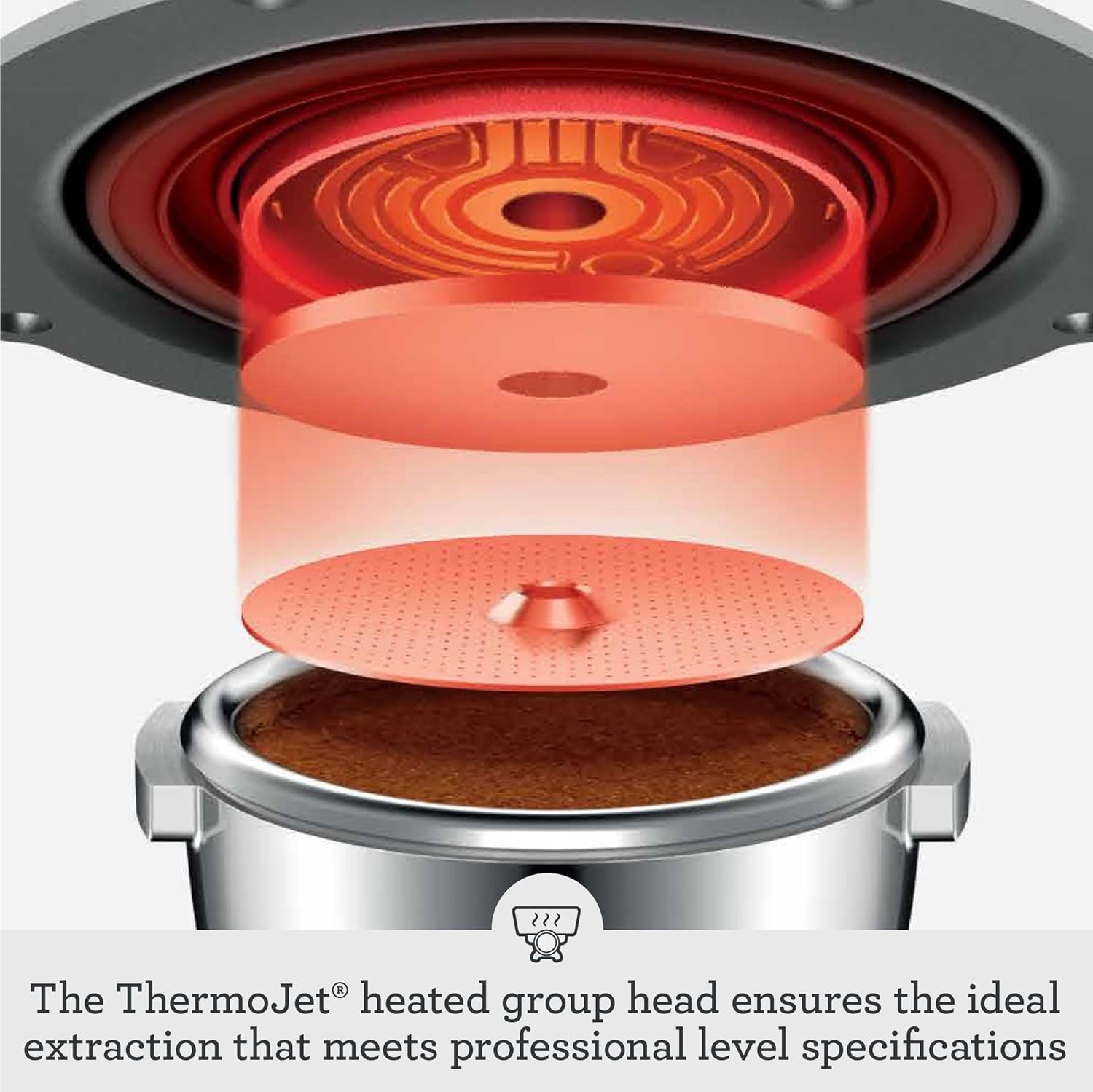
| Heating system & temperature control | ThermoJet rapid heat system with +/- 1-degree group head customization; manufacturer cites improved energy efficiency vs thermoblock |
| Grinder & burrs | Integrated Baratza European precision high-carbon hardened steel burrs; 45 grind settings, auto grind/dose/tamp into 58 mm portafilter |
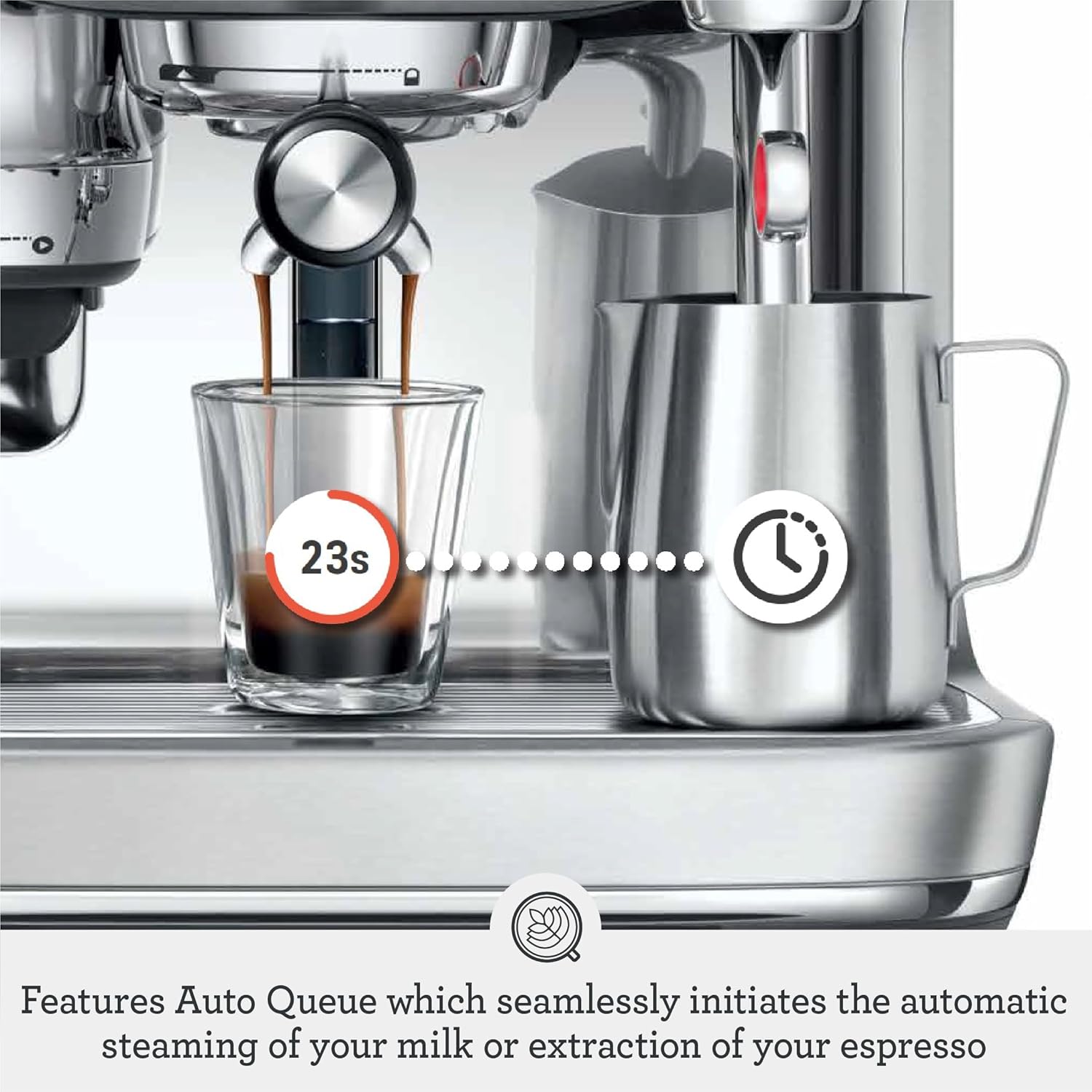
| Milk steaming | Auto MilQ automated steam wand with adjustable temperatures (104 F–167 F) and 8 texture levels; Auto Queue to start steaming after extraction |
| User interface | Responsive color touchscreen with swipe selection and pre-programmed café favorites including Cold Brew & Cold Espresso |
| Best-suited users & use cases | Home baristas and households seeking pro-level components with automated workflow for espresso, lattes, cappuccinos, and cold espresso |
The table summarizes how core specifications influence day-to-day results: integrated Baratza burrs and a 58 mm portafilter support consistent dose and grind quality, while the ThermoJet group head with tight temperature control targets repeatable extraction. Auto MilQ and touchscreen presets reduce manual technique demands, and the 77-ounce reservoir plus included milk jug support multi-drink serving. Materials and removable components affect cleanup, stability, and longevity.

Brewing Method Compatibility and Shot Quality
The Oracle Jet is built around traditional espresso extraction using freshly ground beans into a 58 mm portafilter, matching professional practices for grind distribution, dosing, and pressure application. The fully integrated Baratza burr grinder with 45 settings supports a wide grind range from fine espresso to coarser settings for cold espresso presets, enabling adaptability to different roast profiles. Precise dosing and automated tamping aim to reduce puck variability that commonly affects channeling and under- or over-extraction. The ThermoJet group head offers per-degree customization to align brew temperature with roast and origin characteristics, while the touchscreen presets include lower-temperature options for Cold Brew and Cold Espresso to highlight reduced acidity. Brewing compatibility centers on espresso and milk-based specialty drinks, with flexibility to tune shot parameters for clarity and balance.
Grinder, Dosing and Particle Distribution
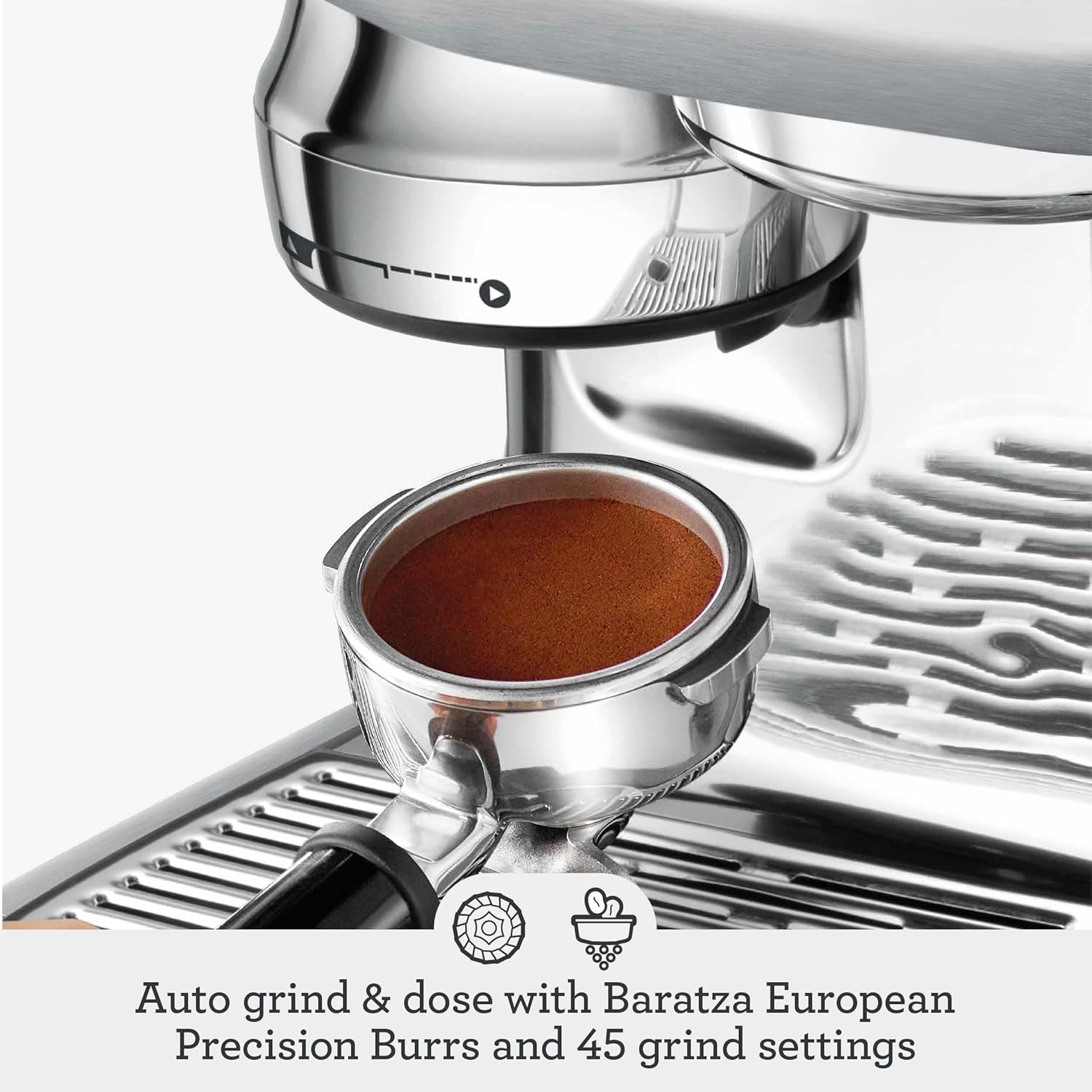
The integrated Baratza European precision burrs are high-carbon hardened steel units known for consistent particle size and extended edge retention compared to low-grade steel burrs. Forty-five grind settings provide incremental control to dial in particle distribution for different beans and roast levels. Automated dosing and tamping into the 58 mm portafilter reduce user-to-user variability in puck density and surface uniformity, which both affect extraction kinetics. Consistent grind particle size, combined with repeatable dose and tamp, limits channeling risk and supports predictable extraction yields when matched with proper recipe and tamping pressure specifications.
Portafilter and Basket Options Impact on Extraction
A professional-style 58 mm portafilter increases basket volume and allows use of single-wall or pressurized baskets for different skill levels. Single-wall baskets paired with consistent dosing and grind enable better crema production and full-bodied extraction, while dual- or pressurized baskets (if included or available separately) can reduce sensitivity to grind and tamp variations for beginners. The Oracle Jet ships with single-wall 1-cup and 2-cup filter baskets, which favor direct extraction control and make yield and brew ratio adjustments more predictable. Basket selection influences contact time and flow rate, therefore affecting the balance of acidity, sweetness, and body in the espresso.
Cold Espresso and Lower-Temperature Extraction
Cold Espresso and Cold Brew presets extract at lower temperatures to reduce volatile acidity and emphasize sweetness and body, an approach aligned with extraction science that links solubility of acids and aromatic compounds to temperature. Lower-temperature extraction slows solute uptake and can preserve nuanced flavors in delicate single-origin beans. The Oracle Jet’s touchscreen presets provide factory-configured settings for these techniques, but achieving optimal results still relies on matching grind size, dose, and brew ratio to the lower extraction temperatures. Users will need to adjust grind coarseness and dose to maintain suitable flow rate and avoid under-extraction when using cold-focused programs.
Ease of Use and Daily Workflow
Automation features target a balance between professional components and simplified daily use. Auto grind, dose, and tamp aim to move consistent dosing out of the operator’s hands, while the touchscreen delivers swipe-and-select access to common beverage templates. Auto MilQ hands-free steaming and Auto Queue coordination reduce the need for simultaneous manual workflow steps, enabling a single-operator path to espresso-plus-milk drinks. The 77-ounce reservoir and included 480 ml stainless milk jug support multiple servings before refill, but the system adds maintenance tasks such as milk-system cleaning cycles, burr cleaning, and periodic group-head cleaning. The fully automatic operation mode simplifies repeatability, but the presence of adjustable parameters still allows experienced users to tune extraction and milk texture settings to preferred profiles.
User Interface and Preset Customization
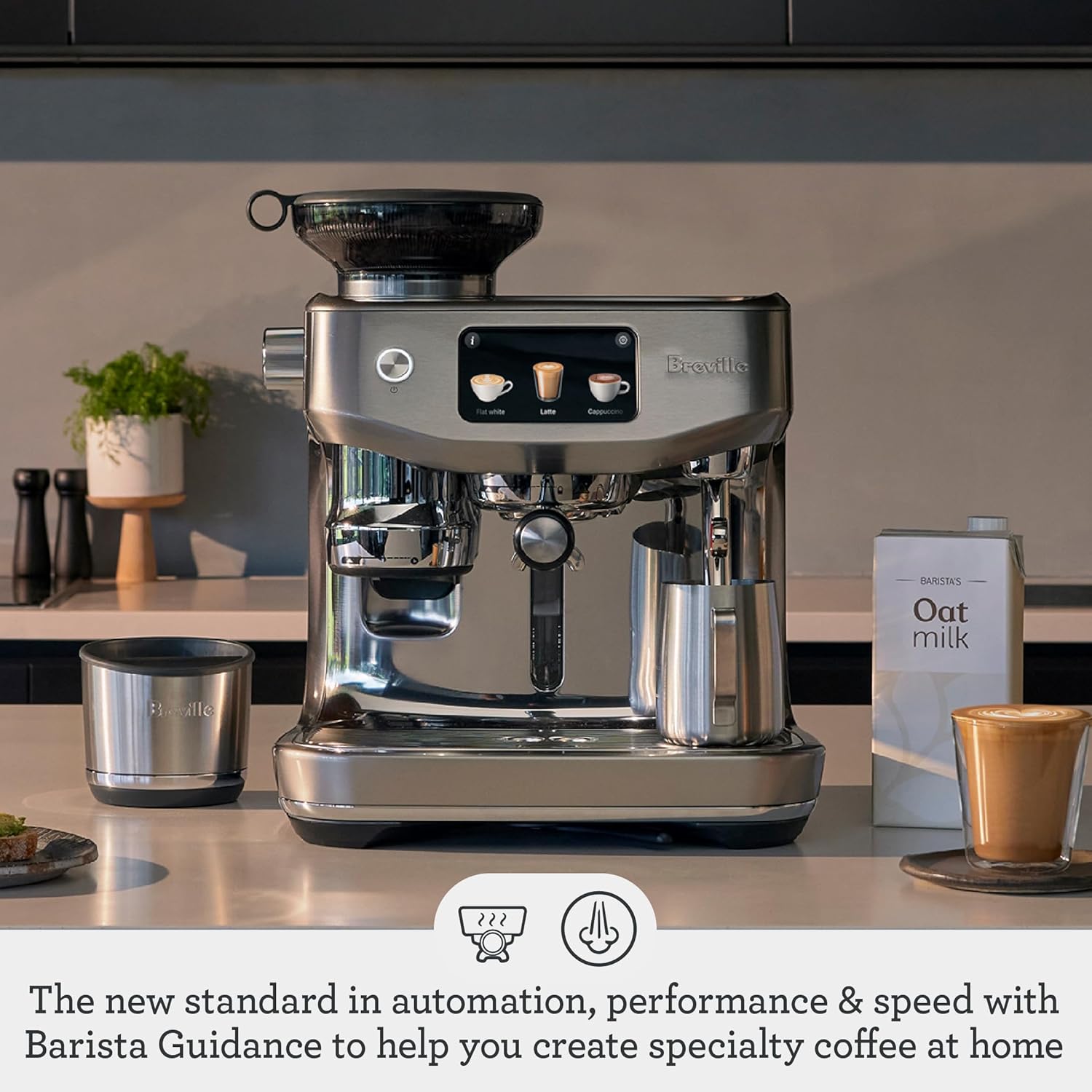
The responsive color touchscreen provides pre-programmed café favorites and options to customize extraction parameters and milk texturing profiles. Swipe navigation lowers the learning curve for selecting drinks and toggling between hot, cold, and iced options. Settings for Auto MilQ allow adjustment of temperature and texture across eight levels, and group-head temperature can be stepped in one-degree increments for recipe-specific tuning. This combination of presets and granular controls satisfies users who want immediate convenience and those who prefer iterative adjustment, although the depth of options requires a brief orientation to translate desired sensory outcomes into machine parameters.
Automated Milk Workflow and Cleaning Needs
Auto MilQ automates hands-free milk steaming with adjustable temperature (104 F–167 F) and texture levels, plus an Auto Queue feature that delays steaming until extraction completes. Automated milk systems streamline morning routines but introduce cleaning responsibilities: milk residue must be purged and internal surfaces cleaned after each use to prevent flavor transfer and bacterial buildup. The included stainless milk jug is not dishwasher safe, so manual rinse and regular deep-clean cycles using manufacturer-recommended milk-system cleaners will be necessary. The convenience of automation reduces technique dependence while increasing the importance of a consistent cleaning regimen for hygiene and performance.
Footprint, Installation and Routine Maintenance
With a footprint of approximately 14.5″D x 15″W x 16.7″H and a 26.7-pound weight, the machine requires dedicated counter space and stable placement. The removable 77-ounce reservoir simplifies refills but necessitates attention to water quality and descaling per manufacturer recommendations to maintain heating efficiency and flow rates. Integrated grinder maintenance includes periodic burr cleaning and replacement planning, and the portafilter, baskets, drip tray, and steam wand require daily rinsing. While automated tasks reduce some manual steps, regular preventative maintenance is required to preserve long-term reliability and consistent extraction performance.
Temperature Control and Extraction Consistency
Temperature stability directly influences solute extraction rates and flavor balance, and the Oracle Jet’s ThermoJet heating system is positioned to deliver rapid heat-up and controlled group-head temperature. Manufacturer disclosures cite the ThermoJet as faster and more energy-efficient compared to legacy thermoblock systems, and the machine supports one-degree customization at the group head to allow fine adjustments that align with roast profile and grind. Tight temperature control helps maintain repeatable extraction yields and limits variability between shots, particularly important when dialing in single-origin beans. Consistent water temperature, combined with consistent grind and dosing, forms the core triad for reliable espresso extraction and sensory consistency across multiple servings.

ThermoJet Heating Architecture and Heat-Up Time
ThermoJet is a rapid-heat architecture designed to bring the boiler and group head to operating temperature quickly while limiting thermal lag between shots. Fast heat-up reduces idle time and supports sequential extractions, which benefits household routines with multiple drinks. The manufacturer has reported improved energy efficiency relative to thermoblock designs, which typically exhibit slower stabilization. Rapid thermal recovery is beneficial for maintaining target temperature across consecutive shots, although the true stability during heavy back-to-back use will depend on water temperature management, drain cycles, and adherence to recommended maintenance schedules.
Per-Degree Temperature Customization and Sensory Impact
The ability to change group-head temperature in one-degree increments allows alignment with extraction science that ties temperature to solubility and flavor release. Cooler temperatures tend to suppress acidity and volatile compounds, while warmer settings increase extraction of sugars and body up to a limit where bitterness and over-extracted phenolics emerge. Tuning in one-degree steps enables iterative adjustments to achieve desired balance when switching beans or roast levels. Users seeking precision can use these adjustments in combination with grind and dose changes to refine extraction yield and cup clarity.
Stability Across Shots and Impact on Consistency
Extraction consistency depends on maintaining stable temperature between shots, consistent particle size distribution, and repeatable dosing. ThermoJet’s rapid recovery supports consistent conditions from shot to shot in typical home use, while the integrated grinder and automated tamping reduce puck-to-puck variability. However, environmental factors such as room temperature, water mineral content, and frequency of use can influence thermal stability. Regular descaling, head backflushing if recommended by the manufacturer, and burr maintenance are required to preserve the system’s reproducibility over time.
Capacity, Milk Workflow, and Serving Flexibility
Capacity and milk-handling features determine how well a machine serves households or small gatherings. The 77-ounce water reservoir reduces refill frequency for multiple drinks and supports sequential extraction needs. The included 480 ml stainless milk jug and Auto MilQ system automate milk texturing across dairy and plant-based alternatives (dairy, soy, almond, oat), with adjustable temperatures and eight texture levels to accommodate different milk proteins and fat levels. Touchscreen presets for cold and iced drinks expand versatility beyond hot espresso and steamed milk. Despite these conveniences, milk-system cleaning and the need to adapt texture settings per milk type add procedural steps. Serving flexibility is strong for home environments that prepare both espresso shots and milk drinks, though large-volume commercial use would exceed intended capacity and maintenance cadence.
Milk Alternatives and Texture Control
Auto MilQ includes factory settings tuned for dairy, soy, almond, and oat milks, recognizing distinct foaming behaviors due to protein and fat differences. Adjustable temperature and texture levels enable tailoring to desired microfoam consistency—richer microfoam typically benefits whole dairy, while plant-based milks often require different texture and heat profiles to avoid scalding or separation. Automated steaming programs help achieve a stable baseline, but optimal results depend on selecting the correct texture level and verifying the milk’s temperature. Plant-based milk users should expect to test settings to find the sweet spot that produces stable microfoam without overheating.
Water Capacity and Serving Patterns
A 77-ounce reservoir supports several single or double shots plus milk-based drinks before refilling, making it suitable for households and small groups. Larger social settings or continuous serving periods may necessitate frequent refills or a secondary water source. Water quality and mineral content impact scaling rates; using recommended water hardness levels and periodic descaling preserves heater efficiency and flow. For users prioritizing convenience, the removable reservoir simplifies refilling, while for those wanting always-on commercial-style service, hard plumbing options may be required if supported by the manufacturer.
Included Accessories and Their Role
The Oracle Jet ships with a 480 ml stainless milk jug, single-wall 1-cup and 2-cup filter baskets, a filter, and a Knock Box™ 10 accessory for spent puck disposal. These accessories cover typical home barista needs for single and double extractions and milk-based drinks, and the stainless milk jug aids in temperature retention during steaming. The absence of dishwasher-safe components for some parts means routine manual cleaning is required. Accessories influence workflow efficiency and maintenance planning; having a dedicated knock box and appropriate baskets supports tidy workflow and consistent dosing.
Pros & Cons
Pros
- Professional 58 mm portafilter and integrated Baratza burrs: The combination of a commercial-style portafilter and high-carbon hardened steel burrs supports consistent particle distribution and extraction control, aligning with café-level shot standards. Automated dosing and tamping reduce variability between shots.
- ThermoJet rapid heating with per-degree adjustment: Fast heat-up and +/- 1-degree customization at the group head allow fine tuning of extraction temperature to match different roast profiles and specialty methods, promoting repeatable results.
- Auto MilQ with multi-milk optimization: Hands-free milk steaming with eight texture levels and temperature control offers consistent microfoam repeatability for dairy and plant-based alternatives, reducing the skill barrier for latte and cappuccino preparation.
- Touchscreen presets including cold beverage modes: Swipe-and-select interface with Cold Brew and Cold Espresso presets extends versatility for iced and lower-temperature extraction techniques without manual programming.
- Generous reservoir and included accessories: A 77-ounce removable water reservoir and supplied 480 ml milk jug, baskets, and knock box support multi-drink routines while keeping key tools on hand for daily use.
- Durable stainless steel construction and serviceable components: Brushed stainless surfaces and replaceable burrs and baskets support long-term durability and maintenance.
Cons
- Maintenance and cleaning requirements: Automated milk and grinder systems simplify workflow but introduce mandatory cleaning cycles, milk-system cleaning, and periodic burr maintenance to preserve hygiene and performance.
- Complexity and learning curve for tuning: The wealth of adjustable parameters (grind settings, per-degree temperature, texture levels) requires time to learn and dial in for specific beans, potentially overwhelming casual users.
- Footprint and counter space needs: At 14.5″D x 15″W x 16.7″H and weighing 26.7 pounds, the machine requires a dedicated, robust countertop area and may be unsuitable for very compact kitchens.
- Not dishwasher-safe components: Some included items such as the milk jug and baskets are not dishwasher-safe, increasing manual cleaning time for routine upkeep.
Final Verdict: Who This Product Is Best For (and Who Should Skip It)
The Breville Oracle Jet suits home baristas who seek pro-grade components and semi-automated convenience. Its 58 mm portafilter, integrated Baratza burr grinder, and per-degree ThermoJet control provide the building blocks for café-quality extraction while reducing routine variables through automated dosing and tamping. Auto MilQ expands accessibility to consistent microfoam across dairy and plant-based milks, and touchscreen presets cover hot and cold specialties. Users who prioritize speed, repeatability, and the ability to tune temperature and texture will find these features aligned with enthusiastic home brewing goals.
This machine is less well-suited for casual users who want a minimal maintenance, low-complexity appliance or for high-volume commercial environments where continuous service and hard-plumbed water are required. The Oracle Jet’s breadth of adjustable settings and cleaning tasks demands a willingness to learn and to perform regular upkeep. For users seeking a compact, ultra-simple single-button solution or very frequent public-facing service, a different product category may offer a better fit in 2026.

Frequently Asked Questions (FAQs)
How does the ThermoJet heating system affect shot temperature stability?
ThermoJet is designed for rapid heat-up and faster thermal recovery compared with traditional thermoblock systems, which helps maintain target group-head temperatures between shots. Manufacturer disclosures note per-degree customization of the group-head temperature, enabling fine adjustments to align extraction temperature with roast and bean characteristics. Stable temperature reduces variability in solute extraction rates, contributing to more consistent flavor balance when grind and dose are held constant.
Can the Oracle Jet handle plant-based milks effectively?
Auto MilQ includes factory settings optimized for dairy, soy, almond, and oat milks, recognizing differences in protein and fat that affect foam stability. Adjustable temperature and eight texture levels let users tune microfoam for each milk type. Optimal results depend on selecting the appropriate texture setting and avoiding overheating; plant-based milks often require slightly different steam profiles compared to whole dairy.
What role do the integrated Baratza burrs play in extraction quality?
The integrated high-carbon hardened steel Baratza burrs provide a consistent particle size distribution and durability, supporting predictable extraction when paired with proper dosing and tamping. Forty-five grind settings allow fine-grain adjustments to control flow rate and contact time, which are critical for achieving desired extraction yields and balancing acidity, sweetness, and body.
How much maintenance is required to keep the machine performing well?
Routine maintenance includes daily rinsing of the portafilter, baskets, and steam wand, purging and cleaning of milk pathways after each milk use, periodic burr cleaning or replacement, and descaling according to water hardness and usage patterns. Automated features reduce some manual steps but introduce regular cleaning cycles to prevent flavor transfer and preserve hygiene and long-term reliability.
Is the Oracle Jet suitable for making cold espresso or iced drinks?
Yes. The touchscreen includes Cold Brew and Cold Espresso presets that extract at lower temperatures to reduce acidic notes and highlight sweetness and body. Lower-temperature extraction requires adjustments to grind size and dose to maintain proper flow rate and avoid under-extraction, so pairing presets with appropriate grind settings is important for consistent results.
How does the 58 mm portafilter impact compatibility with accessories?
A 58 mm portafilter is the commercial standard size, allowing compatibility with a wide range of aftermarket baskets, distribution tools, and tampers designed for professional espresso work. The larger basket volume supports greater control over dose and extraction dynamics compared with smaller domestic portafilters, which can benefit users seeking café-style results.
What should be expected in terms of counter space and installation?
The machine measures approximately 14.5″ deep by 15″ wide and stands 16.7″ high, weighing around 26.7 pounds, so it requires a stable, dedicated countertop location with sufficient clearance for the water reservoir and steam wand operation. The removable 77-ounce reservoir simplifies refilling but users should plan placement to allow easy access for routine maintenance and cleaning.
Does the Oracle Jet offer precise temperature adjustment for different beans?
Yes. The ThermoJet-equipped group head permits one-degree increments of temperature adjustment, allowing users to tailor extraction temperature to bean roast profiles and personal taste preferences. This precision supports controlled solute extraction and the ability to emphasize or temper acidity, sweetness, or body in the final cup.