
Introduction: Why equipment choice matters for small-batch coffee
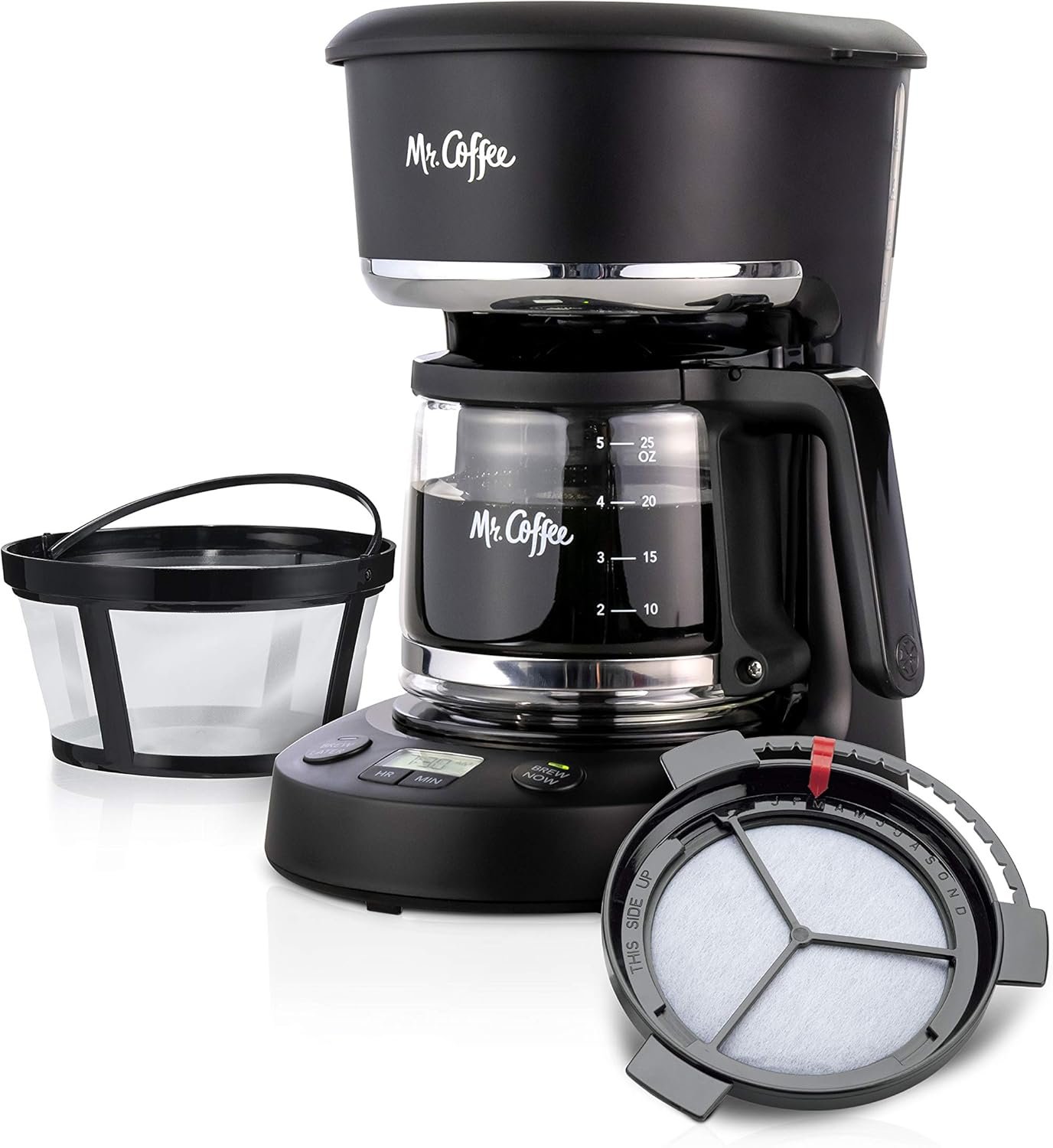
Choosing the right coffee maker affects extraction, flavor clarity, and daily workflow as much as the coffee itself. Small-capacity drip machines are designed for users who prioritize simplicity, counter space, and predictable output rather than cafe-style pressure brewing. For home brewers, students, and couples with constrained kitchens, a compact programmable drip brewer can deliver consistent hot or iced coffee when its thermal design, filter compatibility, and user interface align with brewing best practices. The Mr. Coffee 5-Cup Programmable Coffee Maker positions itself as a compact solution: a 25-ounce glass carafe, auto-pause, reusable filter compatibility, and programmable scheduling. These product traits determine grind tolerance, brewing temperature behavior, and the hands-on time required for routine cleaning. Understanding how these specifications influence extraction, heat retention, and maintenance helps buyers match machine capabilities to individual brew habits, beverage size preferences, and expectations for long-term reliability in a small-format brewer.
Quick Overview
| Feature | Details |
|---|---|
| Product category and brewing method | Drip coffee maker (automatic drip) |
| Capacity and output | 25 oz. carafe (about two 12 oz. servings) |
| Materials and construction | Plastic housing with chrome accents; glass carafe; ergonomic handle |
| Heating or temperature system | Single hotplate warming plate with internal heating element; auto shut-off after two hours |
| Grind or filter compatibility | #2 reusable and paper cone/filter compatible; designed for medium grind sizes |
| Controls and programmability | Simple button interface with Brew Later programmable timer and Auto Pause |
| Best suited users | Single users, couples, dorms, office cubicles, small kitchens |
| Intended use cases | Hot filter coffee, iced coffee prep, compact daily brewing |
The table condenses core specifications that shape practical use: capacity and filter compatibility set extraction window and brew strength potential, materials influence heat retention and durability, and the single heating system with warm plate determines temperature stability after brewing. Programmable timing and auto-pause affect workflow convenience and pouring flexibility during the brew cycle.

Brewing method compatibility
The Mr. Coffee 5-Cup Programmable is designed around standard automatic drip principles, and compatibility centers on filter type and grind size. The brewer accepts #2 cone-style filters and a reusable filter, which aligns with medium grind sizes typical for drip extraction. Medium grinds produce a balanced contact time as water passes through the bed, supporting predictable extraction when paired with correct coffee-to-water ratios. The unit is not designed for pressurized extraction or pour-over immersion techniques, so flow rate and contact time are constrained by gravity-fed drip geometry and basket design. Ambitious users who prefer fine espresso or manual pour-over control should weigh the inherent limits of automated drip flow control versus the convenience of a programmable, compact unit.

Filter and grind compatibility
The machine’s reusable filter and acceptance of #2 cone filters make it compatible with standard medium-drip grinds. Medium grind particles balance surface area for extraction speed and minimize excessive fines that can slow flow in a cone basket. Using too coarse a grind will under-extract, producing thin, weak cups, while overly fine grinds risk over-extraction or slower draining on a small cone filter. Consistent grinding, even with pre-ground options, supports repeatability; however, grind uniformity remains a primary determinant of extraction quality irrespective of this brewer’s automation.
Beverage types and use cases (hot vs iced)
This brewer is suited for traditional hot filter coffee and preparation of coffee intended for cooling and dilution for iced beverages. The 25-ounce capacity supports making a small batch that can be brewed stronger for iced coffee recipes that account for ice melt and dilution. The machine’s auto-pause feature enables mid-brew pouring for immediate consumption, which can help with single-cup needs. It is not intended for milk-based espresso drinks nor for cold-brew methods that require extended immersion; those specialty methods require different equipment or additional steps outside this brewer’s automated drip cycle.
Water quality and filtration impact
Water chemistry directly affects extraction balance and perceived flavor; this machine’s inclusion of a filtration system and reusable filter addresses basic clarity and taste concerns. A simple internal filter can reduce chlorine and large particulates, improving consistency compared with untreated tap water in many regions. For optimal extraction, neutral mineral content supports soluble extraction of desirable acids and oils, while very soft or distilled water may produce flat results. Consumers aiming for precise flavor control may pair the brewer with a measured water profile, but the onboard filtration provides practical improvement for everyday brewing needs.
Ease of use and workflow complexity
The Mr. Coffee 5-Cup Programmable targets simplicity: a compact footprint, button-based controls, and programmable Brew Later functionality that reduces morning prep. The human interface uses a small button set and a basic display to set a delayed start, and the auto-pause feature allows pouring mid-cycle without significant spillage. Setup for routine use involves measure-and-fill steps common to automatic drip machines—measuring coffee against ounce markings on the carafe, adding water to the tank, and inserting the filter. Because the unit is fully automatic, user intervention during brewing is minimal; this benefits users prioritizing low-touch convenience, though experienced brewers who want manual flow control or temperature profiling will find the workflow intentionally limited to preserve compactness and simplicity.

Controls, programmability, and scheduling
The programmable Brew Later feature allows pre-setting a start time so brewing completes on a schedule, improving convenience for morning routines. Button-driven input is straightforward but lacks advanced scheduling features found on larger machines—there are no multi-program memory slots or fine-grain timing adjustments. For many users, the single delayed-start schedule provides enough control to align brewing with wake-up times. The simplicity reduces cognitive load but also limits customization for those who expect multi-step automation or variable brew-strength programs.
Auto-pause, pouring workflow, and carafe ergonomics
Auto-pause enables interrupting the brew cycle to pour a cup without waiting for the full batch, which is valuable for small-batch use and immediate consumption. Ounce markings on the ergonomic glass carafe simplify portion control and recipe consistency for hot or iced preparations. The glass carafe returns to the warm plate, allowing the remaining brewed coffee to stay accessible, though glass will not retain heat as long as insulated alternatives. The pour spout and handle geometry support spill-free serving in standard domestic contexts.
Setup, daily routine, and learning curve
Initial setup is minimal: rinse the reusable filter or install a paper filter, fill the reservoir to match the desired ounces on the carafe, add ground coffee at a medium grind, and program the delayed start if desired. Daily maintenance routines are straightforward but require manual descaling and cleaning of the carafe and filter basket to prevent flavor degradation over time. The learning curve for basic operation is low, making this unit accessible to novices; however, users seeking precision brew technique must adapt their expectations to the automatic, simplified workflow.
Temperature control, heat stability, and extraction quality
Temperature behavior in small drip machines is a core determinant of extraction efficiency. The Mr. Coffee 5-Cup Programmable uses a single heating element with a warming plate to maintain post-brew temperature. Unlike multi-boiler or PID-controlled systems, this design does not provide precise temperature profiling during the entire extraction; peak brew temperature will depend on element power, water volume, and brewing speed. Consistent extraction requires water entering the grounds within the 195–205°F range favored by specialty guidelines; many compact drip units aim for a practical window that balances energy use and safety. For routine home use, this brewer’s thermal approach supports acceptable extraction for medium roasts and standard recipes, but it lacks the temperature fidelity required for advanced control over acidity and body in specialty brewing.

Heating element design and thermal behavior
The integrated heating element supplies the heat energy to raise water to brewing temperature and to maintain a warm plate temperature after extraction. In compact designs, the element size and duty cycle are balanced to limit power draw while achieving adequate brew temperatures for small volumes. The glass carafe sits on a single warm plate which prevents rapid cooling of the brew but does not actively reheat brewed coffee. This arrangement prioritizes safety and compactness over long-term thermal retention, so brewed coffee is best consumed within a shorter window for optimal sensory quality.
Impact on extraction and brew consistency
Extraction consistency depends on stable temperature during contact with coffee grounds. For a 25-ounce batch, the unit’s heating profile typically delivers reproducible temperatures across repeat brews when water dosing and grind size are consistent. Variations in starting water temperature, ambient conditions, and brew basket loading can produce perceptible differences in flavor. Users who grind fresh and measure brew ratios will see the most repeatability; the machine’s predictable flow and basic thermal profile support consistent outcomes for straightforward drip recipes without the nuance of variable-temperature systems.
Warm plate behavior and auto-shutoff safety
The warming plate maintains residual brew heat but also activates an automatic two-hour shut-off for safety and energy considerations. The warm plate design prevents immediate cooling but can accelerate flavor degradation if coffee sits for extended periods due to continued gentle heat exposure. The auto-shutoff mitigates risks of overheating and reduces continuous energy use, but it also signals that long-term heat retention relies on serving vessels or thermal carafes outside the brewer. For users prioritizing kept-warm performance beyond a couple of hours, an insulated carafe or transferring the brew after completion is recommended.
Capacity, cleaning expectations, and long-term reliability
Capacity and build choices determine whether a compact brewer matches daily consumption patterns and maintenance willingness. The 25-ounce carafe suits single users or pairs and supports two standard 12-ounce servings; this limits suitability for larger households or entertaining. Materials—plastic exterior with chrome accents and a glass carafe—favor lightweight construction and visual clarity of brew levels but introduce trade-offs: glass carafes are fragile relative to insulated stainless options, and plastic housings can show wear over time. Reusable filter compatibility reduces ongoing consumable costs but requires routine cleaning. Long-term reliability hinges on simple maintenance: regular descaling, careful handling of the glass carafe, and replacement of components if faucet-scale buildup or electrical wear occurs.

Capacity and serving flexibility
The 25-ounce capacity is purposely small for counter space efficiency and single-serve convenience. It allows brewing concentrated small batches for immediate consumption and is useful when making a stronger concentrate for iced coffee. However, the smaller water reservoir and carafe limit batch scalability; users who frequently need larger quantities will find the unit inadequate. The ounce-marked carafe supports recipe repeatability and portion control in daily routines where space and waste reduction are priorities.
Cleaning and maintenance expectations
Cleaning is largely manual: the glass carafe and reusable filter require rinsing after each use to prevent oil buildup, and the brew basket should be cleaned periodically to avoid stale flavors. Descaling frequency depends on local water hardness; mineral deposits can affect flow and heating efficiency over time. The machine is not dishwasher safe, so parts must be hand washed. Routine maintenance is straightforward but necessary for preserving extraction quality and mechanical longevity in a compact drip brewer.
Durability, components, and who should avoid this product
Durability considerations include the glass carafe’s vulnerability to breakage and the plastic housing’s long-term resistance to heat and staining. The simple electrical and thermal components reduce complexity and potential failure points, but the trade-off is fewer serviceable features and limited performance upgrades. Users who prioritize heavy daily usage, high-volume serving, precise temperature control, or integrated insulated carafes should consider larger-capacity or higher-end models. Those requiring espresso, steam, or milk texturing functions should avoid this machine, as it is strictly an automatic drip brewer focused on compact convenience.
Pros & Cons
Pros
- Compact footprint and small batch focus reduce counter space impact and waste for single users or couples. The 7.1″D x 9.65″W x 10.63″H design fits tight spaces and dorm-room or office environments while supporting targeted daily servings.
- Programmable Brew Later increases convenience and aligns with morning routines. The delayed-start scheduling lets coffee finish brewing at a set time without manual initiation, benefiting predictable consumption patterns.
- Auto-pause provides mid-brew pouring flexibility, reducing wait time for the first cup. This feature prevents dripping and supports immediate serving without interrupting the remainder of the brew.
- Ounce-marked ergonomic glass carafe aids portion control and recipe reproducibility. Clear markings simplify measuring for hot and iced preparations and support repeatable brew ratios.
- Reusable filter compatibility lowers recurring consumable costs and reduces waste compared with requiring paper filters. The included filtration system can improve basic water clarity and taste for everyday use.
- Simple controls and fully automatic operation minimize the learning curve for new coffee makers. The button-based interface and minimal settings reduce operational complexity for non-specialist users.
Cons
- Limited capacity constrains serving flexibility for larger households or entertaining. The 25-ounce carafe is tailored to small servings and may require multiple cycles for bigger groups.
- Glass carafe and plastic exterior reduce long-term heat retention and increase fragility risks. Glass cools faster than insulated vessels, and the plastic housing can show wear over extended use.
- Temperature control is basic and lacks precision found in PID or multi-boiler systems. This restricts fine-grain manipulation of acidity and body for specialty brewing preferences.
- Not dishwasher safe; routine cleaning requires hand washing. The need for manual descaling and part cleaning increases maintenance time compared with dishwasher-safe components.
- Limited programmability and no advanced brew-strength controls. Users seeking multiple schedule presets or strength adjustments will find functionality intentionally minimalist.
Final Verdict: Who This Product Is Best For (and Who Should Skip It)
This Mr. Coffee 5-Cup Programmable Coffee Maker best serves users who prioritize compact footprint, straightforward automatic drip brewing, and low-touch daily routines. It matches single consumers, couples, students, and small office settings that need reliable, small-batch hot or iced coffee without complex controls. The programmable Brew Later and auto-pause features enhance morning workflow and immediate serving needs, while the reusable filter and ounce-marked carafe aid repeatability and cost-conscious use. The machine is a pragmatic choice where counter space, simplicity, and predictable output outweigh advanced thermal control or large-batch capacity.
It should be avoided by users who require precise temperature profiling, high-volume serving, integrated insulated carafes, or espresso and milk-texturing capabilities. Specialty coffee enthusiasts seeking PID-level stability, adjustable brew strength, or manual flow control will find this unit too basic for advanced extraction experiments. For compact, routine drip brewing in 2026, this model offers a balanced combination of convenience and straightforward performance for everyday, small-batch needs.
Frequently Asked Questions (FAQs)
Can the Mr. Coffee 5-Cup Programmable make iced coffee directly?
The brewer is designed for hot drip extraction; to make iced coffee, brew a smaller volume or a slightly stronger concentrate and pour it over ice to account for dilution. The ounce-marked carafe helps measure water and concentrate volumes for consistent iced recipes. The machine does not perform cold-brew immersion, which requires longer steep times and a different method.
What grind size works best with this 5-cup Mr. Coffee model?
A medium grind typical for drip coffee is recommended for cone-style filter baskets used in this brewer. Medium grinds balance extraction rate and flow; too coarse a grind yields under-extraction, while too fine a grind can slow flow and risk over-extraction. Consistent grind particle size improves repeatability across brews.
Does the programmable feature let users set multiple brew times?
The Brew Later function provides a single delayed-start schedule intended to finish brewing at a preset time. It simplifies timed brewing for routines but does not include multi-program memory or multiple daily presets. For basic scheduled brewing, the functionality is sufficient; advanced scheduling requires higher-end models.
How should the reusable filter and carafe be maintained?
The reusable filter and glass carafe should be rinsed or hand washed after each use to remove coffee oils and grounds. Periodic deeper cleaning and descaling of the machine will reduce mineral buildup that can affect flow and flavor. The unit is not dishwasher safe, so avoid placing components in a dishwasher unless manufacturer guidance explicitly allows it.
Does the warming plate keep coffee hot for long periods?
The single warm plate maintains residual heat for a limited period but is not a substitute for an insulated carafe. Continuous warming can accelerate flavor changes, so transferring coffee to an insulated vessel is recommended for longer-term heat retention. The brewer includes a two-hour auto-shutoff for safety and energy conservation.
Is this machine suitable for heavy daily use or large households?
This 25-ounce, five-cup brewer targets small-batch brewing for singles or couples and compact spaces. It is not optimized for continuous heavy commercial use or large households that require larger batch volumes. Multiple brew cycles can serve larger groups but reduce convenience and may increase wear over time.
Will the included filtration system improve flavor significantly?
The built-in filtration system can reduce chlorine and large particulates in tap water, improving basic clarity and consistency for everyday brewing. Water mineral content still affects extraction balance; for precise flavor control, users may choose water with measured mineral content or dedicated external filtration tailored to their local water profile.
Can this brewer handle different coffee strengths?
The machine lacks a dedicated strength selector; strength control relies on grind size, coffee-to-water ratio, and dose. Adjusting the amount of coffee relative to the 25-ounce capacity and using a slightly finer grind can increase perceived strength, while coarser grinds and reduced dose lower it. This manual approach provides some flexibility within the unit’s automatic drip constraints.