
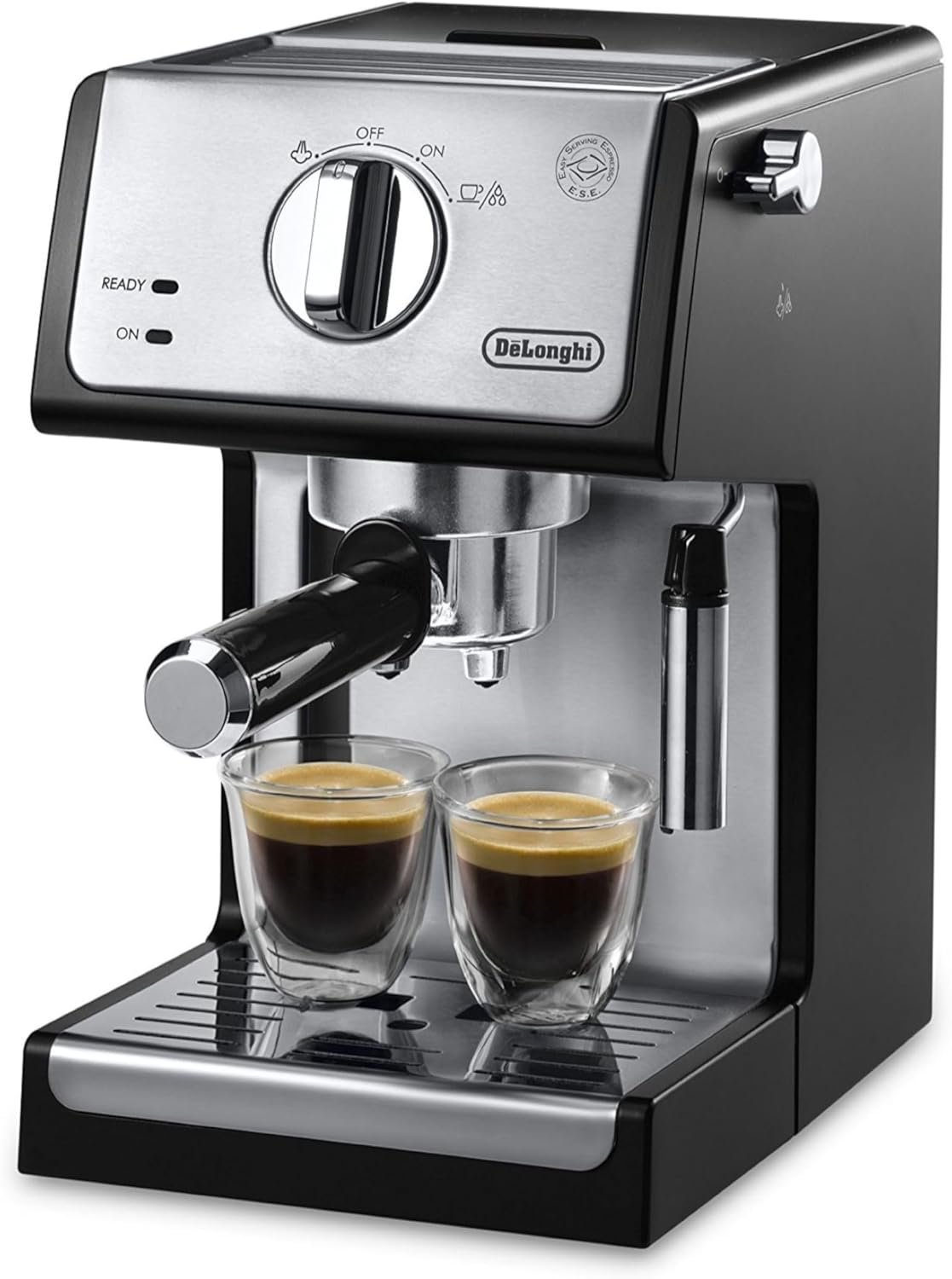
De’Longhi ECP3420: A Compact Espresso Machine for Everyday Brewing
De’Longhi’s ECP3420 15-bar pump espresso machine pairs a manual cappuccino system with a three-in-one filter holder, positioning it as an accessible entry point for households moving from drip coffee toward espresso-based drinks. This De’Longhi 15 review looks at how the machine’s pump pressure, temperature control, and milk-frothing hardware translate into daily brewing performance, since pump pressure alone does not guarantee a well-extracted shot. Espresso equipment in this category is typically judged on how consistently it pulls a balanced shot, how quickly it recovers between drinks, and how much manual skill the user must bring to the process. The ECP3420 targets buyers who want espresso, cappuccino, latte, and iced coffee options without stepping up to a plumbed-in or fully automatic bean-to-cup system. Its compact plastic-and-stainless build is designed for small kitchens and apartment counters rather than high-volume use. Households with more than one or two daily espresso drinkers, or anyone expecting commercial-grade shot-to-shot consistency, will want to weigh its manual controls against pricier semi-automatic alternatives before choosing this machine for a 2026 kitchen upgrade.
Quick Overview
| Feature | Details |
|---|---|
| Product Category | Semi-automatic pump espresso machine |
| Brand / Model | De’Longhi ECP3420 |
| Pressure System | 15-bar pump pressure with adjustable controls |
| Brewing Method | Ground coffee or espresso pods |
| Filter Compatibility | Reusable single-shot, double-shot, and pod filter inserts (three-in-one holder) |
| Milk System | Advanced Cappuccino System with manual steam frother |
| Temperature Control | Manual dial-based temperature adjustment |
| Water Tank | Removable, refillable, with visible fill level |
| Dimensions | 7.25″D x 9.6″W x 11.9″H |
| Weight | 10.6 pounds |
| Construction Materials | Plastic housing with stainless steel accents |
| Power Draw | 1,100 watts at 120V |
| Best Suited Users | Beginner-to-intermediate home baristas |
| Intended Use Cases | Countertop espresso, cappuccino, latte, and iced coffee brewing |
| Warranty | Coverage terms should be confirmed directly through De’Longhi’s current documentation |
These specifications point to a machine built around manual control rather than automation: the user sets grind, tamp pressure, temperature, and froth texture rather than relying on programmed presets. That structure gives flexibility to adjust each variable independently, but it also means brewing results depend more heavily on technique and routine maintenance than on the hardware alone, a distinction that matters most to first-time espresso buyers.

De’Longhi 15 Review: Pump Pressure and Extraction Performance
The ECP3420’s defining spec is its 15-bar pump, a pressure ceiling common across entry-level and mid-range home espresso machines and higher than the 9 bars generally considered ideal for extraction at the puck itself. In practice, the extra headroom compensates for pressure loss through the portafilter, tamped grounds, and plumbing rather than delivering 15 bars directly to the coffee. Combined with adjustable controls for shot strength, the pump gives users room to fine-tune extraction to taste rather than locking them into a single fixed output. Consistency still depends on grind size, dose, and tamping technique, since a pump-driven system reacts to resistance created by the puck rather than regulating flow independently the way rotary or gear-pump commercial machines do.

15-Bar Pump Pressure and Crema Development
Crema formation depends on forcing hot water through finely ground, tightly tamped coffee at sustained pressure, and a 15-bar pump has enough force to emulsify oils into a visible layer of crema when the grind and dose are correctly matched. Grounds that are too coarse allow water to pass too quickly, producing thin, watery shots with minimal crema regardless of pump strength. Because the ECP3420 uses a standard portafilter rather than pressurized baskets exclusively, users have more control over this variable, but that also shifts more responsibility onto grind selection and tamping consistency.
Ground Coffee vs. Pod Compatibility
The machine accepts both finely ground coffee and easy-serve espresso pods, which broadens its appeal beyond dedicated grind-and-tamp enthusiasts. Pod use simplifies dosing and reduces mess, making it a reasonable option for mixed households where one person wants convenience and another wants manual control over grind size and freshness. Ground coffee use, by contrast, allows tighter control over extraction variables like dose weight and grind fineness, which tends to produce more consistent shots once the user has dialed in a routine, though it requires a separate burr grinder for best results.
Grind consistency matters more with loose grounds than with pre-dosed pods, since uneven particle size creates channels that let water bypass some of the coffee bed while over-saturating other areas. Buyers planning to use ground coffee exclusively should budget for a quality burr grinder alongside the machine, since a blade grinder’s uneven output tends to undercut the benefit of the adjustable pump pressure described above.
Three-in-One Filter Holder Flexibility
The included filter holder accommodates single-shot, double-shot, and pod-based brewing, letting one machine serve varied preferences without additional hardware purchases. This modularity is particularly useful in households where coffee habits differ from day to day, such as a single espresso on weekday mornings and a double shot base for weekend lattes. Switching between inserts is a manual, tool-free process, which keeps the workflow simple even though it adds a small step compared with machines that rely on a single fixed basket.
Temperature Control and Heat Consistency
Temperature stability affects extraction as directly as pressure does, since water that is too cool under-extracts flavor compounds while water that is too hot pulls excessive bitterness from the grounds. The ECP3420 includes a temperature control feature that lets users adjust heat output rather than relying on a single fixed brewing temperature, which is useful given that different roast levels and bean origins respond better to slightly different extraction temperatures. This manual adjustment places the burden of dialing in the right setting on the user rather than automating it, a tradeoff typical of machines in this complexity tier. Because there is no digital display or PID temperature regulation referenced in the manufacturer specifications, users should expect to learn the dial’s behavior through repeated use rather than precise numeric readouts.
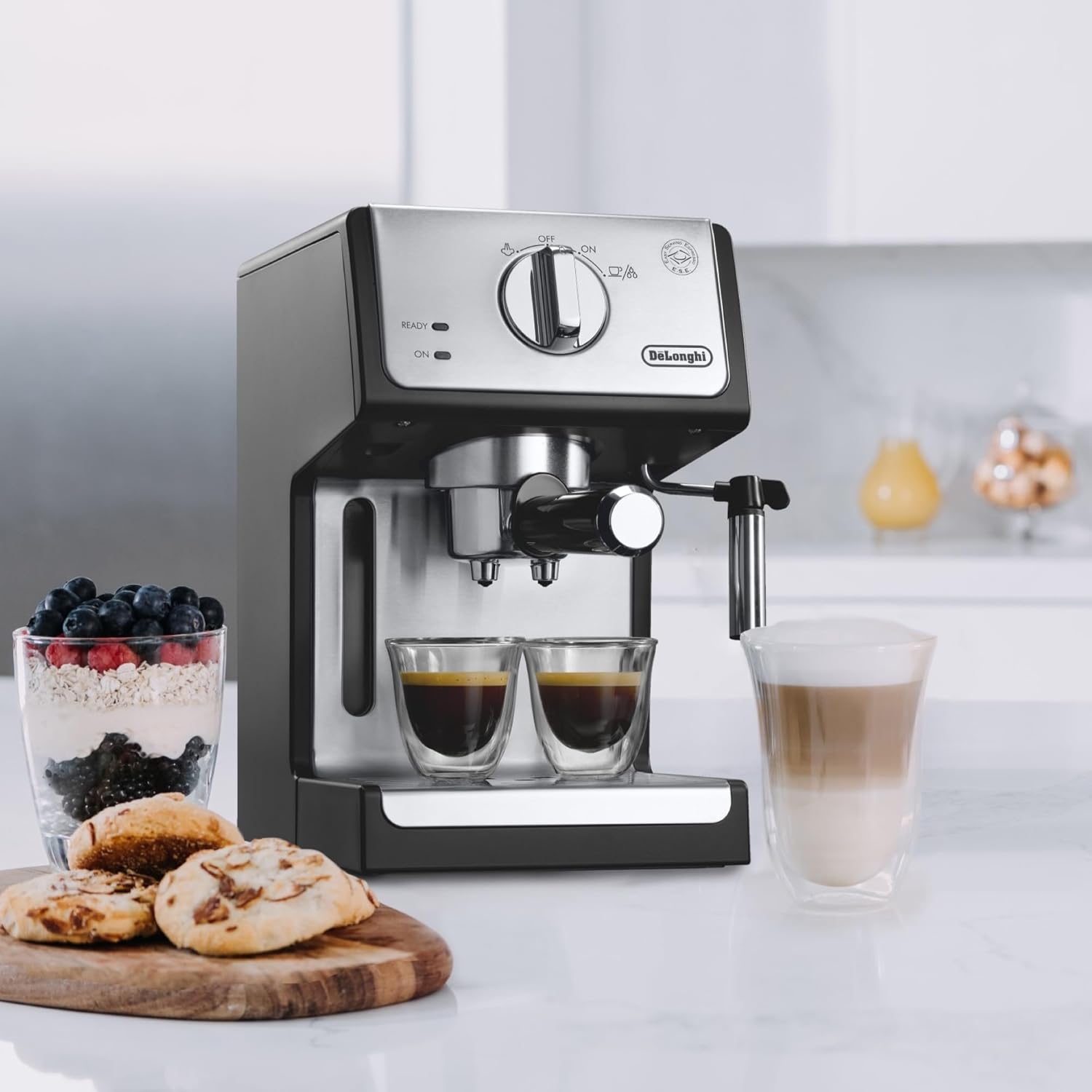
Manual Temperature Control Dial
Adjusting the dial changes how hot the water is when it contacts the grounds, giving users a way to correct for bitterness or sourness in their shots without altering grind or dose. Because the control is manual rather than digitally regulated, achieving a repeatable setting benefits from marking a preferred position or keeping notes on what has worked for a given bean. This approach favors users willing to experiment over those who want a single automated setting that adjusts itself.
Recovery Time Between Consecutive Shots
Single-boiler pump machines typically need a short recovery period between an espresso pull and a milk-frothing cycle, since both functions draw on the same heating element. Buyers pulling back-to-back double shots for multiple drinks should expect brief pauses for the system to stabilize, particularly when switching between brewing and steaming functions. This is a standard characteristic of machines in this tier rather than a defect specific to the ECP3420.
Adjusting Extraction for Different Roast Profiles
Darker roasts generally extract well at slightly lower temperatures because their cell structure is already broken down by longer roasting, while lighter roasts often benefit from marginally higher heat to draw out sweetness and acidity fully. Because the ECP3420 leaves this adjustment to a manual dial rather than automating it per bean type, users who rotate between roast styles have a genuine tool for correcting flavor balance, provided they are willing to test and note settings. This puts more responsibility on the user than a machine with automatic roast-detection would, but it also avoids locking extraction temperature to a single generic profile that may not suit every bag of beans.
Milk Frothing, Beverage Versatility, and Serving Capacity
The Advanced Cappuccino System uses a manual frothing wand with a selector for hot milk or textured cappuccino foam, which means the user directly controls how much air is introduced into the milk during steaming. That hands-on approach produces more variation between users than an automatic frother would, since foam texture depends on wand angle, milk temperature, and pitcher technique rather than a fixed program. For buyers who already make lattes or cappuccinos elsewhere and understand milk steaming fundamentals, this system offers more creative control; for those without that experience, it introduces a learning curve absent from machines with one-touch milk buttons. The tradeoff favors flexibility over convenience, which is consistent with the machine’s overall manual-control design philosophy.

Advanced Cappuccino System Operation
The frother mixes steam and milk external to the reservoir, meaning texture quality depends on how the pitcher is positioned relative to the steam wand tip. Beginners typically need several attempts to produce microfoam suitable for latte art or dense cappuccino foam, while more experienced users can adjust foam density on demand for different drink styles. The selector switch between hot milk and cappuccino settings adds a layer of control that fully automatic frothers generally do not offer.
Latte, Cappuccino, and Iced Coffee Range
Beyond straight espresso, the machine is positioned for lattes, cappuccinos, and iced coffee, which broadens its use case across a household’s coffee preferences throughout the day. Iced coffee preparation typically involves pulling a stronger, more concentrated shot over ice, a workflow the adjustable pump and filter options support reasonably well. This versatility makes the ECP3420 more of a general café-style beverage station than a single-purpose espresso puller.
Serving Flexibility for Single and Double Shots
The dual-shot filter baskets allow users to brew for one or scale up for two without switching machines or running multiple cycles, which is useful for small households or couples with similar coffee habits. However, the unit is not designed for high-volume batch brewing, so gatherings requiring several drinks in quick succession will test its recovery time and water tank capacity more than everyday single- or double-serving use.
Ease of Use, Cleaning, and Long-Term Durability
Daily workflow with the ECP3420 involves filling the removable water tank, selecting a filter insert, tamping grounds or loading a pod, and manually managing both brew and steam functions, a process closer to a traditional semi-automatic espresso machine than a push-button pod system. The compact footprint and narrow profile suit smaller kitchens, and the removable bottom tray accommodates taller cups and travel mugs without needing extra clearance. Maintenance expectations are moderate: the water tank and drip tray are designed to be removed and cleaned regularly, and the housing’s plastic construction with stainless accents is easier to wipe down than an all-metal body, though it is generally regarded as less durable over years of heavy daily use than machines built with more metal components throughout.

Compact Footprint and Water Tank Design
At roughly 7.25 inches deep, 9.6 inches wide, and 11.9 inches tall, the machine occupies limited counter space, which is a meaningful advantage in apartments or shared kitchens. The removable water tank has a visible fill level, reducing the guesswork involved in knowing when a refill is needed mid-session. Filter storage built into the compact housing helps keep loose parts organized rather than scattered across a counter or drawer.
Cleaning Routine and Component Care
Manufacturer materials and care information for this model indicates the unit itself is not fully dishwasher safe, even though the removable water tank and drip tray are designed for easy hand cleaning and rinsing. Regular descaling is also part of routine upkeep for any pump espresso machine, since mineral buildup from tap water gradually affects heating efficiency and flow consistency. Users should plan on a light daily wipe-down plus periodic descaling rather than treating any component as fully dishwasher-safe by default.
Build Materials and Reliability Considerations
The primary housing material is plastic, accented with stainless steel panels that give a more premium visual impression than the underlying material composition. Plastic-bodied espresso machines in this complexity tier are common and generally reliable for moderate daily use, but they tend to show wear, especially around buttons and dials, sooner than metal-bodied alternatives subjected to identical use. Long-term reliability also depends heavily on descaling frequency and water quality, factors within the user’s control rather than fixed by the build itself.
Pros & Cons
Pros
- Adjustable 15-bar pump pressure gives users room to fine-tune extraction strength rather than locking in a single fixed output, which suits buyers who want to experiment with different beans and roasts.
- The three-in-one filter holder supports single-shot, double-shot, and pod-based brewing, making the machine flexible enough for mixed household preferences without additional purchases.
- Manual temperature control allows adjustment for different roast profiles, addressing a common limitation of fixed-temperature entry-level machines.
- The Advanced Cappuccino System offers hands-on control over milk texture, appealing to users who want to develop latte art or adjust foam density by drink type.
- A removable water tank with a visible fill level simplifies refilling and reduces guesswork mid-session.
- The compact footprint and removable bottom tray make it practical for small kitchens and taller cups or travel mugs alike.
- Compatibility with both ground coffee and espresso pods broadens accessibility for households with differing convenience needs.
- Stainless steel accents over a plastic body provide a more premium countertop appearance without the full cost of an all-metal build.
Cons
- The unit is not fully dishwasher safe despite having some removable components, so cleaning requires more manual attention than fully dishwasher-compatible machines.
- Manual temperature and frothing controls introduce a learning curve, and results depend more on user technique than on automated machines with programmed presets.
- Single-boiler-style operation means brief recovery pauses are likely when switching between brewing espresso and steaming milk in the same session.
- A primarily plastic housing may show cosmetic wear sooner than metal-bodied competitors under heavy, sustained daily use.
- The compact water tank and general design favor single or double servings rather than high-volume brewing for gatherings or offices.
Final Verdict: Who This Product Is Best For (and Who Should Skip It)
The De’Longhi ECP3420 fits households and individuals moving from drip coffee or pod machines into manual espresso brewing who want control over pressure, temperature, and milk texture without committing to a plumbed-in or fully automatic system. Its three-in-one filter holder, pod compatibility, and adjustable pump make it a flexible option for mixed-preference households, and its compact footprint suits smaller kitchens well. Beginners willing to learn tamping, dosing, and manual frothing will get the most value from its adjustability, while its feature set and complexity position it as an accessible rather than professional-grade tool.
Buyers who want fully automatic, one-touch beverage programs, dishwasher-safe components throughout, or commercial-level shot consistency across many consecutive drinks should look toward higher-tier bean-to-cup or dual-boiler machines instead. High-volume households, offices, or anyone unwilling to handle manual frothing and periodic descaling may find the workflow more demanding than expected. Within its category among 2026 entry-level pump espresso machines, the ECP3420 remains a reasonable choice for hands-on beginners and intermediate users who value flexibility over full automation.
Frequently Asked Questions (FAQs)
Is the De’Longhi ECP3420 good for espresso beginners?
The ECP3420 suits beginners willing to learn manual tamping, dosing, and frothing, since it does not rely on automated presets. Its three-in-one filter holder and pod compatibility soften the learning curve by allowing simpler pod-based brewing while a user develops ground-coffee technique. Buyers wanting fully automatic, one-touch operation from day one may find the manual controls more involved than expected.
Can the De’Longhi ECP3420 use both ground coffee and pods?
Yes, the three-in-one filter holder includes inserts for a single espresso shot, a double shot of ground coffee, and an easy-serve pod, so the same machine accommodates either format. Ground coffee generally allows tighter control over extraction variables like dose and grind size, while pods simplify dosing and cleanup for users who prioritize convenience over adjustability.
Does the De’Longhi ECP3420 have a built-in grinder?
No, this model does not include an integrated grinder and relies on pre-ground coffee or espresso pods loaded into its filter holder. Buyers planning to use freshly ground coffee should pair the machine with a separate burr grinder, since grind consistency has a significant effect on extraction quality and crema development independent of the machine’s own pump pressure.
How does the milk frother on the De’Longhi ECP3420 work?
The Advanced Cappuccino System uses a manual steam wand with a selector switch for hot milk or textured cappuccino foam, mixing steam and milk outside the reservoir. Foam texture depends on wand angle, milk temperature, and pitcher technique rather than an automated program, so results improve with practice. This hands-on design gives more creative control than one-touch frothers but requires more user involvement.
Is the De’Longhi ECP3420 dishwasher safe?
Manufacturer materials and care information indicates the unit is not fully dishwasher safe overall, though the removable water tank and drip tray are designed for easy hand cleaning and rinsing. Regular descaling is also recommended as part of routine maintenance, since mineral buildup from tap water can gradually affect heating efficiency and consistent flow through the pump system.
What is the water tank capacity approach on the De’Longhi ECP3420?
The machine uses a removable water tank with a visible fill level rather than a fixed high-capacity reservoir, which keeps the compact footprint intact while simplifying refills. This design favors single or double servings and everyday use over high-volume batch brewing, so households hosting several guests at once should expect more frequent refilling during extended sessions.
How much counter space does the De’Longhi ECP3420 need?
At approximately 7.25 inches deep, 9.6 inches wide, and 11.9 inches tall, the ECP3420 has a relatively narrow footprint suited to smaller kitchens or apartment counters. Its removable bottom tray also allows taller cups and travel mugs to fit underneath the spout without requiring additional vertical clearance around the machine.
Does the De’Longhi ECP3420 support both espresso and iced coffee?
Yes, the machine is positioned for espresso, cappuccino, latte, and iced coffee preparation, with iced coffee typically made by pulling a stronger, more concentrated shot over ice. The adjustable pump pressure and multiple filter options support this range of drinks, making the machine more of a general beverage station than a single-purpose espresso puller.