
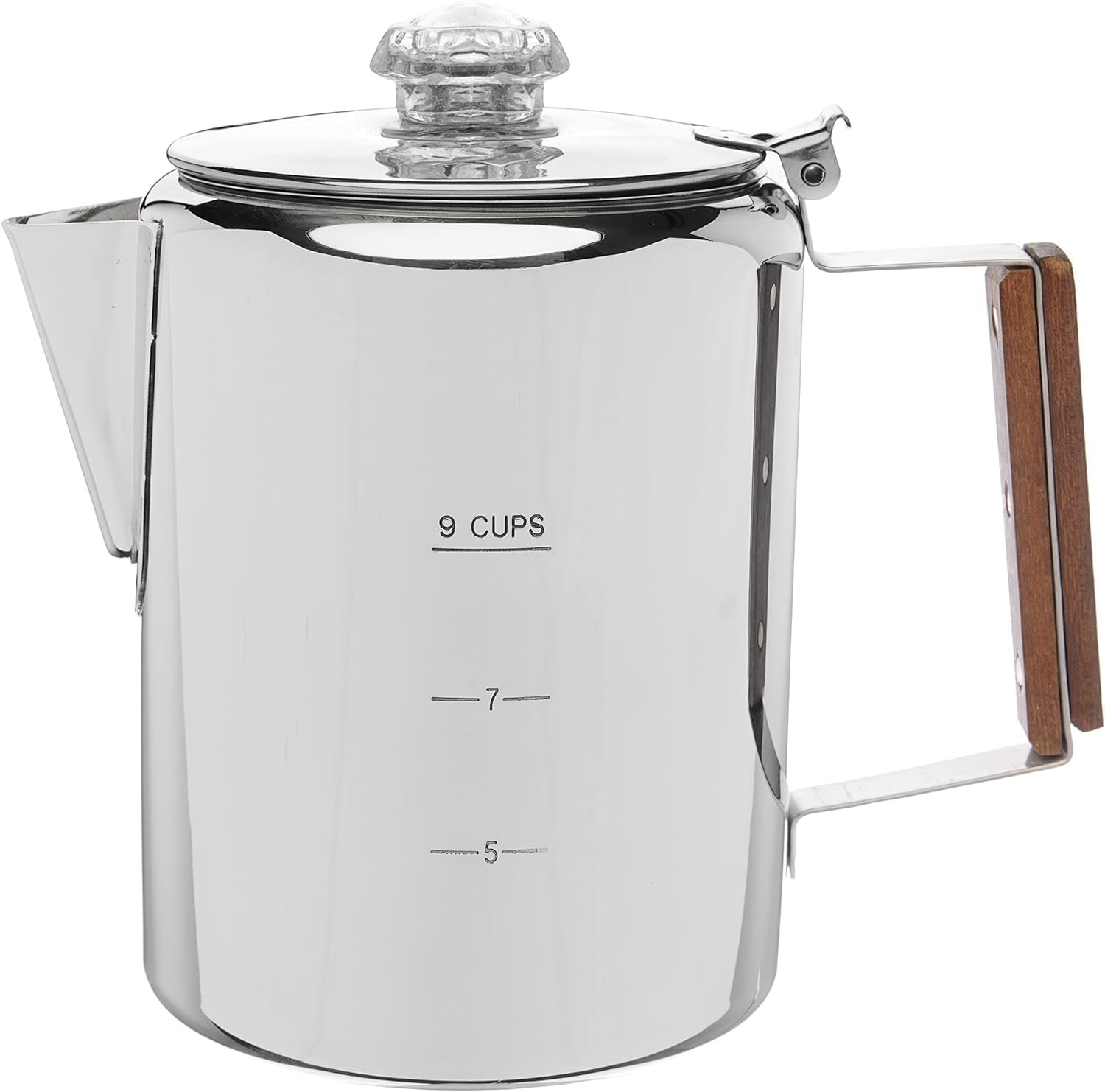
COLETTI Bozeman Percolator Coffee Pot Review: Stainless Percolation Without Aluminum or Plastic
COLETTI’s Bozeman percolator coffee pot is built from stainless steel throughout, a material choice that removes the aluminum and plastic components found in many entry-level stovetop percolators. This coletti bozeman percolator coffee pot review looks at how that construction, paired with a 9-cup capacity and a glass view top, shapes the pot’s performance for campers, off-grid households, and home brewers who prefer traditional percolated coffee over drip or pod-based methods. Percolators work differently from automatic coffee makers: water is heated on a stovetop or open flame, then cycled repeatedly through a metal basket of grounds until the desired strength is reached. That manual process rewards users who want direct control over brew strength and don’t mind a slightly longer, hands-on routine compared to a programmable machine. The Bozeman model is aimed squarely at buyers who value durability and simplicity over automation — a pot that can sit on a campfire grate one weekend and a kitchen range the next. Because it has no electronic components, no nonstick coatings, and no plastic housing, it also appeals to households trying to limit the number of synthetic materials in daily food and beverage preparation. The sections below break down how the pot’s materials, capacity, and design translate into real brewing outcomes.
Quick Overview
| Feature | Details |
|---|---|
| Product Category | Stovetop percolator coffee pot |
| Brewing Method | Manual stovetop or campfire percolation |
| Heat Source Compatibility | Gas, electric coil, and open flame; not induction-compatible |
| Capacity | 9 cups (45 fl. oz. total) |
| Construction Material | Stainless steel, no aluminum or plastic components |
| Viewing Component | Glass view top for monitoring the percolation cycle |
| Filter System | Reusable metal percolator basket; compatible with #4 paper filters |
| Product Dimensions | 7.64 in. D x 7.4 in. W x 5.34 in. H |
| Weight | 2 pounds |
| Cleaning | Dishwasher safe |
| Best Suited Users | Campers, off-grid brewers, and traditional stovetop coffee drinkers |
| Warranty | 1-year manufacturer warranty from a veteran-owned company |
These specifications point to a pot designed for manual control rather than automated convenience. The all-metal build and glass viewing dome let users track color development during percolation, while the 9-cup output and dishwasher-safe design support both group camping trips and everyday kitchen use. The lack of induction compatibility is a meaningful limitation for households built entirely around induction cooktops.
![COLETTI Bozeman Percolator Coffee Pot — NO Aluminum or Plastic [9 cup]](https://m.media-amazon.com/images/I/810UV0wqA3L._AC_SL1500_.jpg)
Brewing Method and Heat Source Compatibility
The Bozeman percolator relies on manual stovetop or open-flame percolation, a brewing method that predates automatic drip machines and remains popular for its simplicity and lack of dependence on electricity. Water is added to the base chamber, grounds are loaded into the metal basket, and heat drives the water upward through a stem where it cascades repeatedly over the grounds until the desired strength develops. This method works on gas burners, electric coil ranges, and campfires or portable camp stoves, making it a flexible option for households that split time between a kitchen and the outdoors. However, the pot is explicitly not compatible with induction cooktops, since induction relies on magnetic fields that most percolator bases are not engineered to interact with efficiently. Buyers whose primary or only cooking surface is induction should look toward COLETTI’s induction-specific percolator line instead.
![COLETTI Bozeman Percolator Coffee Pot — NO Aluminum or Plastic [9 cup]](https://m.media-amazon.com/images/I/71YPhko2KiL._AC_SL1500_.jpg)
Stovetop and Campfire Versatility
Because the Bozeman percolator has no electronic parts, it functions the same way whether it sits over a campfire grate, a portable propane burner, or a home gas range. This consistency makes it a practical option for households that camp seasonally but also want a stovetop coffee maker for daily use at home, avoiding the need to own two separate percolators for different environments. The trade-off is that brew time and heat intensity are entirely dependent on the heat source, meaning a roaring campfire will percolate faster and less predictably than a controlled gas flame, which places more responsibility on the user to judge timing rather than relying on an automatic shutoff.
Induction Stove Limitation
The manufacturer states plainly that this percolator does not work on induction cooktops, and offers a separate induction-compatible Bozeman model for that use case. This is an important consideration for buyers replacing an older stovetop percolator in a kitchen that has since switched to induction, since the base will not generate the magnetic interaction induction ranges require to produce heat. Households with mixed cooking setups, such as a gas range at home and an induction cooktop at a secondary residence, should confirm which surfaces they intend to use before purchasing this particular version rather than the induction variant.
Ease of Use and Daily Brewing Workflow
Operating the Bozeman percolator is entirely manual, which means there are no digital displays, brew-strength presets, or automatic shutoff timers to rely on. Users fill the base with water, insert the stem and metal filter basket, add coarsely ground coffee, and place the assembled pot on a heat source until the water begins to cycle and darken through the glass view top. This workflow suits buyers who enjoy a hands-on ritual and don’t mind monitoring the brew rather than walking away from a machine that finishes on its own. For households used to programmable drip machines or single-serve pod systems, the adjustment period may involve a few brews before the timing and heat level feel intuitive, since percolation strength depends on both duration and flame intensity rather than a fixed measurement.
![COLETTI Bozeman Percolator Coffee Pot — NO Aluminum or Plastic [9 cup]](https://m.media-amazon.com/images/I/81S7FqpT9qL._AC_SL1500_.jpg)
Manual Operation and Learning Curve
Because there is no built-in timer or strength sensor, achieving a preferred brew requires a short period of trial and error to learn how long a given heat setting takes to reach the desired color and strength through the glass top. Once that timing is established, the process becomes repeatable, since the same water volume, grind size, and heat level will produce a similar result each time. This manual feedback loop is a deliberate trade-off: it demands more attention than a programmable coffee maker but gives the user direct control over brew strength without needing to adjust settings on a control panel.
Loading Grounds and Monitoring the Brew
The glass view top is a functional workflow feature rather than a cosmetic one, allowing users to watch the color of the percolating coffee without removing the lid and losing heat or interrupting the cycle. This visual feedback helps users judge doneness by color intensity, a traditional percolator technique that substitutes for the automatic cutoffs found on electric machines. Loading the reusable metal basket with grounds is straightforward, and the included pack of paper filters offers an alternative for users who prefer a cleaner cup with fewer fine sediment particles passing through.
Brew Consistency, Extraction Quality, and Capacity
Percolation is a repeated-extraction brewing method, meaning water passes over the same bed of grounds multiple times rather than once, as in drip brewing. This produces a bolder, more full-bodied cup, though it also carries a higher risk of over-extraction and bitterness if the cycle runs too long or the heat is too aggressive. The Bozeman’s stainless steel construction conducts and holds heat differently than aluminum, generally producing more even heat distribution across the base and reducing the localized hot spots that can scorch grounds. At a 9-cup, 45-fluid-ounce capacity, the pot is sized for group settings such as campsites, family breakfasts, or small offices, rather than for a single daily cup, which matters for buyers evaluating serving flexibility.
![COLETTI Bozeman Percolator Coffee Pot — NO Aluminum or Plastic [9 cup]](https://m.media-amazon.com/images/I/812ZhUMRF6L._AC_SL1500_.jpg)
How Percolation Shapes Flavor
Repeated cycling through the grounds extracts more oils and solids than a single pass, which is why percolated coffee is often described as stronger and more robust than drip coffee brewed with the same grind and ratio. This also means percolation is less forgiving of oversights like walk-away timing, since extended cycling continues pulling compounds from the grounds well past the point of balanced extraction. Coarser grinds are generally recommended for percolators to slow the rate of extraction and reduce the chance of a harsh, over-extracted result by the time the cycle finishes.
Capacity and Filter Compatibility
A 9-cup rated capacity, equal to 45 fluid ounces, positions this percolator for multi-person households, camping groups, or extended brewing sessions rather than single servings, and buyers who only need one or two cups at a time may find it oversized for daily solo use. The pot ships with paper filters sized for a #4 coffee filter and uses a reusable metal basket as the default filtering method, giving users the choice between the traditional metal-filtered percolator taste or a paper-filtered cup with less sediment.
Cleaning, Maintenance, and Long-Term Durability
Stainless steel construction affects both cleaning routines and expected service life. Unlike aluminum percolators, which can develop pitting, discoloration, or a metallic taste over repeated use, stainless steel resists corrosion and does not react with the acidity of brewed coffee, helping preserve flavor consistency brew after brew. The pot is listed as dishwasher safe, simplifying cleanup at home, while its simple construction — a base, stem, metal basket, and glass-topped lid — means there are few small or fragile parts that commonly fail in more complex percolators. At a campsite, the same simplicity allows for a quick rinse and reuse without access to soap or a dishwasher, a workflow advantage over more intricate stovetop brewing devices with gaskets or multiple seals.
![COLETTI Bozeman Percolator Coffee Pot — NO Aluminum or Plastic [9 cup]](https://m.media-amazon.com/images/I/71yfZMhtmgL._AC_SL1500_.jpg)
Dishwasher-Safe Convenience at Home
For home use, dishwasher compatibility removes a common maintenance friction point associated with percolators, many of which require hand-washing to protect nonstick coatings or delicate finishes. Because the Bozeman percolator has no such coating, it can be cleaned in a standard dishwasher cycle or hand-washed without special care, and the glass view top is similarly low-maintenance compared to plastic viewing domes that can cloud or scratch over repeated washes. This reduces the daily upkeep burden for households that use the pot regularly rather than occasionally.
Field Cleaning and Long-Term Reliability
On the trail, cleanup is limited to emptying the grounds and rinsing the basket and stem with available water, a process that does not require detergent to keep the pot functional for the next brew. Stainless steel’s resistance to rust and corrosion supports long-term reliability in outdoor conditions where a pot may sit damp for extended periods between trips, a scenario that would accelerate degradation in an aluminum equivalent. The one-year manufacturer warranty offers a baseline reliability assurance, though the simple, low-part-count design is itself a factor in reducing points of potential failure.
Portability, Setup, and Ideal Brewing Environments
At roughly 7.64 inches deep, 7.4 inches wide, 5.34 inches tall, and about 2 pounds empty, the Bozeman percolator is compact enough to pack into a camping kit or store in a cabinet without requiring dedicated counter space. Its all-metal, cordless design means it has no cords, batteries, or electronic components to protect from moisture, dust, or temperature swings, which suits environments ranging from a car-camping site to a cabin without reliable power. At the same time, its heat-source requirements and lack of induction compatibility narrow the field of ideal buyers to those with access to a gas flame, electric coil burner, or open fire, rather than an all-electric induction kitchen.
![COLETTI Bozeman Percolator Coffee Pot — NO Aluminum or Plastic [9 cup]](https://m.media-amazon.com/images/I/81tQq-M20KL._AC_SL1500_.jpg)
Best Fit for Camping and Off-Grid Use
The pot’s stated design intent, reinforced by its ranking in camping coffee categories, centers on outdoor and off-grid brewing where electricity is unavailable and durability against drops, dust, and temperature swings matters more than programmable features. Campers, van-lifers, and cabin owners without induction cooktops represent the clearest fit, since the pot can move between an open fire and a portable camp stove without any change in operation.
Less Suited to Induction Kitchens and Espresso-Style Drinkers
Buyers whose home cooking surface is exclusively induction will need COLETTI’s induction-compatible Bozeman variant instead, since this stainless steel percolator will not generate heat on those cooktops. Similarly, drinkers who prefer espresso-style concentration, pressure-brewed crema, or precise, programmable temperature control from an electric machine are likely to find a manual percolator’s flavor profile and hands-on process less aligned with their expectations than a dedicated espresso machine or moka pot.
![COLETTI Bozeman Percolator Coffee Pot — NO Aluminum or Plastic [9 cup]](https://m.media-amazon.com/images/I/415DCxgrqTL._AC_.jpg)
Pros & Cons
Pros
- All-stainless-steel construction eliminates aluminum and plastic from parts that contact water and coffee, reducing concerns about metallic taste transfer and material degradation over years of use.
- Glass view top allows users to monitor brew color and progress without lifting the lid, supporting more consistent, repeatable results once preferred timing is learned.
- 9-cup, 45-ounce capacity suits groups, campsites, and multi-person households, offering more serving flexibility than single-cup manual brewers.
- Dishwasher-safe design simplifies cleanup at home, while the simple, low-part-count build allows for quick rinse-and-go cleaning in the field.
- Dual filter compatibility lets users choose between the traditional metal-basket flavor or a cleaner, sediment-reduced cup using the included #4 paper filters.
- No electronic components mean no cords, batteries, or circuitry to fail, contributing to a long expected service life and straightforward troubleshooting.
- Compact, lightweight footprint at about 2 pounds and under 8 inches in any dimension makes it easy to pack, store, and transport between home and camp.
- 1-year warranty from a veteran-owned company provides a baseline reliability guarantee uncommon among budget stovetop percolators.
Cons
- Not compatible with induction cooktops, which rules it out for households whose only cooking surface is induction unless they purchase the separate induction-specific model.
- Fully manual operation requires users to judge brew timing and strength themselves, which can produce inconsistent results during the initial learning period compared to automated machines.
- Metal exterior and handle retain heat, meaning the pot and its parts get hot during brewing and require care or a cloth when handling.
- Percolation brewing is prone to over-extraction if left on heat too long, producing bitterness that requires attentiveness to avoid.
- 9-cup capacity may be excessive for single-person households seeking a compact one- or two-cup daily brewer.
Final Verdict: Who This Product Is Best For (and Who Should Skip It)
The COLETTI Bozeman percolator coffee pot is best suited to campers, off-grid households, and traditional stovetop coffee drinkers who prioritize a durable, all-metal build over programmable convenience. Its stainless steel construction, dishwasher-safe cleanup, and 9-cup capacity make it a practical choice for group camping trips, cabins without reliable power, and home kitchens where a gas or electric coil range is available. Buyers who value watching the brew progress through a glass view top, and who don’t mind a manual, hands-on process, will likely find the pot’s straightforward design and simple maintenance routine well matched to their expectations for 2026 and beyond.
Households built entirely around induction cooktops should skip this specific model in favor of COLETTI’s induction-compatible Bozeman version, since the base will not generate heat on those surfaces. Single-person households wanting a compact one-cup brewer, or drinkers seeking espresso-style pressure extraction and programmable temperature precision, are also better served by a smaller manual brewer or a dedicated espresso machine rather than a 9-cup percolator. For its intended audience — group and outdoor brewing without plastic or aluminum components — the Bozeman percolator represents a durable, no-frills option within the stovetop coffee maker category.
Frequently Asked Questions (FAQs)
Does the COLETTI Bozeman percolator work on induction cooktops?
No. The Bozeman percolator is designed for gas, electric coil, and open-flame heat sources, and the manufacturer states it does not function on induction cooktops because its base does not interact efficiently with induction’s magnetic heating field. Buyers with induction-only kitchens should look at COLETTI’s separate induction-compatible Bozeman percolator model instead, which is built specifically to generate heat on those surfaces while retaining the same stainless steel, no-aluminum construction.
How many cups of coffee does the Bozeman percolator make?
The pot is rated for 9 cups, which equals approximately 45 fluid ounces of brewed coffee in total. This capacity is intended for group settings such as camping trips, family breakfasts, or small gatherings rather than a single daily serving, so buyers who only need one or two cups at a time may find the capacity larger than necessary for everyday solo use.
What material is the COLETTI Bozeman percolator made from?
The percolator is constructed entirely from stainless steel, with no aluminum or plastic components in the parts that contact water or coffee grounds. The lid includes a glass view top for monitoring the brew. This material choice is intended to avoid the metallic taste transfer and corrosion sometimes associated with aluminum percolators, while also supporting long-term durability across repeated outdoor and indoor use.
Is the COLETTI Bozeman percolator dishwasher safe?
Yes, the manufacturer lists the pot as dishwasher safe for home cleanup. Its simple construction, consisting of a base, stem, metal filter basket, and glass-topped lid, also allows for quick rinse-and-go cleaning when a dishwasher isn’t available, such as at a campsite. The absence of nonstick coatings or delicate finishes means neither cleaning method risks damaging the pot’s surface over time.
What type of filter does the Bozeman percolator use?
The pot uses a reusable metal percolator basket as its default filtering method, and it also ships with a pack of paper filters sized for a #4 coffee filter. This gives users the option to brew with the traditional metal-filtered percolator flavor or switch to paper filtration for a cleaner cup with less fine sediment passing into the finished coffee.
How hot does the COLETTI Bozeman percolator get during brewing?
Because the pot is made entirely of metal and heated directly on a stovetop or open flame, its exterior surfaces and handle become hot during the brewing cycle. The manufacturer notes that metal parts get hot when brewing, so users should handle the pot with an oven mitt, cloth, or heat-resistant grip rather than bare hands, particularly around the stem and lid area.
Can the Bozeman percolator be used for camping and at home?
Yes. The percolator is designed to function the same way on a campfire, a portable camp stove, or a home gas or electric coil range, since it has no electronic components that would behave differently across environments. This versatility allows one pot to serve both outdoor trips and daily kitchen use, provided the heat source is not an induction cooktop.
How long is the warranty on the COLETTI Bozeman percolator?
The percolator is backed by a 1-year manufacturer warranty from COLETTI, a veteran-owned company, covering replacement if the pot fails within that coverage period. This warranty length is fairly standard for manual stovetop coffee equipment and offers buyers a baseline assurance about long-term reliability, though the pot’s simple, low-part-count construction, with no electronics or seals to fail, is also a contributing factor to its expected service life over repeated brewing seasons.