Bialetti Moka Express 9-Cup Review — Stovetop Espresso Guide
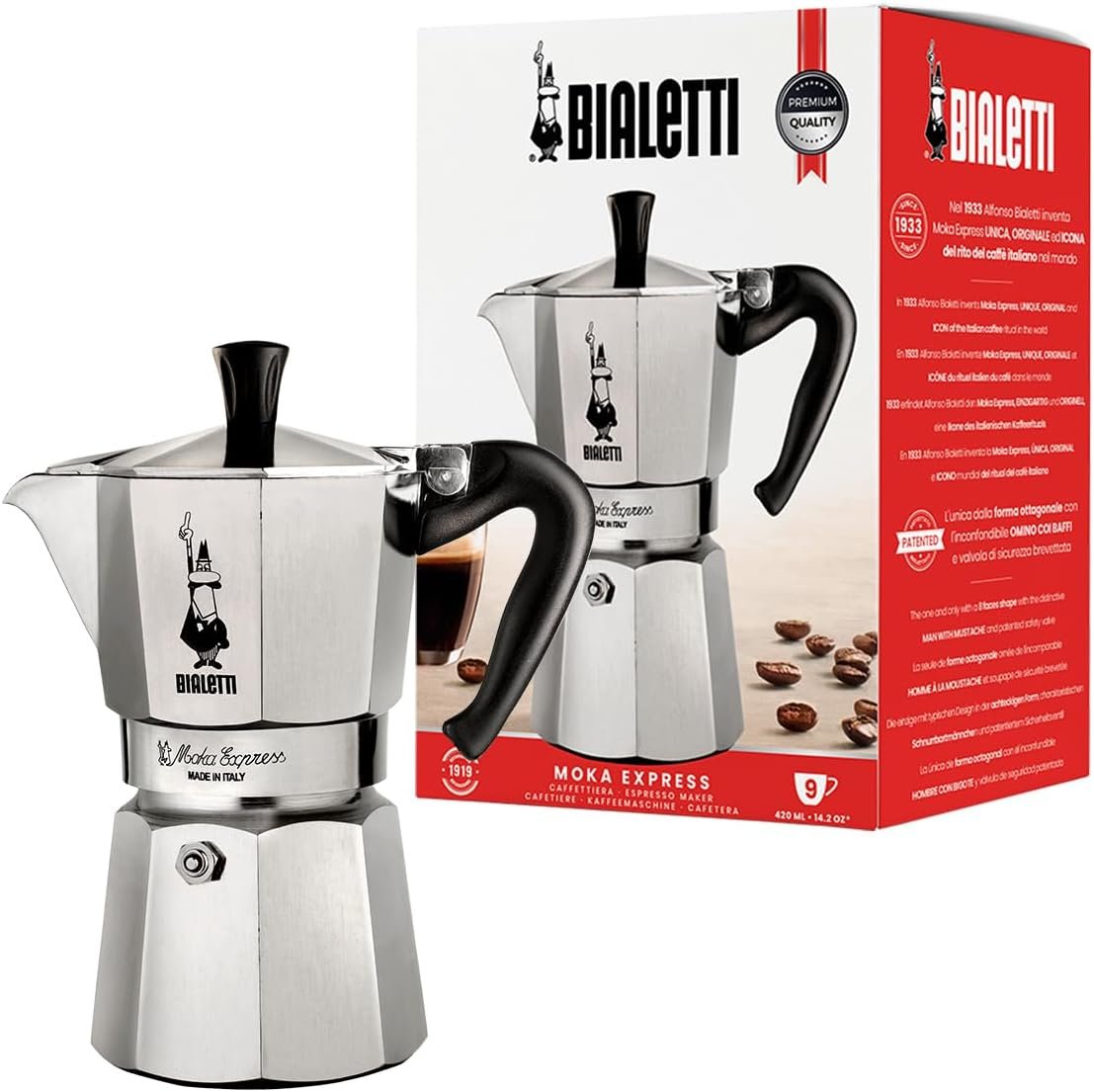
Why equipment choice matters for stovetop coffee
Choosing the right coffee equipment changes extraction control, flavor balance, and everyday workflow for home brewers. Stovetop moka pots occupy a distinct niche between drip brewers and pump-driven espresso machines: they use direct heat and a simple pressure differential to produce concentrated, espresso-like coffee without a pump. For households seeking a compact, low-maintenance solution that emphasizes strong, aromatic cups, material, capacity, and heat-management characteristics matter most. The Bialetti Moka Express 9-cup is a long-established aluminum design that prioritizes speed and robustness. Evaluating this model requires attention to grind compatibility, stovetop heat source, user interaction during brewing, and long-term maintenance of gaskets and safety features. Buyers should assess whether the moka workflow — manual heat control, short brew cycles, and concentrated output — aligns with desired drink strength, consistency needs, and kitchen routines.
Quick Overview
| Feature | Details |
|---|---|
| Product category | Stovetop moka pot (percolation-style stovetop brewer) |
| Brewing method | Steam/pressure-driven percolation (no pump) |
| Capacity | 9-cup (Italian espresso cups) — 420 milliliters total output |
| Materials | Polished aluminum body with safety valve and phenolic handle (ergonomic) |
| Heating/compatibility | Gas and electric stovetops; compatible with induction using a separate Bialetti induction adapter plate |
| Grind/filter compatibility | Ground coffee only; medium-fine to fine grind recommended for moka extraction |
| Best suited users | Home brewers who want concentrated, espresso-like coffee without a pump |
| Intended use cases | Single-cup concentrated coffee, small household servings, stovetop espresso-style drinks |
| Maintenance notes | Rinse only; not dishwasher-safe; replaceable rubber gasket and filter plate |
| Safety features | Patented safety valve in boiler to release excess pressure |
| Warranty | Manufacturer warranty details vary; consult Bialetti disclosures |
The table summarizes how construction, capacity, and the simple pressure-based brewing system influence daily use: aluminum conducts heat rapidly for quick extraction but requires attentive temperature control to avoid over-extraction. The 420 ml output suits small groups or repeated single servings, and maintenance habits — rinsing only and gasket care — affect long-term flavor retention and durability.

Brewing method compatibility and beverage outcomes
The Moka Express operates by heating water in a lower chamber until steam pressure forces water up through a coffee-filled funnel and filter into the upper collecting chamber. This mechanism produces a concentrated beverage that carries more solubles than drip coffee but lower crema and pressure than pump espresso. Compatibility centers on ground coffee: finely ground espresso-style beans or medium-fine grinds provide better extraction speed and surface area for the brief contact time inside the unit. The aluminium construction favors rapid heat transfer, which accelerates the extraction kinetics; a brisk head of steam and the characteristic “gurgle” signal completion. This method is most compatible with drinkers seeking robust, aromatic cups for straight sipping or milk-based drinks when combined with a separate steaming solution.

Grind size and particle distribution effects
Grind size directly impacts flow rate and extraction percentage in a moka pot. A medium-fine to fine grind provides sufficient surface area to extract bold flavor compounds during the short percolation interval, while overly fine, espresso-level grinds can slow flow and increase the risk of channeling or clogging. Conversely, coarser grinds reduce extraction and yield thin, underdeveloped cups. Particle uniformity matters: grinders with consistent burrs produce more predictable extraction than blade grinders. Given the Moka Express’s short brew path and modest pressure, achieving repeatable results benefits from a calibrated burr grinder and small adjustments to grind and dose.
Water temperature and preheating options
Water temperature at the point of contact governs how quickly soluble compounds dissolve. Filling the boiler with preheated water reduces the time the aluminum sits on the stove before percolation, limiting prolonged exposure to high heat and lowering the chance of burnt, bitter notes. Using cold water lengthens the heating phase and can increase extraction of bitter compounds if the pot remains on high heat. Practically, many brewing guides recommend medium heat and monitoring the flow so that the extraction completes as the upper chamber fills; however, consistent stovetop heat profiles are essential, and induction setups require the adapter plate to ensure correct heating behavior.
Beverage types and adaptability
The Moka Express produces a concentrated base suitable for multiple preparations: straight short cups reminiscent of Italian stovetop coffee, lungo-style servings by adjusting dose and grind, or milk-based beverages when paired with a separate milk-heating device. It does not create true pump-driven espresso pressure, so expect differences in crema and body compared to espresso machines. The moka method is adaptable but optimized for shorter, intense servings rather than high-volume or specialty coffee precision extraction.
Ease of use and workflow complexity
The Moka Express follows a manual, three-part workflow: fill the lower chamber with water to the safety valve, add ground coffee to the filter basket without tamping, assemble, and place on a stovetop. The operation is straightforward but requires attention to heat ramp, brew