Bialetti Moka Express 6-Cup: Stovetop Espresso Review Guide
Why equipment choice matters for stovetop espresso and who should consider a Moka pot
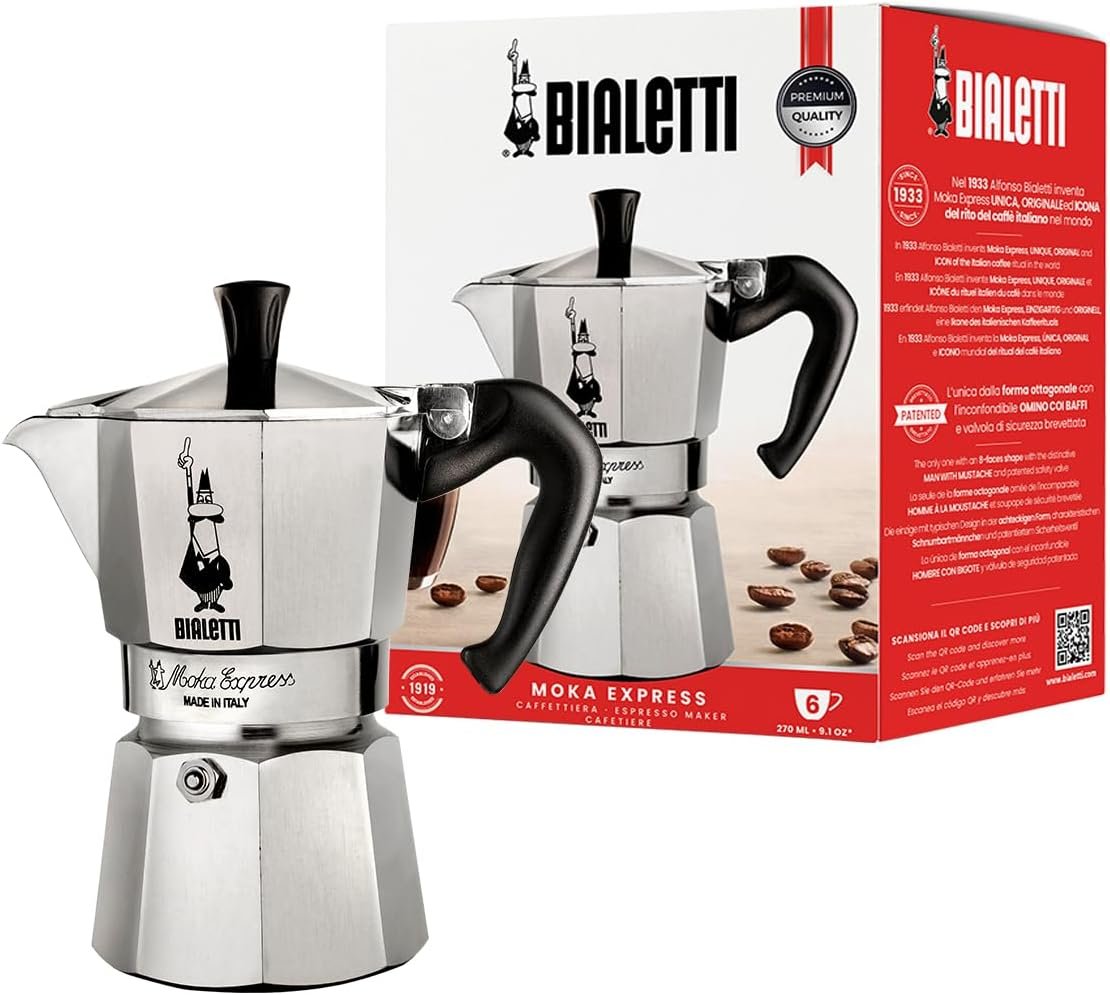
Choosing the right coffee equipment has a direct impact on extraction, flavor clarity, and daily workflow for home brewing. For many households and enthusiasts seeking a compact, manual alternative to pump-driven espresso machines, a stovetop moka pot offers a low-footprint method that relies on boiler pressure and heat transfer rather than a pump for extraction. The Bialetti Moka Express 6-Cup is a classic aluminum model sized for small groups or single-person multiple cups; it uses a safety valve, a three-piece assembly, and manual operation. Decisions around materials, stovetop compatibility, grind size, and cleaning regime determine whether a moka pot will fit a user’s routine. This review is aimed at home brewers, apartment dwellers, and coffee enthusiasts evaluating tradeoffs between convenience, thermal behavior, brew strength, and long-term durability in a simple, manual brewer.
Quick Overview
| Feature | Details |
|---|---|
| Product category and brewing method | Stovetop moka pot (espresso-style extraction via steam pressure) |
| Capacity and output | 250 milliliters (marketed as 6 espresso cups / approx. 6 oz total output) |
| Materials and construction | Cast aluminum body with polymer handle and knob; classic octagonal shape |
| Heating / pressure system | Manual stovetop heating; pressure generated by steam in water chamber; safety pressure valve included |
| Grind compatibility | Ground coffee; medium-fine to fine (espresso-style) without tamping |
| Best suited users | Home brewers, small households, those seeking traditional Italian stovetop coffee |
| Intended use cases | Daily home brewing, casual espresso-style servings, stovetop-compatible kitchens |
| Cleaning & maintenance notes | Rinse only after use; not dishwasher safe; avoid detergents to preserve flavor |
The table lists concrete specifications that influence brewing outcomes: aluminum construction yields rapid heat transfer and light weight but requires attention to cleaning and potential oxidation; stovetop operation means heat source type affects temperature consistency; and the safety valve sets a baseline for safe pressure relief. These features combined shape workflow speed, extraction potential, and recommended maintenance practices.

Brewing method compatibility and stovetop performance
The Bialetti Moka Express is designed specifically for direct-heat stovetop brewing and is compatible with gas and many electric range types; induction use requires an induction adapter plate because the base is aluminum and not magnetic. The brewing method relies on water in the lower chamber heated to generate steam pressure that pushes water through the coffee basket into the upper chamber, producing a concentrated, espresso-style beverage rather than true pump-driven espresso. Compatibility with a range of stovetops makes it versatile for kitchens, but heat source control becomes a primary variable affecting extraction control and flavor consistency. Users must assess their stove’s heat responsiveness and consider an induction adapter for induction cooktops to achieve reliable results.

Stove types, heat transfer, and adapter requirements
Aluminum construction provides fast heat transfer from the stovetop to the boiler, enabling relatively quick brew cycles; however, rapid heating reduces the margin for stable temperature control. On gas ranges a lower flame setting is usually recommended to avoid overheating and bitter extraction, while electric coil and smooth-top stoves heat differently and may maintain steadier temperatures but react more slowly to adjustments. Because the Moka Express base is non-magnetic aluminum, induction cooktop users need a dedicated induction adapter disk to transfer heat. The adapter adds thermal mass and can slow response time, which may improve temperature stability but changes the brewing rhythm and total brew time.
How the safety valve and manual pressure system affect compatibility
The integrated safety valve is a manufacturer-disclosed safety feature that relieves excess pressure; it does not regulate extraction pressure but functions to reduce risk if blockages occur. The moka principle produces pressure levels well below commercial espresso pumps, typically creating a pressurized, forced percolation rather than the high-pressure crema-producing extraction of 9 bar machines. Therefore, compatibility with espresso grind and expectations of espresso-like crema should be calibrated: the Moka Express performs best when used with grounds designed for concentrated stovetop brews, and the valve’s presence supports safe manual operation on compatible stovetops.
Grind compatibility and recommended adjustments for different stovetops
Grind size significantly influences flow rate and extraction in a moka pot. For the Moka Express, a medium-fine to fine ground—finer than drip but coarser than machine espresso—tends to balance extraction time with pressure-driven flow. If a particular stove heats quickly, a slightly coarser grind can prevent over-extraction and bitter flavors by increasing flow; conversely, slower, steadier heat sources may permit a finer grind for fuller extraction. The absence of tamping and the fixed filter basket mean even distribution and consistent grind particle size are crucial for repeatable results, so grinder consistency is central to performance.
Ease of use and daily workflow for home brewing
As a manual stovetop brewer, the Moka Express follows a straightforward, repeatable workflow: measure water to the safety valve line, add ground coffee without pressing into the filter basket, assemble, and heat until the upper chamber begins to fill and gurgle. This manual sequence eliminates electronic controls and programmable features, which simplifies the learning curve but places more emphasis on operator technique—fill level, grind size, and heat control—to reach desired extraction. The ergonomic polymer handle and compact form support easy handling, but care is needed during the hot brew and when disassembling. The manual mode suits users seeking tactile control and a predictable, low-tech routine rather than automated preset convenience.

Step-by-step workflow and common user adjustments
Typical workflow centers on measured water and coffee doses, attention to the safety valve fill line, and heat management. Filling to the valve ensures appropriate steam volume and headspace; overfilling risks spillage while underfilling may shorten brew and under-extract. No tamping is recommended—coffee should be leveled but not compressed. During heating, monitoring the transition from steady boil to the pronounced gurgle signals completion; turning the heat down or removing from the element at that point helps prevent overheating. Consistent dosing and repeatable pacing are the main user-side controls available.
Ergonomics, assembly, and handling considerations
The classic octagonal aluminum body and separate chambers create a lightweight, easy-to-grip profile, and the ergonomic polymer handle reduces heat transfer during pouring. Assembly is simple: lower boiler, filter basket, and upper collector screw together. The simplicity is an advantage for rapid daily use and travel, but the small metal threads and gasket require routine inspection and careful hand-tightening to avoid wear. Thermal shock risk is reduced by allowing the pot to cool before washing; abrupt changes in temperature can stress aluminum and gasket materials over time.
Workflow complexity compared with automatic brewers
Compared with electric espresso or pod machines, the Moka Express has a lower workflow complexity in terms of buttons and programming but a higher dependency on manual technique for consistent results. There are no digital temperature controls, pressure profiles, or timed extraction cycles; instead, heat source management and grind consistency become the primary levers for flavor control. This trade-off favors users who prioritize ritual and manual control and those who own a high-quality grinder to deliver repeatable particle distribution.
Temperature control, heat stability, and how they influence extraction
Temperature and its stability are central to extraction chemistry in any immersion or percolation brew. The Moka Express uses direct conduction through aluminum to heat the boiler; the resulting temperature profile is governed by stovetop power, pot mass, and user timing. Rapid temperature spikes can push the brew into over-extraction, increasing bitterness and dark solubles, while insufficient heat yields under-extracted, weak flavors. Because the device lacks thermostatic control, achieving consistent extraction depends on stove selection, managing flame or element level, and tracking the audible gurgle as a completion indicator. Heat retention of aluminum is modest compared with stainless steel, so brewing is swift and thermal losses during pouring are limited.

How heat transfer in aluminum affects brew speed and flavor
Aluminum’s high thermal conductivity expedites the transfer of stovetop heat to the water, which shortens the time to pressure build-up and reduces total brew cycle length. Faster cycles concentrate extraction into a narrower window; this can deliver bright, intense flavors but also increases sensitivity to small variations in grind or fill level. Because temperature ramps are steeper with aluminum, users should favor lower heat settings once water nears boiling to avoid a too-rapid push that produces harsh notes. The pot’s relatively thin walls promote quick cooling after removal from the heat, which helps limit post-extraction overcooking of the brewed liquid in the upper chamber.
Audible signals, timing, and extraction endpoints
The Moka Express relies on auditory cues—initial sputtering and a gurgle—to indicate that water has been forced through the coffee and the upper chamber is filling. These sounds mark the transition from active percolation to the final phase, signaling the operator to reduce or cut heat to prevent overheating and excessive concentration. Timing varies with stove and fill volumes, so operators should correlate the gurgle sound with observed flow and extraction strength over a few repetitions. Using consistent dose and grind, and stopping the heat at the same audible point, is a practical strategy for repeatability without instrumentation.
Grind distribution, flow dynamics, and extraction quality
Extraction quality in a moka pot is highly dependent on flow dynamics across a fixed shower of coffee within the basket. Evenness of grind distribution reduces channeling and uneven flow paths, which would otherwise create pockets of over- or under-extraction. A consistent medium-fine grind yields a flow rate that balances soluble extraction and contact time under the limited pressure produced by steam. Because the Moka Express does not generate pump pressure, soluble yield tends to emphasize heavier-bodied, concentrated flavors; to refine clarity, consider slightly coarser grinds or cooler contact at the end of the cycle to reduce excessive bitter solubles.
Capacity, serving flexibility, cleaning, and long-term durability
The 250 milliliter capacity (marketed as a 6-cup model) places the Moka Express in the small household range: suitable for 2–4 small espresso-style cups or sequential single servings. Serving flexibility depends on cup size and desired strength—larger cups dilute concentrated output and alter perceived balance. Cleaning is straightforward but restrictive: rinse with water, avoid detergents and the dishwasher to preserve flavor and prevent surface degradation. Durability considerations center on aluminum’s susceptibility to corrosion over time if not dried properly and on wear to the gasket and safety valve. With regular maintenance—drying, gasket inspection, and valve checks—the design can provide many years of functional service in appropriate environments.

Capacity constraints and serving strategies for households
At 250 milliliters, the pot produces a concentrated output best enjoyed in small cups or combined with milk-based drinks; for households that regularly serve larger portions or multiple simultaneous cups, multiple brew cycles or a larger-size moka pot may be needed. Because the brewing process is quick, sequential brewing is feasible but requires slight cooling and cleaning between cycles if consistent flavor is desired. For single-serve routines, the compact capacity limits waste while enabling quick morning preparation without the footprint of a large machine.
Cleaning protocol and how it affects flavor and lifespan
Manufacturer guidance specifies rinsing with water after each use, avoiding detergents and dishwasher exposure so as not to strip seasoned aluminum surfaces or impart off-flavors. Residual coffee oils can form a stable patina that some users consider part of a seasoned flavor profile; however, periodic thorough cleaning of the filter basket, gasket area, and safety valve is important to prevent clogging and maintain consistent flow. Draining, drying, and storing disassembled reduces moisture retention that could accelerate oxidation or gasket deterioration.
Durability risks: gasket, valve maintenance, and aluminum care
Common wear points include the rubber or silicone gasket and the safety valve; both are replaceable components for many moka pots. The aluminum body is lightweight but can show signs of pitting or discoloration if exposed to detergents, acidic residues, or prolonged moisture. Avoiding dishwasher cycles and abrasive scrubbers preserves the surface and sealing surfaces. Regular inspection of threads and the sealing ring ensures safe operation; a compromised gasket or clogged valve can alter pressure behavior and extraction consistency, so scheduled replacement based on visible wear is a prudent preventive step.

Pros & Cons
Pros
- Classic, compact design with low footprint and proven stovetop brewing method. The Moka Express uses a simple three-piece assembly that supports quick brewing cycles and easy storage, making it suitable for small kitchens and travel-friendly routines.
- Aluminum construction provides very efficient heat transfer and rapid brew cycles. Faster heat-up times reduce waiting and enable concentrated extraction with minimal thermal mass.
- Integrated safety valve improves operational safety. The valve offers pressure relief if blockages or overpressure conditions occur, reducing risk in manual operation.
- Manual, no-electronics operation gives tactile control. Users can manage grind, dose, and heat to dial extraction and flavor without relying on electronic programming.
- Compatible with gas and many electric stovetops out of the box. Induction compatibility is available using a separate adapter plate for induction ranges.
- Simple cleaning regimen (rinse only) reduces chemical exposure risks. Avoiding detergents and dishwashers helps maintain the aluminum surface and flavor profile over time.
- Well-suited to espresso-style concentrates and milk-based beverages. The concentrated output pairs effectively with steamed milk for cappuccinos and lattes when combined with separate frothing methods.
- Replacement parts like gaskets and valves are commonly available. This supports long-term maintainability compared with sealed, proprietary systems.
Cons
- Temperature and extraction control depend heavily on stovetop behavior and operator technique. The lack of thermostatic or pressure control requires careful heat management and consistent grind to avoid over- or under-extraction.
- Aluminum is prone to surface changes if exposed to detergents or dishwashers. Users must follow rinse-only cleaning to prevent discoloration, off-flavors, or surface pitting over time.
- Not induction-ready without an adapter plate. Induction users must acquire and accommodate an adapter, which changes thermal response and may alter brew timing.
- Output volume is limited to 250 milliliters, which may necessitate multiple cycles for larger gatherings. The small capacity is ideal for concentrated servings but less efficient for larger households or entertaining.
- Pressure and crema differ from pump espresso. The moka pot produces a concentrated cup but cannot replicate the high-pressure crema and microfoam characteristics of pump-driven espresso machines.
Final Verdict: Who This Product Is Best For (and Who Should Skip It)
The Bialetti Moka Express 6-Cup is best for home brewers and enthusiasts who value a compact, manual stovetop method that produces concentrated, espresso-style coffee without the complexity or footprint of an electric espresso machine. It fits small households, apartment kitchens, and users who appreciate tactile control over grind, dose, and heat—especially those who already have a consistent grinder and are comfortable managing stovetop heat. The pot’s aluminum construction supports quick brewing and easy handling, while the safety valve and simple assembly make it accessible to users seeking a reliable, low-tech ritual.
This moka pot is not ideal for users requiring automated temperature and pressure control, large-quantity serving efficiency, or induction compatibility without additional accessories. Those wanting true 9-bar espresso, programmable extraction, or the convenience of one-touch milk steaming should consider pump espresso machines or capsule systems instead. For users focused on traditional stovetop extraction and willing to manage grind, heat, and maintenance, the Moka Express remains a practical and historically proven choice.
Frequently Asked Questions (FAQs)
What grind size works best for the Bialetti Moka Express 6-Cup?
A medium-fine to fine grind typically provides the best balance for moka pot brewing. The grind should be finer than drip but coarser than machine espresso to permit adequate flow under steam-induced pressure. Uniform particle distribution from a consistent grinder reduces channeling and uneven extraction; avoid tamping, instead level the grounds without compressing to maintain flow.
Can the Bialetti Moka Express be used on induction stoves?
The Moka Express has an aluminum base that is not magnetically compatible with induction cooktops. Induction users can employ a flat induction adapter plate to transfer heat; the adapter adds thermal mass and alters heat response, often improving stability but slightly lengthening brew time. The manufacturer notes an adapter is required for induction.
How should the Moka Express be cleaned to preserve flavor and longevity?
Manufacturer guidance recommends rinsing with water after each use and avoiding detergents and dishwasher cycles. Gentle hand rinsing preserves the aluminum surface and avoids stripping seasoning or causing discoloration. Periodic inspection and cleaning of the filter basket, gasket seating, and safety valve reduce clogging risks and help maintain consistent flow and flavor over time.
What safety features are included with this moka pot and what do they do?
The Moka Express includes a patent-disclosed safety valve on the lower boiler that relieves excess internal pressure if a blockage or overpressure condition occurs. The valve is a passive safety element and does not regulate extraction pressure; it reduces the risk associated with manual stovetop pressurization but should be inspected periodically for cleanliness and proper function.
How many cups does the 6-Cup Bialetti Moka Express actually make?
The model is rated at 250 milliliters, commonly marketed as a 6-cup moka size. That output translates to several small espresso-style servings—typically 2 to 4 small cups or multiple sequential single servings—depending on cup size. Users should plan multiple cycles for larger gatherings or larger cup formats.
Will the Moka Express produce the same crema as a pump espresso machine?
No. The moka pot uses steam-induced pressure rather than a high-pressure pump and therefore typically produces a concentrated, robust cup without the persistent high-pressure crema found in pump-driven espresso. The beverage is espresso-style and intense in body, but its crema characteristics differ due to lower extraction pressure and different flow dynamics.
How does heat source selection affect extraction with this moka pot?
Heat source type and control are key variables: gas allows rapid adjustments but can produce quicker spikes in temperature, while electric surfaces offer steadier but slower response. Aluminum transfers heat rapidly, so moderating flame or element power as the upper chamber fills helps prevent over-extraction and bitter notes. Consistent heat management improves repeatability.
Are replacement parts available and what should be inspected regularly?
Common wear parts such as the sealing gasket and filter basket are generally available for replacement. Regular inspection should target the gasket for cracks or compression, the safety valve for cleanliness and free movement, and the thread/gasket seating area for residue that could impair sealing. Replacing worn components maintains extraction consistency and safety.