BLACK+DECKER 12-Cup Coffee Maker — Brew Quality Guide Review
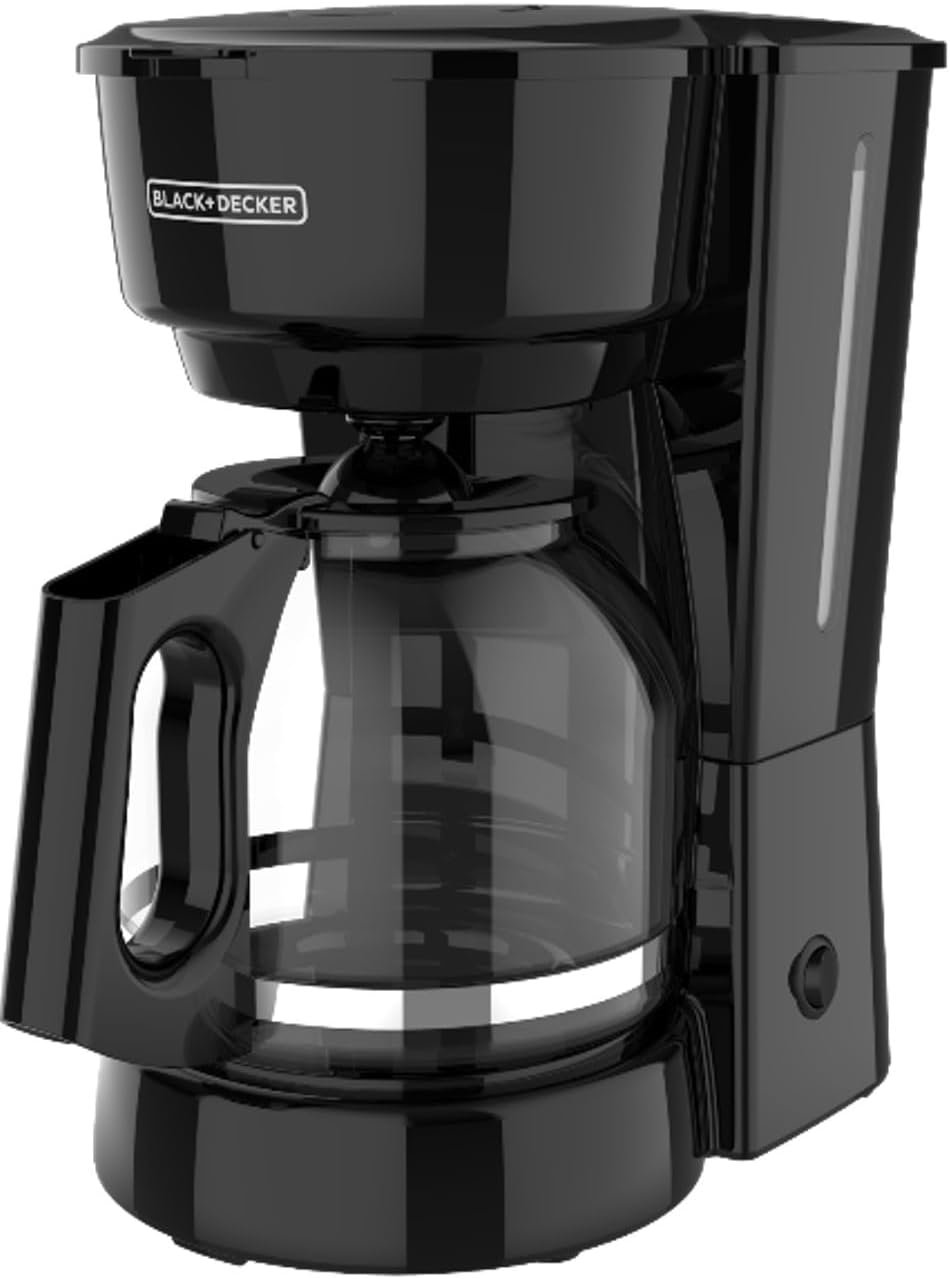
Choosing the right drip brewer for everyday use
Selecting domestic coffee equipment affects daily brew quality, kitchen workflow, and long-term value for households. For many home brewers and families, a reliable 12-cup drip machine balances batch capacity with counter footprint and routine maintenance. Important decision factors include the machine’s brew method compatibility, how it wets and extracts grounds, temperature stability during and after brewing, ease of pouring and serving, and the cleaning steps required to keep flavor consistent. Appliances that favour straightforward controls and removable parts reduce friction in morning routines while technologies such as showerhead or vortex systems influence extraction uniformity for coarser domestic grinds. This evaluation focuses on functional attributes relevant to users seeking a mostly automatic drip brewer for filter coffee, highlighting how design choices — like carafe shaping, filter type, and heated plates — interact with established extraction principles and common household use patterns.
Quick Overview
| Feature | Details |
|---|---|
| Product category | Drip coffee machine (12-cup capacity) |
| Brewing method | Automatic drip with showerhead / Vortex-style dispersion |
| Capacity & output | 12-cup glass carafe; keep-warm plate for serving |
| Materials & construction | Metallic exterior finish; plastic and glass components; removable brew basket |
| Heating system | Internal heating element with heated carafe plate (Keep Hot) |
| Filter compatibility | #6 basket-style paper filters; compatible with permanent filter basket |
| Key usability features | Sneak-A-Cup flow stop, no-drip pour spout, removable dishwasher-safe filter basket |
| Intended users | Households, casual home brewers, multi-cup morning routines |
| Maintenance notes | Dishwasher-safe removable filter basket; carafe and plate require regular cleaning |
The table summarizes how the machine’s components connect to brewing outcomes and daily usability. The Vortex-style showerhead targets more even grounds saturation, while the #6 basket-type filter options support coarse-to-medium grind ranges typical for drip. The Sneak-A-Cup and no-drip carafe prioritize spill reduction during service, and the keep-warm plate offers serving flexibility at the cost of continuous heat exposure that requires periodic cleaning.

Brewing method compatibility and filter choices
The machine is built as a conventional drip brewer, which means brewing is compatible with ground coffee intended for basket-style drip brewers and follows typical drip extraction parameters. Compatibility centers on #6 basket filters or the included removable permanent filter basket; both options influence flow rate and fines retention. Coarser medium grind sizes reduce over-extraction risk in longer contact time setups, while finer drip grinds can increase extraction and body. This configuration is not designed for press or immersion methods and cannot produce espresso-style pressure-based extraction. Users should match grind size and dose to typical drip brew ratios and expect results consistent with automatic showerhead dispersion rather than manual pour-over nuances.

Filter type implications for extraction
Using the included permanent filter basket alters soluble retention compared with paper filters. Metal or nylon mesh retains more oils and fines, which increases perceived body and flavor volume but can also introduce more sediment when using finer grinds. Paper basket filters trap more micro-particles and oils, yielding a cleaner cup and slightly lower mouthfeel. Grind sizing becomes more critical with the permanent filter: a medium grind reduces fines passing through the mesh, while a slightly coarser setting minimizes clogging and maintains steady flow. Daily cleaning of either filter type helps stabilize flavor by preventing old oils from affecting subsequent brews.
Grind size and brew ratio guidance
Recommended starting points for grind and dose mirror standard drip practices: a medium grind and brew ratios near 1:15 to 1:17 (coffee to water by weight) produce a balanced extraction in automatic drip systems. Because the unit uses a showerhead-style dispenser, uniform saturation is more achievable when the grounds bed allows even water penetration; overly fine grinds can restrict flow and increase contact time, promoting over-extraction and bitterness. Conversely, very coarse grinds may under-extract and taste weak. Consistent grinding and adjustment by small increments will help align extraction with personal taste preferences while working within the machine’s flow characteristics.
Ease of use and workflow for daily routines
The machine emphasizes simple operation with a flip switch, button interface, and semi-automatic features designed for straightforward daily use. Programs and timers are minimal; the Sneak-A-Cup feature temporarily interrupts flow to allow early pouring, and the removable filter basket reduces the friction of handling grounds. Control simplicity minimizes setup time, but users wanting advanced scheduling or multiple strength settings will find the interface basic. The carafe’s no-drip spout and the keep-warm plate reduce mess and support serving in multi-person households. Overall workflow favors users who prioritize quick start, predictable operation, and minimal interaction over granular control of brew parameters.

Sneak-A-Cup and service workflow
Sneak-A-Cup pauses the drip process when the carafe is removed, letting a single cup be poured mid-cycle without a full stop to brewing. It is practical for interrupting service briefly, provided the carafe is returned to the hot plate within the specified window to prevent overflow when brewing resumes. This feature aids busy mornings but slightly complicates the timing of multi-cup pours compared with continuous carafe flow. Users should be aware of the 30-second guidance for return to the plate to avoid spill risks and to maintain consistent brewing progression when resuming full-cycle extraction.
Carafe design, pouring, and serving flexibility
The glass carafe has a no-drip perfect pour spout intended to minimize spills and drips, which benefits serving in small kitchens or around work surfaces. Glass preserves clarity of flavor but offers less thermal retention than insulated alternatives; the keep-warm plate compensates by maintaining serving temperature. Ergonomics of the carafe handle and spout influence pouring control during repeated serving; the no-drip geometry reduces cleanup frequency, while the glass body allows visual monitoring of remaining volume. For those requiring extended heat retention without active plate use, an insulated carafe would be preferable but is not part of this configuration.
Temperature control and heat stability during brew and keep-warm
Temperature management in automatic drip brewers depends on the heating element design, flow rate, and thermal coupling between water reservoir and warming plate. The machine uses an internal heating element and a heated carafe plate to maintain serving temperature after brewing. Because there is no active PID or adjustable thermostat disclosed, temperature is governed by factory defaults, so peak water temperature during extraction will align with common domestic drip ranges rather than precise specialty coffee targets. Heat loss through the glass carafe and the continuous keep-warm plate may affect taste if the carafe sits for extended periods; periodic transfer to insulated vessels preserves cup temperature without prolonged exposure to plate heat.

Expected extraction temperatures and implications
Automatic drip systems typically aim for water delivery temperatures near the 195–205°F window that optimizes extraction of soluble compounds. Without explicit temperature control, the actual in-cup result depends on initial water temperature, brew time, and heat losses. The showerhead dispersion improves saturation but cannot alter baseline temperature. Users seeking strict temperature profiling for specialty coffee may find the thermal characteristics adequate for everyday filter coffee but limited for precision brewing. For best results, using freshly heated water and minimizing time between heating and brewing supports maintaining extraction temperature within the productive range.
Keep-warm plate effects and best practices
The Keep Hot carafe plate maintains serving temperature but keeps coffee in contact with heat after extraction, which can accelerate volatile loss and change flavor over time. Leaving brewed coffee on a heated plate for prolonged periods may produce a flatter or slightly baked profile compared with pouring into an insulated carafe immediately after brewing. Regular cleaning of the plate and prompt serving or transfer to an insulated container improves sensory retention. For households that serve throughout the morning, the plate provides convenient access to hot coffee at the expense of the freshest tasting cup after longer holding periods.
Brew consistency and extraction quality driven by Vortex technology
The machine’s Vortex Technology references a showerhead-like dispersion designed to increase even saturation across the grounds bed, which helps improve uniform extraction in automatic drip systems. Uniform water distribution reduces channeling and uneven extraction that can occur when water is delivered to a narrow area. Consistent flow through a properly sized grounds bed, paired with appropriate grind and dose, encourages balanced extraction across the brew. While the showerhead aids saturation, final cup quality still depends on upstream variables such as grind uniformity, coffee freshness, and brew ratio—factors outside the machine’s mechanical dispersion capabilities.

Flow control, contact time, and their impact on cup balance
Flow rate through the grounds determines contact time and extraction yield; the brewer’s internal geometry and filter type set the baseline flow. Basket-style systems tend toward shorter, uniform flow paths compared with cone filters, so maintaining a medium grind and stable dose helps ensure balanced yield. If flow slows due to fine grind or clogged mesh filters, contact time rises and can push extraction toward bitterness. Conversely, too coarse a grind reduces solubles extraction and yields a weak cup. Matching grind and dose to the machine’s basket system supports predictable results with less iterative adjustment than some manual methods.
Limitations for specialty extraction goals
Although showerhead dispersion improves wetting and extraction uniformity, the unit cannot replicate manual pour-over control over pulse pouring, flow pauses, or micro-adjusted pour rates. Similarly, pressure-profiled espresso and immersion-based techniques fall outside its design scope. For users prioritizing precise extraction curves or tasting subtle origin characteristics at the highest resolution, manual brewing gear or advanced programmable machines offer more control. For a household-focused drip brewer, the trade-offs favor simplicity and reproducibility over the micro-control needed for specialty-focused extraction tuning.
Cleaning, maintenance, and long-term reliability considerations
Durability and maintenance expectations depend on component materials, ease of disassembly, and the chosen cleaning cadence. The removable, dishwasher-safe filter basket simplifies grounds removal and reduces hands-on cleanup, while the glass carafe and metallic exterior require routine washing to prevent mineral or oil buildup. Plastic components in domestic brewers are common and can last with normal care, but long-term reliability is influenced by heating element longevity, seal integrity, and regular descaling when used with hard water. Periodic descaling and cleaning of the showerhead and reservoir areas help maintain flow rates and extraction consistency over the appliance’s service life.

Routine cleaning steps and intervals
Regular cleaning minimizes flavor carryover and mechanical issues. Key steps include daily removal and washing of the carafe and filter basket, weekly wipe-downs of the exterior and warming plate, and monthly descaling depending on local water hardness. Dishwasher-safe parts reduce manual time, but manual rinsing and occasional gentle scrubbing maintain performance where dishwasher detergents might accelerate wear over years. Keeping the showerhead and water passages free from mineral deposits preserves even water distribution and helps maintain consistent brew profiles.
Factors that affect longevity and expected wear
Thermal cycling around the heating element and mechanical wear on switches and plastic components are common longevity determinants in compact drip brewers. Using filtered water reduces scale buildup and extends heater life, while careful handling of the glass carafe prevents breakage. The simplicity of the machine’s electronics and controls can be advantageous for long-term reliability because fewer complex parts mean fewer potential failure points. However, heavy daily use in large households will naturally accelerate wear relative to intermittent use in smaller households.

Pros & Cons
Pros
- Even grounds saturation via Vortex/showerhead design supports more uniform extraction across a typical domestic grounds bed. This feature reduces channeling risk compared with single-point water delivery and helps yield balanced cups with consistent pouring patterns.
- Sneak-A-Cup flow-stop adds practical flexibility during brewing, letting a single serving be poured mid-cycle without significant mess when the carafe is briefly removed. It suits busy mornings and staggered serving in multi-person households.
- No-drip pour spout and ergonomic carafe design minimize spills while serving, reducing cleanup and making the brewer more user-friendly for family kitchens and shared spaces.
- Removable, dishwasher-safe filter basket and compatibility with #6 basket paper filters simplify maintenance and allow users to choose between cleaner paper-filtered cups and fuller-bodied metal-filter results.
- Keep-warm carafe plate provides convenient serving temperature for multi-cup service, allowing the brewed pot to remain at a ready temperature for household consumption.
- Compact footprint and metallic exterior finish balance counter space needs with durability, making the unit suitable for typical kitchen layouts.
Cons
- No precise temperature control or advanced programming disclosed means extraction temperatures are governed by factory settings and heat-loss variables, limiting precision for specialty coffee applications that require tight thermal control.
- Glass carafe with warming plate combination preserves serving temperature but provides less insulation than a thermal carafe, which can lead to flavor degradation over longer holding times on the hot plate.
- Basic control interface and limited programmability may be insufficient for users seeking scheduled brew presets, brew-strength adjustments, or more granular user control.
- Permanent filter basket increases sediment and oil transfer into the cup compared with paper filters; some users report preference for paper filtration to reduce mouthfeel heaviness and fine particle presence.
Final Verdict: Who This Product Is Best For (and Who Should Skip It)
The machine suits households and casual home brewers seeking a straightforward, reliable 12-cup drip solution for routine use. Its Vortex/showerhead dispersion, no-drip carafe design, and Sneak-A-Cup convenience address common daily needs: even saturation for consistent extraction, spill-minimized serving, and simple mid-cycle access. The removable dishwasher-safe filter basket and basket filter compatibility make cleaning approachable for users who prioritize low-effort maintenance. The keep-warm plate supports multi-person serving without additional steps, which is useful for family breakfasts or small offices.
Users who should consider alternatives include specialty coffee enthusiasts needing precise temperature control, programmable brewing curves, or pressure-based extraction; those requirements are beyond this model’s disclosed capabilities. People who regularly require extended thermal retention without continuous heating may prefer a brewer that includes an insulated carafe. For buyers prioritizing simplicity, capacity, and predictable drip-brew performance in a compact package, the machine provides practical everyday utility with clear maintenance considerations and extraction characteristics aligned with standard drip brewing practices.

Frequently Asked Questions (FAQs)
Can this BLACK+DECKER coffee maker use paper basket filters?
Yes. The unit accepts #6 basket-style paper filters in addition to the included permanent filter basket. Using paper filters produces a cleaner cup with fewer oils and micro‑particles, while the permanent basket retains more body and oils. Choice of filter affects mouthfeel and requires corresponding grind adjustments—medium grind works well with either filter to maintain steady flow and avoid over-extraction.
How does Vortex Technology impact extraction in drip brewing?
Vortex-style or showerhead dispersion distributes water across the grounds bed more evenly than single-point delivery, which reduces channeling and helps uniform extraction. Even saturation paired with appropriate grind and dose supports balanced soluble extraction. The technology improves repeatability for routine drip brewing but does not substitute for micro-control available in manual pour-over techniques.
Is temperature control adjustable on this machine?
The machine relies on its internal heating element and factory-set controls to deliver brewing and keep-warm temperatures; no user-adjustable thermostat or PID control is disclosed. This arrangement yields typical domestic drip temperatures suitable for everyday filter coffee but lacks the fine-grained temperature profiling desired for specialty extraction precision.
What are the cleaning and maintenance requirements?
Daily cleaning includes washing the carafe and removing and rinsing the filter basket; the basket is dishwasher-safe. Regular wipe-down of the exterior and warming plate prevents residue buildup. Periodic descaling of water passages and the showerhead is recommended based on local water hardness to maintain flow and extraction consistency over time.
How well does the keep-warm plate preserve flavor?
The keep-warm plate maintains serving temperature for short periods and is convenient for multi-cup service. However, prolonged exposure to constant heat can accelerate volatile loss and yield a flatter cup over time compared with transferring brewed coffee to an insulated carafe. For best flavor retention beyond the initial hour, transfer to an insulated container is recommended.
Who should consider a different brewer instead of this model?
Users seeking programmable brewing profiles, precise temperature control, pressure-based espresso extraction, or extended thermal retention via an insulated carafe should consider other models. This unit is tailored for straightforward, repeatable drip brewing in household settings rather than specialty coffee experimentation or advanced customization.