Braun BrewSense 12-Cup Review: Brew Quality & Usability Guide
Why appliance choice matters for home brewing
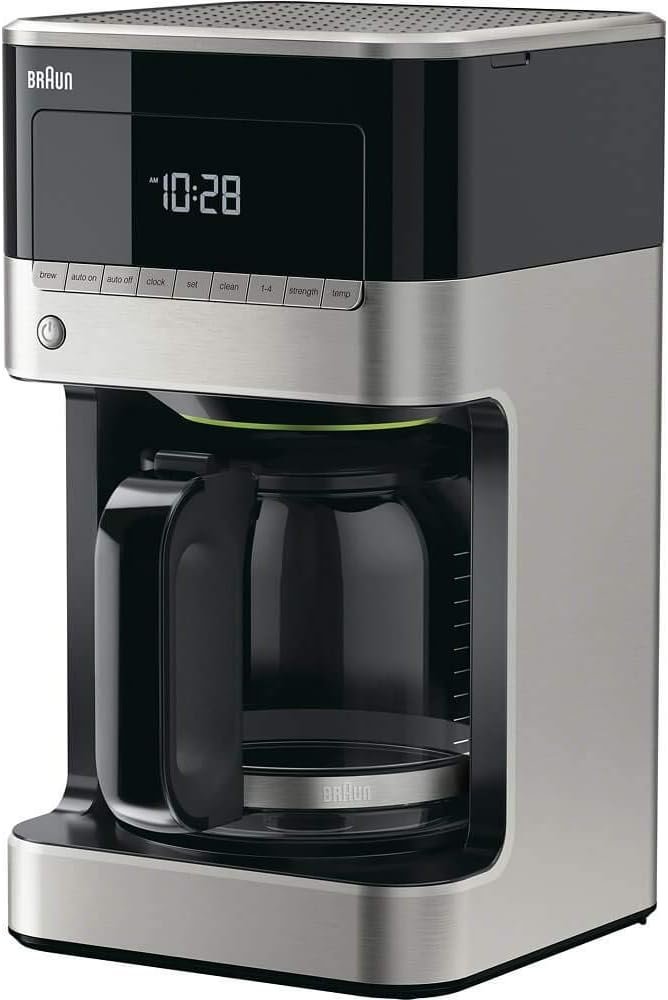
Selecting a home coffee maker influences consistency, flavour extraction, and daily workflow. For households and casual enthusiasts, a drip coffee maker must balance capacity, ease of use, and predictable thermal performance to deliver repeatable results across different grind sizes and brew ratios. The Braun BrewSense 12-cup model is positioned for multi-cup routines where programmability and simple maintenance matter. Key buyer needs include compatibility with common grind sizes for automatic drip, a predictable water flow path to minimize under- or over-extraction, and controls that reduce setup time for morning routines. Material choices such as stainless steel accents and reusable gold-tone filters affect heat retention and oil transfer into the cup. Water filtration and customizable cleaning address mineral buildup and extraction variability. Decisions should weigh how the machine’s specified features map to daily serving patterns, cleanliness expectations, and desired cup profile rather than headline claims.
Quick Overview
| Feature | Details |
|---|---|
| Product category & brewing method | Drip coffee maker designed for automatic pour-over style extraction |
| Capacity & output | 12-cup capacity (carafe included) for multi-cup serving |
| Materials & construction | Stainless steel exterior with black accents; included carafe; dishwasher-safe parts |
| Heating & control systems | Fully automatic operation, 24-hour programmable timer, auto shutoff, 110 Volt operation |
| Filtration & filter compatibility | Gold-tone permanent filter and charcoal water filter for flavor and water quality management |
| Best suited users | Households, small offices, users who want programmable scheduling and larger batch brewing |
| Intended use cases | Daily morning brewing, entertaining, and multi-cup serving; ground coffee input only |
| Warranty & packaging | Standard customer packaging; manufacturer-supplied model and identifiers |
This snapshot highlights how the machine’s core specs affect brewing and use. Capacity and permanent filtration influence oil transfer and extraction clarity; programmability and the timer shape pre-brew temperature management and convenience for scheduled brewing; dishwasher-safe parts and a customizable clean cycle impact maintenance frequency and long-term extraction consistency.

Brewing performance and extraction characteristics
The BrewSense design emphasizes conventional drip extraction where water distribution, contact time, and filter media determine cup clarity and body. The gold-tone permanent filter allows more coffee oils to pass compared with paper filters, increasing perceived body and brightness; this affects grind choice—medium to medium-coarse grinds will generally reduce fines and channeling. The charcoal water filter can reduce chlorine and off-flavors in municipal water, improving perceived extraction balance; however, it does not alter mineral content significantly, so scale management remains important. The 1–4 cup setting is intended to shorten contact time for smaller batches, reducing over-extraction risk when brewing fewer cups. Flow rate and showerhead geometry, typical to automatic drip designs, shape uniformity of extraction; repeatable results rely on consistent grind distribution, correct ratios, and stable brew temperature throughout the cycle.

Filter types, grind compatibility, and flavor impact
The included gold-tone filter changes extraction dynamics versus disposable paper filters by permitting essential oils and micro-fines to reach the carafe. For users seeking cleaner, brighter cups, medium grind sizes and a coarser profile can reduce sediment transfer while preserving flavor oils. Finer grinds increase surface area and extraction rate, which can raise bitterness or over-extraction in automatic drippers that do not actively regulate flow beyond gravity and spray distribution. The charcoal water filter addresses taste contaminants but does not replace attention to water hardness; mineral content influences extraction efficiency and perceived acidity, so pairing with municipal water profiles and grind adjustments is recommended.
1–4 cup setting and batch size control
The 1–4 cup function modifies brew time and water delivery patterns to compensate for smaller batch physics: less water volume changes thermal inertia and flow dynamics. This mode aims to shorten contact time to prevent over-extraction when brewing small quantities in a large carafe system. For best results, use the setting with the same grind and adjusted brew ratios—reducing coffee dose proportionally while monitoring strength. Users aiming for single-serve strength may still find manual ratio adjustments necessary because built-in modes cannot replicate pour-over micro-adjustments used by experienced brewers.
Flow control and extraction consistency considerations
Consistency in automatic drip systems depends on showerhead design, reservoir delivery stability, and filter media. While the BrewSense implements standard design principles—steady gravity-fed flow and basket filtration—extraction uniformity will depend on grind distribution and dosing practices. Users who prioritize strict repeatability should pair the machine with a burr grinder and follow consistent brew ratios. Temperature and flow profile limitations inherent to consumer drip brewers make fine-tuning important: small changes in grind, dose, or water quality will produce noticeable shifts in cup balance.
Temperature control and heat stability
Temperature during the brew cycle and subsequent holding time are critical for extraction and flavor preservation. The BrewSense operates on standard 110 Volt household power with an automatic brewing system that relies on an internal heating element to warm water and move it through the grounds; stable delivery temperature during bloom and main extraction phases supports balanced solubility of desirable compounds. Heat retention after brewing depends on the carafe type and whether a warming element or insulated solution is used; prolonged exposure to a hot plate can accelerate volatile loss and alter flavor if the carafe sits for extended periods. Programmable timers help ensure the machine reaches operating temperature before water contacts grounds for scheduled brews. Overall, thermal management is adequate for typical household brewing but not equivalent to controlled-temperature pour-over kettles or commercial espresso systems that use PID-regulated boilers.

Brew temperature profile and extraction chemistry
Extraction is sensitive to water temperature, with ideal drip ranges generally between 195 and 205 degrees Fahrenheit to optimize solubility of acids, sugars, and bitter compounds. The Braun unit’s heating approach—common to domestic drip brewers—relies on rapid water heating and delivery rather than active temperature regulation during flow. This design achieves acceptable extraction for most home contexts but can permit modest temperature drift mid-cycle as the volume of heated water changes. Temperature-induced variation interacts with grind size and brew ratio: to maintain balance, slightly coarser grinds can offset higher-than-ideal temperature spikes, whereas finer grinds compensate for lower temperatures within the acceptable extraction window.
Warm-hold implications and auto-shutoff behavior
Auto shutoff provides safety and energy-saving benefits but also indicates a timed approach to warm-hold functionality. If the carafe is kept on a keeping-warm surface, prolonged holding times can flatten brightness and accentuate bitterness; using the programmable timer to brew closer to serving time preserves volatile aromatics. For households that brew once and drink throughout the morning, intermittent reheating or transferring brewed coffee to an insulated thermos will better preserve flavor. The automated shutoff also reduces continuous heat exposure that accelerates degradation of brewed coffee when left unattended.
Water quality, charcoal filtration, and temperature interplay
The charcoal filter included with this Braun model reduces certain taste contaminants like chlorine that can mask delicate flavor notes. Water hardness remains a variable that affects both scale formation on heating components and perceived extraction outcomes. Minerals contribute to flavor extraction by acting as buffer and solubility mediators; excessively soft or aggressive water profiles will shift perceived acidity and mouthfeel. Regular use of the machine’s cleaning settings in line with local water hardness recommendations supports consistent thermal transfer and prolongs component life, maintaining stable brew temperatures and extraction behavior over time.
Ease of use, interface, and daily workflow
Workflow considerations include setup time, programming complexity, and interaction points such as filter handling and pouring. The BrewSense integrates a 24-hour programmable timer, LCD display, and button-based controls to support scheduled brewing; these features reduce morning prep time for users who value a ready pot. An anti-drip “Pause & Pour” function enables mid-cycle pouring with minimal mess, which benefits multi-tasking households. Dishwasher-safe parts and clear user manual references simplify maintenance and reduce the friction around cleaning. The device’s physical footprint and cord storage are intended for counter spaces with limited room. Overall usability suits users seeking a straightforward, repeatable morning routine rather than barista-level control.

Programmability, timer utility, and scheduling benefits
A 24-hour timer paired with simple button controls allows users to program brewing in advance, aligning extraction with serving time. Scheduled brewing helps ensure the machine reaches stable operating conditions before extraction begins; pre-heated internal pathways reduce the cold-water slug effect that can lower initial brew temperature. For households with staggered schedules, programming supports single-batch prep for later consumption, but timing cannot mitigate long warm-hold degradation, so alignment with serving windows remains important. The LCD and button layout emphasize clarity over complex menus, supporting quick daily operation without extensive menu navigation.
Pause & Pour and anti-drip convenience for multi-tasking
The anti-drip system provides a practical interruption point allowing a partial pour mid-cycle with minimal dripping, which is useful when a cup is needed before a full pot completes. This feature reduces mess and enables immediate serving without stopping the machine or causing overflow. For users who alternate between single-cup and batch drinking, the pause capability complements the 1–4 cup setting by adding flexibility to access coffee as it brews. Reliance on this convenience should be balanced with awareness that interrupting natural flow can affect total contact time for the remainder of the batch.
Interface, footprint, and routine setup considerations
The unit’s lower profile and cord storage are intended to reduce counter clutter and improve access to the control panel. A straightforward button interface and LCD reduce cognitive load compared with multi-tiered touchscreen systems. The included user guide should be referenced for initial setup, filter installation, and water hardness configuration; proper initial setup ensures predictable behaviour and reduces user error during daily brewing routines. Dishwasher-safe components shorten cleaning cycles and minimize the time investment required to keep the machine ready for repeated use.
Cleaning, maintenance, materials, and reliability
Maintenance affects flavor stability and long-term reliability. The BrewSense provides a customizable cleaning feature that accounts for water hardness levels, helping users schedule descaling cycles appropriate for their local water chemistry. Dishwasher-safe parts reduce the burden of manual cleaning for components exposed to oil and grounds. The permanent gold-tone filter eliminates recurring paper filter costs but requires periodic rinsing to remove accumulated fines and oils that can impact flow patterns. External stainless steel surfaces resist staining and provide durable aesthetics; internal materials that contact water and coffee should be cleaned per manufacturer directions to avoid scale buildup that impairs heating performance over time.
Self-clean cycle, water hardness settings, and descaling expectations
A built-in clean function that adjusts for water hardness streamlines descaling cadence by accounting for the mineral load of local water. Hard water accelerates scale deposition on heating elements and flow passages, reducing thermal transfer efficiency and altering brew temperature over time, which in turn affects extraction. Following the manufacturer’s recommended descaling intervals—guided by the machine’s hardness settings—helps preserve flow characteristics and heating performance. Where municipal water hardness is high, more frequent maintenance or use of treated water reduces the need for aggressive descaling.
Dishwasher-safe parts and routine filter upkeep
Dishwasher-safe components simplify day-to-day cleanup: removable carafe components, filter baskets, and lids that tolerate dishwasher cycles reduce manual cleaning time. The gold-tone permanent filter should be rinsed frequently and periodically soaked to remove oil buildup; failure to maintain the filter can lead to slower flow rates and altered extraction. The charcoal water filter requires replacement per manufacturer recommendations to sustain water taste improvement; its effectiveness diminishes with cumulative water volume and contaminant load.
Materials, construction, and indicators of long-term durability
Stainless steel exterior panels provide corrosion resistance and a durable finish while reducing visible wear from routine use. The overall build integrates plastic components for internal housings and water pathways common to consumer drip brewers; longevity depends on scale management and adherence to cleaning cycles. Customer review patterns indicate general satisfaction with durable performance when maintenance recommendations are followed. The presence of auto shutoff and programmable controls reduces mechanical stress from continuous heating, which can extend component lifespan compared with non-automatic systems.
Pros & Cons
Pros
- Programmable 24-hour timer with LCD: Enables scheduled brewing and reduces morning setup time; useful for users who want coffee ready on demand without manual intervention.
- Gold-tone permanent filter and charcoal water filter: The metal filter permits essential oils to reach the carafe for fuller body, while the charcoal filter improves taste by reducing certain water contaminants that mask flavor.
- 1–4 cup setting and Pause & Pour anti-drip: These features add flexibility for small-batch brewing and mid-brew serving without excessive mess, accommodating varied household consumption patterns.
- Dishwasher-safe parts and customizable clean cycle: Simplifies maintenance and supports regular descaling based on water hardness, helping to preserve heating performance and extraction consistency.
- Stainless steel exterior and compact footprint: Provides a durable aesthetic suitable for kitchens with limited counter space and supports long-term wear resistance.
- Fully automatic operation with auto shutoff: Enhances safety and reduces energy use, particularly for users who may leave a machine running after brewing.
Cons
- Limited temperature regulation compared with specialty kettles: As a domestic drip brewer, active PID-style temperature control is not provided; the design relies on typical heating element dynamics, which can permit modest temperature variation during brew cycles.
- Permanent filter increases oil transfer and sediment: The gold-tone filter permits more oils and micro-fines into the carafe, which may not suit drinkers who prefer the clarity of paper-filtered drip.
- Dependence on routine descaling in hard water areas: Without strict adherence to cleaning intervals, scale buildup can impair heating performance and extraction over time, increasing maintenance requirements.
- Less granular brew control than manual pour-over: The machine’s automated delivery and fixed flow profile limit micro-adjustments to bloom time and pulse pouring used by manual brewing enthusiasts.
Final Verdict: Who This Product Is Best For (and Who Should Skip It)
The Braun BrewSense 12-cup drip coffee maker is well-suited to households and small offices that prioritize programmable convenience, larger-batch brewing, and simplified maintenance. Its combination of a 24-hour timer, dishwasher-safe components, and anti-drip features supports a low-friction daily workflow for users who want reliably good coffee without manual pour-over technique. The gold-tone filter and charcoal cartridge cater to those who prefer fuller-bodied drip coffee and improved water taste without ongoing paper filter purchases.
This model is less appropriate for users seeking barista-level temperature control, single-cup manual pour-over precision, or the absolute clarity of paper-filtered coffee. Enthusiasts who demand precise PID temperature stability, adjustable flow profiling, or micro-adjustments to bloom and pulse may find the BrewSense’s automated drip profile limiting. For typical home consumers in 2026 looking for dependable, programmable multi-cup brewing with manageable upkeep, the BrewSense offers a balanced mix of usability and extraction-focused features.
Frequently Asked Questions (FAQs)
How does the gold-tone filter affect coffee taste compared to paper filters?
A gold-tone permanent filter allows more coffee oils and fine particles to pass into the carafe than paper filters, producing a fuller body, increased mouthfeel, and more pronounced aromatics. Paper filters trap oils and fines, yielding a cleaner, brighter cup with less sediment. Users preferring clarity should consider paper filtration where compatible; those seeking richer texture will often prefer the metal filter’s effect.
Can the 1–4 cup setting maintain brew quality for smaller batches?
The 1–4 cup setting shortens contact time and adjusts flow dynamics to reduce over-extraction when brewing small volumes in a larger-capacity machine. It helps maintain balance for reduced batches but does not replicate single-cup pour-over precision. Consistent grind, accurate dose, and attention to brew ratio remain important for optimal small-batch results.
How important is water hardness for the BrewSense’s performance?
Water hardness directly affects scale buildup on heating components and can influence extraction by altering mineral-mediated solubility of flavor compounds. The BrewSense’s customizable clean cycle helps manage descaling frequency based on local hardness, but users in hard-water areas should plan more frequent maintenance or consider treated water to sustain thermal efficiency and consistent extraction.
Does the machine include a warming plate and how does warm-hold affect flavor?
Typical drip coffee makers rely on an internal heating element and a warm-hold approach to keep brewed coffee hot. Prolonged exposure on a hot surface can degrade aromatics and flatten brightness over time. To preserve flavor, it is recommended to time brewing close to serving or transfer coffee to an insulated container for extended holding periods.
How often should the permanent gold-tone filter and charcoal filter be maintained or replaced?
The gold-tone permanent filter should be rinsed after each use and periodically soaked or scrubbed to remove accumulated oils and fines that can impede flow. The charcoal water filter provides finite adsorption capacity and should be replaced according to manufacturer recommendations or when taste improvement diminishes. Adherence to these intervals preserves water taste and extraction consistency.
Is the Braun BrewSense suitable for users seeking precise temperature control?
The BrewSense uses standard domestic heating element dynamics typical of automatic drip machines and does not provide PID-style active temperature regulation. It achieves acceptable brewing temperatures for most home contexts but is not intended for users who require the tight thermal control and micro-adjustments offered by specialty kettles or commercial espresso boilers.