Breville Barista Express BES870XL Review — Espresso Control
Why Equipment Choice Matters for Home Espresso
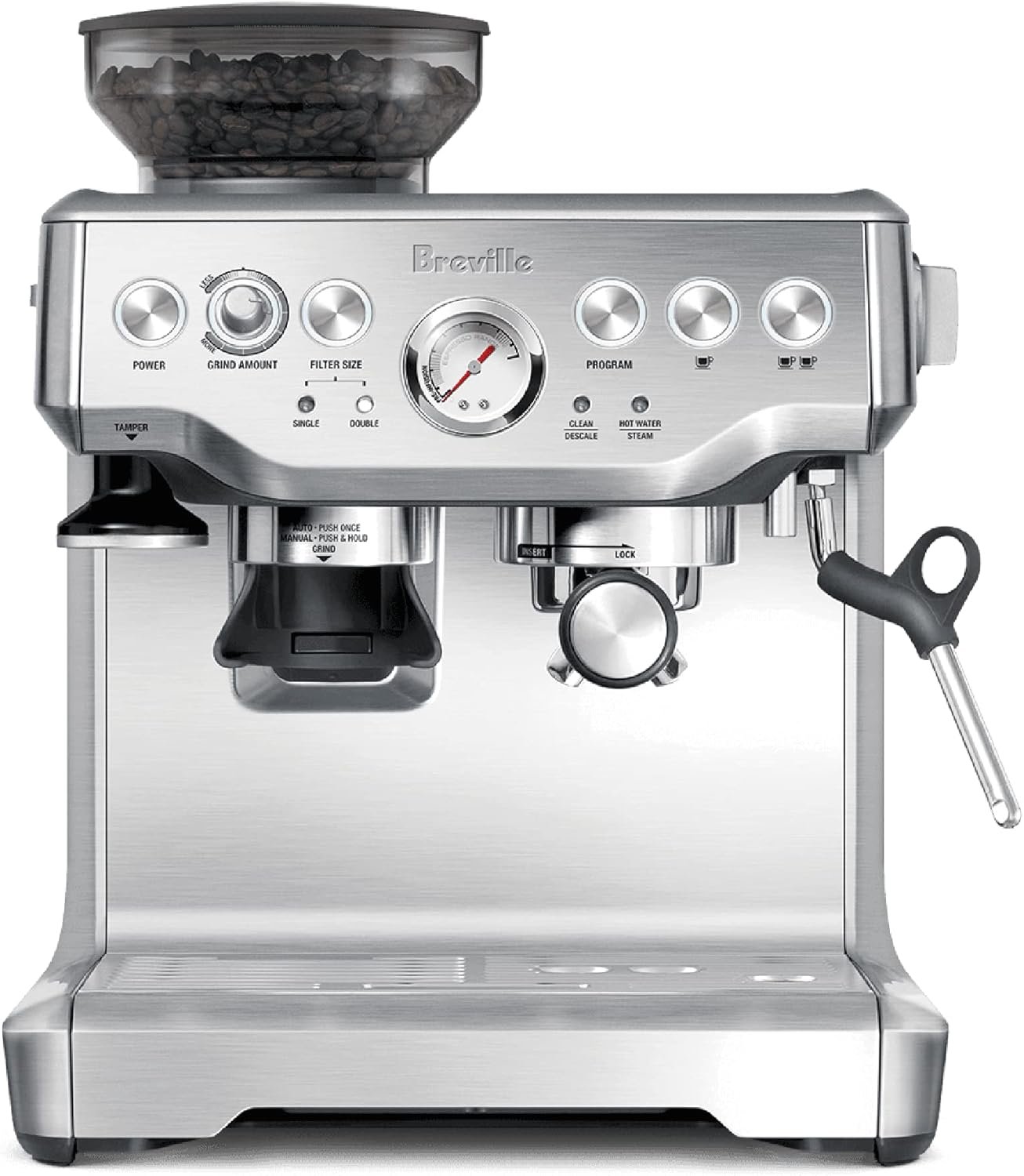
Selecting the right espresso appliance influences extraction quality, consistency, and the daily workflow of a home brewer. Equipment determines how variables such as grind size, dose, water temperature, pressure profile, and milk texturing are controlled—each of which affects flavor balance, crema, and cup clarity. This review focuses on users who prioritize control and repeatability: home enthusiasts, budding latte artists, small households, and people transitioning from pod or drip coffee to freshly ground espresso. The Breville Barista Express BES870XL positions itself as an all-in-one semi-automatic solution that integrates a conical burr grinder, a manual steam wand, PID temperature control, and low-pressure pre-infusion. The machine’s materials, component set, and workflow design make it suitable for those who want a compact system that centralizes key variables while retaining manual input for tamping and milk texturing. Readers should evaluate the Barista Express against personal priorities including workflow complexity, cleaning demands, and the desire for near-professional extraction control without separate dedicated devices.
Quick Overview
| Feature | Details |
|---|---|
| Product category | Semi-automatic espresso machine with integrated grinder |
| Brewing method | Espresso (pump-driven, pre-infusion) with manual steam wand |
| Capacity & output | Listed capacity: 1 Cups; single/double shot extraction via portafilter |
| Materials & construction | Brushed stainless steel exterior, metal and polymer internal components |
| Heating & pressure systems | PID temperature control, low-pressure pre-infusion and pump-based extraction |
| Grinder | Integrated conical burr grinder with grind size dial and dose control |
| Best suited users | Home enthusiasts and small households seeking hands-on control |
| Included accessories | Portafilter, integrated tamper, razor dose trimming tool, stainless milk jug, cleaning disc, water filter |
The quick overview condenses the Barista Express’s main design choices: an integrated grinder and manual steaming system intended to centralize the espresso workflow. These features trade off footprint and convenience against a modest learning curve; precise grind and tamping remain necessary to reach consistent extractions. The stainless exterior and included maintenance tools reflect a kit designed for regular use and basic upkeep.

Brewing method compatibility and grinder integration
The machine is engineered around single-serve espresso extraction using freshly ground whole beans and manual milk texturing, so compatibility centers on medium- to fine-roast espresso workflows rather than alternative immersion or pour-over methods. An integrated conical burr grinder with a grind size dial and dose control facilitates on-demand grinding directly into the portafilter, reducing time between grinding and extraction, which helps preserve volatile aromatics. Because grind particle distribution and dose variability are primary drivers of extraction, this integrated approach supports typical espresso needs but limits users who want to use pre-ground espresso or separate super-fine tuning via a dedicated grinder. The Barista Express is optimized for classic espresso shots and milk-based drinks; using it for ristretto, lungo, or experimentation with different extraction ratios is possible but requires manual adjustment of grind, dose, and tamp.

Whole-bean input, burr type, and dose control
The integrated conical burr grinder uses on-demand dosing and a grind size dial to control particle size distribution; conical burr geometry generally produces a bimodal distribution with a mix of fines and larger particles that can be tuned for espresso. Dose control reduces the need to transfer grounds from a separate grinder but still requires visual and weight-aware adjustments—this unit includes a razor dose trimming tool to standardize fill level in the portafilter. For consistent extraction, grind setting must be calibrated to roast level and ambient conditions; darker roasts often need coarser settings than lighter roasts. While convenient, integrated grinders can limit the range of fineness and micro-adjustments offered by dedicated high-end grinders, which may be relevant for users pursuing competition-level extraction consistency.
Compatible coffee styles and extraction variables
Extraction style on the Barista Express centers on classic espresso shots and milk-based beverages. Variables that determine cup quality—grind setting, dose, tamp pressure, water temperature, and extraction time—are under manual or semi-automated control. The machine’s low-pressure pre-infusion and PID temperature control are designed to improve evenness during the pressure ramp and to maintain brew temperature, but users must still manage dose and tamp to avoid channeling or under-extraction. The portafilter-based workflow supports single and double baskets, enabling different brew ratios commonly used for ristretto, standard espresso, or lungo-style shots, provided the user adjusts grind and dose accordingly. Alternate brew methods such as pour-over or immersion are not applicable for extraction but the integrated steam wand supports textured milk for milk-based drinks.
Ease of use and workflow complexity
The Barista Express streamlines many steps by integrating grinding, dosing, and espresso extraction into a single chassis, creating a coherent workflow from beans to cup that reduces equipment footprint in a kitchen. Controls combine a grind-size dial, a dosing interface, a manual steam wand, and a dial-based interface for power and extraction selection; this hybrid setup balances convenience with manual input. For users coming from automatic machines, the manual tamping and steam wand require technique development, while experienced home baristas will find the tactile control beneficial. Workflow complexity includes routine grinding adjustments with changing roast profiles, manual tamping consistency, and separate milk steaming, so users should expect an initial calibration period to dial in grind settings and tamping technique for stable shot-to-shot results.

Integrated workflow: from bean to shot
The all-in-one design reduces steps like transferring grounds and coordinating separate devices, enabling faster turnaround and reduced cleanup of multiple appliances. Grinding directly into the portafilter lowers the time between grinding and extraction which assists flavor retention by minimizing exposure to oxygen. The included razor dose trim tool and integrated tamper help create repeatable puck preparation, but success depends on consistent technique—particularly tamp level and distribution. The machine supports a single-station workflow that suits kitchens with limited counter space and users who prefer a consolidated station rather than a separate grinder and espresso machine setup.
Manual controls, learning curve, and user interface
User interaction relies on mechanical dials and a simple interface rather than touchscreen automation, which favors tactile control and durability. Manual steam wand operation allows for nuanced milk texture but requires practice to achieve microfoam suitable for latte art. The grind size dial provides immediate feedback when adjusting for different beans or roast levels, but without weight-based dosing automation, users must rely on repeatable technique or a separate scale for precision dosing. Experience with basic espresso principles—grind calibration, extraction timing, and milk steaming—shortens the learning curve, whereas complete beginners should anticipate time investment to reach consistent results.
Temperature control, pre-infusion, and pressure management
Accurate temperature and pressure control are central to espresso extraction chemistry; the Barista Express includes digital temperature control (PID) and a low-pressure pre-infusion stage aimed at improving extraction uniformity. PID systems regulate boiler or thermoblock output to stabilize water temperature during extraction, reducing thermal drift that can lead to sour or bitter flavors. Low-pressure pre-infusion gradually wets the puck before full pressure application, which aids in even expansion of coffee grounds and reduces channeling. Pressure ramping and PID temperature management together help the machine achieve more repeatable results across shots, but extraction quality still depends on proper grind, dose, and tamping technique to match the machine’s thermal and pressure profile.

PID temperature control and thermal stability implications
Digital PID control actively monitors and adjusts heating output to maintain target brew temperature, which is important because small temperature deviations alter solubility of coffee compounds and extraction balance. Stable brew temperature reduces shot-to-shot variability, particularly when pulling multiple shots in succession. On a compact machine, heat capacity and recovery rate are limited by boiler size and heating element design; the Barista Express’s PID helps mitigate those limits by precisely modulating heat. Consistent brew temperature supports predictable extraction when grind and dose are held constant, but users must be mindful of heat soak effects when performing long steam sessions that can alter system temperature if not given recovery time.
Low-pressure pre-infusion and pressure ramping for even extraction
Pre-infusion wets the coffee puck at a lower pressure to allow gases to escape and grounds to saturate more uniformly, which reduces localized channeling under high pressure. The Barista Express applies a low-pressure pre-infusion phase before ramping to full extraction pressure, allowing fuller flavor development and a more balanced cup when coupled with consistent dosing. Because the machine relies on manual tamping and grind adjustments, pre-infusion serves as a mechanical equalizer that improves outcomes for users still perfecting tamp and distribution technique. It does not eliminate the need for proper puck preparation, but it reduces sensitivity to small inconsistencies and supports a more forgiving extraction window.
Milk texturing, capacity, and serving flexibility
Milk-based drinks are a primary use case for many home espresso buyers; the Barista Express provides a manually operated steam wand designed for microfoam creation and latte art practice. Manual steam wands offer fine-grain control of steam pressure and frothing technique but demand skill and time to produce consistent texture. Capacity and serving flexibility are defined by the machine’s dimensions and component set: the listed capacity is one cup for extraction, and the included stainless steel milk jug supports steaming single to small double servings. The machine’s comparatively compact footprint suits small kitchens, but households that require frequent multi-cup service or high-volume steaming may find single-steam sessions and recovery times limiting.

Manual microfoam performance and steam wand capability
The steam wand is engineered for powerful steam output to create microfoam when used with correct technique—stretching, rolling, and aerating milk at appropriate temperatures and volumes. Manual control allows for nuanced texturing but requires attention to steam tip position, pitcher angle, and milk temperature to produce velvety microfoam. Consistency across multiple drinks depends on the operator’s ability to replicate technique and allow appropriate recovery time between steam cycles. The included stainless steel milk jug is sized for single or small double servings and supports standard latte art practice, but larger milk volumes will require additional sessions and attention to heat recovery affecting steam pressure.
Capacity, serving patterns, and kitchen fit
The Barista Express’s footprint and build weight are tailored to home usage and limited counter space, while the extraction capacity is typical of single-station semi-automatic machines. Households that prepare one to three milk-based drinks per session will find the machine matches typical morning routines; however, those who host larger gatherings or require continuous multi-cup output may encounter limitations due to boiler capacity and steam recovery time. The integrated grinder speeds single-shot preparation by avoiding grinder-to-portafilter transfer, but for sustained multi-cup service a separate grinder and larger boiler machine better serve throughput demands.
Cleaning, maintenance, durability, and long-term reliability
Durability and long-term reliability depend on materials, component accessibility, and a practical maintenance schedule. The Barista Express pairs a stainless steel exterior with a combination of metal and polymer internal parts; included maintenance items—cleaning disc, brush tool, water filter, and filter holder—reflect manufacturer attention to upkeep. Routine cleaning tasks include backflushing with the cleaning disc for the brew path, descaling based on water hardness and usage, emptying drip tray and used grounds, and periodic burr cleaning. Regular maintenance preserves pump and boiler function, prevents scale buildup that impairs heat transfer, and prolongs grinder performance; adherence to recommended maintenance intervals influences longevity.

Expected cleaning routine and included maintenance tools
Included accessories such as a cleaning disc, brush tool, and water filter simplify basic maintenance procedures. Backflushing with a cleaning tablet and disc removes oils and residues from the group path, while periodic grinder cleaning prevents buildup that can alter dose and particle distribution. The water filter reduces scale-forming minerals and extends intervals between descaling, but does not eliminate descaling needs entirely. Maintenance frequency depends on water hardness and usage volume; following manufacturer guidance maintains extraction quality and reduces wear on seals and pump components.
Build materials, component wear points, and service considerations
The brushed stainless exterior provides corrosion resistance and a durable finish, while internal components combine metals and engineered polymers for functionality and cost control. Wear points typically include burr wear in the grinder, group head seals and gaskets, pump lifespan, and steam wand valves; these components benefit from regular cleaning and timely replacement when performance declines. The machine’s modular accessory set and common component designs aid in sourcing replacement parts and carrying out routine service, but heavy commercial-level usage will accelerate wear relative to light home use. Buyers should consider expected usage patterns and plan maintenance to align with the machine’s semi-automatic design and home-oriented build.

Pros & Cons
Pros
- Integrated grinder and dose control simplify the beans-to-shot workflow and reduce counter clutter; grinding directly into the portafilter shortens time between grinding and extraction, helping preserve aroma and volatile compounds.
- PID digital temperature control improves thermal stability during extraction, reducing temperature-driven flavor shifts and aiding repeatability when grind and dose are consistent.
- Low-pressure pre-infusion and pressure ramping help promote even saturation and reduce channeling risk, supporting more balanced extractions across varying tamp and distribution technique.
- Manual steam wand delivers the control needed to develop microfoam and practice latte art, offering flexibility for textured milk drinks when technique is applied consistently.
- Robust stainless steel exterior and included maintenance accessories (cleaning disc, water filter, brush) support regular upkeep and present a durable appearance that fits home kitchens.
- Grind size dial and razor dose trimming tool facilitate quick calibration for different bean roasts and espresso recipes without a separate grinder.
Cons
- Integrated grinder limits the degree of independent upgrade and may not match the fineness range or consistency of high-end dedicated grinders, constraining extreme micro-adjustments sought by advanced users.
- Manual tamping and steam-wand operation require a learning curve; users seeking one-button automation for milk drinks or hands-off shot timing may find the workflow demanding.
- Boiler capacity and steam recovery time can constrain multi-cup throughput for larger households or entertaining situations compared with machines designed for continuous commercial-like service.
- Regular maintenance items such as backflushing, descaling, and burr cleaning are required to sustain performance; neglecting these tasks can degrade extraction quality and component longevity.
Final Verdict: Who This Product Is Best For (and Who Should Skip It)
The Breville Barista Express BES870XL is best suited for home espresso enthusiasts who prioritize control over key extraction variables while appreciating an integrated, space-efficient workflow. It fits users who want to grind fresh beans on demand, refine grind settings across roast profiles, and practice manual milk texturing without investing in separate high-end grinders or commercial steam boilers. Consumers who value tactile controls, PID-driven temperature stability, and pre-infusion benefits will find the machine aligns with home-based specialty espresso objectives. Regular maintenance and a willingness to learn tamping and steaming techniques are part of the ownership profile.
Conversely, those who should skip this model include buyers seeking fully automatic one-touch milk drinks, households that require frequent high-volume service, and users who demand ultra-precise grind control at the level of specialty dedicated grinders. Commercial establishments and heavy daily throughput scenarios also exceed the Barista Express’s design intent. For 2026 home shoppers comparing semi-automatic options, the Barista Express remains a compelling mid-range choice that balances integrated convenience with manual control, provided the buyer accepts the maintenance and skill investment required for consistent high-quality espresso.

Frequently Asked Questions (FAQs)
Does the Breville Barista Express include a burr grinder and how does it affect extraction?
The Barista Express includes an integrated conical burr grinder with a grind size dial and dose control, enabling on-demand grinding directly into the portafilter. Conical burr geometry provides a workable particle distribution for espresso and supports quick adjustments for different roast levels. Grinding immediately before extraction helps preserve volatile aromatics, but fine-tuning remains necessary: grind setting, dose, and tamp must be calibrated to match roast and desired extraction profile for consistent results.
How does PID temperature control impact shot consistency on this machine?
Digital PID control monitors and adjusts heating to maintain stable brew temperature, reducing thermal drift during extraction that can cause sourness or bitterness. Improved temperature stability aids repeatable solubility dynamics when grind and dose are held constant. On smaller home systems, PID compensates for limited heat capacity and helps achieve consistent extractions across successive shots, though extended steam use can still affect system recovery and transient temperatures.
Can the Barista Express produce microfoam suitable for latte art?
The machine features a manual steam wand capable of producing microfoam when used with proper technique—positioning the steam tip, controlling pitcher angle, and managing milk temperature are key. Manual control enables nuanced texturing for latte art practice, but consistency depends on user skill and attention to steam recovery time between drinks. The included stainless milk jug is sized for single or small double servings commonly used for home latte work.
What maintenance tasks are required to keep the machine performing well?
Routine maintenance includes backflushing with the supplied cleaning disc and tablets to remove oils from the brew path, regular descaling based on water hardness, emptying the drip tray and puck container, and periodic grinder burr cleaning. The Barista Express includes tools such as a brush and water filter to support these tasks. Consistent maintenance preserves pump and boiler function and helps sustain grind consistency and extraction quality over time.
Is the machine suitable for a household that serves multiple drinks at once?
The Barista Express is optimized for home use and single-station workflows; it supports one to a few milk-based drinks per session effectively. Boiler capacity and steam recovery time may limit throughput when producing multiple milk drinks in quick succession. Households that regularly prepare several drinks simultaneously or host larger gatherings may find machines with larger boilers or commercial-grade components better suited to high-volume service.
How flexible is the Barista Express for different espresso recipes and roast profiles?
Flexibility comes from the grind size dial, dose control, and manual tamping, which allow adjustments to accommodate a range of roast levels and espresso recipes, from ristretto to lungo-style shots. The machine’s PID temperature control and pre-infusion further support balanced extraction across recipes. However, the integrated grinder has finite adjustment range compared with high-end dedicated grinders, so extreme fineness or micrometric dosing needs may require a separate grinder for advanced experimentation.
Does the Barista Express require professional servicing for common repairs?
Many routine issues—such as replacing seals, cleaning the group head, servicing the steam wand, or changing grinder burrs—can be handled through home maintenance or authorized parts replacement. For pump failures, boiler issues, or more complex repairs, professional servicing or manufacturer support is typically recommended. Following regular maintenance schedules reduces the likelihood of costly repairs by preventing scale buildup and component wear.