Breville Oracle Espresso Machine BES980XL: Specialty Coffee at Home

The Importance of Choosing the Right Coffee Equipment
Selecting the right coffee equipment is a critical decision for home brewers seeking consistent quality and efficiency. For enthusiasts and households aiming to replicate café-quality coffee, factors like brewing method compatibility, temperature control, and ease of use play a decisive role in satisfaction. The Breville Oracle Espresso Machine BES980XL represents a significant investment in home coffee preparation, offering a blend of advanced technology and user-friendly design. Its features, such as the Dual Boiler system and integrated grinder, address key challenges in achieving professional-grade extraction. However, the machine’s performance depends on understanding how its specifications align with brewing science principles like extraction time, pressure management, and heat retention. This review evaluates the Breville Oracle through the lens of these factors, providing insights for buyers considering its capabilities in 2026. By analyzing its design, functionality, and user feedback, we assess whether it meets the demands of home espresso enthusiasts while balancing practicality and long-term reliability.
Quick Overview
| Feature | Details |
|---|---|
| Product Category | Espresso Machine |
| Brewing Method | Fully Automatic |
| Capacity | 5.3 Pounds |
| Materials | Brushed Stainless Steel |
| Heating System | Dual Boiler |
| Grind Compatibility | Integrated Precision Conical Burr Grinder |
| Best Suited For | Home Baristas, Coffee Enthusiasts |
| Intended Use Cases | Espresso, Latte, Cappuccino |
| Warranty | Not Specified |
The Breville Oracle’s brushed stainless steel construction and Dual Boiler system provide a robust foundation for consistent temperature control, essential for optimal espresso extraction. Its integrated grinder ensures precise dosing and tamping, reducing manual effort while maintaining grind consistency. These features collectively enhance usability for users prioritizing convenience without compromising on quality. However, the machine’s size and weight may impact its suitability for smaller kitchens, highlighting a trade-off between performance and space efficiency.
Brewing Method Compatibility and Specialty Coffee Potential
The Breville Oracle’s fully automatic operation positions it as a versatile tool for replicating specialty coffee techniques at home. Its integrated precision conical burr grinder automatically grinds, doses, and tamps 22 grams of coffee, aligning with the principles of third-wave coffee preparation that emphasize consistency and quality. This automated process ensures uniform grind size, which is critical for achieving balanced extraction. The machine’s ability to handle both espresso and milk-based beverages like lattes and cappuccinos further expands its utility, catering to users who desire a multifunctional appliance. However, the lack of manual control over certain parameters, such as pre-infusion time, may limit its appeal to advanced users seeking greater customization.
Grind Consistency and Extraction Science
The Breville Oracle’s integrated conical burr grinder operates on the principle of mechanical grinding, using two interlocking burrs to produce a uniform grind size. This design is particularly effective for specialty coffee, where consistent particle size ensures even extraction. The 22-gram dose is optimized for standard espresso shots, aligning with the 1:2 coffee-to-water ratio recommended for balanced extraction. However, users who prefer alternative brewing methods, such as pour-over or French press, may find the machine’s fixed dose and grinder settings less adaptable. The grinder’s performance is further enhanced by its automatic tamping function, which ensures even pressure distribution during extraction.
Dual Boiler System and Temperature Stability
The Breville Oracle’s Dual Boiler system separates the steam wand and espresso brewing functions, allowing for simultaneous operation without thermal interference. This design is crucial for maintaining stable water temperatures during extraction, as fluctuations can lead to under-extraction or over-extraction. The machine’s digital temperature control (PID) enables precise regulation of boiler temperatures, ensuring that water reaches the optimal range of 195–205°F (90–96°C) for espresso. However, the absence of a built-in thermometer for real-time monitoring may require users to rely on the machine’s digital display, which could introduce minor variability in temperature management.
Milk Texturing and Latte Art Capabilities
The Breville Oracle’s dedicated steam wand and separate boiler for milk texturing facilitate the creation of barista-quality microfoam, essential for crafting lattes and cappuccinos. The self-cleaning steam wand reduces maintenance efforts, but the lack of a built-in milk frother may limit its appeal to users prioritizing convenience. The machine’s ability to produce consistent microfoam is influenced by the steam wand’s pressure and temperature settings, which are controlled by the machine’s digital system. While this automation simplifies the process, it may not accommodate advanced techniques like manual frothing or specific foam textures preferred by some baristas.
Ease of Use and Workflow Complexity
The Breville Oracle’s user interface combines intuitive controls with automated functions, aiming to simplify the espresso-making process. The LCD display allows users to select between one, two, or manual shot control, providing flexibility without requiring extensive technical knowledge. However, the machine’s workflow involves multiple steps, including grinding, dosing, tamping, and brewing, which may overwhelm less experienced users. The absence of a pre-programmed brewing profile for different coffee types could necessitate manual adjustments, potentially affecting the consistency of results. This balance between automation and user involvement reflects a design philosophy that prioritizes precision over convenience, which may appeal to enthusiasts but challenge casual users.

Touchscreen Interface and Shot Control Options
The Breville Oracle’s touchscreen interface offers a straightforward method for selecting brewing parameters, including shot size and temperature settings. The ability to choose between one, two, or manual control allows users to customize their espresso experience while maintaining consistency. However, the limited customization options compared to semi-automatic machines may restrict users who prefer greater control over variables like extraction time or pressure. The touchscreen interface also serves as a display for real-time feedback, such as brewing progress and temperature readings, which enhances user awareness without requiring additional tools.
Cleaning and Maintenance Requirements
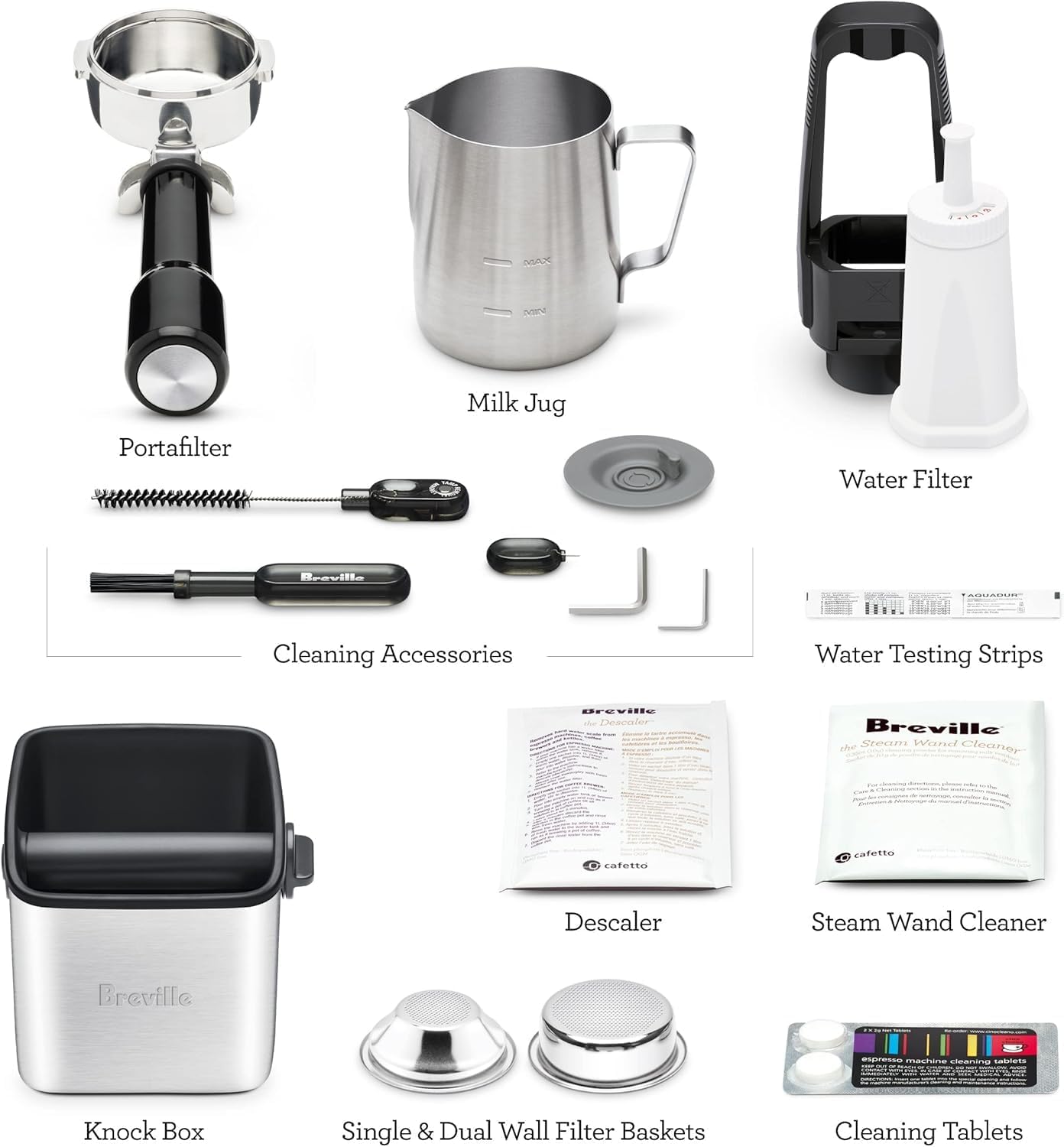
The Breville Oracle’s design incorporates features that reduce maintenance burdens, such as a self-cleaning steam wand and removable parts for easy cleaning. The machine’s stainless steel construction is resistant to corrosion and staining, making it easier to maintain over time. However, the lack of a built-in descaling function means users must manually descale the boilers and steam wand, which can be time-consuming. The machine’s weight and size may also make it challenging to maneuver during cleaning, particularly for users with limited mobility. These factors highlight a trade-off between durability and ease of maintenance, which is relevant for long-term usability.
Space and Setup Considerations
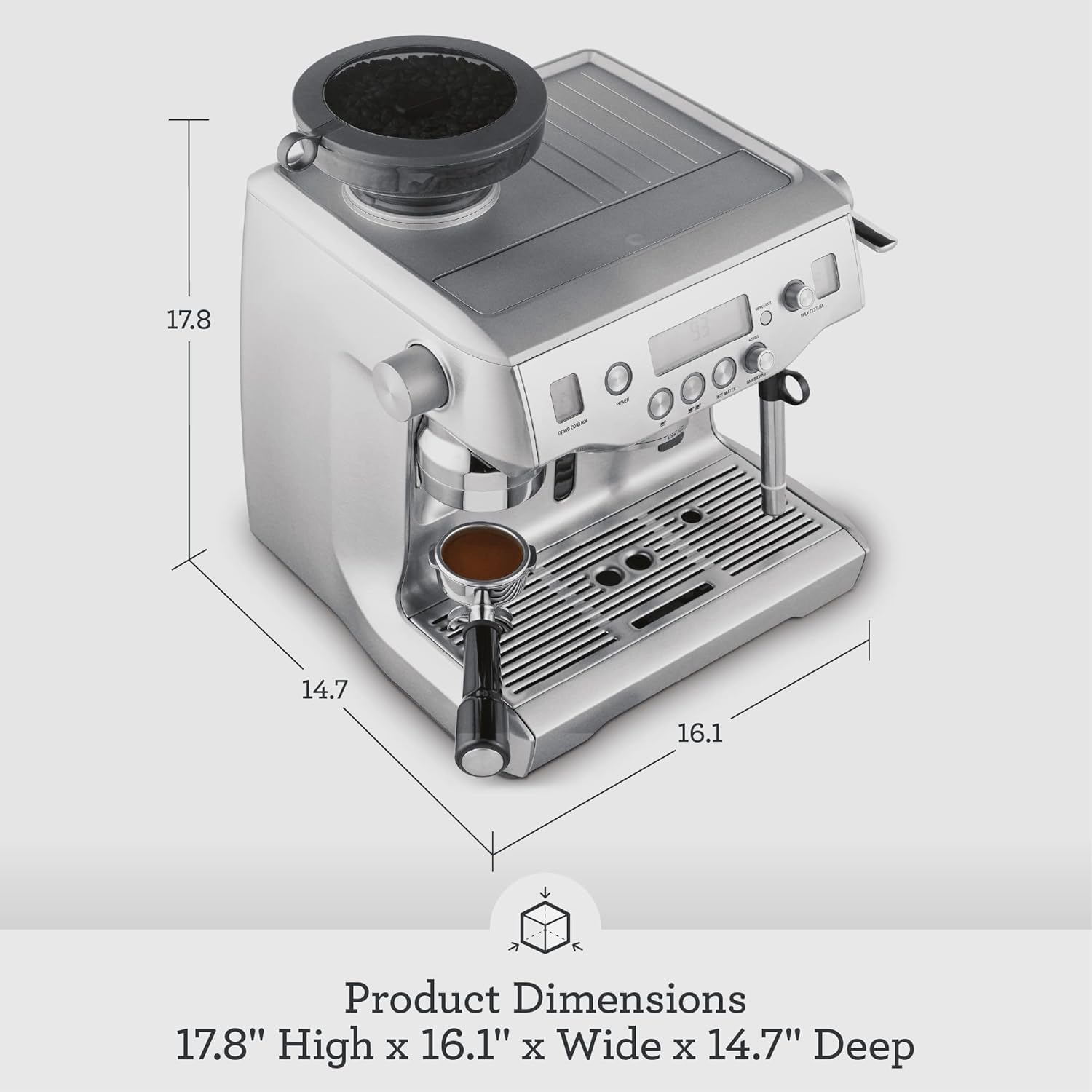
The Breville Oracle’s dimensions (14.7″D x 16.1″W x 17.8″H) and weight (35.5 pounds) make it a substantial appliance, suitable for dedicated coffee spaces but potentially challenging for smaller kitchens. The machine’s footprint requires a stable surface, and its height may affect accessibility for users with mobility constraints. While the machine’s design minimizes the need for additional accessories, the absence of a built-in milk frother or compact design could limit its appeal to users prioritizing space efficiency. These considerations are critical for buyers evaluating the machine’s fit within their home environment.
Temperature Control and Heat Stability
The Breville Oracle’s Dual Boiler system ensures stable temperature control by isolating the steam wand and espresso brewing functions. This separation prevents thermal interference, which is essential for maintaining consistent water temperatures during extraction. The machine’s PID temperature control allows users to set and maintain precise boiler temperatures, crucial for optimal espresso extraction. However, the absence of a built-in thermometer for real-time monitoring may require users to rely on the digital display, which could introduce minor variability in temperature management. The machine’s ability to maintain heat stability is further enhanced by its stainless steel construction, which minimizes heat loss and ensures efficient energy use.

Water Pressure and Extraction Optimization
The Breville Oracle’s Over Pressure Valve limits the maximum pump pressure during extraction, preventing over-extraction and bitterness. This feature is particularly important for maintaining the balance between extraction time and pressure, which are key factors in producing high-quality espresso. The low pressure pre-infusion gradually increases water pressure to expand the coffee grounds, ensuring even extraction. However, the machine’s fixed pressure settings may not accommodate advanced techniques like manual pressure adjustments, which some users may prefer for fine-tuning their brews. This design choice reflects a focus on simplicity and consistency, which may appeal to casual users but limit the machine’s versatility for advanced applications.
Heat Retention and Energy Efficiency
The Breville Oracle’s stainless steel construction and Dual Boiler system contribute to efficient heat retention, reducing energy consumption over time. The machine’s design minimizes heat loss by maintaining a stable temperature environment, which is essential for consistent brewing results. However, the lack of a built-in energy-saving mode may result in higher energy usage compared to models with optimized power management. The machine’s ability to maintain heat stability is further enhanced by its insulation properties, which help retain heat during prolonged use. These factors are important for users concerned about long-term energy costs and environmental impact.

Pros and Cons
Pros
- Integrated Precision Conical Burr Grinder: Ensures consistent grind size, crucial for balanced extraction and specialty coffee preparation.
- Dual Boiler System: Provides stable temperature control for simultaneous espresso brewing and milk texturing, enhancing efficiency.
- Digital Temperature Control (PID): Allows precise regulation of boiler temperatures, optimizing extraction for different coffee profiles.
- Self-Cleaning Steam Wand: Reduces maintenance efforts by automatically cleaning the steam wand after use.
- LCD Display with Shot Control Options: Offers flexibility in adjusting shot size and brewing parameters without requiring technical expertise.
- Stainless Steel Construction: Durable and resistant to corrosion, ensuring long-term reliability and easy cleaning.
Cons
- Limited Manual Control: Fixed pressure settings and lack of advanced customization options may restrict users seeking greater flexibility.
- Size and Weight: The machine’s dimensions and weight make it challenging to maneuver, particularly in smaller kitchens.
- Manual Descaling Required: Absence of a built-in descaling function necessitates regular manual cleaning, which can be time-consuming.
- No Built-In Milk Frother: The lack of a compact milk frother may limit convenience for users prioritizing space efficiency.
- Energy Consumption: The machine’s design may result in higher energy usage compared to models with optimized power management.
Final Verdict: Who This Product Is Best For (and Who Should Skip It)
The Breville Oracle Espresso Machine BES980XL is best suited for home baristas and coffee enthusiasts who prioritize consistency, quality, and multifunctionality. Its integrated grinder, Dual Boiler system, and precise temperature control make it an excellent choice for users aiming to replicate café-quality espresso at home. The machine’s ability to handle both espresso and milk-based beverages expands its utility, appealing to those who enjoy a variety of coffee styles. However, its size and weight may pose challenges for users with limited kitchen space or mobility constraints. Additionally, the lack of advanced customization options and manual descaling requirements could deter users seeking greater flexibility or convenience. For buyers prioritizing simplicity and ease of use, the Breville Oracle may not be the optimal choice, particularly compared to smaller, more compact models with streamlined features.

Frequently Asked Questions (FAQs)
How does the Breville Oracle Espresso Machine ensure consistent espresso extraction?
The Breville Oracle uses a Dual Boiler system to maintain stable water temperatures during extraction, while its integrated precision conical burr grinder ensures uniform grind size. These features work together to produce balanced extraction, essential for specialty coffee.
Can the Breville Oracle make milk-based beverages like lattes and cappuccinos?
Yes, the machine’s dedicated steam wand and separate boiler for milk texturing allow users to create barista-quality microfoam, making it suitable for crafting lattes and cappuccinos.
What are the key differences between the Breville Oracle and a semi-automatic espresso machine?
The Breville Oracle is fully automatic, with integrated grinding and dosing functions, while semi-automatic machines require manual grinding and tamping. This makes the Oracle more convenient for casual users but less customizable for advanced baristas.
How does the Breville Oracle handle temperature control during brewing?
The machine’s digital temperature control (PID) allows precise regulation of boiler temperatures, ensuring optimal extraction. The Dual Boiler system isolates steam and brewing functions to prevent thermal interference.
Is the Breville Oracle suitable for users with limited kitchen space?
The machine’s size and weight may make it challenging to maneuver in smaller kitchens, making it better suited for dedicated coffee spaces. Users with mobility constraints should consider this before purchasing.
What maintenance is required for the Breville Oracle?
Regular manual descaling of the boilers and steam wand is necessary, as the machine lacks a built-in descaling function. Its stainless steel construction simplifies cleaning but requires attention to maintenance schedules.
Can the Breville Oracle produce high-quality espresso without manual intervention?
Yes, the machine’s automated functions, including grinding, dosing, and tamping, allow users to produce consistent espresso shots with minimal manual effort, ideal for casual use.