CASABREWS CM5418 Espresso Review: Brew Quality & Ease 2026
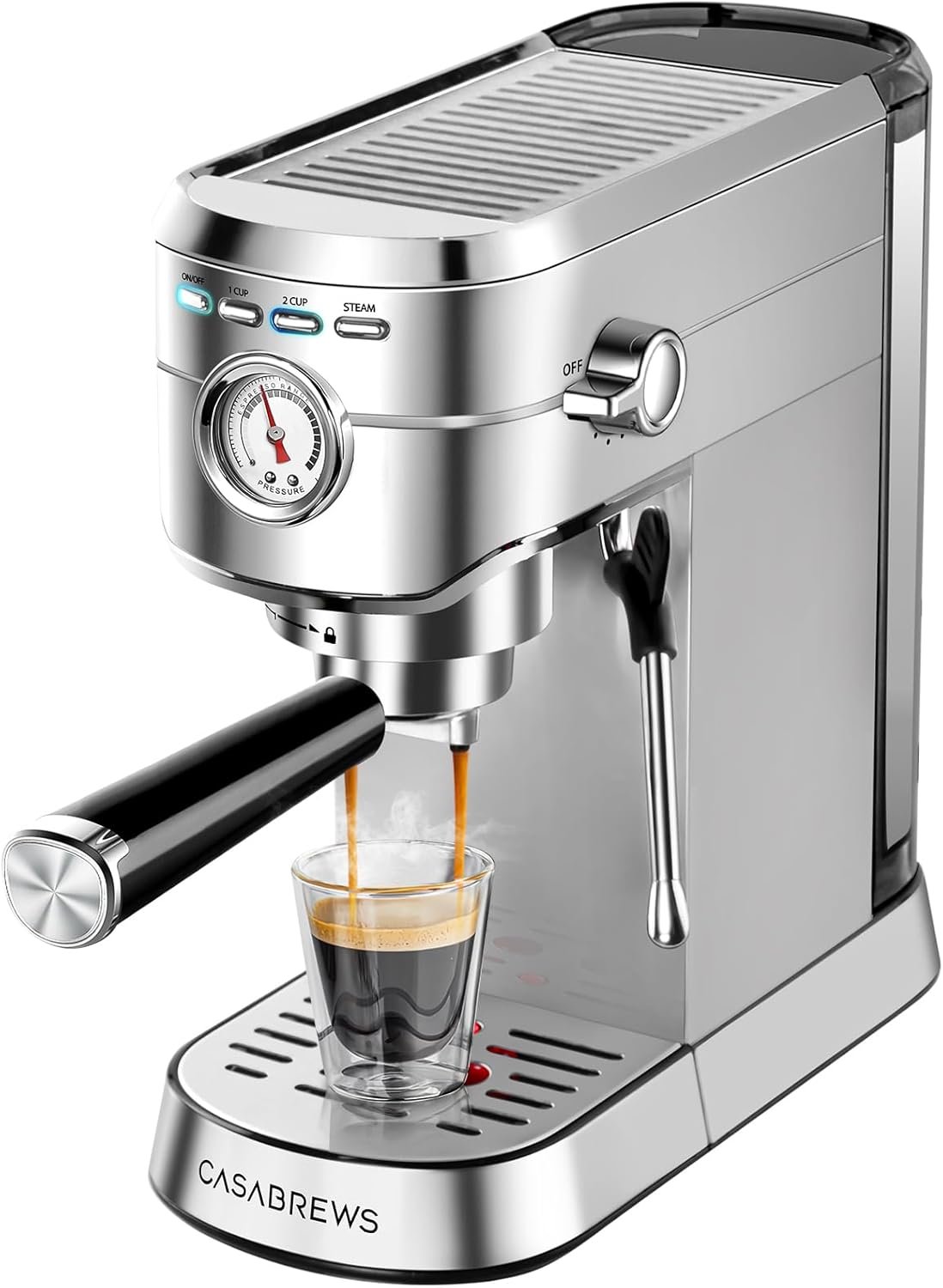
CASABREWS CM5418: Why equipment choice matters for home espresso
Choosing the right espresso machine shapes everyday brewing outcomes, workflow, and the kinds of beverages that a household can reliably produce. For home brewers and casual enthusiasts, a semi-automatic espresso machine must balance extraction capability, temperature and pressure control, and an ergonomically efficient milk-steaming workflow. The CASABREWS CM5418 positions itself as a compact stainless-steel option with a 20-bar pump, 1350 W power rating, and a 34 oz removable water tank, paired with a steam wand and 51 mm portafilter accessories. These specifications suggest suitability for single-operator home use where counter space is limited and rapid turnaround between shots and milk drinks matters. Equipment choice affects grind compatibility, required tamping consistency, heat-up and recovery time, and routine maintenance. Evaluating a machine against brewing needs — whether consistent single/double espresso shots, milk-based drinks, or occasional hot water use — helps determine whether the CM5418’s semi-automatic design and included accessories meet household expectations for reliability, extraction, and ease of maintenance.
Quick Overview
| Feature | Details |
|---|---|
| Product category and brewing method | Semi-automatic espresso machine for ground coffee (51 mm portafilter) |
| Capacity and output | 34 oz removable water tank; single or double cup filters included |
| Materials and construction | Brushed stainless steel exterior with plastic components; compact footprint (12.28″D x 5.9″W x 11.97″H) |
| Heating and pressure system | 20-bar Italian pump; 1350 W power; steam wand for milk frothing; built-in pressure gauge |
| Grind or filter compatibility | Ground coffee only; 51 mm single and double baskets included |
| Best suited users | Home brewers and beginners who want milk-based drinks; small kitchens and office environments |
| Intended use cases | Espresso shots, cappuccinos, lattes, macchiatos; hot water function for preheating and cooling cycles |
| Warranty and support notes | Manufacturer-provided documentation and online instructional videos (as disclosed) |
The table captures core hardware and usability attributes that influence extraction and workflow. The 20-bar pump and included 51 mm portafilter set expectations for espresso-compatible extraction pressure, while the removable 34 oz tank and steam wand shape serving flexibility and milk drink workflow. Materials and footprint inform durability and countertop fit, and included accessories influence initial setup and the learning curve for tamping and steaming.

Brewing performance and extraction potential
The CM5418’s extraction potential rests on its 20-bar pump, the 51 mm portafilter, and accessory set that supports single- and double-shot baskets. A higher nominal pump rating can assist with creating crema when paired with appropriately roasted and freshly ground coffee, but consistent extraction depends on stable temperature, grind uniformity, and proper tamping. The machine is semi-automatic, so shot volume and timing are user-controlled rather than automated. A built-in pressure gauge helps monitor pump output, but pressure reading is only one part of extraction quality; grind distribution, dose, and tamp pressure must complement pump performance. For home users without a dedicated grinder, pre-ground espresso blends can work but will reduce control over extraction variables. Overall, the machine offers the core hardware for espresso brewing while placing the onus of grind and dosing precision on the user.

Pressure, pump design, and crema implications
A 20-bar Italian pump indicates the unit can generate higher-than-standard pump pressure at the outlet, which manufacturers often specify to emphasize capability. In practical extraction, effective brewing pressure during the shot should be around 9 bars for balanced extraction; pressure above or below that must be managed through grind size, dose, and distribution. Crema development also depends on roast level and freshness; a strong pump helps, but it cannot compensate for inconsistent grind particles or stale coffee. The included pressure gauge is a useful visual reference to confirm that the pump is operating, and it can help users troubleshoot obvious pressure failures, though it does not replace fine-tuning via grind adjustments and consistent tamping technique.
Dose, grind compatibility, and basket size considerations
The 51 mm portafilter and supplied single/double baskets require attention to dose and grind spectrum typical for home espresso: a fine, even grind and a dose that fits the basket capacity. Basket size constrains maximum dose volume and influences headspace for puck expansion during pre-infusion and extraction. Without a built-in grinder, compatibility with burr grinders should be prioritized since blade-ground or inconsistent grounds will increase channeling risk. For users aiming for repeatable extraction, measuring dose and timing shots while adjusting grind by small increments is the proven path to better results with a machine of this class.
Temperature stability and heat system indicators
The CM5418’s power rating (1350 W) supports faster heat-up and recovery compared with lower-wattage machines, but the product specifications do not disclose PID control or thermostat precision. Temperature stability in semi-automatic home machines typically varies with boiler design and heat exchange control; consistent brew temperature promotes balanced extraction of soluble compounds. The provided steam wand and the hot water function imply separate heating demands for milk texturing and shot brewing, and the manufacturer’s cooldown warnings indicate a protective thermal management system. Without explicit PID feedback, users should expect some temperature variance and compensate with preheat practices such as flushing the group and preheating cups.
Milk steaming workflow and frothing performance
The integrated steam wand and 1350 W heating capacity position the CM5418 toward milk-based drink preparation for lattes and cappuccinos. Milk steaming quality hinges on steam pressure, wand design, and boiler recovery time; manual steam wands require technique to create dense microfoam for latte art and glossy milk texture. The machine’s control knob for steam and an onboard steam/pressure indicator inform operation but do not automate temperature or texture. Manufacturer guidance includes cooldown and hot-water cycles to avoid overheating, which suggests safety cutouts and thermal management that affect sequential steaming and brewing. For households making multiple milk drinks, steam recovery time and wand ergonomics will define usability and consistency more than raw wattage alone.

Steam wand design and milk texturing basics
A manual steam wand provides control over steam position, air introduction, and milk whirlpooling, all essential to producing microfoam. Proper frothing requires steady steam pressure and quick introduction of air during initial stretching followed by submerging the tip to create a smooth vortex. The CM5418’s wand is described as powerful, but foam quality depends on operator technique and milk temperature. Repeated steaming sessions can heat the boiler, so attention to machine cooldown advice and allowing thermal recovery between steaming and brewing is needed to maintain both safety and consistent milk texture.
Recovery time, cooldown protocol, and workflow implications
The manufacturer’s instructions advise not to brew immediately after frothing milk and provide a hot water cooldown option when indicators flash, implying that the machine includes overheat protection. This requires an operational workflow where steaming and brewing tasks are sequenced to avoid triggering protective interlocks. For single-drink preparation, the impact is minor, but for serving multiple milk drinks in quick succession, recovery time will lengthen the total service time. Users should plan sessions to allow the boiler to return to an appropriate brewing temperature or use hot water flushes as recommended to stabilize internal conditions.
Safety, maintenance, and milk residue considerations
Milk proteins and fats can adhere to steam wands and internal surfaces, increasing the need for immediate purge and periodic deep cleaning. The CM5418 includes a wand that should be purged and wiped after each use to prevent buildup and off-flavors. Without dishwasher-safe portafilter or baskets, manual cleaning with warm water and proper backflushing routines (if compatible accessories are used) will prolong performance. Frequent milk steaming without thorough cleaning accelerates maintenance needs and can impair steam consistency and flavor over time.
Ease of use, controls, and daily workflow
The semi-automatic button interface and included accessories aim to simplify the home brewing process, but users must learn tamping, dosing, and steaming technique to achieve repeatable results. The machine’s compact footprint and removable water tank support convenient refills and small-kitchen placement, while the single/double cup buttons provide basic automation for shot volume. The portafilter, tamper with spoon, and two filter baskets supply a complete starter kit, yet grind preparation and packing remain manual. The presence of indicator lights and a pressure gauge supports diagnostic awareness, and the hot water function aids preheating and cooling cycles. For users seeking full automation or precise digital temperature control, this model’s semi-automatic, manually adjusted workflow requires some commitment to developing consistent habits.

Control layout, button functions, and user feedback
Button-based interfaces reduce complexity for basic shot initiation, and the two-cup and single-cup options simplify selecting shot volumes for typical home servings. Lights that flash when cooling is needed or when buttons are active provide clear feedback, and the built-in pressure gauge offers an additional status element for users to correlate with extraction behavior. However, the absence of programmable shot timing and advanced temperature controls means that consistent shot volume and extraction require manual attention to tamp pressure, grind size, and visual/chrono monitoring during brewing.
Setup, included accessories, and initial learning curve
The CM5418 ships with a 51 mm portafilter, single and double baskets, a tamper with spoon, and a removable water tank, forming a basic setup for espresso preparation. This reduces initial accessory purchasing but does not replace a quality burr grinder, which is essential for dialing in extraction. The initial learning curve centers on mastering grind setting, distribution, and tamping within the constraints of the supplied baskets. Instructional videos and manufacturer documentation can shorten the learning timeline, but effective extraction still depends on user technique and consistent input variables.
Cleaning, routine maintenance, and required tasks
Daily maintenance is straightforward but essential: emptying the drip tray, rinsing or brushing the baskets, purging and wiping the steam wand, and topping the water reservoir as needed. Backflushing may not be explicitly supported with supplied parts, so consult documentation for safe descaling and internal cleaning procedures. The exterior stainless finish wipes easily, but plastic trims should be treated gently to avoid wear. Over time, attention to descaling frequency, gasket condition, and basket cleanliness will influence long-term performance and extraction consistency.
Capacity, footprint, and suitability for households
Compact dimensions and a 34 oz removable water tank characterize this machine as suitable for small households, apartments, or office kitchens where counter space is limited. The 34 oz reservoir supports multiple single shots between refills but will require refilling for larger gatherings or frequent use. The lightweight construction and narrow 5.9″ width make placement flexible, though the small footprint also reduces component size, including the 51 mm portafilter, which constrains dose size versus commercial-style machines. For users who prioritize a compact milk-capable espresso unit that can produce one or two milk-based drinks at a time, the CM5418 fits the typical workload of small households rather than high-volume entertaining.

Water tank capacity and serving flexibility
A 34 oz removable water tank allows multiple espresso extractions and a few steam cycles before refilling, fitting routine single-operator use. Removability simplifies refilling and reduces spills compared with top-fill designs in tight spaces. For households preparing several milk drinks back-to-back, the tank size is adequate for short sessions but may necessitate refills during longer gatherings. The machine’s hot water function can assist in quick cup preheating or short cooling cycles between tasks.
Footprint, placement, and kitchen ergonomics
With a depth of 12.28″ and a height under 12″, the CM5418 fits most kitchen counters without dominating space, and narrow width makes it suitable for tight countertops. Placement considerations include access to a grounded AC outlet and sufficient clearance above the machine for cup stacking or tamping clearance. The compact footprint supports storage in smaller kitchens but may limit hands-on ergonomics for users accustomed to larger commercial-style portafilters and group heads.
Serving scenarios and recovery for multiple drinks
The machine is optimized for household use and intermittent office use rather than continuous commercial service. For single or paired milk drinks, steaming and shot extraction are manageable, but multiple successive milk drinks will expose steam recovery and cooldown protocols described by the manufacturer. Planning drink sequence and allowing brief recovery cycles will maintain temperature and steam performance across service.
Build quality, materials, and long-term reliability factors
The brushed stainless-steel exterior and included metal portafilter suggest a focus on durable surfaces where tactile contact is frequent, but some internal components are plastic by design to keep weight low and manufacturing costs affordable. The listed weight of 2 pounds indicates a lightweight assembly, and compact construction can be subject to tighter thermal cycles compared with heavier, more robust boiler-containing units. The manufacturer’s inclusion of protective overheat warnings and a cooldown protocol indicates thermal safety measures. Long-term reliability will depend on routine descaling, steam-wand maintenance after milk use, and treating the machine within its intended household use rather than heavy commercial loads. For users seeking prolonged durability, attention to service intervals and careful handling of plastic components will be important.

Materials, exterior finishes, and user-facing components
A brushed stainless-steel finish provides scratch resistance and a neutral aesthetic that integrates with many kitchens, while the portafilter and metal accessories offer better wear characteristics than lightweight plastic alternatives. Non-dishwasher-safe parts require manual cleaning, which can prolong material life when done correctly. Plastic trim and internal fittings may be present in water paths and housing components; regular descaling and correct use of the hot water function reduce stress on these parts and support longevity.
Thermal management, protection features, and failure modes
Built-in protections that trigger flashing lights and cooldown cycles indicate thermostatic or thermal cutoff safeguards, a common design choice in compact espresso machines to prevent overheating during rapid steam-and-shot sequences. These safeguards protect internal elements but also create operational pauses that users must plan for. Failure modes for machines in this class often center on scale buildup, steam wand clogging from milk residue, and wear on gaskets or seals; scheduled maintenance reduces the risk of performance degradation.
Expected maintenance cadence and part accessibility
Maintenance tasks include descaling at manufacturer-recommended intervals based on water hardness and usage, gasket inspection after extended use, steam wand cleaning after each milk operation, and filter basket cleaning to avoid oils and fines buildup. The removable water tank and accessible drip tray support easy daily upkeep. Replacement parts availability and manufacturer support policies will influence long-term ownership experience and repairs, so verifying service options and parts compatibility is advisable for buyers seeking multi-year use.

Pros & Cons
Pros
- Reliable extraction hardware for home use: The 20-bar Italian pump and included portafilter with single and double baskets provide the basic components needed to produce espresso-style shots when paired with a consistent grind and proper dose management. The pressure gauge offers visual feedback for pump operation.
- Compact footprint and removable reservoir: A narrow 5.9″ width and 34 oz removable water tank make the unit suitable for small kitchens and easy refilling, improving placement flexibility and daily convenience.
- Milk steaming capability: The manual steam wand and 1350 W heating power enable milk texturing for lattes and cappuccinos, allowing users to create microfoam when proper technique is applied.
- Starter accessory package: Inclusion of a 51 mm portafilter, single/double baskets, tamper, and spoon reduces the need for immediate accessory purchases, supporting out-of-the-box brewing attempts.
- Stainless-steel exterior: Brushed stainless finish provides a durable, cleanable surface that resists everyday wear and integrates well into most kitchen aesthetics.
- Safety and diagnostic features: Built-in pressure gauge, indicator lights, and documented cooldown procedures provide operational feedback and thermal protection for domestic use.
Cons
- Manual controls and limited temperature regulation: The absence of PID or programmable temperature control means that temperature stability is managed implicitly and may require user compensation through preheating and flushing routines.
- Learning curve for consistent results: Semi-automatic operation places responsibility on the user for grind, dose, tamping, and steaming technique; beginners will need practice to achieve reliable extraction and milk texture.
- Service and maintenance needs for milk drinks: Frequent milk steaming increases cleaning frequency and maintenance demands to prevent wand fouling and flavor carryover; parts are not dishwasher-safe, increasing hands-on tasks.
- Compact design limits heavy use: The lightweight construction and small footprint favor household use but may be less durable under high-volume or commercial conditions, making it unsuitable for heavy-duty daily commercial service.
Final Verdict: Who This Product Is Best For (and Who Should Skip It)
The CASABREWS CM5418 is a compact semi-automatic espresso machine tailored to home brewers who want a small-footprint unit capable of producing espresso shots and milk-based drinks without requiring a large dedicated space. Its 20-bar pump, 1350 W heating capability, and manual steam wand deliver the essential hardware for lattes, cappuccinos, and basic espresso extraction when combined with a quality burr grinder and consistent tamping practice. The removable 34 oz water tank and starter accessories make it convenient for single-operator households and office kitchens that prioritize ease of placement and straightforward servicing. Individuals who appreciate manual control, want to learn extraction technique, and plan to prepare occasional milk drinks will find the CM5418 aligned with their needs.
Users who should consider alternatives include those seeking precise digital temperature control, programmable shot automation, or commercial-grade durability for high-volume service. Beginners unwilling to invest time in dialing grind size, dose, and steaming technique may find initial results inconsistent compared with more automated machines. Additionally, households that serve multiple milk-based drinks in quick succession or require robust daily commercial performance should look to larger, more thermally stable machines with dedicated boilers and PID control. Overall, the CM5418 presents a balanced entry-level to mid-range option for 2026 home espresso users who prioritize compactness and milk-based beverage capability within a semi-automatic workflow.
Frequently Asked Questions (FAQs)
How does the 20-bar pump affect espresso extraction on the CASABREWS CM5418?
A 20-bar pump indicates the machine can generate higher nominal pressure, which helps produce crema and ensure pump capability. Effective extraction, however, depends on actual brewing pressure during the shot (commonly around nine bars), consistent grind particle size, dose, and tamping. The built-in pressure gauge helps verify pump output but does not substitute for grind and dosing adjustments required to achieve balanced extraction.
Is the CM5418 suitable for milk-based drinks like lattes and cappuccinos?
Yes. The CM5418 includes a manual steam wand and sufficient heating power to texture milk for lattes and cappuccinos. Quality microfoam depends on steam pressure, wand technique, and boiler recovery. The manufacturer’s cooldown guidance implies protective thermal management, so users should follow recommended workflows and clean the wand after each use to maintain steam performance and prevent residue buildup.
What grind and dosing approach is recommended for consistent results with this machine?
A consistent, fine burr grind intended for espresso and a measured dose that fits the supplied 51 mm baskets are recommended. Dose, grind size, and tamp pressure work together to control flow rate and extraction. Without a built-in grinder, pairing the machine with a quality burr grinder and using small grind adjustments while timing shots will improve repeatability and extraction quality.
How does the 34 oz removable water tank influence daily use?
A 34 oz removable water tank supports multiple single-espresso shots and some milk steaming cycles between refills, making it convenient for typical household use. Removability simplifies refilling and cleaning, but for larger gatherings or frequent high-volume use, the tank may require more frequent refilling. It is well-suited for apartments or small kitchens where counter space and convenience are priorities.
What maintenance is required to keep the CM5418 operating reliably?
Daily tasks include emptying the drip tray, rinsing filter baskets, and purging and wiping the steam wand after each milk use. Periodic descaling based on water hardness and usage frequency is necessary to prevent scale buildup. Because parts are not dishwasher-safe, manual cleaning is required. Following manufacturer-recommended cooldown and hot water routines also protects internal components and reduces thermal stress.
Who should consider a different espresso machine instead of the CM5418?
Users who require programmable shot profiles, PID temperature control, or heavy commercial-level durability should consider alternatives with more advanced temperature management and larger boilers. Also, those looking for a fully automated solution with an integrated grinder or faster steam recovery for continuous multi-drink service may find larger or more feature-rich machines better suited to their needs.
Does the CM5418 support backflushing or advanced cleaning routines?
The CM5418’s documentation emphasizes manual cleaning, steam wand purging, and using the hot water function for cooldowns. Backflushing compatibility depends on whether a blind filter and appropriate detergent are used; users should consult manufacturer guidance before backflushing. Regular descaling and careful cleaning of baskets and gaskets will extend service life and maintain extraction quality.
Can the CM5418 deliver consistent temperature stability without PID control?
The machine’s 1350 W power supports faster heat-up and recovery, but specifications do not indicate PID temperature control. Temperature stability in this class typically requires preheating, flushing the group head, and allowing recovery between demanding tasks. Users should anticipate some variance and use recommended preheat and hot water cycles to optimize brew temperature during shots.