Chefman 1.8L Glass Electric Kettle — Fast Boil & Safer Use
Choosing the right kettle for coffee and tea brewing
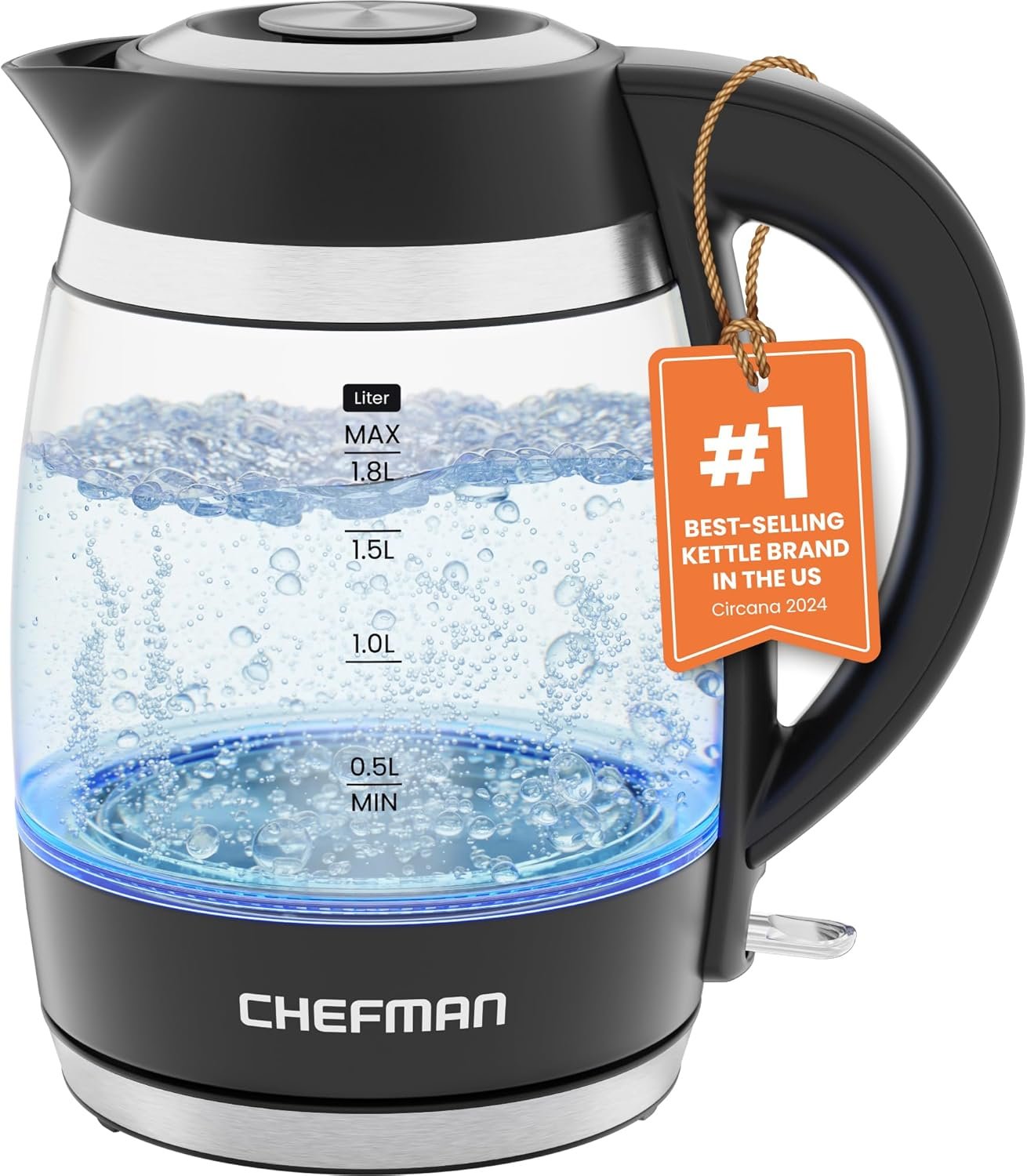
The choice of electric kettle affects extraction, temperature control, and daily workflow for home brewers and households. A kettle that brings water to the desired temperature reliably and quickly reduces the risk of under‑ or over‑extraction for delicate teas and pour‑over coffee. For consumers seeking a balance of speed, capacity, and straightforward operation, specifications such as wattage, capacity, materials, and safety features determine practical performance. The Chefman 1.8L borosilicate glass kettle with a 1500W heating element emphasizes rapid heat‑up and visual clarity of water level and boil status. Its design targets users who prioritize fast hot water for tea, instant coffee, pour‑over preparations, and general kitchen tasks, while also requiring basic safety protections like auto shutoff and boil‑dry protection. Consideration of heat retention, ease of pouring, and maintenance expectations helps align the product to routines that value simplicity and reliability over advanced temperature presets or precision PID control.
Quick Overview
| Feature | Details |
|---|---|
| Product category | Electric kettle for hot water (tea, coffee, instant beverages) |
| Capacity | 1.8 liters (approx. multiple cups) |
| Power / Heating | 1500W heating element, 120V |
| Material & construction | Borosilicate glass body, stainless steel accents, cool‑touch handle |
| Safety features | Auto shutoff, boil‑dry protection, cETL approved |
| Controls & indicators | On/off switch with blue LED heating indicator |
| Pouring & filter | Drip‑free spout with removable stainless‑steel anti‑scale mesh filter |
| Base & workflow | 360° cordless swivel base for lift‑off serving |
| Cleaning & care | Removable lid, hand wash recommended |
| Warranty & support | 1‑year manufacturer assurance |
These specifications affect brewing results and daily usability: the 1500W heater shortens heat‑up time which supports quick brewing sessions, while borosilicate glass provides thermal shock resistance and visibility. The lack of variable temperature control means users must rely on off‑kettle practices (cooling, pre‑measured pours) for precise tea or coffee extraction rather than integrated temperature presets.

Heating performance and temperature stability
The kettle’s 1500W element is designed for rapid heating, delivering near‑boil water quickly for most home beverage uses. Thermal performance depends on element wattage, vessel material, ambient temperature, and water volume; borosilicate glass transmits heat efficiently while resisting thermal shock, but it is a poorer insulator than double‑walled metal vessels. Consequently, the unit will reach boiling faster than lower‑wattage kettles but will also lose heat faster after boil unless transferred to an insulated carafe. The absence of adjustable temperature control or a PID regulator means exact setpoint stability and recoverability between pours are not integrated; for applications that require mid‑range temperatures for delicate teas or precise pour‑over extraction, users should incorporate simple cooling pauses, measured pour techniques, or a separate thermometer to approximate ideal brew temperatures.

Fast‑boil implications for brewing
A 1500W heater paired with a 1.8L capacity favors quick heat‑up cycles for single to multi‑cup sessions. Rapid boiling accelerates workflows for tea steeping, instant beverages, and pre‑heating kettles for pour‑over routines. For pour‑over coffee extraction, water brought to a rolling boil must be allowed to cool slightly to reach the optimal 195–205°F range; without built‑in temperature presets, proper timing or a secondary thermometer helps achieve the appropriate temperature for consistent extraction. Rapid recovery between pours is influenced by total volume and ambient cooling; smaller batches will reheat faster, while full‑capacity boils take longer to return to target temperatures.
Temperature control strategies without presets
Since integrated temperature selection is absent, achieving consistent brew temperatures requires process adjustments. Typical approaches include bringing water to a full boil then allowing it to rest for a specific interval (usually 30–60 seconds) to approximate common brew temperatures. For delicate green and white teas, longer cooldowns or mixing with cooler water can avoid over‑extraction. For drip or pour‑over coffee, pre‑wetting filters and warming the carafe reduces heat loss during pour. Use of a separate instant‑read thermometer or kettle‑adjacent temperature device can aid repeatability when precise temperatures are necessary for consistent extraction.
Heat retention and recovery considerations
Borosilicate glass offers see‑through visual feedback but has moderate heat retention compared with insulated stainless‑steel kettles. Expect quicker heat loss after boiling, particularly with larger exposed surface area and a single‑walled body. For multi‑cup brewing sequences, reheating from residual warm water takes less time than from cold, but recovery to boiling on repeated cycles places demand on the 1500W element. Households that require prolonged heat retention between pours may prefer a vacuum‑insulated vessel or an electric kettle with keep‑warm functionality, which this model does not provide.
Capacity, serving flexibility, and workflow
The 1.8‑liter capacity targets households and small gatherings, offering multiple servings per boil for tea, instant coffee, ramen, or oatmeal. Capacity influences brewing sessions: larger boils reduce the need for repeated heat‑ups but raise the amount of cooling time required to reach lower target temperatures for specialty teas or pour‑over coffee. The cordless 360° swivel base supports ergonomic placement and serving flexibility, enabling lift‑off transport from base to table without cord constraints. The removable lid simplifies filling and accessing the interior for visual scale checks, while the drip‑free spout and cool‑touch handle reduce spill risk during transfers. Workflow efficiency depends on matching boil volume to intended use—smaller fills speed heat‑up and temperature recovery, while full‑volume boils are most efficient for bulk serving.

Practical serving scenarios for 1.8 liters
At full capacity, the kettle supports several standard cup servings, making it suitable for families or when preparing multiple hot items at once. For single‑cup pour‑over methods, filling only the needed volume shortens time to target temperature and optimizes extraction timing. The unit is also suited for non‑brew tasks such as reconstituting soups or instant meals where exact temperature control is less critical. Users should balance the convenience of fewer boil cycles against the need for temperature precision when selecting how much water to heat for a session.
Cordless base and pouring ergonomics
A 360° swivel base combined with a cool‑touch handle supports easy placement and ambidextrous use. Lift‑off kettles streamline movement between counter and serving area without unplugging, helping maintain workflow in busy kitchens. The drip‑free spout and balanced handle geometry reduce splash and tipping risk but rely on user pour technique for controlled flow during precision tasks like pour‑over coffee. The cordless design also isolates the electrical base from the vessel for safer cleaning practices when the unit is unplugged.
Capacity vs. heat‑up tradeoffs
Larger capacity increases boil duration and energy per session, while smaller fills reach desired temperatures faster and recover more quickly between pours. For consistent coffee extraction, heating only the necessary volume reduces time at non‑optimal temperatures and aids repeatability. In contrast, preparing multiple beverages or rapid successive servings benefits from maximizing the 1.8‑liter capacity to minimize downtime for reheating. The kettle’s 1500W element performs well across these scenarios but users must manage volume intentionally according to brewing goals.
Materials, construction quality, and safety features
The construction centers on a borosilicate glass body with stainless‑steel accents and an internal anti‑scale mesh filter. Borosilicate glass is selected for clarity and thermal resistance, allowing visual monitoring of boiling and scale buildup while reducing the risk of thermal shock compared with ordinary glass. Stainless steel components add corrosion resistance at contact points, and the cool‑touch handle is intended to limit external surface heat. Safety systems include automatic shutoff and boil‑dry protection, which interrupt heating when water reaches a boil or when the kettle lacks sufficient water—features commonly associated with cETL certification. These combined elements address common safety and durability concerns for countertop kettles, though single‑walled glass construction has predictable limitations in insulating and long‑term surface wear relative to metal bodies.

Borosilicate glass benefits and limitations
Borosilicate glass offers excellent visibility for water level and scale inspection, and its chemical inertness avoids flavor transfer. It resists sudden temperature changes better than soda‑lime glass, reducing risk when moving between cool and hot environments. However, glass remains more fragile than metal and can be susceptible to chipping at edges or stress points over time. The finish and reinforced stainless‑steel rim and base area mitigate common failure points, but care during handling and storage is important to preserve long‑term integrity.
Filter, lid, and user safety design
A removable stainless‑steel anti‑scale mesh filter screens mineral particulates during pour, improving beverage clarity and prolonging downstream devices like pour‑over drippers. The lift‑out lid simplifies filling and interior access for descaling, but hand‑wash care is recommended to preserve seals and finishes. Auto shutoff and boil‑dry protection are essential safeguards that reduce overheating risk and conserve component life; cETL approval indicates third‑party electrical safety evaluation, supporting consumer confidence in certification‑based safety compliance.
Durability expectations and warranty coverage
Durability hinges on material handling and maintenance: glass bodies must be protected from impacts, and stainless‑steel elements resist corrosion if cleaned and dried properly. The manufacturer’s 1‑year assurance covers defects within typical consumer use windows, though long‑term life expectancy depends on frequency, mineral content of local water, and maintenance routines like descaling. Regular removal of scale from the filter and interior surfaces helps preserve heating efficiency and reduces stress on the heating element over time.
Cleaning, maintenance, and long‑term reliability
Cleaning and maintenance impact both hygiene and thermal performance. The removable lid and stainless‑steel mesh filter facilitate manual scale removal and rinse cycles; however, manufacturers recommend hand washing the kettle body to protect seals and finishes. Hard water accelerates limescale accumulation on heating elements and filters, which can reduce heat transfer efficiency and alter boil times. Periodic descaling using vinegar or citric acid solutions helps restore performance, with care taken to follow manufacturer guidance to avoid damage. Because the unit is single‑walled glass, drying the interior thoroughly after cleaning prevents mineral spots and potential corrosion of metal components. Overall reliability is a function of maintenance frequency, local water hardness, and careful handling to avoid glass impacts.

Descaling and filter care
The anti‑scale mesh filter is removable for routine cleaning and should be checked weekly in hard water areas. Descaling intervals depend on mineral content and usage patterns; typical household guidance suggests descaling every 1–3 months. Use of mild acid solutions (white vinegar or citric acid) followed by thorough rinsing clears scale without aggressive abrasion. Filters should be inspected for clogging or corrosion and replaced if damaged to maintain flow characteristics and reduce stress on the heating element.
Hand wash recommendations and component longevity
Hand washing is advised to preserve the kettle’s lid seal, outer finishes, and any electrical interface on the base. Avoid submerging the base or exposing the electrical connector to moisture. Frequent cleaning of exterior stainless‑steel accents prevents mineral staining, while internal glass surfaces benefit from gentle scrubbing with non‑abrasive tools. Component longevity is improved by avoiding thermal shock and physical impacts; careful storage and handling extend useful life compared with rough usage.
Common wear points and expected maintenance tasks
Typical wear points include the filter mesh, lid hinge or seal, handle attachment, and the glass rim where impacts may occur. Regular inspection of these areas helps catch early signs of degradation. Replacing a clogged filter, reseating a lid gasket, or tightening handle screws can restore many functional issues without full replacement. The heating element is a durable component when scale buildup is controlled, but heavy mineral deposits accelerate degradation, making routine descaling a critical maintenance practice.

Pros & Cons
Pros
- Rapid heating performance: The 1500W heating element provides quick boil times for common household volumes, improving workflow efficiency for tea, instant beverages, and pre‑heat tasks. Fast heat reduces waiting time between beverage preparations and supports rapid kitchen tasks.
- Large 1.8L capacity: The sizable reservoir accommodates multiple servings per boil, which is useful for families or entertaining situations and reduces the need for repeated heating cycles during group use.
- Visual feedback and thermal shock resistance: The borosilicate glass body offers clear visibility of water level and scale accumulation while resisting sudden temperature changes better than standard glass, supporting safer fill and pour operations.
- Safety features and certification: Auto shutoff and boil‑dry protection, along with cETL approval, provide recognized electrical safety compliance that mitigates overheating risks and enhances consumer confidence in daily use.
- Convenient cordless base and pour design: The 360° swivel base and drip‑free spout enable easy serving and ambidextrous operation without cord entanglement, improving counter workflow and tabletop serving convenience.
- Removable anti‑scale filter: The stainless‑steel mesh filter captures mineral particles and is removable for cleaning, preserving downstream brewing devices and improving beverage clarity.
- Cool‑touch handle and stainless steel accents: These features add handling comfort and resistance to corrosion at high‑contact points, contributing to a cleaner aesthetic and practical use.
- Simple cleaning access: Lift‑out lid and a broadly accessible interior facilitate manual cleaning and descaling procedures to maintain performance over time.
Cons
- No variable temperature control: The absence of adjustable temperature presets or a PID controller limits precision for specialty tea brewing and pour‑over coffee where exact temperatures affect extraction profiles.
- Single‑walled glass heat retention: Borosilicate glass offers visual benefits but retains heat less effectively than insulated metal kettles, resulting in faster cooling after boil and potentially slower recovery between pours.
- Hand wash required: Dishwasher incompatibility and recommendations for hand washing add routine maintenance time and necessitate careful drying to avoid water spots and corrosion at metal interfaces.
- Fragility relative to metal bodies: Although borosilicate is durable for glass, the vessel remains more susceptible to chipping or breaking from impacts than stainless‑steel options, requiring more cautious handling.
Final Verdict: Who This Product Is Best For (and Who Should Skip It)
The Chefman 1.8L borosilicate glass electric kettle suits users who prioritize rapid boil times, visible water monitoring, and straightforward serving flexibility. It aligns with households, small groups, and general kitchen workflows where multiple hot servings and quick heat‑up are the primary requirements. Visual clarity and a removable anti‑scale filter make it practical for users concerned with scale management and easy inspection of water condition. The included safety systems and cETL certification support reliable daily operation in typical home environments.
This kettle is less suitable for specialty tea and coffee enthusiasts who require integrated variable temperature control, precise setpoint stability, or long‑term heat retention between pours. Consumers seeking a more rugged, impact‑resistant solution or an insulated keep‑warm function should consider stainless‑steel or vacuum‑insulated models with temperature presets. For households that match the kettle’s strengths—speed, capacity, and clear visual operation—this unit provides a balanced option that supports common brewing and kitchen needs when paired with good maintenance practices and deliberate temperature management techniques.

Frequently Asked Questions (FAQs)
How quickly does a 1500W electric kettle heat water?
A 1500W kettle typically brings a moderate volume of water to a full boil faster than lower‑wattage units. Actual time depends on starting water temperature, volume, and ambient conditions. For smaller fills the heat‑up is noticeably quicker, while full‑capacity boils require longer and place greater continuous demand on the heating element.
Is borosilicate glass better than stainless steel for kettles?
Borosilicate glass offers excellent visibility and chemical inertness, helping users monitor water level and scale buildup. Stainless steel provides superior impact resistance and better heat retention. Choice depends on priorities: glass favors visual feedback and flavor neutrality, whereas stainless steel favors insulation and durability.
Can this kettle be used for precise tea temperature control?
This model lacks built‑in variable temperature presets or PID control, so precise temperature management requires process techniques such as resting boiled water for a specified interval or using a separate thermometer. Those needing exact setpoints for delicate teas may prefer kettles with integrated temperature controls.
How should mineral scale be managed in an electric kettle?
Scale accumulates with hard water and can degrade heating efficiency. Regular descaling with mild acid solutions like white vinegar or citric acid every 1–3 months, depending on usage and water hardness, helps maintain performance. The removable stainless‑steel filter should be cleaned frequently to prevent clogging.
Is the kettle safe to leave unattended while boiling?
The kettle includes automatic shutoff and boil‑dry protection, which are safety features designed to stop heating at a boil or when water is insufficient. While these features reduce risk, standard safety practice still advises monitoring appliance operation and keeping the unit away from edges and flammable materials.
Can the glass kettle retain enough heat for multiple pours?
Single‑walled borosilicate glass retains heat less effectively than insulated vessels, so expect faster cooling between pours. For multiple pours, reheating time depends on remaining volume; smaller reheats recover faster, but for extended heat retention an insulated carafe or vacuum‑insulated kettle is more effective.
Is hand washing necessary for this kettle?
Manufacturer guidance recommends hand washing the kettle body and removable components to protect seals and finishes. Avoid submerging the electrical base and dry metal accents thoroughly after cleaning to prevent limescale buildup and preserve component life.
Who should choose a kettle with variable temperature presets instead?
Users focused on specialty tea varietals or precision pour‑over coffee will benefit from kettles with variable temperature control and stable setpoints. Those wanting repeatable temperatures for specific extraction profiles should choose models offering direct temperature selection or PID regulation rather than relying on cooldown timing.