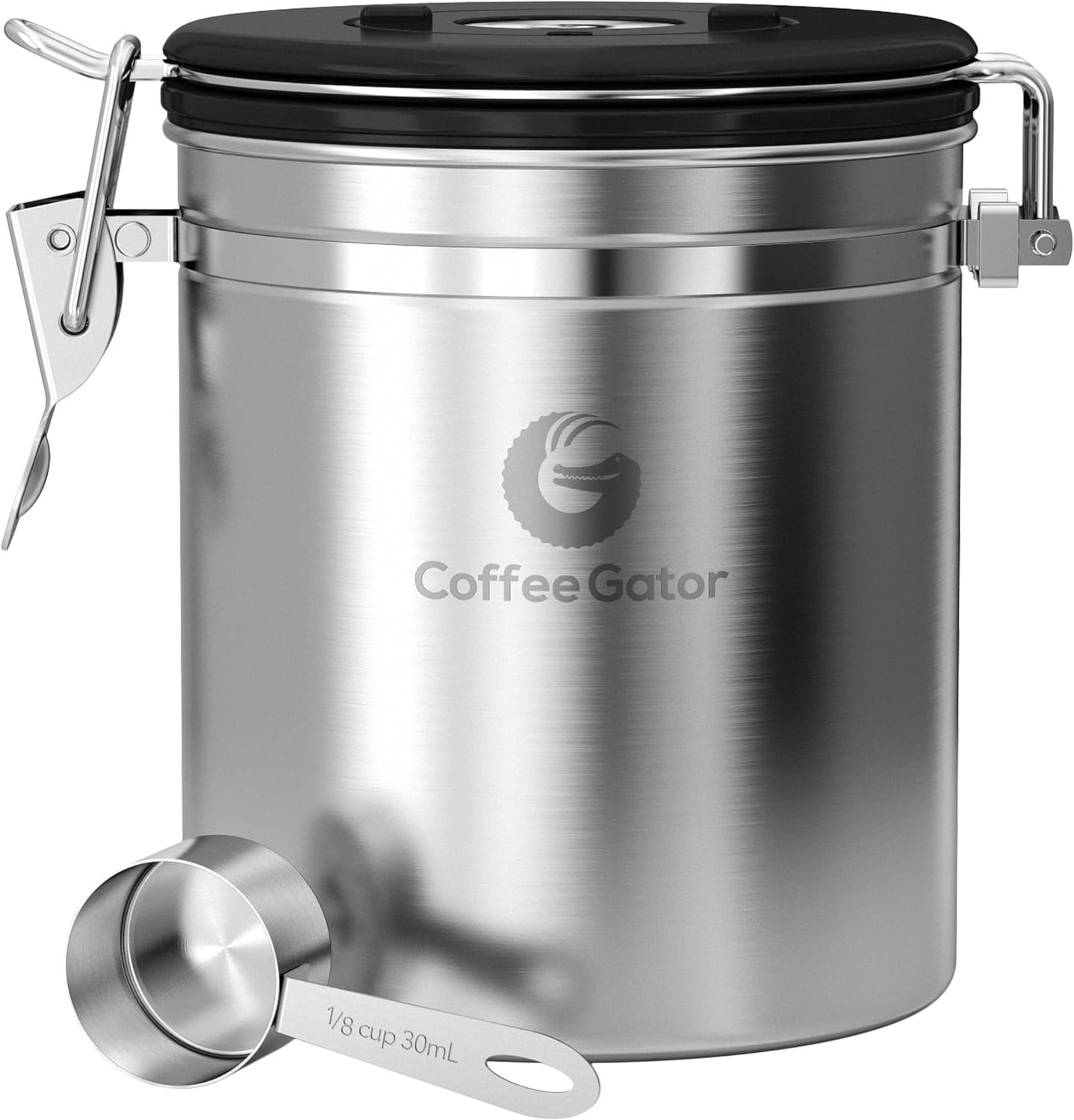
Coffee Gator 16oz Stainless Canister — Airtight Freshness
Why storage choices matter for home coffee and tea freshness
Choosing storage for coffee and tea directly affects extraction, flavor clarity, and daily brewing workflow for home brewers and households. Proper storage limits exposure to oxygen, moisture, light, and temperature fluctuations—factors that accelerate volatile compound loss and staling. For people who buy whole beans, small-batch roasters, or maintain multiple coffee styles, a dedicated container with a venting strategy and a reliable seal helps preserve aromatic oils and CO2 release behavior that influence grind particle performance and extraction balance. This review focuses on features relevant to pour-over, drip, French press, and espresso users as well as tea keepers, examining how materials, valve design, capacity, and maintenance expectations affect brewing results, dosing consistency, and countertop workflow for typical domestic brewing routines.
Quick Overview
| Feature | Details |
|---|---|
| Product category | Coffee & tea storage canister |
| Model | Canister (Coffee Gator) |
| Capacity / size | 1300 milliliters (manufacturer overview) / 16oz size designation |
| Material & finish | Stainless steel, silver finish |
| Seal & valve | Airtight lid with CO2-release freshness valve |
| Included components | Valve replacements (x4), measuring scoop, user manual |
| Compatible uses | Whole beans, ground coffee, tea, sugar, flour, cereal |
| Care instructions | Hand wash only (manufacturer states) |
| Special features | Date tracker wheel, flip-top closure, BPA-free components |
| Additional identifiers | ASIN B07W1KN79C; Best Sellers Rank listed in kitchen storage category |
These specifications show a storage-first design: stainless construction resists light and provides a barrier against ambient humidity while the one-way valve addresses degassing from freshly roasted beans. The date wheel and included scoop support inventory control and consistent dosing for repeatable brew ratios, while hand-wash care and a flip-top closure recommend a maintenance routine rather than dishwasher convenience.

Brewing method compatibility and impact on extraction
The canister’s core design—stainless steel body combined with a venting freshness valve—affects grind retention and extraction potential across brewing methods. Whole-bean storage benefits most from a one-way valve that allows CO2 to escape without reintroducing oxygen, which helps maintain oil-rich aromatics that contribute to soluble yield during grinding and extraction. Ground coffee will stale faster due to increased surface area; the same valve and airtight seal slow oxidation but cannot stop it indefinitely. Espresso users who rely on freshly degassed beans for predictable pressure profiles will find sealed storage useful for timing degassing; pour-over and immersion brewers will notice differences in aroma and extraction clarity when beans are stored in low-oxygen conditions.
Whole beans vs ground coffee: storage implications
Whole beans retain volatile aromatics and essential oils longer than ground coffee because intact cell structures reduce surface-area-driven oxidation. The canister’s valve helps by permitting CO2 release without oxygen ingress, which is beneficial for beans during the post-roast degassing window and for medium-term storage. For ground coffee, this design slows staling but cannot reverse increased extraction variance caused by fines and rapid aromatic loss. For best extraction consistency, store whole beans and grind immediately before brewing; if ground storage is necessary, limit residence time in the canister and consider smaller batch sizes to maintain predictable soluble concentration and flavor balance.
Pairing with common home brews: espresso, pour-over, French press
Espresso requires stable grind distribution and tightly controlled pressure; beans stored in an airtight canister with a CO2 valve will experience slower oxidation, preserving crema-building oils and aromatic precursors that affect shot body. Pour-over brewing benefits from preserved clarity and volatile retention, which influence perceived acidity and sweetness; a sealed environment prolongs desirable aromatics. French press and immersion methods, which extract more oils and heavier compounds, will reflect changes in oil content and oxidation as well—sealed storage helps maintain the heavier mouthfeel that some immersion brewers seek. None of these storage conditions modify extraction temperature or pressure, but they influence the raw material quality entering the grinder and brewer.
Tea and other pantry items: cross-contamination and flavor transfer
The stainless interior and airtight lid reduce light and moisture exposure for tea leaves, but flavor transfer can occur if the canister previously held strong aromatics like spices or flavored coffees. Metal surfaces do not absorb oils like some plastics, yet residual volatile compounds can adhere to gasket materials and seams. For mixed usage, reserve separate containers for highly aromatic items to avoid cross-contamination. When storing delicate teas, ensure thorough cleaning and drying of the canister and valve components between uses to preserve subtle floral and vegetal notes that influence infusion balance and mouthfeel.
Capacity, serving flexibility, and space considerations
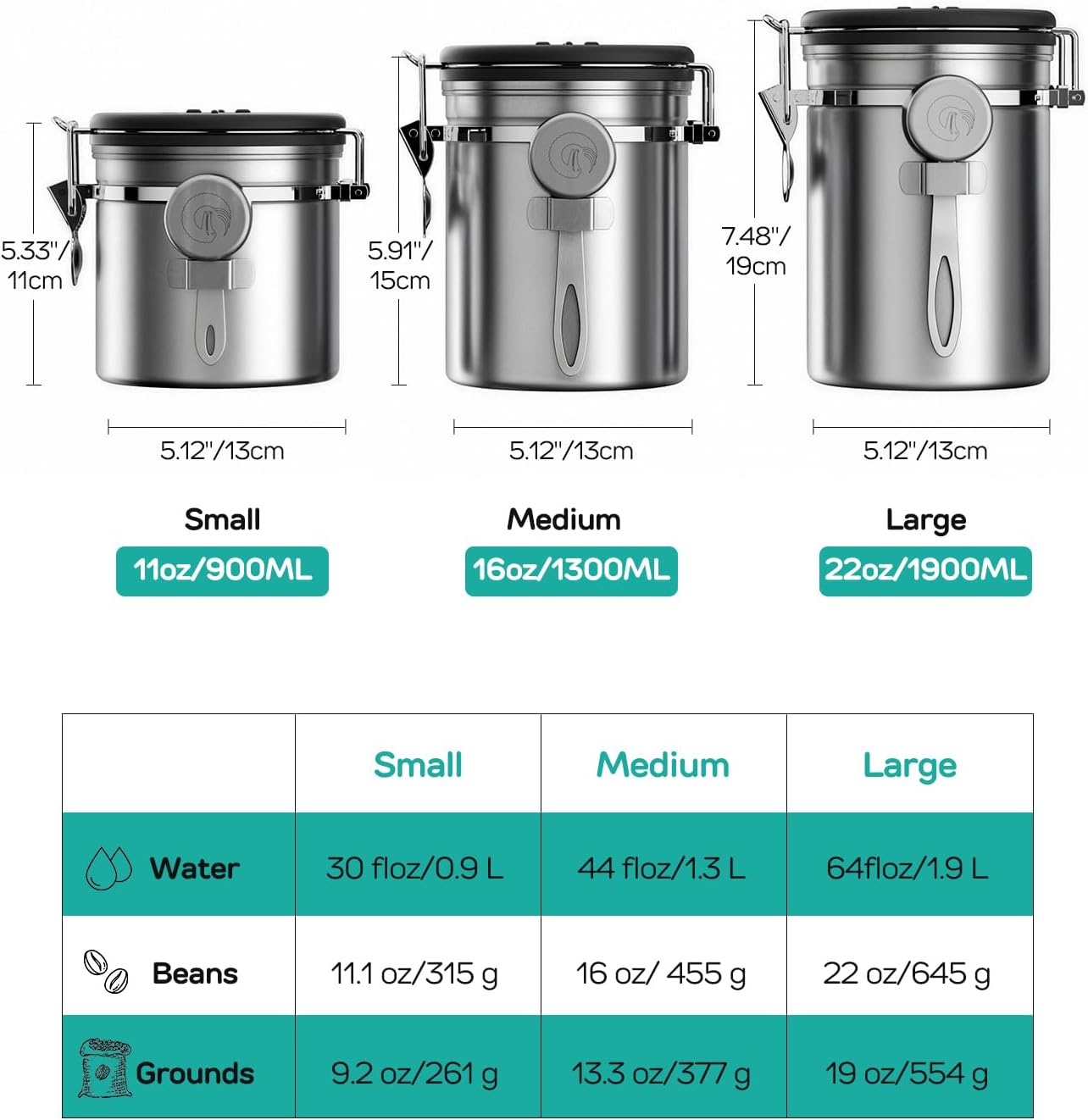
Capacity determines how much coffee can be stored without compressing roast integrity or leaving excess headspace that accelerates oxidation. The manufacturer-provided capacity specification lists 1300 milliliters while the product name indicates a 16oz size; users should treat these as guidepoints and verify actual fill volume relative to roast density. For single-serve or daily-brew households, smaller canisters reduce open-air exposure and support fresher grind-to-brew timelines. For multi-cup homes or batch brewers, a larger quantity may be convenient but requires attention to rotation and consumption rate to avoid stale beans. Countertop footprint and lid clearance also matter for grinders placed nearby, and the flip-top design impacts how close accessories can sit during workflow.

Batch size and servings: matching capacity to consumption
Matching canister volume to daily or weekly consumption is essential for minimizing stale volume. For households that consume one to two daily brews, a canister sized for one-week supply of whole beans keeps beans within an optimal freshness window. Larger households or hosts who prepare multiple pots may prefer larger containers, but increased stored volume prolongs the time beans spend in storage after roast. A measured approach—store a roast-sized portion matching planned grind frequency—supports consistent extraction and reduces variance in soluble yield and taste profile across brews.
Countertop footprint and storage placement
Stainless canisters add visual weight to a counter but protect contents from light exposure better than glass. The flip-top lid and date wheel require frontal access, so placement under cabinets with low clearance or in tight shelving can affect usability. Proximity to grinders and brewers improves workflow efficiency but avoid spots near heat sources or direct sunlight; ambient temperature stability helps preserve volatile compounds, and stainless steel will conduct heat more readily than insulated containers, so cool, shaded storage is recommended for consistent bean quality.
Capacity labeling and fill-level best practices
Specification discrepancies between volume listings and product naming suggest referencing measured fill levels for commonly roasted beans. Roast density and bean size affect how many grams fit into a given volume; using a scale to portion beans to match desired servings ensures reproducible dose mass and grind retention. Avoid overfilling, which can compress beans and limit valve function, and prevent storing small residual amounts of different roasts together to reduce flavor crossover. Using the included scoop combined with a scale-based approach will improve repeatability of extraction and taste outcomes.
Ease of use and workflow for daily brewing
Workflow considerations center on how quickly beans can move from storage to grinder and brewer with minimal sensory loss. The flip-top closure combined with a one-way CO2 valve provides a balance between rapid access and controlled exchange of gases; this is useful during morning routines when speed matters. The date tracker wheel supports inventory rotation and reduces the chance that a bag ages unnoticed, assisting brew consistency over weeks. The included scoop enables repeatable dosing, but for precision brewers a scale is recommended. Overall, the canister’s operational design favors a quick-access storage solution for domestic routines, with trade-offs in cleaning frequency and the absence of thermal insulation.

Lid and valve operation in typical morning routines
The flip-top lid offers quick access for single-handed scoop retrieval, which streamlines morning grind-and-brew processes. The one-way valve is passive—no user intervention is required for degassing—so newly roasted beans can be stored immediately without manual venting. However, valve placement and gasket seating must remain clean to ensure airtight performance; any residue or improper closure can allow oxygen ingress and accelerate deterioration. For high-frequency use, inspect the valve and lid interface periodically to sustain consistent storage conditions that support stable extraction outcomes.
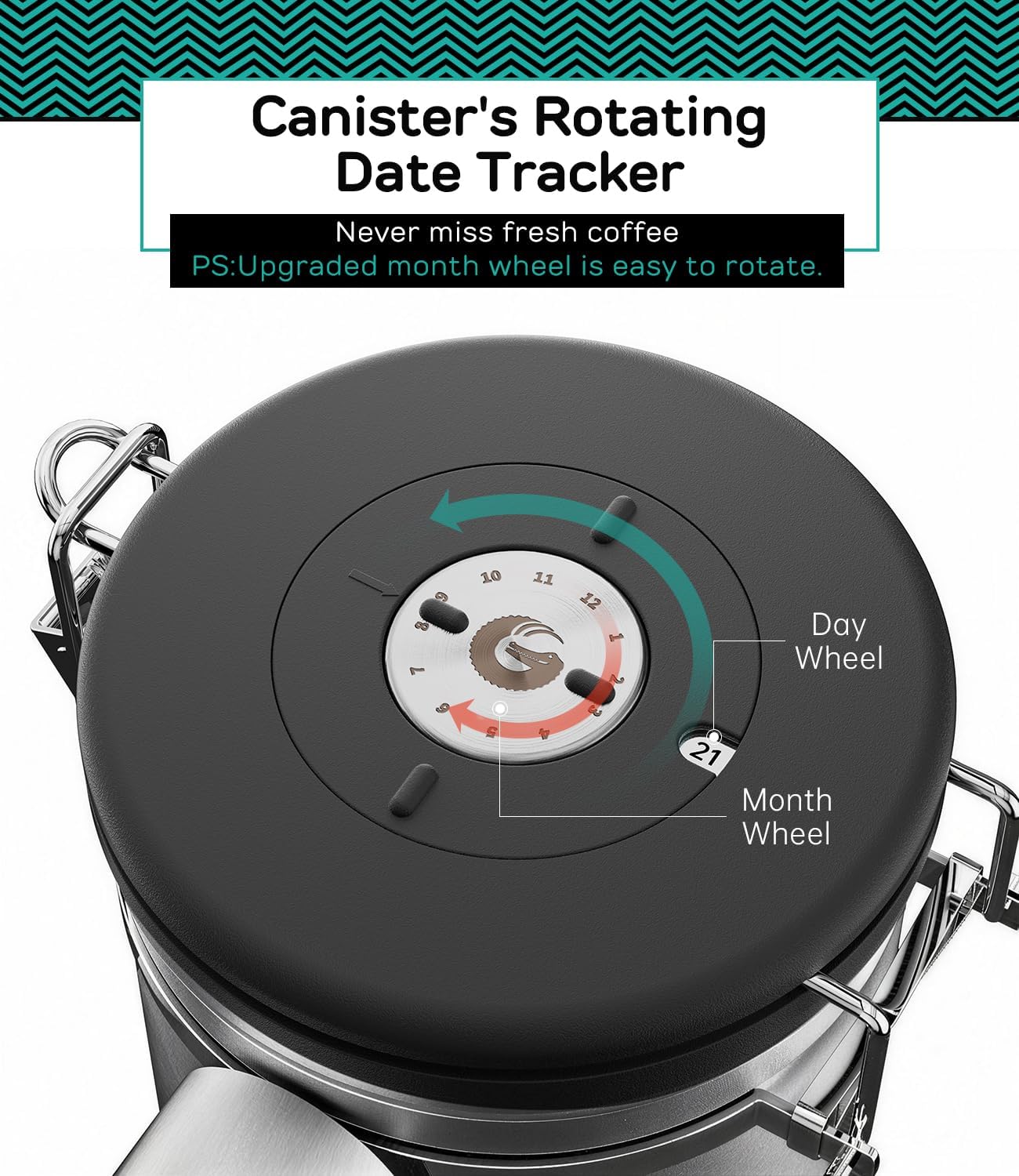
Date wheel and inventory rotation for consistency
A manual date wheel helps track roast or purchase dates, aiding inventory rotation and reducing the likelihood of brewing from stale stock. Inconsistent roast age introduces variation in soluble extraction and perceived flavor, so a visible date marker supports consistent dosing decisions and timing for grinding. This mechanical tracker does not enforce discipline but complements habitual weighing and tasting practices that determine when beans should be consumed or discarded for optimal cup quality.
Scoop sizing, dosing, and reproducible brew ratios
The included measuring scoop provides a quick reference for dosing, but volume-based scoops vary with bean size and roast density, which affects dose mass and extraction. For reproducible brew ratios and target TDS or strength, combine scoop use with a scale to calibrate grams per scoop for specific beans. Precise dosing reduces batch-to-batch variance in soluble yield and helps maintain consistent extraction parameters across brewing methods.
Cleaning, maintenance, materials, and durability expectations
Material selection and recommended care determine long-term reliability and odor neutrality. Stainless steel construction resists light and provides a non-porous interior that minimizes long-term absorption of coffee oils compared with some plastics or woods. Manufacturer guidance indicates hand wash only; this reduces exposure to high-temperature dishwasher cycles that can degrade gaskets or valve adhesives. Valve assemblies and gaskets are wear items—four replacement valves are included, suggesting periodic maintenance. Regular cleaning of the lid, gasket, and valve components maintains airtight performance and limits off-flavors that would influence extraction and brew clarity.
Hand-wash care and interior corrosion resistance
Stainless steel tolerates hand washing and resists corrosion under normal kitchen conditions, but aggressive detergents or prolonged soaking can affect finishes and gasket materials. Drying components thoroughly before reassembly prevents trapped moisture from encouraging microbial growth or degrading seals. Avoid abrasive scrubbers on polished finishes to preserve the exterior look and maintain smooth internal surfaces that resist oil adhesion; this keeps aroma retention minimal and helps prevent flavor carryover between roasts.
Valve and gasket maintenance: replacement and longevity
The inclusion of four valve replacements indicates the manufacturer anticipates periodic valve service, especially under heavy use. Gaskets and valve membranes are subject to mechanical wear and can lose elasticity, compromising the one-way seal. Periodic inspection for cracks, hardening, or residue buildup is recommended; replacement valves restore intended CO2 release behavior and airtight performance. Keeping spare valves on hand supports uninterrupted storage quality and predictable degassing behavior for freshly roasted beans.
Long-term durability and parts availability
Stainless steel provides a durable shell that resists dents and light corrosion, but moving parts—flip lid hinges, valve membranes, and gasket seats—are the likeliest failure points. The product includes replacement valves, which reduces the need to source parts externally in the short term. Over multi-year use, hinge wear or gasket degradation may require more involved maintenance; selecting a storage location that avoids repeated impacts and extreme temperatures will extend service life and preserve airtight characteristics that are critical for maintaining bean quality over time.

Pros & Cons
Pros
- Airtight design with one-way CO2 valve slows oxidation and allows degassing: A valve that vents CO2 without admitting oxygen helps maintain volatile aromatics and oils important for extraction, especially for recently roasted whole beans. This supports better aroma retention and more predictable grind-to-brew behavior.
- Stainless steel construction reduces light exposure and resists staining: Metal walls block light and are less porous than many plastics, which reduces the risk of flavor absorption and visible staining over repeated use, aiding long-term odor neutrality.
- Date tracker wheel improves inventory rotation: A mechanical date marker assists in tracking roast or purchase dates, supporting consistent consumption timelines and reducing the chance of brewing with stale beans.
- Included spare valves and scoop simplify maintenance: Replacement valve components on hand reduce downtime if a valve shows wear, while the scoop enables repeatable, quick dosing that integrates with everyday routines.
- Versatile for beans, grounds, and tea: The canister’s size and features are suitable for multiple dry goods, allowing consolidation of storage for small-batch households while maintaining basic protection against moisture and light.
- Flip-top lid provides fast access for morning routines: Rapid access supports efficient workflows when paired with nearby grinders and brewers, minimizing time between opening and grinding.
Cons
- Hand-wash only care increases maintenance time: The manufacturer’s instruction to avoid dishwashers requires deliberate cleaning habits; gaskets and valves need careful hand washing and drying to preserve seal integrity.
- Potential capacity labeling inconsistency requires verification: Multiple capacity indicators in listings may confuse buyers about true fill volume; measuring actual bean mass per intended servings is necessary for precise dose planning.
- Limited thermal insulation compared with vacuum canisters: Stainless steel without vacuum insulation will not control temperature as effectively as double-walled, vacuum-sealed containers, so ambient storage conditions remain important for preserving volatile compounds.
- Moving parts (valve, gasket, hinge) require periodic maintenance: The valve and lid components are wear items; improper cleaning or frequent rough handling can reduce airtight performance and lead to more frequent part replacement.
Final Verdict: Who This Product Is Best For (and Who Should Skip It)
This canister is best for home brewers who prioritize airtight storage, simple degassing control, and an organized countertop workflow. Users buying whole beans from specialty roasters, those who value a visible date wheel for rotation, and households that prepare daily pour-over, drip, or French press brews will benefit from the CO2-release valve, stainless construction, and included spare parts. The unit supports consistent dosing when paired with a scale and quick-access scooping, helping maintain extraction repeatability and aroma retention for several days to weeks depending on consumption rate.
Those who should skip this product include users who need dishwasher-safe containers, require vacuum-insulated temperature control, or store very large quantities beyond the stated capacity. Precision baristas seeking integrated vacuum seals or temperature regulation for long-term aging should consider alternatives designed specifically for thermal isolation. For typical domestic use focused on preserving roast freshness and streamlining morning routines, the canister offers a practical balance of features and maintainability.
Frequently Asked Questions (FAQs)
How does a one-way CO2 valve affect coffee freshness?
A one-way CO2 valve allows gases released by freshly roasted beans to exit the container without permitting oxygen to enter. This reduces internal pressure buildup while limiting oxidizing air contact, which slows the loss of volatile aromatics and oils that contribute to flavor. The valve helps maintain bean quality during the degassing window and in short- to medium-term storage, but it does not replace grinding just before brewing for optimal extraction.
Is stainless steel storage better than plastic for coffee beans?
Stainless steel blocks light, resists staining, and does not absorb oils as readily as many plastics, which helps prevent flavor transfer and preserves aromatics. Metal also provides a robust barrier to ambient moisture when paired with an airtight seal. However, stainless steel without vacuum insulation will not control ambient temperature, so storage location remains important for preserving volatile compounds.
Can ground coffee be stored in this canister, and for how long?
Ground coffee can be stored in an airtight canister with a one-way valve to slow oxidation, but ground coffee loses aromatics faster than whole beans due to greater surface area. For best results, limit ground storage to short periods—generally a few days—depending on consumption habits. Grinding immediately before brewing is recommended for consistent extraction and flavor clarity.
How often should valves and gaskets be replaced or cleaned?
Valve membranes and gaskets are wear items that should be cleaned regularly and inspected for hardening, cracks, or residue buildup. Frequency depends on use; routine inspection every few weeks under frequent use is reasonable. Replacement is recommended when elasticity or sealing performance declines. The product supplies spare valves, which supports straightforward maintenance when needed.
Does this canister keep beans at a stable temperature?
The stainless steel body provides a barrier to light and some insulation from rapid ambient changes, but without vacuum insulation it does not actively maintain a stable internal temperature. For best freshness, store the canister away from heat sources, direct sunlight, and fluctuating temperatures to minimize volatile compound degradation.
Will storing tea in the same canister affect coffee flavor later?
Storing strongly aromatic items like tea, spices, or flavored coffee in the same canister can lead to flavor transfer, particularly if gasket materials retain volatiles. Stainless interiors are less likely to absorb oils than some plastics, but to avoid cross-contamination of subtle tea notes or coffee roast characteristics, dedicate separate containers to distinct categories or perform thorough cleaning and drying between uses.
How should this canister be cleaned to preserve seals?
Manufacturer guidance indicates hand washing. Use mild detergent and warm water to clean the interior, lid, valve, and gasket components, then dry thoroughly before reassembly. Avoid high-temperature dishwasher cycles and abrasive cleaners that could degrade gaskets or finish. Regular gentle cleaning preserves airtight performance and reduces odor retention.
What size canister is best for maintaining coffee freshness?
Select a canister size that matches typical consumption so beans are used within an optimal freshness window—smaller containers are preferable for single-serve households, while larger households may require bigger capacity. Avoid overfilling and rotate inventory using a date tracker to minimize the period beans spend stored after roast, which supports consistent extraction and flavor.