Cuisinart DBM-8P1 Burr Coffee Grinder — Precision Grinds

Introduction: Why the Right Grinder Matters for Home Brewing
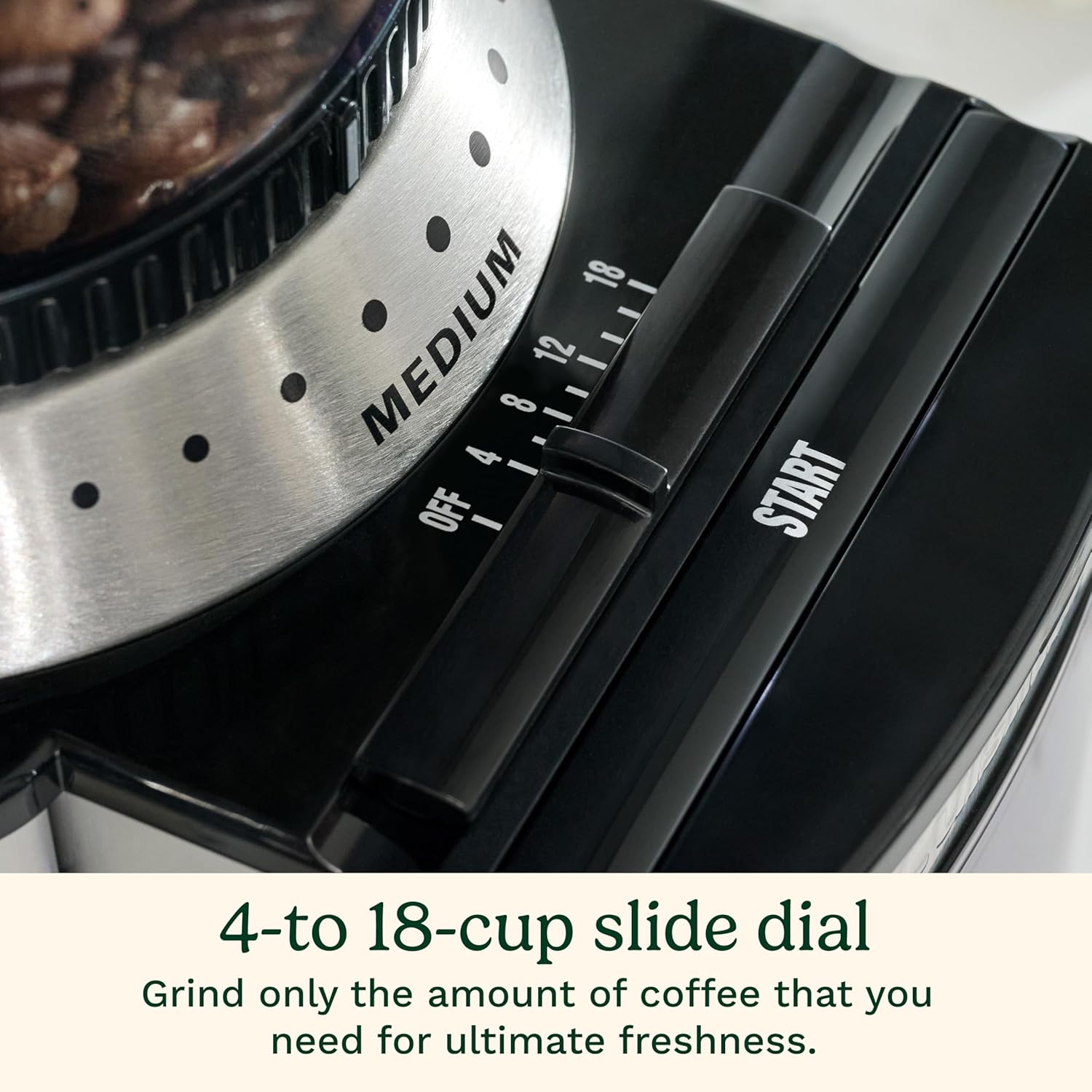
Choosing the correct grinder is foundational to predictable extraction, consistent flavor, and reliable brewing workflow for household coffee preparation. For home brewers and households that prepare drip, pour-over, and coarse-immersion methods, a burr grinder improves particle-size uniformity and reduces the proportion of fine and oversized particles that lead to under- or over-extraction. The Cuisinart DBM-8P1 presents a compact, flat-burr design with an 18-position grind selector and one-touch timed operation intended for everyday use. This review focuses on how specifications—burr type and material, grind range, hopper capacity, dosing controls, and removable components—translate into grind consistency, brew method compatibility, heat management concerns, maintenance expectations, and long-term durability. The aim is to clarify who benefits from the DBM-8P1’s feature set and which users should consider alternatives, using appliance design principles, manufacturer disclosures, and common customer feedback themes rather than hands-on testing or first-person claims.
Quick Overview
| Feature | Details |
|---|---|
| Product category & brewing method | Electric flat-burr coffee grinder for ground-bean dosing; suited to drip, pour-over, French press and coarse brew methods; limited suitability for pressurized espresso heads |
| Capacity & output | 8 oz bean hopper; removable grind chamber holds enough grounds for approximately 4–18 cups (manufacturer cup = ~5 oz) |
| Materials & construction | Stainless-steel housing, removable BPA-free grind chamber and hopper components, flat steel burrs (manufacturer-stated) |
| Power & control system | Heavy-duty motor with one-touch power bar and internal electric timer; cord storage included |
| Grind compatibility | 18-position slide-dial grind selector from ultra-fine to extra-coarse; manual-timed dosing rather than weight-based dosing |
| Best suited users | Home brewers who want adjustable, repeatable ground sizes and easy cleanup; households making drip, pourover, and French press |
| Intended use cases | Daily home grinding up to household volumes; preparing batches for multiple servings and storing grounds in the chamber |
| Warranty & service | Limited 18-month manufacturer warranty (manufacturer disclosure) |
These specifications shape real-world brewing outcomes: the 18 grind settings and flat burrs enable a broad grind range that supports diverse brew methods, while the removable hopper and grind chamber simplify maintenance. Timed, one-touch dosing leverages repeatability over precision weighing, and the stainless-steel construction favors countertop durability but does not impart active temperature control during grinding.
Grind Consistency and Extraction Quality
The Cuisinart DBM-8P1’s flat-burr geometry and 18-position selector provide the principal pathway to consistent extraction by reducing the coarse-to-fines spread inherent in blade grinders. Flat burrs typically produce a tighter particle distribution at a given setting compared with common conical alternatives at similar price points, which supports steadier flow during pour-over and more uniform immersion extraction in French press. The timed one-touch dosing system improves repeatability for routine brewing, but absence of weight-based dosing means grind-by-grind variation can occur if bean density or roast level changes. Heat generation is a concern when grinding at high speed or for large batches; stainless-steel burrs and a heavy-duty motor can transfer heat, so intermittent grinding or smaller doses can help limit temperature rise that could volatilize aromatic compounds prior to brewing.
Burr Design, Materials, and Particle Distribution
Flat steel burrs in the DBM-8P1 are specified by the manufacturer and operate on the principle of shearing beans between two flat surfaces, which encourages consistent particle-size bands and a relatively low percentage of fines compared to many blade systems. For extraction science, a tighter particle distribution reduces channeling during pour-over and limits over-extracted bitter notes that arise from excessive fines in a bed. Material choice—stainless steel—balances durability with wear resistance, though eventual burr wear will increase particle variance over long-term heavy use. The flat-burr layout can also produce more retention in the grinding path relative to conical grinders, which may influence dosing repeatability unless grounds are cleared between sessions.
Grind Range, Settings, and Their Impact on Brewing
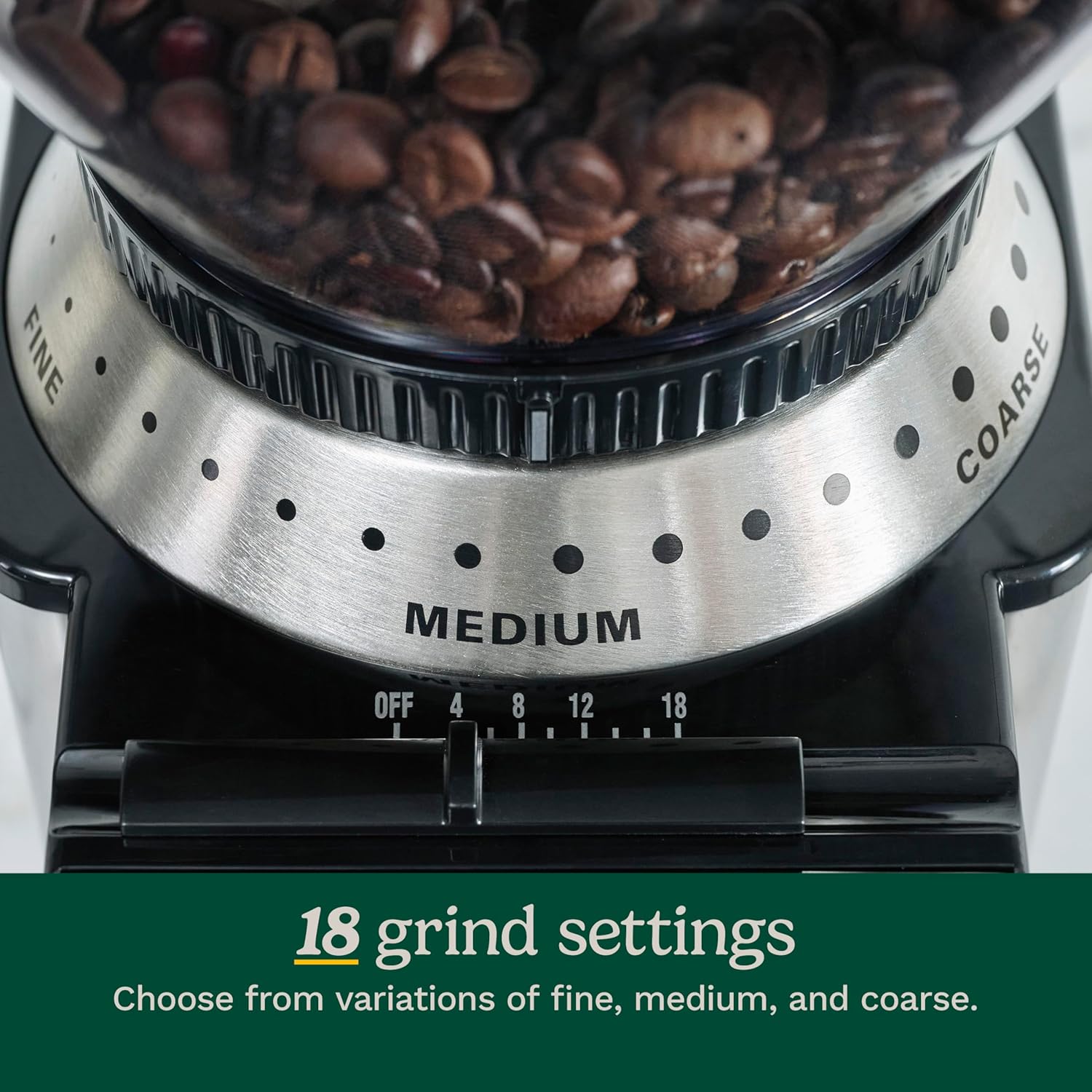
An 18-position grind selector spans ultra-fine to extra-coarse settings, which on paper accommodates espresso-adjacent fines through to coarse French-press levels. In practice, each incremental setting modifies mean particle size and therefore extraction rate: finer settings increase surface area and expedite soluble extraction, while coarser settings slow flow and increase contact time. For drip and pour-over, mid-to-fine settings allow balanced extraction when paired with appropriate brew ratios and water temperature; for immersion methods, coarser settings reduce over-extraction. Because dosing is timed rather than weight-monitored, consistent grind-output mass per time must be established by users aligning grind time and grind setting to target brew ratios.
Consistency Across Multiple Batches and Roast Types
Consistency from batch to batch depends on maintaining similar bean characteristics (density, roast level, and moisture) and using a stable timed dose. Lighter, denser roasts will yield lower mass for a given volume and may require longer grind times or adjusted settings to achieve the same dose. The DBM-8P1’s removable grind chamber and one-touch operation support repeatable workflow, but without integrated weight or programmable dosing, users must calibrate settings when swapping bean types. Aggregated user feedback frequently cites reliable daily consistency for a single bean profile, with the caveat that noticeable recalibration is required when switching roasts or grind target.
Brewing Method Compatibility and Capacity
The DBM-8P1’s 18-step adjustment and flat-burr configuration support a wide range of household brew methods. The manufacturer-stated ultra-fine to extra-coarse range allows theoretical compatibility from some fine drip and pour-over targets through to French-press textures. Capacity-wise, the 8 oz hopper and removable grind chamber rated for 4–18 cups afford flexibility for single-serve to family-batch preparation, aligning with common household brew ratios. However, suitability for low-pressure, pressurized espresso machines remains limited because consistent micro-fines and precise dosing are critical for pressure-based extraction; a dedicated espresso grinder with stepless adjustment and weight dosing typically performs better for that use case.

Drip, Pour-Over, and Immersion Methods
Drip and pour-over methods benefit from the DBM-8P1’s ability to dial in particle size across multiple discrete increments. For pour-over, flow control is achieved by matching grind setting to water temperature and pouring technique; the grinder’s consistency supports steady liquid flow and predictable extraction. For immersion brews like French press, the extra-coarse settings minimize fines and reduce over-extraction risk. While the grinder provides the necessary particle-size range to create target flow rates, achieving ideal extraction still depends on correct brew ratios and water temperature.
Espresso Considerations and Limitations
Although the selector offers ultra-fine settings, achieving commercial-style espresso requires precise micro-adjustments, minimal retention, and consistent weight-based dosing. The DBM-8P1’s stepped 18-position selector and timed dosing are designed for convenience and repeatability in household contexts rather than the finetuned control demanded by pressure-based extraction. Users employing pressurized or non-pressurized single-serve espresso devices may see acceptable results for lighter or softer-profile espresso, but serious home-barista workflows that target 9-bar extraction curves and narrow shot windows will often favor specialized espresso grinders.
Capacity, Batch Workflow, and Serving Flexibility
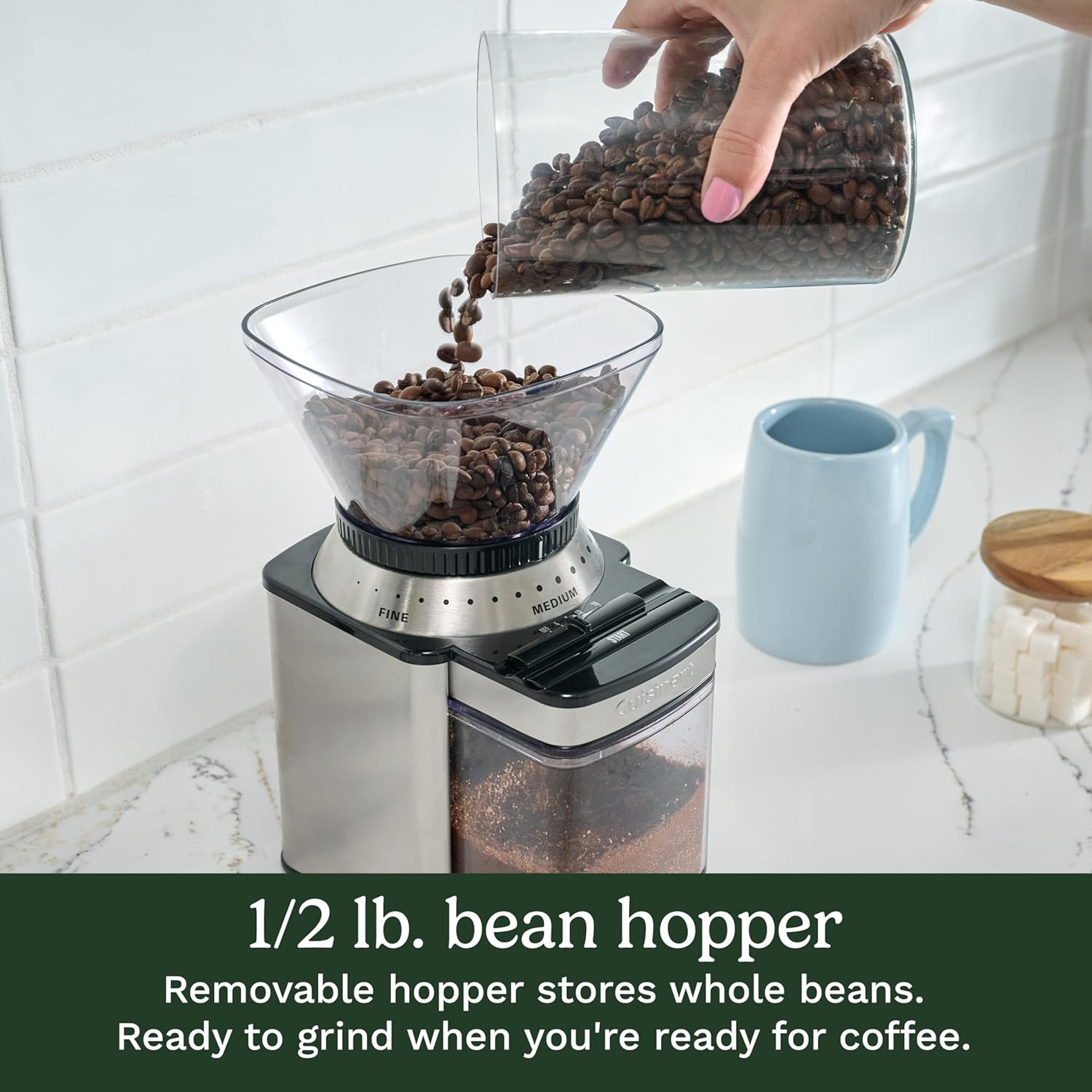
The 8 oz hopper accommodates routine household consumption without constant refilling; the removable grind chamber supplies grounds for 4–18 manufacturer-specified cups, providing options from single-serve mornings to larger gatherings. For workflows requiring multiple consecutive doses, the motor’s heavy-duty rating supports short bursts of operation, though large-volume users should consider incremental grinding to limit heat buildup. The removable chamber also enables pre-grinding for short-term storage when immediate brewing is not required, but ground coffee shelf life and aroma loss remain dictated by exposure to oxygen and time.
Usability, Controls, and Workflow Efficiency
Controls on the DBM-8P1 center on an 18-position slide-dial grind selector and a one-touch power bar paired to an internal electric timer. This design simplifies daily operation, allowing users to lock in a setting and dose time that yields repeatability for consistent beans and brew ratios. Removable components—the 8 oz hopper and grind chamber—simplify cleaning and switching beans. However, timed dosing rather than weight or programmable grams requires calibration when bean density varies, and stepped adjustments mean finer micro-tuning is limited compared with stepless systems. The electric timer and one-touch interface prioritize speed and predictability for typical household routines over professional-level dosing fidelity.
One-Touch Dosing, Timer, and Repeatability
The built-in electric timer and one-touch power bar provide a straightforward dosing loop: set grind size, set desired run time, and activate the grinder. This facilitates consistent mass output if bean type and roast remain constant, which is important for daily morning routines. Repeatability is achieved through human calibration rather than automatic weighing; when beans change, timed doses must be adjusted to match target brew ratios. For users prioritizing speed and simplicity, the timer approach is intuitive, but for precision dosing or recipe-driven brewing, a separate scale and tare step are recommended.
Removable Components and Bean-Switching Workflow
Removable hopper and grind chamber components reduce cleanup time and enable rapid bean changes without contaminating flavors across varieties. The BPA-free chamber and straightforward disassembly support multiple-batch workflows and quick maintenance, while included accessories such as a scoop and cleaning brush declutter routine care. Ground retention in the grind path can still produce trace mixing between beans if not fully cleared; a short purge or quick brush-out is recommended to minimize flavor cross-contamination when switching between light and dark roasts.
Speed, Noise, and Kitchen Integration Considerations
Motor specifications indicate a heavy-duty motor designed for household throughput, which typically implies moderate to brisk grind speed. Higher-speed grinding tends to increase audible noise and can generate thermal energy in the burrs; kitchen placement and user tolerance for operational noise should be considered. The unit’s compact footprint and cord storage favor countertop integration, while stainless-steel housing matches many modern kitchen aesthetics and offers resistance to surface wear with routine care.
Cleaning, Durability, and Who Should Avoid This Grinder
Manufacturer disclosures on removable parts and an 18-month limited warranty frame expectations for upkeep and longevity. The stainless-steel exterior and removable grind chamber make routine cleaning straightforward, and the design includes a scoop and brush for maintenance. Over time, burr wear is a normal outcome of metal-on-bean abrasion; flat steel burrs are durable but will gradually lose sharpness under heavy daily use. Aggregated customer feedback commonly praises ease of cleaning and consistent performance for household volumes, while noting that serious espresso-focused users and commercial venues should opt for grinders with stepless adjustments and professional-duty burr systems.

Cleaning Procedure and Maintenance Expectations
Routine maintenance centers on emptying the hopper, brushing out the grind chamber, and wiping external surfaces; the removable, BPA-free components simplify those tasks. Frequent cleaning reduces oil buildup and stale residue that can impair flavor transfer between beans. Without disassembly of the burr set, a brush and occasional purge are typically sufficient for household users, but periodic professional servicing or burr replacement will be required with heavy usage to maintain initial particle uniformity.
Construction Quality, Warranty, and Long-Term Reliability
Stainless-steel housing and metal burrs indicate a construction aimed at durability for domestic environments. The manufacturer-provided 18-month limited warranty covers certain defects, yet normal wear—such as burr dulling—falls under expected maintenance rather than warranty repair. In terms of longevity, grinders used at moderate household volumes and cleaned regularly will retain functional performance for years, while sustained heavy-duty use accelerates wear patterns and may necessitate earlier burr replacement or upgrade.
Who Should Avoid the DBM-8P1
This grinder is not a match for users requiring commercial throughput, exact gram-based dosing, or stepless micro-adjustment for professional espresso work. Serious home-baristas who demand sub-100-micron adjustments, minimal retention, and integrated dosing by weight should consider purpose-built espresso grinders with stepless adjustment and higher-tolerance burr sets. Likewise, venues or users that grind for dozens of servings per day should evaluate commercial-grade options designed for continuous operation and simple burr replacement.

Pros & Cons
Pros
- Broad grind range with 18 discrete settings: The 18-position slide-dial spans ultra-fine to extra-coarse sizes, supporting multiple household brewing methods from pour-over to French press while enabling visible, repeatable adjustments.
- Flat-burr geometry for improved particle uniformity: Flat steel burrs typically yield a tighter particle distribution than blade systems, supporting more even extraction and cleaner flavor clarity in brewed coffee.
- Removable hopper and grind chamber for easy cleaning: Detachable, BPA-free components simplify maintenance, allow rapid bean changes, and reduce flavor crossover between roasts.
- One-touch power bar with internal timer for repeatable dosing: The timed, single-button operation makes daily grinding straightforward and repeatable for users who maintain consistent bean types and brew ratios.
- Compact, stainless-steel construction fits kitchen counters: Durable housing and cord storage minimize countertop clutter and offer long-term surface resilience in typical household settings.
- Suitable capacity for household servings: An 8 oz hopper and grind chamber sized for 4–18 cups accommodate single-serve mornings and family-batch preparation without constant refilling.
- Included accessories streamline upkeep: The supplied scoop and cleaning brush support routine maintenance and promote consistent dosing and cleanliness.
- Manufacturer warranty supports consumer confidence: The limited 18-month warranty provides coverage for certain defects and aligns with standard small-appliance protection.
Cons
- Timed dosing instead of weight-based dosing limits precision: Without integrated scales or programmable gram settings, achieving exact brew ratios requires manual calibration and external measurement for highest accuracy.
- Stepped grind settings constrain micro-adjustments: The 18-step selector offers broad control but lacks the infinite tunability of stepless grinders preferred by precision-focused espresso users.
- Potential for heat buildup during large batches: High-speed grinding for extended periods can transfer heat into grounds; large or continuous batches may benefit from incremental grinding to mitigate aromatic loss.
- Not ideal as a dedicated espresso workhorse: While ultra-fine settings exist, stepped adjustments, retention characteristics, and timed dosing make the unit less suitable for pressure-extraction workflows that require narrow tolerance and minimal retention.
- Eventual burr wear affects long-term particle uniformity: Metal burrs are durable but will dull with prolonged, heavy use, requiring replacement or an upgrade for sustained high-performance demands.
Final Verdict: Who This Product Is Best For (and Who Should Skip It)
The Cuisinart DBM-8P1 is positioned as a homeowner-focused burr grinder that balances adjustable grind range, convenient controls, and straightforward maintenance for everyday brewing. It is well-suited for households that prepare drip coffee, pour-over, and French press, providing an accessible pathway to improved extraction through tighter particle distributions than blade grinders. The removable hopper and chamber, one-touch timer, and stainless-steel build support routine workflows, moderate batch sizes, and simplified upkeep without professional-level complexity.
Prospective buyers who should consider alternatives include dedicated home-baristas and small commercial users who require stepless micro-adjustment, weight-based dosing, minimal retention, and burr systems engineered for continuous high-volume operation. Similarly, users whose primary interest is traditional espresso with narrow shot windows may prefer a specialized espresso grinder with higher tolerance burrs. For typical household use in 2026—where consistency, ease of cleaning, and multi-method compatibility are priorities—the DBM-8P1 offers a pragmatic compromise between performance and simplicity.

Frequently Asked Questions (FAQs)
What brew methods is the Cuisinart DBM-8P1 best suited for?
The DBM-8P1’s 18-position grind selector and flat-burr geometry support a range of household brew methods such as drip coffee, pour-over, and French press. The grinder’s extra-coarse settings are appropriate for immersion brews, while mid-to-fine settings suit drip and pour-over. For pressure-based espresso extraction that requires micro-adjustment and weight dosing, a dedicated espresso grinder is typically more appropriate.
How consistent are the grind sizes from the Cuisinart DBM-8P1?
Consistency derives from the flat-burr design and incremental 18-step selector, which together tend to produce a relatively narrow particle-size distribution compared with blade grinders. The timed dosing system supports repeatability for a given bean profile, but consistent mass output requires calibration when beans change. Long-term consistency may decline as burrs wear, a normal outcome of prolonged use.
Does the grinder heat the coffee beans and affect flavor?
Any grinder can generate heat during operation, particularly when grinding large batches continuously. The DBM-8P1 uses a heavy-duty motor and metal burrs, so short, incremental grinding or smaller doses can reduce heat transfer to grounds. Limiting extended continuous runs helps preserve volatile aroma compounds prior to brewing.
How easy is the DBM-8P1 to clean and maintain?
The unit includes a removable 8 oz hopper and a BPA-free grind chamber designed for straightforward cleaning, plus a scoop and brush for routine maintenance. Regular brushing and occasional purging reduce oil and residue buildup. Full burr disassembly is not required for routine cleaning, but periodic burr inspection and eventual replacement may be needed with heavy long-term use.
Can the DBM-8P1 be used for espresso?
While the DBM-8P1 offers ultra-fine settings, it is not optimized for professional-style espresso workflows that demand stepless adjustment, minimal retention, and weight-based dosing. It can produce finer grinds adequate for pressurized or entry-level espresso devices, but dedicated espresso grinders are recommended for users targeting precise pressure-extraction profiles and narrow shot windows.
What capacity does the hopper and grind chamber provide for household use?
Manufacturer specifications list an 8 oz bean hopper and a removable grind chamber capable of holding grounds sufficient for about 4–18 cups, based on a manufacturer cup measure. This capacity suits single-serve preparation as well as small gatherings, reducing the need for repeated refilling during typical home use.