Cuisinart DCG-20BKN Grinder Review: Capacity, Ease & Fit
Why the right grinder matters for home coffee
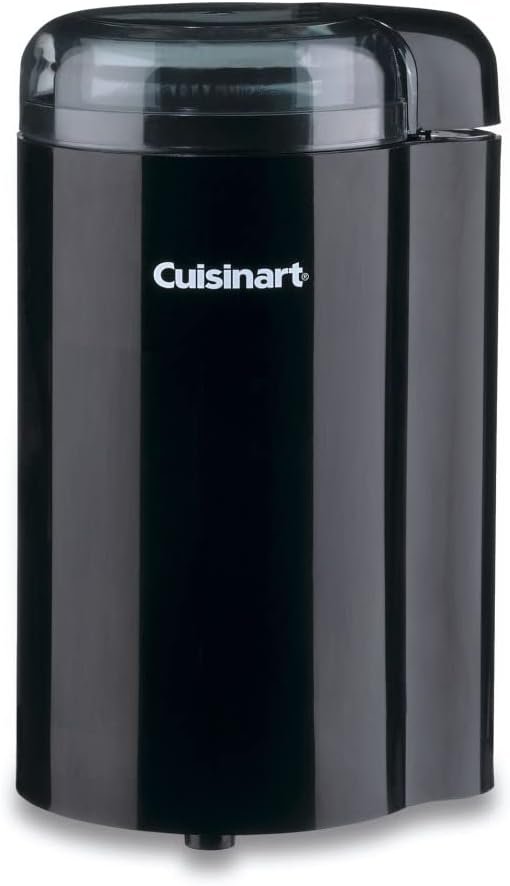
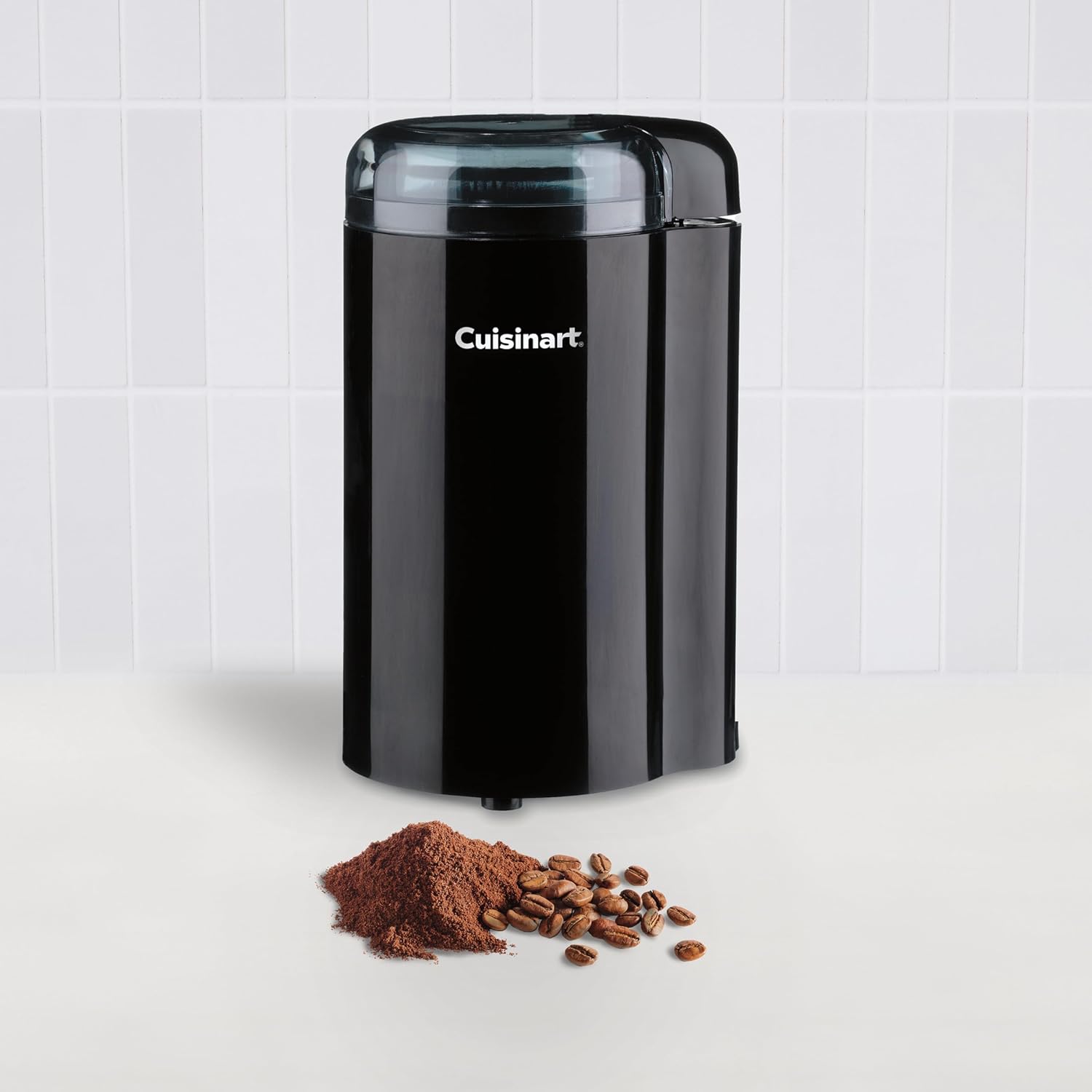
Choosing a grinder shapes extraction, flavor clarity, and brewing workflow more than many other appliances. For home brewers and household users who want fresher grounds than preground coffee, a compact electric grinder is often the most practical option. The Cuisinart DCG-20BKN is a blade-style grinder with a 2.5-ounce (70g) stainless steel bowl and blades, designed to support up to 12 cups of brewed coffee per grinding cycle. Its simple on/off control, built-in safety interlock, cord storage, and stainless steel components target casual consumers, busy kitchens, and entry-level enthusiasts who prioritize convenience. Understanding the grinder’s operational principles—high-speed blade impact, single-speed motor behavior, and small-batch capacity—helps buyers match the tool to brewing goals such as drip coffee, pour-over, or French press. Expectations should be calibrated for grind uniformity limits inherent to blade designs and for maintenance and temperature considerations that affect extraction and cup balance.
Quick Overview
| Feature | Details |
|---|---|
| Product category | Electric blade coffee grinder (compact model) |
| Brew methods supported | Best for drip, pour-over approximation, and French press coarse chops; not ideal for calibrated espresso or ultra-fine applications |
| Capacity/output | 2.5 oz / 70 g per cycle — marketed as enough for up to 12 cups |
| Materials & construction | Stainless steel bowl and blades, plastic housing, teardrop form factor |
| Motor & control | High-speed DC motor, single on/off push control, safety interlock |
| Grind compatibility | No discrete grind settings; pulse control determines particle size distribution |
| Best suited users | Casual home brewers, households, new coffee enthusiasts, compact-kitchen users |
| Intended use cases | Small-batch grinding for drip machines, pour-over, and coarse French press; occasional daily use |
| Warranty | Limited 18-month warranty |
The features above directly affect performance and usability: a blade grinder’s single-speed motor and stainless-steel blades allow fast processing of whole beans but produce a broader particle-size distribution than burr grinders. Capacity and bowl shape determine batch workflow, and the safety interlock and simple on/off interface prioritize quick operation over precision. Cleaning access to the bowl and lid limits maintenance time, while the 18-month warranty provides modest protection against defects.

Brewing method compatibility
The Cuisinart DCG-20BKN is positioned for general household brewing rather than for method-specific precision. As a blade grinder, it creates particle-size variation that can work acceptably for drip coffee makers and some pour-over routines when paired with appropriate dosing and pulse technique; coarser pulses yield larger fragments suited to French press immersion brewing. However, extraction-focused methods demanding uniform particle distribution—especially espresso and very fine Turkish or moka pot grinds—will be compromised by uneven particles and fines. This grinder is therefore most compatible with batch-oriented, forgiving methods that tolerate wider particle distribution: automatic drip machines, single-cup pour-over using adjusted bed and brew times, and coarse immersion methods.
Drip and pour-over applications
For drip machines and many pour-over setups, grind uniformity affects extraction balance. Pulse grinding with the DCG-20BKN can produce acceptable medium-fine to medium-coarse ranges for drip and pour-over when users adjust dose, grind pulse duration, and brew time. Because blade grinders create a mix of fines and coarse bits, extraction can trend toward over-extraction of fines with under-extraction of larger particles; compensating techniques include slightly coarser target, shorter contact time, or adjusting brew ratio. The product’s capacity is adequate for typical household servings, and the stainless-steel bowl reduces static compared with some plastics, though static and irregular particle sizes remain considerations.
French press and coarse grind suitability
For French press or immersion brewing, coarse fragments and intact bean pieces are more forgiving of particle-size variance. The DCG-20BKN can produce sufficiently coarse material through short, controlled pulses; longer pulses will create more fines. The stainless-steel bowl and blades support quick coarse chopping, and the 2.5-ounce capacity supports multi-cup batches for one or two consecutive presses. Users should plan to sift or rest grounds if sediment sensitivity is high, as blade grinding tends to increase small particles that pass a metal mesh filter.
Grind consistency and extraction quality
Blade grinders operate on high-speed impact rather than shearing between calibrated burrs, so particle distribution is inherently wider. This pattern affects extraction by creating both over-extracted fines and under-extracted coarse fragments in the same batch, which translates to potential bitterness and uneven flavor clarity if brew parameters remain unchanged. The DCG-20BKN’s stainless-steel bowl and blades are durable for impact grinding and help limit contamination, but they do not confer the precision of stepped or stepless burr adjustments. Buyers should approach extraction by managing grind time and pulse technique, adjusting brew ratio, filtration, and water temperature to compensate for broader distributions and achieve a balanced cup for tolerated brew methods.

Blade vs. burr: particle distribution implications
Burr grinders produce a tighter particle distribution through compression and shearing, which supports consistent extraction and repeatability—important when dialling in espresso or specialty pour-over recipes. Blade grinders like the DCG-20BKN chop at high speed, producing particles that range across sizes. In practice, this means the same nominal pulse time can yield variable cup results based on bean hardness, roast level, and batch size. The stainless-steel construction helps maintain blade integrity and edge retention, but the lack of speed control and grinding geometry adjustments means repeatable, precise extraction is less achievable than with burr systems.
How inconsistent grind affects cup balance
A mixed particle-size bed alters water flow and extraction kinetics: fines extract quickly and can dominate perceived bitterness, while large fragments release soluble flavors slowly, sometimes leaving vegetal or sour notes. For drip or immersion brewing with broader tolerances, these effects can be mitigated by coarser targets and shorter contact times, or by using filtration systems that trap fines. Understanding these dynamics helps set realistic expectations: the DCG-20BKN can produce satisfying cups when paired with method-appropriate adjustments, but it is not designed for precision extraction or specialty coffee competition-level control.
Capacity, serving flexibility, and workflow
Capacity and batch workflow are central for household coffee routines. With a 2.5-ounce (70g) capacity marketed to supply up to 12 cups, the grinder supports small to moderate daily needs but is not optimized for large-volume or commercial workflows. The bowl shape and single-cup dosing allow one-button operation and quick refills, and the cord storage keeps countertops tidy. However, the limited per-cycle volume means that multiple cycles may be required for larger households or entertaining, increasing total processing time and thermal load on the motor. Buyers should weigh the trade-off between compact convenience and the need for larger batch throughput depending on household size and serving patterns.

Single-batch households and daily routines
For single users, couples, or small families, the DCG-20BKN’s capacity aligns with typical morning routines where fresh grounds are produced immediately before brewing. The straightforward on/off control streamlines the task and minimizes handling. Because the grinder is compact and quick, it pairs well with automatic drip machines and compact pour-over setups. Households with staggered brewing times can grind per brew to preserve freshness; however, grinding multiple batches in short succession will increase motor use and can produce additional heat in the bowl that may affect aromatic retention.
Multiple-cup scenarios and throughput limits
Entertaining or multi-cup routines that require 12+ cups at once will either need several cycles or pre-planned grinding, which undermines the fresh-grinds advantage. Multiple cycles increase operator time and exposure to inconsistent particle-size outcomes between batches due to variation in pulse technique. The limited size of the bowl also affects dosing granularity for small single-serve needs—very small doses may be more difficult to measure and achieve consistently. This grinder is therefore best for those who value compactness and quick single-cycle grinding rather than high-throughput, large-batch production.
Ease of use, safety interlock, and cleaning workflow
Operational simplicity is a primary selling point: one-button on/off control and a safety interlock reduce accidental operation and make the unit approachable for inexperienced users. The stainless-steel bowl and lid are removable and marketed as easy to clean, and cord storage in the base simplifies kitchen organization. Because the grinder does not include multiple speed settings or grind presets, the learning curve focuses on pulse timing and dosing rather than menu navigation. From a safety and maintenance perspective, the lid interlock reduces the risk of blade exposure during use; recommended cleaning approaches emphasize caution around the blades and regular removal of trapped fines to limit stale-oil buildup and preserve flavor integrity.

Controls and user interaction
The single on/off control emphasizes quick start-stop action and lends itself to pulse technique: short bursts to achieve coarse chops, longer presses for finer particles. The lack of variable speed or timed presets reduces complexity for users who prefer straightforward mechanics, but it also removes automation that can aid consistency. The safety interlock prevents the motor from running unless the lid is properly secured, aligning with standard small-appliance safety protocols and reducing the likelihood of misuse around children or pets.
Cleaning procedures and maintenance expectations
Because blades and bowl are stainless steel, routine cleaning can be managed with a dry brush, brief wipe with a damp cloth, or hand wash of the removable bowl and lid where permitted by manufacturer guidance. Avoid submerging the motor base; use a dry brush to dislodge grounds from vents and crevices. Regular cleaning prevents residual oils from accumulating on blades and bowl surfaces, which can impact flavor over time. The included instruction book and simple architecture reduce maintenance complexity, though blade edge care is limited to general use (no sharpening service expected), and extended heavy-duty use can stress bearings and motor windings.
Durability, motor performance, and who should avoid this grinder
Durability considerations center on the heavy-duty motor claim, stainless-steel blades and bowl, and the compact plastic housing. Stainless steel resists corrosion and supports blade longevity, and cord storage in the base protects wiring during idle periods. The limited 18-month warranty offers a basic manufacturer safety net. Despite these strengths, blade grinders inherently place high stress on motor bearings and fast-rotating components, so frequent large-batch or continuous commercial-style use accelerates wear. Noise and heat generation are common with high-speed DC motors. Buyers seeking long-term precision, commercial durability, or fine-grind consistency should consider burr alternatives. Additionally, espresso-focused users and those needing exact grind settings should avoid this model due to particle-size variability.

Motor, materials, and warranty trade-offs
The combination of a high-speed DC motor with stainless-steel blades provides fast processing and corrosion resistance, but the single-speed design means thermal and mechanical stress management depends on user behavior—short pulses and intermittent operation reduce wear, while repeated long runs increase heat and component strain. The 18-month limited warranty covers certain defects but does not convert a consumer blade grinder into a professional-grade solution. Plastic external components and compact form factor favor countertop convenience but limit shock resistance and industrial-level serviceability.
Who should avoid the Cuisinart DCG-20BKN
This grinder is not suited for espresso purists who require narrow particle-distribution and pressure-profile consistency, nor for high-volume households or small cafes that need continuous throughput and precise settings. Users who prioritize silent operation, micro-adjustable grind steps, or professional durability should consider entry-level burr grinders. Those sensitive to sediment in the cup or who exclusively brew with ultra-fine techniques will find blade-produced fines problematic. For casual households prioritizing quick fresh grinding for drip and coarse methods, the unit remains a compact option.
Pros & Cons
Pros
- Compact, user-friendly design: The teardrop-shaped housing, single-button operation, and built-in cord storage make the grinder space-efficient and approachable for home users with simple morning routines. The safety interlock reduces accidental starts, aligning with family kitchen safety needs.
- Stainless-steel bowl and blades: Materials resist corrosion and handle impact grinding well, improving hygiene and edge retention compared with lower-grade metal or plastic components. Stainless surfaces are easier to wipe clean and less likely to absorb oils.
- Adequate small-batch capacity: A 2.5-ounce/70g bowl supports typical single-serve and small household needs up to the marketed 12-cup output per cycle, enabling day-of brewing without preground coffee for many households.
- Quick processing time: The high-speed DC motor accomplishes chopping tasks rapidly, reducing active wait time during morning routines and simplifying workflow for users who prefer quick operation.
- Low complexity for beginners: With no grind-step menus or settings to learn, the grinder minimizes setup friction, making it suitable for users who value simplicity over precision.
- Removable parts ease cleaning: A removable stainless-steel bowl and lid reduce cleaning time and make regular removal of fines straightforward, supporting flavor maintenance between uses.
Cons
- Inconsistent particle distribution: Blade grinding produces a wider particle-size distribution than burr grinders, limiting precision extraction and making the unit less suitable for espresso or very fine brewing requirements. Expect trade-offs in clarity and consistency.
- Heat and fines generation: High-speed blades can heat beans and create fines during longer runs, which may alter aromatic retention and lead to uneven extraction unless pulsed carefully and used in short bursts.
- Limited batch throughput: A 2.5-ounce capacity requires multiple cycles for larger gatherings, increasing total operation time and accelerating motor usage under sustained runs, which may reduce long-term reliability.
- Lack of grind control settings: The single on/off control requires operator technique to achieve target sizes; there are no grind presets or speed adjustments for repeatable, measured results.
- Housing material constraints: While blades and bowl are stainless steel, the outer housing appears to use molded plastic, which is common in this price and size class but offers less impact resistance and repairability than metal-bodied alternatives.
Final Verdict: Who This Product Is Best For (and Who Should Skip It)
The Cuisinart DCG-20BKN blade grinder suits casual home brewers, small households, and entry-level coffee users who prioritize convenience, compactness, and quick fresh-grind workflows for drip, pour-over approximations, and coarse immersion methods. Its stainless-steel bowl and blades, straightforward one-button control, and safety interlock make it a practical choice for kitchens where counter space is limited and simple operation is valued. The 2.5-ounce capacity supports typical morning routines and single-session multi-cup brewing without complex setup.
This grinder should be skipped by espresso enthusiasts, users requiring narrow particle-size distributions, and households or light-commercial settings with high throughput demands. Buyers seeking precise grind adjustment, repeatability, and long-term professional durability are better served by burr grinders with stepped or stepless settings. In a 2026 landscape that includes many compact and budget burr alternatives, the DCG-20BKN remains a sensible, low-friction option for those trading ultimate precision for portability and ease of use.
Frequently Asked Questions (FAQs)
Is a blade grinder like the Cuisinart DCG-20BKN suitable for espresso?
Blade grinders produce a broad particle-size distribution that is generally unsuited to calibrated espresso extraction. Espresso requires a narrow range of particle sizes to achieve consistent pressure and even extraction; blade-chopped particles include both fines and large fragments, which can create channeling and inconsistent crema. For espresso, a burr grinder with micro-adjustments is the recommended choice.
How many cups can the DCG-20BKN grind at once?
The grinder’s marketed capacity is 2.5 ounces or 70 grams per cycle, which is stated as sufficient to prepare up to 12 cups depending on cup size and brew strength. In practice, batch size depends on dose per cup and brewing method; larger gatherings may require multiple cycles.
How should this grinder be cleaned to maintain flavor quality?
Regular cleaning involves removing the stainless-steel bowl and lid and wiping them dry or rinsing per manufacturer guidance, taking care to avoid the motor base. Use a dry brush to remove residual grounds and prevent oil buildup on blades and bowl surfaces. Avoid immersing the motor housing and allow removable parts to dry completely before reassembly.
Does the DCG-20BKN get hot and does that affect coffee flavor?
High-speed blade grinders can generate heat during sustained runs, which may warm beans and volatile aromatic compounds. Short pulse grinding reduces heat buildup and helps preserve flavor. For best results, grind in brief bursts and avoid prolonged continuous operation to limit temperature rise that could slightly alter aroma and extraction.
What brewing methods work best with this Cuisinart blade grinder?
Methods that tolerate a wider particle distribution work best: automatic drip coffee makers, many pour-over setups with adjusted parameters, and French press or immersion techniques that accept coarser fragments. Methods requiring precise, narrow grind distributions—such as espresso—are not ideal for blade grinders.
How durable is the grinder and what does the warranty cover?
Durability is supported by stainless-steel blades and bowl and a compact high-speed motor. The unit includes a limited 18-month warranty covering certain manufacturer defects. Routine heavy-duty or continuous commercial-style use may accelerate wear on motor bearings and components; casual household use aligns with expected longevity for this product class.
Can the DCG-20BKN produce consistent grind sizes for pour-over brewing?
While the grinder lacks discrete grind settings, the user can approximate consistent sizes for pour-over by practicing short, repeatable pulse durations and adjusting dose and brew time. However, particle-size variance inherent to blade grinding means repeatability will be lower than with burr grinders, and some experimentation is typically needed to reach a desired pour-over profile.
Are there any safety features on this model?
The Cuisinart DCG-20BKN includes a built-in safety interlock that prevents operation unless the lid is securely in place. This reduces the risk of accidental blade exposure during operation and aligns with standard household appliance safety expectations.