De’Longhi All-in-One Coffee & Espresso Combo 2026
Introduction
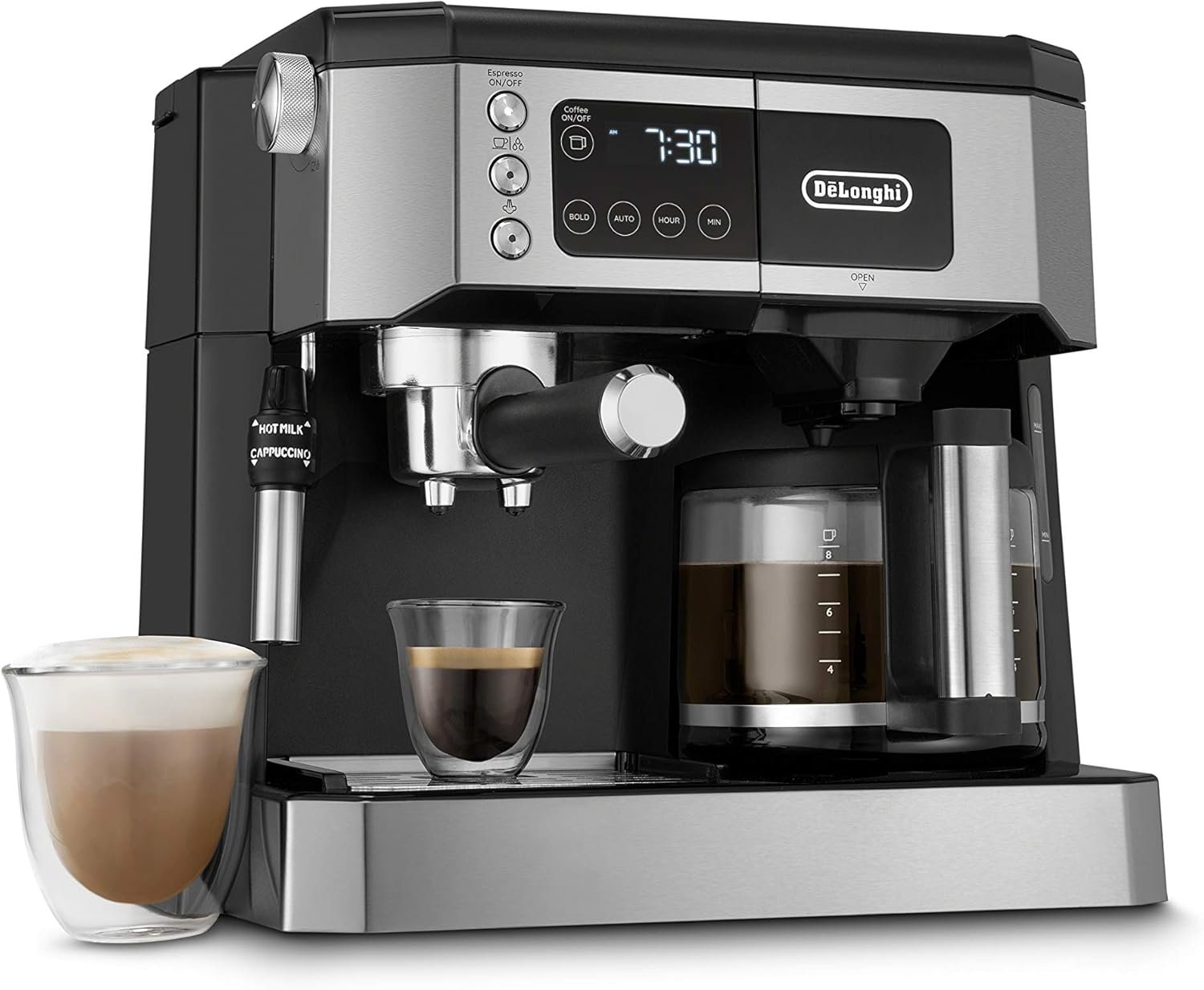
Choosing the right coffee and espresso appliance matters for extraction control, workflow, and daily reliability. Home brewers who want both a drip carafe and espresso capability face trade-offs between convenience and performance; an all-in-one combination unit aims to address those trade-offs by integrating a drip brewer, 15-bar pressure pump, and steam wand into one footprint. For households, small offices, or mixed-preference kitchens, selection criteria include brewing method compatibility, temperature stability, capacity, and cleaning requirements. Materials, pump and heating design, and filter options directly influence extraction quality and flavor consistency. This review dissects the De’Longhi All-in-One COM532M (black) using manufacturer specifications, component design, heating and pressure principles, and aggregated customer feedback to clarify how the machine performs on those criteria. The goal is to help buyers match this combination appliance to their brewing needs, whether priority is carafe volume, espresso pressure fidelity, or milk-texturing flexibility.
Quick Overview
| Feature | Details |
|---|---|
| Product category | Combination coffee maker and espresso machine (drip coffee + espresso) |
| Brewing methods | Drip carafe (10-cup) and espresso (pump-driven, pod and ground compatible) |
| Capacity | 47 fl oz water reservoir; 10-cup glass carafe for drip coffee |
| Materials and construction | Plastic and metal housing, glass carafe, gold-tone permanent filter, stainless portafilter components |
| Heating and pressure system | Dual heating system for simultaneous brewing; Italian 15 BAR pressure pump for espresso |
| Filter/compatibility | Gold-tone permanent filter for drip, pod filter basket, single & double shot filter baskets for espresso |
| User interface and features | Digital touchscreen, 24-hour programmable timer, Bold setting, carafe warmer, adjustable steam wand |
| Best suited users | Households and small offices seeking combined espresso and drip capability without separate appliances |
| Intended use cases | Daily drip coffee for multiple cups, single or double-shot espresso, milk-based drinks (lattes, cappuccinos) |
| Warranty | 1 year manufacturer warranty |
These specifications affect brewing outcomes and day-to-day usability by combining volumetric drip brewing with a pressurized espresso circuit and an adjustable steam wand. Dual heating supports simultaneous tasks but shifts reliance to factory temperature management rather than a user-accessible PID. Gold-tone and pod filter options increase flexibility for grind and brew styles but require consistent dosing and maintenance to achieve repeatable extraction quality.

Brewing method compatibility
The decision to buy a combined drip-and-espresso machine often hinges on whether the unit supports the brewing methods a household uses. The De’Longhi COM532M supports two distinct workflows: a 10-cup drip carafe with a gold-tone permanent filter and a 15-bar pump-driven espresso circuit that accepts both pods and ground coffee via a 2-in-1 portafilter. This mixed compatibility allows alternating between full-pot drip sessions and single or double espresso shots without separate machines, but it also concentrates mechanical complexity in a single chassis. For buyers prioritizing method-specific control—such as precise drip temperature profiling or professional-grade espresso pressure profiling—this hybrid design favors convenience over full independent optimization of both methods.

Drip carafe and filter compatibility
The drip side uses a 10-cup glass carafe with a gold-tone permanent filter and a charcoal water filter in the reservoir. Permanent filters eliminate paper waste and alter flow rate and extraction by allowing more oils through, which can increase body but requires consistent grind size and timely cleaning to avoid off-flavors. A glass carafe with a carafe warmer preserves brew temperature for several minutes; however, glass has lower heat retention than thermal carafes, so longer holding periods can lead to cooling and flavor changes. Compatibility with the gold-tone filter supports medium-coarse to medium grind sizes for balanced extraction across drip batches.
Espresso portafilter and pod compatibility
The 2-in-1 portafilter accepts both ground coffee and ESE-style pods, expanding convenience and user choice. Ground coffee operation depends on dosing, tamping, and grind size for puck resistance; the machine’s 15-bar pump provides nominal pressure, but actual extraction relies on tamp consistency and pre-infusion characteristics that are not user-adjustable on this model. Pod compatibility reduces workflow steps and provides more predictable extraction for users who prefer convenience over grind control. For consistent espresso results with ground coffee, attention to dose, tamp, and grind distribution is necessary because the machine lacks an integrated grinder and fine pressure profiling controls.
Milk frothing and steam wand versatility
An advanced adjustable steam wand with selectable micro-foam and cappuccino settings targets both latte and cappuccino textures. Steam output depends on boiler capacity, steam wand geometry, and available steam pressure, which are influenced by the dual heating system and heating cycle timing. Micro-foam setting supports finer milk texturing for latte art-style micro-bubbles, while cappuccino mode produces more voluminous foam. Users seeking the finest professional micro-foam or high-volume steaming for back-to-back drinks may find limitations compared with commercial or dedicated prosumer steam boilers, but the wand presents a flexible home solution for milk-based beverages when coupled with proper milk handling and pitcher technique.
Brew consistency and extraction quality
Consistency in espresso and drip extraction depends on pressure stability, flow control, and repeatable dose and temperature conditions. The COM532M uses an Italian 15 BAR pump to reach the pressure range associated with crema formation and efficient espresso solubilization, yet true extraction quality relies on the interplay of tamp, grind, and water temperature. For drip coffee, the gold-tone permanent filter and carafe flow profile influence contact time and flow rate; users must consider grind size and water distribution within the brew basket to achieve uniform extraction. Because the machine integrates both brewing circuits, simultaneous operations may shift internal thermal dynamics; therefore, consistent extraction benefits from routine calibration of grind, dose, and water quality as well as maintenance of the permanent filter and charcoal filter to avoid flow inconsistencies.

Pressure and pump considerations for espresso
A 15 BAR pump rating indicates the unit is capable of producing the pressure used in domestic espresso machines, but pressure stability during the shot is affected by pump regulation and plumbing. Consistent pressure during pre-infusion and the extraction phase supports even solubilization of coffee compounds; however, the machine does not provide user-set pressure profiling or a display of real-time pressure. As a result, espresso quality will depend on consistent puck prep, correct grind for the machine’s extraction dynamics, and stable water temperature. For users aiming at precise shot-by-shot control, an integrated pump with clearer pressure feedback or manual profiling would be preferable.
Flow control, filter media, and drip extraction
The gold-tone permanent filter affects flow resistance and extraction compared with paper filters. Metal filters permit more oils and fine particles into the carafe, increasing body and perceived strength, but they also require regular cleaning to prevent buildup and flavor carryover. Flow rate through the filter is influenced by grind and distribution; a medium grind typically suits the included permanent filter to avoid over-extraction or under-extraction. For crossover households that switch between paper and metal filter styles, the machine’s permanent filter is a convenience but limits the ability to fine-tune clarity versus body without swapping to paper replacements externally.
Role of water quality and filtration
The included charcoal water filter and the machine’s 47 fl oz reservoir reduce taste-impacting contaminants and scale formation when replaced per manufacturer guidance. Water mineral content and pH directly affect extraction yield and flavor balance: higher mineral content increases extraction efficiency and can accentuate sweetness and body, while low-mineral water yields thinner extraction. In practice, maintaining a consistent water source and replacing the charcoal filter on schedule supports both extraction consistency and longevity of heating components. Regular descaling as recommended prevents flow restrictions that would otherwise disrupt pressure and temperature stability during shots and drip cycles.
Temperature control and heat stability
Temperature stability is a primary determinant of extraction balance for both espresso and drip cycles. The COM532M’s dual heating system is designed to eliminate wait time between brewing modes by maintaining separate thermal circuits for espresso and drip functions, which improves workflow for simultaneous use. However, the machine does not advertise a PID-based temperature controller, so temperature depends on factory-set thermostats and the effectiveness of the dual boilers or thermoblock components. For espresso, ideal extraction temperature typically falls in the 88–94°C range; for drip, slightly lower stable temperatures help balanced extraction. Buyers should expect reasonable factory-managed thermal performance suitable for home use, but not the fine-grained temperature profiling found in dedicated prosumer machines.

Dual heating system implications
A dual heating architecture allows the drip circuit and espresso/steam circuit to operate without lengthy heat-up transitions, which benefits households that alternate beverages quickly. When both systems run concurrently, internal heat management and component insulation determine whether boiler temperatures remain within target ranges. Dual systems can improve. However, heat transfer between circuits and peak steam demand during milk steaming can create short-term temperature variation if the steam boiler capacity is modest. For standard single or paired beverage preparation sequences, the dual heating design reduces downtime and supports smoother multi-user workflows.
Carafe warmer and thermal retention
The included carafe warmer keeps glass-brewed coffee at serving temperature, but glass carafes have limited insulative properties compared with stainless thermal carafes; extended holding on the warmer may accelerate bitterness extraction changes and flavor degradation. Users valuing longer heat retention for brewed pots should plan for immediate consumption within the first hour or consider transferring brewed coffee to an insulated server. The carafe warmer’s steady low heat can prevent rapid cooling but will not maintain peak aroma and flavor as effectively as thermal solutions.
Milk steaming temperature control and texturing
Milk texture and temperature are governed by steam pressure, wand geometry, and operator technique. The Advanced Steam Wand’s micro-foam and cappuccino settings indicate selectable steam delivery profiles, likely adjusting steam flow or tapping into boiler output. Consistently achieving textured milk for lattes or airy cappuccinos requires attention to milk starting temperature, pitcher size, and steaming time. Without precise temperature readouts, users should rely on sound and tactile cues and use a thermometer for repeatable results if strict control is desired. The machine’s steam performance suits home specialty drinks but is not a substitute for dedicated commercial steam boilers.
Ease of use, capacity, cleaning, and durability
Usability combines interface design, capacity needs, and maintenance requirements. The COM532M features a digital touchscreen and a 24-hour programmable timer for scheduled brewing, which streamlines routine operation and supports morning readiness. The 47 fl oz reservoir and 10-cup carafe provide service flexibility for households and small offices, while the machine’s compact footprint aims to conserve counter space. Cleaning responsibilities include rinsing the portafilter, backflushing when applicable, cleaning the permanent gold-tone filter, replacing the charcoal water filter, and periodic descaling using the included solution. Durability expectations derive from component materials—metal pump, gold-tone filter, glass carafe—and proper maintenance; long-term reliability correlates with adherence to cleaning schedules and water treatment.

User interface and workflow complexity
A digital touchscreen plus Bold and programmable timer functions simplify selection of strength and scheduled brewing. The two-sided workflow—drip cup versus espresso group—requires the user to load coffee from the front, switch portafilter options for pods or grounds, and manage the steam wand for milk drinks. For multi-drink sessions, simultaneous brewing capability reduces waiting, but users must coordinate dosing and cleaning steps between beverage types. The touchscreen reduces button complexity, though users desiring granular shot programming or pressure/temperature customization will find the interface oriented toward straightforward preset operation rather than advanced tuning.
Capacity and serving flexibility
The 47 fl oz reservoir and 10-cup carafe address small-group service and longer stretches of household consumption. A large reservoir reduces refill frequency when making multiple carafe batches or repeated espresso shots, and the carafe warmer keeps brewed pots at serving temperature. The combination format is suitable for morning routines that include both a carafe and milk drinks, and the machine can support several people in a small office. For larger gatherings or continuous high-volume use, a separate dedicated espresso machine with larger boilers or multiple boilers may be preferable to sustain back-to-back steaming and high shot throughput.
Cleaning, maintenance, and expected longevity
Maintenance tasks include daily rinsing of the portafilter and steam wand, emptying and cleaning the gold-tone filter basket, replacing the charcoal water filter per interval, and descaling with the included solution. The gold-tone permanent filter increases the need for thorough cleaning to prevent oil buildup. The manufacturer-provided 1-year warranty covers defects but longevity beyond warranty is influenced by water hardness management and adherence to descaling schedules. Aggregated user feedback recommends routine maintenance and use of filtered water to minimize scale and pump stress, which in turn supports extended operational life of the pump and heating assemblies.

Pros & Cons
Pros
- Versatile dual-function design: Combines a 10-cup drip carafe with a 15 BAR espresso pump so households can brew full pots and single or double espresso shots from one compact unit. This reduces the footprint compared with separate machines and supports varied beverage preferences.
- Dual heating system for reduced wait time: Separate heating circuits enable simultaneous drip and espresso tasks, minimizing downtime between brewing modes and improving workflow for multi-drink preparation.
- Pod and ground compatibility: The 2-in-1 portafilter accepts both pods and ground coffee, increasing convenience for users who alternate between ease-of-use pods and freshly ground espresso.
- Adjustable steam wand: Advanced steam wand with selectable micro-foam and cappuccino settings provides flexibility for milk-based drinks, allowing texturing suitable for lattes and cappuccinos at home.
- Digital touchscreen and programmable timer: Intuitive controls, a Bold brew option, and a 24-hour timer support customization and scheduled brewing for daily routines.
- Included accessories and water filtration: Accessories such as measuring scoop, charcoal water filter, gold-tone filter, and descaling solution promote easier setup and maintenance out of the box.
Cons
- Limited temperature profiling: The absence of a user-accessible PID or detailed temperature controls constrains fine-grained temperature tuning for advanced espresso extraction.
- Glass carafe heat retention: The glass carafe and carafe warmer provide short-term heat maintenance but offer less insulation than thermal servers for extended holding periods.
- Maintenance demands of permanent filter: The gold-tone permanent filter increases cleaning frequency to prevent oil buildup and can allow more fines into the cup compared with paper filters, affecting clarity.
- Not a prosumer espresso pressure/steam platform: While the 15 BAR pump and steam wand are adequate for home use, the machine lacks advanced pressure profiling, larger boilers, or commercial-grade steam capacity for heavy-duty, back-to-back steaming.
Final Verdict: Who This Product Is Best For (and Who Should Skip It)
The De’Longhi All-in-One COM532M suits households and small offices that prioritize space-saving versatility and mixed beverage needs—those who want a 10-cup drip carafe and the ability to pull pod or ground espresso shots without owning two separate machines. Its dual heating system and programmable touchscreen facilitate convenient morning routines and multi-user workflows, while the adjustable steam wand supports everyday latte and cappuccino preparation. The included gold-tone filter, pod compatibility, and charcoal water filter make the unit adaptable for users balancing convenience and flavor customization.
This product is less appropriate for buyers who demand prosumer-level temperature profiling, commercial steam capacity, or integrated grinding and shot-by-shot pressure control. Those who routinely steam multiple milk drinks in succession or require thermal carafes for long holding periods may prefer dedicated machines with larger boilers and thermal servers. For typical home users seeking combined drip and espresso capability with manageable maintenance in 2026, the COM532M presents a pragmatic compromise between convenience and performance.

Frequently Asked Questions (FAQs)
Can this De’Longhi unit brew drip coffee and espresso at the same time?
Yes. The machine uses a dual heating system that allows the drip circuit and the espresso pump/steam circuit to operate simultaneously. This reduces wait time between making a carafe and pulling espresso shots, though simultaneous operation can influence internal thermal dynamics depending on steam demand and sustained use.
Does the espresso side accept both pods and ground coffee?
The 2-in-1 portafilter accepts both ESE-style pods and ground coffee using the included filter baskets. Pod use provides convenience and consistent dosing, while ground coffee requires attention to dose, tamp, and grind size for repeatable extraction.
How important is water filtration and descaling for this machine?
Water filtration and regular descaling are important for maintaining consistent extraction and prolonging component life. The included charcoal water filter improves taste and reduces certain contaminants, while scheduled descaling prevents scale buildup that can impair flow, pressure stability, and heating efficiency.
Can the steam wand produce micro-foam for latte art?
The Advanced Steam Wand offers a micro-foam setting intended to produce finer milk texture suitable for latte-style drinks. Achieving consistent micro-foam also depends on steam pressure, pitcher technique, and starting milk temperature; a thermometer and practice will improve repeatability.
Is the carafe insulated to keep coffee hot for long periods?
The included 10-cup carafe is glass and sits on a warming plate. While the carafe warmer helps maintain serving temperature for a limited time, glass does not insulate as well as vacuum thermal carafes, so flavor and temperature will decline during extended holding periods.
Does the machine provide adjustable temperature or pressure profiling?
This model does not offer user-adjustable PID temperature controls or pressure profiling. The espresso circuit uses a 15 BAR pump and factory-managed thermostats. Users seeking granular temperature or pressure programming should consider prosumer machines with explicit PID and pressure profiling features.
How large is the water reservoir and how many cups can it serve?
The built-in reservoir holds approximately 47 fluid ounces and the drip side includes a 10-cup glass carafe. This capacity suits single households or small offices for several servings before a refill is needed.
What routine maintenance keeps the machine reliable over time?
Routine maintenance includes daily rinsing of the portafilter and steam wand after use, regular cleaning of the gold-tone permanent filter, periodic replacement of the charcoal water filter, and descaling with the recommended solution per manufacturer intervals. Consistent water quality and adherence to maintenance reduce wear on the pump and heating components.