La Specialista Maestro Review — Home Espresso Crafting Guide
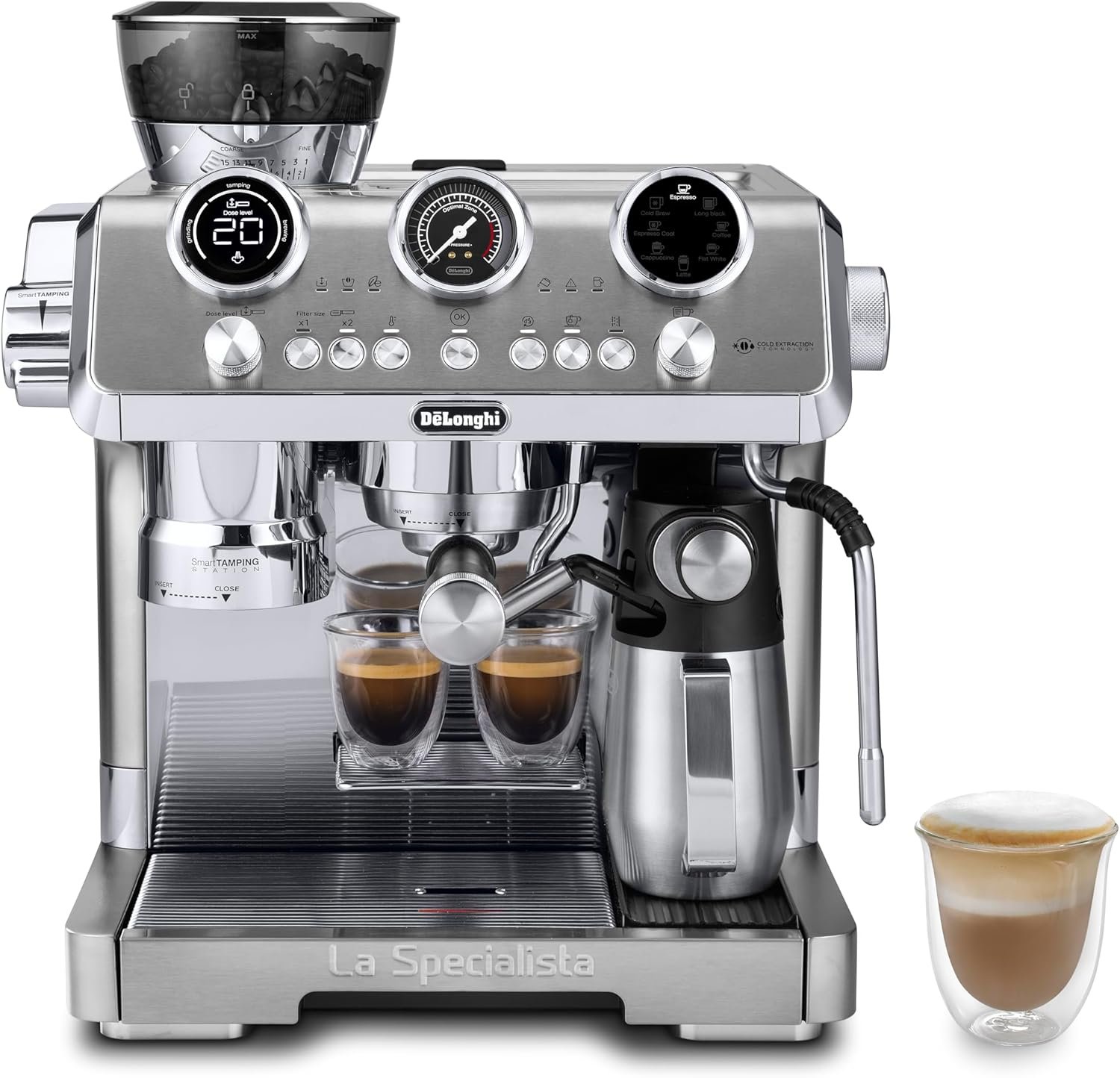
Choosing the right espresso and milk-steaming appliance has a direct effect on brew quality, consistency, and the daily workflow in a home kitchen. Appliances that integrate grinding, dosing, tamping, temperature control, and milk texturing remove variability from the process and let the user target specific variables that affect extraction, such as grind size, dose consistency, tamp evenness, water temperature, and pressure profile. The De’Longhi La Specialista Maestro positions itself as a semi-automatic, bean-to-cup solution with an integrated burr grinder, Smart Tamping, a 19-bar pump, active temperature control, and both automatic and manual milk systems. This configuration targets home brewers who want more control than a super-automatic machine but prefer assistance for repeatable results. The following review focuses on how the machine’s specifications and design principles relate to extraction chemistry, workflow, maintenance expectations, and serving flexibility without claiming hands-on testing or personal use.
Quick Overview
| Feature | Details |
|---|---|
| Product category and brewing method | Semi-automatic espresso machine with integrated burr grinder; supports espresso, Americano, long coffee, and cold-extraction beverages |
| Capacity and output | Water tank capacity 67.6 fluid ounces; built for multiple daily beverages and drinks for small groups |
| Materials and construction | Stainless steel exterior with branded components; includes stainless steel milk frothing jug and metal grinder housing |
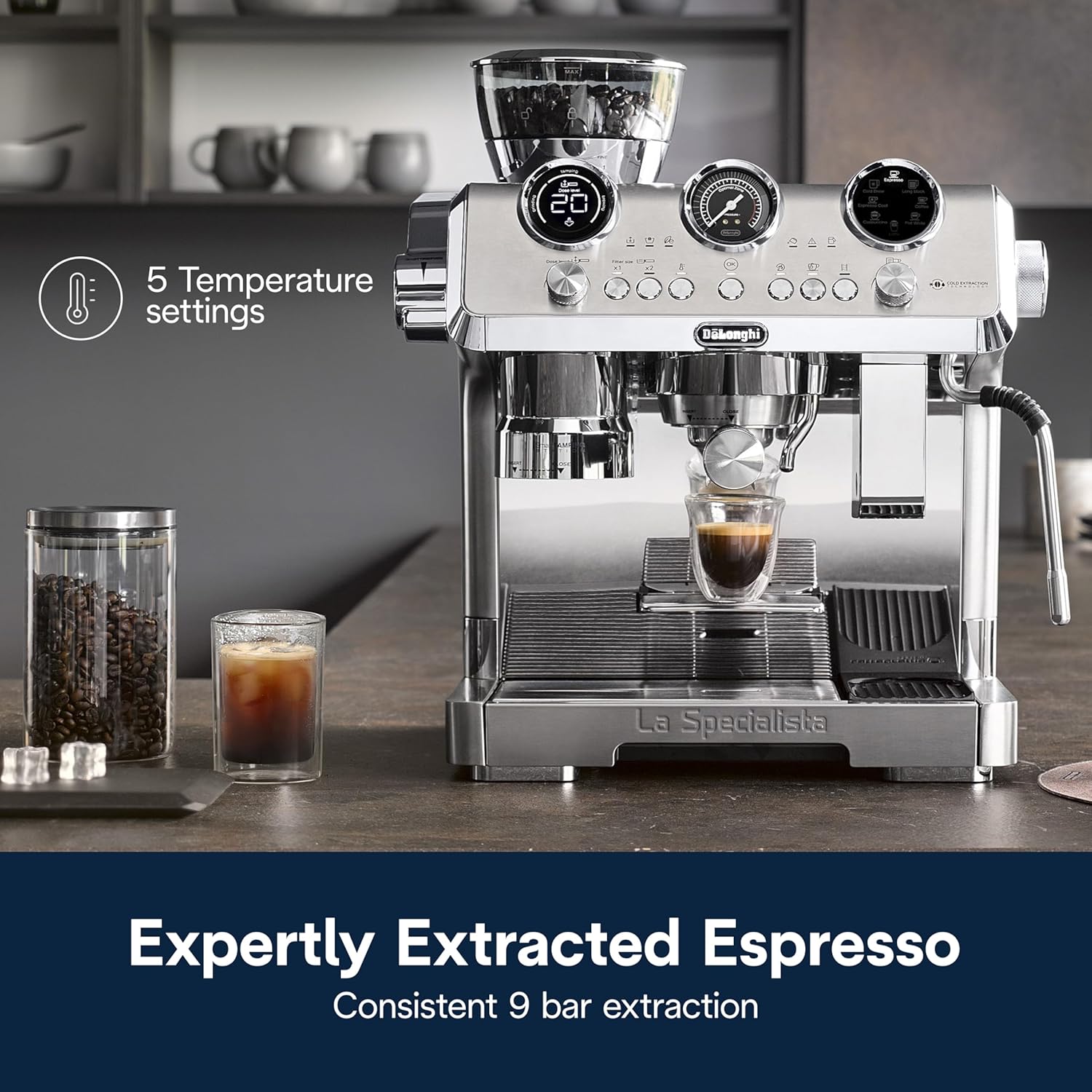
| Heating and pressure system | 19-bar Italian pump with low-pressure pre-infusion and targeted 9-bar extraction; Active Temperature Control with five selectable infusion temperatures |
| Grinder and dosing | Built-in Italian burr grinder with 15 grind settings; supports single and double dosing with guided dose selection |
| Milk systems | LatteCrema Hot fully automatic frothing plus commercial-style steam wand for manual texturing |
| Special features | Smart Tamping Technology, Cold Extraction Technology for fast cold brew-style drinks, 8 drink presets |
| Best suited users | Enthusiast home baristas who want hands-on control with automation assistance |
This concise feature table highlights the machine’s core mechanical systems and user-facing components. The integrated grinder and Smart Tamping simplify dose preparation, while the 19-bar pump and multi-temperature control are intended to stabilize extraction variables. The large water tank and multiple milk options broaden serving flexibility, but the design also implies a maintenance routine for grinding, milk circuits, and internal sanitation to preserve long-term performance.

Grinding, dosing and tamping: control where extraction begins
Grinding quality and dosing are the foundation of consistent espresso, and integrated systems influence how precisely a machine can present grounds to the portafilter. The La Specialista Maestro’s Italian burr grinder with 15 discrete settings allows a broad grind range suitable for espresso through coarser brewed styles, and the grinder is engineered to deliver single or double doses directly to the portafilter. Smart Tamping Technology automates the tamp stroke to promote even puck compression and repeatable puck density—two factors that affect flow resistance and extraction uniformity. These specifications indicate the machine is intended to reduce human variability on dose preparation while still allowing manual adjustments to grind setting and dose size for tuning extraction.
Burr type, grind range and consistency implications
The inclusion of a multi-setting Italian burr grinder points to a focus on adjustable particle size distribution, which is essential for controlling extraction rate and crema formation in espresso. Burr geometry and alignment determine particle uniformity; commercial-grade or high-quality domestic burr sets tend to produce a narrower distribution and fewer fines than inexpensive alternatives. A 15-step adjustment range provides adequate granularity for most home espresso beans, permitting users to dial in grind size to balance flow time and solubles yield. Consistent grind and dose stability reduce channeling risk and create a more repeatable extraction profile across shots.
Dosing workflow and Smart Tamping effects on puck preparation
Smart Tamping eliminates the need to estimate tamp pressure by applying a consistent tamp stroke when the lever is engaged, which should improve puck density regularity between shots. Consistent tamping reduces the variance in flow resistance and helps the pre-infusion and high-pressure phases act on a uniform surface, encouraging more even extraction. However, automated tamping also limits the tactile feedback available to experienced users; visual observation of puck integrity and manual adjustments remain important for those optimizing micro-adjustments in the grind-to-dose-to-tamp chain.
Pressure profile and extraction: how the pump and flow control shape the shot
Pressure and flow dynamics directly affect solubles extraction and crema development. The machine’s 19-bar Italian pump and stated profile—low pressure during pre-infusion followed by a targeted extraction pressure around 9 bars—reflect a pressure staging approach commonly used in espresso machines to regulate pre-infusion wetting and then push water through the puck at an industry-standard extraction pressure. Controlled pre-infusion widens contact time at low pressure to reduce channeling, while the extraction phase targets solubles yield and balance. The ability to pair precise grind and dose control with a staged pressure profile supports a stable extraction environment, though actual pressure stability and profile curve are influenced by the machine’s boiler dynamics and flow regulation engineering.

Pre-infusion, 9-bar extraction and what to expect in cup balance
Pre-infusion at low pressure increases even wetting of the puck, which can reduce preferential channels and improve uniform extraction across the coffee bed. Moving to approximately 9 bars during active extraction aligns with conventional espresso practice and optimizes the pressure-driven extraction of oils and soluble solids that contribute to body and crema. This staged approach favors balance—sugars, acids, and bitter compounds are extracted according to contact time and pressure. A machine that manages pre-infusion and stable extraction pressure is better positioned to produce repeatable shots when grind, dose, and water temperature are optimally configured.
Cold Extraction Technology and short-form cold brew implications
Cold Extraction Technology that uses measured water flow, pressure rates, and specific extraction temperatures aims to emulate cold-brew flavor profiles in a much shorter time by manipulating extraction variables under cooler conditions. By controlling flow and pressure, the system can favor extraction of aromatic and flavor compounds while limiting harsher bitter compounds that appear with hotter water. For users seeking concentrated cold beverages or a cool espresso-like drink, this feature broadens recipe options beyond hot espresso, but it also requires understanding of how grind, dose and water-to-coffee ratios determine flavor intensity and perceived sweetness in cold extraction modes.
Temperature control and milk texturing: stability and milk microfoam options
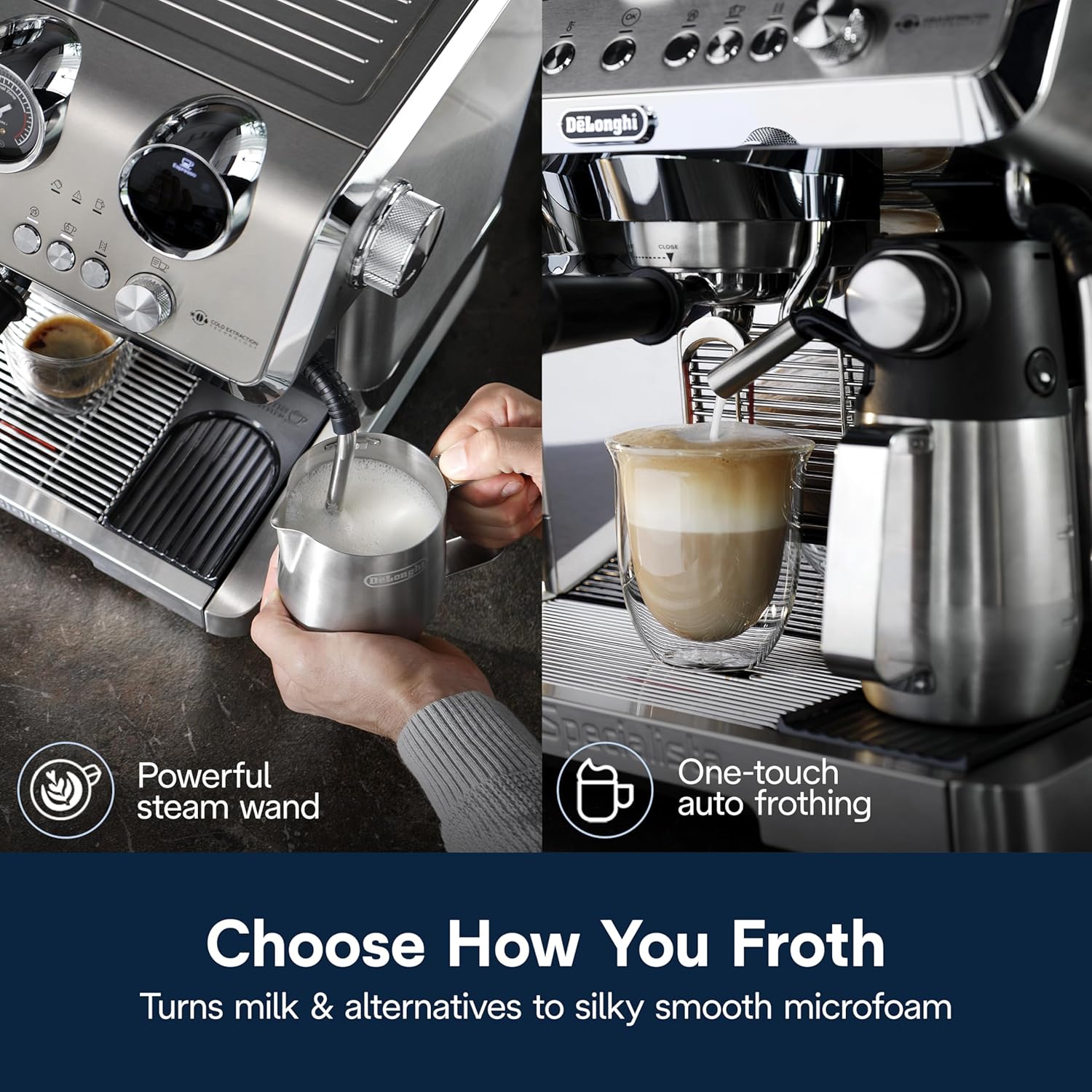
Temperature is a key determinant in extraction kinetics and flavor balance. Active Temperature Control with five selectable infusion temperatures enables users to tune brew temperature to bean roast profile and desired flavor emphasis, since higher infusion temperatures can increase extraction of bitter compounds while lower settings preserve acidity and floral notes. The machine also pairs two milk-texturing systems: the fully automatic LatteCrema Hot frother for one-touch drinks and a commercial-style manual steam wand for hands-on microfoam work. These dual systems offer both convenience and craft control, letting users choose consistent automatic textures or engage in manual steaming to sculpt microfoam for latte art and nuanced mouthfeel.

Brewing temperature selection and extraction stability considerations
The availability of multiple infusion temperature settings allows adaptation to bean origin and roast level, which is important because roast degree influences solubles solubility and flavor concentration. Stable boiler or thermoblock design and thermal mass affect heat recovery between shots; systems with active temperature control aim to minimize temperature drift during multi-shot sessions. Users tuning flavor for a given bean can iterate by adjusting temperature and grind to reach a target extraction range and sensory outcome, but consistent tamp, dose, and grind remain essential to isolate temperature’s effect on cup balance.
Automatic LatteCrema Hot vs manual steam wand: texture and workflow trade-offs
A fully automatic milk frothing system is designed to produce repeatable milk temperature and texture for one-touch beverages, reducing variability in foam density and serving temperature. The manual steam wand provides higher potential for skill-dependent microfoam creation and temperature control, which is preferred by users pursuing latte art or specific mouthfeel. Dual options allow a balance: automatic frothing for consistent daily drinks and manual steaming for those who want to practice and refine texture. Maintenance differences also appear; automatic frothers often require regular cleaning cycles, while manual wands need purging and wiping after each use.
Workflow, interfaces and drink presets: daily use and customization
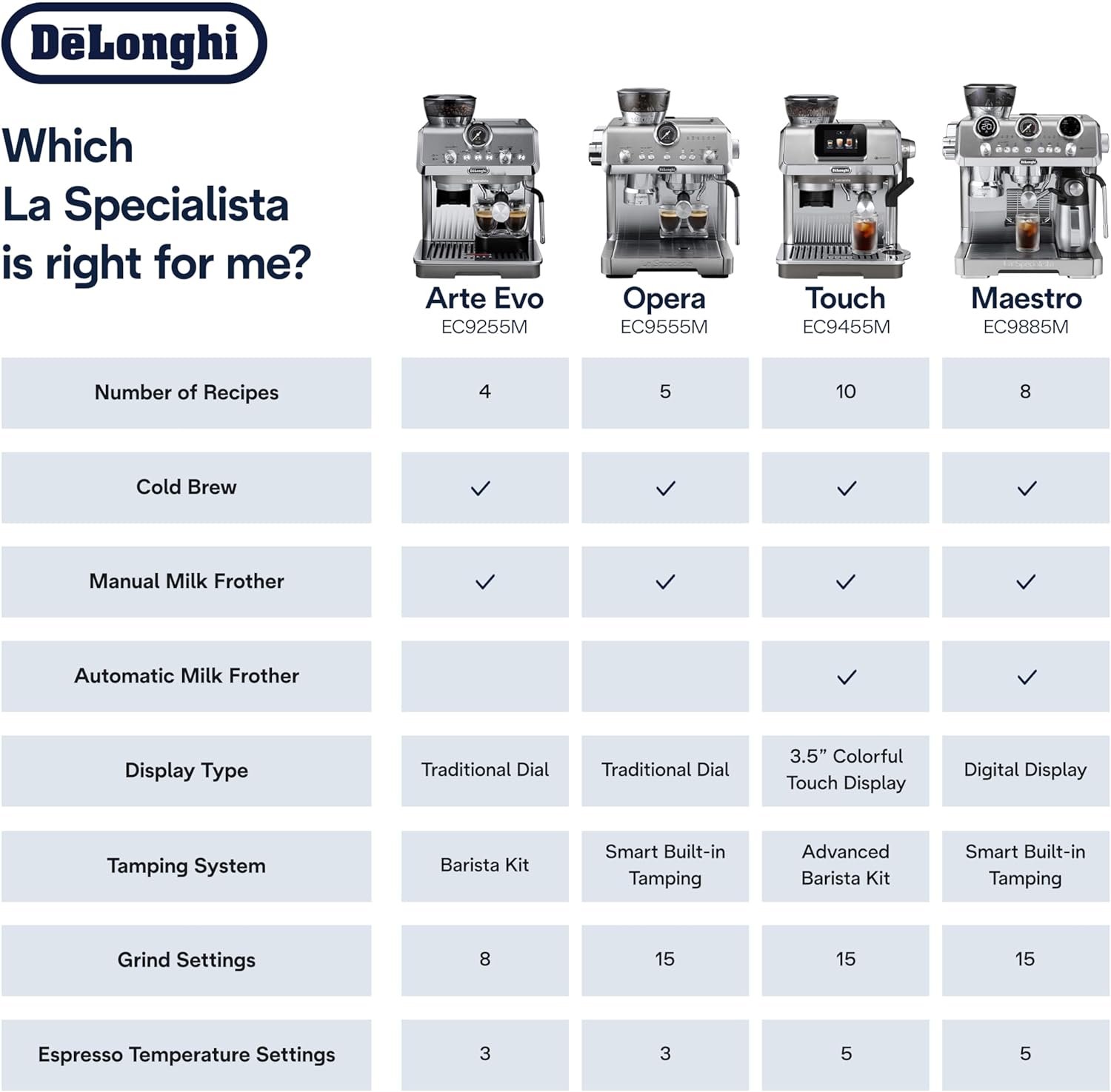
Workflow and interface design determine how quickly a user can produce consistent beverages and how deep customization can be. The Maestro includes eight drink presets—Espresso, Americano, Coffee, Flat White, Latte Macchiato, Cappuccino, Espresso Cool, and Cold Brew—designed to streamline common recipes into one-touch preparations. Human interface inputs include buttons and a dial, and the machine’s semi-automatic nature preserves manual control over key variables while automating repetitive steps like dosing and tamping. For users prioritizing speed and repeatability, presets reduce setup time; for experimental home baristas, the machine provides manual pathways to adjust grind, temperature, and milk texture.

Presets, programmability and how they affect recipe control
Presets provide immediate access to standardized recipes by combining grinder dose, infusion volume, milk frothing type, and temperature parameters. While these speed up production and lower the learning curve, presets can obscure the underlying variables that determine extraction, limiting fine-tuning without entering manual or custom modes. Machines that allow saving or adjusting preset parameters give the most flexibility; the presence of a dial and multiple temperature options suggests the Maestro supports manual calibration for users who want to alter shot times, temperature and grind to refine recipes beyond the default presets.
Daily workflow, learning curve and time-per-drink expectations
The integrated grinder, Smart Tamping, and one-touch milk options streamline repetitive tasks, reducing per-drink steps for routine beverages, but they also introduce additional components requiring fresh-water management, bean hopper filling, and regular clean cycles. The workflow suits users who accept a modest setup and cleaning routine in exchange for consolidated functionality. The learning curve centers on dialing in grind settings and learning how temperature and dosing choices influence extraction, while the automated tamp and presets help lower the initial complexity for daily use.
Capacity, cleaning and durability considerations for long-term ownership
Capacity, component materials, and maintenance demands inform long-term reliability and ownership costs. A 67.6 fluid ounce water tank supports multiple drinks between refills, and an integrated grinder reduces the need for a separate appliance. Stainless steel construction on the exterior and metal components for the grinder and steam wand contribute to durability and heat retention. However, integrated grinders and internal milk systems increase the number of wear points and sanitary touchpoints; proper cleaning routines—backflushing, descaling, milk circuit cleaning, and grinder maintenance—are necessary to preserve performance. Warranty coverage and replacement part availability are additional durability factors to consider when evaluating long-term value.
Water capacity, hopper size and serving flexibility implications
A larger water tank reduces refill frequency and supports serving several drinks in succession, improving convenience for households or small gatherings. The bean hopper and dosing mechanism determine how often beans need refilling and how readily the grinder clears between bean changes. Serving flexibility is enhanced by the Cold Extraction and Espresso Cool options, which broaden beverage repertoires without separate equipment, but frequent multi-user scenarios increase the demands on cleaning cycles and component wear, particularly for the milk system and grinder bearings.
Cleaning steps, maintenance intervals and parts longevity expectations
Integrated grinders and automatic milk systems require routine maintenance steps: hopper cleaning, periodic burr replacement or sharpening over time, backflushing with appropriate detergent for the brew group, descaling according to local water hardness, and milk system cleaning or replacement of seals and hoses where applicable. Consumables such as gaskets, filters, and cleaning tablets will be recurring needs. Machines with accessible service parts and clear manufacturer cleaning protocols generally achieve longer lifespans in domestic settings, but owners should plan for scheduled upkeep to maintain heat stability, flow consistency, and sanitary milk operation.
Pros & Cons
Pros
- Integrated grinder with 15 settings improves convenience and reduces equipment footprint. The multiple grind steps allow calibration for espresso and longer-brew recipes without a separate grinder, simplifying the grind-to-dose workflow.
- Smart Tamping Technology promotes consistent puck compression and reduces tamp variability. Consistent tamping supports more uniform extraction and lowers one source of human error during shot preparation.
- 19-bar pump with staged pre-infusion and targeted 9-bar extraction supports conventional espresso pressure dynamics. Pressure staging can reduce channeling and help produce balanced shots when paired with proper grind and dose.
- Active Temperature Control with five selectable temperatures enables adaptation to bean roast and flavor preferences. Temperature selection aids users in balancing acidity, sweetness, and bitterness across a wider range of beans.
- Dual milk systems provide both one-touch automatic frothing and a commercial-style steam wand. This combination suits users who want quick, repeatable milk drinks and those who prefer manual microfoam shaping for latte art.
- Cold Extraction Technology and espresso-cool presets expand beverage variety without additional appliances. Fast cold-extraction modes offer recipes that approximate cold-brew characteristics for quick, chilled beverages.
- Large water tank capacity reduces refill frequency for home use. The 67.6 fluid ounce reservoir supports multiple beverages before attention is needed, which is practical for households.
- Stainless steel exterior and included stainless-steel accessories contribute to perceived durability and heat retention. Metal components typically resist staining and can withstand routine cleaning cycles better than plastics.
Cons
- Integrated systems increase maintenance complexity. Combined grinder, milk circuit, and internal brew components require regular cleaning, descaling, and occasional part replacement to maintain performance.
- Automated tamping limits tactile control for experienced users. While consistency improves, advanced users seeking nuanced tamp pressure adjustment may find automated tamping less flexible.
- Machine size and weight demand counter space and may be heavy for some kitchens. At over 35 pounds and a footprint requiring a moderate depth and width, placement considerations are necessary.
- Cold Extraction and fast cold-brew modes require recipe knowledge to optimize flavor. Users unfamiliar with cold extraction variables (grind, ratio, temperature) may need time to learn settings that deliver preferred taste profiles.
Final Verdict: Who This Product Is Best For (and Who Should Skip It)
The De’Longhi La Specialista Maestro is positioned for home users who want a semi-automatic, hands-on espresso experience with automation that reduces repeatable sources of error. Ideal profiles include home baristas who appreciate integrated grinder convenience but still intend to control grind setting, dose, and temperature, and households that value multiple drink types—hot espresso drinks, milk-based beverages, and chilled extractions—without investing in separate grinders or a standalone cold-brew system. The machine’s pressure staging, selectable infusion temperatures, and dual frothing options offer a versatile platform for dialing in shots and experimenting with milk texture and cold extraction recipes.
Those who should consider alternatives include minimal-maintenance buyers who prefer fully automatic super-automatic machines with self-contained cleaning cycles, and users with limited countertop space or who require truly portable solutions. Advanced pros seeking full mechanical control over tamp force and a separate commercial-grade grinder may also seek modular setups for the ultimate in precision. Overall, the Maestro suits motivated home baristas who accept a moderate maintenance routine in exchange for a consolidated, feature-rich machine that supports a wide beverage repertoire and the pursuit of consistent extraction and milk texture in a domestic environment.
Frequently Asked Questions (FAQs)
How does the built-in grinder affect shot consistency compared to a separate grinder?
An integrated grinder offers convenience and a compact workflow by combining grinding, dosing, and tamping steps. When the burr quality is high and adjustment steps are sufficient, an internal grinder can produce stable particle size for repeatable shots. However, dedicated external grinders often provide larger burrs, finer adjustment, and easier maintenance, which can yield a narrower particle distribution favored by precision-focused users.
Can the temperature settings on the Maestro help extract different flavors from light and dark roasts?
Selectable infusion temperatures allow tuning of solvent extraction rates to favor particular flavor compounds. Lower infusion temperatures can preserve delicate acids and floral notes common in lighter roasts, while higher temperatures may enhance body and sweetness in darker roasts. Temperature selection should be used in combination with grind and dose adjustments to achieve a balanced extraction for each roast profile.
What maintenance routines are required for an espresso machine with automatic frothing and a built-in grinder?
Routine maintenance includes daily milk circuit cleaning or purge cycles, regular removal and cleaning of the drip tray and portafilter, periodic backflushing of the brew group with approved detergent, descaling according to local water hardness, and hopper cleaning. Grinder maintenance involves clearing the chute and occasional burr inspection or replacement. Adherence to manufacturer cleaning schedules preserves sanitary operation and consistent extraction.
Is the Smart Tamping feature suitable for users who prefer manual control?
Smart Tamping provides a consistent tamp stroke to reduce variability in puck density, which benefits repeatability. Users who prioritize tactile feedback and fine control over tamp pressure may find pneumatic or mechanical manual tamping preferable. The Maestro’s semi-automatic design still allows adjustments to grind and dose, giving experienced users levers to tailor extraction despite automated tamping.
How does Cold Extraction Technology differ from traditional cold brew methods?
Traditional cold brew relies on long contact time at room or refrigerated temperatures to extract soluble compounds slowly. Cold Extraction Technology shortens preparation time by using controlled flow, pressure, and specific lower-temperature infusion parameters to extract flavor compounds more rapidly while limiting bitter extraction. The result approximates cold-brew flavor profiles in a fraction of the time but may yield different sensory nuances compared with extended steeping.
What beverage capacity and household suitability does a 67.6-ounce water tank provide?
A 67.6-ounce water reservoir supports multiple espresso shots and milk-based drinks before refilling, making it suitable for households or small gatherings where several beverages are prepared per day. Larger-capacity tanks reduce refill frequency but require counter space. Users hosting frequent groups or serving many drinks in succession should plan for refill intervals or consider models with plumb-to-water options if available.
Are replacement parts and servicing typically available for domestic semi-automatic machines like this one?
Manufacturer-provided replacement parts—such as gaskets, filters, cleaning accessories, and specialty components—are commonly available for established brands. Service centers and authorized technicians typically support maintenance and repairs. Availability can vary by region, so checking manufacturer service networks and part access before purchase helps ensure manageable long-term upkeep.