De’Longhi Linea Classic Espresso: Temp, Pressure, Frothing
Why equipment choice matters for home espresso
Selecting the right espresso machine shapes daily brewing outcomes, workflow in the kitchen, and the range of drinks that can be produced consistently. Home brewers and small households seeking café-style espresso must weigh extraction control, temperature stability, milk-texturing capability, and the unit’s footprint against routine maintenance needs and longevity. Semi-automatic machines like the De’Longhi Linea Classic prioritize user involvement—grind size, dose, and tamping remain the primary levers for extraction—while offering mechanical assists such as a 15-bar pump and Thermoblock heating to stabilize key parameters. For enthusiasts who want repeatable single- or double-shot workflows without commercial complexity, machines that combine a reliable pump, visible pressure feedback, and a capable steam wand deliver the most tangible benefits. Kitchen space, frequency of use, and compatibility with ground coffee (rather than integrated grinders) are practical considerations that determine whether a compact stainless-steel semi-automatic unit aligns with a household’s brewing goals.
Quick Overview
| Feature | Details |
|---|---|
| Product category & brewing method | Semi-automatic espresso machine for ground coffee (espresso, americano, latte, cappuccino) |
| Capacity & output | Compact countertop unit; intended for single- and double-shot servings; water/reservoir capacity not specified |
| Materials & construction | Stainless steel exterior, chrome accents, adjustable drip tray, visual pressure gauge |
| Heating & pressure system | 15-bar Italian professional pump; Thermoblock heating technology; visual pressure gauge for brew pressure monitoring |
| Grind & filter compatibility | Ground coffee input; single- and double-shot filter baskets included; no integrated grinder |
| Milk & steam | Adjustable two-setting steam wand for steaming and microfoam |
| Controls & programmability | Customizable single or double espresso preset recipes; button interface; semi-automatic operation |
| Intended users & use cases | Home enthusiasts, households seeking café-style drinks, users comfortable with ground coffee prep |
| Warranty | Manufacturer warranty not specified in product disclosures |
The Linea Classic’s specifications indicate a compact, semi-automatic workflow that relies on user-prepared ground coffee and tamping, with mechanical systems—15-bar pump and Thermoblock—to deliver pressure and temperature control. These components directly influence extraction dynamics, milk texturing capability, and the time-to-cup, while the lack of an integrated grinder defines the upstream work required for repeatable shots.

Brewing compatibility and grind requirements
The Linea Classic is built for ground espresso-style coffee rather than whole beans, which shapes compatibility with different brewing workflows and grinders. As a semi-automatic machine, consistent extraction hinges on grind particle distribution, dose accuracy, and tamping pressure; these remain user responsibilities. Without an integrated grinder, pairing with a quality burr grinder is essential to achieve the fine, uniform grind needed for 20–30 second espresso extractions. The listed accessories—single and double filters plus a measuring scoop/tamper—facilitate common dosing workflows, but they do not replace the benefits of precise grind adjustment. Users who rely on pre-ground coffee will see greater variability versus freshly ground beans, while those prepared to match grind setting, dose, and tamp will be positioned to maximize extraction potential using the Linea Classic’s pump and pressure feedback.

Grind consistency and downstream effects on extraction
Grind uniformity directly affects flow rate through the puck and thus extraction yield and balance. Finer, consistent grinds increase resistance, slow down flow, and generally raise extraction when paired with a fixed pump pressure; overly fine or uneven grinds can lead to channeling and over-extraction in certain shot regions. Since the Linea Classic accepts ground coffee, a conical or flat burr grinder capable of fine adjustments is recommended to dial in the target extraction window. Even distribution tools and proper tamping technique help mitigate channeling risk; using the included tamping spoon aids workflow but does not substitute for grinder precision.
Compatibility with alternative brew workflows
The Linea Classic is optimized for espresso and milk-based espresso drinks; it does not support capsule formats or integrated pouring-for-filter methods. For users who prefer manual pour-over, French press, or cold brew as primary methods, the Linea Classic can complement a multi-method kitchen but will not replace dedicated equipment for those styles. The presence of a steam wand and adjustable drip tray expands usability for milk drinks, making the machine suitable for households that rotate between straight espressos and lattes, while grind preparation remains a prerequisite for consistent results.
Grinder pairing and recommended approach
A matched grinder selection is critical: a stepless or fine-indexed burr grinder allows incremental adjustments to find the correct particle size to achieve a 20–30 second extraction time for a typical espresso dose. Consistent dosing—measured by weight where possible—combined with the machine’s single- and double-shot presets improves repeatability. For users without a quality grinder, pre-ground alternatives introduce variability, so pairing the Linea Classic with a competent burr grinder is best practice to realize its extraction capabilities.
Extraction quality and pressure control
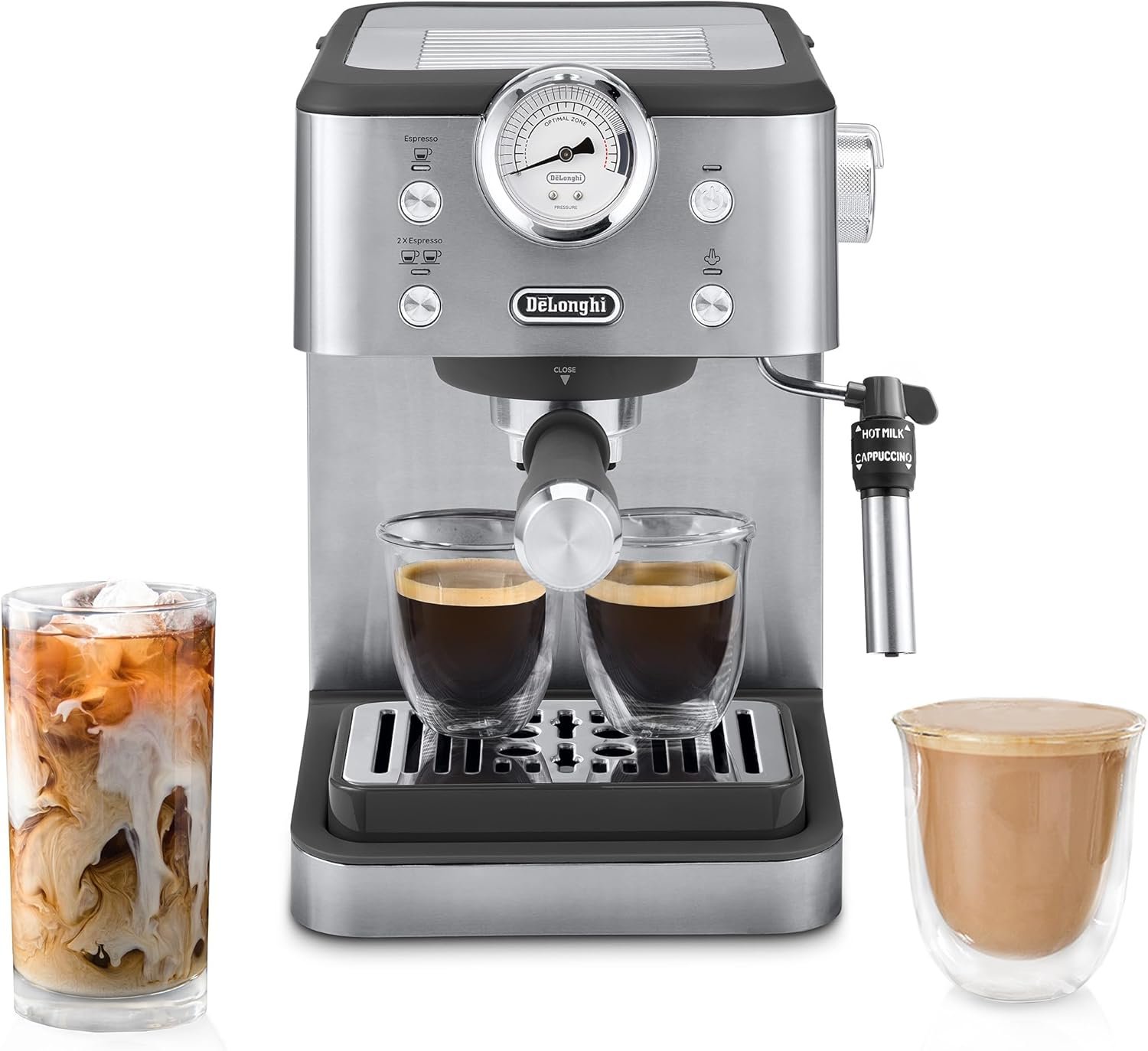
The Linea Classic features a 15-bar Italian professional pump and a chrome-detailed visual pressure gauge, both of which play pivotal roles in extraction dynamics. Pump pressure provides the driving force through the tamped coffee puck; while marketed as 15-bar, effective espresso extraction depends on how the pump translates to stable, consistent pressure at the puck during the shot. The visual pressure gauge offers immediate feedback on whether the system reaches an appropriate operating range during extraction, helping users adjust grind size and dose to target optimal flow and extraction time. Semi-automatic operation means the user starts and stops shots, making manual control over shot timing an important variable. The inclusion of single and double filter baskets supports standard dosing ranges, enabling consistent puck thickness and pressure profiles when paired with proper grind and tamping technique.

Role of the pressure gauge in dialing shots
A pressure gauge provides real-time indication of resistance and pump load during a shot, which correlates with grind setting and puck preparation. Observing the gauge can help detect under- or over-extraction trends—low pressure may indicate a coarse grind or insufficient dose, while excessively high pressure can signal a too-fine grind or blocked group head. Used alongside shot timing and taste assessment, the gauge becomes a practical diagnostic for users tuning variables. However, gauge readings are one input among several; flow rate, crema appearance, and sensory evaluation remain essential for final adjustments.
Pump design versus commercial systems
Many home espresso machines advertise 15-bar pumps while commercial standards emphasize stable 9-bar extraction at the puck. The design of the internal pump and plumbing determines how advertised pressure translates to puck pressure. Thermoblock systems and compact pump assemblies prioritize rapid heat-up and compact size, which can produce adequate extraction for home use when paired with correct grind and dose, but will not replicate the thermal mass and pressure stability of commercial boilers. For home-focused use cases, the Linea Classic’s pump and gauge give a balance between compact design and the necessary pressure dynamics for classic espresso recipes.
Shot repeatability and user variables
As a semi-automatic machine, shot-to-shot consistency depends on repeatable user inputs: grind size, dose, distribution, and tamping pressure. The inclusion of preset single/double recipes simplifies timing but does not automate extraction variables that stem from the puck itself. Regular attention to grinder maintenance, consistent dosing technique, and monitoring of the pressure gauge are required to minimize variability. Users seeking turnkey shot repeatability may prefer machines with integrated grinders or volumetric dosing, whereas the Linea Classic suits users who accept manual control in exchange for a compact, feature-focused unit.
Temperature control and heat stability
Thermoblock heating is a core specification on the Linea Classic, providing rapid heat-up and temperature control suited to compact espresso machines. Thermoblock systems circulate water through a heated block, enabling quick attainment of brewing temperature and responsive recovery between shots. Temperature stability influences extraction chemistry—soluble solids dissolve at rates sensitive to brew temperature—so machines that maintain consistent temperature across the brew cycle produce more repeatable flavor profiles. The Linea Classic pairs Thermoblock technology with relatively low thermal mass compared to boiler systems; this design favors shorter warm-up times and quick recovery for occasional back-to-back drinks, while requiring attention to shot spacing and steam operations to avoid minor temperature fluctuation during high-volume use.

Thermoblock advantages and limitations
Thermoblocks heat water on demand, reducing idle heat energy and shortening warm-up. This is advantageous in compact counter environments and in homes where immediate use is preferred. The trade-off compared with a boiler is thermal inertia: a boiler’s larger heated water volume offers steadier thermal output during extended steam or multi-shot sequences. In typical household scenarios with intermittent steaming and a small number of drinks per hour, a Thermoblock delivers practical temperature control. For users planning sustained cafe-level throughput, boiler-equipped machines maintain temperature with less variance over long runs.
Impact on milk steaming and beverage temperature
Temperature stability affects both extraction and milk steaming. When the steam wand is used, heat and pressure demands overlap with brewing; Thermoblock recovery determines how quickly the machine returns to optimal brewing temperature after steaming. The Linea Classic’s adjustable two-setting steam wand supports microfoam and basic milk-texturing tasks, but repeated or heavy steam use in short succession can transiently affect brew temperature. Managing workflow—such as steaming after pulling espresso shots or allowing brief recovery periods—helps maintain desired beverage temperatures and consistent flavor extraction.
Practical tips for maintaining heat consistency
Users can manage temperature consistency by adopting steady workflows: preheating cups on the cup rail, allowing short recovery times after steam use, and pulling shots with consistent intervals. For best extraction stability, ensure the group head and portafilter are warmed before brewing; the compact stainless-steel design benefits from brief preheating of metal components. Routine descaling and maintenance of the Thermoblock system per manufacturer guidance also preserve heat transfer efficiency and reduce the risk of mineral buildup impacting temperature stability.
Milk texturing, workflow complexity, capacity, and maintenance
Milk-texturing capability is a decisive factor for households that value lattes, cappuccinos, and microfoam-dependent drinks. The Linea Classic provides an adjustable two-setting steam wand designed to produce both steamed milk and velvety microfoam appropriate for basic latte art. Workflow complexity is moderate: semi-automatic operation requires manual tamping and shot start/stop, while one-touch presets simplify shot timing. Capacity and serving flexibility are defined by the compact footprint and adjustable double-height drip tray, enabling a range of cup sizes but not large commercial pitchers. Cleaning and maintenance expectations include regular backflushing (if the unit supports it), steam wand purge and wipe routines, descaling schedules adapted to local water hardness, and occasional gasket or filter replacement. Durability considerations hinge on build materials, pump and heating design, and adherence to maintenance protocols.

Milk-texturing performance and technique demands
A two-setting steam wand provides basic control for texturing milk from heated steamed milk to richer microfoam. Achieving stable microfoam requires a combination of steam power, wand positioning, and milk temperature control; lower-fat alternatives will behave differently than whole milk. Because steam power and thermal recovery are tied to the Thermoblock and pump design, technique—such as stretching then introducing air for microfoam—will influence outcomes. For users aiming for advanced latte art, consistent practice and a reliable milk pitcher and thermometer complement the machine’s steam capability.
Workflow complexity for daily use
Daily workflow combines grinder preparation, dosing, distribution, tamping, shot activation using presets or manual timing, and milk steaming. The included single/double filters and tamping scoop streamline standard steps, but the absence of an integrated grinder necessitates extra preparation. One-touch preset recipes reduce decision overhead for shot timing but do not automate distribution or tamping. For multi-person households or users prioritizing quick morning routines, the Linea Classic balances manual control with helpful automation; for those seeking fully automated, push-button beverage making, bean-to-cup systems are a better fit.
Cleaning, maintenance, and expected longevity
Maintenance routines for this machine type generally include daily steam wand purging and wiping, periodic backflushing if supported, filter basket cleaning, and routine descaling following water hardness guidelines. Stainless-steel exterior and chrome fittings aid durability but require gentle cleaning to prevent cosmetic wear. The semi-automatic, pump-and-Thermoblock architecture is common for home machines; longevity depends on frequency of use, water quality, and adherence to maintenance. Components like gaskets and filters are user-serviceable or replaceable, which supports long-term repairability compared to sealed consumer models.
Capacity and serving flexibility in household contexts
The compact dimensions and adjustable drip tray make the Linea Classic suitable for espresso cups and taller latte glasses, but the unit is oriented toward single-operator household use rather than frequent multi-cup commercial output. The lack of a high-volume boiler limits continuous steaming throughput, so households preparing several milk drinks in rapid succession should plan for brief recovery intervals. For typical home consumption—daily single or double-shot drinks and occasional milk-based beverages—the machine’s capacity and features provide practical flexibility without requiring commercial-level space or infrastructure.

Pros & Cons
Pros
- Reliable pressure system and visible feedback: The 15-bar Italian professional pump paired with a chrome visual pressure gauge provides clear, immediate information during extraction, helping users tune grind and dose for improved shot consistency. This combination supports traditional espresso recipes that rely on pressure-driven extraction.
- Rapid temperature readiness: Thermoblock heating offers fast warm-up and quick recovery between uses, which shortens time-to-cup for intermittent household brewing and reduces idle energy compared with large-boiler designs.
- Versatile milk-texturing: An adjustable two-setting steam wand accommodates both steamed milk and microfoam, enabling basic latte art and a range of milk-based beverages suitable for home users.
- Compact, durable construction: Stainless-steel exterior with chrome accents and an adjustable drip tray delivers a kitchen-friendly footprint with materials that resist wear when cleaned and maintained properly.
- Programmable single/double presets: Customizable shot presets simplify routine brewing by automating shot timing, aiding consistency for users who prefer repeatable, straightforward workflows.
- Includes essential accessories: Single and double filters plus a measuring scoop/tamper arrive with the machine, providing the basic tools needed to start brewing with ground coffee without additional purchases.
Cons
- Requires external grinder: The machine accepts ground coffee only; absence of an integrated grinder places responsibility on the user to supply a high-quality burr grinder to achieve consistent extraction, increasing setup complexity and cost.
- Thermoblock thermal limitations under heavy use: While Thermoblock heats quickly, its lower thermal mass compared with boiler systems can result in slightly greater temperature variance during repeated steam cycles or high-volume sequences.
- Semi-automatic workflow demands: Manual dosing, tamping, and shot control require skill and routine attention to achieve repeatable results, which may not suit users seeking fully automated, push-button convenience.
- Limited manufacturer warranty information: Warranty details are not specified in the product disclosures provided, so users should consult manufacturer resources to verify coverage and service procedures.
- Not dishwasher safe: Accessories and removable parts require hand cleaning, adding to routine maintenance time for daily use.
Final Verdict: Who This Product Is Best For (and Who Should Skip It)
The De’Longhi Linea Classic is best suited to home espresso enthusiasts and households that prioritize classic, pressure-driven espresso extraction and milk-based drinks while accepting a degree of hands-on workflow. Users who already own—or plan to pair the machine with—a good burr grinder will extract the most value, as grind consistency and dosing are critical to leveraging the 15-bar pump and pressure gauge for repeatable results. The compact stainless-steel build, Thermoblock fast-heat design, and adjustable steam wand make it an appealing option for kitchens with limited counter space and for those who prepare a mix of straight espressos and milk drinks.
This machine is less appropriate for buyers seeking integrated bean-to-cup convenience, high-volume commercial throughput, or turnkey, fully automated beverage systems. Households that demand rapid successive milk steaming at cafe levels or users who prefer minimal manual intervention should consider alternatives with larger boilers, built-in grinders, or super-automatic designs. For home users in 2026 who want a balance of mechanical control, visible pressure feedback, and compact heat-up performance, the Linea Classic offers a focused semi-automatic experience that rewards attention to grind, dose, and technique.

Frequently Asked Questions (FAQs)
Can the Linea Classic use whole beans or does it require a separate grinder?
The Linea Classic accepts ground coffee only. Achieving consistent espresso extraction therefore requires a separate burr grinder capable of fine adjustments. Pairing with a quality grinder improves particle uniformity and flow control, which is essential for hitting target extraction times and reducing shot variability.
How does the Thermoblock heating system affect shot temperature and recovery?
Thermoblock heating provides rapid warm-up and responsive recovery, which shortens time-to-cup for household use. Compared with larger boilers, Thermoblocks have lower thermal mass, so brief temperature variation can occur during sustained steam use; allowing short recovery intervals helps maintain consistent extraction temperatures.
Is the steam wand on this machine suitable for latte art and microfoam?
The adjustable two-setting steam wand is designed to produce both steamed milk and richer microfoam appropriate for basic latte art. Achieving stable microfoam also depends on technique, milk type, and pitcher control; practice and consistent steaming workflow improve results with the Linea Classic.
What role does the visual pressure gauge play during extraction?
The visual pressure gauge indicates pump load and resistance during a shot, providing real-time feedback that correlates with grind fineness and puck preparation. Observing gauge behavior helps diagnose under- or over-extraction tendencies and guides adjustments to grind size or dose to reach optimal flow and extraction time.
How much maintenance does the Linea Classic require for daily use?
Daily maintenance typically includes purging and wiping the steam wand after each use, cleaning filter baskets and portafilter, and emptying the drip tray. Periodic tasks include descaling according to local water hardness and inspecting gaskets and filters. The unit is not dishwasher safe, so removable parts require hand cleaning.
Is this machine suitable for high-volume or commercial use?
The Linea Classic is designed for household use and moderate home throughput. Its Thermoblock heating and compact pump system are optimized for intermittent domestic use rather than continuous, high-volume commercial operation. Users requiring sustained steaming and heavy-duty output should consider commercial or high-capacity boiler-equipped machines.
Does the Linea Classic include a warranty and what should buyers verify?
Manufacturer warranty specifics are not provided in the product disclosures included here. Prospective buyers should verify warranty coverage, service centers, and included support directly from manufacturer resources to confirm details such as duration, parts coverage, and authorized repair channels.