Wancle Electric Coffee Grinder – Grind Control Tips
Why the right grinder matters for home brewers
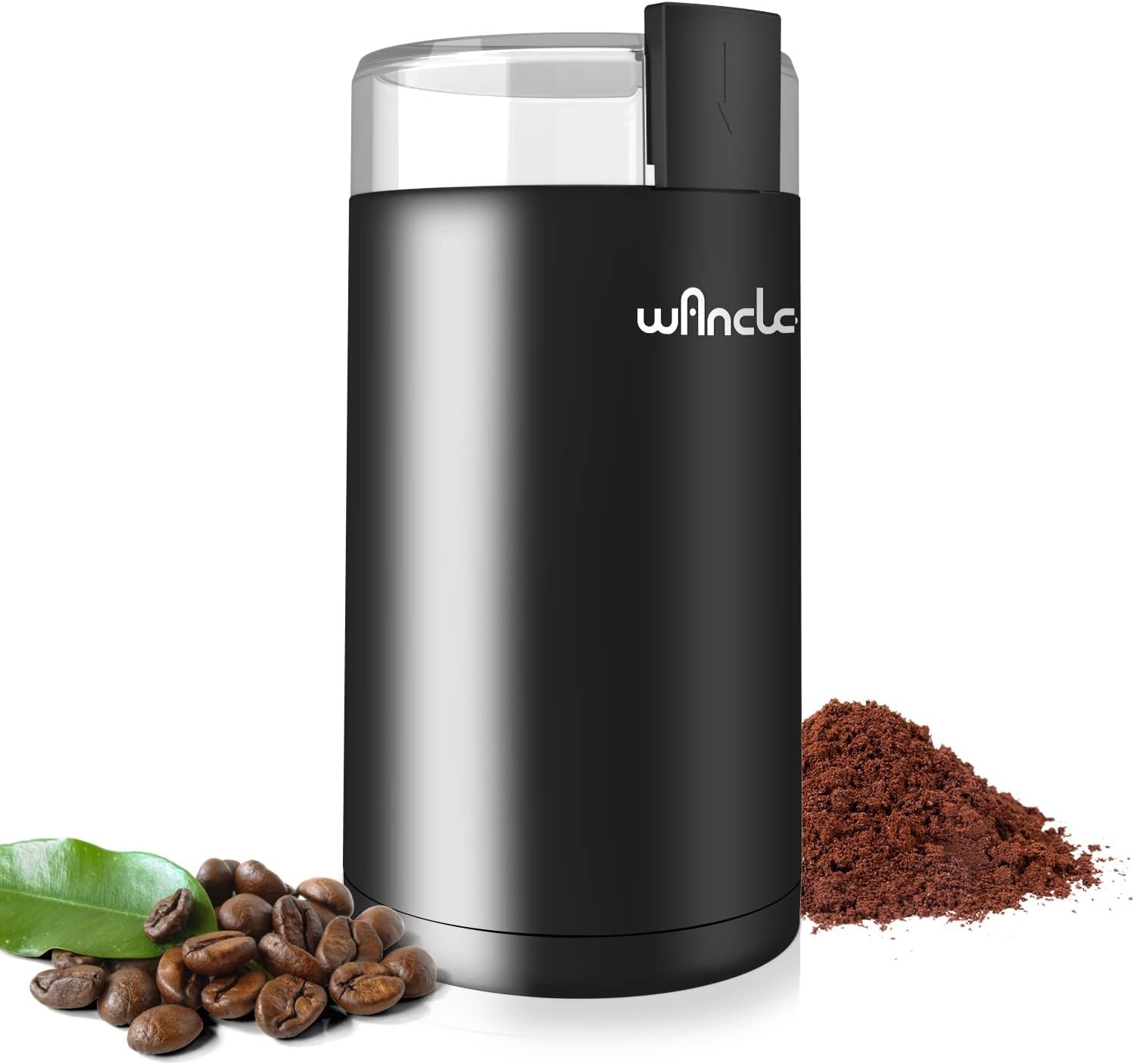
Selecting a grinder shapes the extraction trajectory and ultimately the cup. Particle size distribution, heat transfer during grinding, and capacity influence how evenly flavors are extracted during brew cycles. Home brewers, households, and casual enthusiasts often seek a balance between convenience and sufficient control over grind size to match brewing methods like drip, pour-over, and French press. The Wancle Electric Coffee Grinder positions itself as an entry-level electric blade grinder intended to serve multiple roles: coffee beans, spices, seeds, and nuts. Its one-button pulse operation, 60 gram capacity, stainless steel blade and bowl, and plastic housing define workflow, thermal behavior, and maintenance demands. Understanding how blade grinders perform relative to burr designs—especially around grind uniformity, static, and heat—is important when choosing a grinder for specific brewing goals. This review summarizes the Wancle grinder’s characteristics, clarifies suitable brewing matches, and highlights trade-offs that matter during routine home preparation.
Quick Overview
| Feature | Details |
|---|---|
| Product category and brewing method | Electric blade coffee grinder for small-batch grinding; intended for coarse to fine pulse grinding suitable for drip, French press (coarse/medium), and infusion methods; not a burr grinder. |
| Capacity and output | Up to 60 g (approximately 5–6 tablespoons) per batch; best for single to small multi-cup preparations. |
| Materials and construction | Plastic housing, transparent plastic lid, stainless steel blade and grinding bowl, copper motor components as disclosed by manufacturer. |
| Power and electrical | 120 VAC / 60 Hz, 150 Watts motor rating. |
| Grind compatibility | Pulse-operated blade system; particle size controlled by grind time rather than calibrated settings. |
| Best suited users | Casual home brewers, households seeking compact multipurpose grinder, and users who grind spices and seeds in addition to coffee. |
| Intended uses | Coffee beans, spices, seeds, nuts, and herbs. |
| Size and weight | 3.5 x 3.5 x 6.6 inches; approximately 15.9 ounces (450 grams). |
The specifications indicate a compact, multi-use blade grinder designed for convenience rather than precision. The 60 gram capacity supports single-batch brewing, while the stainless steel blade and bowl provide corrosion resistance. Electrical and material choices affect thermal and longevity expectations, and the pulse, press-and-hold operation determines workflow and how grind consistency will be achieved via time-based control.

Grind quality and brewing compatibility
Particle size distribution is the primary factor for extraction consistency, and blade grinders achieve size control through timing and pulse technique rather than calibrated burr spacing. The Wancle unit uses a high-speed stainless steel blade driven by a 150 W motor; that configuration allows rapid chopping of beans but tends to produce a broader particle size range than burr systems. For drip and French press methods where a uniform medium-to-coarse grind helps avoid over- or under-extraction, the Wancle can be adequate when short, controlled pulses are used to limit fines. For brew methods that depend on tight particle distribution—espresso or specialty pour-over with exacting extraction targets—the inherent variability of blade grinding increases the risk of channeling and inconsistent extraction. The grinder’s transparency lid helps monitor particle size visually, which is important for time-based control.

Compatibility with drip and pour-over brewing
Drip and pour-over brewing favor a medium grind that balances contact time and surface area. With the Wancle blade grinder, achieving a medium grind requires practice with short bursts and pulse intervals to avoid creating excessive fines that accelerate extraction and increase bitterness. The stainless steel bowl and relatively small grinding chamber promote quick processing of a 30–60 gram dose, but heat buildup and static can encourage clumping, which alters flow through paper or cloth filters. Visual monitoring through the transparent lid helps adjust pulse timing; users should aim for multiple short pulses with shaking between pulses to distribute particle sizes more evenly. Overall, the grinder can serve as a pragmatic option for drip or pour-over when precision is less critical and when post-grind sifting or settling is acceptable.
French press and immersion methods
Immersion brewing such as French press benefits from a coarser, more forgiving particle profile, which the Wancle blade grinder can produce with longer, less frequent pulses. The larger particles reduce fines that cause excessive sediment and over-extraction. Because blade grinders tend to create a mixture of large and very fine particles, double-checking the finished grind and allowing coarse particles to settle before pouring can improve clarity. The 60 gram capacity is sufficient for 1–4 cup press servings, making the Wancle a practical option for households that do not require professional-grade uniformity. Heat generation from extended grinding may cause minor volatile loss, so short pulses with intermittent rests will limit temperature rise in beans.
Ease of use and daily workflow
Operation simplicity is a key purchase driver for households and casual brewers; the Wancle adopts a single-button press-and-hold control that keeps workflow straightforward. Loading up to 60 grams and using the transparent lid supports rapid visual feedback on grind progress, and the compact footprint fits most counters or storage spaces. Maintenance tasks are typical for blade grinders: emptying the bowl, brushing residual grounds from the blade and sides, and occasional deep cleaning to remove oils and residues from spices. Because the unit’s housing is plastic, it remains lightweight but requires attention to avoid scratching the transparent lid, which can obscure visual monitoring over time. The absence of stepless grind settings means the user’s manual technique dictates repeatability, which places emphasis on consistent pulse timing and dose measurements for repeatable results.

Workflow for multi-beverage households
In homes that prepare multiple beverage types—drip coffee in the morning and tea or spice grinding later in the day—the Wancle’s multi-use capability is an asset. Stainless steel contact surfaces reduce flavor transfer compared to porous materials, but thorough cleaning between uses is advised to avoid cross-contamination of volatile spice oils with coffee. The compact size supports quick storage when not in use, and electrical specifications (120 V, 60 Hz) align with standard household outlets. For consistent daily throughput, allowing the motor to rest between extended batches will reduce thermal stress on the motor assembly; the pulse-style operation naturally encourages brief on-off cycles that align with this recommendation.
User interface and controls
One-button operation simplifies the learning curve but removes the ability to program repeatable grind times or set calibrated fineness. Visual monitoring through the transparent lid becomes the primary feedback loop, and consistent dose measurement plus timed pulses form the repeatable protocol for grind targets. Because there are no fixed settings, a simple kitchen timer or counting pulses can help create reproducible routines. The press-to-run safety behavior—grind only while the button is held or pressed—reduces accidental continuous operation, but it means hands-on presence is needed for each batch.
Heat generation, static, and temperature stability
Blade grinders convert mechanical work into heat more rapidly in the grinding zone than many burr designs, and this has implications for volatile retention and flavor. The Wancle’s 150 W motor and stainless steel blade allow quick grinding, but prolonged runs will increase temperature of both metal components and coffee particles. Heat can accelerate loss of volatile aromatics and slightly change extraction behavior, particularly during fine grinding where surface area is high. Static charge frequently accompanies dry, fine grounds in electric grinders, causing clinging and uneven distribution in dosing. Techniques such as short pulses with pauses, grounding the grounds with a brief tap, or resting ground coffee for a minute before dosing can mitigate these effects. The plastic housing has comparatively low thermal conductivity, which reduces external heat transfer but does not limit internal blade heating.

How heat affects extraction quality
Heat introduced during grinding can pre-warm beans and marginally increase the rate of volatile evaporation from aromatic compounds. For medium and coarse grinds used in drip and French press, the practical impact is typically small if grinding is kept brief. For fine grinds intended for concentrated methods, even modest heating can alter perceived sweetness and acidity due to changes in volatile balance. Because this grinder is designed for short pulses and small batches, limiting continuous run time and using cooling intervals is the recommended approach when grind fineness is increased.
Static control and dosing consistency
Static is a common challenge with lightweight, high-speed grinders because small particles become charged and cling to the chamber and dosing surfaces, affecting measured dose weight. Wancle’s stainless steel bowl offers a less electrostatic surface than some plastics, but the transparent plastic lid and the fine grind particles can still adhere. To improve dosing consistency, tapping the grinder base lightly over a catch, using a small brush to collect adhered particles, or allowing a brief settle period after grinding will yield more accurate dosing for filtration and immersion methods.
Cleaning, maintenance, and expected durability
Cleaning and maintenance expectations influence long-term performance and flavor neutrality. The Wancle grinder’s stainless steel blade and bowl are straightforward to wipe and brush, and the transparent lid allows inspection for residual grounds. Because the outer housing is plastic, avoiding abrasive cleaners will help maintain appearance and prevent scratching that could trap oils and particles. Routine cleaning after each use—emptying grounds and using a small brush—reduces rancid oil buildup from spices or oily beans. The motor assembly and electrical components are sealed within the housing and should not be submerged; manufacturer disclosures specify household electrical ratings (120 V, 60 Hz, 150 W), so follow standard safety practices.

Maintenance schedule and common wear points
Blade grinders tend to have fewer moving parts than burr units, but blade sharpness, lid seals, and switch reliability define lifespan. The stainless steel cutting edges are durable but will slowly dull with heavy use on hard materials; occasional grinding of non-coffee items (spices, seeds, nuts) accelerates wear. The transparent lid’s latch and any small plastic clips are common wear points on compact grinders and may show stress under repeated removal. Keeping the unit clean, avoiding moisture exposure in the motor cavity, and using it within short duty cycles helps preserve motor windings and switch contacts.
Expected longevity based on design choices
The combination of a pure copper motor core (as disclosed) and a 150 W rating suggests a robust short-duty motor for small batches. However, extended continuous use, frequent hard-material grinding, or heavy multi-batch sessions increase thermal and mechanical stress. The plastic housing and small form factor prioritize portability and affordability over industrial durability. For occasional daily home use focused on coffee and occasional spice grinding, the appliance’s materials and motor specification align with reasonable longevity expectations if maintenance protocols are followed.
Capacity, serving flexibility, and who should avoid the product
The 60 gram maximum batch size positions the grinder for single-serve to small household service—roughly enough for two to four cups depending on brew ratio. This capacity works well for morning single-brew cycles and occasional multi-cup preparation but is less efficient for batch brewing for large groups. Grind size is determined by pulse technique rather than mechanical settings, which limits rapid switching between precise fineness targets; this affects workflows where multiple brew methods are prepared in quick succession. Users seeking tightly controlled particle distributions—primarily espresso or high-precision specialty pour-over—should prioritize a burr grinder. Conversely, households wanting a compact, multi-use unit for coffee and spices will find the Wancle aligns with those needs.
Serving flexibility and batch throughput
A 60 gram capacity allows for quick preparation of daily single or small household brews, but preparing several back-to-back batches requires time for motor cool-down and cleaning between runs to avoid flavor carryover. For frequent, larger-volume brewing routines, a higher-capacity grinder with more thermal tolerance and programmable settings will streamline workflow. The Wancle is optimized for convenience and countertop footprint rather than continuous high-throughput operations.
Who should avoid this grinder
Users who prioritize precise grind uniformity—such as home baristas dialing espresso or specialty pour-over practitioners—should avoid blade grinders due to inherent particle variability. Similarly, those needing rapid, repeatable grind settings for mixed-method households or commercial use will find the Wancle’s time-based control limiting. Heavy-duty users who grind large volumes daily should choose a commercial or higher-end home burr grinder designed for sustained duty cycles.
Pros & Cons
Pros
- Compact, multi-use design: Small footprint and light weight make it easy to store and suitable for kitchens with limited counter space. The unit’s ability to process coffee, spices, seeds, and nuts increases versatility for households that want a single appliance for several tasks.
- Simple one-button operation: Press-and-hold control simplifies training and daily use; the transparent lid provides visual feedback for time-based grind control without complex settings.
- Stainless steel blade and bowl: Metal contact surfaces resist corrosion and are straightforward to wipe clean, reducing flavor transfer compared with porous materials and making post-use cleaning more efficient.
- Pure copper motor disclosure: Copper motor windings typically indicate good electrical conductivity and efficient torque delivery for brief grinding cycles, supporting the intended small-batch use case.
- Adequate capacity for small batches: Up to 60 grams per batch suits single-serve and small household brewing needs without requiring oversized equipment.
- Multipurpose capability: Works beyond coffee—spices and seeds can be processed, which is useful for kitchens that prefer one compact appliance for multiple tasks.
Cons
- Grind consistency limitations: Blade grinding inherently yields a broad particle size distribution, increasing the chance of uneven extraction in precision brewing methods, particularly espresso and some specialty pour-over needs.
- Heat and static generation: High-speed blades can elevate bean temperature and produce static-charged fines; these effects can affect volatile retention and dosing accuracy unless pulse technique and short runs are used.
- No calibrated grind settings: Time-based control requires practice and repeatable technique; there are no mechanical or digital settings to reproduce exact grind sizes.
- Plastic housing and lid durability concerns: While lightweight, the plastic components—especially the transparent lid—may show wear or scratching over time and can trap oils if abraded.
- Small batch throughput: Limited to 60 grams per run, which is inefficient for large households or frequent large-batch brewing and increases cycle time when multiple batches are required.
Final Verdict: Who This Product Is Best For (and Who Should Skip It)
The Wancle Electric Coffee Grinder is best suited to casual home brewers and households that prioritize compactness, multipurpose functionality, and a low-complexity workflow. For users who prepare single-serve or small multi-cup brews, who occasionally grind spices and seeds, and who accept time-based pulse control rather than precision calibration, the Wancle provides a practical solution. Its stainless steel blade and bowl, transparent lid for visual monitoring, and standard household electrical compatibility make it convenient for kitchens where space and simplicity matter.
This grinder is not recommended for users seeking narrowly distributed particle sizes for espresso or high-precision specialty pour-over routines, nor for heavy-volume or commercial applications. In 2026, compared to entry-level burr and higher-end home grinders, the Wancle trades precision and sustained duty performance for affordability, compactness, and multipurpose use. Buyers who prioritize grind uniformity, programmable settings, or high-throughput durability should evaluate burr grinder alternatives.
Frequently Asked Questions (FAQs)
Is the Wancle electric grinder suitable for espresso?
The Wancle is a blade grinder that controls particle size via pulse timing rather than calibrated settings. Blade grinders typically produce a broad particle size distribution, which makes them a suboptimal choice for espresso that requires tightly distributed fines. For home users pursuing espresso-level consistency, a burr grinder with adjustable, repeatable settings is generally recommended.
How much coffee can the Wancle grinder handle per batch?
The manufacturer specifies a maximum capacity of about 60 grams per batch, which is suitable for single-serve brewing and small household portions. This capacity supports one to a few cups per cycle depending on brew ratio, but multiple batches will be required for larger gatherings.
Will grinding make the beans hot and affect flavor?
High-speed blade grinding converts mechanical energy into heat in the grinding zone; prolonged runs can raise metal and particle temperature slightly. Short pulses with rest intervals limit temperature rise and help preserve volatile aromatics. For routine home use with brief pulses, the practical impact on flavor is typically small.
Can the Wancle grinder process spices and nuts safely?
The Wancle’s stainless steel blade and bowl are suitable for grinding spices, seeds, and nuts. To avoid flavor transfer, cleaning between uses is advised—brush or wipe the bowl and lid to remove residual oils. Processing very hard materials may increase wear on the blade over time, so occasional spice grinding is consistent with multipurpose use.
How difficult is cleaning and maintenance?
Cleaning involves emptying grounds, brushing residual particles from the blade and bowl, and wiping the transparent lid. Stainless steel surfaces are straightforward to maintain, while the plastic housing should be cleaned with non-abrasive cloths to avoid scratching. The motor compartment is sealed and should not be immersed; follow basic electrical safety for maintenance.
What brewing methods match this grinder best?
The grinder is most compatible with drip coffee, automatic brew machines, and immersion methods like French press where medium-to-coarse grinds are acceptable. For precision-driven methods—espresso or high-accuracy pour-over—users should prefer burr grinders that provide a narrower particle distribution.
How reliable is the motor for frequent use?
The disclosed motor specification is 150 W with copper components, which supports short, small-batch grinding. For occasional daily home use, the motor specification aligns with reasonable durability. However, continuous heavy-duty or high-volume use increases thermal and mechanical stress and may shorten operational life compared with commercial-grade or high-end home grinders.