Hamilton Beach 2-Way 12-Cup: Flexible Home Brewing Choice

Why appliance choice matters for everyday home brewing
Selecting the right coffee appliance affects extraction, temperature stability, workflow, and long-term enjoyment. Home brewers and multi-person households require equipment that matches routine demands: single-serve convenience for busy mornings, and larger-carafe capacity for shared cups. Appliances that combine methods must balance components and controls to avoid compromises in extraction or usability. Design features such as water dispersion, programmable timing, and brew-strength settings influence saturation, extraction yield, and the balance between acidity and body. Materials and construction—glass carafes, heating plates, plastic components, and mesh filters—affect heat retention, flavor contact, and cleaning needs. Considerations for purchase include compatibility with preferred inputs (ground coffee grind range), the importance of precise temperature hold, and whether an iced coffee mode or programmable delay will fit daily routines. For households seeking a single footprint that supports both solo and group brewing, machine features and limitations should be weighed against desired brew quality, maintenance expectations, and longevity.
Quick Overview
| Feature | Details |
|---|---|
| Product category and brewing method | Drip coffee maker with dual-mode brewing: single-serve pour and 12-cup carafe drip |
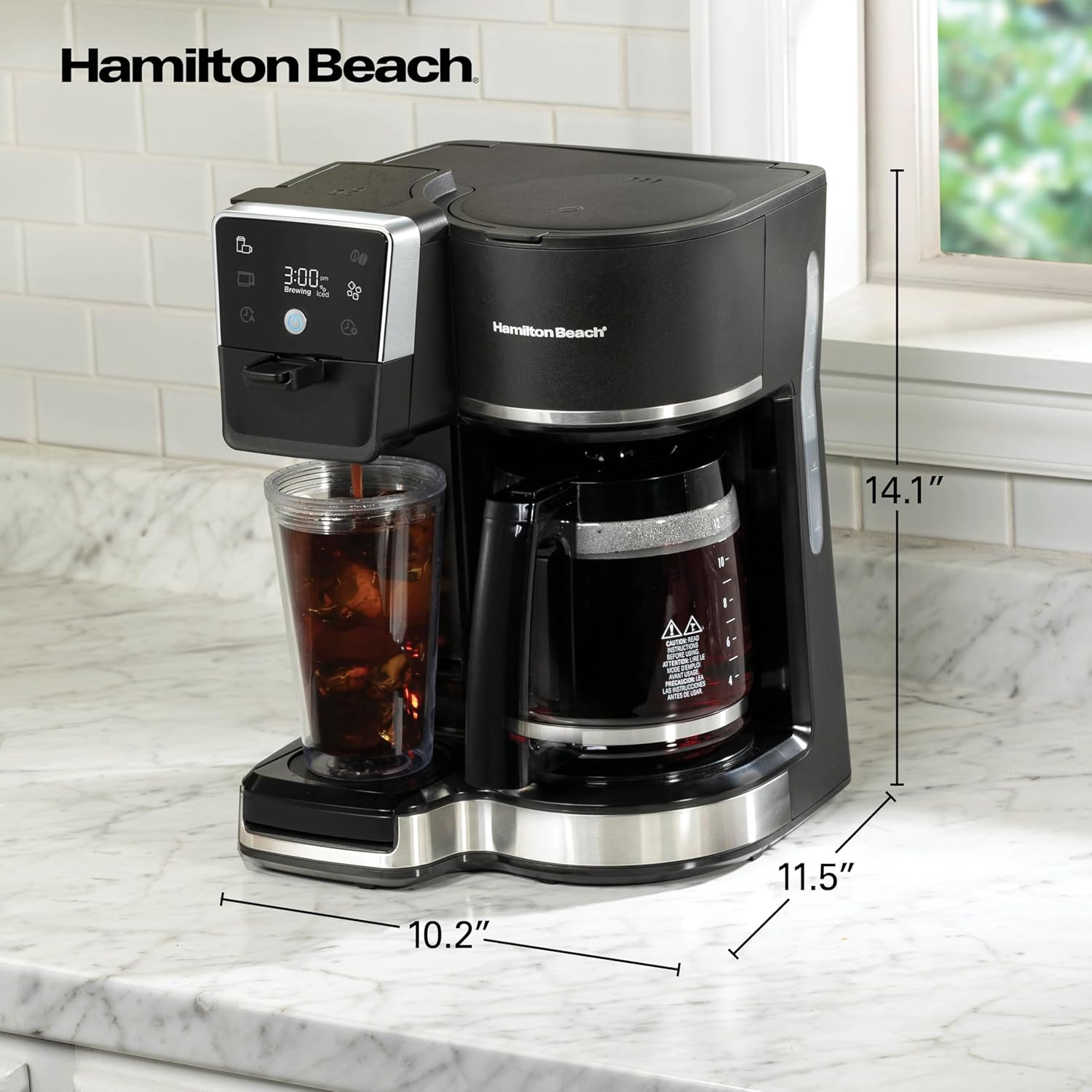
| Capacity and output | 12-cup carafe (60 fluid ounces) and single-serve cup option |
| Materials and construction | Plastic housing with glass carafe, stainless/metal heating elements, mesh single-serve scoop/filter |
| Heating or pressure system | Standard electric hot plate with internal heating element (no pump or pressure system) |
| Filter and grind compatibility | Ground coffee only; mesh single-serve scoop included; basket-style paper or reusable filters applicable |
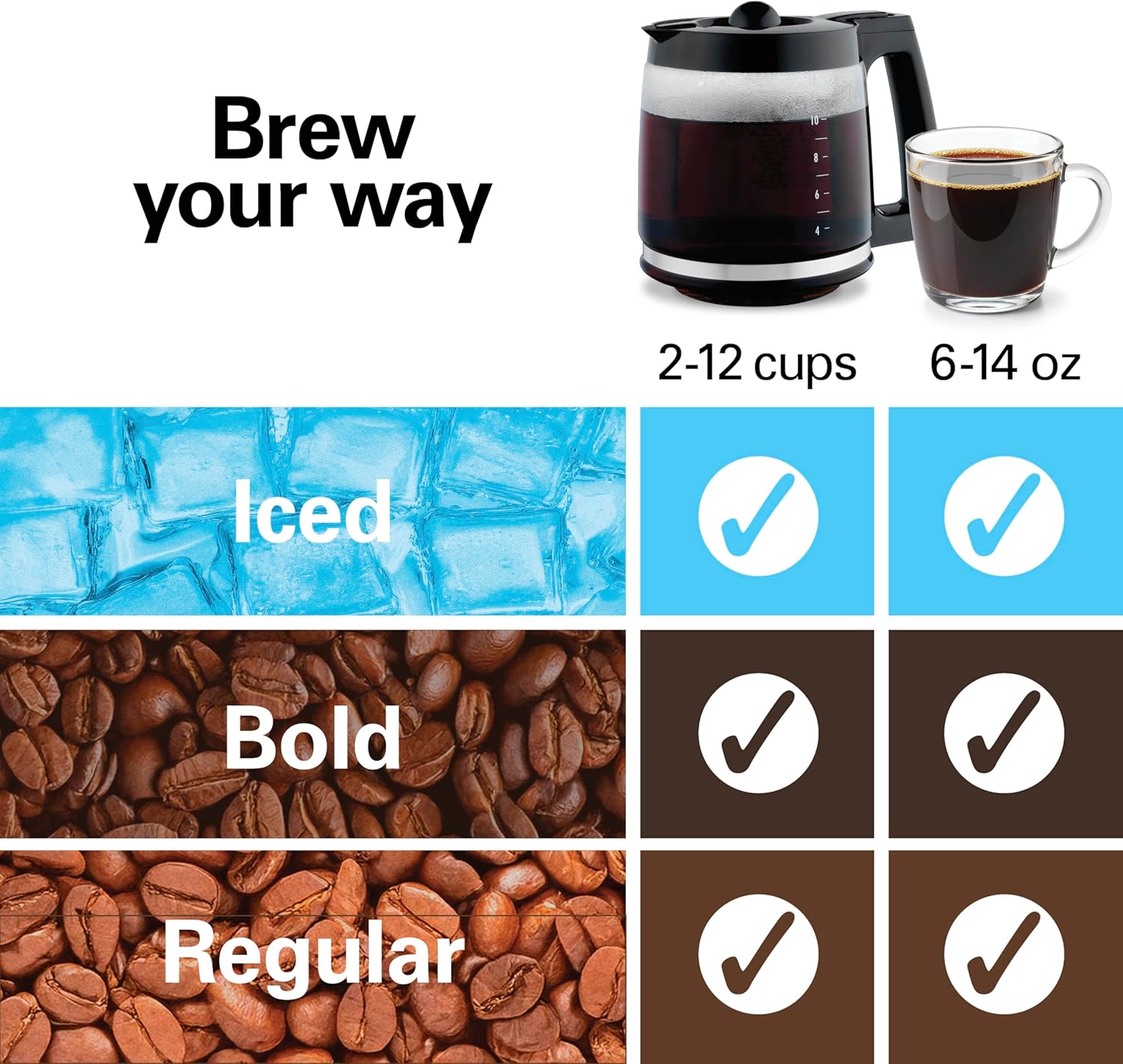
| Controls and programmability | Touchscreen display, programmable up to 24 hours, 6 brew settings including iced, bold, hot, regular |
| Best suited users | Households needing both single-serve convenience and full-pot brewing, casual home brewers |
| Intended use cases | Daily hot drip or iced coffee, timed morning brewing, intermittent single cups |
| Warranty | Manufacturer warranty: unspecified |
This machine’s dual-mode layout and feature set affect brewing outcomes and usability by prioritizing convenience and flexible workflows. AquaFlow water dispersion and strength settings influence extraction consistency, while the glass carafe and hot plate determine heat retention and flavor stability over time. Programmability and single-serve mesh use alter daily workflow, but filter choice and grind particle distribution remain critical for optimal extraction.
Brewing method compatibility and grind considerations
The machine supports only ground coffee inputs, with a dedicated single-serve side that uses a mesh scoop and a carafe-side basket for typical drip filters. For buyers focused on extraction quality, grind size and distribution should match the drip contact time and water flow characteristics of this brewer. Medium grind sizes typical for automatic drip yield even extraction with showerhead-style dispersion, while finer grinds risk over-extraction and clogging the mesh scoop. Coarser than recommended grinds can lead to under-extraction and weak cup strength. The unit’s lack of pod compatibility means reliance on fresh grounds, which places emphasis on grinder quality and consistent particle size to achieve predictable brewing results across single-serve and full-pot modes.
Ground coffee compatibility and grind-size guidance
Grind selection interacts directly with contact time and flow rate in drip systems. A medium grind (similar to table salt) is typically recommended for most automatic drip machines to balance surface area and filtration speed; this produces target extraction yields when combined with proper brew ratios. For the single-serve mesh scoop, slightly finer particles increase surface area but also increase the risk of fines migrating through the mesh, which can affect clarity and lead to faster extraction. A consistent burr grinder is advised to minimize fines and large particles, ensure even saturation during the AquaFlow cycle, and reduce channeling or over/under-extraction in both brewing modes.
Iced coffee mode and ratios for cold-brewed-style iced drinks
The dedicated iced coffee setting is designed to compensate for dilution from ice by producing a stronger hot brew that becomes balanced after cooling/dilution. This typically involves using a higher brew ratio (more coffee per water volume) and engaging the machine’s bold or iced setting to increase extraction concentration. For iced drinks, concentrate recipes often use a 1:10 to 1:12 weight ratio before dilution; when using volume measurements, increasing grounds by 25–50 percent compared with a regular hot cup often produces better-tasting iced results. Adequate grind and full saturation remain crucial because cold-served beverages reveal different flavor balances than hot cups.
Extraction consistency and AquaFlow water distribution
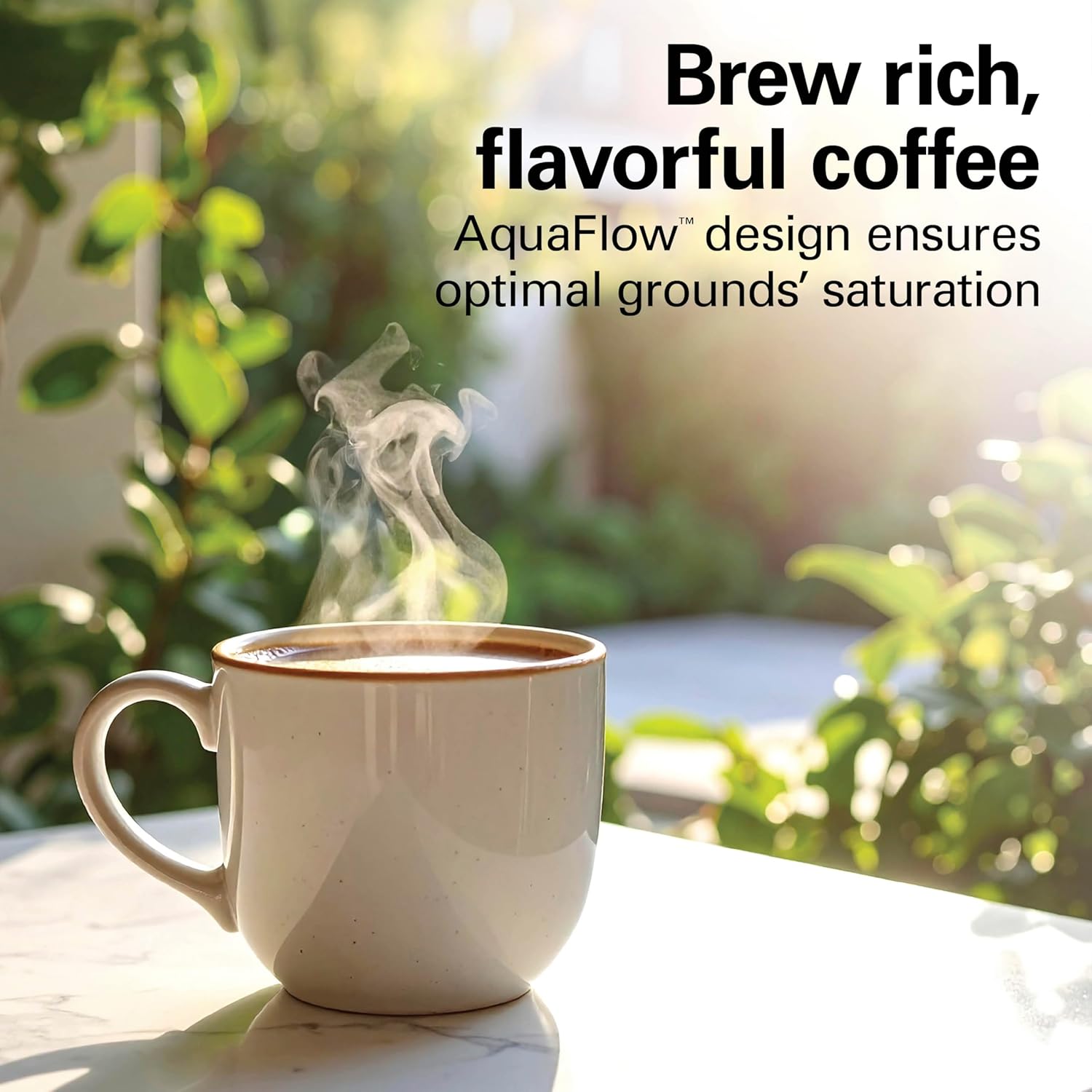
The AquaFlow showerhead design directs water across the entire brew basket to improve uniform saturation of coffee grounds, which affects extraction consistency. Even water distribution aims to reduce channeling and ensure a more uniform extraction yield across the pierced puck, which leads to improved balance between acidity, sweetness, and body. In drip systems, contact time, water volume, and particle surface area determine extraction kinetics; a consistent spray pattern and controlled flow help maintain predictable contact time. While showerhead designs do not replicate pour-over pour control, they can substantially narrow extraction variance between brews when combined with consistent grind and dose. Users should pair the machine with stable grind and measured dosing to realize the intended benefits of AquaFlow dispersion.
How showerhead flow affects uniformity and flavor balance
Water distribution over the coffee bed impacts the rate at which solubles are dissolved. A concentrated spray on one zone causes faster extraction locally and under-extraction elsewhere. A well-designed showerhead produces a broad, even spray pattern that promotes simultaneous wetting and extraction, yielding a more even removal of desirable soluble compounds. For a drip brewer, this reduces the need for manual agitation and increases repeatability across different doses. To maximize benefits, attention to even dosing and level tamping (not pressing) of grounds within the basket prevents preferential channels and improves overall cup clarity and balance.
Brew strength settings and their impact on extraction outcomes
Adjustable brew-strength settings change the machine’s programmed flow profile and dwell time to influence extraction concentration. Choosing a bold setting typically increases contact time or the effective brew ratio to extract more solubles, producing a fuller-bodied cup, while regular settings aim for a balance between brightness and body. Because solubility varies across compound classes, stronger settings accentuate body and extracted bitters, whereas lighter settings preserve volatile aromatics. For consistent results, strength settings should be paired with measured dose and proper grind size; otherwise, adjustments may merely alter perceived intensity rather than improve extraction quality.
Temperature control, heat stability, and timing
Temperature stability is a core determinant of extraction efficiency. Automatic drip systems rely on an internal heating element to bring water to an optimal extraction range before contact with grounds; consistent inlet temperature helps dissolve desired solubles without excessive bitterness. The Hamilton Beach unit uses standard electric heating and a hot plate beneath a glass carafe for post-brew heat retention, while programmable timing allows delayed starts up to 24 hours for a ready cup. Heat retention with a glass carafe is less effective than thermal carafes, causing the hot plate to be the principal mechanism for maintaining serving temperature. Because glass and hot-plate combinations can alter flavor over extended hold times, users should consider timing between brew completion and consumption to preserve peak sensory quality.
Heat retention, glass carafe implications, and flavor over time
Glass carafes provide visual clarity and simple cleaning but have lower insulating properties than stainless thermal carafes. The hot plate maintains serving temperature but continues to subject brewed coffee to heat, which accelerates flavor degradation and can increase perceived bitterness over prolonged periods. For short-term holding (under one hour), glass plus hot plate keeps a drinkable temperature with minimal sensory deterioration. For extended holding, transferring brewed coffee to an insulated container or brewing only the needed volume reduces thermal and oxidative changes that alter aroma and perceived freshness.
Programmability, auto-shutoff, and their effects on workflow and pre-infusion
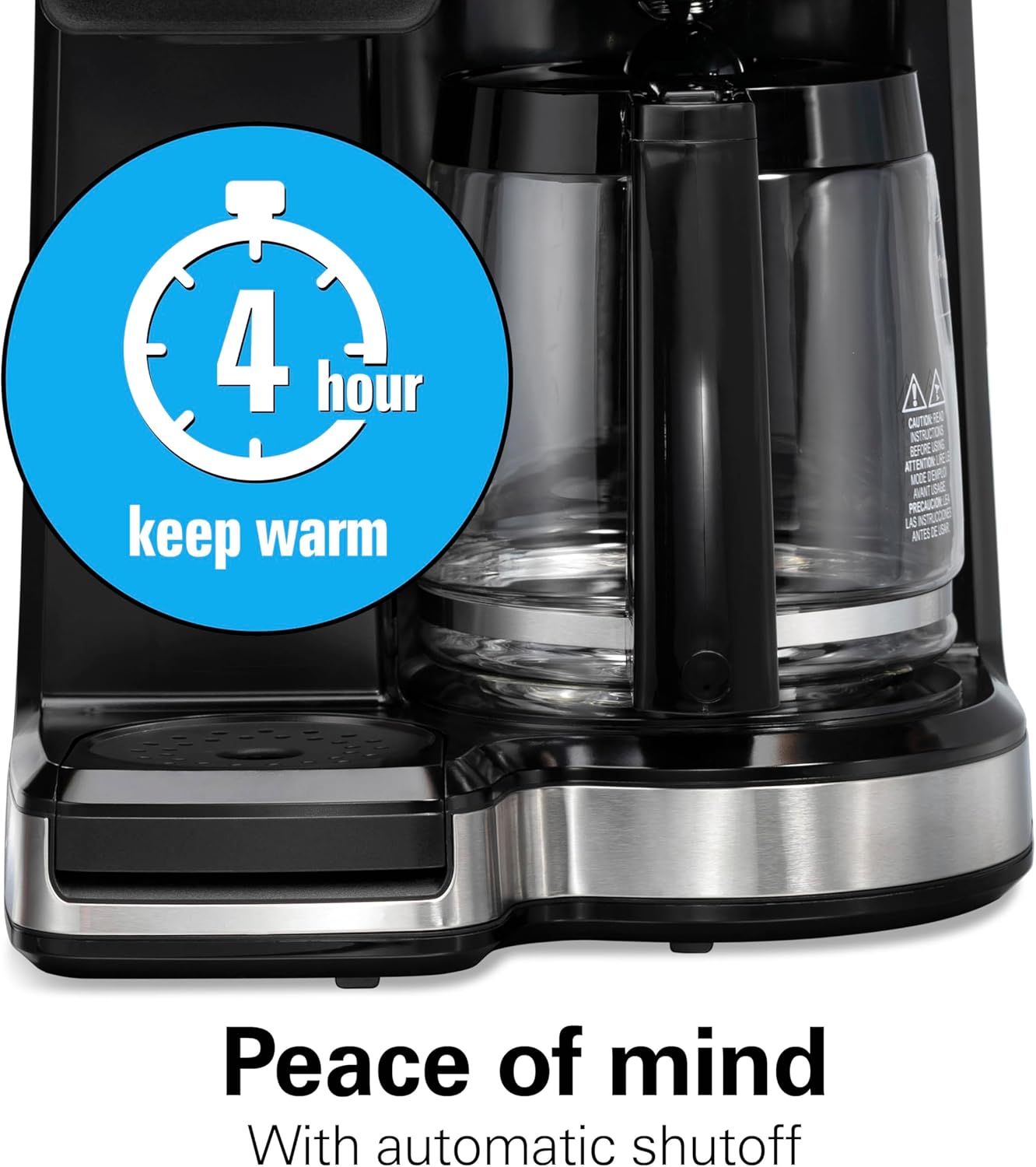
The machine’s programmable timer enables scheduled start times up to 24 hours ahead, improving morning workflows by aligning brew completion with first use. Programmed delay affects workflow by decoupling preparation from consumption; however, long delays do not replace the importance of using fresh water and freshly ground beans at the time of brewing. Auto-shutoff after four hours is a safety and energy feature that reduces continuous heat exposure but also means the hot plate will turn off if extended hold is required. Pre-infusion or bloom phases are not manually controlled on this type of automatic brewer, so grind uniformity and dosing become the primary levers to influence initial wetting and degassing effects.
Capacity, workflow flexibility, cleaning, and durability considerations
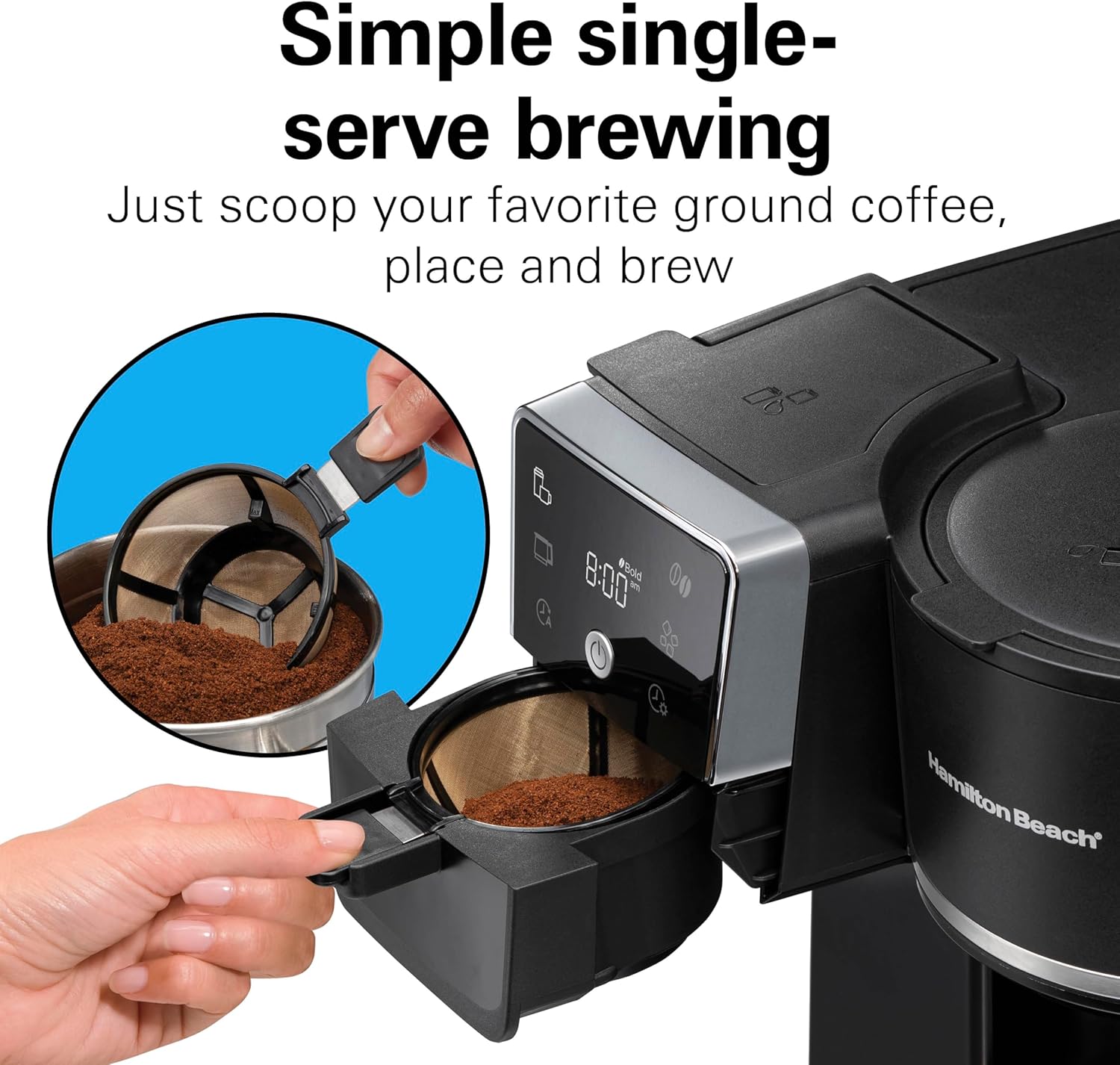
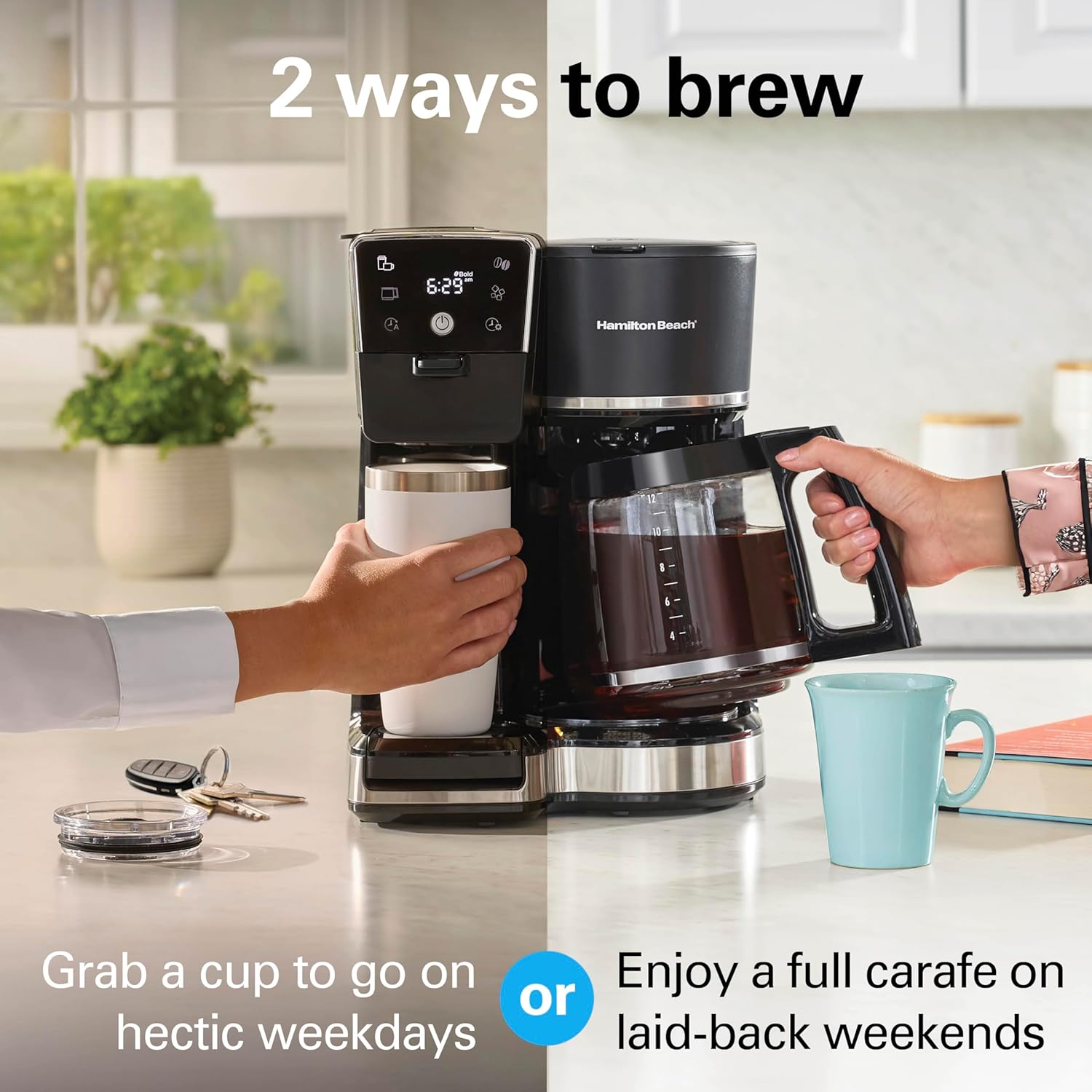
Dual-mode machines are designed to serve two distinct workflows: a quick single cup and a larger carafe for groups. Capacity and configuration influence daily routines and storage footprint: the single-serve side uses a mesh scoop for convenience and reduced consumables, while the full-pot side accommodates standard basket filters and yields up to 12 cups. Materials and build—plastic housing with a glass carafe and mesh components—impact cleaning frequency and long-term wear. Dishwasher safety is limited, and reusable mesh components require thorough hand cleaning to prevent oils and fines buildup. Durability expectations for multi-function consumer appliances typically reflect balance between cost and performance; recurring complaints in aggregated reviews often focus on hinge durability, electronic controls longevity, and hot-plate wear.

Single-serve versus carafe workflows and serving flexibility
The single-serve side offers grab-and-go convenience without requiring pods, enabling control over dose and grind. This benefits users who vary single-cup recipes or prefer to avoid single-use pods. The carafe side serves shared needs and supports Auto Pause & Pour for quick cups mid-cycle. Switching between modes in one footprint reduces counter clutter but requires understanding each side’s fill limits and filter placement. For households with mixed consumption patterns, the dual setup reduces the need for multiple machines but may require coordinated cleaning and dosing routines to prevent cross-contamination of grounds and oils between modes.
Cleaning, maintenance expectations, and who should avoid this model
Cleaning requires regular removal and rinsing of the mesh scoop, emptying and washing the glass carafe and filter basket, and descaling the internal heating pathway based on water hardness. Non-dishwasher-safe components increase hand-wash time compared with fully dishwasher-safe units. Plastic housing can discolor over time if not cleaned regularly. Buyers seeking commercial-grade robustness, pod compatibility, or precision temperature control (PID) should consider other solutions. Users prioritizing thermal carafes, professional-grade build materials, or integrated grinders should avoid this model and choose appliances engineered for those specific needs.
Pros & Cons
Pros
- Dual-mode flexibility for single-serve and 12-cup carafe: Allows households to brew one cup or a full pot using the same footprint, minimizing counter space and accommodating varying daily needs. The single-serve mesh option reduces pod waste and supports custom dosing.
- AquaFlow showerhead for better saturation: Targeted water dispersion promotes more even wetting of the coffee bed, supporting uniform extraction and reducing common drip-brewer channeling issues when paired with consistent grind and dose.
- Programmable up to 24 hours with touchscreen controls: Scheduling capability aligns brewing with user routines and the touchscreen simplifies selection of modes like iced or bold, streamlining morning workflows.
- Iced coffee and multiple strength settings: Dedicated iced mode and strength adjustments provide versatility for cold-served recipes and a wider range of flavor intensity preferences without manual recipe changes.
- Auto Pause & Pour feature: Allows a cup to be poured mid-brew from the carafe side, improving convenience for immediate consumption without waiting for brewing completion.
- Four-hour automatic shutoff for safety and energy savings: Reduces continuous heating risks and conserves energy if the machine is left unattended after brewing.
- Glass carafe eases visual monitoring and cleaning: Transparent carafes make it simple to check remaining volume and spot residues, aiding routine maintenance.
Cons
- No pod compatibility: The unit does not accept pod formats, which limits convenience for users who rely on single-serve capsules and expect that interoperability.
- Glass carafe and hot plate reduce long-term heat retention: Compared with thermal carafes, the glass and plate approach accelerates flavor changes over time and requires timely consumption or transfer to an insulated container.
- Mesh single-serve filter and non-dishwasher components increase manual cleaning: Reusable mesh and some non-dishwasher-safe parts demand hand washing and more frequent maintenance to prevent oil buildup and clogging.
- Limited temperature control precision: As a consumer drip brewer, there is no PID or adjustable brew temperature, so users seeking tight temperature control for nuanced extraction may find performance constrained.
- Plastic housing and control longevity concerns in aggregated reviews: Long-term durability expectations should be tempered, as consumer appliances in this class can show wear in hinges and electronic interfaces over time.
Final Verdict: Who This Product Is Best For (and Who Should Skip It)
This Hamilton Beach 2-way programmable drip brewer suits households and consumers seeking a compact, flexible solution for both single cups and full-carafe needs. It benefits users who prefer ground coffee, want a scheduled morning brew, or value an iced coffee option without investing in multiple machines. The AquaFlow showerhead and adjustable strength settings support repeatable extraction when paired with consistent grind and measured dosing. The mesh single-serve option provides pod-free convenience for grab-and-go routines and reduces single-use waste.
This model is less appropriate for buyers who require pod compatibility, advanced temperature control (PID), or superior heat retention via thermal carafes. Professional or high-volume users seeking commercial durability, integrated grinders, or precision brewing controls should consider higher-tier specialized machines. For typical home use in 2026—where convenience, hybrid workflow, and moderate extraction control are primary objectives—this unit offers a balanced feature set with clear material and maintenance trade-offs to inform purchase decisions.
Frequently Asked Questions (FAQs)
Can this machine use coffee pods or K-Cup-style capsules?
No. The machine is compatible only with ground coffee and the included mesh scoop for single-serve brewing. Pod or capsule formats are not supported, so users who rely on pre-packaged single-serve pods will need a separate pod-compatible brewer.
What grind size works best for the single-serve mesh scoop and carafe basket?
A medium grind is typically best for automatic drip systems. For the mesh scoop, avoid overly fine grinds to reduce fines migration through the mesh and potential clogging. Consistent particle size from a burr grinder helps achieve balanced extraction in both single-serve and full-pot modes.
How does the iced coffee mode differ from regular brewing?
The iced coffee mode produces a stronger hot brew intended to offset dilution from ice, usually by adjusting flow profile and increasing extraction concentration. For best results, a higher coffee-to-water ratio is recommended so the final chilled beverage retains balanced flavor after cooling and ice addition.
Does the glass carafe keep coffee hot for long periods?
The glass carafe on a hot plate maintains serving temperature for shorter durations but provides less insulation than stainless thermal carafes. Extended holding on the hot plate accelerates flavor changes and can increase bitterness, so consuming within an hour or transferring to an insulated container is advised for prolonged warmth.
What maintenance is required to keep extraction consistent?
Regular rinsing of the mesh scoop and filter basket, washing the glass carafe after each use, and periodic descaling based on water hardness will help maintain consistent flow and extraction. Avoiding oil buildup and removing trapped fines preserves spray pattern performance and reduces flavor carryover.
Is the programmable timer reliable for daily scheduled brewing?
Programmable scheduling up to 24 hours provides convenience for timed brewing, allowing alignment with morning routines. For predictable results, use fresh water and freshly ground coffee at brew time, as scheduling advances brewing but does not replace the importance of fresh inputs for optimal flavor.
Who should consider a different type of brewer instead of this model?
Buyers who need pod compatibility, very precise temperature control (PID), superior heat retention, or commercial-grade durability should consider alternative models. Those seeking integrated grinders or specialty espresso functionality will find dedicated or higher-end machines better suited to those purposes.