Harney & Sons Chamomile Tea Review — Brew Quality & Use
Why tea equipment and ingredient choices matter for home brewing
Tea equipment and ingredient choices directly influence extraction, temperature stability, and the sensory result that reaches the cup. For home brewers, a focus on infusion method, water quality, steep time, and vessel heat retention is essential when selecting a sachet-style herbal tea such as Harney & Sons Chamomile. This product is aimed at daily drinkers, households seeking a caffeine-free option, and tea enthusiasts who prioritize convenience and consistent single-cup servings. Understanding how sachet construction, ingredient origin, and manufacturer steep recommendations interact with common home kettles, teapots, and mugs helps determine whether the product will meet expectations for flavor clarity, body, and repeatable results without additional gear.
Quick Overview
| Feature | Details |
|---|---|
| Product category | Herbal tea sachets (chamomile) |
| Brewing method | Hot water infusion; single-cup sachet brewing |
| Capacity / output | 20 sachets per tin; each sachet brews one 12 oz cup |
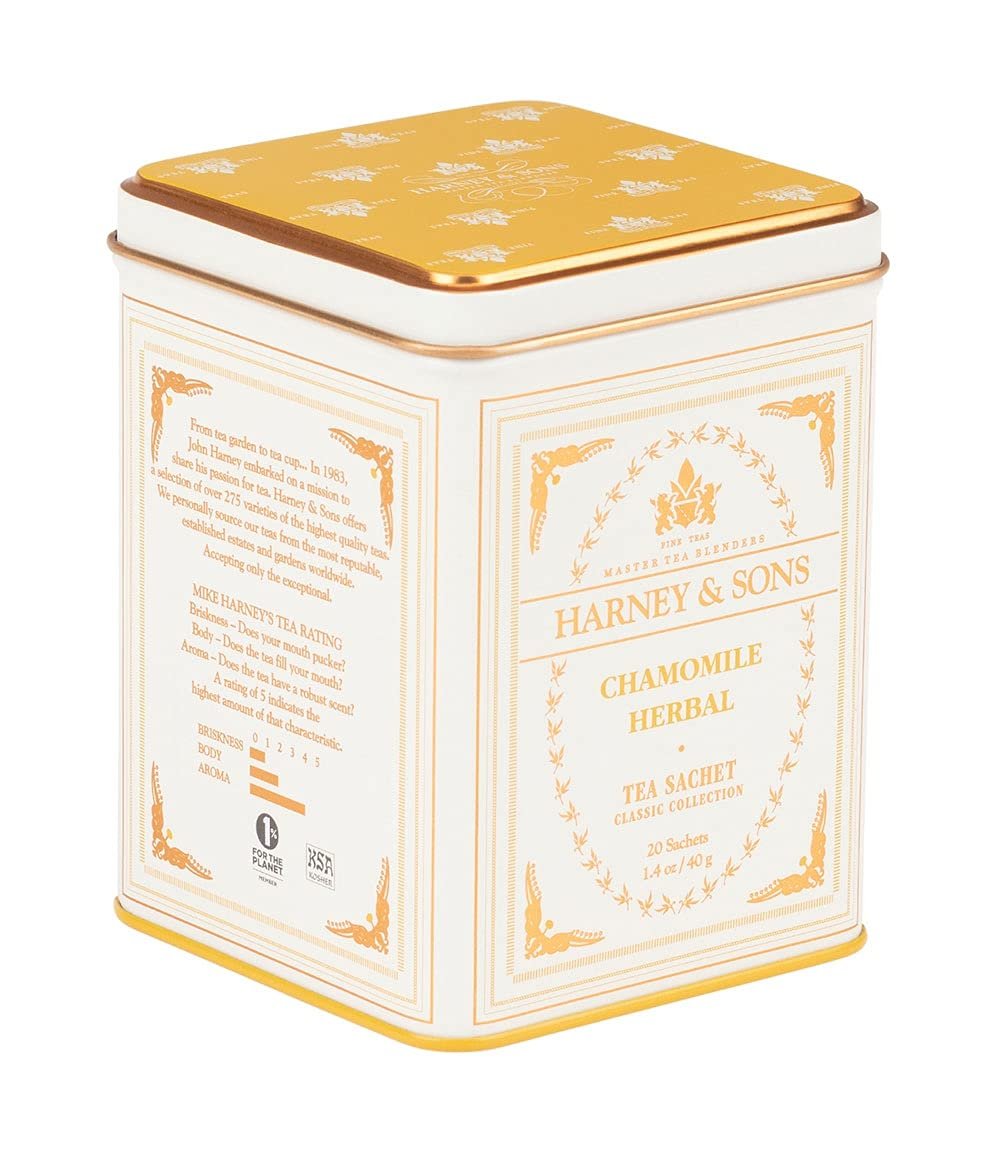
| Ingredients & origin | 100% chamomile flower heads sourced from Egypt; no extenders |
| Packaging & materials | Metal tin; individually sealed sachets (manufacturer disclosure) |
| Certifications | Certified Kosher; herbal, caffeine-free |
| Best suited users | Households, evening tea drinkers, those seeking caffeine-free herbal options |
| Intended use cases | Single-cup convenience, bedtime or relaxation routine, light herbal infusion |
| Warranty / manufacturer info | No explicit warranty listed by manufacturer |
These factual points determine how the product performs in typical home brewing setups. Sachet form supports quick single-cup preparation and simplified workflow but places emphasis on water temperature, steep time, and the infusion vessel’s heat retention for optimal extraction. Tin packaging protects dried flowers from light and moisture, supporting storage stability when handled in typical household conditions.

Brewing method compatibility and infusion workflow
Harney & Sons Chamomile sachets are designed for hot-water steeping and are compatible with a wide range of household brewers, from kettles and teapots to single-serve electric kettles and mug infusers. Sachet construction is optimized for single-cup infusion, meaning extraction relies on sufficient water contact and movement around the sachet. Recommended steeping at near-boiling water and a 4–5 minute window aligns with chamomile extraction chemistry: apigenin and other volatile compounds release readily at high temperature but can become muted or overly vegetal with oversteeping. Compatibility with controlled-temperature kettles provides the best repeatability, whereas improvised methods (microwaved water or low-heat kettles) can produce variable results.

How sachet form impacts extraction and equipment choices
Sachet size and weave influence contact area and flow-through, which are central to infusion efficiency. The Harney sachet, formulated for a 12 oz cup, concentrates the chamomile mass to achieve body without additional leaf material. This design favors vessels that allow free circulation—open mugs, teapots, or infusers—over tightly packed travel mugs or vacuums that restrict flow. When used with pour-over style kettles, controlled pouring encourages even extraction; when paired with insulated travel mugs, shorter steep times or pre-warmed vessels can offset heat loss. Water-to-sachet ratio, steep time, and vessel geometry combine to determine perceived strength and aromatic clarity.
Recommended water temperature and steeping considerations
Chamomile infusion benefits from water at or near 212F (100C) to maximize extraction of the floral oils and bitter-sweet glycosides that create the characteristic body. The manufacturer recommends pouring boiling water and steeping 4–5 minutes; this range balances aromatic release with moderation of astringency. For lower-temperature steeping, longer contact will increase extraction of soluble compounds but may produce a flatter aroma profile. Controlled-temperature kettles set to full boil or very near-boil deliver the most consistent result across multiple brews, especially for users seeking identical cups each time.
Integration with common kitchen appliances and routines
Integration with common home appliances is straightforward: electric kettles, stovetop kettles, and temperature-controlled kettles all supply the necessary heat for recommended steeping. The sachet format eliminates grinding or filter preparation, simplifying workflow for multi-cup households. For households using thermostatic kettles or smart kettles, user presets can be programmed to the manufacturer-recommended temperature and time, increasing repeatability. However, sachet packaging requires attention to storage (sealed tins) to avoid moisture pickup that can degrade flavor over time.
Flavor profile, extraction quality, and consistency expectations
The product’s formulation—100% chamomile flower heads sourced from Egypt—produces an infusion profile expected to emphasize floral aromatics, a soft honey-like sweetness, and moderate body rather than the tannic qualities found in oxidized teas. Extraction quality is driven by particle size and sachet permeability; whole flower heads tend to release essential oils more gradually than crushed material, which favors a balanced cup with fewer harsh bitter notes when steeped in the recommended range. Consistency across sachets depends on batch blending and sachet fill variance; aggregated customer feedback suggests generally uniform cups, with occasional reports of slightly lighter or stronger individual sachets attributable to natural variability in botanical ingredients rather than processing differences.

Sensory expectations tied to ingredient selection
Whole chamomile flower heads typically yield a cup characterized by delicate apple-like and honeyed notes, with low bitterness and a soothing mouthfeel. Egyptian-grown chamomile is often favored for its floral intensity and clean finish, factors that influence perceived sweetness and aromatic clarity. Because the sachets use flower heads and avoid extenders, the infusion tends to have less vegetal cloudiness and a clearer liquor. For consumers sensitive to subtle flavor shifts, consistency will hinge on precise water temperature and steep time control to highlight the desirable compounds while avoiding over-extraction.
How sachet fill and construction influence cup-to-cup repeatability
Sachet fill weight and the size of the flower heads impact extraction kinetics: larger intact heads release oils more slowly, providing forgiving extraction windows, while finer fragments accelerate solute release and can heighten variability. Harney’s emphasis on using whole flower heads helps stabilize extraction, but natural variance in botanical size and density can still produce perceptible differences between sachets. Using a consistent 12 oz fill per sachet and adhering to the recommended steep time reduces inter-sachet variance and supports repeatable results for routine consumers.
Handling aromatic compounds and avoiding off-notes
Aromatic volatiles in chamomile are prone to evaporation and oxidation; pouring freshly boiled water over the sachet and allowing the specified steep time captures a strong aroma without promoting excessive volatilization. Oversteeping beyond 6–7 minutes or storing sachets in humid or warm conditions can lead to flattened aromatics or slight vegetal off-notes due to breakdown of essential oils. Proper storage in the supplied tin, away from light and moisture, helps maintain the aromatic profile expected from thoughtfully sourced chamomile flower heads.
Ease of use, serving flexibility, and workflow considerations
Sachet packaging simplifies the brewing workflow for individual servings and short prep times, reducing equipment needs and minimizing cleanup. The single-sachet, single-cup format is convenient for households and users who prioritize speed and low-complexity preparation. Serving flexibility is moderate: each sachet is optimized for a 12 oz cup, which aligns with many standard mugs but may under- or over-concentrate when used in larger or smaller vessels. Workflow integration is strengthened by tin storage that organizes sachets and protects contents, but users seeking multi-cup brewing or customized strength via adjustable leaf weight may find sachets less adaptable than loose-leaf formats.

Single-cup convenience versus loose-leaf adaptability
Sachets offer immediate portion control and predictable preparation for one cup, reducing the need for infusers or strainers. That convenience comes at the expense of dose flexibility: adjusting strength means extending steep time rather than altering leaf mass without opening multiple sachets. For small households or individuals who prefer reliable single cups, sachets reduce decision friction. For enthusiasts who prefer fine-tuning brew ratios, loose-leaf chamomile enables granular control over infusion strength and aroma concentration.
Capacity and serving scenarios in household settings
A 20-sachet tin supports short- to medium-term consumption for light daily use or occasional evening servings. In multi-person households or frequent-daypart drinking, restocking cadence will depend on consumption patterns. The tins are portable and suitable for secondary storage in kitchen cabinets; however, the fixed sachet portioning makes the product best suited to users who consume single cups rather than those entertaining larger groups or preparing pitchers of cold-brew herbal tea.
Cleaning, maintenance, and cleanup expectations
Sachet use minimizes cleaning burden: after steeping, the sachet can be removed and composted or discarded, eliminating the need to clean infusers or strainers. Residual tea oils on mugs or teapots are minimal with herbal infusions, so routine dishwashing is typically adequate. For users who reuse teapots or insulated vessels, occasional descaling or rinsing is recommended to prevent flavor transfer and maintain neutral vessel surfaces. Tin packaging reduces the risk of moisture-driven contamination, but proper kitchen hygiene and dry storage remain important for shelf life.
Packaging, materials, sustainability, and long-term reliability
Packaging choices and material disclosures affect storage longevity, environmental footprint, and perceived product quality. The product is supplied in a metal tin that shields botanical material from light and moisture, important for retaining volatile aromatics and preventing staling. Sachets made for single-cup convenience reduce preparation friction but create packaging waste compared to bulk loose-leaf. Harney & Sons’ membership in 1% for the Planet reflects a corporate sustainability commitment; however, environmental impact assessments depend on sachet materials and end-of-life disposal practices. Long-term reliability for stored dried chamomile hinges on maintaining a cool, dry storage environment and resealing the tin when not in use.

Material construction and implications for flavor protection
Metal tins provide a low-permeability barrier against oxygen and light, slowing oxidation and photodegradation of aromatic compounds. The sachet material’s breathability will affect moisture exchange during storage; sealed sachets inside a tin help mitigate this risk. Properly packaged whole flower heads typically retain desirable volatile profiles longer than crushed or pulverized botanicals, improving consistency over the product’s shelf life when stored as recommended.
Sustainability trade-offs: sachets versus loose-leaf
Sachets enhance convenience but tend to increase material throughput per serving compared with loose-leaf purchases. Compostable sachets, if used, reduce landfill impact; if sachets are synthetic or non-compostable, environmental trade-offs increase. Corporate donations to environmental organizations signal a sustainability ethos but do not directly change sachet lifecycle impacts. Buyers prioritizing low-waste options may prefer bulk loose-leaf alternatives, while those prioritizing convenience may accept single-serve sachet trade-offs.
Expected durability and storage best practices
Dried chamomile in whole-head form is inherently shelf-stable when kept dry and away from heat and sunlight. The provided metal tin supports longevity by limiting exposure to humidity and light; long-term reliability is therefore largely driven by home storage conditions rather than product fragility. For best results, keep tins in a cool pantry or cabinet and avoid frequent exposure to steam or open-air humidity near cooking areas.

Pros & Cons
Pros
- Convenient single-cup sachet format speeds preparation and simplifies cleanup. Sachet packaging eliminates the need for measuring and reduces the number of brewing accessories required for a single serving.
- Uses whole chamomile flower heads sourced from Egypt, which typically yield clearer liquor and aromatic floral notes. Whole-head ingredients reduce the presence of fines that can cloud an infusion or accelerate staling.
- Metal tin packaging protects against light and moisture, supporting aromatic retention and shelf stability when stored appropriately. Resealable tins are more effective than paper boxes for long-term storage.
- Certified Kosher and explicitly caffeine-free, making the product suitable for users avoiding stimulants or following certain dietary requirements. Clear labeling helps buyers align product attributes with personal needs.
- Manufacturer steeping guidance aligns with chamomile extraction science, recommending near-boiling water and a 4–5 minute steep for balanced flavor. Clear guidelines support consistent home preparation.
- Brand transparency about ingredient origin and commitment to environmental giving provides additional context for eco-minded buyers. Public membership in environmental programs signals corporate-level engagement.
- Compact 20-sachet count is convenient for trial, occasional use, or targeted seasonal consumption. Smaller package sizes reduce risk of prolonged storage leading to staleness for infrequent drinkers.
Cons
- Sachet portioning limits flexibility for strength customization compared with loose-leaf options, since adjusting concentration typically requires oversteeping or using multiple sachets. Buyers who prioritize precise brew ratios may find sachets constraining.
- Single-serve sachet packaging generates more material per serving than bulk loose-leaf, introducing waste-management considerations for environmentally focused consumers. Compostable options vary by region and disposal infrastructure.
- Fixed 12 oz target per sachet may produce suboptimal strength in much larger or smaller vessels, requiring user adjustments to steep time or sachet count. Uniform serving size reduces adaptability for diverse cup sizes.
- Limited information on manufacturer warranty or after-sales support was provided, so buyers seeking explicit product guarantees should consult retailer or manufacturer resources prior to purchase. Manufacturer disclosure does include sourcing and packaging details but not warranty specifics.
Final Verdict: Who This Product Is Best For (and Who Should Skip It)
Harney & Sons Chamomile Herbal Tea in the 20-sachet tin is best suited to consumers who prioritize single-cup convenience, consistent herbal flavor, and low-preparation workflows. The sachet format paired with whole chamomile flower heads makes the product appropriate for evening routines, households seeking a caffeine-free option, and users who want a low-friction cup without investing in additional infusers or measuring tools. The protective metal tin supports storage longevity, while manufacturer steep guidance aligns with established extraction principles for chamomile, enabling repeatable cups when water temperature and steep time are controlled.
This product is less appropriate for buyers who require granular control over brew strength, those planning to brew multi-cup batches or pitchers regularly, and consumers prioritizing minimal packaging waste. Enthusiasts seeking maximum flexibility and the ability to dial-in brew ratios may prefer loose-leaf chamomile sold in bulk. For most home users seeking a reliable, aromatic, and convenient caffeine-free herbal infusion, the sachet tin provides a balanced compromise between quality ingredients and everyday usability.
Frequently Asked Questions (FAQs)
How should Harney & Sons chamomile sachets be steeped for best flavor?
Use water at or near boiling (about 212F/100C) and pour directly over a single sachet per 12 oz cup. Steep for 4 to 5 minutes to extract floral aromatics and a balanced body; steeping longer increases extraction but can mute delicate volatiles. Adhering to a consistent steep time and temperature produces more repeatable cups.
Are the sachets compostable or recyclable?
Compostability depends on the specific sachet material and local disposal facilities; manufacturer disclosures do not universally confirm compostable sachet materials. The metal tin is recyclable where accepted. For composting guidance, check local municipal guidelines and the sachet material indicated on packaging.
Can multiple sachets be used together to make a stronger or larger batch?
Yes. Increasing sachet count or reducing water volume increases concentration, while multiple sachets in a larger vessel can create a stronger batch for serving several cups. Sachet design targets a 12 oz serving, so measure ratios and adjust steep times to achieve desired strength without over-extracting bitter compounds.
How should the tin be stored to maintain freshness?
Store the tin in a cool, dry, and dark location away from heat sources and steam exposure. Keep the lid closed to limit oxygen and moisture ingress, which protects volatile aromatics and slows staling. Avoid storing near cooktops or dishwashers where humidity fluctuates.
Is Harney & Sons chamomile tea suitable for bedtime consumption?
The product is labeled caffeine-free and uses 100% chamomile flower heads, aligning it with common evening and relaxation routines. As with any herbal infusion, individual responses vary; the caffeine-free profile makes it broadly appropriate for consumers seeking a non-stimulant beverage in the evening.
Will using a travel mug or insulated cup affect flavor?
Insulated or travel vessels can alter extraction dynamics by affecting heat retention and flow around the sachet. Pre-warming the vessel and adjusting steep time may be necessary to achieve the expected flavor, since rapid heat loss or restricted circulation can result in under-extracted or inconsistent cups.
How consistent is flavor across sachets within a tin?
Using whole flower heads tends to promote uniform extraction, but natural botanical variance can cause mild differences between sachets. Consistency improves when water temperature and steep time are controlled; small inter-sachet variation is common with natural ingredients rather than indicative of processing defects.