Imusa 6-Cup Stovetop Espresso Maker Review — Reliable Brew
Why equipment choice matters for stovetop espresso
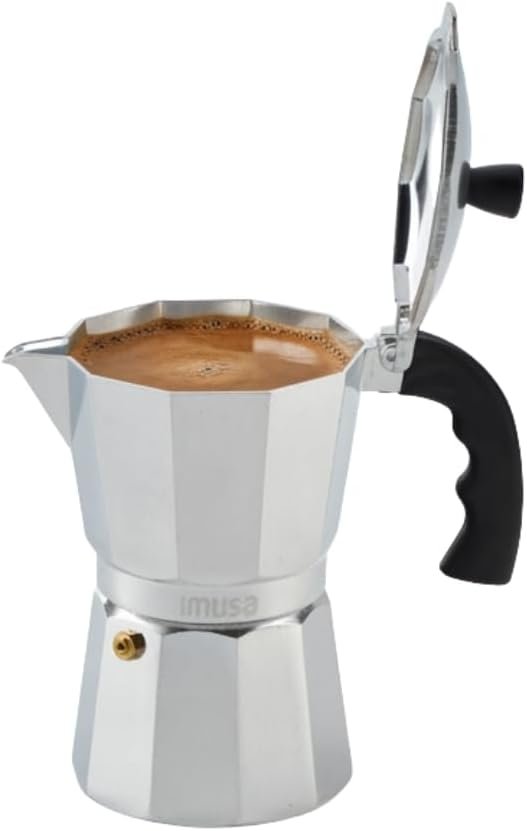
Choosing the right stovetop espresso maker affects the extraction pathway, heat management, and daily workflow for home brewers. For households and casual enthusiasts seeking a compact, manual way to produce strong, espresso-style coffee without an electric espresso machine, construction material, pressure behavior, and brew capacity are central decision points. The Imusa Aluminum Stovetop 6-cup Espresso Maker (B120-43V) is positioned as a classic, manual stovetop brewer: aluminum construction, a 6-cup output, a bakelite handle, and stove compatibility with gas, ceramic, and coil surfaces. These characteristics influence temperature transfer, required grind size, and the cadence of a multi-cup brew. Buyers focused on consistent extraction, straightforward maintenance, and portability will weigh the trade-offs of aluminum heat transfer and mild pressure production against the convenience of a compact stovetop workflow. Understanding how grind, dose, and heat source interact with the Moka-style design clarifies what to expect in cup clarity, body, and brew repeatability.
Quick Overview
| Feature | Details |
|---|---|
| Product type | Stovetop espresso maker (Moka pot) |
| Capacity | 6 cups (manufacturer metric for moka-style servings) |
| Materials | Durable aluminum body; bakelite handle and knob |
| Heating / pressure system | Manual stovetop, steam-driven mild pressure (manufacturer disclosure) |
| Grind compatibility | Fine espresso to medium-fine moka grind recommended |
| Compatible cooktops | Gas, ceramic, and coil surfaces (manufacturer disclosure) |
| Best suited users | Home brewers seeking compact manual espresso-style brewing |
| Intended use cases | Small-batch espresso-style coffee for households, travel, or camping |
The specifications indicate a traditional Moka-style workflow: rapid heat transfer from aluminum produces fast cycle times but requires attention to grind size, dose, and stovetop heat. The 6-cup capacity suits multi-cup servings but does not produce pressurized microfoam like pump espresso machines; instead, it yields concentrated, robust coffee when grind and dosing are matched to the unit’s mild pressure profile.

Brewing method compatibility and intended beverage profile
The Imusa 6-cup Moka pot follows the classic bottom-boiler, steam-driven design that produces concentrated coffee through mild pressure rather than pump-driven barista espresso. Compatibility centers on grind size and the brewer’s ability to operate on open-flame or electric coil heat sources; ceramic glass induction cooktops are not supported without an induction adapter. The brewer is suitable for users who want a dense, full-bodied cup that emphasizes body and extraction of solubles rather than crema production. Because the device does not reach the 9-bar pressures associated with espresso machines, it performs best with a grind slightly coarser than true espresso and with medium to fine dosing to avoid over-extraction or channelling. This alignment of method, grind, and target beverage profile is critical for repeatable results.

Stovetop and heat-source compatibility
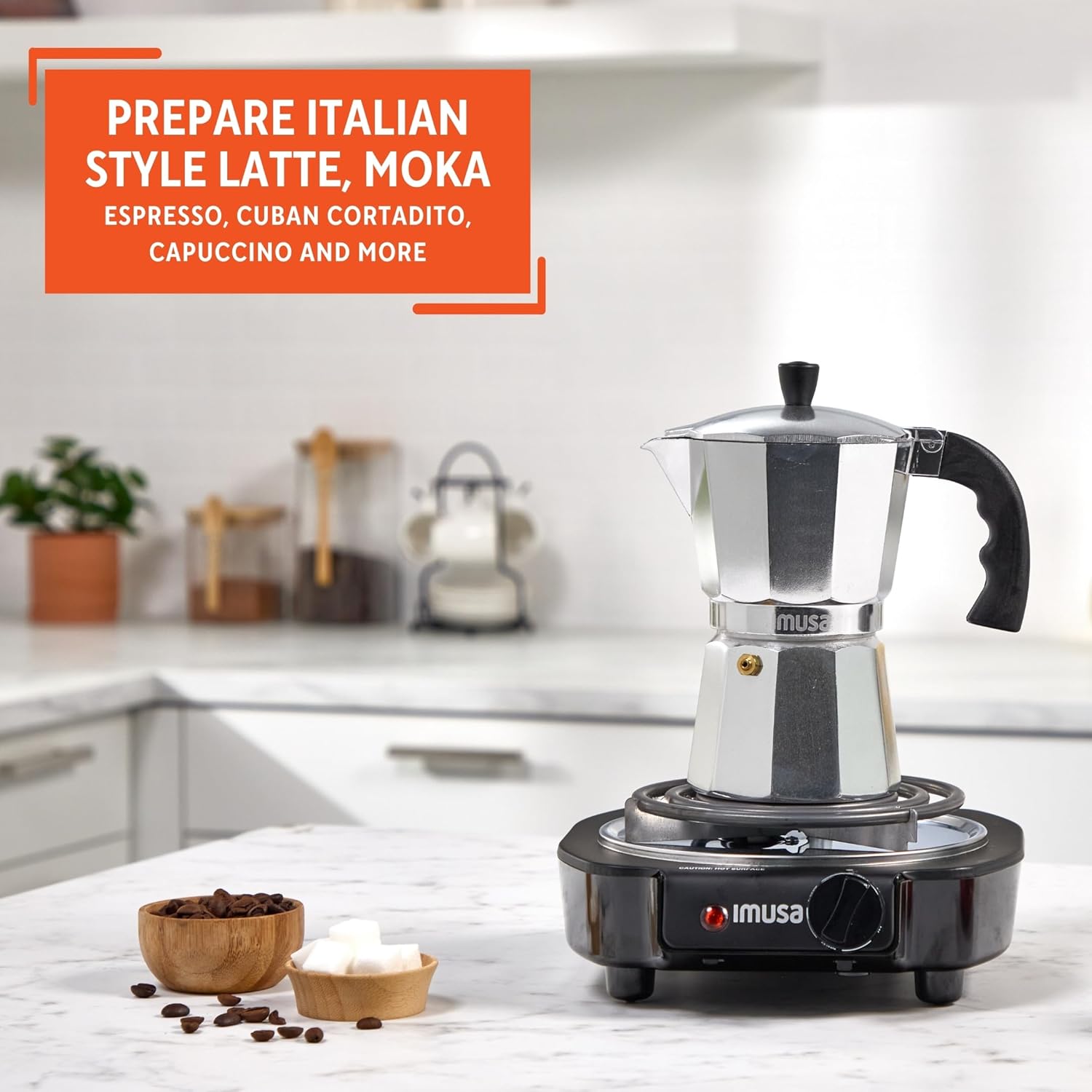
Manufacturer disclosures list gas, ceramic, and coil stovetops as compatible surfaces; the aluminum base performs well on direct-flame gas and electric coil elements due to efficient heat transfer. Users on glass-ceramic cooktops should use moderate heat to avoid hotspotting and to maintain uniform extraction. Induction cooktops require a ferrous adapter plate because aluminum is non-magnetic; using an adapter will change heat-up dynamics and may lengthen brew time. The lack of built-in temperature control means heat management occurs at the cooktop level, so stovetop type and burner size materially affect extraction rate and final cup profile.
Grind and filter considerations for Moka brewing
The unit’s mild pressure pathway favors a grind between true espresso and drip—commonly described as medium-fine to fine. Excessively fine, packed grounds increase resistance and can cause long brew times or bitter extraction; too coarse a grind yields weak, under-extracted coffee. The design uses a standard single-chamber metal filter basket compatible with ground coffee; paper or cloth filters are not applicable. Consistent grind particle size and cleanly sieved grounds reduce channeling and help the unit produce a richer, more concentrated brew that highlights body and solubles.
Beverage profile and volume control
The 6-cup rating uses moka-pot serving conventions rather than single-shot espresso metrics; the actual extracted volume per cycle is concentrated but larger than a single espresso shot. Volume control derives from dose in the filter basket and the amount of water in the lower chamber up to the safety valve level. Adjusting dose and cup count affects concentration: a fuller lower chamber and higher dose produce more volume with lower concentration, while a reduced dose yields a stronger, smaller output. For households sharing multiple cups, the six-serving capacity balances single-cycle convenience with the need to manage extraction for consistent strength across servings.
Ease of use, workflow, and daily operation
The Imusa Moka pot follows a straightforward fill-assemble-heat-pour routine, but workflow nuances affect how quickly and consistently a usable cup is achieved. The manual operation means no electronic controls—beneficial for simplicity but requiring user attention to grind, dosing, and stovetop heat. The bakelite handle and knob reduce thermal transfer and ease handling after brewing; manufacturer guidance for hand washing is standard, and parts are simple to disassemble for cleaning. For multi-person households, the six-cup capacity reduces repeat brewing, but the manual cycle requires monitoring to avoid overheating or prolonged steaming. Repeatable workflow depends on consistent dosing, uniform grind, and a predictable heat source; users comfortable with a manual routine will find the unit quick to operate once parameters are dialed in.

Assembly, dosing, and safety notes
Assembling the lower chamber, filter basket, and upper carafe follows the established Moka pot sequence. The lower chamber must be filled to but not above the safety valve, and the filter basket should be filled and leveled without excessive tamping; manufacturer notes emphasize that too coarse a grind, too little coffee, or insufficient tamping can reduce extraction pressure. The safety valve requires attention—any blockage or corrosion can impede operation—so periodic inspection is prudent. The bakelite handle reduces burn risk but direct contact with hot metal surfaces should be avoided. Adhering to fill-level and assembly guidance supports safe, predictable brewing.
Daily brewing speed and monitoring
Brew cycle length depends on burner power and water temperature at start: efficient aluminum conduction produces fast heat-up and extraction times, often within minutes on a medium burner. This speed is advantageous for quick preparation, but rapid temperature change requires monitoring to prevent scalding or bitter, over-extracted flavors if left on high heat. Users often reduce heat once percolation begins to finish extraction more gently. For consistent results, using the same burner setting and starting water temperature (room temperature vs. preheated) makes the cycle repeatable and reduces flavor variability between sessions.
Serving ergonomics and pouring control
The Imusa design includes a flip-up top and side pour spout intended for straightforward dispensing into cups. The bakelite knob and handle are intended for cool-touch handling while pouring, improving ergonomics compared with all-metal handles. The spout geometry and carafe opening influence flow—steady, controlled pouring is possible with attention to angle. For multi-cup serving, pouring into a pre-warmed carafe or heat-safe cups maintains temperature and allows distribution without additional brewing cycles. Attention to hot metal surfaces around the spout is necessary when serving multiple cups to avoid heat exposure.
Temperature control, heat transfer, and stability
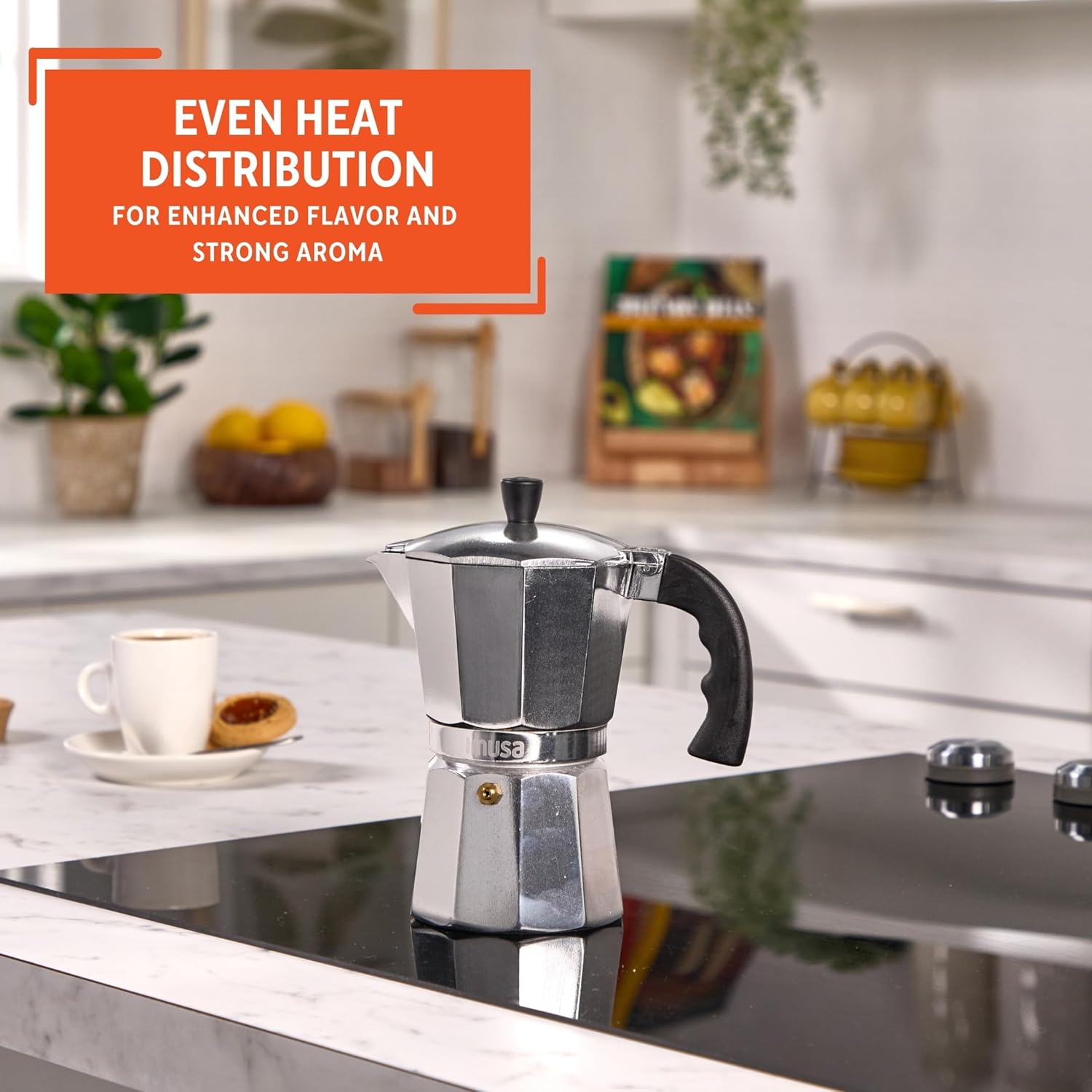
Aluminum construction gives the Imusa unit strong heat conductivity, promoting fast heat-up and efficient transfer to brewing water, but the same property reduces thermal inertia compared with thicker stainless-steel bodies. Temperature stability during the extraction window depends entirely on stovetop management; the pot does not isolate or regulate heat internally. Rapid conduction can cause overshooting if high heat is used, increasing the risk of metallic or burnt flavors. Conversely, controlled medium heat and timely reduction of burner power lead to steadier extraction. The aluminum body contributes to quick cooling after removal from the heat source, so pre-warmed cups and immediate serving preserve perceived temperature and aroma.

Aluminum heat transfer and its brewing implications
Aluminum’s high thermal conductivity speeds the path from flame to water, shortening brew time and enhancing extraction efficiency for soluble compounds. This can accentuate body and concentration but also makes the unit sensitive to burner fluctuations; micro-variations in heat produce perceptible changes in extraction dynamics. Aluminum can react with acidic components over long-term use if protective oxide layers are compromised, potentially affecting taste perception. Regular hand washing and thorough drying, along with avoiding abrasive detergents, helps preserve the metal surface. The design trade-off is faster brewing versus the need for attentive heat control.
Heat retention and serving temperature management
The unit’s relatively thin-walled aluminum construction means heat retention after brew completion is modest compared with thicker stainless-steel or double-walled devices. Coffee poured immediately into warmed cups retains temperature better than leaving coffee in the carafe. For multi-cup serving scenarios, pre-warming cups and minimizing time between extraction and consumption help maintain a satisfying temperature profile. The bakelite handle and knob help with safe handling during serving but do not contribute to thermal insulation of the brewed coffee itself.
Practical steps to avoid overheating and uneven extraction
Controlling burner size, beginning with moderate heat, and reducing power as percolation begins prevents excessive steam pressure and high-temperature extraction that yields bitter notes. Using hot water in the lower chamber shortens the time needed to reach percolation and reduces metal contact at extreme temperatures, though this requires careful handling. Monitoring the audible percolation and adjusting heat to a gentle finish reduces channeling and minimizes harsh flavors. Regular inspection of the gasket and safety valve ensures pressure pathways remain clear and that extraction proceeds along designed channels rather than through unintended leaks.
Brew consistency, extraction quality, and long-term reliability
Consistency in moka-style brewing depends on repeatable grind, dose, water temperature, and stovetop heat. The Imusa 6-cup unit provides a reliable mechanical pathway for extraction—lower chamber boiler, filter basket, and upper carafe—but repeatable results require disciplined inputs. The mild pressure produced by steam and boiling water extracts a broad spectrum of solubles that favor body and robustness; however, the unit does not emulate pump espresso pressure and will not produce crema typical of pressurized machines. Durability considerations include aluminum material longevity, seal and gasket wear, and potential for mineral buildup in the safety valve or channels. Regular maintenance, correct dosing, and grind control support longer-term reliability and stable cup profiles.
Pressure dynamics and flavor extraction principles
Moka pots operate with internal pressure generated by heated water and steam forcing water through packed grounds; this pressure is considerably lower than pump-driven espresso systems. Extraction relies on contact time and flow rate through the compacted grounds. When dose and grind are matched to the unit, the result is concentrated coffee with pronounced body and extracted solubles that highlight sweetness and bitterness balance. Overly fine grind or excessive tamping increases resistance and can prolong flow, producing over-extracted bitter compounds. Understanding these pressure and flow dynamics guides adjustment of grind and dose for predictable flavor extraction.
Grind consistency, dosing, and reproducible cups
Uniform particle size and precise dosing are primary drivers of consistency. A burr grinder with repeatable settings helps achieve the medium-fine to fine grind that the Imusa unit favors. Because the design uses a single metal filter basket, consistent filling and leveling of grounds reduce channeling. The manufacturer’s caution that grind size and amount affect extraction indicates that users should expect to recalibrate dose when grind adjustments are made. Small incremental changes to dose and grind typically yield predictable shifts in concentration and clarity, allowing reproducible cups once parameters are locked in.
Maintenance, wear points, and expected longevity
Durability depends on material care and component replacement. Aluminum bodies are lightweight and conductive but susceptible to surface discoloration and potential taste changes if not cleaned and dried properly. The rubber or silicone gasket and metal filter plate are common wear items; periodic replacement restores seal integrity and prevents bypass flow. The safety valve should be inspected and kept free of mineral buildup to maintain designed pressure safety. When maintained according to manufacturer recommendations—hand washing and drying—these Moka pots can offer long service life for daily household use, though long-term reliability also depends on water chemistry and cleaning practices.

Pros & Cons
Pros
- Classic Moka pot construction delivers concentrated, full-bodied coffee without electricity. The bottom-boiler steam-driven design extracts robust solubles ideal for strong, espresso-style beverages.
- Lightweight, durable aluminum accelerates heat transfer for fast brewing cycles. Rapid conduction reduces brew time and is convenient for quick morning routines when stovetop control is consistent.
- Six-cup capacity suits small households and sharing. Producing multiple concentrated servings in one cycle reduces repetitive brewing when several people are drinking at once.
- Cool-touch bakelite handle and knob improve handling safety during pouring. The non-metal handle reduces burn risk compared with all-metal designs.
- Compatible with gas, ceramic, and coil cooktops. This flexibility makes the unit adaptable to common household stovetops, with the caveat about induction compatibility.
- Simple, manual operation with a small number of parts reduces mechanical failure points. The lack of electronics simplifies maintenance and long-term ownership considerations.
Cons
- Aluminum construction requires attentive cleaning and dry storage to avoid discoloration or potential taste changes over time. Hand washing only is recommended by the manufacturer, increasing maintenance effort.
- Not suitable for induction cooktops without an adapter. The aluminum base is non-magnetic, which limits compatibility for induction-only kitchens unless an adapter is used, altering heat dynamics.
- Produces mild pressure rather than pump espresso pressure; crema and true espresso extraction are not achievable. The resulting beverage is concentrated and robust but differs from machine espresso in crema and mouthfeel.
- Sensitivity to grind and dosing requires calibration. Users without a consistent grinder or experience adjusting grind may encounter under- or over-extraction until parameters are tuned.
- Safety valve and gasket are wear items that need periodic inspection and replacement. Neglecting these components can affect pressure pathways and extraction consistency.
Final Verdict: Who This Product Is Best For (and Who Should Skip It)
The Imusa Aluminum Stovetop 6-Cup Espresso Maker is best for home brewers and households that prioritize a compact, manual pathway to concentrated, espresso-style coffee without the footprint or complexity of an electric espresso machine. It suits users who value fast brew cycles, multi-cup capability, and a straightforward refill-and-heat workflow. Those with gas or coil cooktops will find the aluminum construction advantageous for efficient heat transfer, while users looking for portability for camping or travel will appreciate the lightweight design.
This unit is less appropriate for users who require true pump-pressure espresso, integrated temperature control, or induction-ready design without an adapter. Consumers who prefer low-maintenance, dishwasher-safe appliances or who lack a consistent burr grinder may find repeatable extraction more challenging. For buyers seeking strong, full-bodied stovetop coffee and willing to manage grind, dose, and stovetop heat, the Imusa 6-cup Moka pot is a reliable, low-tech option that aligns well with traditional stovetop espresso brewing principles.
Frequently Asked Questions (FAQs)
Can the Imusa 6-cup stovetop espresso maker be used on an induction cooktop?
The Imusa aluminum body is not magnetic and will not work directly on induction cooktops. An induction-compatible adapter plate can be used to place the pot on an induction surface, but the adapter will change heat-up times and conduction behavior. Using an adapter requires monitoring brew time and heat to maintain consistent extraction.
What grind size should be used with a 6-cup Moka pot like the Imusa model?
A medium-fine to fine grind is typically recommended—slightly coarser than true espresso—so that water can pass through under the Moka pot’s mild pressure without excessive resistance. Extremely fine grinds or tamping can slow flow and produce bitter extraction, while too coarse a grind yields weak, under-extracted coffee.
How should the Imusa stovetop espresso maker be cleaned and maintained?
Manufacturer guidance recommends hand washing and immediate drying to protect the aluminum surface and prevent oxidation. The filter plate and gasket should be inspected and cleaned regularly to prevent mineral buildup; periodic gasket replacement maintains seal integrity and extraction consistency. Avoid abrasive cleaners that strip protective oxides.
Does this Moka pot produce real espresso with crema?
Moka pots generate concentrated coffee using steam-driven mild pressure and typically do not reach the high pressures of pump espresso machines; therefore, they do not reliably produce the crema characteristic of machine espresso. The beverage is concentrated and full-bodied but differs in crema and mouthfeel from pump-driven espresso.
How does the 6-cup capacity translate to single-serve espresso shots?
Moka pot ‘cup’ sizing differs from single-shot espresso metrics; a 6-cup Moka pot produces multiple concentrated servings rather than standard single espresso shots. Total extracted volume depends on the water fill level and dose. Adjusting dose and water quantity controls concentration and per-serving volume.
What are common causes of inconsistent extraction with a Moka pot?
Inconsistent extraction often stems from variations in grind size, uneven dosing, fluctuating stovetop heat, or a compromised gasket or clogged safety valve. Uniform grind and precise dosing, consistent burner settings, and routine inspection of seals and the valve support repeatable extraction and more consistent flavor profiles.
Is aluminum construction safe for long-term coffee brewing?
Aluminum is widely used in traditional Moka pots due to its light weight and conductivity. To preserve surface condition and flavor neutrality, hand washing, drying after use, and avoiding abrasive cleaners are recommended. Over time, surface oxidation can occur; proper care mitigates taste impact and preserves longevity.
How can bitterness be reduced when brewing with this Moka pot?
Bitterness can be reduced by using a slightly coarser grind, lowering stovetop heat during percolation, shortening contact time, and avoiding overfilling the filter basket. Starting with hot water in the lower chamber can also shorten metal exposure time; careful adjustments to dose and heat deliver a cleaner, less bitter cup.