Mueller 12-Cup Drip Coffee Maker — Best for Home Brewing
Why equipment choice matters for home drip coffee
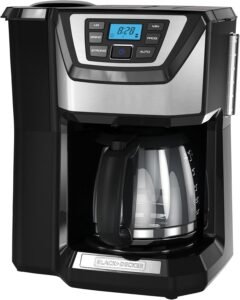
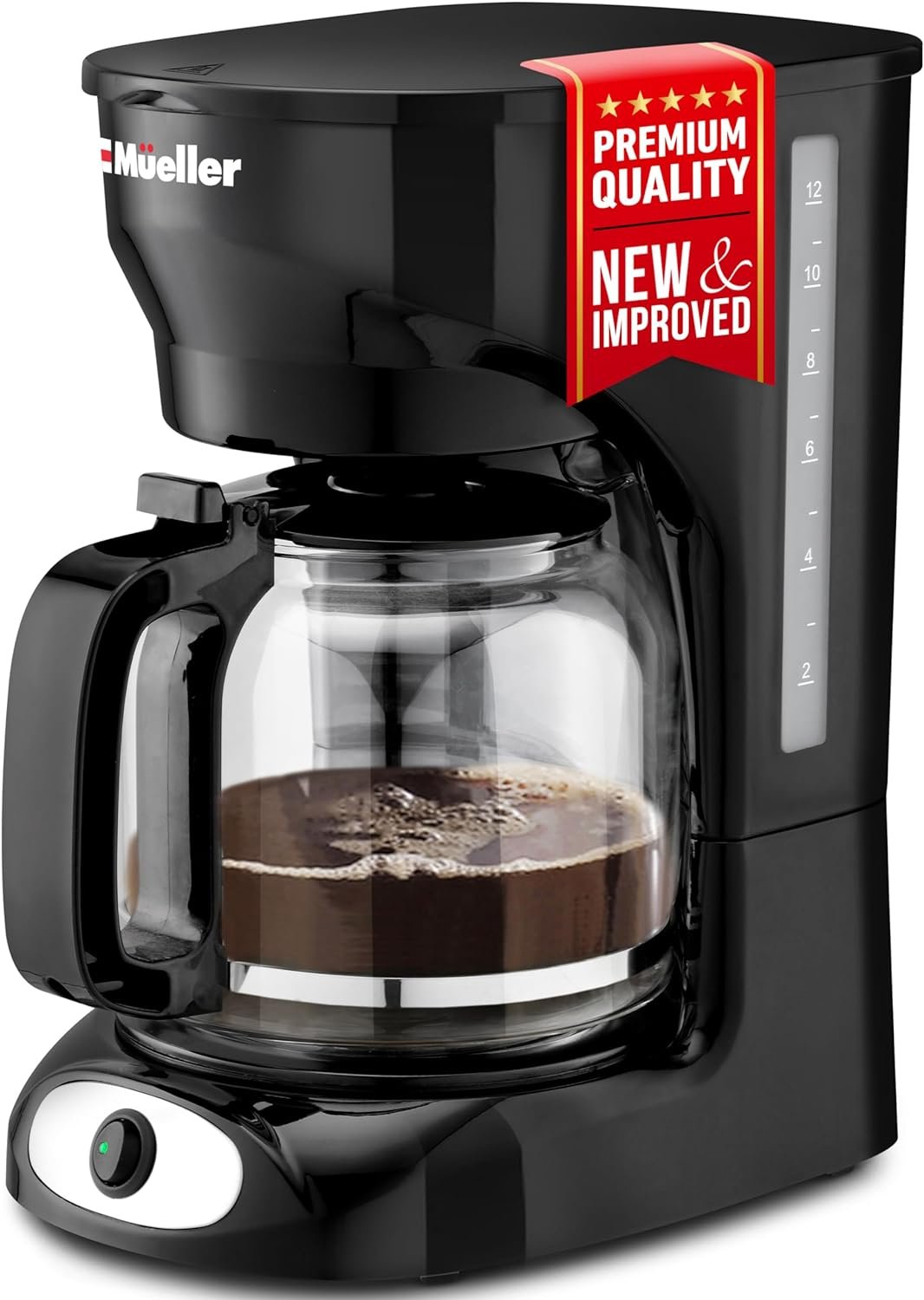
Selecting the right drip coffee maker affects daily brewing outcomes, consistency, and kitchen workflow. Home brewers and households seeking reliable batch brewing often prioritize capacity, thermal retention, and predictable extraction more than advanced pressure or steam systems. For casual enthusiasts who use medium grind coffee and standard drip techniques, a straightforward machine with clear water measurement, a stable hot-plate or thermal carafe, and a reusable or paper filter compatibility covers most needs. The Mueller 12-cup drip coffee maker positions itself as a value-oriented appliance for families and shared kitchens, offering a borosilicate glass carafe, reusable eco-filter, anti-drip mechanism, and an automatic keep-warm function with timed auto-off. Understanding how those design choices translate into temperature stability, flow control, and cleanup helps potential buyers decide whether this model meets their daily routine and brewing standards.
Quick Overview
| Feature | Details |
|---|---|
| Product category and brewing method | 12-cup automatic drip coffee maker (batch drip) |
| Capacity and output | 60.87 fl oz (up to 12 cups) |
| Materials and construction | Borosilicate glass carafe, matte black plastic housing, stainless filter mesh |
| Heating or pressure system | Hot plate warming plate with keep-warm and 120-minute auto-off |
| Grind or filter compatibility | Medium-ground coffee; reusable permanent filter included; compatible with paper filters |
| Best suited users | Households, small offices, casual home brewers, batch coffee needs |
| Intended use cases | Daily drip brewing, brunches, multi-cup service |
| Warranty / manufacturer notes | Manufacturer support listed; warranty specifics not specified in product listing |
The table above summarizes the machine’s functional design and materials. The borosilicate carafe and permanent mesh filter affect flavor contact and extraction dynamics, while the hot-plate keep-warm and anti-drip carafe influence temperature retention and serving convenience. These practical elements shape daily usability, cleaning expectations, and whether the unit aligns with established drip brewing practices and household routines.
Brewing method compatibility and grind/filter considerations
As an automatic drip brewer, compatibility centers on grind size, filter type, and batch brewing technique. The Mueller unit accepts medium-ground coffee, consistent with conventional paper and permanent mesh filter workflows used in most household drip brewers. Mesh filters permit more oils and fine particles into the cup, which can yield fuller body but also require coarser grind control to prevent over-extraction or silt. Paper filters trap fines and oils, producing cleaner cups and easier cleanup. The machine’s reservoir, water flow path, and shower dispersion geometry determine contact uniformity; while exact spray-head specs are not published, the balance between water flow rate and saturation time sets extraction range. For those using pre-ground or specialty single-origin beans, matching grind and dose to this brewer’s flow characteristics will be necessary to approach ideal soluble extraction.
Grinder guidance and grind consistency
Consistent grind particle distribution is essential for reliable extraction on batch drip machines. Coarse particles slow extraction and can produce weak cups; overly fine grounds increase surface area and extraction rate, risking bitterness. A medium grind—similar to granulated sugar texture—is the recommended starting point for automatic drip devices that use mesh or paper filters. When using the included permanent mesh filter, slightly coarser settings help reduce fines passing into the brew, limiting over-extraction and sediment. For consumers without a home grinder, pre-ground blends labeled for drip coffee align better with this brewer’s flow profile than espresso or French-press grinds.
Filter trade-offs: mesh vs. paper
The permanent eco-filter offers environmental and cost advantages but changes cup characteristics. Metal mesh allows oils and microscopic particles to remain, enhancing body and mouthfeel while slightly muting perceived acidity. Paper filters provide cleaner flavor clarity by removing oils and micro-fines, which can accentuate acidity and perceived sweetness. Maintenance frequency differs as well: mesh filters need regular rinsing and periodic deep cleaning to avoid oil buildup, while paper filters are single-use and reduce long-term cleaning tasks. The choice affects taste, cleanup, and how often descaling or filter replacement is necessary.
Brew-ratio and dose recommendations
Standard drip brew ratios of 1:15 to 1:17 (coffee to water by weight) apply when aiming for balanced extraction with this machine. For batch brewing a full carafe, scaling the dose while ensuring even bed saturation and appropriate grind helps limit channeling and under-extraction. Because automatic drip systems control water delivery, starting with 10–12 grams of coffee per 6 ounces of water (roughly one standard tablespoon per 6 ounces) is a pragmatic approach, then adjusting to taste. Consistent measuring by weight improves repeatability, especially when switching between paper and mesh filters that alter perceived strength.
Temperature control, keep-warm function, and heat retention
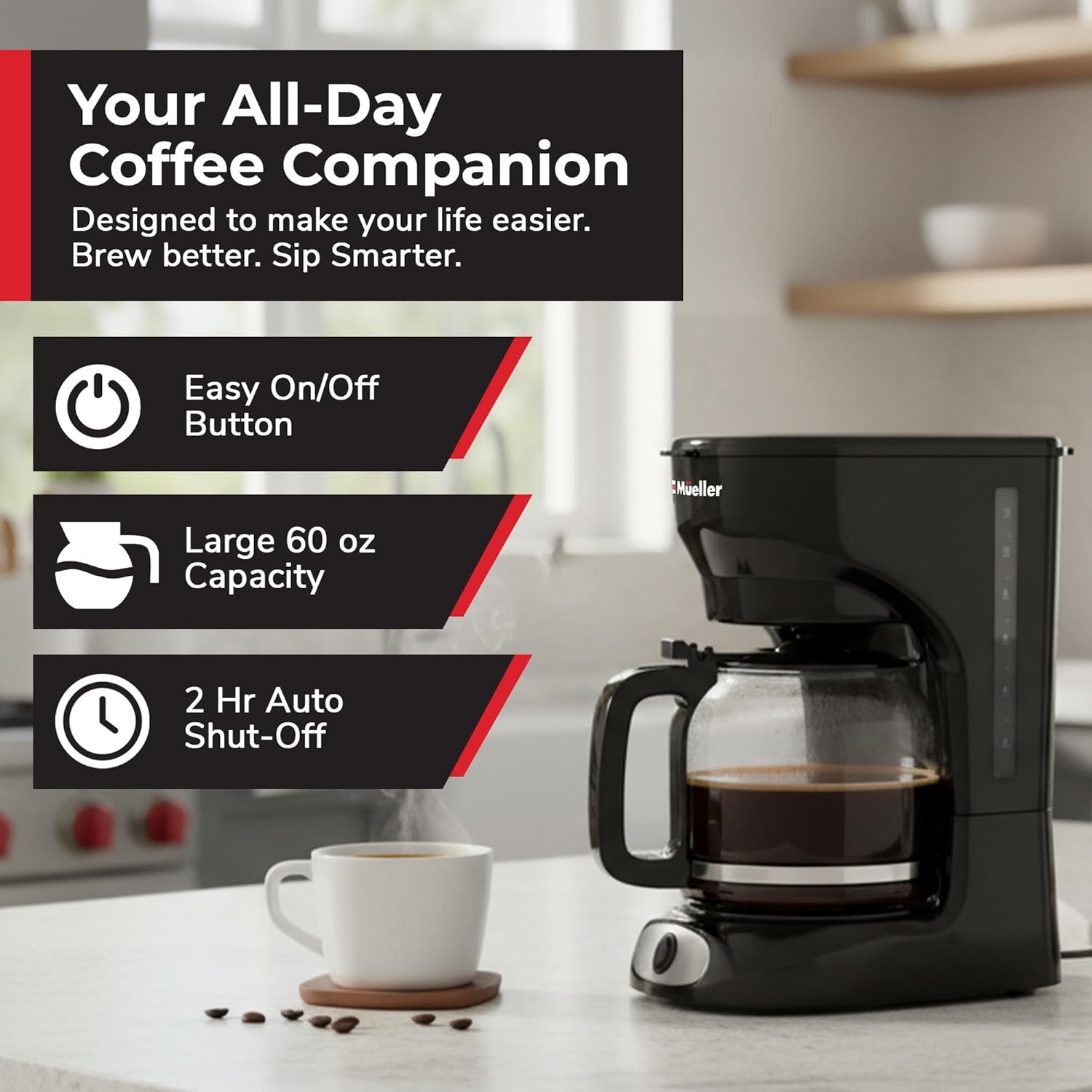
Temperature stability during and after brewing strongly influences extraction yield and flavor clarity. This Mueller brewer relies on a hot-plate keep-warm system paired with a borosilicate glass carafe; the manufacturer specifies an automatic two-hour shutoff for the warming plate. Glass carafes, including borosilicate, transfer heat more rapidly than insulated thermal carafes, which means brewed coffee will begin cooling faster once removed from the plate. The warming plate maintains service temperature for short intervals but extended warming can accelerate flavor degradation. The auto-off after two hours is a safety and energy-saving feature. Users who prioritize long-term heat retention for later servings should consider preheating the carafe or transferring to a thermal container to preserve temperature and volatile aromatics.

Effects of carafe material on temperature and aroma
Borosilicate glass offers superior thermal shock resistance compared with standard glass and resists odor absorption, which preserves flavor purity across multiple uses. However, glass cannot match the insulating performance of double-walled stainless steel thermal carafes; therefore, coffee held in a borosilicate pot on a warming plate will gradually lose heat and volatile aroma compounds. The warming plate stabilizes temperature during initial serving periods, but prolonged exposure to heat can flatten delicate aromatics and accelerate bitterness development. For best sensory results, consume within an hour or transfer to insulated storage for extended hot service.
Keep-warm settings and safety considerations
The brewer’s automatic two-hour shutoff for the warming plate addresses safety and energy concerns. Continuous high-temperature exposure of coffee can produce off-flavors; the timed auto-off prevents indefinite heating and reduces risk. Non-slip feet and an anti-drip carafe design support safe handling, while the brewer’s stated operation mode combines automatic brew cycles with manual interface buttons for brew initiation and potential brew-strength adjustments. Users in areas with different mains voltage should confirm compatibility, as the product lists voltage at 220 volts in specifications.
Impact on extraction and brew consistency
Brewing temperature directly affects soluble extraction; optimal drip extraction typically occurs between 195–205°F at the shower head. This model uses an integrated heating element feeding a hot plate, but manufacturer details for brew-head temperature and flow rate are not published. In practical terms, if the water delivered is near the ideal range and the flow pattern provides even saturation, extraction will trend toward balanced cups. Variability in reservoir temperature, ambient conditions, and carafe heat loss will influence extraction consistency across successive brews, so monitoring grind size and dose remains the primary control for achieving repeatable results.
Capacity, serving flexibility, and carafe design
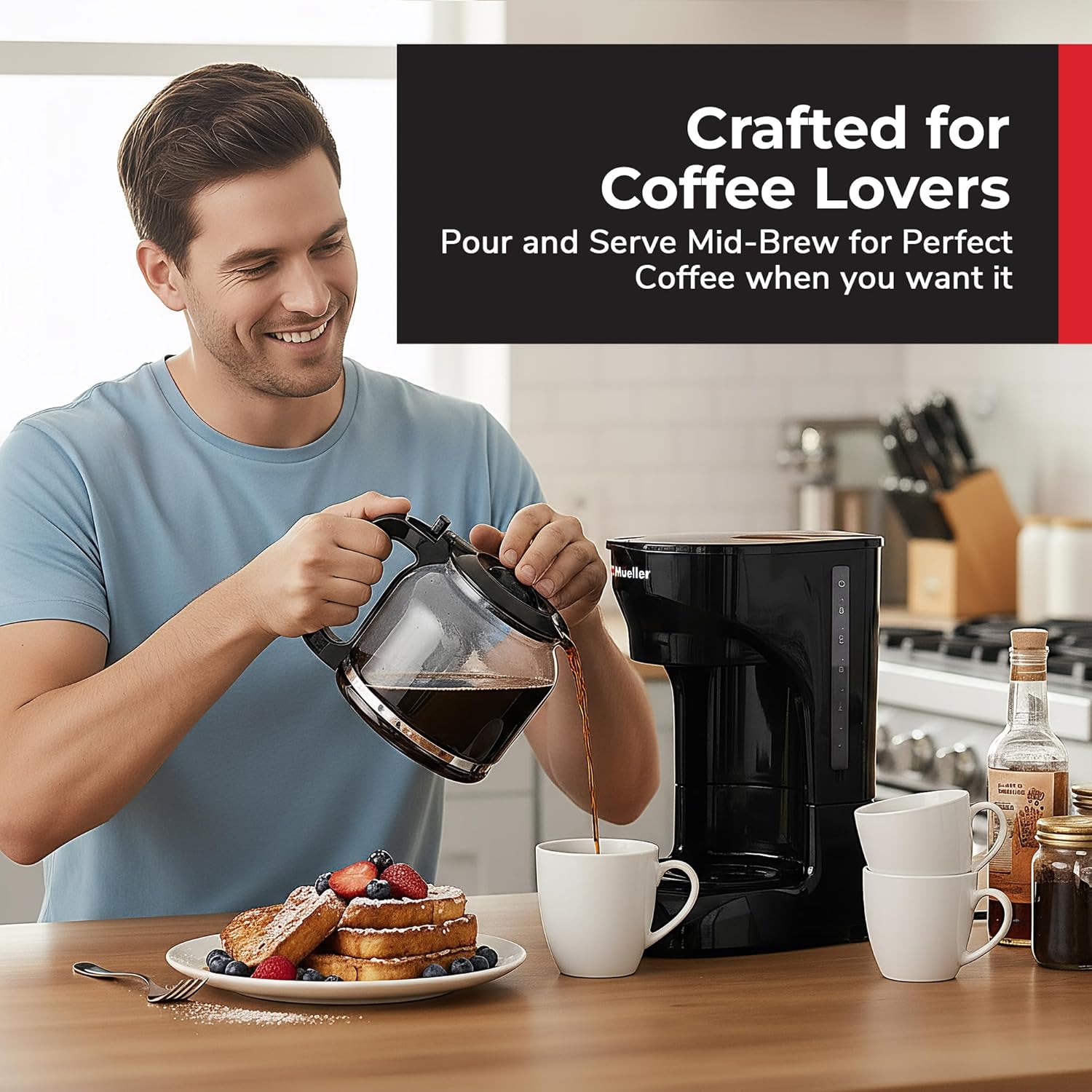
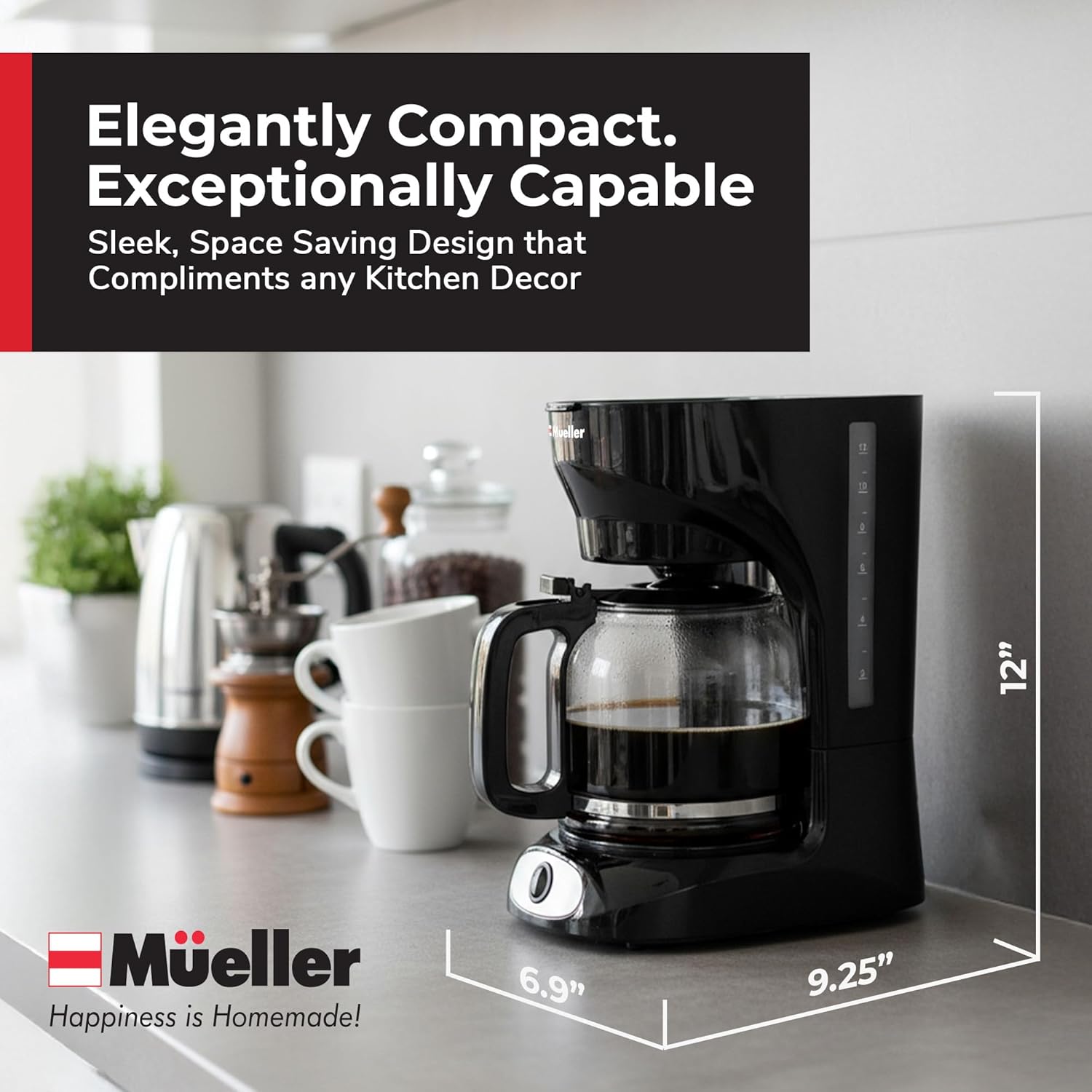
The 60.87 fl oz borosilicate carafe is tailored for multi-cup service, accommodating up to 12 standard drip-style cups per carafe. This capacity benefits households, small offices, and hosts who require several consecutive servings without repeated brewing. The easy-grip, anti-drip spout and non-slip base on the brewer support clean pouring and stable placement on countertops. While the large glass carafe enhances visibility of remaining coffee volume and integrates well with communal serving, it is less effective at insulating than thermal carafes; thus, it is ideal for short-duration service or immediate consumption. The dishwasher-safe designation simplifies cleanup of the carafe, but the housing and internal water path will still require occasional descaling based on local water hardness.
Serving patterns and pour management
A large single carafe streamlines service for gatherings but changes how coffee is kept hot between pours. The anti-drip carafe spout helps reduce spills and allows mid-brew pouring without unwanted leakage, which is convenient for intermittent serving. The clear water level window in the reservoir aids accurate dosing when scaling batch size down to 2 or 4 cups, improving efficiency for smaller households. For users who prefer single-cup brewing or frequent fresh-pour servings, smaller drip machines or pour-over setups may provide better temperature control and flavor retention per cup.
Carafe durability and material maintenance
Borosilicate glass is more heat-resistant than standard soda-lime glass and less prone to thermal shock during temperature changes, reducing breakage risk when rinsing or placing on a warm plate. The dishwasher-safe labeling for the carafe reduces manual cleaning burden, but repeated dishwasher cycles and abrasive detergents can affect external finish over time. The plastic housing with matte black finish should be cleaned with a damp cloth to avoid moisture ingress. Regular rinsing of the carafe and the permanent filter prevents residue buildup, preserving longevity and reducing stale flavor transfer between brews.
Water window and volume control for partial brews
The clear water level window simplifies fractional brewing by allowing visual measurement when brewing 2 or 4 cups instead of a full carafe. Accurate water dosing matters for maintaining consistent brew ratios and extraction; underfilling while maintaining the same grind can result in over-extraction, while overfilling dilutes flavor. The combination of clear reservoir indicators and the ability to brew smaller batch volumes increases flexibility for households with variable consumption patterns.
Ease of use, cleaning, and long-term reliability
User interface and maintenance expectations determine how a machine performs in real-world household settings. The Mueller brewer presents a straightforward button-based interface and fully automatic operation for one-touch brewing, with a permanent eco-filter included for repeated use. Dishwasher-safe components and a removable carafe simplify post-brew cleanup. Long-term reliability hinges on heating element quality, the integrity of the anti-drip mechanism, and the condition of the permanent filter mesh; regular descaling and filter care mitigate mineral buildup and preserve flow rates. Plastic housing and internal plastic water paths are common in this segment and can be durable when kept clean, but prolonged exposure to hard water without descaling can accelerate wear. Model-specific details such as voltage listing and AC adapter usage should be confirmed against local mains specifications for safe long-term operation.

Cleaning regimen and descaling expectations
Routine maintenance includes rinsing the permanent filter after each batch, washing the carafe regularly, and wiping the exterior. For mineral-rich water, periodic descaling of the water path and heating element with a vinegar or citric acid solution will prevent scale accumulation that can slow flow and alter temperature delivery. The inclusion of a reusable filter reduces waste but increases the need for mechanical cleaning to remove trapped oils and fines; soaking the mesh in a mild detergent solution occasionally restores flow and reduces off-aromas. Following manufacturer guidance, if provided, helps avoid warranty issues and preserves function.
Control simplicity and workflow for daily brewing
A simple control panel supports quick morning routines: fill, measure, add grounds, and press brew. The water window and standard carafe design reduce setup time compared with pour-over methods that require manual pouring technique. For households that value convenience, the automated program and keep-warm features streamline repeated use. However, the trade-off is less direct control over variables such as pre-infusion, pulse pouring, or flow rate modulation that skilled pour-over brewers use to manipulate extraction nuances.
Durability indicators from materials and design
Key durability indicators include the borosilicate carafe, stainless mesh filter, and the presence of non-slip feet and anti-drip mechanics. Borosilicate resists thermal stress; stainless mesh maintains shape better than plated varieties; non-slip feet anchor the unit during use, reducing tipping risk. Plastic housing is common for mid-range machines and generally endures routine use, though long-term reliability depends on build tolerances, component seals, and maintenance frequency. Confirming voltage compatibility and adhering to descaling schedules supports component longevity.

Pros & Cons
Pros
- Generous 12-cup capacity with a heat-resistant borosilicate carafe: useful for households and small gatherings where multiple servings are needed; the glass carafe resists odor retention and withstands thermal stress.
- Reusable stainless mesh eco-filter included: reduces waste and recurring filter costs while permitting fuller-bodied cups by allowing oils through the filter; paper filters are still compatible for cleaner cups.
- Simple automatic operation with clear water level window: straightforward workflow reduces setup time and helps maintain consistent brew ratios for full or partial carafes.
- Keep-warm function with two-hour auto-off: maintains serving temperature for short intervals and improves safety and energy efficiency via timed shutoff.
- Anti-drip carafe spout and non-slip feet: practical design details that minimize spills during pouring and improve countertop stability.
- Dishwasher-safe carafe and removable components: eases cleaning routines and reduces dishwashing friction for busy households.
Cons
- Glass carafe limits long-term heat retention compared with thermal carafes: borosilicate resists thermal shock but loses heat faster, so coffee may cool more quickly after brewing.
- Permanent mesh filter requires regular cleaning: while eco-friendly, the mesh can accumulate oils and fines, demanding periodic soaking or scrubbing to avoid off-flavors.
- Limited published technical details on brew-head temperature and flow pattern: absence of explicit manufacturer data makes precise extraction control dependent on grind, dose, and user technique rather than machine adjustments.
- Voltage listing may require buyer confirmation: the product lists 220 volts, which necessitates checking local mains compatibility or adapter requirements for safe operation in certain regions.
Final Verdict: Who This Product Is Best For (and Who Should Skip It)
The Mueller 12-cup drip coffee maker suits households, small offices, and casual home brewers who prioritize capacity, simple operation, and low-maintenance batch service. Its borosilicate carafe and reusable mesh filter appeal to users who want a large, clear carafe for communal serving and reduced consumable waste. The machine’s automatic brewing, water-level indicators, and dishwasher-safe components support straightforward daily workflows and make it appropriate for users who prefer convenience over granular control of extraction variables. Conversely, those who demand the tightest temperature control, insulated long-term heat retention, or precise flow modulation for specialty coffee preparation should consider alternatives with thermal carafes, programmable pre-infusion, or more detailed temperature control systems. Buyers in regions with differing mains voltage should verify compatibility prior to purchase. Overall, the unit offers a practical, materials-conscious option for multi-cup drip brewing in 2026-style home kitchens, where reliability, ease of cleaning, and predictable batch service are the primary priorities.

Frequently Asked Questions (FAQs)
Can the Mueller 12-cup drip coffee maker use paper filters instead of the permanent filter?
Yes. The design accepts medium-ground coffee and is compatible with paper cone-style or flat paper filters in addition to the included stainless mesh permanent filter. Using paper filters will produce a cleaner cup by trapping oils and micro-fines, while the permanent mesh yields fuller body and more oils in the brew. Choice of filter affects flavor, cleanup frequency, and maintenance routines.
How should grind size be adjusted for best extraction with this automatic drip brewer?
A medium grind—resembling granulated sugar—is the recommended starting point for automatic drip machines. When using the included metal mesh filter, slightly coarser settings can reduce fines passing through and limit sediment. If the cup tastes weak, a finer grind or increased dose should be tried; if it tastes bitter, a coarser grind or shorter contact time is advisable. Measuring by weight improves repeatability.
Does the keep-warm plate negatively affect coffee flavor over time?
Extended heat exposure on a warming plate can accelerate flavor degradation by dissipating volatile aromatics and increasing perceived bitterness. The brewer’s automatic two-hour shutoff mitigates indefinite reheating. For best sensory results, consume brewed coffee within an hour or transfer it to an insulated thermal carafe to preserve temperature and aroma when longer hot-holding is needed.
Is the borosilicate carafe more durable than standard glass carafes?
Borosilicate glass is more resistant to thermal shock and less prone to absorbing odors than standard soda-lime glass, improving durability during temperature changes. It withstands hot-plate exposure and cleaning practices better, but it is still glass and can break with impact. Proper handling and avoiding sudden, severe temperature swings further extend service life.
What cleaning and descaling schedule is recommended for this model?
Routine cleaning includes rinsing or washing the carafe and filter after each use and wiping the external housing periodically. For areas with hard water, descaling the internal water path and heating element every 1–3 months with a vinegar or citric acid solution is recommended to prevent scale buildup. The permanent filter should be soaked and cleaned regularly to remove oil buildup and fines.
Is this brewer suitable for single-cup brewing or specialty coffee preparation?
The Mueller 12-cup brewer is optimized for batch brewing rather than single-cup or pour-over precision. While it can brew smaller volumes (2 or 4 cups) using the reservoir indicators, those seeking fine-grained control over bloom, pulse pouring, or precise temperature programming for specialty coffee may prefer pour-over setups or higher-end programmable brewers designed for specialty extraction techniques.
Are there any electrical compatibility concerns to be aware of?
The product listing includes a voltage specification of 220 volts. Buyers should confirm mains voltage compatibility in their region and consult manufacturer guidance or local electrical standards before use. Using devices with incompatible voltage without appropriate conversion or adapters can risk performance issues or safety hazards.
How does the permanent mesh filter affect long-term maintenance?
The permanent stainless mesh filter reduces recurring filter purchases and waste, but requires regular mechanical cleaning to remove trapped oils and fines. Periodic deep cleaning—soaking in mild detergent or a recommended cleaning solution—prevents buildup that could alter flow rates and impart stale flavors. Consistent care preserves filter lifespan and maintains brew quality.