Nespresso Vertuo by De’Longhi: Brew Quality & Usability Guide

Why equipment choice matters for home coffee and espresso
Selecting the right coffee appliance shapes daily brew outcomes, kitchen workflow, and the range of drinks that can be produced reliably in a home setting. For households and casual enthusiasts who prioritize convenience and repeatability, capsule-based systems offer a predictable route to crema-topped espresso and larger brewed cups with minimal grinding or dosing skill. Differences in heating systems, extraction approach, and accessory compatibility influence temperature stability, brew ratios, and texture of milk-based drinks. Materials and serviceability affect long-term reliability and cleaning frequency, while reservoir size and capsule logistics determine serving flexibility for single users versus multi-person households. Understanding how a specific machine handles heat-up time, control over extraction parameters, and integration with milk frothers helps match purchase decisions to routines marked by speed, consistency, or variety.
Quick Overview
| Feature | Details |
|---|---|
| Product Category and Brewing Method | Single-serve capsule brewer using Nespresso Vertuo centrifusion barcode system |
| Cup Sizes Supported | Single and double espresso, coffee 5 oz and 8 oz cup volumes via capsule profiles |
| Reservoir Capacity | 54-ounce removable water tank |
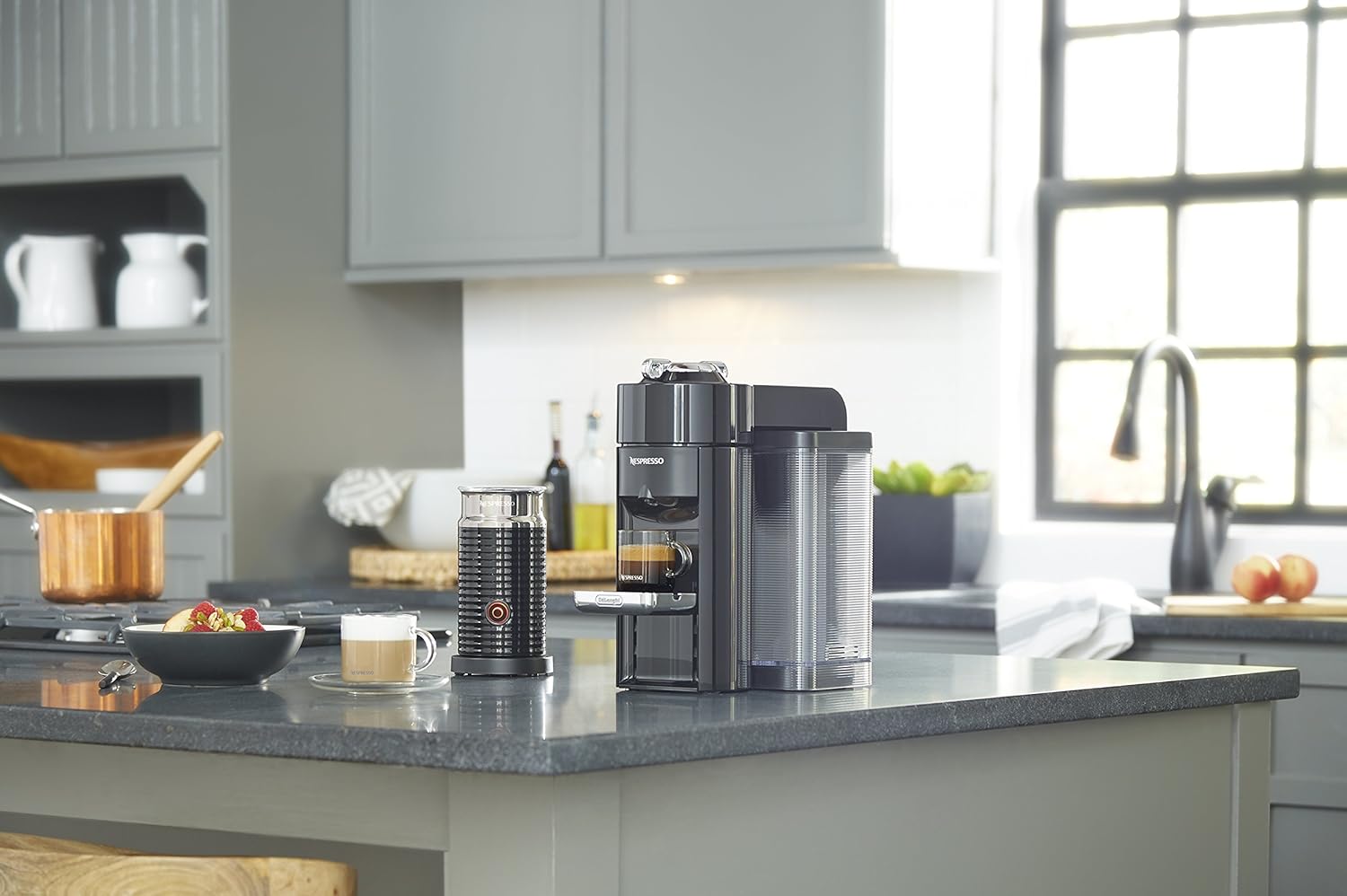
| Included Accessories | Aeroccino milk frother (hot and cold froth) |
| Materials & Finish | Powder-coated exterior; plastic internal components; stainless elements in internal brew path |
| Heating & Controls | Rapid heat-up (15–20 seconds), automatic capsule ejection, button controls, energy-saving auto shutoff (9 minutes) |
| Capsule Compatibility | Nespresso Vertuo capsules only (barcode-enabled) |
| Best Suited Users | Home users seeking consistent single-serve drinks with simple workflow |
| Maintenance & Warranty | User-replaceable water tank and descaling recommended per manufacturer; consult user guide for warranty specifics |
These specifications orient expectations for extraction control and daily use. Centrifusion and barcode-controlled brewing tailor each capsule’s spin speed and volume, while rapid heat-up and a 54-ounce reservoir reduce wait times and refill frequency. The included Aeroccino expands drink profiles to milk-based beverages but adds cleaning tasks. Material and component choices influence heat transfer and long-term wear, shaping maintenance cadence and reliability.
Brewing method compatibility and drink range
The Vertuo system uses Nespresso’s barcode-recognition centrifusion brewing, which is built around single-use capsules with pre-defined brew parameters encoded on each capsule rim. This approach limits grind, dose, and tamp variables by design, delivering repeatable volumes and aroma profiles for capsule lines formulated by the manufacturer. As a capsule-only platform, compatibility is restricted to Vertuo-format pods; third-party refillable options are rare and generally unsupported by manufacturer guidance. The machine can produce both espresso-format servings and larger 5-oz or 8-oz brewed coffees using capsules engineered for those volumes, making it suitable for households that want a range of cup sizes without manual dosing or separate equipment.

Cup size flexibility and serving scenarios
The built-in capsule profiles provide discrete extraction programs for different cup sizes, enabling one-button selection through automatic barcode reading. This method standardizes brew ratios and extraction time per capsule, reducing the need for user adjustments when switching between espresso and larger coffee servings. A 54-ounce reservoir supports multiple extractions before refilling, which suits moderate household use and short staff-free periods. However, reliance on proprietary capsules constrains bean origin or roast customization, so users looking to dial in specific extraction variables or to experiment with grind settings will find less flexibility compared with bean-to-cup or manual espresso machines.
Compatibility with milk drinks and Aeroccino integration
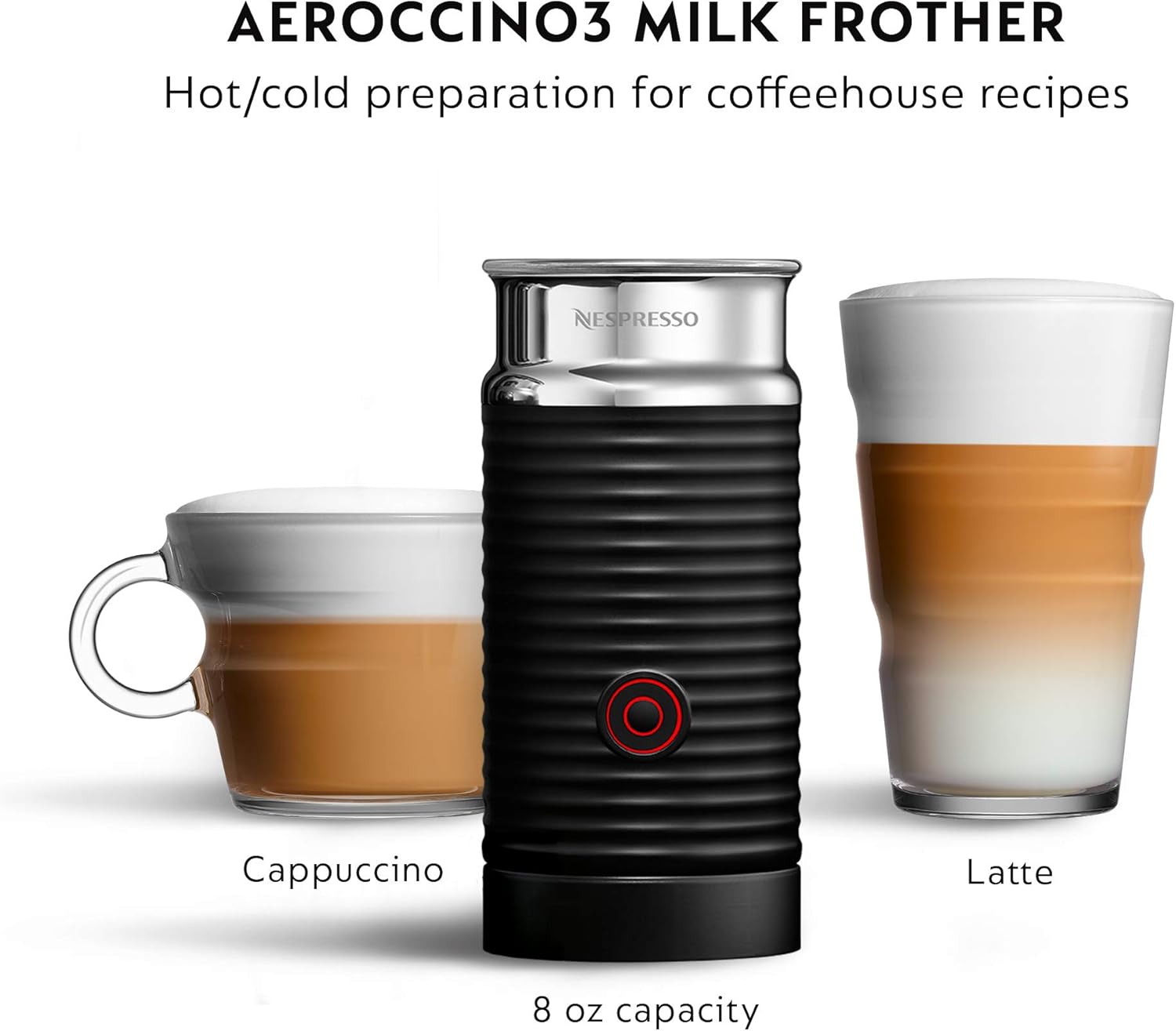
The included Aeroccino milk frother produces hot or cold milk froth independently from the brewing unit, allowing cappuccinos and lattes without a steam wand. Aeroccino operation is separate and requires manual transfer of milk into a cup or serving vessel post-frothing. This arrangement reduces machine complexity but introduces an extra step in workflow and additional cleaning points. For users who value automatic milk steaming and integrated texturing, the Aeroccino’s separate operation may be a trade-off—simpler and lower-maintenance than an integrated steam system, yet less seamless than machines with built-in frothing arms or automated milk circuits.
Ease of use and workflow complexity
Operational simplicity is a core appeal for capsule systems, and the Vertuo’s button-based interface, automatic capsule ejection, and rapid heat-up are designed to minimize decision points during brewing. The process typically involves filling the water reservoir, inserting a new capsule, and pressing a single brew button; capsule barcode scanning directs the machine to the pre-programmed extraction sequence. The Aeroccino adds a two-step milk workflow: froth milk separately, then combine with the extracted coffee. While straightforward for single-serve preparation, these steps can become repetitive in multi-person settings, especially where differing cup sizes or milk preferences require swapping capsules and re-frothing milk. The machine’s removable drip tray and adjustable cup support aid accommodating different mug sizes.

Daily preparation and multi-user routines
The Vertuo streamlines routine brewing for users who want consistent results quickly: insert the capsule, press the button, and the program completes automatically. For households with multiple users, the combination of four capsule-defined cup sizes and a sizable 54-ounce reservoir reduces interruptions for water refills and simplifies serving differences across preferences. Capsule inventory management and storage planning remain necessary to maintain variety and avoid mid-morning shortages. The separate Aeroccino means parallel workflows are possible—one person can froth while another brews—but coordination is required for high-volume serving scenarios.
Controls, feedback, and user learning curve
Button controls and capsule detection minimize learning curves by exposing only essential user inputs. Temperature and extraction parameters are managed internally, so visible feedback is limited to indicator lights and capsule ejection; users do not directly set brew temperature or flow. This reduces complexity for users prioritizing convenience, but it can be limiting for those who prefer granular control over shot parameters. Reactivity in the interface is governed by the machine’s automatic sequences, making the device accessible to novices while constraining experimentation for advanced users.
Temperature control and heat stability
Temperature control is a key factor in extraction chemistry and flavor balance. The Vertuo advertises a rapid heat-up window of 15–20 seconds and relies on internal thermal elements to reach extraction temperature quickly. While fast heat-up improves readiness and reduces standby time, longer-term thermal stability across successive brews depends on the machine’s thermal management and mass of heated components. Smaller thermally active components heat and cool more rapidly, which benefits initial availability but can yield temperature shifts under continuous use. For single-serve cycles separated by short intervals, the system’s design and manufacturer-reported heat-up time aim to provide consistent pre-infusion and brew temperatures within the operational envelope defined by Nespresso’s capsule profiles.
Heat-up time, temperature consistency, and extraction impact
Rapid heat-up reduces the interval between turning the machine on and brewing, which supports busy household routines. However, extraction sensitivity to temperature means that consistency across back-to-back shots depends on the machine’s ability to maintain stable water temperature in the brewing path. Nespresso’s factory-set programs and capsule-specific profiles mitigate small temperature variances by adjusting spin speed and brew time through barcode data, but users executing repeated consecutive extractions may observe subtle differences if the machine lacks a heavier thermal mass or active temperature regulation used in higher-end espresso units.
Heat retention, standby behavior, and energy features
An automatic shutoff after nine minutes balances energy conservation with short-term readiness. This feature helps reduce idle power consumption but may require re-heat cycles if the machine remains unused beyond the standby window, potentially reintroducing the heat-up interval. The 54-ounce reservoir reduces the need for frequent refills, which indirectly supports thermal consistency by limiting the introduction of cold water that can pull down system temperature. Users must consider the trade-offs between immediate availability and energy-saving sleep modes when planning multi-cup sessions.
Brew consistency and extraction quality
Extraction on the Vertuo platform is driven by Centrifusion technology combined with capsule-specific barcode programming. Centrifugal force spins the capsule at high RPM to mix water and ground coffee, producing an emulsion commonly described as crema on both espresso and larger cup formats. Barcode data instructs the machine on parameters like rotational speed and total water volume, enforcing consistent brew ratios and extraction duration per capsule type. Because the system standardizes dose and grind at the capsule level, variability from user-side grind distribution, tamping, and dosing is removed, resulting in highly repeatable outcomes within the designed capsule profiles.

Centrifusion mechanics, crema, and flavor extraction
Centrifusion substitutes pressure-based extraction variables with spin-generated mixing and controlled flow. The generated shear forces and rapid mixing promote solute extraction and emulsification, producing a characteristic crema layer on espresso-format capsules and a stable body on larger coffees. This approach alters the extraction dynamics compared with traditional pump-driven machines, which rely on pressure and pre-infusion sequences. The net result is a reliable extraction profile as intended by the capsule formulations, but it reduces the user’s ability to influence variables like extraction pressure or grind fineness directly.
Repeatability, capsule formulation, and roast profiles
Because grind size and dose are encapsulated in factory-sealed pods, consistency across brews is largely a function of capsule manufacturing and machine calibration. Capsules designed for different cup sizes and roast profiles will extract according to their encoded programs, delivering predictable strength and aroma characteristics. For consumers seeking to explore single-origin nuance or to dial extraction variables manually, the closed capsule system limits direct experimentation. Conversely, users prioritizing simple, repeatable results across drink types will benefit from the system’s built-in standardization.
Cleaning, maintenance, and durability expectations
Maintenance demands reflect the combination of a capsule-based brew path and a separate milk frother. The machine requires periodic descaling and cleaning of the water tank, drip tray, and capsule container in line with manufacturer recommendations to maintain flow and heating efficiency. The Aeroccino has its own cleaning protocol—rinsing the whisk and interior surfaces after use and following manufacturer guidance for more thorough cleaning. Materials such as powder-coated exterior panels and plastic internal parts balance cost and corrosion resistance but can show wear or staining over extended use. Overall durability is influenced by the frequency of use, adherence to descaling schedules, and careful handling of removable parts.

Water system maintenance and descaling considerations
Hard water mineral buildup affects flow channels and heating surfaces over time, impacting temperature transfer and extraction volume. The manufacturer-recommended descaling intervals and solutions should be followed to preserve pump and thermally active component performance. The removable 54-ounce reservoir simplifies refilling and occasional rinsing, but sediment and biofilm can develop if left stagnant; regular emptying and cleaning help mitigate odor and microbial risk. Users in areas with hard water should anticipate more frequent descaling and consider filtered water to extend service intervals and help maintain consistent brew temperatures and flow rates.
Frother cleaning, removable components, and serviceability
The Aeroccino’s compact design simplifies frothing tasks but requires routine cleaning of the milk container, whisk, and lid to prevent residue buildup. Since the Aeroccino is a separate unit, it can be cleaned independently of the main machine, but the additional cleaning step affects overall workflow and maintenance time. Removable parts such as the drip tray, capsule container, and water tank enable straightforward access for rinsing and wiping; however, internal components and sealed assemblies will require authorized service for complex repairs. Long-term reliability therefore depends on both user maintenance and the quality of replaceable external components.

Pros & Cons
Pros
- Consistent, one-touch brewing across defined cup sizes: The barcode-controlled Centrifusion system enforces preset extraction parameters, producing repeatable results without manual adjustments. This reduces variability for users who prioritize reliable daily performance.
- Rapid heat-up and generous reservoir: Reported 15–20 second heat-up time and a 54-ounce water tank minimize waiting and refill frequency, which benefits busy households and short-interval multi-cup sessions. The removable reservoir aids refilling and occasional cleaning.
- Included Aeroccino milk frother expands drink options: The bundled frother enables hot and cold milk froth for cappuccinos and lattes without an integrated steam wand, offering milk-based drink capability with lower complexity.
- Automated capsule handling simplifies cleanup: Automatic capsule ejection and a built-in container collect used pods, reducing manual handling and keeping the brewing area tidier between maintenance cycles.
- Powder-coated exterior with compact footprint: Durable exterior finish and compact dimensions suit countertop placement while resisting common surface wear; the design supports kitchens with limited space.
- Energy-saving features: Automatic shutoff after nine minutes reduces idle power consumption and aligns with household energy practices.
- Predictable crema and body from Centrifusion: The spin-based extraction produces an emulsified layer and full-bodied cup profiles consistent with the manufacturer’s capsule formulations.
- Simple user interface lowers learning curve: Button controls and automated programs make the machine accessible to novice users without technical setup.
Cons
- Proprietary capsule dependency: The Vertuo platform requires Vertuo capsules, limiting access to loose beans, grind adjustments, and some third-party alternatives, which constrains customization and long-term running costs.
- Limited manual control over extraction variables: Temperature, flow, and extraction time are managed by capsule programming, reducing the ability to experiment with grind size, dose, and pressure for advanced tuning.
- Separate milk frother adds workflow and cleaning steps: While the Aeroccino enables milk drinks, it operates independently of the brewer and requires separate cleaning, introducing extra tasks for daily milk-based beverage preparation.
- Potential temperature variation under continuous use: Smaller thermal mass and rapid heat-up design can lead to subtle temperature shifts during back-to-back extractions compared with heavier commercial or prosumer machines.
- Sealed internal components limit repairability: Complex internal failures will likely require authorized service, and warranty or part availability should be consulted for long-term ownership planning.
Final Verdict: Who This Product Is Best For (and Who Should Skip It)
The Nespresso Vertuo by De’Longhi is well-suited to users who prioritize convenience, repeatability, and a compact footprint in a home environment. It fits households and individuals who prefer single-serve reliability, want quick access to both espresso-format shots and larger brewed cups, and value a plug-and-play experience without the need to manage grind, dose, or tamping. The included Aeroccino complements the system for those who regularly enjoy milk-based drinks and are willing to manage a separate frothing routine and cleaning steps. The machine is also appropriate for kitchens where space and simple maintenance are important considerations.
This model is not ideal for enthusiasts who seek hands-on control over extraction parameters, for users who want to brew from loose beans or adjust grind settings, or for high-volume environments that require integrated milk steaming or industrial-grade thermal stability. Buyers focused on long-term serviceability and granular tuning should consider bean-to-cup or semi-automatic options. When compared with competing single-serve systems available in 2026, the Vertuo platform stands out for capsule-engineered consistency and one-touch convenience, while trading off customization and open brewing flexibility.

Frequently Asked Questions (FAQs)
Can the Nespresso Vertuo brew both espresso and regular coffee?
Yes. The Vertuo system is designed to brew multiple cup formats from the same machine using capsule-specific programs. It supports espresso-format servings as well as larger brewed cups (commonly 5 oz and 8 oz) by recognizing the capsule barcode and adjusting spin speed and water volume to match the capsule’s extraction profile.
Is the included Aeroccino milk frother integrated or a separate unit?
The Aeroccino included with many Vertuo bundles is a separate, standalone milk frother that produces hot or cold froth independently from the brewer. It requires manual transfer of frothed milk into the coffee and separate cleaning, which simplifies the machine design but adds an extra step to milk-based drink preparation.
How does Centrifusion extraction differ from pump-driven espresso extraction?
Centrifusion uses rotational force to blend water and ground coffee inside a capsule while barcode programming controls spin speed and water volume. This method emphasizes emulsion and mixing rather than relying on high-pressure pump extraction and user-adjustable tamping, delivering consistent results tied to capsule formulations rather than manual parameter control.
What maintenance is required to keep the machine performing reliably?
Regular tasks include emptying the used-capsule container, cleaning the drip tray and water reservoir, and following the manufacturer’s descaling schedule to prevent mineral buildup in the water circuit. The Aeroccino also requires rinsing and cleaning after use. Adherent maintenance preserves flow rates, temperature transfer, and long-term reliability.
Can alternative capsules or refillable pods be used in the Vertuo machine?
The Vertuo system is engineered for Nespresso Vertuo-format capsules that include barcode data for extraction control. While there are some third-party Vertuo-compatible capsules available, refillable or generic pods are uncommon and generally unsupported by the manufacturer, which limits open-system flexibility for using loose coffee or custom dosing.
How suitable is the machine for a household that serves multiple people?
The combination of a 54-ounce reservoir, one-touch brewing for multiple cup sizes, and automatic capsule ejection supports moderate multi-user households by reducing refill frequency and simplifying selection of different drink sizes. For frequent, high-volume serving, the separate frother and limited customization may require additional coordination or multiple units.
Does the Vertuo offer adjustable temperature or extraction settings for experienced users?
Extraction parameters such as temperature, water volume, and spin behavior are managed by capsule-encoded instructions, so users do not have direct controls for these variables. This design favors consistency over manual tuning; therefore, users seeking granular adjustment of temperature or extraction variables should consider semi-automatic or prosumer espresso machines instead.
What are best practices to minimize temperature variation during consecutive brews?
Minimizing consecutive-brew temperature variation involves pre-warming cups, avoiding long idle periods that trigger the auto-shutoff, using filtered or pre-warmed water if local protocols allow, and following recommended descaling intervals to maintain efficient heat transfer. These steps reduce thermal draw-down and help preserve consistent extraction temperatures across successive uses.