De’Longhi Nespresso VertuoPlus Review — Brew Quality Guide
Why Equipment Choice Matters for Home Brewing
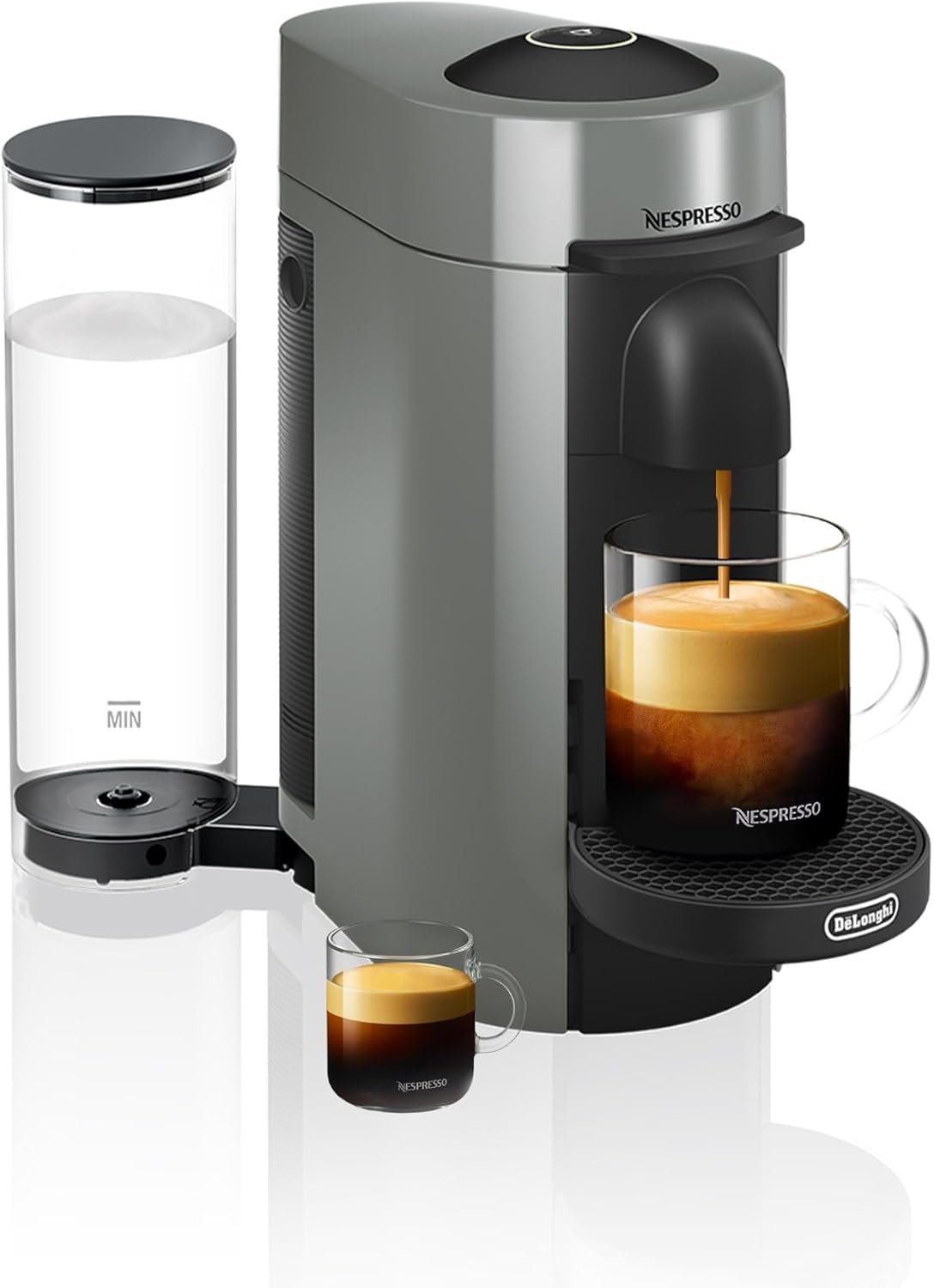
Choosing coffee and tea equipment affects extraction, flavor balance, temperature consistency, and daily workflow in the home kitchen. For single-serve systems, design choices such as capsule format, brewing technology, reservoir size, and user interface determine how reliably a chosen beverage style can be reproduced. The De’Longhi Nespresso VertuoPlus targets users who prioritize quick, single-serve convenience across espresso and larger cup formats while relying on pre-dosed capsules for consistency. Household buyers, apartment dwellers, and busy mornings-oriented users should weigh capsule availability, recyclable-aluminum pod handling, and trade-offs in brew customization against the convenience of automated extraction. Brewing needs such as preferred cup size, milk-based drink preparation, and desire for manual control inform whether a capsule-based centrifugal extraction system aligns with long-term consumer expectations. Equipment selection also influences maintenance rhythm, counter space planning, and compatibility with existing milk frothers or accessories.
Quick Overview
| Feature | Details |
|---|---|
| Product category | Single-serve capsule coffee & espresso maker (Nespresso Vertuo system) |
| Brewing method | Centrifugal ‘‘Centrifusion’’ capsule extraction; barcode-guided parameters |
| Cup sizes supported | 5 oz (coffee), 8 oz (coffee), Single Espresso, Double Espresso |
| Water reservoir | 40 oz removable tank; adjustable positioning for counter fit |
| Materials & build | Plastic housing with metal internal components; aluminum capsule system |
| Heat-up & power | Manufacturer heat-up under a short interval; AC power operation; auto shutoff |
| Waste handling | Automatic capsule ejection; internal used capsule bin stores up to ~10 capsules |
| User interface | Push-button controls; one-touch brewing; adjustable drip tray |
| Best suited users | Home users seeking quick single-serve coffee and espresso without grind setup |
| Intended use cases | Espresso shots, larger brewed coffees, iced coffee bases, milk-based drinks |
| Warranty & support | Manufacturer warranty and Nespresso capsule recycling program (manufacturer-provided) |
The listed features determine everyday usability: the VertuoPlus’s barcode-guided Centrifusion simplifies extraction by automating pressure, spin rate, and water volume for each capsule, while a large removable tank reduces refill frequency. Cup-size options and an adjustable tray allow different cup profiles but limit in-cup customization compared with manual espresso machines. Capsule recycling and automatic ejection shape upkeep routines and environmental considerations.

Brewing method compatibility and beverage range
The VertuoPlus uses the Nespresso Vertuo capsule format and Centrifusion extraction, which combines rapid capsule rotation with capsule-specific brewing parameters encoded on each rim. This system is designed to produce both espresso-style shots and larger brewed coffee in one platform. Compatibility is therefore restricted to Vertuo-size aluminum capsules and compatible blends, rather than ground coffee, pods, or third-party filter baskets. For users prioritizing broad brewing method compatibility, the VertuoPlus excels at single-serve capsule workflows but does not accept bulk grounds, portafilter attachments, or alternate brewing baskets. Those wanting manual tamp-and-pressure control or fresh-ground dosing should consider traditional pump-driven espresso machines or pour-over equipment instead.

Espresso-style extraction and capsule constraints
Centrifusion relies on high-speed rotation to push hot water through a pre-portioned aluminum capsule; this delivers crema-like emulsions and a concentrated extraction for espresso-sized servings. Because extraction parameters (flow rate, brew volume, temperature window, and rotational speed) are set via codes on capsule rims, customization of pressure profiling and grind-fineness interplay are not available to the user. The pre-dosed capsules maintain consistency between servings but limit opportunities for dialing in variables like grind distribution or tamp pressure—factors that influence extraction in traditional machines. Users who prioritize repeatable single-serve convenience over granular control will find this acceptable.
Coffee cup sizes and recipe versatility
The machine supports multiple programmed volumes for 5 oz and 8 oz coffee and single and double espresso. These presets enable repeatable drink preparation for black coffee, iced coffee, or milk-based recipes when paired with external frothers. The fixed extraction profiles optimize flavor for each capsule’s intended serving size, but users seeking adjustable shot volumes, manual pre-infusion, or bespoke flow control will find the system more constrained than grinder-plus-pump setups. For recipe variation, capsule selection and supplemental milk frothers are the primary levers for drink customization.
Ease of use and daily workflow
The VertuoPlus is configured for minimal user interaction: one-touch brewing, automatic capsule recognition via barcode, quick heat-up, and automatic capsule ejection streamline the daily coffee workflow. Button-driven controls reduce the learning curve for household members and make it suitable for shared kitchens. The removable 40 oz water tank reduces refill frequency, and the adjustable drip tray accommodates different cup heights. However, the capsule-only design means users must manage capsule inventory and recycling logistics separately from the machine. The used capsule container capacity and automatic ejection simplify disposal, but frequent high-volume use requires regular emptying. For kitchens where consistent, fast single-serve brewing is the priority, this system prioritizes convenience over manual process control.

User interface and setup considerations
The control layout centers on a few clearly labeled buttons and automatic mode selection via capsule barcode, which removes manual programming for flow and temperature. Initial setup primarily involves placing the reservoir, powering the unit, and inserting capsules from the starter assortment. Because the machine is fully automatic, there is limited need for parameter adjustment, which benefits users who prefer predictable results with minimal configuration. Countertop placement should account for the water tank footprint and the space needed to access the capsule bin and drip tray for routine maintenance.
Inventory and recycling workflow
Daily use of capsule systems requires attention to capsule supply and end-of-life handling. The VertuoPlus uses aluminum capsules that the manufacturer designs for recyclability; users must participate in Nespresso’s recycling program or local aluminum recycling pathways. The machine’s automatic ejection and internal collection simplify the short-term workflow by storing used capsules until the container is emptied. Households should plan where to store unused capsules and how often to transfer used capsules to a recycling bag or drop-off to avoid overflow and odor concerns.
Temperature control and heat stability
Temperature stability and rapid heat-up are important for consistent extraction and flavor extraction. The VertuoPlus is marketed with a fast heat-up interval and automatic temperature control tuned to Vertuo capsule profiles. The Centrifusion process is coupled with preset thermal and flow parameters encoded on each capsule, meaning the machine adjusts brew temperature and duration per capsule code rather than allowing manual temperature adjustment. For most single-serve scenarios this offers predictable extraction across capsule varieties, but external milk steaming or advanced tempering requires a separate milk heater. Users who need strict temperature profiling for specialty coffee pours or precision espresso shots should note the limitations inherent to capsule-led temperature control.

Heat-up speed and ready-to-brew timing
Manufacturer disclosures indicate a short heat-up cycle, which reduces wait time between powering the unit and starting a brew. Fast readiness suits busy morning routines and on-demand brewing. Rapid heat-up benefits extraction by minimizing thermal loss between reservoir and brew head, particularly when the machine is used intermittently. However, continuous back-to-back brewing can elevate the internal thermal load; the auto shutoff function helps manage energy use and idle heat exposure. Buyers should be aware that temperature stability in a capsule system is managed by fixed software and hardware profiles rather than manual tuning.
Practical implications for extraction temperature
Because each capsule carries a barcode read by the machine, temperature and water volume for each capsule variety are predefined to match the intended flavor profile. This means extraction temperature stays within manufacturer-defined tolerances, supporting consistent solubles extraction for each capsule type. For beverage styles sensitive to a narrow temperature band—such as some specialty-coffee-leaning brews—the lack of user-adjustable temperature may limit ability to experiment. For typical home espresso and larger brewed cups, the automated temperature control provides the consistency most users seek.
Brew consistency, extraction quality, and sensory expectations
Consistency across servings is a central design goal for capsule systems, and the VertuoPlus achieves reproducible results through pre-dosed, hermetically sealed aluminum capsules combined with barcode-guided Centrifusion parameters. Extraction quality depends on capsule blend, roast level, and the machine’s programmed flow and temperature profiles. The rotational extraction method favors emulsification and crema formation on espresso-sized servings and controlled infusion for larger cups. While the system reduces variability from dosing and grind, it does not allow direct manipulation of variables such as extraction yield, grind setting, or water temperature, which are critical levers in specialty coffee dialing. Sensory expectations should therefore align with capsule-specific flavor profiles rather than bespoke, barista-style adjustments.

Role of capsule design and roast selection
Aluminum capsules preserve freshness and are shaped to work with the VertuoPlus’s centrifuge mechanism, dictating flow resistance, extraction time, and turbulence. Capsule blends and roast profiles are formulated to perform within the machine’s preprogrammed parameters, making capsule selection the primary way to influence flavor, body, and crema. Users can expect consistent cup-to-cup results when using the same capsule type, but variation between different blends will reflect formulation rather than machine inconsistency. For consumers who value consistent flavor with minimal calibration, this engineered capsule-to-machine pairing reduces the need for user-driven adjustments.
Extraction yield and crema characteristics
Centrifusion differs from pump-driven pressure extraction by combining spin-induced flow with calibrated water injection, which can yield a stable crema layer on espresso-sized extractions and a fuller body on larger brewed servings. Because the system’s pressure profile and rotational speeds are encapsulated within the capsule code, the resulting extraction yield is indirectly controlled by capsule engineering. This provides repeatable crema and body for intended serving sizes, but users seeking precise control over extraction percentage or microfoam integration will find fewer options for fine-tuning compared with lever or pump espresso machines.
Capacity, maintenance, and long-term reliability
Reservoir capacity, waste capsule capacity, and component access drive maintenance cadence and overall reliability expectations. The 40 oz removable water tank reduces refill frequency in typical home use and offers flexible placement options; the automatic ejection and internal bin that stores around ten used capsules simplify short-term cleanup. Materials include plastic housing and metal internal parts where thermal and mechanical stresses occur, balancing cost and durability. Regular maintenance tasks include descaling per manufacturer guidance, emptying the used-capsule container, and cleaning the drip tray and external surfaces. Long-term reliability depends on adherence to descaling intervals, proper water quality management, and following the recycling and waste-handling instructions provided.

Cleaning routines and descaling expectations
Capsule systems reduce internal grounds-related mess but still require periodic descaling and water circuit maintenance to protect heating elements and flow channels. Manufacturer instructions typically recommend descaling intervals based on water hardness and frequency of use, and following these schedules preserves thermal efficiency and extraction consistency. External components such as the removable reservoir, drip tray, and capsule bin should be cleaned regularly. Because internal components are not user-serviceable beyond standard cleaning, prompt attention to scaling and residue buildup supports longer machine life.
Durability considerations and warranty context
The combination of plastic external parts with metal internal components is common in single-serve machines to manage weight, cost, and thermal performance. Mechanical elements involved in capsule spinning and ejection bear moving-part wear risks; however, the automatic ejection and internal storage reduce user handling stress. Manufacturer-provided warranty terms and access to replacement parts or service channels influence long-term ownership costs. Frequent high-volume commercial-like use may accelerate component wear, so owners expecting heavy daily throughput should assess more robust alternatives.

Pros & Cons
Pros
- Consistent single-serve extraction: The capsule system and barcode-driven Centrifusion automate brew parameters, reducing variability tied to grind, dose, and tamp, which supports predictable daily results for home users.
- Multiple cup sizes: Preprogrammed cup sizes for 5 oz, 8 oz, single and double espresso enable both short and larger servings suitable for black coffee, iced coffee bases, and milk-based drinks.
- Fast readiness and streamlined workflow: Short manufacturer-stated heat-up periods and one-touch operation minimize wait time, supporting quick on-demand brewing in busy households.
- Large removable reservoir: A 40 oz tank decreases refill frequency and allows flexible placement around kitchen layouts, which benefits multi-user homes.
- Automatic used-capsule ejection and internal bin: The machine’s automated disposal mechanism simplifies short-term waste handling and keeps the brew area tidy until manual emptying is convenient.
- Aluminum capsule recyclability: The manufacturer’s recycling program and recyclable aluminum capsules provide an environmentally oriented option compared with non-recyclable single-use pods.
Cons
- Capsule exclusivity limits flexibility: The machine only accepts Nespresso Vertuo aluminum capsules, preventing use of ground coffee, non-compatible pods, or third-party brewing baskets, constraining brewing method adaptability.
- Limited manual control: No user-accessible pressure profiling, temperature adjustment, or grind tuning restricts the ability to dial in extraction beyond choosing different capsule blends.
- Ongoing capsule supply and recycling effort: Dependence on proprietary capsules requires inventory management and participation in recycling logistics, which adds recurring considerations compared with whole-bean systems.
- Internal waste capacity requires attention: The used-capsule bin holds about ten capsules, which necessitates periodic emptying in moderate-to-high use scenarios to avoid overflow.
- Plastic external components: While common in the category, plastic housing may be less durable than all-metal chassis options designed for heavier-duty usage.
Final Verdict: Who This Product Is Best For (and Who Should Skip It)
The De’Longhi Nespresso VertuoPlus aligns with home users who prioritize convenience, speed, and predictable single-serve results across both espresso-sized and larger coffee servings. It suits households that value a low-learning-curve appliance for consistent morning beverages, those who rely on one-touch brewing and minimal daily maintenance, and users committed to a capsule ecosystem with recyclable aluminum pods. The machine’s barcode-guided Centrifusion provides reproducible extraction without the need for grind calibration, making it appropriate for users who accept capsule-based flavor variety rather than hands-on dialing.
Conversely, this system is not ideal for users who demand manual control over pressure, temperature, and grind variables, nor for those who prefer to brew from fresh grounds or experiment with different brew methods. High-volume users seeking a commercial-grade, repairable machine with extensive user-adjustable parameters should consider pump-driven espresso machines or grinder-plus-brewer setups. Overall, the VertuoPlus presents a practical compromise between convenience and quality for consumers focused on single-serve reliability and capsule-driven repertoire in the home kitchen.
Frequently Asked Questions (FAQs)
What cup sizes does the De’Longhi Nespresso VertuoPlus brew?
The VertuoPlus supports four programmed serving sizes: two coffee volumes (approximately 5 oz and 8 oz) and single and double espresso servings. These presets are linked to the capsule type and ensure the machine delivers a manufacturer-intended extraction for each size, making it suitable for both shorter espresso-style shots and larger brewed coffees without manual volume programming.
Can the VertuoPlus use ground coffee or non-Vertuo pods?
No. The VertuoPlus is designed to work exclusively with the Nespresso Vertuo family of aluminum capsules. The Centrifusion extraction and barcode-guided brewing parameters rely on capsule-specific design and codes, so ground coffee, standard filter pods, or other capsule formats are not compatible with this system.
How does Centrifusion extraction affect crema and body?
Centrifusion combines high-speed capsule rotation with controlled water injection to create agitation and emulsification, which often yields a crema-like layer on espresso-sized extractions and a fuller body on larger cups. Because extraction parameters are predetermined by capsule codes, crema and body are consistent per capsule type but are governed by capsule engineering rather than user-adjustable pressure or grind settings.
What maintenance tasks are required to keep the machine running well?
Routine maintenance includes emptying the used-capsule bin, cleaning the drip tray and removable reservoir, and descaling the internal water circuit at manufacturer-recommended intervals based on water hardness and usage. Keeping the reservoir and external surfaces clean and participating in the capsule recycling workflow will help preserve performance and extend component life.
Is the VertuoPlus suitable for milk-based drinks like lattes?
Yes, the machine produces espresso and larger brewed coffee that can be paired with a separate milk frother or steaming device for lattes and cappuccinos. The VertuoPlus itself does not include a steam wand, so milk texture and temperature will depend on an external frother or milk-heating accessory.
How does the water reservoir size affect daily use?
A 40 ounce removable water reservoir reduces refill frequency for typical household use, which benefits multi-user kitchens and streamlines morning routines. The removable design also allows flexible placement and easier refilling, but users should still monitor water quality and perform descaling per manufacturer guidance to maintain heating efficiency.
Are the Vertuo capsules recyclable?
Yes. The manufacturer supplies aluminum capsules that are designed for recycling, and the company provides a recycling program to return used capsules. Participation in the recycling program or use of local aluminum recycling pathways is required to realize environmental benefits associated with aluminum capsule recyclability.