Ninja 12-Cup Programmable Coffee Brewer — Hot Consistency
Introduction: Why equipment choice matters for home drip coffee
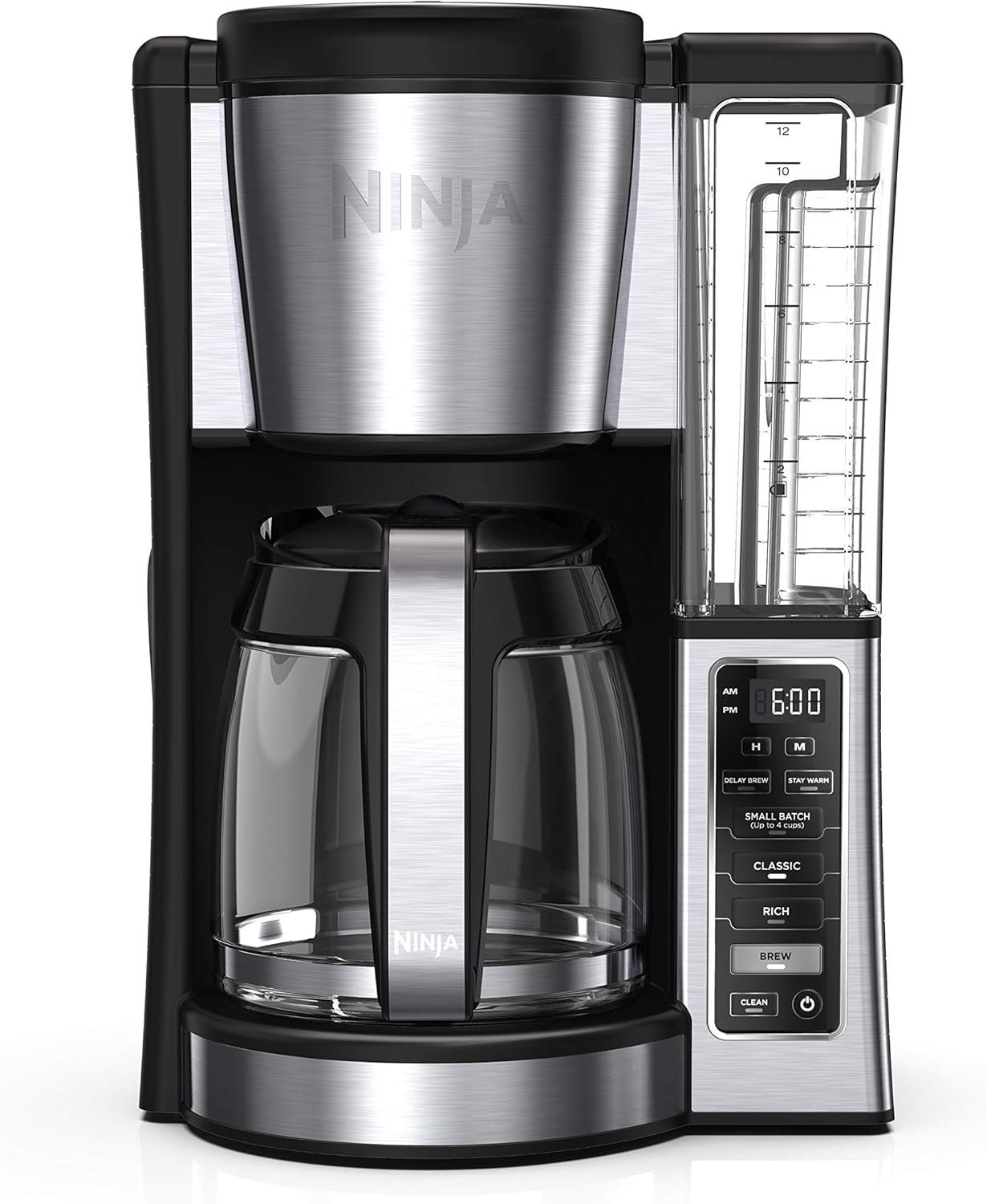
Choosing the right coffee equipment affects extraction, temperature stability, workflow, and ultimately cup clarity for everyday home use. For households and home brewers seeking reliable drip coffee, design details such as water temperature, saturation pattern, reservoir capacity, and programmable controls determine whether a machine produces balanced, repeatable cups or inconsistent, under- or over-extracted brews. The Ninja 12-Cup Programmable Coffee Brewer targets users who want a traditional drip workflow with extras—programmable delay, a removable 60-ounce reservoir, adjustable warming plate, and selectable Classic or Rich brew styles. These features matter when matching grind size, dose, and brew ratios to expected output, especially with small-batch 1–4 cup options. Understanding how the brewer’s heating approach, flow rate, and filter basket interact with grind distribution and brew time helps households optimize extraction without additional devices. The following analysis uses manufacturer specs, materials, functional design, and common coffee science to evaluate suitability for different home profiles and brewing priorities.
Quick Overview
| Feature | Details |
|---|---|
| Product category and brewing method | Drip coffee maker (automatic drip) with Classic and Rich brew styles |
| Capacity and output | 12-cup glass carafe; removable 60-oz water reservoir; small-batch 1–4 cup function |
| Materials and construction | Stainless-steel accents with plastic housing; glass carafe; nylon/plastic filter basket and removable reservoir |
| Heating or temperature system | Manufacturer-stated hotter brewing technology with advanced boiler and temperature control for improved saturation |
| Grind and filter compatibility | Ground coffee input; flat-bottom filter basket; paper filter compatible with included filter shape |
| User interface and programmability | Button controls; 24-hour programmable delay brew; adjustable warming plate up to 4 hours |
| Maintenance and cleaning | Removable water reservoir and carafe; washable filter basket; descaling recommended per manufacturer |
| Best suited users and use cases | Households and home brewers seeking hot, consistent drip coffee and simple programmable workflow |
| Warranty | Manufacturer limited warranty; check SharkNinja for details |
The features above shape brew outcomes and daily usability: hotter brew plumbing and a focused saturation method aim to improve extraction and flavor clarity, while the removable 60-ounce tank and programmable delay enhance convenience for households. The small-batch mode addresses dilution and over-extraction risk with low-volume runs, and the adjustable warming plate preserves drink temperature for limited periods. Materials such as a glass carafe and plastic reservoir influence heat retention and cleaning routines compared with insulated carafes.

Brewing method compatibility and extraction considerations
The brewer’s automatic drip design, with selectable Classic and Rich modes and a small-batch function, is intended to accommodate a range of grind sizes and brew ratios typical of household drip routines. Classic mode likely targets a faster flow and lighter extraction suited to medium grinds and standard brew ratios, while Rich increases contact time and saturation for fuller extraction with slightly finer grind or higher dose. Small-batch mode adjusts flow and extraction mechanics to prevent under-extraction or watery cups when brewing 1–4 cups by changing water distribution and timing relative to dose. Understanding these modes helps match grind profile, dose, and filter type to avoid over- or under-extraction and achieve consistent results across batch sizes.

Grind size, dose, and extraction control
Drip machines rely on matching grind size and dose to expected flow rate and basket geometry. The Ninja’s flat-bottom filter basket and programmed flow suggest medium grind is the baseline for Classic mode, with a slightly finer grind or modestly higher dose improving extraction in Rich mode. Small-batch brewing often requires proportionally less water and a careful grind adjustment to maintain contact time; using the same grind and dose as a full carafe can lead to over-extraction if Rich mode increases saturation. For consistent extraction, aim for a brew ratio (coffee weight to water) appropriate for drip—commonly 1:15 to 1:17 by mass—and tweak grind size to hit brew time targets commensurate with the selected mode.
Filter compatibility and basket design impact
The included filter and integrated scoop indicate a paper-filter workflow compatible with standard basket filters. Flat-bottom baskets generally promote even water distribution across the grounds, but performance depends on showerhead design and spray pattern—components not fully exposed in specifications. Paper filters remove fines and oils, improving clarity compared with metal filters, but can slightly reduce body and perceived strength. For users prioritizing mouthfeel, switching to a high-quality paper that matches the basket shape or using a reusable mesh filter (if supported) will alter extraction dynamics and cleanup frequency.
Small-batch function and dilution control
Small-batch functions address common drip machine limitations when brewing low volumes, like long pause times between water pulses and lower thermal energy, which can produce weak, acidic cups. By adjusting water delivery and timing, this function reduces dilution and maintains temperature consistency for 1–4 cup outputs. Users should still calibrate grind and dose: a slightly finer grind and careful brew ratio help ensure adequate extraction without increasing bitterness. Small-batch mode is particularly useful for single or couple servings where a full-carafe workflow would otherwise compromise cup quality.
Temperature control, heat stability, and their influence on flavor
Temperature plays an essential role in the extraction of acids, sugars, and bitter compounds. The manufacturer’s hotter brewing technology and advanced boiler indicate a design emphasis on reaching and maintaining extraction temperatures that optimize solubility for common drip recipes. Temperature stability during the contact period reduces variability between batches, improving sweetness and reducing sourness associated with under-extraction. An adjustable warming plate preserves serving temperature for up to four hours but is a passive retention method that can slowly degrade sensory qualities due to ongoing heat exposure. The removable reservoir and glass carafe combination interact with thermal performance: the reservoir affects how quickly incoming water reaches temperature, while the glass carafe offers lower heat retention than insulated alternatives.

Manufacturer-stated hotter brewing and extraction temperature
The advertised hotter brewing system suggests an internal heating circuit or boiler calibrated to deliver water near recommended brew temperatures for optimal extraction—commonly 195–205°F (90–96°C). Higher delivery temperatures typically increase extraction efficiency, improving body and reducing perceived acidity if other variables (grind, dose, time) are balanced. Temperature uniformity during saturation helps ensure consistent solubles extraction across the bed. Differences in thermodynamics between units and environmental factors like ambient kitchen temperature will still affect final cup temperature and perceived strength.
Warming plate performance and heat exposure effects
An adjustable warming plate maintains serving temperature for up to four hours per manufacturer information but exposes brewed coffee to continued heat. Prolonged warming can accelerate flavor degradation, increasing bitterness and reducing volatile aroma compounds. For houses prioritizing fresh flavor, limiting warming time, transferring coffee to an insulated carafe after brewing, or using the warming plate only briefly preserves volatile aromatics and balance. The plate’s adjustability helps manage retention interval, but it cannot replace insulated thermal retention for long-term freshness.
Reservoir design and its role in thermal consistency
A removable 60-ounce water reservoir facilitates easy filling and reduces interruptions in morning routines. The reservoir’s material and capacity influence how quickly water draws down and how consistently heated water is supplied to the boiler. A larger reservoir supports back-to-back full-carafe brewing without frequent refills, but if water sits long in the reservoir it can cool slightly, depending on ambient temperature. For best consistency, use room-temperature water and fill shortly before brewing; frequent descaling maintains flow and heating performance that affect temperature delivery to the grounds.
Ease of use, workflow, and daily maintenance
User workflow is shaped by programmability, reservoir ergonomics, interface clarity, and cleaning accessibility. The 24-hour programmable delay brew and simple button inputs aim to streamline morning preparation, while the removable reservoir removes a major step in filling routines. The glass carafe and included filter and scoop present a familiar drip workflow for most households. However, maintenance considerations—such as filter basket accessibility, removable parts cleanability, and recommended descaling intervals—impact long-term ease of ownership. For households that prioritize minimal daily effort, the combination of a removable tank and straightforward controls reduces friction; for users who expect advanced manual controls or integrated grinder compatibility, the appliance remains a primarily automatic drip solution.

Programming, delay brew, and daily scheduling
A 24-hour delay brew supports pre-scheduled brewing using user-selected brew strength and batch size, aiding routines that require ready coffee upon waking. Programmable settings reduce manual steps and ensure the brewer adheres to a consistent extraction schedule when paired with stable grind and dose. Users should pre-fill and prepare the filter and grounds before setting the timer; water sitting in the reservoir for extended periods can affect temperature at the moment of brewing. Delay functionality is most beneficial in stable household contexts where consistent timing and ready access to a grounded coffee supply are routine.
Removable reservoir and fill-to-brew workflow
The 60-ounce removable reservoir streamlines sink-to-machine filling, reducing spills and making refills faster compared with top-fill designs. This design reduces the friction of refilling for daily use and supports quick transitions between brew cycles. Removability also simplifies occasional deep cleaning: the reservoir can be rinsed and wiped without internal access tools. The reservoir’s plastic construction requires attention to mineral buildup where water contacts surfaces; following manufacturer descaling guidance preserves pump and heating efficiency.
Interface, controls, and user learning curve
Button-based controls provide a direct, low-complexity interaction model suited to users who prefer tactile inputs over menus. The layout supports quick selection of brew style (Classic or Rich), batch size, and delay settings without steep learning curves. Absence of touchscreen or advanced flow control limits fine-grained manual adjustment for users desiring precise brew customization. Clear labeling and the presence of an integrated scoop simplify dosing, but users focusing on exact brew ratios by weight will still rely on external scales and timers for rigorous consistency.
Capacity, cleaning, and durability expectations
Capacity and long-term reliability depend on component quality, materials, and serviceability. The glass carafe, stainless-steel accents, and plastic housing balance cost and function: glass provides visual monitoring of volume but offers lower thermal retention than insulated carafes. The removable water reservoir and washable filter basket reduce daily cleaning friction, while periodic descaling protects the heating element and pump. Build materials—plastic reservoir, plastic filter basket, glass carafe—suggest common wear points: reservoir seals and plastic components may require attention over years, and the warming plate can accumulate residue. Durable operation aligns with regular maintenance and adherence to descaling intervals recommended by the manufacturer.

Serving flexibility and carafe design
A 12-cup glass carafe suits households and small gatherings, allowing full-carafe brewing for multiple servings. Glass affords clarity for monitoring but loses heat faster than thermal alternatives, which can affect sensory perception if consumed over extended periods. The adjustable warming plate mitigates heat loss for limited windows, but transfer to an insulated server is preferable for multi-hour retention. Carafe pouring ergonomics and lid fit are common review focus points; a well-designed spout and lid reduce spills and preserve aroma when pouring.
Cleaning, descaling, and maintenance schedule
Regular cleaning tasks include rinsing the removable reservoir, washing the carafe and filter basket, and periodic descaling of internal plumbing and the heating element. Mineral buildup from hard water can degrade flow and temperature delivery; manufacturer guidance typically recommends descaling cycles every 1–3 months depending on use and water hardness. Accessible removable parts simplify these tasks, but hidden plumbing and fixed heating components still require attention through descaling solutions or manufacturer-recommended agents to maintain performance and longevity.
Materials, expected wear points, and longevity
Stainless-steel accents and a plastic housing are common in this category, offering corrosion resistance in exposed metal areas while keeping weight and cost down. Expected wear points include reservoir seals, the filter basket hinge or latch, and the warming plate surface. Glass carafes are breakable in accidental drops, and thermal cycling can stress plastic components over years. Longevity aligns with user maintenance habits: regular cleaning, avoiding abrasive cleaners on critical seals, and following descaling instructions preserve performance and reduce early failure risks.
Pros & Cons
Pros
- Programmable 24-hour delay brew and multiple brew styles provide scheduling flexibility and tailored extraction options. These controls enable consistent timing and selectable contact-time adjustments for different taste preferences without manual intervention.
- Removable 60-ounce water reservoir simplifies filling and reduces spills. The reservoir design shortens refill cycles for multiple brews and makes occasional cleaning easier than fixed-fill units.
- Small-batch 1–4 cup function addresses common drip machine weaknesses at low volumes. By adapting water delivery and timing, the feature reduces dilution and under-extraction when brewing fewer cups.
- Manufacturer-stated hotter brewing technology aims to deliver higher delivery temperatures and better saturation. Improved temperature delivery can increase extraction efficiency, improving sweetness and reducing sourness when grind and dose are balanced.
- Adjustable warming plate preserves serving temperature for up to four hours. The setting gives short-term retention for households that serve across a breakfast window without immediate transfer to thermal servers.
- Included components (carafe, filter, scoop) create a ready-to-use setup consistent with household drip workflows. The glass carafe and integrated scoop help users follow repeatable dosing and pouring steps.
- Compact footprint and stainless-steel finish fit many kitchen environments. The machine’s dimensions and design balance counter space needs with capacity for everyday household use.
Cons
- Glass carafe and warming plate combination provides limited long-term heat retention. Glass loses heat faster than insulated carafes, and extended warming can degrade flavor over time, so thermal servers are preferable for prolonged serving.
- Plastic reservoir and internal plumbing require routine descaling to maintain temperature and flow performance. Hard water environments will see more frequent maintenance and possible mineral buildup affecting heating efficiency.
- Limited manual flow control and absence of integrated grinder constrain precision adjustments. Users seeking exact extraction control by flow profiling or in-line pressure adjustments will find the automatic drip approach less flexible.
- Some users may prefer an insulated carafe or metal thermal options for longer freshness; the included glass carafe is more fragile and requires careful handling and faster consumption to preserve aroma.
Final Verdict: Who This Product Is Best For (and Who Should Skip It)
The Ninja 12-Cup Programmable Coffee Brewer suits households and home brewers seeking a reliable, automated drip brewer that emphasizes hotter delivery and convenient scheduling. Its removable 60-ounce reservoir, 24-hour delay, and Classic/Rich modes make it a practical choice for families or individuals who want consistent hot coffee with minimal manual intervention and who usually consume brewed coffee within a few hours. The small-batch function is particularly useful for single- or two-cup brewing without sacrificing cup strength, and the included components support a straightforward, familiar drip workflow.
Those who should skip this model include users demanding professional-level control over flow profiling, integrated grinding, or long-term thermal retention without additional equipment. Also, households prioritizing multi-hour aroma preservation should prefer machines with insulated carafes or separate thermal servers. For kitchen setups that require commercial-grade durability or advanced manual extraction tuning, more specialized brewers or espresso equipment provide features beyond an automatic drip platform. Overall, the Ninja CE251 competes as a versatile, user-friendly drip solution for 2026 home contexts where programmability and hotter extraction are primary priorities.
Frequently Asked Questions (FAQs)
How does the Ninja CE251 handle small-batch brewing (1–4 cups)?
The small-batch function adjusts water delivery and timing to reduce dilution and maintain appropriate contact time when brewing 1–4 cups. By altering pulse timing and saturation relative to dose, the machine aims to avoid weak, under-extracted cups common in full-carafe drip cycles, but users should still calibrate grind size and dose to match the reduced volume for optimal extraction.
Does the Ninja 12-Cup Brewer reach recommended extraction temperatures?
Manufacturer information indicates a hotter brewing system designed to deliver water at temperatures aligned with common drip recommendations. Higher delivery temperatures improve solubles extraction when grind, dose, and contact time are balanced. Actual temperature at the coffee bed will depend on ambient conditions and maintenance such as descaling.
What maintenance is required to keep the brewer performing well?
Regular tasks include rinsing the removable reservoir, washing the carafe and filter basket, and periodic descaling of internal plumbing and heating components. Frequency depends on water hardness and usage volume; following manufacturer descaling guidance preserves flow, heating efficiency, and long-term reliability.
Is the included glass carafe suitable for long-term heat retention?
A glass carafe provides clear volume visibility but lower thermal retention than insulated or stainless-steel thermal carafes. For multi-hour serving while preserving aroma and balance, transferring brewed coffee to an insulated server is recommended instead of relying on the warming plate for extended periods.
Can this brewer use reusable filters or only paper filters?
The design uses a flat-bottom filter basket compatible with standard paper filters sized to the basket. Users can often switch to a compatible reusable mesh filter if it matches the basket geometry, but switching filter type alters body and extraction dynamics and may require grind and dose adjustments.
Who benefits most from the Ninja CE251’s features?
Households and home brewers who want a programmable, user-friendly drip coffee experience benefit most — particularly those valuing a removable reservoir for easy filling, selectable Classic and Rich modes for extraction tuning, and a small-batch option for single-serve flexibility. Those needing advanced manual flow control or integrated grinding should consider other solutions.
Does the warming plate damage coffee flavor if used frequently?
Prolonged exposure to heat on a warming plate can accelerate flavor degradation by reducing volatile aromatics and increasing bitterness. Using the warming plate for short periods preserves serving temperature without extensive flavor loss; for longer retention, transferring coffee to an insulated server is preferable.
What grind size works best with the Ninja CE251?
A medium grind is typically suitable for Classic mode with a flat-bottom basket, while Rich mode may benefit from a slightly finer grind or increased dose to extend extraction. For small-batch brewing, finer adjustments to grind size help maintain appropriate contact time and avoid under-extraction.