Ovente KG83 Glass Kettle Review: Fast Boil for Coffee & Tea
Why kettle choice matters for home coffee and tea brewing
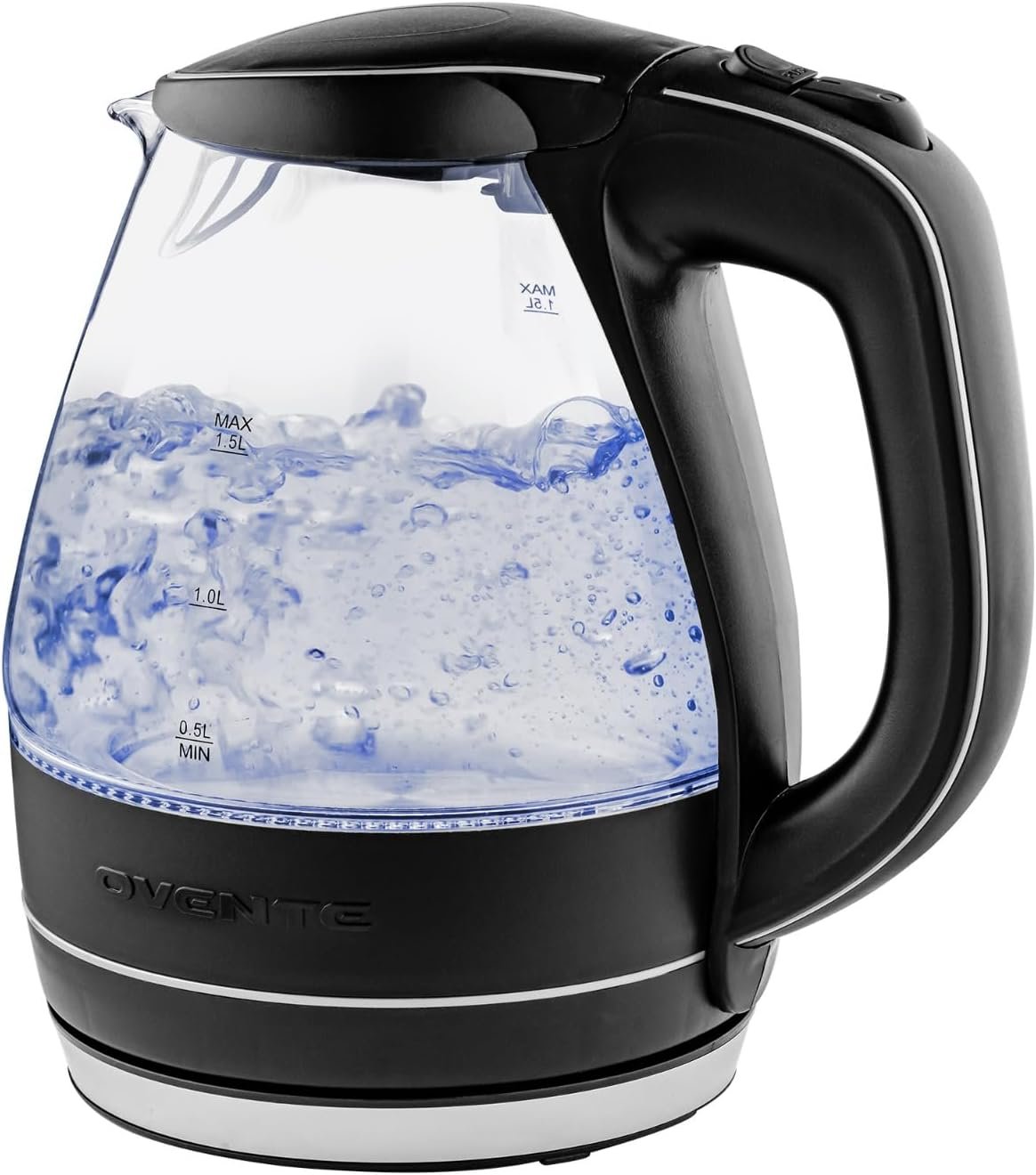
Selecting the right kettle influences extraction, temperature stability, and daily workflow for home brewers and household kitchens. The Ovente KG83 borosilicate glass electric kettle targets users who prioritize rapid hot-water delivery, visual clarity of the boiling process, and straightforward operation for coffee and tea preparation. For pour-over coffee, accurate water temperature and repeatable flow are critical to control extraction; for tea, reaching and holding appropriate infusion temperatures protects delicate flavors. Countertop kettles also affect cleanup routines, countertop footprint, and heat exposure in kitchen environments. This review uses product specifications, design principles, material characteristics, and aggregated customer feedback to assess how the KG83 aligns with common brewing needs: capacity for small groups, a concealed heating element for reduced scaling signage, visible water level and boil status, and safety features like auto shut-off and boil-dry protection that shape daily usability.
Quick Overview
| Feature | Details |
|---|---|
| Product category | Electric countertop kettle (glass) intended for hot water delivery for coffee, tea, and instant foods |
| Capacity & output | 1.5 liter capacity; 1100 watts heating power; 360° rotary base with cord storage |
| Materials & construction | Heat-tempered borosilicate glass body with stainless steel accents and concealed stainless steel heating element |
| Heating system | Concealed stainless steel heating element; LED halo illumination indicates operation |
| Filtration & compatibility | Removable, washable spout filter for reducing particulates from tap water; compatible with pour-over and French press workflows requiring hot water but not with devices requiring direct electric temperature control |
| Best suited users | Households, casual pour-over coffee makers, tea drinkers, small gatherings, kitchen countertops |
| Intended use cases | Brewing coffee and tea, preparing instant foods, hot cereal, soup |
| Warranty | Manufacturer warranty for defects in materials and workmanship (2 years per manufacturer disclosure) |
The table highlights functional features that influence brewing outcomes and daily convenience. Capacity and power determine how quickly a full pot reaches boiling, while borosilicate glass construction affects thermal shock resistance and visibility of water level. A concealed heating element reduces exposed scaling surfaces, and a removable spout filter helps maintain cleaner water for beverage preparation, though the unit lacks precise temperature presets often desired for specialty brewing.

Build quality and materials: durability, heat behavior, and safety
The KG83 uses heat-tempered borosilicate glass for the kettle body and high-grade stainless steel for the base and concealed heating element, combining visual clarity with material durability suitable for countertop use. Borosilicate glass offers better resistance to thermal shock than ordinary glass, which reduces risk of cracking during repeated boil cycles; stainless steel parts provide corrosion resistance where water and metal meet. The concealed stainless steel heating element minimizes direct exposure to water, decreasing the surface area for rapid mineral buildup compared with exposed coils. Safety features such as automatic shut-off and boil-dry protection are embedded into the electrical control system, while a stay-cool handle isolates the user from the hot glass body. These material and safety choices shape long-term reliability and influence maintenance frequency.

Materials and thermal behavior
Borosilicate glass is commonly chosen for electric kettles intended to show the boil and minimize glass stress. Its lower coefficient of thermal expansion compared with soda-lime glass helps withstand rapid temperature changes typical of boiling cycles. Stainless steel components, including the concealed heating element housing, add durability and reduce direct metal contact that can impart metallic tastes when mineral concentrations are high. The combination supports predictable heat transfer to water while maintaining a visible boil for users who prefer to monitor the process visually. Over time, mineral scaling can form on concealed elements, requiring periodic descaling to preserve heating efficiency.
Safety engineering and electrical protections
The KG83 incorporates an automatic shut-off triggered at boil and boil-dry protection to prevent heating when water is absent, common safety features in modern kettles. A secure locking lid and stay-cool handle reduce scald risks from accidental tipping or lid opening during operation. The 360° rotary base isolates mains connections from the kettle body, enabling cordless lift-and-pour convenience without exposed wiring. Aggregated customer feedback frequently highlights appreciation for these protections, while also noting that the glass body will be hot during and immediately after boiling, so reliance on the handle and lid lock remains important for safe operation.
Heating performance and temperature stability for brewing
Heating performance is defined by wattage, element design, and thermal losses: the KG83 reports 1100 watts driving a concealed stainless steel heating element, enabling rapid full-capacity boiling suitable for general hot-water needs. Wattage and the enclosed heating element dictate time-to-boil and how evenly water approaches target temperature; a concealed element typically transfers heat effectively to the vessel but concentrates scaling on its surface over long-term use. Temperature stability after boil is affected by the glass body’s heat retention characteristics—borosilicate glass provides less insulation than thicker-walled kettles or insulated models, so heat loss after boil is faster. For temperature-sensitive pour-over or tea brewing where holding a precise target is desirable, the kettle functions best as a fast heat source, with users recommended to measure or allow brief cool-down for lower-temperature infusions.

Boil speed, heat transfer, and practical implications
At 1100 watts, the KG83 falls within the mid-range of household electric kettles; this level of power allows a full 1.5-liter volume to reach a rolling boil in a timeframe suitable for kitchen workflows. Faster boil speeds reduce waiting but do not replace precise temperature control for specialty brewing. The concealed stainless steel element transfers energy directly into the water while reducing exposed scaling surfaces; however, energy transfer efficiency can decline with mineral buildup. Users aiming for repeatable pour-over extractions should account for the kettle’s rapid heat-up and possible post-boil temperature drop due to glass heat loss when timing pour and bloom steps.
Temperature behavior for tea and specialty coffee
Exact temperature control presets are absent; therefore, the KG83 operates primarily as a single-step heat source that reaches boiling. For tea drinkers requiring distinct infusion temperatures—such as 175–185°F for green teas or 195–205°F for black teas—manual cooldown timing or a thermometer will be necessary to achieve optimal steeping temperatures. Similarly, for pour-over coffee, the kettle supports hot-water supply but lacks precise temperature hold or variable temperature control, which can impact extraction if tight temperature consistency is required. The visible boil and quick refill workflow support routine beverage preparation where absolute temperature precision is not the primary concern.
Capacity, serving flexibility, and workflow fit
The 1.5-liter capacity positions the KG83 as a mid-sized household kettle that accommodates multiple cups per boil, suitable for families, small gatherings, or sequential brewing tasks like multiple pour-overs. Capacity affects both the number of servings and heat-up efficiency: smaller fills reach target temperatures faster, which can benefit single-serve brewing and temperature-sensitive steeping. The 360° rotary base with cord storage supports quick placement from either hand, and the cordless pour convenience simplifies transfer to pour-over devices, French presses, or tea infusers. The kettle’s footprint and dimensions make it compatible with standard kitchen counters, while the glass form factor allows visible water level and boil status—useful for planning batches and avoiding overfilling.

Serving scenarios and batch preparation
A 1.5-liter volume covers several standard 8-ounce servings and supports making kettles of tea or multiple coffee servings during morning routines. For households that prepare hot water for different beverages in succession, the capacity provides headroom so refilling frequency is reduced. For single-cup specialty coffee preparation, filling smaller volumes reduces wait time and post-boil heat loss; this kettle design supports variable fill sizes without performance penalties. The removable spout filter helps prevent particulates from entering devices like pour-over cones, though it does not filter dissolved ions that affect flavor or scaling on equipment.
Countertop workflow and ergonomics
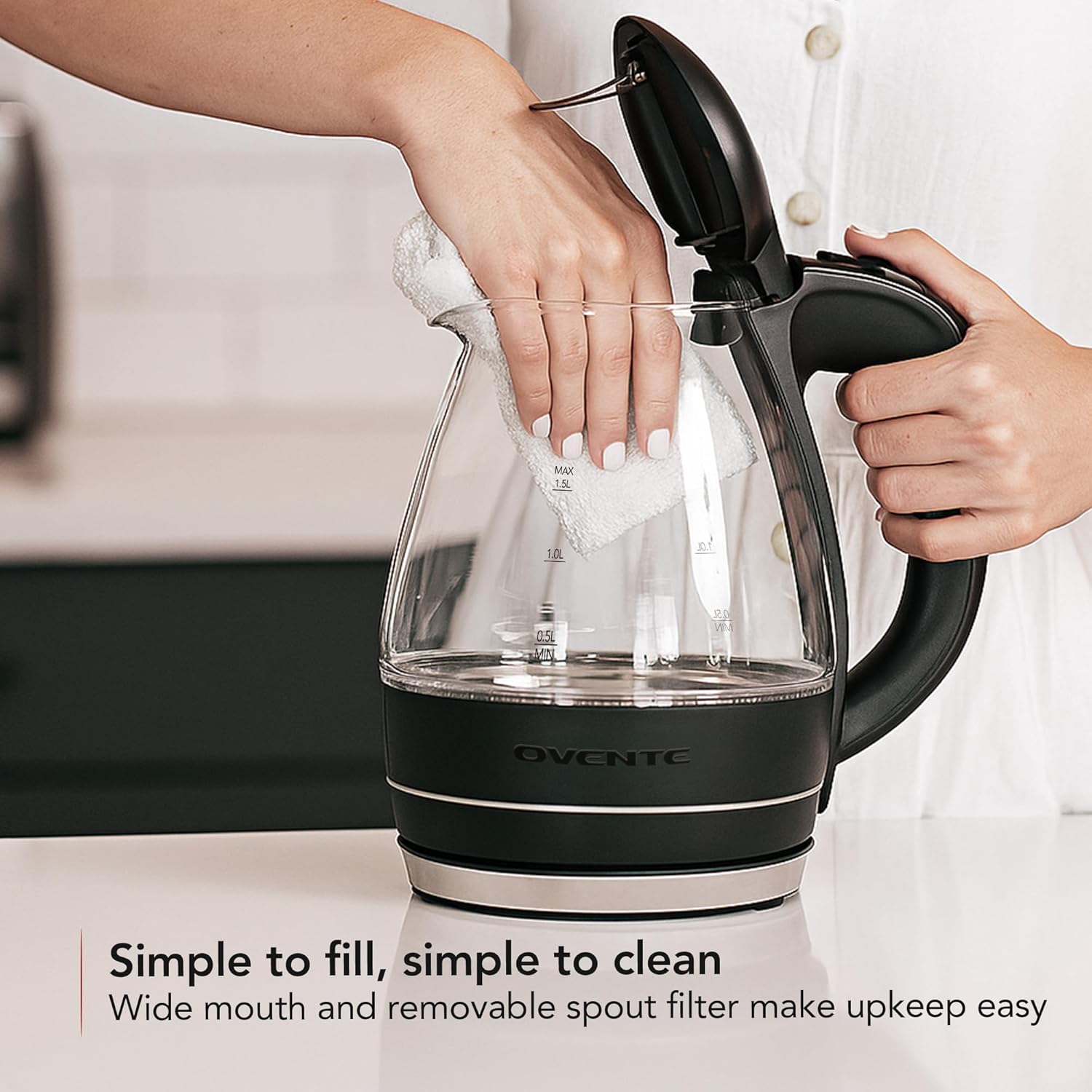
The 360° base allows ambidextrous placement and straightforward lifting from the base for pouring, while a stay-cool handle provides a clear grip point away from the hot glass body. A one-touch flip-back lid simplifies refills and cleaning access to the interior, and the wide opening supports easier rinsing and occasional descaling. The base’s cord storage reduces countertop clutter, and the compact dimensions make the unit suitable for kitchens with limited counter space. Ergonomic choices prioritize convenience for repeated daily use in household routines.
Ease of use, cleaning, and maintenance expectations
Ease of use centers on straightforward controls, visible operation cues, and accessible maintenance features. The KG83 employs a one-touch power control with LED halo illumination to indicate active heating, and its wide lid opening and removable spout filter simplify rinsing and debris removal. Cleaning intervals depend on water hardness; the concealed stainless steel heating element reduces exposed coil scrubbing but concentrates limescale formation around element housing, requiring routine descaling with acid-based solutions to maintain heat transfer efficiency. The glass body is hand-wash recommended per manufacturer care instructions; while the material resists staining, mineral deposits at the water line can become visible. Users should expect periodic descaling and filter cleaning to preserve performance and water clarity.

Routine cleaning and descaling procedures
Regular cleaning includes rinsing the removable spout filter, wiping the glass exterior, and descaling the interior at intervals determined by local water hardness. Descaling with vinegar or citric acid solutions loosens mineral buildup on the concealed element and internal surfaces; manufacturers typically recommend following specific concentration and soak durations to avoid damage. Because the product care instructions specify hand washing, full submersion of electrical components must be avoided—focus cleaning on the glass pot and removable filter, using the base only for cord storage and not for wet cleaning. A consistent maintenance schedule will help retain heating efficiency and clean-tasting results.
User controls, indicators, and daily workflow
Simple one-button operation and halo LED illumination create an intuitive experience for users who prefer minimal controls. The absence of temperature presets reduces complexity but removes direct temperature-setting functionality for specialty tea or coffee workflows that require precise temperatures. Visual cues—visible water level and boiling action—help timing for manual cooldowns, and the secure locking lid supports safe transport from base to cup. Aggregated user feedback suggests that straightforward operation and easy access for cleaning are valued by household users seeking low-complexity appliances.
Compatibility with brewing methods and extraction quality
Compatibility hinges on delivering hot water at appropriate temperatures and supporting controlled pouring. The KG83 provides rapid boiling and a cordless pour capability that pairs well with manual brewing methods like pour-over, French press, and tea steeping routines that require hot water rather than active temperature regulation. For pour-over extraction quality, consistent temperature and controlled flow rate are primary factors; while the KG83 supplies hot water quickly, it lacks a narrow gooseneck spout for flow control, meaning that pour technique or an auxiliary pouring kettle may be needed for high-precision pour-over profiles. For French press and immersion brews, where water temperature and steep time are most important, the kettle functions adequately as a reliable heat source.
Pour-over considerations and flow control
Pour-over brewing benefits from precise flow control and consistent water temperature throughout the pour. The KG83’s standard spout and cordless design facilitate pouring but do not provide the fine flow rate control offered by dedicated gooseneck kettles. This affects bloom control and pour distribution for users pursuing highly consistent extraction curves. To mitigate this, users can pour more slowly, use smaller fill volumes to limit pour duration, or transfer boiled water into a separate gooseneck kettle or insulated pourer to refine flow. The visible boil and quick refill capability remain helpful for multi-cup pour-over sessions.
Tea brewing and immersion methods
For tea brewing, reaching a boil and then allowing the water to cool to target infusion temperatures is common; the KG83 reliably brings water to boiling and the glass body allows visible monitoring of steam and boiling action. Because the kettle lacks temperature presets and hold features, precise lower-temperature infusions require manual cooldown timing or a thermometer. For immersion methods such as French press coffee, where a single target temperature and consistent steep time drive extraction, the KG83 provides repeatable hot-water supply but users should account for heat loss during transfer and pour to achieve consistent extraction profiles.

Pros & Cons
Pros
- Rapid heating and visible boil: The 1100-watt concealed heating element brings water to a rolling boil quickly and the borosilicate glass body provides clear visual feedback on boil status, which helps timing for pour-over and tea steeping workflows. Regular descaling preserves this efficiency.
- Durable glass and stainless steel construction: Heat-tempered borosilicate glass combined with stainless steel accents offers better thermal shock resistance and corrosion resistance than standard glass, supporting long-term countertop use when handled per care instructions.
- Safety features reduce misuse risk: Automatic shut-off at boil, boil-dry protection, a secure locking lid, and a stay-cool handle lower the likelihood of overheating or accidental burns when used according to manufacturer guidance.
- Removable, washable spout filter: A washable filter helps reduce particulates and visible debris entering cups or brewing devices, which is useful in areas with higher tap particulates and for cleaner pour-over setups.
- Cordless 360° base and compact footprint: The rotary base provides ambidextrous placement and integrated cord storage for tidy countertops, improving ergonomic access during multi-step brewing sessions.
- Multi-purpose utility: Suitable for coffee, tea, instant foods, and other kitchen uses, the kettle supports diverse household hot-water needs, providing flexibility for families and small gatherings.
- Warranty coverage: A manufacturer-stated warranty for defects in materials and workmanship provides assurance about expected durability when used normally.
Cons
- No temperature presets or hold function: The absence of variable temperature control limits precision for specialty tea and coffee brews that require stable, non-boiling temperatures, requiring manual cooldown or a thermometer for accuracy.
- Standard spout limits pour precision: Without a gooseneck spout, fine flow control for pour-over extraction is more difficult, which can impact repeatability for users seeking strict pour profiles.
- Glass body heat retention is limited: Borosilicate glass transmits heat well but offers less insulation than double-walled or insulated kettles, resulting in faster post-boil temperature loss and potential need to work quickly for precise extraction.
- Hand-wash recommended and periodic descaling required: Manufacturer care instructions call for hand washing and regular descaling to maintain heating efficiency; users in hard-water areas should expect additional maintenance.
Final Verdict: Who This Product Is Best For (and Who Should Skip It)
The Ovente KG83 borosilicate glass electric kettle suits household users seeking a reliable, visually transparent heat source for coffee, tea, and general hot-water tasks. Its 1.5-liter capacity, 1100-watt heating element, and safety features align well with families, casual pour-over brewers, tea drinkers who manually manage infusion temperatures, and kitchen environments that value a clear view of boiling action. The combination of concealed stainless steel heating element and removable filter supports clean-tasting water and straightforward maintenance when descaling schedules are followed.
This kettle is less suitable for specialty brewers who require precise temperature presets, long-term temperature holding, or refined pour control inherent to gooseneck kettles. Users prioritizing insulated heat retention or single-handed, high-precision pour-over technique should consider temperature-controlled or gooseneck alternatives. Overall, the KG83 is a practical mid-range electric kettle that balances aesthetic clarity, safety protections, and everyday utility for a broad range of home brewing and kitchen tasks.

Frequently Asked Questions (FAQs)
How fast does the Ovente KG83 electric kettle bring water to a boil?
The kettle uses an 1100-watt concealed stainless steel heating element to heat water efficiently; a full 1.5-liter volume reaches a rolling boil in a relatively short timeframe for household kettles. Actual time-to-boil varies with starting water temperature, ambient conditions, and altitude, and mineral scale buildup over time can slow heating efficiency if descaling is not performed periodically.
Is the Ovente KG83 suitable for specialty coffee pour-over brewing?
The KG83 supplies rapid hot water and cordless pouring convenience that supports pour-over workflows, but it lacks a gooseneck spout and variable temperature presets. Users who prioritize fine flow control and exact temperature settings for consistent extraction may prefer a temperature-controlled gooseneck kettle. The KG83 functions well as a hot-water source for less precision-dependent pour-over routines or as a preheat and refill source.
What maintenance does the KG83 require to maintain performance?
Routine maintenance includes rinsing and cleaning the removable spout filter, wiping the glass body, and periodic descaling to remove mineral deposits from the concealed heating element and interior. The manufacturer recommends hand washing the glass components and avoiding submersion of electrical parts. Frequency of descaling depends on local water hardness; following a regular schedule preserves heating efficiency and water clarity.
Does the kettle provide temperature control for different tea types?
The KG83 does not include variable temperature presets or a hold function. It brings water to a rolling boil and relies on manual cooldown or a separate thermometer to reach lower infusion temperatures suitable for delicate teas. For users who require precise preset temperatures for different tea varieties, a kettle with adjustable temperature control is more appropriate.
Are there safety features to prevent accidental overheating or dry boiling?
Yes, the kettle incorporates automatic shut-off at boil and boil-dry protection that prevents the unit from powering when water is absent, reducing the risk of overheating. Additional safety elements include a secure locking lid and a stay-cool handle. Despite these features, the glass body becomes hot during operation and users should rely on the handle and lid lock to avoid burns.
How does borosilicate glass affect heat retention and durability?
Borosilicate glass offers better thermal shock resistance than standard glass, reducing cracking risk from rapid temperature changes. However, it provides less insulation than double-walled or insulated kettles, so water will lose heat faster after boiling. The glass is durable for countertop use when handled per care instructions and supports visible monitoring of boiling action for brewing workflows.
Can the removable spout filter improve brewed water quality?
The removable, washable spout filter reduces particulates and visible debris from tap water entering cups or brewing devices, which can improve perceived clarity. It does not remove dissolved minerals or ions that affect flavor and scaling; those require filtration systems or water treatment. Regular cleaning of the filter preserves effective particle reduction.