OXO Conical Burr Grinder — Precise Grinds for Home Brewing
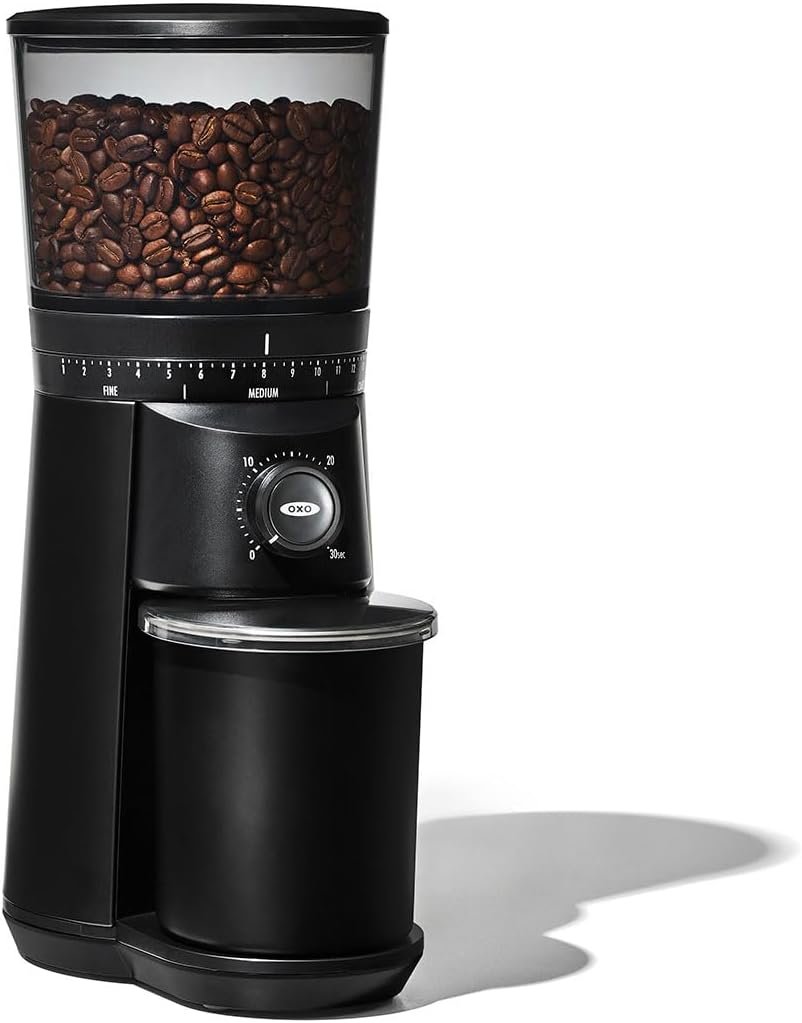
Choosing coffee equipment influences extraction, flavor clarity, and daily workflow in a home setting. For home brewers and coffee enthusiasts seeking consistent extraction across drip, pour-over, French press, cold brew, and espresso-adjacent applications, grinder selection is central: burr geometry, grind range, and grind uniformity determine how water interacts with ground coffee particles. Kitchen space, serving needs, and routine complexity also shape the right choice; some users prioritize single-button simplicity and memory functions, while others require fine micro-adjustments for espresso or large capacity for households. The OXO Brew Conical Burr Grinder presents a combination of stainless steel conical burrs, 15 main grind settings with micro-adjustments, a large UV-tinted hopper, and a one-touch timer memory intended to streamline everyday grinding. Evaluating this model against core brewing principles—grind distribution, particle-size consistency, motor heat transfer, and workflow integration—helps match the appliance to brewing goals and household routines without relying on subjective impressions.
Quick Overview
| Feature | Details |
|---|---|
| Product category and brewing method | Electric conical burr grinder for home coffee preparation; supports espresso-adjacent to coarse methods (drip, pour-over, French press, cold brew) |
| Capacity and output | Hopper holds up to 12 ounces (approximately 0.75 pounds) of whole beans; grounds container is removable stainless steel |
| Materials and construction | Stainless steel conical burrs; plastic and metal housing finished in matte black; UV-blocking hopper tint |
| Motor and heat control | DC motor specified to reduce heat buildup during short-duty grinds |
| Grind settings and controls | 15 indexed grind settings plus micro-adjustments; one-touch start with memory function for last time setting |
| Grind handling and static control | Trap door in hopper to prevent spills; static-fighting stainless steel grounds container to reduce cling and mess |
| Dimensions and fit | Product dimensions 7.5″L x 5.3″W x 12.9″H; item weight 4.47 pounds; 120V operation |
| Best suited users and use cases | Home brewers, small households, users seeking consistent daily grinds with minimal adjustment; compatible with drip, pour-over, French press, and manual espresso puck preparation |
These features combine to influence daily brewing results and usability: stainless steel conical burrs and a broad grind range support extraction control across methods, while the large UV-tinted hopper and memory timer streamline repeatable workflows. Motor type and burr design help limit heat transfer during short grinding cycles, preserving volatile aromatics when used within typical home-brew batch sizes.

Grind quality and extraction potential
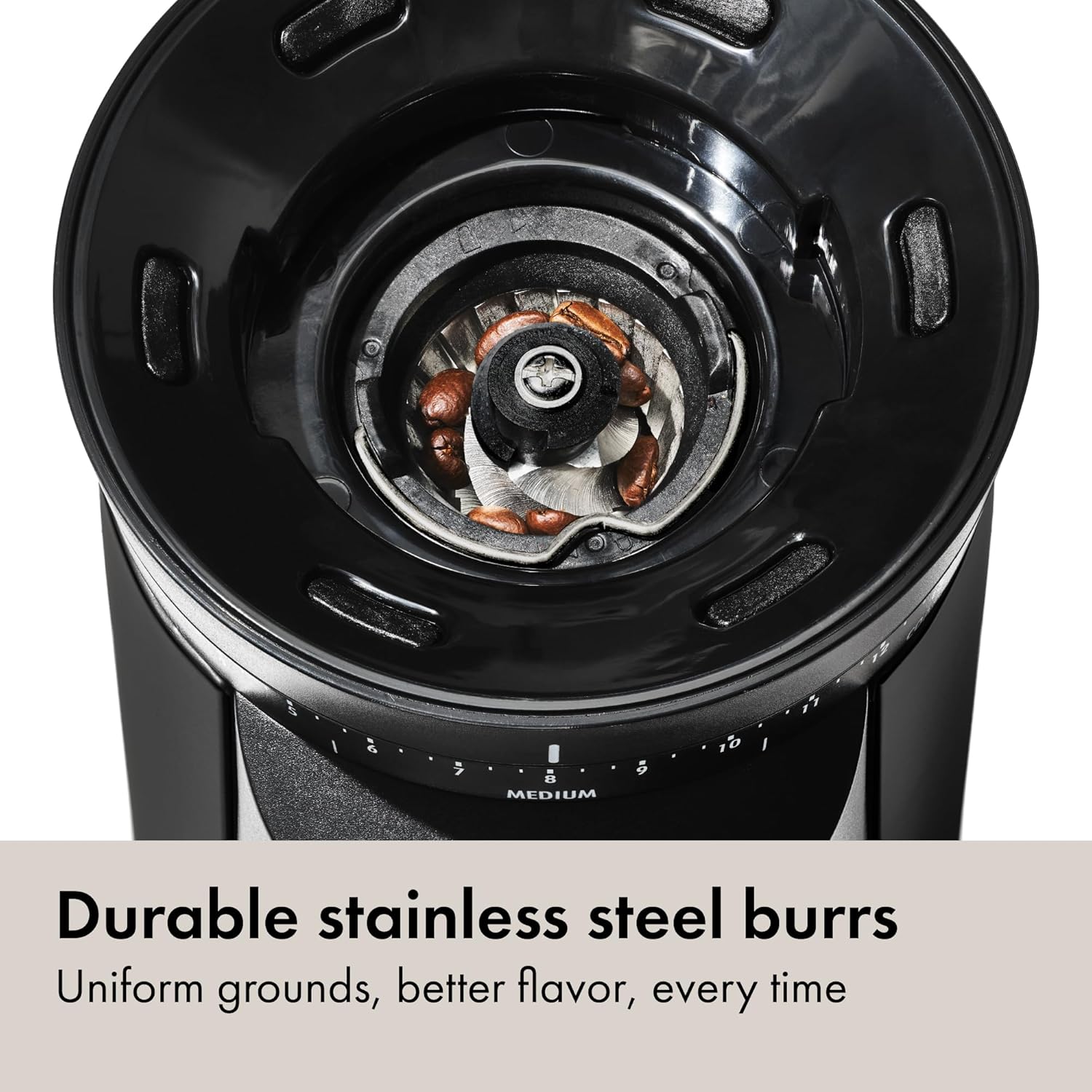
Grind quality is a primary determinant of extraction uniformity and flavor balance; the OXO Brew Conical Burr Grinder emphasizes uniform particle size through stainless steel conical burr geometry. Conical burrs produce a bimodal distribution with fewer fines when compared to some blade or low-end flat burr designs, which helps reduce over-extraction risks in fine settings and under-extraction in coarser settings. The combination of 15 indexed main settings and micro-adjustments allows users to dial particle distribution toward target brew ratios and contact times—critical for espresso-style short contact extractions and longer steeping methods. Motor type and grind speed affect heat transfer and static; the DC motor specification is intended to slow grinding speed relative to high-RPM AC motors, lowering thermal load on beans and volatile loss during typical home brewing batch sizes.
How particle size affects extraction and flavor balance
Particle size directly governs surface area available to water during extraction. Finer particles accelerate extraction and deliver stronger solubles per unit time, which is desirable for espresso and fast pour-over recipes but can increase fines that cause channeling or over-extraction. Coarser particles yield slower extraction appropriate for immersion methods like French press and cold brew. Uniformity is equally important: a tighter particle size distribution reduces pockets of under- and over-extracted material, improving clarity and sweetness. The OXO Brew’s conical burrs and adjustable steps are aligned with these principles, enabling systematic adjustments to reach target brew ratios and extraction yields for different methods.
Burr design and thermal considerations
Conical stainless steel burrs are known for durability and consistent geometry over time. Burr profile and cutting angle influence particle-size distribution and retention of fines. Slower grind speeds associated with DC motors help limit frictional heating; lower heat transfer preserves volatile aromatics and reduces premature degassing during grinding. However, extended continuous grinding to process large volumes will still generate some heat; recommended workflow is grinding in short bursts for larger batches. The one-touch timer and memory feature facilitate consistent dosing time, which—paired with a scale and dose technique—supports predictable extraction outcomes.
Brewing method compatibility and grind range
Compatibility across brewing methods depends on the grinder’s ability to reach required particle sizes and produce consistent distributions; this model’s 15 main settings plus micro-adjustments aim to span the range from fine espresso-adjacent grinds to coarse immersion sizes. For pour-over and drip, mid-to-fine settings provide control over flow rate and contact time, while the coarser settings accommodate French press and cold brew steeping. True pressurized or commercial espresso machines often demand extremely fine, narrowly distributed grinds and may perform better with higher-end stepless or precision flat-burr grinders; however, this conical model supports manual espresso puck preparation, Moka pots, and AeroPress recipes when fine-tuned. Grind range flexibility is suitable for households that rotate between methods rather than users committed exclusively to high-demand prosumer espresso extraction.
Performance for pour-over and drip methods
Pour-over and drip methods primarily require consistent mid-range particle sizes to control flow rate and extraction. The OXO Brew’s indexed settings and micro-adjustments enable iterative tuning: a user can make small changes to grind size to adjust brew time and total dissolved solids. The stainless steel grounds bin reduces static and clumping, which aids even distribution in paper filters and improves bloom behavior. For pour-over techniques that rely on precise flow control, achieving repeatable grind settings via the memory timer and discrete indexed steps supports consistent cup-to-cup results when paired with stable brew ratios and temperature control.
Suitability for espresso-adjacent and immersion brewing
Immersion methods like French press and cold brew benefit from coarser, uniform grinds; the grinder’s coarser settings accommodate these needs and its hopper capacity supports multi-cup batches. For espresso-adjacent uses—manual tamping or stovetop methods—the fine end of the range can approach appropriate particle sizes, but users seeking sub-50 micron consistency and minimal fines for pressurized espresso machines may prefer dedicated high-precision grinders. The micro-adjustments help reduce jumps between indexed steps, making it practical to fine-tune for AeroPress and Moka pot extraction where grind size significantly alters pressure buildup and extraction dynamics.
Ease of use, controls, and workflow integration
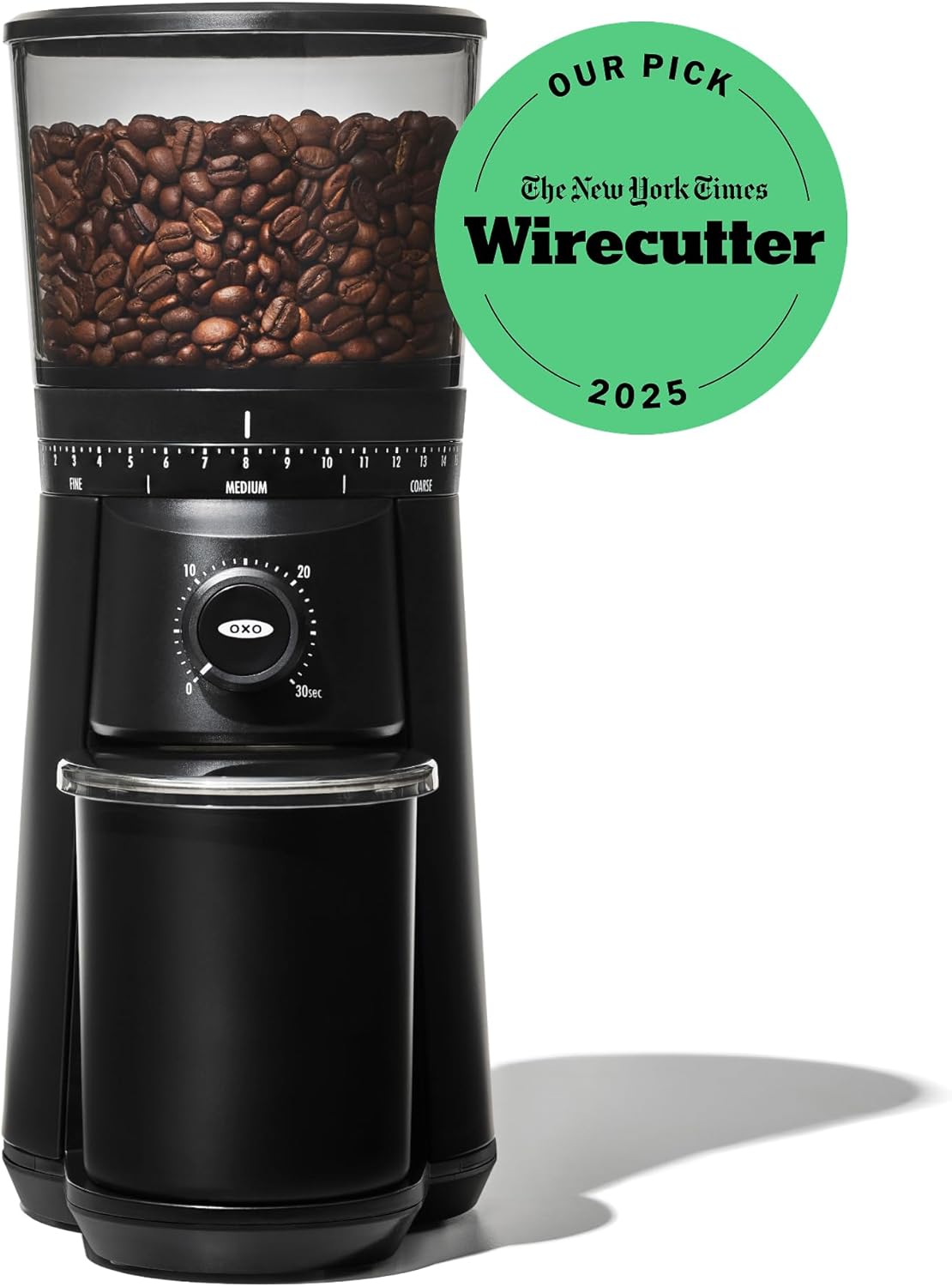
Ease of use influences daily adoption and consistency; the OXO Brew Grinder pairs an intuitive one-touch start and a memory feature that recalls the last timer setting, streamlining repeatable dosing for routine brew sessions. The control layout centers on an indexed grind dial with clear stepped settings plus micro-adjustment capability, balancing accessibility for beginners with refinement for enthusiasts. The trap door in the hopper prevents bean spillage when removing or refilling the hopper, and the removable stainless steel grounds container resists static cling for cleaner transfers into brewers. Workflow integration extends to hopper capacity and how the grinder interfaces with scales, dosing tools, and storage; the grinder supports batch grinding and single-dose workflows but does not include a built-in scale, so pairing with a digital scale is advisable for precision dosing.

One-touch operation and memory function benefits
A one-touch timer with memory reduces the number of decisions during routine brewing, which helps maintain consistent dose sizes across consecutive preparations. This simplifies workflows for households that prepare the same brew strength daily. Memory recall of the last grind time is especially useful when combined with a grind-size setting that remains stable between sessions; together they can reproduce consistent ground weights when grind time correlates reliably with output. For users focused on exact mass dosing, time-based dosing should be calibrated against a scale because bean density and roast level affect mass-per-second output.
Integration with daily routines and equipment
The grinder’s compact footprint and 12-ounce hopper capacity fit most kitchen counters and support multi-cup households. Removing the hopper to refill or change beans is simplified by the trap-door feature. Static-reducing stainless steel grounds container eases transfer to filters and portafilters. Since the unit lacks a built-in scale or set-and-forget dosing by weight, combining it with a scale and consistent tamping or filter dosing workflow improves reproducibility. Users with tight counter space should note the grinder’s 12.9-inch height for clearance around overhead cabinets.
Capacity, hopper design, and serving flexibility
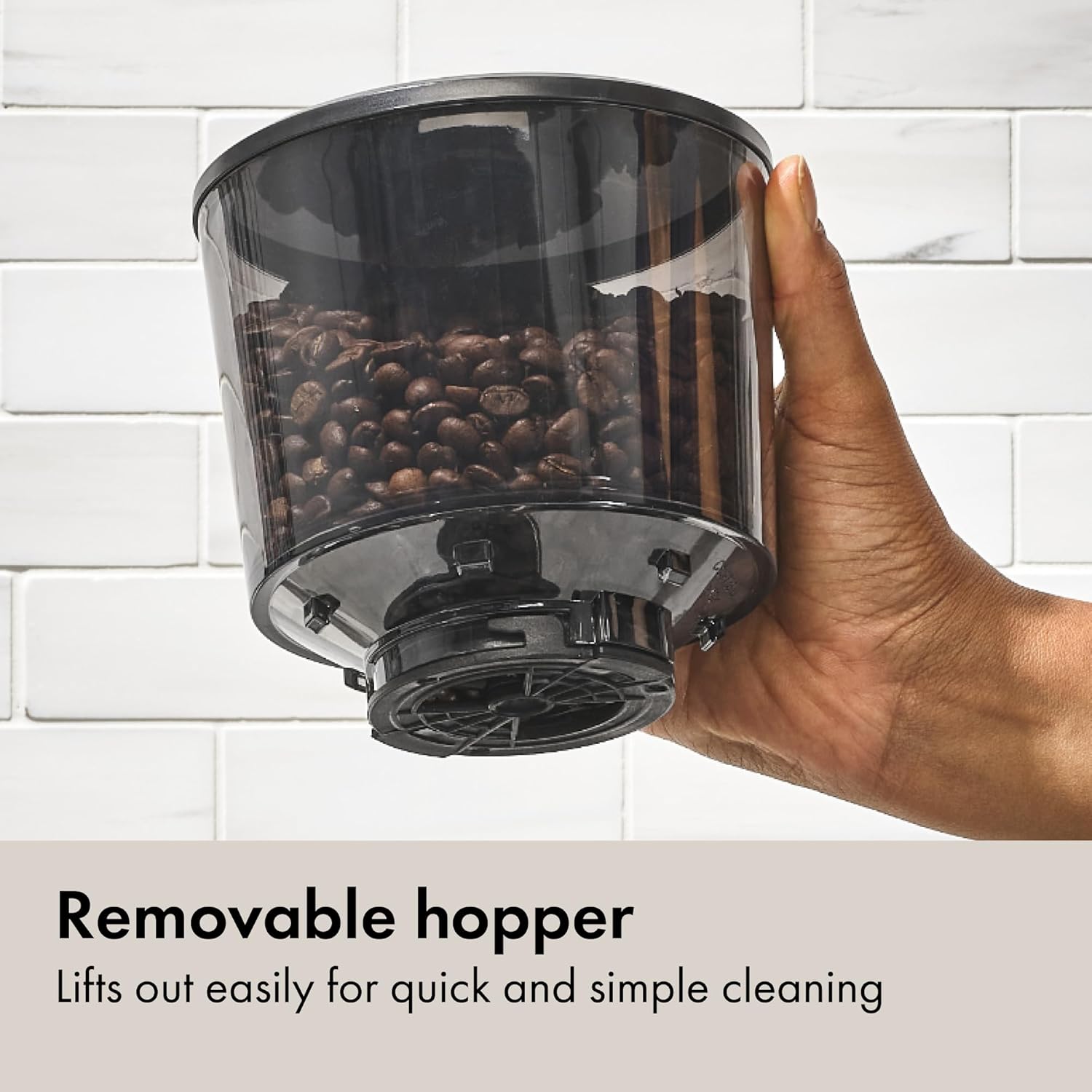
Hopper capacity and ground output determine serving flexibility and storage behavior. The OXO Brew’s removable hopper holds up to 12 ounces of beans (approximately 0.75 pounds), making it suitable for small to medium households and facilitating batch grinding for multiple servings. The UV-blocking tint on the hopper helps reduce light exposure that can accelerate flavor degradation in roasted beans stored on sunlit countertops. A trap-door mechanism prevents accidental bean spillage when the hopper is removed, and the grounds container is sized for typical household doses. For users who roast at home or cycle single-origin beans frequently, the ability to remove the hopper and switch beans quickly supports varied menus, while those who prefer daily single-dose grinding might opt to grind smaller quantities to preserve bean freshness.

Hopper tint and bean freshness considerations
Exposure to light and air accelerates oxidation and flavor loss in roasted beans; the UV-blocking tint reduces direct light transmission, which is beneficial in kitchens with brighter ambient light. However, the hopper is not an airtight long-term storage container; bulk-stored beans intended for prolonged preservation should be kept in dedicated sealed containers or moved to refrigeration/airtight storage when not being used. The removable hopper aids bean rotation and cleaning, allowing users to switch beans between sessions without cross-contamination when properly cleaned.
Batch size and serving scenarios
A 12-ounce hopper supports grinding for multiple cups or small gatherings without frequent refills, useful for households that prepare several pots per day. For single-serve enthusiasts who value maximum freshness, the hopper size allows filling small doses and storing the remainder elsewhere to minimize exposure. When grinding for espresso-style preparations that require fine settings, shorter timed bursts can reduce heat and preserve volatile aromatics; for immersion brews requiring larger volumes, the capacity enables efficient single-batch grinding.
Cleaning, maintenance, and long-term durability
Long-term performance depends on burr wear, motor reliability, and ease of maintenance. Stainless steel conical burrs are durable and resist chipping when used with properly prepared beans; however, like all burrs, they will accumulate oils and fines that affect flavor if not periodically cleaned. The removable hopper and grounds container simplify access for routine cleaning, and the trap-door design reduces accidental bean spills during maintenance. Static-fighting stainless steel grounds container reduces clinging particles and makes tactile cleaning easier. Motorized components should be kept free of excessive dust and oil buildup, and routine burr replacement intervals will vary with frequency of use and roast profile—darker roasts produce more oils and may require more frequent cleaning.

Recommended cleaning routines and component care
Routine maintenance includes emptying the grounds container after each use, wiping the hopper and exterior surfaces, and using a brush to remove fines around the burrs. Periodic deeper cleaning—removing the hopper and accessing the burr assembly according to manufacturer guidance—helps maintain grind consistency and prevents stale oil buildup. Cleaning tablets exist for some grinders but are not a substitute for disassembly and manual cleaning when oils accumulate. Adherence to the manufacturer’s care instructions and avoidance of water contact with motor components protects long-term reliability.
Durability expectations and replacement parts
The stainless steel burr material and robust housing materials suggest reasonable long-term durability for household use. Burr sets wear gradually; replacement intervals depend on grinding volume and bean type, with home users typically seeing longer intervals than commercial settings. The DC motor design balances torque and lower RPMs to minimize wear from frequent starts and stops. Users should verify availability of replacement burrs and manufacturer support channels if long-term serviceability is a priority.
Pros & Cons
Pros
- Precision stainless steel conical burrs promote consistent particle distribution, improving extraction clarity across drip, pour-over, and immersion methods. This design reduces excessive fines relative to blade grinders and helps achieve balanced flavor profiles.
- Wide grind range with 15 indexed settings plus micro-adjustments allows adjustment across common home brewing methods, enabling iterative dialing for brew ratio and contact time optimization. Micro-settings aid fine-tuning without large jumps between steps.
- One-touch start with last-setting memory simplifies repeatable dosing and streamlines daily workflows, making consistent portioning easier for routine preparation. Time-based dosing pairs well with a scale for predictable mass outputs.
- Large removable hopper (approx. 12 ounces) supports multi-cup households and batch grinding while the UV-blocking tint reduces direct light exposure to beans stored on countertops. Removability facilitates bean rotation and cleaning.
- Static-fighting stainless steel grounds container reduces cling and mess, improving transfer into filters, portafilters, or storage and minimizing loss of grounds during dispensing.
- Trap-door hopper mechanism prevents bean spills when removing the hopper, improving safety and reducing cleanup compared to non-sealed designs.
- DC motor specification aims to reduce heat buildup during short bursts of grinding, helping retain volatile aromatics compared with some high-RPM AC designs.
- Compact footprint and matte black finish offer a practical profile for countertop use and a subdued aesthetic that fits many kitchen styles.
Cons
- Time-based dosing requires calibration to a scale; bean density and roast level affect mass-per-second output, so users seeking exact weight dosing will need an external scale. The grinder does not include a built-in scale.
- While the grind range supports espresso-adjacent preparations, users seeking ultra-fine, narrowly distributed grinds for pressure-stable espresso machines may prefer a dedicated high-precision stepless grinder. Indexed steps can limit micro-calibration compared to fully stepless systems.
- Extended continuous grinding of large batches can still generate heat despite the DC motor; recommended practice is short bursts for larger volumes to avoid thermal transfer that could affect aroma.
- Hopper is UV-blocking but not airtight; long-term storage in the hopper will still allow oxidation and loss of freshness. Separate sealed storage is required for extended preservation.
- Replacement parts and burrs availability should be confirmed for intensive long-term use; home users will see long life, but frequent heavy use accelerates burr wear.
Final Verdict: Who This Product Is Best For (and Who Should Skip It)
The OXO Brew Conical Burr Grinder suits home brewers and small households that value a balance of grind consistency, ease of use, and moderate capacity. Its stainless steel conical burrs, 15-step grind selector with micro-adjustments, and one-touch memory timer address the needs of users who switch between drip, pour-over, French press, AeroPress, and manual espresso-style methods. The large UV-tinted hopper and static-reducing grounds container support multi-cup preparation and cleaner transfers, making the unit practical for daily routines and light entertaining. Pairing the grinder with a digital scale and stable brewing temperature will maximize extraction control and repeatability.
This model is less suitable for users demanding professional-grade espresso performance with micro-stepless adjustments or those requiring integrated weight-based dosing. High-volume commercial use and users who require airtight bean storage will need supplemental solutions. Overall, the grinder offers durable materials and practical features for a 2026 home-brewing context, delivering a strong combination of performance, capacity, and usability for the typical enthusiast or household looking to improve daily cup quality without advanced commercial-level controls.

Frequently Asked Questions (FAQs)
What grind settings on the OXO Conical Burr Grinder are best for pour-over and drip coffee?
Mid-range grind settings typically suit pour-over and drip methods. These settings balance flow rate and extraction time, allowing water to interact evenly with the coffee bed. Adjust in small micro-increments to fine-tune brew time and clarity; pairing adjustments with a consistent brew ratio and temperature will yield predictable changes in flavor and strength.
Can the OXO Burr Grinder produce espresso-level fines for manual espresso or Moka pot use?
The grinder’s fine end can approach espresso-adjacent particle sizes suitable for manual tamping, Moka pot, and AeroPress applications. However, users seeking extremely narrow particle distributions for pressurized commercial espresso machines may prefer a high-precision stepless grinder. Micro-adjustments help refine settings for manual espresso-style recipes.
How does the DC motor affect heat and flavor preservation during grinding?
A DC motor generally operates at lower RPMs than some AC motors, reducing frictional heat during short grinding cycles. Lower heat transfer helps preserve volatile aromatics and prevents premature flavor loss. For larger batch grinding, short bursts are recommended to minimize cumulative heat buildup.
Is the hopper on the OXO grinder suitable for long-term bean storage?
The hopper features UV-blocking tint to reduce light exposure, but it is not an airtight long-term storage solution. For prolonged preservation, beans should be kept in a dedicated sealed container; the hopper functions best for short-term holding and quick bean changes.
How often should the conical burrs be cleaned or replaced?
Routine cleaning should occur weekly to remove fines and oils if used daily; deeper cleaning of the burr assembly can be scheduled monthly depending on roast level and usage. Replacement intervals vary with grind volume and bean type; home users typically experience long burr life, while darker roasts and heavy daily use shorten intervals.
Does the grinder support weight-based dosing or only time-based dosing?
The grinder uses a time-based one-touch timer with a memory function and does not include a built-in scale. Time-based dosing can be calibrated against an external digital scale for accurate mass measurement, as bean density and roast level affect the mass output per second.
What cleaning steps help reduce static and mess when using the ground container?
The stainless steel grounds container is designed to reduce static cling. Wiping the container, using a small brush to dislodge fines, and tapping gently when emptying into a filter or portafilter help minimize mess. Avoiding overfilling and cleaning accumulated fines around the burr assembly also reduces static-related clumping.
Is the OXO Conical Burr Grinder a good choice for households that brew multiple methods?
Yes. The wide grind range, micro-adjustments, and sizable hopper make it practical for households that rotate between pour-over, drip, immersion, and manual espresso-style methods. For households focused exclusively on high-precision espresso extraction, a dedicated espresso grinder may be more appropriate.