Tomotato Moka Pot Espresso Maker Review: Best for Home Espresso Brewing
The Importance of Choosing the Right Coffee Equipment
Selecting the appropriate coffee equipment is a critical decision for home brewers and enthusiasts seeking to replicate professional-grade coffee experiences. The brewing method, materials, and design of coffee appliances directly influence extraction quality, flavor complexity, and consistency. For those who prefer the rich, full-bodied taste of espresso, a stovetop moka pot offers a unique combination of simplicity and tradition. These devices rely on steam pressure to extract flavor from coffee grounds, producing a concentrated brew that can be diluted to suit individual preferences. While modern espresso machines offer precision and automation, the moka pot remains a popular choice for its affordability, portability, and ability to deliver a robust coffee experience without complex technology. This review evaluates the Tomotato Moka Pot Espresso Maker, focusing on its compatibility with various heat sources, ease of use, and performance characteristics. By analyzing key factors such as brewing consistency, temperature stability, and material durability, this assessment helps users determine whether this stovetop espresso maker aligns with their coffee preparation goals and lifestyle needs.
Quick Overview
| Feature | Details |
|---|---|
| Product Category | Stovetop Espresso Maker |
| Brewing Method | Steam pressure extraction |
| Capacity | 200 Milliliters (4 cups) |
| Materials | High-quality stainless steel |
| Heat Compatibility | Gas, electric, induction |
| Grind Compatibility | Medium-fine coffee grounds |
| Intended Use | Home espresso brewing |
| Best For | Coffee enthusiasts, households |
| Operation Mode | Manual |
| Dimensions | 9.06″D x 9.45″W x 7.87″H |
| Weight | 10.6 ounces |
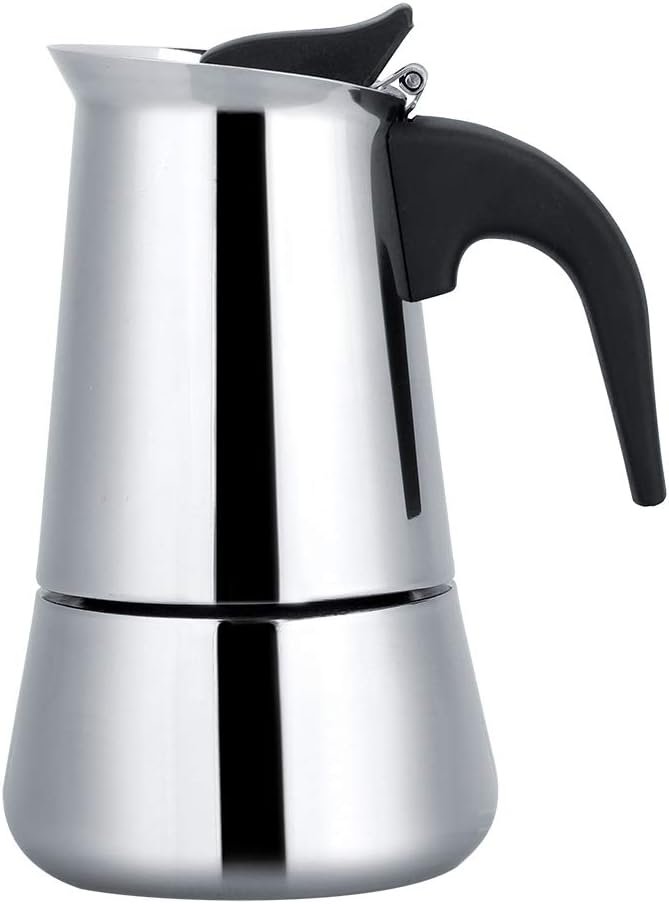
The Tomotato Moka Pot combines classic design with modern heat source versatility, making it suitable for diverse cooking environments. Its stainless steel construction ensures durability while maintaining a sleek appearance. The device’s compatibility with gas, electric, and induction stovetops enhances its usability across different kitchens. However, the manual operation requires attention to detail, particularly in managing water levels and grind consistency to achieve optimal extraction. These features collectively define the moka pot’s role as a reliable yet traditional method for producing espresso-style coffee.

Brewing Method Compatibility and Performance
The Tomotato Moka Pot operates on a steam pressure extraction principle, a method that has been refined over decades to produce a concentrated coffee with rich flavor. This approach relies on the interaction between water temperature, pressure, and coffee grounds to extract soluble compounds. The device’s design allows for a consistent pressure build-up when placed on a heat source, ensuring that the water reaches the necessary temperature to extract maximum flavor without over-extraction. However, the lack of a built-in temperature control means users must rely on their stovetop’s heat regulation to maintain the ideal brewing conditions. The moka pot’s performance is most effective when paired with a heat source that can maintain a steady temperature, avoiding fluctuations that might compromise the extraction process. This method is particularly well-suited for those who prioritize simplicity and tradition in their coffee preparation.

Steam Pressure Extraction Mechanics
The core of the moka pot’s brewing process is its ability to generate and maintain steam pressure. When water is heated in the lower chamber, it turns into steam, which rises and forces the water through the coffee grounds in the middle chamber. This pressure-driven extraction is crucial for achieving the characteristic richness of espresso. The device’s design ensures that the pressure remains consistent as long as the heat source is stable, allowing for a uniform extraction. However, the absence of a pressure regulator means that users must manually monitor the brewing process to prevent over-pressurization, which could lead to a bitter taste. The moka pot’s efficiency in this regard depends on the user’s ability to manage the heat source and adjust the brewing time based on the desired strength.
Heat Source Compatibility and Temperature Stability
One of the key advantages of the Tomotato Moka Pot is its compatibility with multiple heat sources, including gas, electric, and induction stovetops. This versatility ensures that the device can be used in various kitchen environments, making it a practical choice for different households. However, the effectiveness of the brewing process is closely tied to the stability of the heat source. A gas stove, for example, may provide more consistent heat compared to an electric stove, which could lead to temperature fluctuations. The moka pot’s design does not include a temperature control mechanism, so users must rely on their stovetop’s heat regulation to maintain the optimal brewing temperature. This requirement for manual temperature management is a defining characteristic of the moka pot’s operation and may appeal to those who enjoy the hands-on aspect of coffee preparation.
Ease of Use and Workflow Complexity
The Tomotato Moka Pot is designed with simplicity in mind, making it accessible to both novice and experienced coffee makers. The brewing process involves a straightforward workflow: adding water to the lower chamber, placing coffee grounds in the middle chamber, and securing the lid before placing the device on a heat source. This minimalistic approach reduces the complexity of the brewing process, allowing users to focus on the essential steps without unnecessary adjustments. However, the lack of automated features means that users must be attentive to the brewing time and water level to prevent overfilling or underfilling. The device’s ergonomic handle and secure lid contribute to a user-friendly experience, but the manual nature of the operation requires a degree of familiarity with the brewing process. These factors collectively define the moka pot’s usability and its suitability for different user profiles.

Step-by-Step Brewing Process
The brewing process for the Tomotato Moka Pot is intentionally simple, with each step designed to minimize complexity. Users begin by filling the lower chamber with water, ensuring that it does not exceed the safety valve to prevent overflow. Next, they add medium-fine coffee grounds to the middle chamber, which is then sealed with the lid. The device is then placed on a heat source, where the water is heated until it turns into steam, forcing the liquid through the coffee grounds. The brewing time typically ranges from 5 to 7 minutes, depending on the heat source and water temperature. Once the brewing is complete, the device is removed from the heat source, and the coffee is poured into a cup. This straightforward process ensures that users can produce a quality espresso without the need for advanced equipment or technical knowledge.
User Experience and Workflow Efficiency
The user experience with the Tomotato Moka Pot is defined by its simplicity and reliability. The device’s design eliminates the need for complex settings or adjustments, allowing users to focus on the essential steps of brewing. However, the manual nature of the process requires a certain level of attention to detail, particularly in managing the water level and brewing time. The ergonomic handle and secure lid contribute to a smooth workflow, but the lack of automation means that users must actively monitor the brewing process. This balance between simplicity and manual involvement makes the moka pot a practical choice for those who value efficiency without compromising on the quality of the final product.
Brew Consistency and Extraction Quality
The Tomotato Moka Pot’s ability to produce a consistent brew is largely dependent on the user’s adherence to the recommended brewing parameters. The device’s design ensures that the steam pressure remains stable throughout the brewing process, which is essential for achieving a uniform extraction. However, variations in the heat source or water temperature can affect the consistency of the final product. The moka pot’s performance is most reliable when used with a heat source that can maintain a steady temperature, avoiding fluctuations that might lead to over-extraction or under-extraction. The quality of the coffee produced is also influenced by the grind size and the amount of coffee used, making it important for users to follow the recommended brewing ratios. These factors collectively determine the moka pot’s effectiveness in delivering a consistent and flavorful espresso.

Impact of Grind Size on Extraction
The grind size of the coffee grounds plays a critical role in the moka pot’s extraction process. A medium-fine grind is recommended to ensure that the water can flow through the coffee grounds without over-extraction or under-extraction. A finer grind may result in a more concentrated brew, while a coarser grind could lead to a weaker extraction. The moka pot’s design allows for a consistent pressure build-up, which helps to balance the extraction process. However, users must be mindful of the grind size to achieve the desired strength and flavor profile. This requirement for precise grind control is a key consideration for those who prioritize consistency in their coffee preparation.
Coffee Strength and Flavor Profile
The Tomotato Moka Pot produces a rich, full-bodied coffee with a pronounced flavor profile, characteristic of traditional espresso. The steam pressure extraction method enhances the extraction of soluble compounds, resulting in a concentrated brew that can be diluted to suit individual preferences. However, the lack of a built-in temperature control means that the coffee’s strength and flavor can vary depending on the heat source and brewing time. Users who prefer a stronger coffee may need to adjust the brewing time or the amount of coffee used to achieve the desired balance. This flexibility allows for customization, but it also requires a degree of experimentation to optimize the final product.
Cleaning and Maintenance Expectations
Maintaining the Tomotato Moka Pot requires regular cleaning to ensure optimal performance and longevity. The stainless steel construction is resistant to corrosion, but residue buildup from coffee oils and minerals can affect the taste of subsequent brews. The device’s design allows for easy disassembly, with separate components that can be cleaned individually. However, the narrow neck of the lower chamber may make thorough cleaning challenging, requiring careful attention to detail. Users should also be mindful of the water quality used, as impurities can contribute to mineral deposits over time. The moka pot’s maintenance requirements are relatively low compared to more complex coffee machines, but regular cleaning is essential to preserve its functionality and flavor consistency.

Disassembly and Component Cleaning
The Tomotato Moka Pot’s design facilitates easy disassembly, allowing users to clean each component separately. The lower chamber, middle chamber, and lid can be removed and cleaned with mild detergent and warm water. The narrow neck of the lower chamber may require a brush or sponge to reach all areas, ensuring that no residue remains. The stainless steel construction is durable and resistant to staining, but regular cleaning is necessary to prevent the buildup of coffee oils and minerals. This maintenance routine is relatively straightforward, making it accessible for users who prioritize hygiene and long-term performance.
Long-Term Durability and Wear Resistance
The Tomotato Moka Pot’s stainless steel construction contributes to its durability and resistance to wear over time. The material is corrosion-resistant and maintains its structural integrity even with frequent use. However, the device’s performance may degrade if not cleaned regularly, as residue buildup can affect the brewing process and the taste of the coffee. The ergonomic handle and secure lid are designed to withstand regular use, but users should avoid exposing the device to extreme temperatures or physical damage. These factors collectively define the moka pot’s long-term reliability and its ability to maintain consistent performance over time.

Pros & Cons
Pros
- Versatile Heat Source Compatibility: The moka pot works with gas, electric, and induction stovetops, making it adaptable to different kitchen setups.
- Sturdy Stainless Steel Construction: The durable materials ensure longevity and resistance to corrosion, maintaining the device’s integrity over time.
- Simple and Intuitive Operation: The straightforward brewing process requires minimal setup, making it accessible for users of all experience levels.
- Classic Design and Aesthetic Appeal: The sleek, timeless appearance enhances its appeal as a functional and decorative kitchen appliance.
- Efficient Steam Pressure Extraction: The device effectively generates consistent pressure for a rich, full-bodied coffee experience.
- Easy Disassembly for Cleaning: The modular design allows for thorough cleaning of individual components, preserving flavor consistency.
- Compact and Portable: The relatively small size makes it suitable for both home use and travel, though it may not be ideal for large gatherings.
- Affordable Compared to Electric Espresso Machines: The moka pot offers a cost-effective alternative for those seeking a traditional brewing method.
Cons
- Manual Temperature Control Required: Users must manage the heat source to maintain optimal brewing conditions, which may be challenging for inexperienced brewers.
- Limited Brew Consistency: Variations in heat source or water temperature can affect the uniformity of the final product, requiring careful attention to brewing parameters.
- Narrow Neck for Cleaning: The lower chamber’s narrow neck may make thorough cleaning difficult, increasing the risk of residue buildup.
- No Built-In Temperature Regulation: The absence of a temperature control mechanism means users must rely on external heat sources, which may impact consistency.
- Requires Precise Grind Size: The moka pot’s performance is highly dependent on the coffee grind, necessitating careful attention to this detail.
- Not Ideal for Large Quantities: The 200ml capacity is suitable for individual use but may not meet the needs of larger households or gatherings.
- Limited Customization Options: The device lacks advanced settings or adjustable parameters, limiting the ability to fine-tune the brewing process.
- Potential for Over-Extraction: Without proper monitoring, the brewing time may lead to a bitter or overly concentrated coffee.
Final Verdict: Who This Product Is Best For (and Who Should Skip It)
The Tomotato Moka Pot Espresso Maker is an excellent choice for coffee enthusiasts who appreciate the traditional method of steam pressure extraction. Its versatility in heat source compatibility and durable stainless steel construction make it a practical option for home use. The device’s simplicity and classic design appeal to those who value a hands-on approach to coffee preparation, while its affordability makes it an attractive alternative to more expensive electric espresso machines. However, the moka pot is not ideal for users who prioritize automation or precision in their brewing process. Those who require consistent temperature control or advanced customization options may find the moka pot’s manual operation limiting. Additionally, the 200ml capacity is best suited for individual use, making it less practical for households with higher coffee consumption needs. Overall, the Tomotato Moka Pot offers a reliable and traditional method for producing a rich, full-bodied espresso, making it a suitable choice for those who enjoy the simplicity and craftsmanship of stovetop brewing.

Frequently Asked Questions (FAQs)
Is the Tomotato Moka Pot compatible with induction stovetops?
Yes, the Tomotato Moka Pot is designed to work with gas, electric, and induction stovetops. This versatility allows users to choose the most convenient heat source based on their kitchen setup.
How does the moka pot produce espresso-style coffee?
The moka pot uses steam pressure to extract flavor from coffee grounds. When water is heated, it turns into steam, which forces the liquid through the coffee grounds, creating a concentrated, rich coffee similar to espresso.
What is the recommended coffee grind size for the moka pot?
A medium-fine grind is ideal for the moka pot. This grind size ensures proper water flow through the coffee grounds, preventing over-extraction and producing a balanced brew.
Can the moka pot be used for making regular coffee?
The moka pot is specifically designed for espresso-style brewing. While it can produce a strong coffee, it is not suitable for making regular coffee due to its concentrated extraction method.
How easy is it to clean the moka pot?
The moka pot is easy to clean due to its modular design, which allows for individual component disassembly. However, the narrow neck of the lower chamber may require careful cleaning to remove residue.
What is the capacity of the Tomotato Moka Pot?
The Tomotato Moka Pot has a 200ml capacity, which is suitable for making 4 cups of coffee. This size is ideal for individual use or small households.
Does the moka pot require any special maintenance?
Regular cleaning is recommended to maintain the moka pot’s performance and flavor consistency. Using filtered water can help reduce mineral buildup, extending the device’s lifespan.
Is the moka pot suitable for beginners?
Yes, the moka pot is user-friendly and suitable for beginners. Its simple brewing process and intuitive design make it accessible to those new to coffee brewing methods.