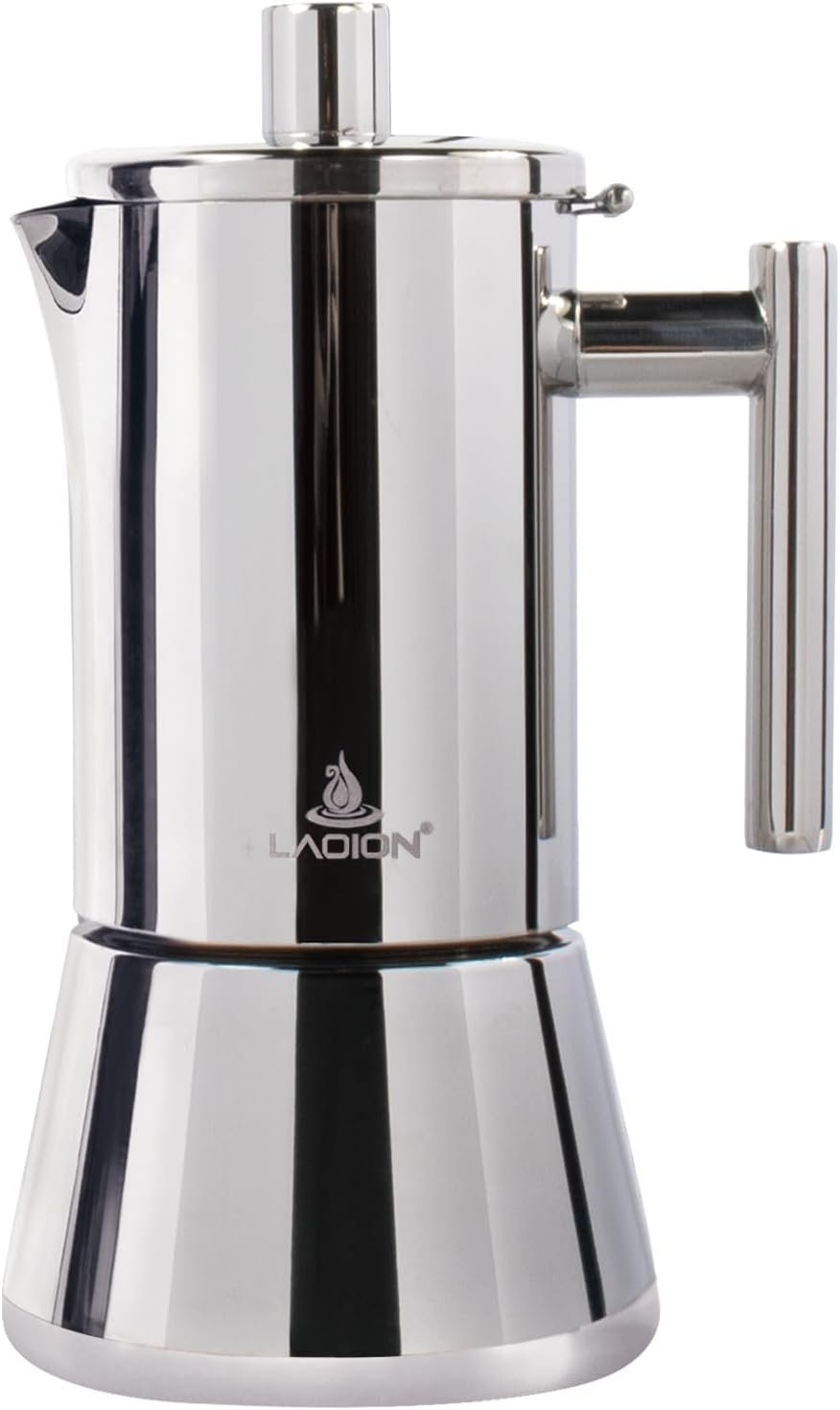
LAOION 6-Cup Stainless Moka Pot — Induction & Consistency
Why the Right Stovetop Espresso Maker Matters
Choosing the correct stovetop espresso maker affects daily brewing results, workflow efficiency, and long-term satisfaction for home brewers. Small design details—materials, base construction, safety valves, gasket fit, and filter geometry—directly influence heat transfer, extraction rate, and retained flavors. For households and home enthusiasts seeking a concentrated, espresso-style brew without an espresso machine, a stainless steel Moka pot balances durability and stovetop versatility. The intended user is someone who values manual control over brew variables (grind size, heat level, and extraction time) and wants a consistent routine that works on gas, electric, or induction ranges. Understanding how Moka brewing physics differs from machine espresso—lower maximum pressure, steam-driven flow, and temperature-sensitive extraction—helps set realistic expectations about body, crema, and flavor concentration. Evaluating a Moka pot on compatibility, ease of use, heat management, capacity, and maintainability clarifies whether it fits a particular kitchen and brewing habit.
Quick Overview
| Feature | Details |
|---|---|
| Product category | Stovetop espresso maker (Moka pot) |
| Brewing method | Steam/pressure-driven stovetop extraction |
| Capacity/output | 10 fl. oz / 300 ml — marketed as 6 small espresso cups |
| Materials & construction | Stainless steel body with induction-compatible base |
| Heating & pressure system | Manual stovetop heating; steam pressure under typical Moka conditions (sub-espresso pressures) |
| Grind & filter compatibility | Medium-fine to medium ground coffee; metal filter basket included |
| Best suited users | Home brewers and enthusiasts seeking manual stovetop espresso-style coffee |
| Intended uses | Concentrated coffee for milk-based drinks or straight consumption |
| Warranty/Manufacturer | Manufacturer: LAOION; model SSMK-6C (manufacture year 2025) |
This specification snapshot highlights how construction and capacity drive brewing performance: stainless steel and an induction-ready base support even heat transfer and broader stovetop compatibility, while the 300 ml capacity targets small concentrated servings. The included metal filter and manual operation define workflow responsibilities—grind control and heat management—both critical to extraction quality and leak avoidance.
Brewing Method Compatibility and Heat Source Considerations
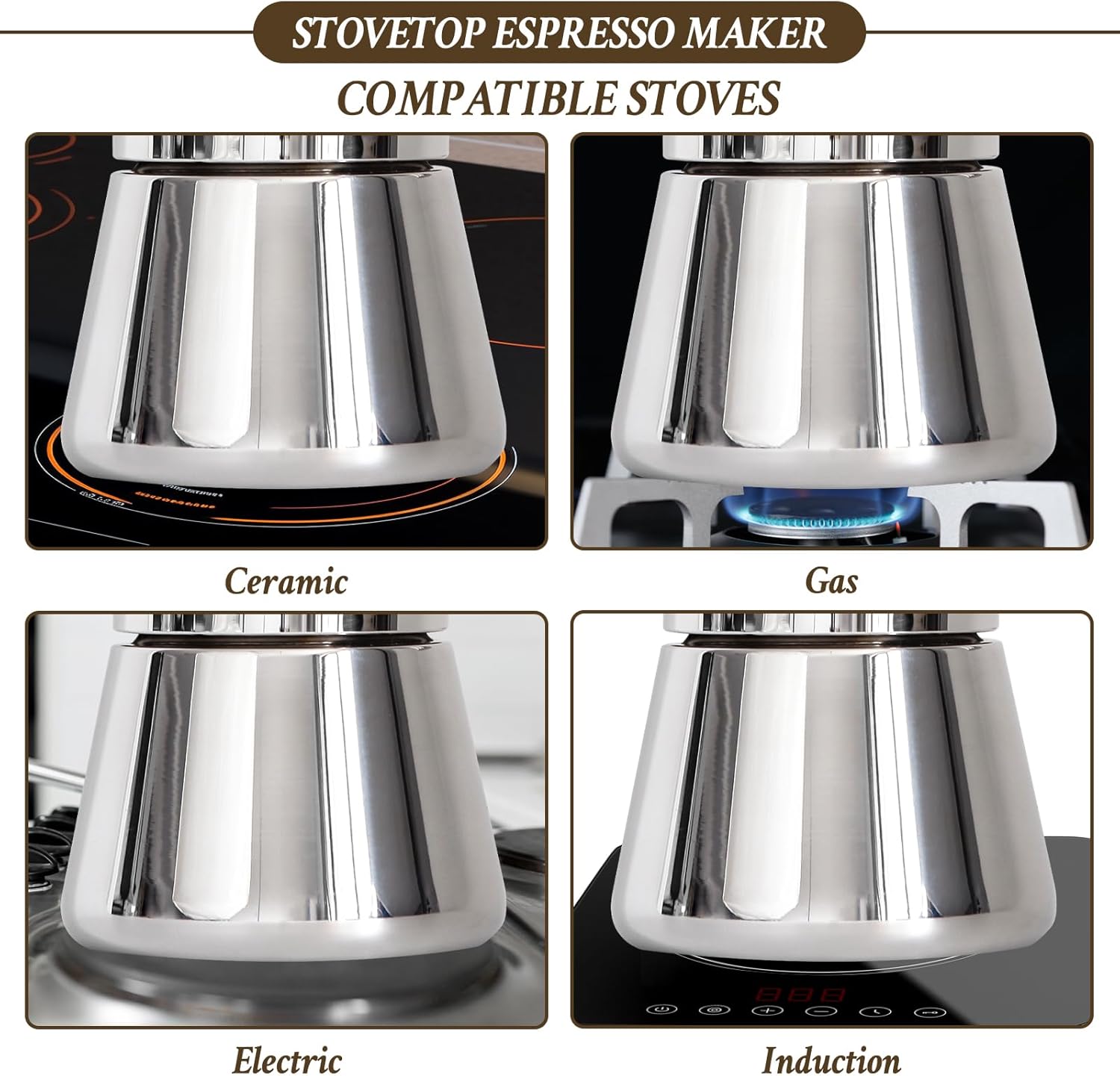
Compatibility with gas, electric, and induction stovetops determines which kitchens can use this Moka pot without additional hardware. Induction compatibility depends on a ferromagnetic base or bonded induction plate integrated into the stainless steel bottom; this design broadens use to modern ranges and improves heating responsiveness compared with plain aluminum bases. On gas, direct flame contact produces rapid heat-up and steeper pressure ramping, which can shorten extraction if heat is too high; on electric coil or ceramic, slower heat change can allow finer control but often requires a slightly higher initial setting. The LAOION unit’s stainless construction and claimed induction readiness suggest a magnetic base layer or steel grade that accepts induction fields, though performance depends on stovetop power and heat distribution. Users should tune heat sources carefully to manage extraction rate and avoid overheating or prolonged exposure that can cause over-extraction and metallic taste.

Induction-Specific Behavior and Base Design
Induction-ready stainless-steel Moka pots require a magnetic base or bonded ferritic disc to couple with induction cooktops. The presence of a flat, well-machined base improves contact and reduces hot spots that cause uneven steam pressure and channeled flow through the coffee puck. On induction, heating is typically faster and more uniform, allowing tighter control of the ramp from hot water to active brew expulsion. However, induction can produce a quicker pressure spike if set to high power; moderating the induction setting and removing the pot from direct high power near the end of the brew prevents overheating. Compatibility does not guarantee identical performance across induction ranges—coil layout, power, and cookware sensing influence results—so expecting some variance in time-to-brew and extraction profile is reasonable.
Gas and Electric Range Differences for Moka Brewing
Gas stovetops provide visible flame control and rapid response for Moka pots, which benefits manual adjustment during the brew cycle. Direct flame can create localized hot spots if the pot’s base is smaller than the flame or if the material distribution is uneven, accelerating pressure build-up and reducing contact time between water and coffee. Electric coil or glass-ceramic tops heat slower and retain heat longer, fostering a gentler pressure rise and more predictable flow. On these stovetops, starting at medium heat and lowering near the end of extraction yields more consistent concentration. Each heat source influences the thermal gradient across the lower chamber and the timing of bubble formation—both central variables to controlling extraction in a Moka pot.
Ease of Use, Workflow, and Leak Prevention
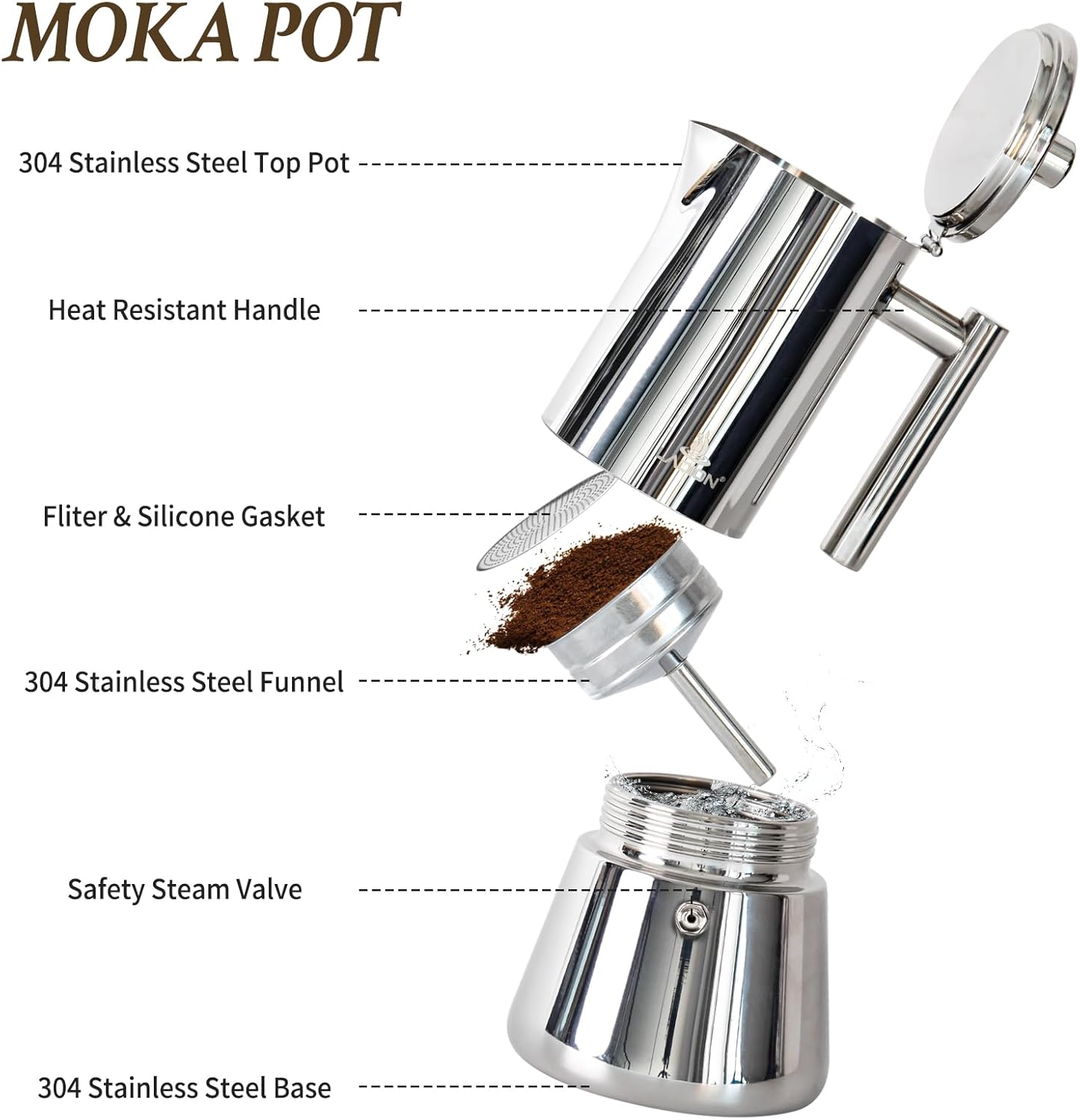
Manual operation requires a clear, repeatable workflow: measure water to the safety-valve level, choose a grind that balances flow and extraction, fill the basket without packing, and assemble finger-tight. The LAOION product includes a standard metal filter basket and safety valve; these components determine leak risk and user maintenance. Common user errors that cause leaks include overfilling the water chamber past the safety valve, tamping grounds into a dense puck, and failing to ensure the top and bottom chambers are sealed correctly. The manufacturer’s quick tips reflect these best practices and align with established stove-top Moka technique. Ease of use also depends on ergonomics—handle heat resistance, lid hinge quality, and the ability to decouple chambers without tools—which affect how quickly a routine becomes reliable and low-friction.

Recommended Brewing Workflow and Grind Guidance
A reliable Moka workflow starts with cold filtered water filled to the safety valve, a medium-fine grind slightly coarser than espresso but finer than drip, and a basket filled and leveled without compressing grounds. Heat should be applied moderately; when coffee starts to emerge into the top chamber, lowering the heat preserves flavor balance. The typical brew ratio for stovetop extraction is concentrated—roughly 1:7 to 1:10 (coffee to brewed volume) depending on grind and desired strength—so measuring grounds and yield supports repeatability. Because the Moka method does not achieve espresso machine pressures, grind and heat adjustments are primary ways to influence body and extraction completeness. Following a consistent sequence and avoiding tamping prevents channeling and excessive pressure on the gasket and valve.
Leak Prevention and Assembly Best Practices
The safety valve is both a regulatory feature and a practical indicator: water must not exceed the valve level, and the valve should always be unobstructed. Thread integrity between the upper and lower chambers affects sealing; finger-tight assembly is sufficient, but cross-threading or worn threads will degrade the seal over time. Periodic inspection of the rubber gasket and filter plate seating prevents leaks that often manifest as drips around the top joint. Users accustomed to quick assembly should still confirm valve clearance and even basket seating each brew. Many recurring customer themes around leaks point to operator error or component wear rather than systemic design failure, so maintenance and correct assembly are primary mitigations.
Temperature Control, Heat Stability, and Extraction Quality
Temperature management in a Moka pot is central to extraction balance because the device relies on heated water and steam pressure to force brew through the coffee bed. Unlike espresso machines with thermostatically controlled boilers and pressure profiles, Moka brewing is governed by stovetop heat input and the vessel’s thermal mass. Stainless steel offers higher thermal inertia than aluminum, smoothing temperature fluctuations and promoting steadier steam production. However, too-high heat accelerates extraction and risks bitter compounds, while too-low heat yields under-extracted, weak concentrate. Grind size, dose, and heat ramp interact: a slightly coarser grind helps maintain flow on higher heat settings, while a finer grind increases extraction but raises leak and clog risk. Understanding these variables enables more consistent results across brews.
Moka Pressure Dynamics and Extraction Principles
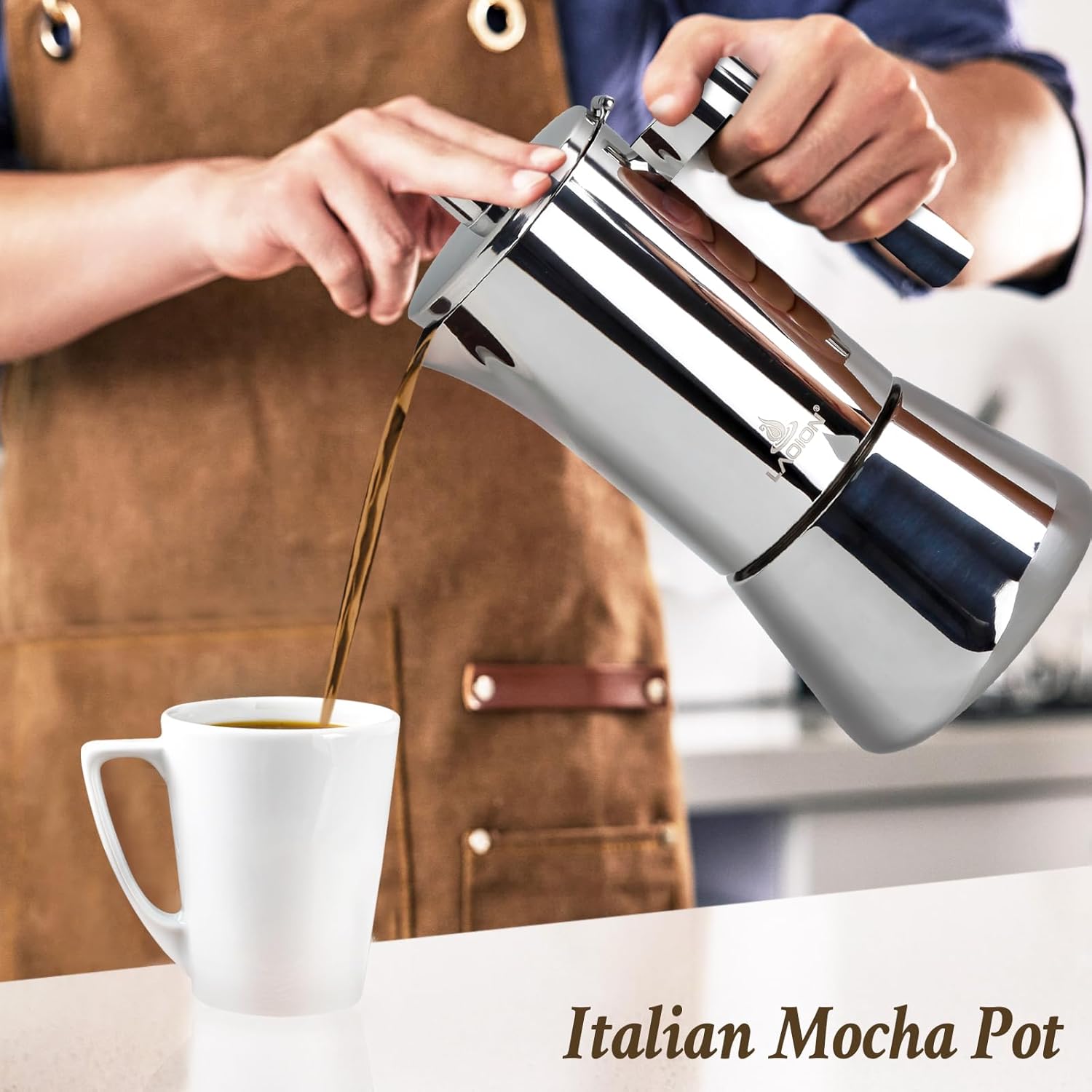
Moka pots generate modest pressures—typically around 1 to 2 bar under common conditions—substantially below pump-driven espresso machines. Extraction in this environment emphasizes contact time and solvent availability rather than high-pressure emulsification. Flow control is coarse and determined by steam production and the resistance of the coffee bed: finer grounds increase resistance and can yield fuller body but may cause interruptions or gurgling if airflow is restricted. Because maximum pressure is limited, achieving balanced flavor relies on optimal grind, careful heat application, and appropriate dose. For milk-based beverages, Moka concentrate provides a rich base that mixes well, though crema production will be limited compared with true espresso machines.
Heat Stability, Metal Thermal Mass, and Flavor Outcomes
Stainless steel’s higher thermal mass compared with thin aluminum walls moderates rapid temperature swings, which can lead to more even extraction across the brew cycle. A stable temperature during the expulsion phase reduces the risk of sudden over-extraction when coffee first emerges. Conversely, prolonged heat exposure after the brew can continue to extract and darken flavor; removing the pot from heat or cooling its base at the end of extraction stops this process. Heat retention properties also influence retained aroma and handling safety: thicker stainless steel retains heat longer, so insulated or heat-resistant handles are important for safe disassembly and pouring without burning the hand.
Capacity, Serving Flexibility, and Practical Use Cases
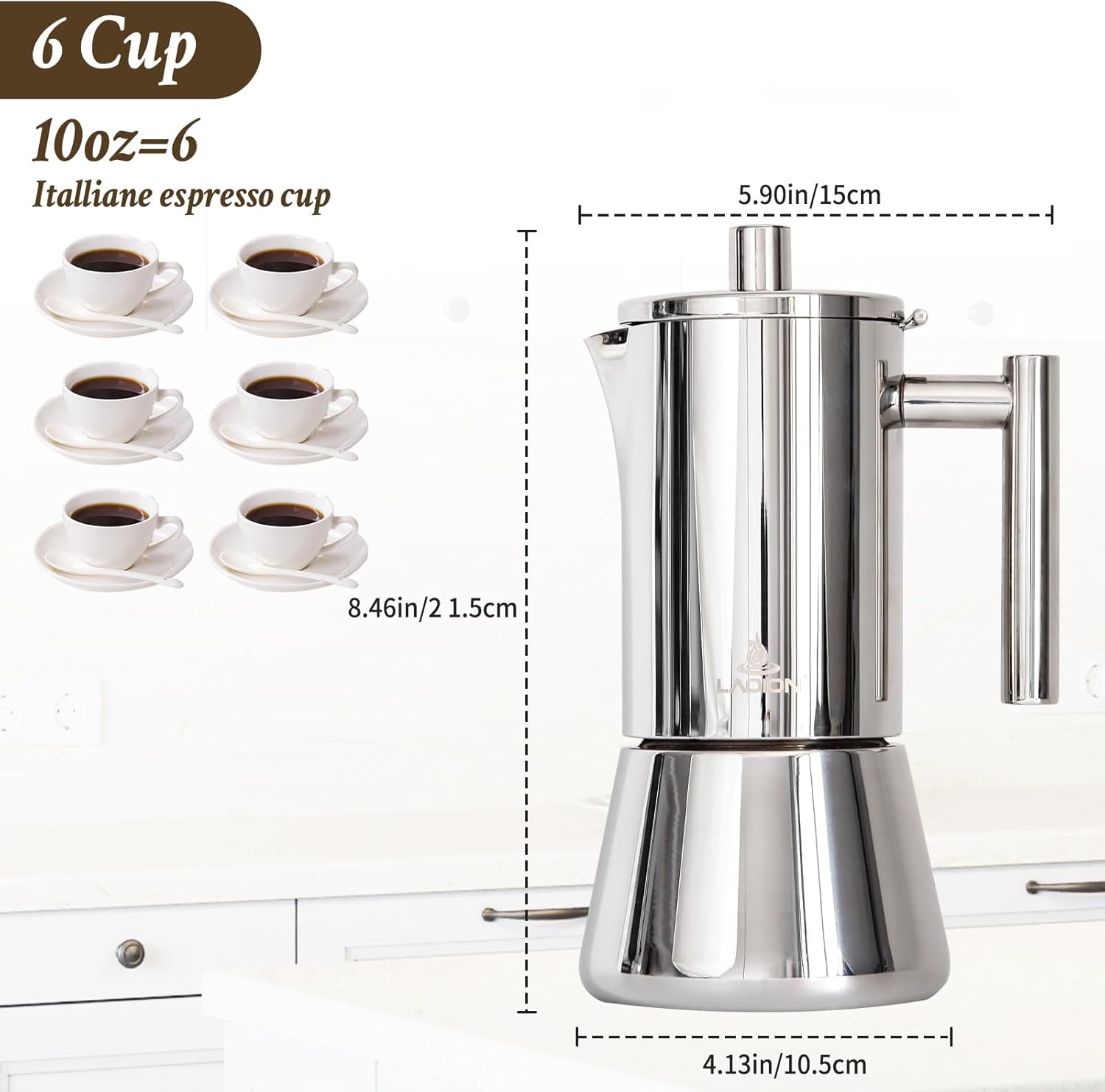
The 10-ounce (300 ml) capacity, presented as a 6-cup Moka, is tailored to small concentrated servings rather than standard mugs. The product is optimized for producing multiple espresso-style shots for milk drinks or several small demitasse servings. For households that prefer single larger cups, the output may require dilution or multiple pours. Serving flexibility depends on brew ratio and intended drink: a higher dose with concentrated yield suits cappuccinos and lattes, while a lighter dose delivers a longer black coffee when diluted. Travel and portability benefit from stainless steel’s robustness and absence of delicate anodized surfaces, making the unit suited to camping, travel, or kitchens where dishwasher-friendly materials and indestructible construction are prioritized.
Yield Expectations and Serving Strategies
A full brew from this 300 ml chamber will yield concentrated coffee best measured in demitasse portions (roughly 1.5–2 oz per small cup). To produce larger cup volumes, dilution with hot water or steamed milk is common; understanding the concentrate-to-water ratio helps replicate preferred strengths. When preparing milk drinks, producing the full concentrated yield and splitting among cups provides consistent sweetness and body. For solo drinkers, partial fills or smaller doses can minimize waste, but careful proportional adjustments to grind and heat are necessary to maintain extraction balance. Measuring output and noting grind/dose adjustments will establish reliable serving strategies over time.
Portability and Suitability for Travel Use
Stainless steel Moka pots are inherently more durable and less prone to denting than aluminum variants, making them practical for travel and outdoor use. The manual operation eliminates reliance on electricity beyond a heat source, so the pot works well on camp stoves or portable induction burners. Weight (approximate item weight 1.87 pounds) and compact dimensions make it packable, though the threaded joints and gasket are small parts that require protection to avoid damage in transit. For travelers who value a concentrated, espresso-style drink without carrying a machine, this format is convenient—provided packing safeguards for the gasket and filter plate are observed to prevent deformation or loss.
Durability, Materials, Maintenance, and Long-Term Reliability
Stainless steel construction supports corrosion resistance and longevity compared with untreated aluminum, particularly in repeated exposure to hot water and detergents. The cleanness of stainless surfaces reduces oxidation and metallic reactivity, preserving flavor neutrality over time when cleaned properly. Critical wear components include the rubber gasket and the filter plate: gasket compression, cracking, or flattening leads to leaks and requires periodic replacement. The safety valve must remain unobstructed and functional; regular checks for mineral buildup or blockages maintain safety and consistent operation. Thread quality and handle attachment points are common stress areas; robust machining and thicker wall sections prolong life but require proper care and avoidance of overtightening and aggressive cleaning methods.
Cleaning Expectations and Component Longevity
Routine cleaning involves disassembly, rinsing the basket and filter plate, and avoiding abrasive cleaners or dishwashers that can accelerate wear on gaskets and seals. Hard water can cause mineral deposits in the lower chamber and on the safety valve; periodic descaling with a mild acid solution restores flow and valve function. The rubber gasket typically requires inspection every few months depending on frequency of use and should be replaced when elasticity decreases or visible wear appears. Metal filter plates can be cleaned with a soft brush to prevent lodged grounds; replacement parts are commonly available for Moka models, and keeping spare gaskets supports long-term usability.
Long-Term Reliability and Common Failure Modes
Typical long-term issues reported for stovetop Moka pots include gasket degradation, valve clogging, thread wear, and handle loosening. Stainless steel body construction reduces risks of corrosion and deformation, but repeated thermal cycling and mechanical stress can affect threaded joints. Consistent maintenance—drying components after cleaning, inspecting the valve and gasket, and avoiding over-tight assembly—mitigates many common failure modes. The design’s simplicity means there are few mechanical systems to fail, but replaceable consumables (gasket, filter plate) are the primary recurring maintenance items that determine overall longevity.
Pros & Cons
Pros
- Durable stainless steel construction offers corrosion resistance and improved longevity compared with thin aluminum models. This material choice supports induction compatibility and sustains structural integrity during repeated heating cycles.
- Induction stovetop compatibility increases versatility across modern kitchens. A magnetic or engineered base allows use on induction, gas, and electric ranges, broadening where reliable brewing can occur.
- Manual brewing workflow provides granular control over grind, heat, and timing. For users who prefer hands-on technique, the Moka pot rewards adjustments to achieve desired concentration and body.
- Compact 300 ml capacity fits households and milk-based beverage preparation. The 6-small-cup framing suits demitasse servings and concentrated bases for lattes and cappuccinos.
- Clear safety and usage guidance (e.g., valve fill limits, no packing of grounds) reduces common user errors that cause leaks or clogging. Built-in safety valve and removable filter support safer operation.
- Easy-to-clean metal components with simple disassembly streamline maintenance. Removing the basket and filter for rinsing minimizes retained grounds and supports regular descaling.
Cons
- The device does not achieve espresso-machine pressures, so crema and extraction profiles will differ from pump-driven espresso. Users expecting full-bar espresso should moderate expectations regarding crema and aromatic intensity.
- Leak risk concentrates on gasket wear and assembly errors; replacement gaskets and thread wear are recurring maintenance points. Incorrect water filling and tamping increase leak potential.
- Heat management requires manual attention: induction and gas behave differently, and inexperienced users may overheat, causing bitter extraction or gurgling. Heat ramping must be learned for consistency.
- The marketed “6 cups” refers to small demitasse portions, not standard mugs, which may confuse buyers seeking single large servings. For larger cups, dilution or multiple brew cycles are necessary.
Final Verdict: Who This Product Is Best For (and Who Should Skip It)
This stainless steel 6-cup Moka pot is best suited to home brewers and kitchen-savvy enthusiasts who want a durable, induction-compatible stovetop option for concentrated coffee. It fits households that prepare milk-based drinks or multiple small servings and values manual control of grind and heat to tune extraction. The stainless construction and straightforward component set appeal to users who prioritize longevity and straightforward maintenance, while the induction-ready base expands compatibility with modern ranges.
This Moka pot is not ideal for users seeking true espresso machine performance—pressure-driven crema and barista-level shot consistency require pump-driven equipment. It also may not suit those who want single large mugs without dilution or those unwilling to learn and follow the manual assembly, heat control, and gasket maintenance routine. For its intended use case in 2026 kitchens, this model presents a practical, versatile option for manual stovetop espresso-style brewing when realistic expectations about extraction and serving size are understood.
Frequently Asked Questions (FAQs)
Is this Moka pot compatible with induction cooktops?
Yes. The product is specified as induction stovetop compatible, which indicates a ferromagnetic base or bonded layer that allows it to couple with induction fields. Actual performance depends on induction range power and cooktop surface contact; a flat, well-machined base improves heat transfer and reduces hot spots. Moderate induction settings are recommended to avoid rapid pressure spikes.
What grind size works best in a stainless steel 6-cup Moka pot?
A medium-fine grind, slightly coarser than espresso and finer than standard drip, is typically recommended. This balance provides sufficient resistance for body while maintaining flow. Finer grinds can increase extraction but risk clogging and gurgling, while coarser grinds may under-extract. Adjust grind with small changes to match heat input and desired concentration.
How should the water be filled to avoid leaks or safety valve issues?
Water should be added only up to—but not above—the safety valve level in the lower chamber. Overfilling the water chamber is a common cause of spills and valve obstruction. Ensuring the valve is unobstructed and that the basket is seated correctly reduces leak risk. Assembly should be finger-tight without overtightening to preserve thread integrity.
Can this Moka pot produce true espresso?
A Moka pot produces a concentrated coffee but does not reach the high extraction pressures of pump-driven espresso machines. Typical pressure in Moka brewing is substantially lower, so crema and extraction dynamics differ. The result is a rich, concentrated brew suitable for milk-based drinks, but not identical to machine espresso.
What maintenance is required to keep the Moka pot reliable over time?
Routine maintenance includes rinsing the basket and filter after each use, descaling the lower chamber periodically for hard-water buildup, and inspecting the rubber gasket and safety valve for wear or blockage. Gaskets are consumable items that should be replaced when elasticity declines. Avoid abrasive cleaners that could damage sealing surfaces.
How many servings does the 10-ounce capacity produce?
The 10-ounce (300 ml) capacity is marketed as a 6-cup yield based on small demitasse-sized servings typical of stovetop Moka piles. For standard larger mugs, the concentrate will need dilution or multiple brew cycles. The pot is intended primarily for concentrated espresso-style servings or as a base for milk-based beverages.
Is stainless steel better than aluminum for Moka pots?
Stainless steel typically offers improved corrosion resistance and durability compared with untreated aluminum, and it can be induction-compatible if engineered with a magnetic base. Stainless tends to have higher thermal mass, which can smooth temperature fluctuations. Aluminum heats rapidly but can be more susceptible to oxidation and may not work on induction cooktops without a special base.
Are replacement parts like gaskets and filters available for this model?
Replacement gaskets and metal filter plates are common consumable parts for Moka pots and are typically available from manufacturers or third-party vendors. Regular inspection of the gasket, filter plate, and safety valve is recommended, and maintaining spares supports continuous use and long-term reliability.