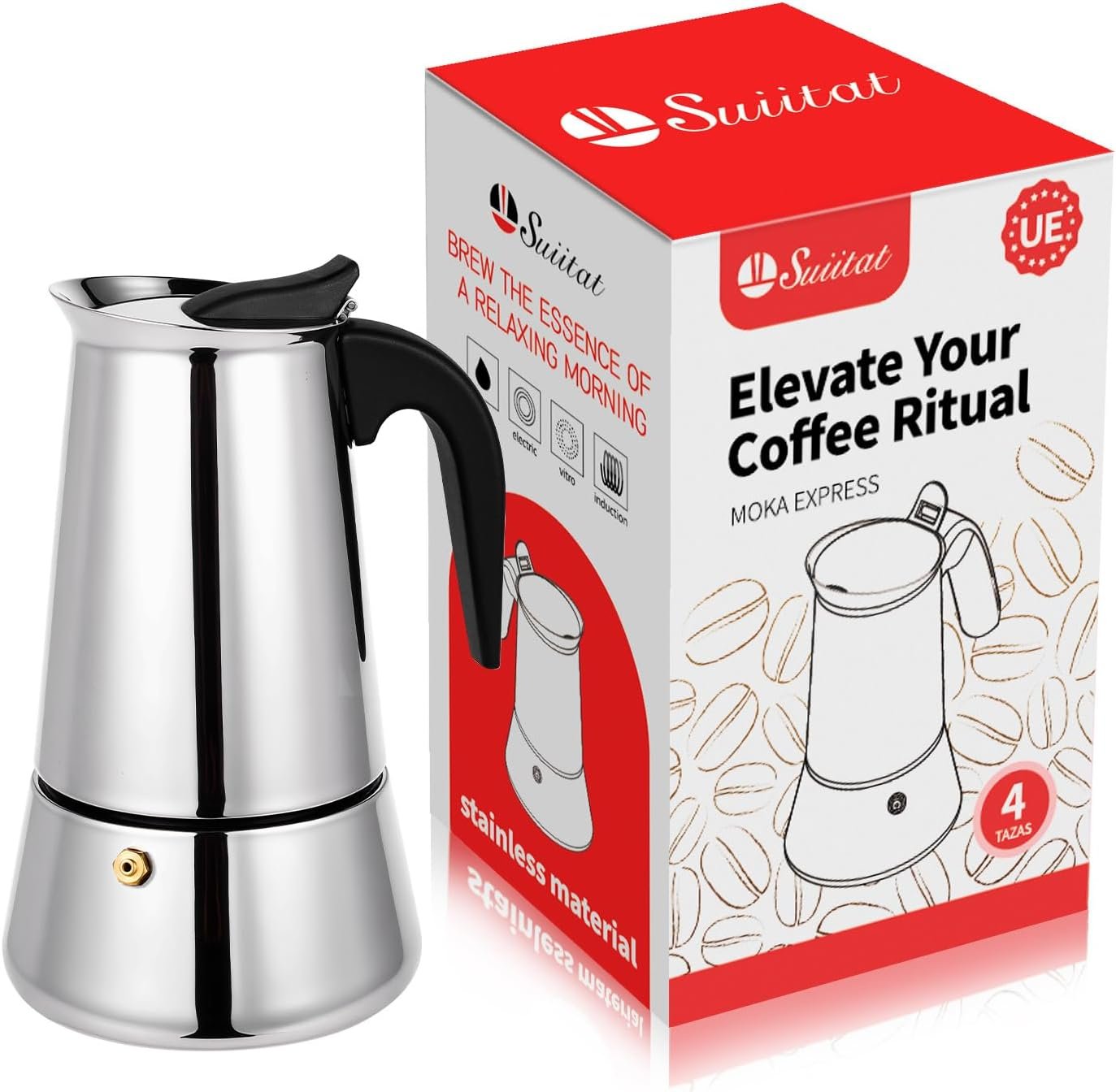
Suiitat 4-Cup Stainless Moka Pot — Induction Ready and Durable
Why brewing equipment choice matters
Choosing the right coffee equipment shapes flavor clarity, consistency, and daily workflow more than many other single purchases. For home brewers and households seeking a concentrated stovetop brew without an electric pump, a stainless steel moka pot can deliver espresso-style intensity while remaining compact, travel-ready, and mechanically simple. Buyers deciding between stovetop options must weigh material stability, heat-source compatibility, extraction behavior, and maintenance needs against serving capacity and portability. The Suiitat 4-cup moka pot targets those who want a 200 ml yield from food-safe 304 stainless steel with induction compatibility and manual operation; its design and included filter influence flow rate and crema-like emulsions, while the safety valve and sandblasted lower chamber affect cleaning and longevity. Understanding grind size, brew ratios, and the moka brewing cycle helps set expectations for body, acidity, and bitterness relative to pressure-driven espresso machines and pour-over methods. That technical framing helps buyers match this style of brewer to routines such as morning household service, small brunches, or campsite coffee preparation without relying on electrical infrastructure.
Quick Overview
| Feature | Details |
|---|---|
| Product type | Stovetop moka pot (4-cup / 200 ml) |
| Capacity / output | Approx. 200 ml final brew (4 small cups) |
| Materials & construction | Food-grade 304 stainless steel; sandblasted lower chamber |
| Heat system compatibility | Gas, electric coil, ceramic, induction, open flame |
| Pressure / brewing mechanism | Steam-driven pressure through coffee bed (non-pump) |
| Grind compatibility | Medium-fine recommended (manufacturer note) |
| Best suited users | Home brewers, campers, travelers, small households |
| Intended use cases | Concentrated espresso-style coffee, Americano base, latte ingredient |
| Cleaning guidance | Rinse after cooling; avoid dishwasher or detergents to protect internal finish |
| Safety & certification | Safety valve present; manufacturer BSCI and ISO 9001 certified |
The table condenses specification- and manufacturer-supplied items that directly influence brewing behavior and usability. Material choice and construction affect heat transfer and corrosion resistance, capacity determines serving patterns and brew ratio planning, and heat-source compatibility makes this moka pot a portable choice for both home kitchens and off-grid scenarios. Recommended grind and cleaning guidance shape everyday workflow and the consistency of extraction over time.

Materials, build quality, and long-term durability
The Suiitat moka pot uses 304 stainless steel throughout, a common food-grade alloy known for corrosion resistance against coffee acids and routine exposure to hot water. A sandblasted finish inside the lower chamber reduces mirror polishing that can hide micro-imperfections and may improve initial surface friction for deposits, while an overall metallic exterior resists scratches better than painted finishes. Component joins, the threaded middle gasket seat, and the safety valve are mechanical wear points typical for moka pots; periodic gasket replacement is expected as part of normal maintenance. The absence of aluminum avoids potential oxidation issues cited in some lower-cost models, and stainless handles or fasteners designed for heat isolation reduce risk of deformation. Certification claims such as ISO 9001 and BSCI indicate manufacturing oversight but do not replace attention to routine upkeep and gasket inspections when forecasting multi-year reliability.

304 stainless steel: benefits and limitations
304 stainless steel provides strong resistance to staining and acid attack from brewed coffee compared with untreated metals. For users, that means less discoloration and lower risk of metallic off-flavors caused by reactive corrosion. Thermal conductivity is lower than aluminum, so heat-up times can be modestly slower but more even once thermal equilibrium is reached; this can reduce hot spots that scorch grounds. The trade-offs include slightly increased weight versus aluminum models and a reliance on gasket and filter quality for sealing. Over long-term use, mineral buildup and oils accumulate on internal surfaces; because detergents and dishwashers are not recommended for preserving internal finishes, periodic manual descaling and full disassembly for inspection are required to maintain material integrity.
Seams, handle design, and safety features
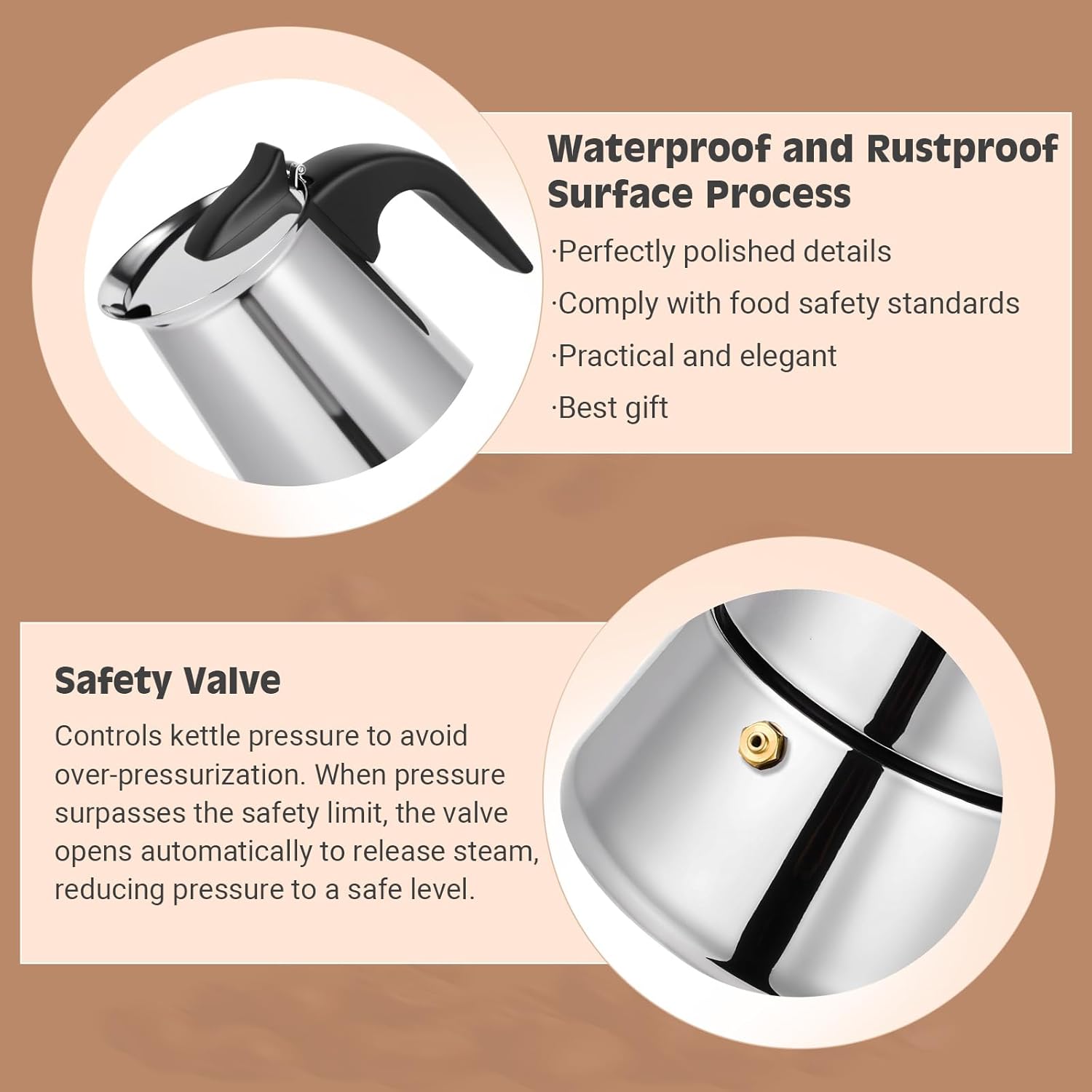
Critical wear points on manual moka pots are the threaded union between upper and lower chambers, the pressure-relief (safety) valve, and the gasket that seals the filter funnel. Threads made from the same stainless alloy resist galling but require correct torque and care during tightening to avoid cross-threading. The safety valve provides a failsafe against overpressure when water is overheated, so users should inspect and clean the valve inlet area regularly. Handle construction that uses heat-resistant polymer or well-spaced metal reduces burn risk; however, any handle-attachment hardware must be checked for loosening after repeated thermal cycles. Manufacturer instructions advising tightness checks before each use help reduce leaks and uneven extraction caused by poor seals.
Brewing compatibility and extraction performance
This moka pot follows the classic pressure-through-bed concept: steam pressure in the lower chamber forces near-boiling water upward through a packed coffee basket into the upper collector. Pressure levels are lower than pump-driven espresso machines, typically under 2 bar in common practice, yielding concentrated coffee with more dissolved solids and a robust mouthfeel rather than authentic espresso crema. Grind size and tamping behavior are decisive for flow control; manufacturer guidance favoring a medium-fine grind aligns with avoiding clogged filter flow while still enabling adequate extraction. The fixed funnel and metal filter influence agitation and channeling; consistent dosing and level tamping (light leveling, not heavy tamping) improve even flow and reduce over-extraction. Because the device is manual and heat-source dependent, extraction time and the gurgling finish cue are the practical controls users employ to balance acidity, sweetness, and bitterness.
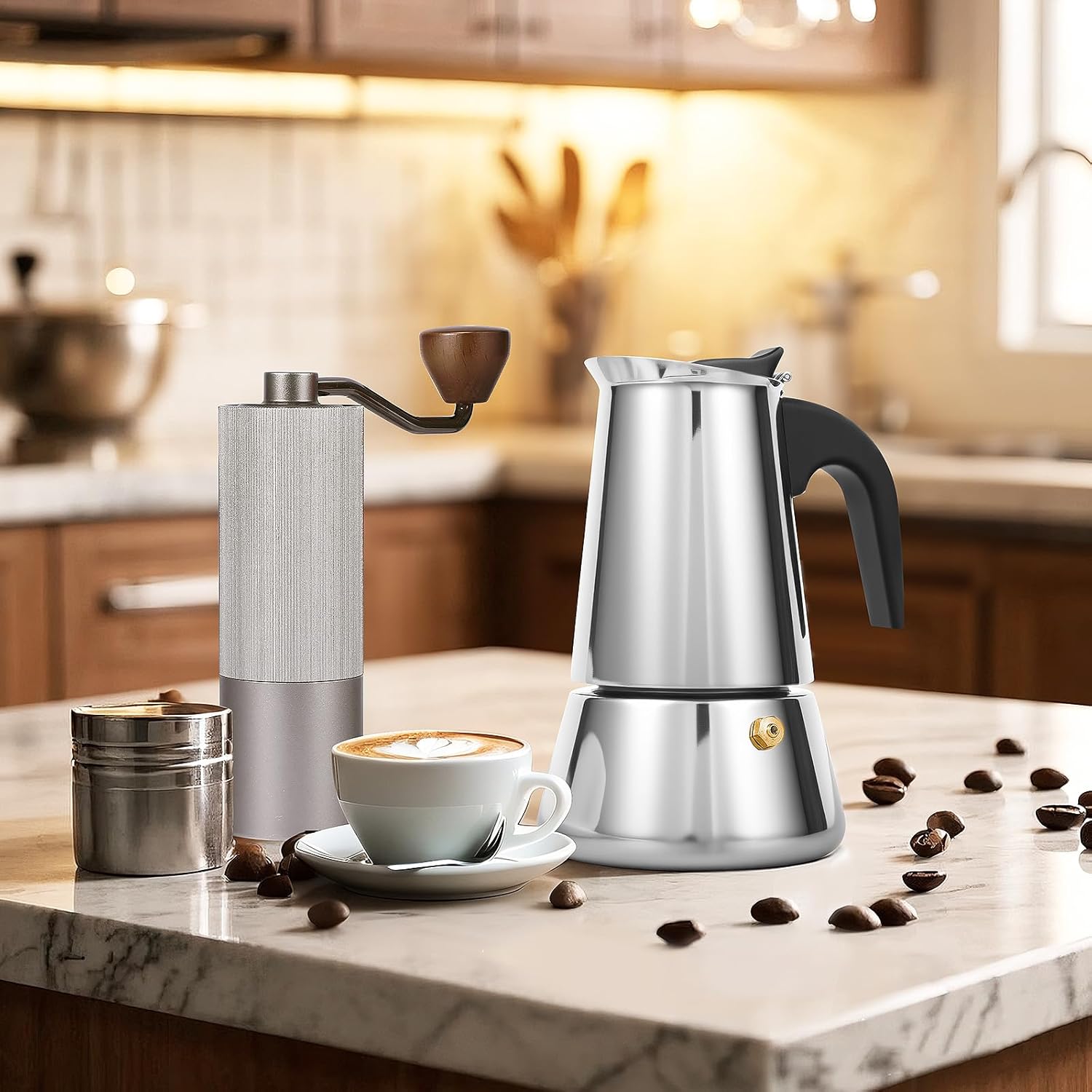
Pressure, flow control, and expected cup characteristics
Steam-driven moka extraction operates at a combination of pressure plus steam expansion rather than the 9-bar environment of espresso machines, so soluble extraction favors heavier body and intensified bittersweet notes. Flow control is mainly determined by grind size, coffee bed evenness, and applied heat; finer grinds slow flow and increase extraction but raise the risk of channeling or clogging, while coarser grinds produce faster flow and potentially under-extracted, thin results. The brew ratio for moka pots commonly ranges from 1:6 to 1:8 (coffee to water by weight) for concentrated output intended as a base for milk drinks or diluted as an Americano. Users seeking consistent results should consider scale-based dosing and a burr grinder to stabilize grind distribution and particle size for repeatable extraction.
Grind recommendations and dosing workflow
Manufacturer notes emphasize medium-fine grinds, which balance flow and extraction for this 200 ml capacity. A medium-fine grind approximates a slightly finer-than-drip but coarser-than-espresso particle size; it helps maintain steady flow through the metal filter without producing excessive fines that compact and obstruct steam flow. Dosing by weight—measuring coffee relative to the lower chamber water volume—reduces variability across sessions. Because moka pots do not employ a pre-infusion stage, distributing grounds evenly and avoiding compression beyond light leveling improves uniform wetting and reduces preferential channels. For blends or single-origin beans, minor grind adjustments by 100–200 microns can tune extraction to desired sweetness and acidity balance.
Heat sources, temperature control, and brewing stability
Induction compatibility is a core attribute for buyers who rely on modern cooktops or require consistent, controllable heat on the go. Stainless steel magnetic bases transfer energy from induction elements effectively, but system-level thermal response depends on cooktop power, pot contact area, and pot wall thickness. On gas or open flame, direct convective heating can produce faster temperature ramps and more pronounced hot spots unless the pot is centered and heat is moderated. Temperature stability matters because the moka method depends on producing sustained pressure and near-boiling water; excessive heat leads to aggressive, rapid flow and over-extraction while too-low heat yields under-extraction and weak body. Practical control points are burner setting, preheated water versus cold fill (affects time-to-pressure), and watching for the characteristic gurgle as the extraction concludes.

Induction performance and heat transfer considerations
When used on induction cooktops, magnetic stainless steel bases enable efficient energy transfer. However, induction response can be abrupt; reducing power once upward flow begins often reduces spray and excessive turbulence that can push fines through the filter. Material thickness affects heat retention: thicker base metals smooth temperature swings but increase heat-up times. Flat, consistent contact between pot base and cooktop improves transfer; warped or uneven bases reduce efficiency. For portable induction plates or varied power levels, users may find slightly different ramp rates, so modest adjustments to power during the brewing cycle are a normal practice to maintain steady extraction.
Managing the gurgle phase and flavor outcomes
The gurgle or sputtering phase signals near-completion of extraction as steam displaces remaining water; timing this phase relative to heat reduction governs final cup bitterness and dryness. Allowing the pot to continue on high heat through the gurgle usually produces a more aggressive, slightly more bitter cup due to prolonged exposure to steam and hotter temperatures. Reducing heat at the first gurgle and removing the pot from the element soon after can preserve sweeter, brighter notes. Heat management also affects aromatic retention: rapid cooling of the upper collector after extraction reduces carryover cooking of volatile aromatics. These thermal handling practices are part of standard moka pot technique for achieving repeatable flavor profiles across sessions.
Capacity, workflow, cleaning, and routine maintenance
The 200 ml capacity (marketed as 4 cups) suits small households and travel situations but is limited for larger gatherings. Workflow centers on manual fill-to-valve water measurement, medium-fine dosing, assembly, heat application, and timed removal. Cleaning is intentionally simple: manufacturer guidance advises rinsing with water and avoiding detergents or dishwasher cycles to protect the internal finish and gasket life. Because oils and mineral residues accumulate, periodic disassembly to clean the filter plate, funnel, and valve area is recommended; replacement gaskets and filters are common consumables. For portability and outdoor use, the stainless construction and compatibility with open flames make the unit resilient, provided seals are kept clean and spare gaskets are available.

Capacity planning and serving flexibility
A roughly 200 ml yield translates to several small concentrated servings or one to two larger milk-based drinks. That capacity is well-suited to single-person daily routines or couples who brew fresh for immediate consumption; it is less convenient for serving multiple guests without repeat cycles. Using the concentrated moka output as a base for lattes or americanos extends serviceability: the brew can be diluted or mixed with steamed milk to create larger volumes. When planning for outdoor or travel use, the compact dimensions and relatively low weight facilitate packing, but repeated back-to-back brewing sessions may require cooldown intervals to protect seals and maintain extraction consistency.
Cleaning, gasket care, and longevity expectations
Routine maintenance centers on hand rinsing after cooling, removing the basket to clear grounds, and keeping the safety valve unobstructed. Manufacturer instructions that recommend against dishwasher use aim to preserve the internal finish and gasket elasticity; exposure to detergents and high-temperature dishwasher cycles can accelerate gasket hardening and corrosion of small fittings. Over time, the rubber or silicone gasket will compress and should be inspected for cracks and replaced as needed. Periodic removal and brushing of the filter plate prevent fine accumulation that can alter flow and extraction. With proper care, stainless models typically outlast similar aluminum units, but consumable parts such as gaskets and filters remain regular service items.
Pros & Cons
Pros
- Durable 304 stainless steel construction resists corrosion and staining. The food-grade alloy reduces the risk of metallic flavor transfer and generally outlasts painted or aluminum alternatives when maintained.
- Induction compatibility increases cooktop flexibility. Magnetic stainless bases allow use on gas, ceramic, electric, and induction surfaces as well as over open flames for camping scenarios.
- Compact 200 ml capacity suits single-serve and small household routines. The size reduces wasted coffee when brewing for one or two people and makes the unit travel-friendly.
- Manufacturer guidance on grind and use helps novices set reasonable expectations. The included filter and clear fill-to-valve instructions simplify basic workflow for concentrated stovetop brewing.
- Sandblasted inner lower chamber and metallic finish limit visible wear and scratches. These surface choices help maintain a cleaner appearance and reduce localized corrosion spots over time.
- Safety valve and ISO/BSCI certifications indicate basic manufacturing oversight and an integrated pressure-relief mechanism. This aligns with standard safety practices for stovetop pressure devices.
Cons
- Lower pressure extraction versus pump espresso limits crema and true espresso characteristics. The moka produces concentrated, robust coffee but not authentic high-pressure espresso crema or crema stability.
- Manual heat management requires user attention. Achieving consistent flavor depends on controlling heat during the gurgle phase and monitoring flow, which adds technique compared with automated machines.
- Gasket and filter are consumables and will require replacement. Manufacturer notes about avoiding dishwashers and detergents mean ongoing manual maintenance to preserve seals and finish.
- Limited volume for group service. The 200 ml output necessitates multiple brew cycles for larger gatherings, which affects convenience when serving several people quickly.
Final Verdict: Who This Product Is Best For (and Who Should Skip It)
The Suiitat 4-cup stainless moka pot is best suited to home brewers who prioritize portability, material longevity, and stovetop versatility. It appeals to small households, travelers, and campers who value a concentrated base for milk drinks or americanos and who accept manual heat management as part of the brewing ritual. The 304 stainless construction and induction compatibility make it a practical choice for modern kitchens and off-grid scenarios where durability and resistance to corrosion are important. Routine maintenance such as rinsing, valve inspection, and gasket replacement aligns with expectations for long-term reliability.
Those who should skip this moka pot include buyers seeking true pump-driven espresso with consistent 9-bar pressure and stable crema, and users who prefer fully automated temperature control and timed extraction. Larger households that need higher volume in a single cycle will find the 200 ml capacity limiting. Additionally, people unwilling to perform manual cleaning and periodic gasket replacement may prefer sealed, dishwasher-safe alternatives. Overall, this model offers a compact, induction-ready option for those who understand moka extraction dynamics and who prioritize simple mechanical reliability over pump-based espresso performance.

Frequently Asked Questions (FAQs)
How does a stainless steel moka pot differ from an aluminum one?
Stainless steel moka pots use food-grade 304 alloy that resists corrosion and staining better than aluminum, reducing risk of metallic off-flavors. Stainless models typically weigh more and transfer heat a bit slower, which can produce more even heating. Aluminum heats faster and lighter but is more prone to oxidation and staining; gasket and filter maintenance needs are similar for both materials.
What grind size works best for a 4-cup moka pot?
A medium-fine grind is commonly recommended to balance flow and extraction in a moka pot. This particle size is finer than drip but coarser than espresso. Too fine a grind risks clogging and excessive pressure, while too coarse a grind yields under-extracted, weak coffee. Consistent particle size from a quality burr grinder improves repeatability.
Can this moka pot be used on an induction cooktop?
Yes. The model’s 304 stainless steel construction includes a magnetic base compatible with induction cooktops. Induction heat response can be quick, so reducing power as the brew advances helps avoid aggressive sputtering. Flat base contact and stable cooktop placement improve heat transfer and extraction consistency.
How should the moka pot be cleaned to protect its finish?
Manufacturer guidance advises rinsing with water after cooling and avoiding dishwashers or detergents to protect the internal finish and the gasket. Periodic disassembly to clear grounds from the funnel and brushing the filter plate maintains flow. Inspection and replacement of the gasket when hardened or cracked prolong overall service life.
What brewing variables most influence flavor with a moka pot?
Primary variables include grind distribution, dose-to-water ratio, heat level during extraction, and timing of removal at the gurgle phase. Grind controls flow resistance; dose determines concentration; and heat management affects the balance between acidity, sweetness, and bitterness. Controlling these factors leads to more consistent cups.
Is the stainless steel moka pot suitable for travel and camping?
Yes. The stainless construction and compatibility with open flame and portable stoves make it a robust option for travel and camping. Its compact size and manual operation without electricity are advantageous outdoors, though spare gaskets and careful cleaning are recommended to maintain sealing and extraction performance.
How much coffee does a 4-cup moka pot produce and how is it typically used?
A 4-cup moka pot yields roughly 200 ml of concentrated coffee, enough for several small espresso-style servings or one to two milk-based drinks. The brew commonly serves as a concentrated base for lattes or americanos rather than a straight one-to-one replacement for pump espresso.
What maintenance items should be expected over time?
Routine maintenance includes rinsing after use, cleaning grounds from the basket and filter, inspecting and cleaning the safety valve, and replacing the gasket and potentially the filter plate as consumables. Avoiding dishwasher cycles and harsh detergents helps extend the lifespan of seals and internal finishes.