Unbreakable Pour Over Coffee Maker — Precise Brewing Control

Why equipment choice matters for pour-over brewing
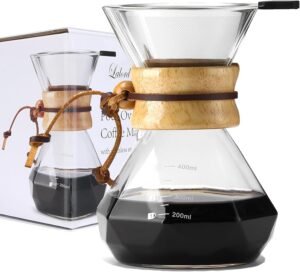
Selecting the right pour-over brewer affects extraction control, temperature stability, and daily workflow for home brewing. For households and coffee enthusiasts who favor manual brewing, a dripper’s materials, filter type, and thermal properties shape how flavors are extracted from a given grind and roast. A permanent stainless steel filter will allow more oils and fine particles through than paper, increasing body and mouthfeel but reducing clarity; thick borosilicate glass provides relatively neutral heat conduction and improved thermal shock resistance compared with soda-lime glass, but it still depends on the heat source and handling practices. Capacity, spout design, and ergonomic considerations determine how easily a single-serve or multi-cup batch is poured and transferred. Understanding these characteristics helps buyers match a brewer to brewing technique preferences, from delicate single-cup pour-overs requiring precise pulse pouring to small batch routine brewing for households.
Quick Overview
| Feature | Details |
|---|---|
| Product category | Pour-over coffee maker (manual dripper/brewer) |
| Capacity | 27 fluid ounces (approximately 3–4 standard cups) |
| Materials | Thickened borosilicate glass carafe; permanent double stainless steel filter |
| Heating compatibility | Stovetop safe (manufacturer states safe for direct gentle heat); refrigerator safe |
| Filter compatibility | Integrated permanent stainless steel filter (no paper required) |
| Best suited users | Home brewers, households, manual brewing enthusiasts preferring reusable filters |
| Intended use cases | Single-batch pour-over brewing, small household servings, stovetop warming |
| Warranty | Manufacturer-provided 3-month warranty for manufacturing defects |
The table above summarizes construction and use-case details that most directly affect brewing results: a permanent stainless filter changes clarity and mouthfeel compared with paper; borosilicate glass offers predictable thermal conduction but is dependent on external heat source; and the 27 fl oz capacity suits small household batches rather than large group brewing.

Brewing method compatibility and filter effects
The brewer’s integrated double stainless steel filter and open-top borosilicate carafe strongly influence which pour-over techniques and grinds produce optimal results. The permanent metal filter permits oils and sub-100-micron fines to pass, resulting in fuller body and heavier mouthfeel than paper-filtered methods; this is well suited to medium and darker roasts or those seeking increased texture. Grind size control becomes more critical because very fine grinds can increase turbidity and extraction speed changes due to fines packing. Manual pour-over techniques that use pulse pouring, controlled bloom, and consistent pour rates remain compatible, but the brewer is less appropriate for those who want exceptionally clear, bright cups typical of paper-filtered pour-overs.

Filter design and particle retention
The double stainless steel mesh filter provides a reusable filtration surface with relatively fine apertures while allowing dissolved oils and some micro-fines to pass. This changes perceived acidity and body: oils carry aromatic compounds that amplify sweetness and mouthfeel, while retained larger particles act as a natural micro-sediment. The mesh geometry also impacts flow rate and drawdown time; a denser mesh slows flow, increasing contact time and extraction when grind size is unchanged. Regular backflushing and brushing are necessary to avoid buildup of oils and gunk that can alter flow characteristics and impart off-flavors over time.
Grind size, dosing, and extraction control
Because the permanent filter permits fines to contribute to extraction, grind consistency and dosing precision are essential for repeatable results. A coarse-medium grind typically recommended for pour-over may need minor adjustments to reach target drawdown times when using a metal filter. Weight-based dosing and a consistent brew ratio (for example, a common starting point of 1:15–1:17 coffee-to-water by weight) help control total dissolved solids (TDS) and maintain balance. Inconsistent grinders or variable particle distributions will be more noticeable in this brewer, making an even burr grinder and scale valuable accessories.
Ease of use and workflow considerations
The brewer’s simple manual operation centers on pouring technique, filter management, and handling of a stovetop-safe glass carafe. Ergonomic aspects such as an easy-grip handle and anti-drip spout help reduce spills and allow more controlled pouring into mugs or servers. The permanent filter eliminates the need to store paper filters and reduces recurring consumable costs, but it adds cleaning steps after each brew and can slow workflow when rinsing and scrubbing mesh is required. Stovetop compatibility allows reheating directly in the carafe, though the thermal behavior of borosilicate glass and the lack of active temperature control mean workflow must incorporate preheated water and stable pouring practice to achieve consistent extraction.

Pour technique and ergonomics
Controlled pouring is central to manual brew consistency with this dripper. The anti-drip spout and handle design support steady circular pouring and targeted pulse pours for bloom and flow management. Because temperature loss during transfer can reduce extraction yield, users who preheat the carafe and use a gooseneck kettle will preserve thermal consistency better than with wider-spout kettles. The absence of a paper filter changes the rhythm of pouring, as drawdown may be faster or slower depending on grind and mesh condition, so small technique adjustments are common when switching from paper-filter workflows.
Cleaning, drying, and routine maintenance
A permanent stainless filter requires regular rinsing and periodic deep cleaning to avoid oil buildup and retained grounds. Immediate rinsing and light brushing after each use prevent clogging and reduce rancid oil development. The glass carafe is dishwasher-safe per manufacturer notes, but hand-washing reduces long-term micro-abrasion and maintains seal points or any glued components longer. For scale-prone water, occasional descaling with food-safe acids can maintain thermal transfer efficiency and prevent mineral accumulation around the filter seat and spout.
Temperature control, heat stability, and stovetop use
Thermal performance in manual pour-over systems derives from preheated water temperature, vessel heat capacity, and exposure time; the brewer’s thickened borosilicate glass moderates heat loss but is not actively heated beyond stovetop use. Borosilicate has lower thermal expansion than standard glass, offering improved resistance to thermal shock and allowing gentle stovetop warming as stated by the manufacturer. However, precise temperature control—such as holding an exact brew temperature during a long pour—remains the brewer user’s responsibility and depends on kettle control and preheating practices. When reheating on a stovetop, gentle, low-to-medium heat and gradual temperature increases reduce stress to the glass.

Heat retention and preheating best practices
Preheating the carafe with hot water or briefly warming it on low heat improves heat retention during the pour, reducing the rate of temperature drop during bloom and pouring phases. Even with borosilicate glass, a cold carafe will drop brew temperature significantly during the initial pour; preheating reduces this delta and supports more stable extraction kinetics. For users seeking minimized temperature loss, pouring faster or using smaller batch sizes reduces exposure, while thicker glass provides slightly higher thermal mass compared with thin-walled drippers.
Stovetop safety and handling precautions
Manufacturer-specified stovetop safety suggests the carafe can tolerate gentle direct heat, but safe stovetop use requires conservative heat application and avoidance of sudden temperature shocks. Rapid transitions from very hot to cold (for instance, placing a very hot carafe into cold water or refrigerator) can still cause stress despite borosilicate composition. The included warning about packaging and shipping fragility reflects that glassware, while thicker, remains breakable under impact. Users should employ low-to-moderate heat and stable, flat burner surfaces when applying direct heat to this brewer.
Brew consistency, extraction quality, and flavor profile expectations
Extraction outcomes hinge on mesh filtration, grind distribution, pour rate, and brew ratio when using this brewer. The permanent stainless double filter tends to produce a cup with increased body, more dissolved oils, and a perception of fuller sweetness relative to paper-filtered pour-overs. Clarity and brightness are moderated, which can be desirable for darker roasts or single-origin beans with naturally low acidity. Because the brewer transmits micro-fines, total dissolved solids and extraction yields may be higher for the same grind compared with paper-filtered methods, necessitating slightly coarser grinds or shorter contact times to avoid over-extraction.

Controlling extraction with grind and pour adjustments
To achieve consistent extraction, small incremental adjustments to grind and pour rate are effective: coarsening the grind reduces surface area and contact time, while modifying the pouring tempo changes agitation and saturation uniformity. A short bloom of 20–45 seconds with a modest water dose stabilizes degassing and improves initial wetting, important when fines can compact and restrict flow. Tracking drawdown time and tasting for astringency or under-extraction guides iterative refinements, and employing a scale, timer, and consistent kettle techniques supports repeatability across batches.
Flavor trade-offs: clarity vs body
The permanent filter’s allowance of oils and fines produces a trade-off: richer mouthfeel and amplified sweetness versus reduced cup clarity and more sediment. For drinkers who prioritize a crisp, tea-like clarity, a paper-filtered method or separate paper-on-metal approach would be preferable. Conversely, those who favor fuller-bodied cups that showcase roast-derived caramelization and mouth-coating textures will find the metal filter’s contribution beneficial. Roast level and bean characteristics amplify these differences, so alignment with preferred flavor profiles is key when choosing this brewer.
Capacity, serving flexibility, durability, and long-term care
A 27 fl oz capacity positions the brewer for small household batches—typically three to four standard cup servings depending on cup size. This capacity supports short-run batch brewing rather than large-group service. Durable design elements such as thickened borosilicate glass and a stainless mesh filter enhance resistance to thermal stress and corrosion, but glass inherently requires cautious handling; shipping damage and accidental impact remain real risks, as acknowledged by manufacturer packaging notes. Long-term reliability relies on proper cleaning, gentle handling, and routine inspection of the mesh filter for deformation or clogging.

Serving scenarios and portioning recommendations
For single-serve enthusiasts, the brewer’s volume accommodates multiple single cups without repeated setups, enabling consistent workflow for morning routines. For households hosting several people, consider brewing sequential smaller batches to preserve peak aroma and temperature. Portion control with a scale and pre-weighed doses simplifies consistency when serving multiple cups. Large gatherings that require continuous hot coffee or insulated transport are less well served by a single glass carafe without an external thermal carrier.
Durability expectations and warranty considerations
Thickened borosilicate glass reduces thermal shock risk compared with standard glass, and stainless steel mesh resists corrosion from hot water exposure. However, glass remains breakable from impacts; manufacturer-provided packaging reduces shipping breakage but acknowledges a small damage probability and a three-month warranty for manufacturing defects. Regular inspection of the filter mesh for tears and routine cleaning reduce the chance of flow irregularities. Stovetop use is permitted when performed with conservative heat application, but repeated direct high-heat exposure may increase long-term stress.

Pros & Cons
Pros
- Reusable stainless steel filter reduces ongoing consumable waste and allows oils into the cup, producing fuller body and richer mouthfeel. This benefits drinkers who prefer texture and sweetness over ultra-clean clarity.
- Thickened borosilicate glass offers improved resistance to thermal shock compared with standard glass and provides a neutral brewing surface that does not impart flavors. The clear carafe also enables visual control of extraction and levels.
- Stovetop-safe construction allows gentle reheating and flexibility for in-situ warming, useful for workflows without an electric server. This supports multi-use scenarios like stovetop brewing and reheating.
- 27 fl oz capacity accommodates small household batches, reducing the need for multiple single-serve brews while still avoiding large, unwieldy carafes. The mid-size is a pragmatic balance for home kitchens.
- Anti-drip spout and ergonomic handle design promote controlled pouring for improved technique and reduce spill risk during transfer. This aids consistency and safety during manual pours.
- Dishwasher-safe glass simplifies cleanup for routine use, and a permanent filter reduces paper storage and waste. These factors streamline daily maintenance when paired with routine rinsing of the filter.
Cons
- Permanent metal filtration increases sediment and oils in the cup, reducing clarity; users seeking very bright, paper-filter-like cups may find results inconsistent with expectations. This makes it a less ideal choice for those prioritizing extreme clarity.
- Glass construction, even borosilicate, remains breakable and requires careful handling; shipping damage is acknowledged as a potential risk and a short warranty period may be limiting for some buyers.
- The absence of active temperature control means reliance on kettle technique and preheating for thermal stability; users seeking precise temperature hold will require additional equipment like a temperature-controlled kettle.
- The stainless mesh will require more frequent manual cleaning and occasional deep scrubbing to avoid oil buildup, which can alter flow and impart off-flavors if neglected.
Final Verdict: Who This Product Is Best For (and Who Should Skip It)
This pour-over brewer suits home brewers and households that value manual control, a fuller-bodied cup, and the convenience of a reusable filter. It is appropriate for users who favor medium to dark roasts or those who enjoy textured, oil-forward cups rather than ultra-bright, paper-filtered brews. The 27 fl oz capacity is practical for small batch brewing and morning routines that serve multiple standard cups without repeated setups. The borosilicate glass and stainless filter provide a combination of thermal neutrality and sustainable filtration that appeals to environmentally minded brewers who accept the cleaning trade-offs.
Those who should skip this brewer include people who require insulated servers for extended hot holding, those who prioritize extremely clear cups and low sediment, or buyers seeking an automated or temperature-controlled brewing solution. Users who frequently need to serve large groups or who are uncomfortable with glass handling and stovetop precautions would also be better served by alternative materials or larger-capacity brewers. Overall, this brewer offers a predictable manual brewing platform for the right user profile in 2026, provided maintenance and technique are matched to desired flavor outcomes.
Frequently Asked Questions (FAQs)
How does a permanent stainless steel filter affect cup clarity compared to paper?
A permanent stainless steel filter allows dissolved oils and some micro-fines to pass into the brewed cup, which increases body and mouthfeel while reducing clarity relative to paper filters. This results in a fuller, sweeter perception for many roasts but can introduce more sediment and a less crisp flavor profile. Those seeking maximum clarity typically prefer paper filtration.
Is borosilicate glass truly safe for stovetop heating?
Borosilicate glass has a lower coefficient of thermal expansion than standard glass, providing improved resistance to thermal shock and enabling gentle stovetop heating per manufacturer guidance. Safe stovetop use requires low-to-moderate heat, gradual temperature changes, and avoidance of sudden transitions between very hot and very cold environments to minimize the risk of cracking.
What grind size and brew ratio work best with a metal-mesh pour-over filter?
A medium-coarse to medium grind generally balances flow and extraction with a metal mesh filter; however, fine adjustments are often required because fines can increase turbidity and extraction. A starting brew ratio in the range of 1:15 to 1:17 (coffee-to-water by weight) is commonly recommended, with grind adjustments used to target desired drawdown times and flavor balance.
How should the stainless steel filter be cleaned to maintain performance?
Rinse and lightly brush the mesh immediately after each brew to remove trapped grounds and oils. Periodic deep cleaning with a mild detergent or soaking in a baking soda or citric acid solution helps remove built-up oils and mineral deposits. Regular maintenance prevents clogging, flow irregularities, and off-flavors.
What brewing practices improve temperature stability with a glass pour-over carafe?
Preheating the carafe with hot water, using a temperature-controlled kettle, and minimizing transfer time between kettle and pour all reduce temperature loss during brewing. Pouring in steady, controlled pulses and avoiding overly long pours also help maintain extraction temperature and yield more consistent results.
Who should avoid choosing a glass pour-over with a permanent filter?
Buyers who need insulated, long-duration hot holding, those who prioritize paper-filter clarity, people who often serve large groups, or users uncomfortable with careful glass handling should consider alternatives. Additionally, those seeking precise temperature hold without external equipment may prefer devices with built-in temperature control.
Does the manufacturer warranty cover shipping breakage?
Manufacturer materials acknowledge a small probability of shipping damage and provide a three-month warranty for manufacturing defects. For shipping breakage, documented photos and contacting seller support are typically required to pursue replacement or repair under the seller’s stated shipping protection procedures.
Can this brewer be used for tea or other hot beverages?
The glass carafe is neutral and suitable for hot water and infusion-based beverages; however, the stainless mesh is designed for coffee grounds and may allow finer tea particles through, potentially increasing body and sediment in brewed tea. For leaf teas, a dedicated infuser or fine mesh specifically sized for tea may be preferable.