Vianté Temp-Control Kettle: Precise Tea and Coffee Brewing
Why the Right Kettle Matters for Brewing
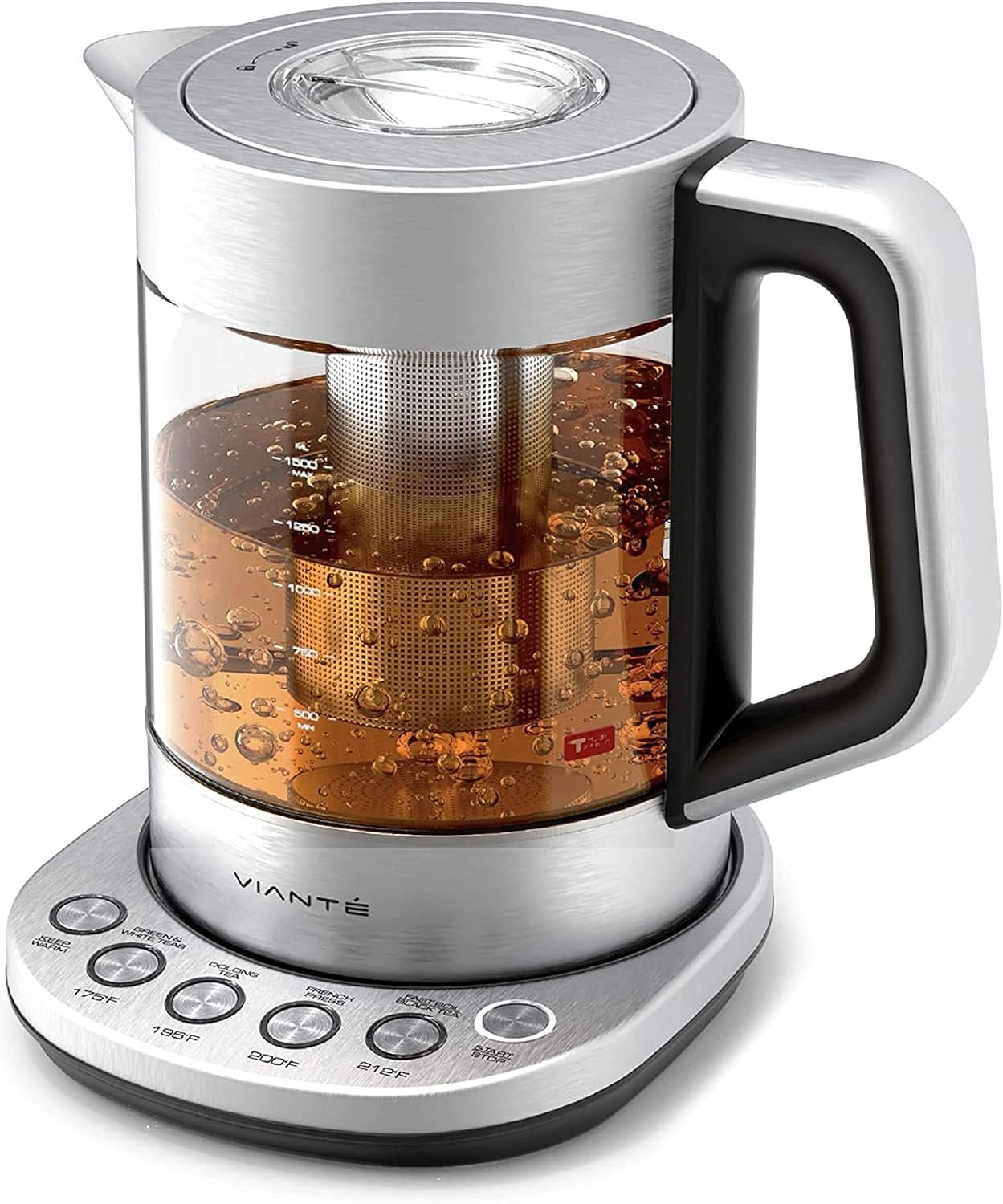
Choice of kettle shapes final extraction for tea and manual coffee methods by controlling temperature, material contact and workflow. Home brewers and enthusiasts who focus on loose-leaf tea varieties or manual coffee brewing methods benefit from equipment that preserves target temperatures, minimizes off-flavors from materials and streamlines repeatable routines. The Vianté electric kettle with infuser positions itself as a multi-function appliance: a borosilicate-glass-bodied kettle with a 304 stainless steel water path and temperature presets intended to support white, green, oolong and black teas while also serving pour-over and French press workflows. For buyers evaluating this model, attention should fall on temperature control fidelity, how the infuser design affects infusion and steeping volume, capacity versus household needs, and cleaning requirements for glass and stainless components. Durability expectations hinge on the material mix and manufacturer maintenance guidance, while workflow compatibility depends on the cordless base, digital controls and the kettle’s keep-warm and automatic shut-off features.
Quick Overview
| Feature | Details |
|---|---|
| Product category & brewing method | Electric kettle with integrated infuser; suited for loose-leaf tea, tea bags, and hot water for pour-over or French press coffee |
| Capacity and output | 1.6 liters capacity; suitable for multiple cups or a small group serving |
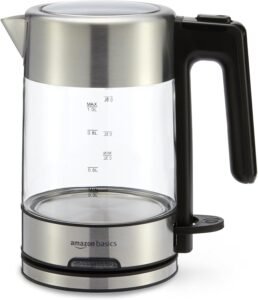
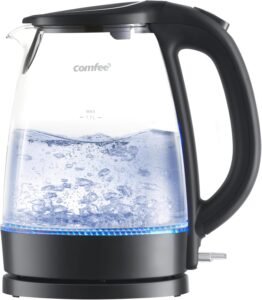
| Materials and construction | Shatter-resistant borosilicate glass body, 304 stainless steel water-contact components, BPA-free plastics for non-water-contact parts |
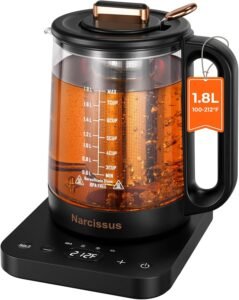
| Heating system | Internal concealed heating element with digital temperature control and keep-warm function |
| Filter / infuser compatibility | Built-in removable infuser basket designed for loose-leaf tea and bags; infuser can be removed for plain boiling |
| Best suited users | Home tea enthusiasts, small households, pour-over coffee users seeking temperature control |
| Intended use cases | Hot tea steeping, iced tea preparation, water for pour-over/French press, general hot water prep |
| Warranty & origin | Designed in Italy; manufacturer warranty information should be confirmed with seller |
These specifications indicate a design focused on controlled infusion and a neutral water path. Borosilicate glass and 304 stainless steel reduce flavor transfer compared with lower-grade plastics, while the removable infuser and digital presets support repeatable steeping; routine descaling and hand washing are required to maintain flow and longevity.

Brewing Method Compatibility
The kettle’s design targets both dedicated tea brewing and hot-water delivery for manual coffee methods, but it is not a pressurized espresso device. The integrated infuser and temperature presets make it straightforward to steep white, green, oolong and black teas at manufacturer-recommended temperature ranges, while the option to remove the infuser and heat plain water enables pour-over, French press and instant preparations. For pour-over workflows, temperature control and a stable water delivery rate from a spout influence extraction; the kettle is intended to provide stable temperatures at the spout for controlled pours. For immersion methods such as French press and cold-brew starters, the kettle supplies temperature-accurate water in adequate volume. It remains incompatible with equipment requiring pump pressure or steam.

Loose-leaf tea and infuser performance
The built-in removable infuser basket is sized to hold moderate to large amounts of loose leaf or multiple tea bags, allowing full leaf expansion which is critical for proper extraction. Infuser mesh density and placement within the kettle influence flow-through and steeping speed: a fine mesh reduces leaf debris in the cup but can slow flow and require more frequent cleaning to avoid leaf buildup. Because the product is made from borosilicate glass and stainless steel where water contacts materials, risk of flavor transfer from plastics is minimized, preserving delicate tea aromatics. The manufacturer’s 30-minute keep-warm setting supports extended steeping schedules but should be used carefully with delicate leaves to avoid over-extraction if leaves remain immersed.
Pour-over and French press water delivery
When used as a hot-water source for pour-over or French press, temperature control accuracy and heat retention are the primary considerations for extraction consistency. A kettle that reaches and holds target temperatures for pour-over helps stabilize extraction and repeatability across brews. The Vianté model’s digital control and base-mounted power system aim to deliver consistent set temperatures; however, the actual pour rate, spout geometry and operator technique also affect coffee saturation and flow. The removable infuser ensures the kettle can heat plain water without obstruction, allowing compatibility with external gooseneck kettles or decanting into specialized pour-over kettles if finer pour control is required.
Temperature Control and Heat Stability
Temperature control is central to the kettle’s value proposition: a digital controller with presets for common tea types and a 30-minute keep-warm feature are intended to reduce guesswork around bloom and steep temperatures. Precision in heating affects extraction chemistry—different tea categories and coffee preparations extract at different temperature ranges, and small deviations can alter perceived bitterness, astringency and aroma. The construction using borosilicate glass for the body and 304 stainless steel for the water path helps minimize thermal gradients and chemical leaching, but glass will lose heat faster than insulated or double-walled designs. Automatic shut-off provides safety and prevents dry-boil conditions; sustained heat stability during the keep-warm period depends on the power delivery and ambient conditions, so users should expect gradual temperature decline over longer holds.

Presets, digital control and set-point reliability
Digital presets simplify selection of common temperature targets for white, green, oolong and black teas, which supports repeatable infusion without manual thermometry. The user interface generally allows selection of discrete set-points rather than continuous PID-style control; this approach is user-friendly but may not match the fine-grained control desired by advanced coffee brewers. Set-point reliability depends on the internal thermostat and sensor placement; sensors mounted closer to the heating element can register differently than the temperature at the spout or in the infuser. For pour-over coffee, measuring water at the point of contact with grounds remains best practice when precision at the kettle is required.
Keep-warm, heat loss and automatic shut-off behavior
A 30-minute keep-warm function allows water to remain near the selected set-point for short serving windows, aiding sequential brews or prolonged steeping. Glass-bodied kettles radiate heat more quickly than insulated alternatives, so users should anticipate moderate temperature drift even with keep-warm engaged; this is typical for single-walled borosilicate designs. Automatic shut-off adds a safety layer, preventing continuous heating if the kettle is empty or reaches a boil. For long holding periods or high ambient heat loss, re-boiling between brews can restore precise temperatures but will increase energy use and may impact mineral concentration in repeated heating cycles.
Ease of Use and Workflow
Workflow considerations include filling, seating on the cordless base, selecting presets, handling the infuser and pouring ergonomics—each element shapes daily usability. A removable infuser simplifies switching between steeping and heating plain water, while digital presets reduce the need to monitor a thermometer. Cordless operation on a 360-degree base supports left- or right-handed pouring motions and quick placement, streamlining multi-step routines like preparing a sequence of kettles for tea service or timing pour-over steps. The spout design and handle ergonomics affect pour stability and wrist comfort; an open glass top versus a sealed lid influences how easily large leaf masses are loaded and how steam is vented during boiling. Safety features such as automatic shut-off and boil-dry protection are integral to user confidence and workflow reliability.

Controls, interface and daily routine integration
The digital control panel offers direct selection for common tea categories and likely includes start/stop and keep-warm buttons; such interfaces shorten the path from intent to brew and reduce errors in temperature choice. For routine use, the combination of presets and a clear display supports consistency across repeated sessions. However, discrete presets may require users to adapt exact brewing target preferences into the available options rather than choose arbitrary temperatures. Integration into a morning or afternoon routine depends on how quickly the kettle reaches set temperatures and whether the user prefers a single appliance performing both infusion and water heating versus a dedicated gooseneck kettle for precision pouring.
Filling, infuser handling and pouring ergonomics
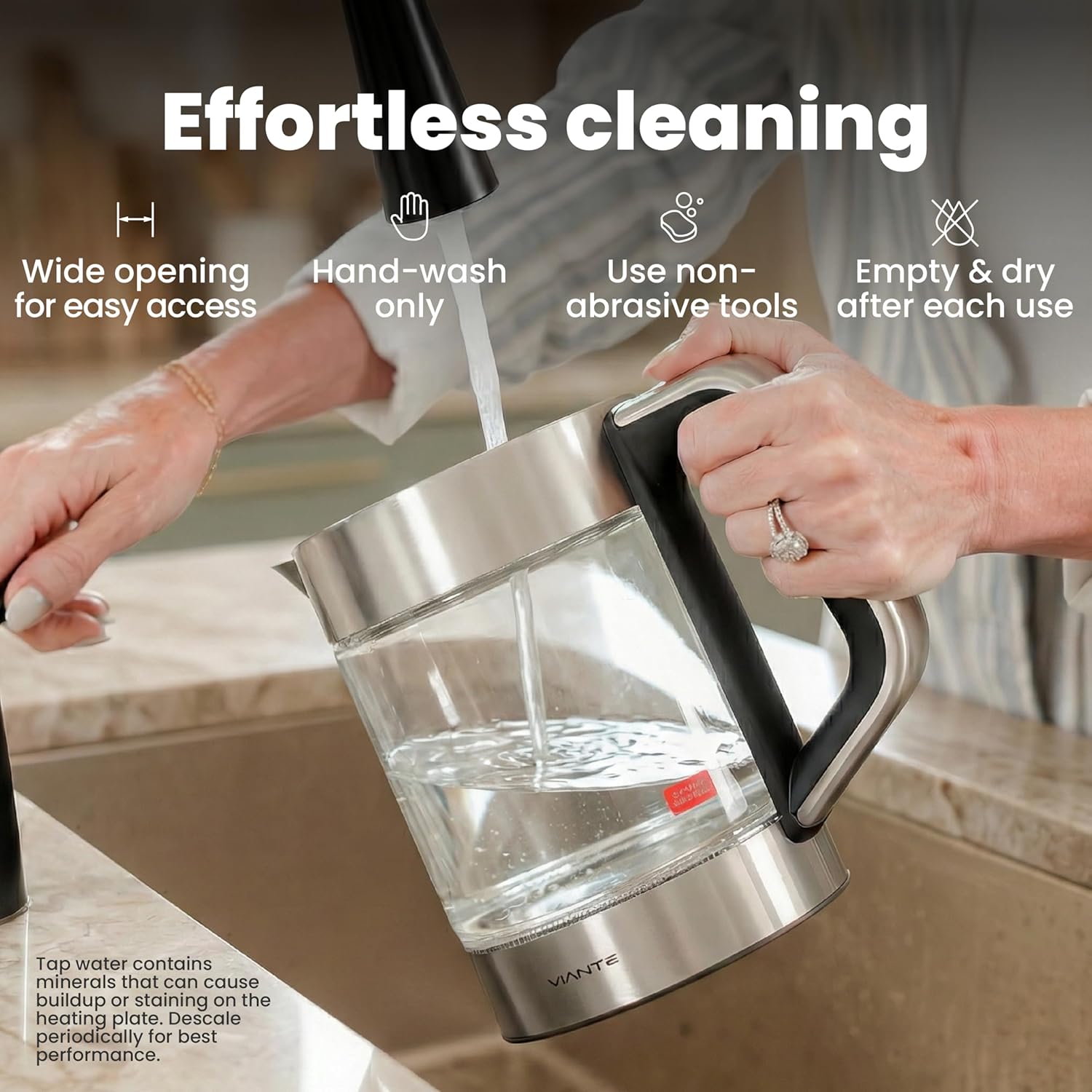
Hand-wash care and a removable infuser make loading and cleaning straightforward, but the practical ease depends on lid access and infuser size. A wide opening and a removable infuser basket facilitate leaf insertion and emptying, reducing mess compared with fixed micro-infusers. The glass body provides visual feedback on water level and steep progress, aiding workflow timing; however, wide-mouthed glass kettles demand careful handling to avoid thermal shock when rinsing with cold water. Spout shape influences pour control and drip behavior: a well-designed spout produces a steady stream for controlled blooms, while a blunt spout increases the likelihood of uneven pours.
Cleaning, Maintenance and Durability
Material selection—borosilicate glass body and 304 stainless steel water-contact components—supports long-term flavor neutrality and corrosion resistance when maintained per manufacturer guidance. The product is hand-wash only, and regular descaling is advised to guard against mineral scale that can affect heating efficiency and flow. Removable parts such as the infuser basket simplify access to interior surfaces; nonetheless, glass bodies can show staining and require careful drying to avoid mineral spots. BPA-free plastics reportedly used for non-water-contact parts reduce concerns about water exposure, but seals and gaskets made from polymer materials can be wear points over time. Replacement parts and warranty provisions will influence long-term ownership economics.

Descaling, hand-wash care and component longevity
Routine descaling with food-safe descalers or vinegar solutions maintains heat transfer and prevents scale accumulation on the concealed heating element. Because the kettle is labeled hand-wash, submerging the entire base or electrical components must be avoided; this increases the importance of removable parts for thorough interior cleaning. Glass is chemically resistant to most cleaning agents but can be fragile if dropped or shocked; shatter-resistant borosilicate reduces risk but does not eliminate it. Stainless steel components in the water path resist corrosion, but mineral deposits and hard-water scaling can form on surfaces over time, necessitating periodic maintenance to preserve thermal performance.
Long-term reliability and parts replacement expectations
Durability depends on build quality and the robustness of non-water-contact plastics, electrical base connections and the integrity of seals. Concealed heating elements generally have predictable lifespans if regularly descaled and not operated dry. The manufacturer’s disclosure about materials—304 stainless steel where water contacts components and borosilicate glass body—points to reasonable resistance to flavor transfer and corrosion, but moving parts like the infuser basket and lid hinges may see the most wear. Availability of replacement infuser baskets, lids or sealing gaskets will determine repairability; buyers prioritizing long service life should verify warranty terms and parts availability with the vendor.
Capacity, Serving Flexibility and Extraction Quality
A 1.6-liter capacity positions the kettle for multi-cup household use, iced-tea batches and small-group service without repeated refills. Capacity affects steeping concentration and extraction control: a larger volume with the infuser in place can dilute tea if leaf mass is not scaled accordingly, while heating plain water for multiple pour-over drippers supports sequential brewing. Extraction quality for both tea and coffee depends on accurate temperature, contact time and water distribution; the kettle’s digital temperature management and visible glass body aid in achieving consistent steep times and monitoring infusion intensity. For coffee brewing that requires precise pour control, some users may prefer decanting to a narrow-pour gooseneck kettle to refine flow.
Household serving scenarios and iced tea use
The 1.6-liter volume suits households that serve multiple cups, guests or iced-tea preparations where cooling and dilution are planned. For iced tea, bulk steeping with the infuser and then rapid cooling over ice leverages capacity while preserving infusion strength; careful adjustment of leaf-to-water ratio is necessary to avoid weak flavor when iced. For small gatherings, the kettle can heat multiple rounds without frequent reheating, reducing workflow interruptions. The glass pitcher-style body also simplifies monitoring of levels and steep darkness, which is helpful when preparing visually sensitive beverages like herbal blends or sun tea.
Brew ratios, infusion control and extraction consistency
Extraction control hinges on maintaining target temperature and consistent steep times or pour rates; the kettle’s presets help standardize one variable in the equation. For tea, selecting the proper leaf-to-water ratio and using the infuser to allow adequate leaf expansion is crucial to avoid under- or over-extraction. For pour-over coffee, delivering water at the correct temperature and then using a steady pour technique across grounds provides predictable extraction; the kettle can serve as the hot-water source, but users aiming for micro-adjustments to flow profile may leverage a dedicated gooseneck implement. In all cases, accurate measurement of water volume and adherence to established brew ratios produce the most repeatable results.

Pros & Cons
Pros
- Controlled temperature presets support repeatable infusion: The digital presets for common tea categories reduce guesswork around target temperatures, helping preserve delicate aromas and avoid over-extraction of tannins. This benefits users seeking consistent results across sessions.
- Neutral water-contact materials minimize flavor transfer: Use of borosilicate glass for the body and 304 stainless steel where water contacts components reduces the risk of plastic-related off-flavors and supports cleaner tasting brews. This is advantageous for delicate teas.
- Built-in removable infuser for flexible steeping: The infuser accommodates loose leaf or multiple tea bags and can be removed for plain water heating, enabling both tea steeping and manual coffee workflows without a dedicated second kettle.
- Generous 1.6-liter capacity for households and iced tea: Capacity suits multi-cup servings, small gatherings and batch iced-tea production, reducing the need for repeated reheating and supporting versatile usage.
- Cordless base and automatic shut-off enhance safety and convenience: A 360-degree base and boil-dry/auto-shutoff protections contribute to daily usability and peace of mind in household environments.
- Visible glass body aids monitoring: Transparent borosilicate allows users to visually confirm water level and steep progress, which assists in timing and quality control for both tea and manual coffee preparations.
Cons
- Glass body has faster heat loss than insulated designs: Single-walled borosilicate glass radiates heat more readily than double-walled or insulated kettles, so temperature drift during keep-warm periods can be more pronounced, affecting extended holding stability.
- Hand-wash requirement and delicate materials increase care needs: The manufacturer’s hand-wash guidance and glass construction necessitate careful cleaning and handling; dishwasher use is not advised and thermal shock should be avoided.
- Preset-based controls may limit fine-grain temperature selection: Discrete presets simplify operation but may not satisfy users who require precise, continuous temperature adjustment for advanced coffee brewing.
- Potential wear points in non-water-contact plastics and seals: While water-contact components use stainless steel and glass, external plastics, lid hinges and gaskets can be wear items over time and may require replacement to maintain performance.
- Not a precision pour gooseneck alternative: Spout geometry of the glass kettle provides general pouring performance but does not replace a dedicated gooseneck kettle for highly controlled pour-over technique.
Final Verdict: Who This Product Is Best For (and Who Should Skip It)
The Vianté electric kettle with infuser is well suited to home tea enthusiasts and households that value controlled temperature presets, a neutral water-contact path and multi-function capability for both tea steeping and hot-water delivery for manual coffee methods. Buyers prioritizing flavor neutrality will appreciate the borosilicate glass body and 304 stainless steel water pathway, while those who want a single appliance to make loose-leaf tea, iced tea batches and to supply hot water for pour-over or French press workflows will find the 1.6-liter capacity practical. The integrated infuser and digital control reduce complexity for routine brewing and help standardize extraction across sessions.
This model is less appropriate for users who require an insulated kettle for prolonged heat retention, a dedicated gooseneck for expert pour-over technique, or fully dishwasher-safe convenience. Advanced coffee brewers seeking micro-adjustable temperature control or a specialized pour profile may prefer a separate precision gooseneck kettle and thermometer. For small households and tea-focused users who accept hand-wash care and occasional descaling, the kettle offers a balance of materials and controls that support consistent brewing and neutral flavor results compared with lower-end alternatives.

Frequently Asked Questions (FAQs)
What water-contact materials does the Vianté kettle use and why does that matter?
The kettle uses shatter-resistant borosilicate glass for the body and 304 stainless steel for components that contact water. These materials are chosen to reduce flavor transfer, resist corrosion and maintain neutral taste profiles. For delicate teas and manual coffee preparations, a neutral water path helps preserve aroma and prevents off-flavors commonly associated with lower-grade plastics.
Can this kettle be used for pour-over coffee and how does it affect extraction?
Yes. The kettle can heat water to target temperatures suitable for pour-over coffee and supply consistent hot water for blooming and pouring. Because the kettle’s spout and pour control differ from a dedicated gooseneck, users aiming for precise flow profiles may pour into a separate gooseneck kettle or decant hot water for finer control. Temperature accuracy remains the primary factor for extraction consistency.
How important is the keep-warm function and how stable is the temperature?
A 30-minute keep-warm function helps maintain near-target temperature for short service windows, which is useful during sequential brews or extended steeping. Glass-bodied kettles lose heat faster than insulated units, so expect moderate temperature drift during the keep-warm period; re-boiling restores exact set-points when strict precision is required.
What cleaning and maintenance does the Vianté kettle require?
The kettle is designated hand-wash only, with removable parts like the infuser to facilitate cleaning. Regular descaling with food-safe descalers or mild vinegar solutions is recommended to prevent mineral buildup on the heating element and water path. Avoid immersing the electrical base; follow manufacturer care instructions to preserve performance and longevity.
Is the built-in infuser suitable for large leaf volumes or multiple tea bags?
The removable infuser is designed to accommodate moderate to large amounts of loose leaf and multiple tea bags, allowing leaves to expand for proper extraction. Fine mesh may retain small particles but requires periodic cleaning to avoid buildup. For very large batch steeping, monitoring leaf-to-water ratios ensures appropriate strength, especially for iced-tea preparations.
Does the kettle prevent plastic contact with water as claimed?
Manufacturer disclosures indicate that water-contact components are made of 304 stainless steel and borosilicate glass, with BPA-free plastics used for non-water-contact elements. This design minimizes direct plastic contact with heated water, reducing the potential for plastic-derived off-flavors; buyers should confirm specific model construction details with the seller if this is a critical requirement.
Who should consider an alternative to this kettle?
Users who need extended thermal retention, dishwasher-safe convenience, very fine-grain temperature control or a gooseneck pour for precision coffee should consider alternatives. Insulated or double-walled kettles, dedicated temperature-controlled gooseneck kettles and kettles with continuous PID control offer features better suited to those specific priorities.