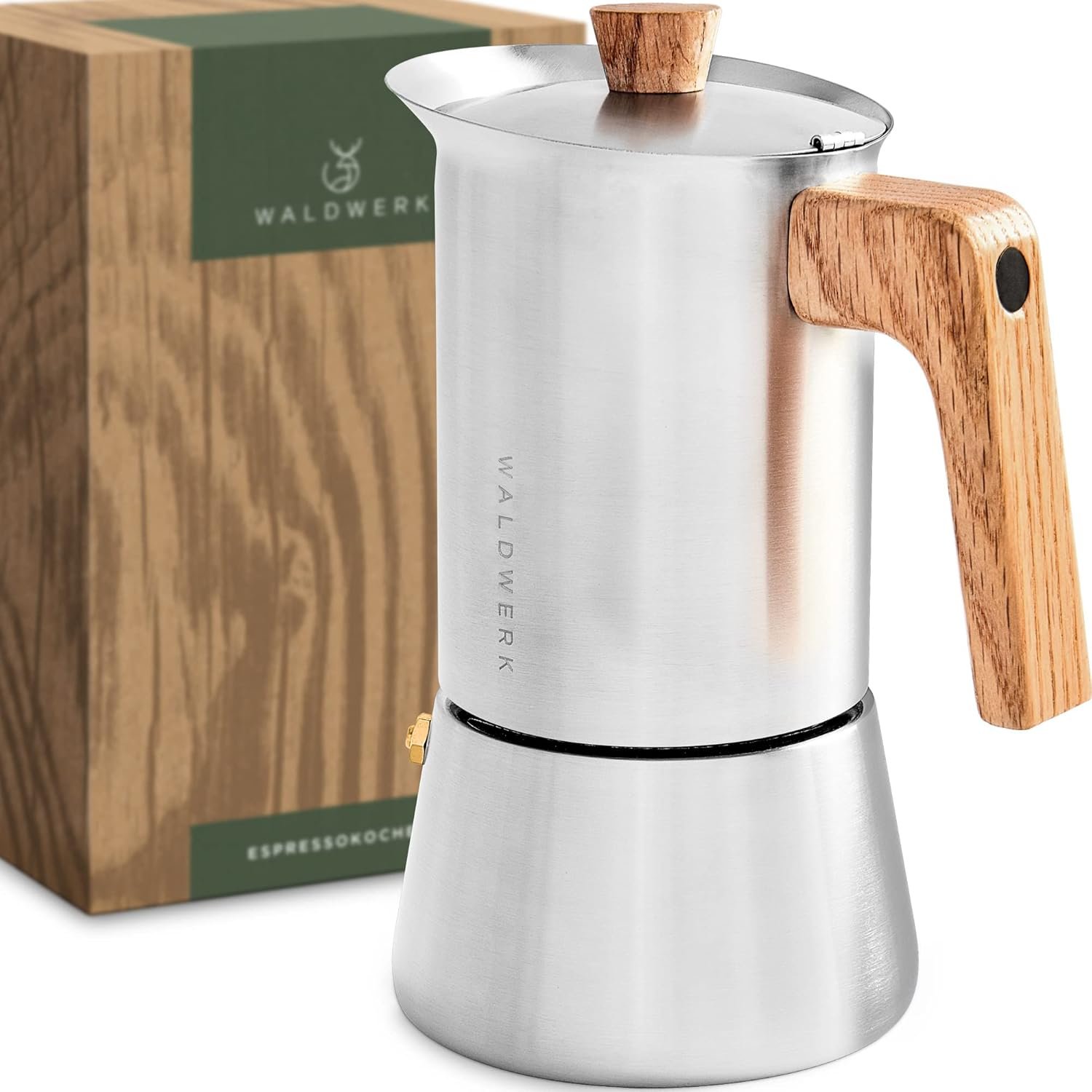
WALDWERK 10oz Stainless Moka Pot – Induction & Stovetop
Introduction: Why the Right Moka Pot Matters for Home Brewing
Choosing coffee equipment influences flavor clarity, extraction control, and daily workflow for home brewers and household kitchens. Stovetop moka pots occupy a practical niche between pour-over clarity and espresso intensity: they use steam-driven pressure to force hot water through a finely ground bed, producing a concentrated, espresso-style brew without an electric pump. For buyers focused on material safety, heat management, and ease of use, construction details such as 304 stainless steel, a solid wood handle, and a reliable safety valve directly affect taste and reliability. The WALDWERK 10oz stainless moka pot targets users who prefer manual brewing, want induction compatibility, and seek an aluminum-free alternative. Considerations include grind size and dose to control extraction, cooktop heat profile for temperature stability, and maintenance of gaskets and valves for long-term performance. This review synthesizes manufacturer specifications, common user feedback themes, and coffee preparation principles to present a detailed, neutral assessment of how this moka pot performs in typical home-brewing scenarios.
Quick Overview
| Feature | Details |
|---|---|
| Product category | Stovetop moka pot (stovetop espresso maker) |
| Capacity | 10 fluid ounces (10oz) |
| Materials | 304 stainless steel body; solid oak wood handle |
| Heating/pressure system | Steam-driven pressure for stovetop brewing; compatible with induction, gas, ceramic, electric |
| Safety features | Stainless steel safety valve (manufacturer-disclosed) |
| Grind/filter compatibility | Ground coffee (moka-fine to medium-fine); included metal filter |
| Best suited users | Home brewers seeking aluminum-free moka brewing and induction compatibility |
| Intended use cases | Manual espresso-style brewing for single- to small-group servings; portable kitchen use |
| Warranty/guarantee | Manufacturer money-back guarantee (60-day satisfaction window disclosed) |
The table lists core specifications that determine brewing behavior and usability. The 304 stainless construction eliminates contact with aluminum, which can affect metallic notes, while induction compatibility and a metal safety valve shape how heat and pressure are managed. Capacity and included filter inform dosing choices and serving size, and the oak handle addresses handling ergonomics and heat isolation.

Build and Materials: How Construction Affects Flavor and Safety
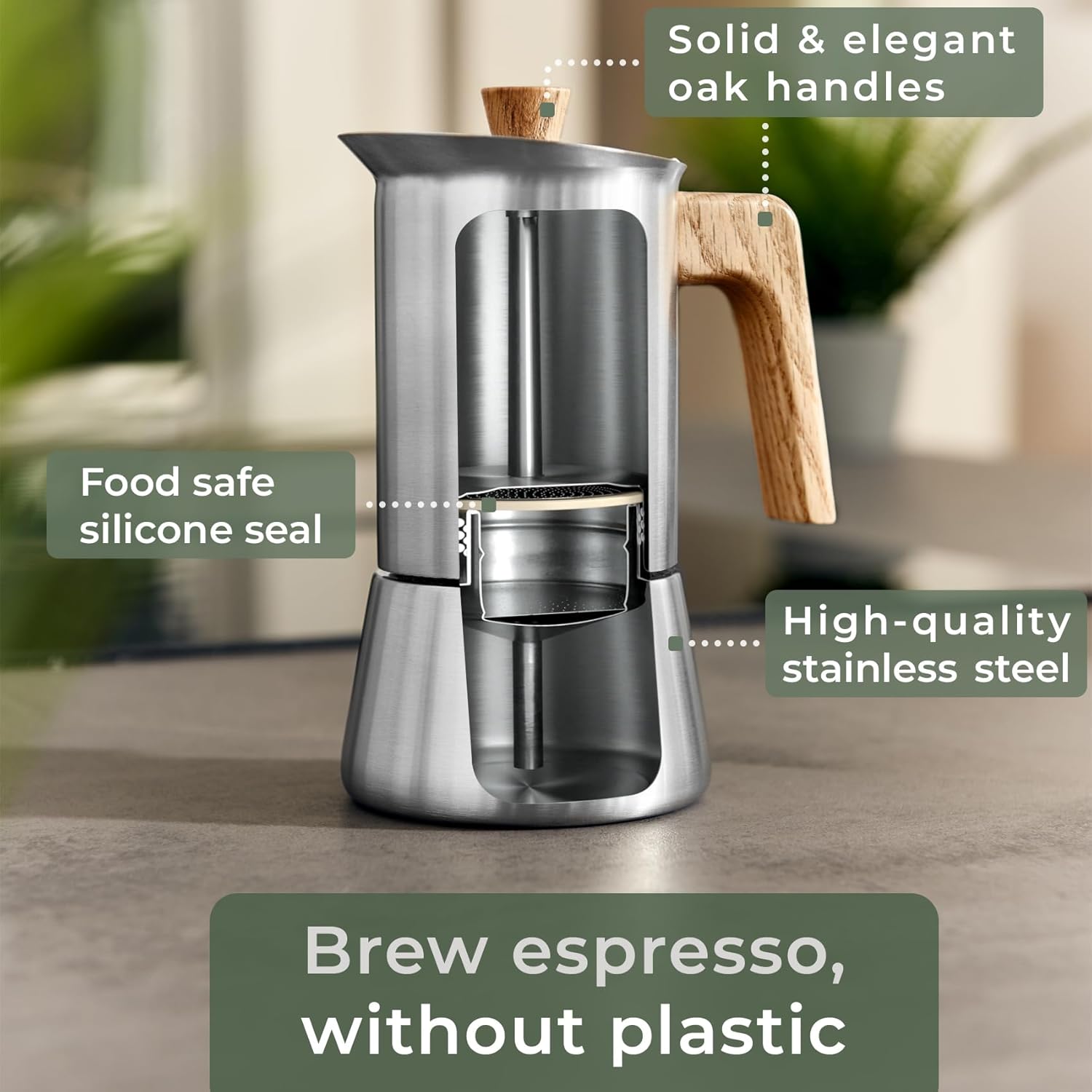
The WALDWERK 10oz moka pot emphasizes material safety by using 304 stainless steel for internal and external surfaces, which reduces the risk of aluminum ion migration and limits unwanted metallic interaction with brewed coffee. Stainless 304 provides corrosion resistance and a neutral surface that minimizes flavor transfer, though thermal conductivity differs from aluminum and requires attention to heat management on different stoves. The solid oak handle is a manufacturer-highlighted design choice that provides an insulating grip and a premium aesthetic, but wood requires care to avoid prolonged exposure to water and high humidity. The included stainless steel safety valve conforms to standard moka safety designs, ensuring pressure relief if blockages occur. Overall, materials selection is balanced toward long-term chemical stability and household safety, with trade-offs in thermal responsiveness and handle maintenance.
Exterior and Internal 304 Stainless Steel
304 stainless steel is widely used in kitchenware due to its chromium-nickel composition, which offers corrosion resistance and reduced reactivity with acidic beverages like coffee. For moka brewing, an internal 304 surface reduces the potential for metallic off-notes compared with aluminum-bodied pots. Thermal conductivity of stainless is lower than aluminum, so heat transfer to the water chamber is slower; this can lead to slightly different extraction dynamics that require stove adjustments. Stainless surfaces are also easier to maintain with non-abrasive cleaning, but mineral scaling from hard water still warrants periodic descaling. From a safety and flavor-preservation standpoint, 304 stainless fulfills the manufacturer’s toxic-free claim in material terms.
Oak Handle and Heat Management Considerations
A solid oak handle provides a tactile and visual upgrade over plastic or resin handles, offering natural insulation that helps prevent burns during pouring. Wood will remain cooler to the touch relative to thin metal attachments but requires protection from prolonged immersion and high moisture, which can lead to swelling or finish wear over time. The handle attachment method matters for longevity: a robust mechanical fastener or rivet reduces wobble and heat transfer; user reports commonly emphasize checking handle stability periodically. For kitchens that run dishwashers, the wooden component suggests handwashing to preserve finish and joint integrity. A wooden handle influences user workflow by encouraging careful drying and storage practices.
Brewing Performance and Extraction: What to Expect from a 10oz Stainless Moka Pot
Moka brewing relies on steam pressure and temperature control to extract soluble compounds from a compact coffee bed. The WALDWERK design adheres to classic moka geometry—separate water chamber, filter basket for ground coffee, and an upper collection chamber—so extraction outcomes depend on grind consistency, dose, and stovetop heat profile rather than internal electronics. Stainless steel thermal behavior requires attention: slower heat transfer relative to aluminum means the water heats differently, influencing the time the brew spends above optimal extraction temperatures. The stainless safety valve reduces blockage risk but cannot replace correct grind and dosing. For consistent extraction, users should pair this pot with a burr grinder for a stable moka-fine grind, monitor stovetop heat to avoid excessive pressure or over-extraction, and use established brew ratios tuned to the 10oz capacity.
Extraction Dynamics of Moka Brewing and Pressure Considerations
Moka pots typically operate at modest pressures generated by boiling water and steam—far lower than pump-driven espresso machines—so the resulting beverage is concentrated but not true espresso. The critical variables are temperature and flow rate: if the stovetop heat is too high, the brew can be forced through too quickly, leading to under-extraction and harsh flavors; if too low, the brew can be slow and over-extracted. Stainless steel’s thermal inertia moderates rapid temperature swings but requires users to find an appropriate burner setting. The safety valve and the three-chamber design remain central to safe operation. Understanding that moka brewing extracts differently from espresso helps set expectations: flavor intensity comes from concentration rather than pressure-driven crema.
Grind Consistency, Dose, and Brew Ratios for Reliable Results
Grind uniformity is essential for predictable flow and extraction in moka brewing. A burr grinder producing a consistent moka-fine to medium-fine grind reduces channeling and uneven extraction; blade grinders or overly fine espresso grinds increase clogging risk and pressure buildup. For a 10oz pot, dosing should be scaled to the included filter basket volume—avoid overpacking, and level without tamping. Standard practice is to fill the lower chamber with water to the safety valve, use a medium-fine grind, and allow the pot to brew until the collection chamber registers a steady flow. Small adjustments in grind and heat typically yield the most meaningful flavor changes, and bitterness or sourness can be corrected by tuning these variables.
Compatibility and Workflow: Using the WALDWERK Pot Across Cooktops
The WALDWERK moka pot is marketed as compatible with induction, gas, ceramic, and electric cooktops, enabling a wide range of kitchen workflows. Induction compatibility requires a ferromagnetic base or full-steel construction, which 304 stainless provides in many cases but can vary with wall thickness and base construction. On gas and electric coil stoves, heat distribution and flame size influence extraction times; broader, lower flames and medium-low settings are commonly recommended to avoid rapid pressure spikes. The manual operation model means control is fully in the user’s hands: filling water to the valve, correct grinding, and attentive heat management. Portability and a compact footprint suit small kitchens and travel, while the lack of automatic temperature control requires users comfortable with manual heat modulation.

Induction, Gas, Ceramic and Electric Stove Considerations
Induction compatibility hinges on magnetic response and base flatness; stainless 304 can be induction-ready if the base includes a magnetic layer or sufficient ferromagnetic content. Manufacturer disclosure confirms induction compatibility, but users should verify full contact and stable positioning on induction hobs. Gas stoves present the most direct heat and the fastest response, requiring careful flame control to prevent overheating the handle area or accelerating extraction. Ceramic and electric coil plates offer gentler, more even heating but vary by model in responsiveness. Across all cooktops, using medium-low heat and removing the pot from direct high heat as the upper chamber fills is a common workflow to control final temperature and flavor balance.
Brewing Workflow and Ease of Use for Household Settings
The workflow for a manual moka pot is a short sequence: grind to a consistent moka-fine, fill the lower chamber with water to the safety valve, add the correct dose in the filter basket without tamping, assemble, and heat until the upper chamber fills. The WALDWERK’s oak handle and stable stainless design support safe pouring and day-to-day handling, but manual attention is necessary during the final stage to prevent sputtering and over-extraction. The pot’s portability and compact size make it suitable for kitchens with limited counter space, RVs, or travel with stovetop access. Routine users who prefer set-and-forget appliances may find the required stove monitoring a workflow consideration; however, manual control enables fine-tuning not available in fully automated devices.
Capacity and Serving Flexibility: Matching Size to Use Cases
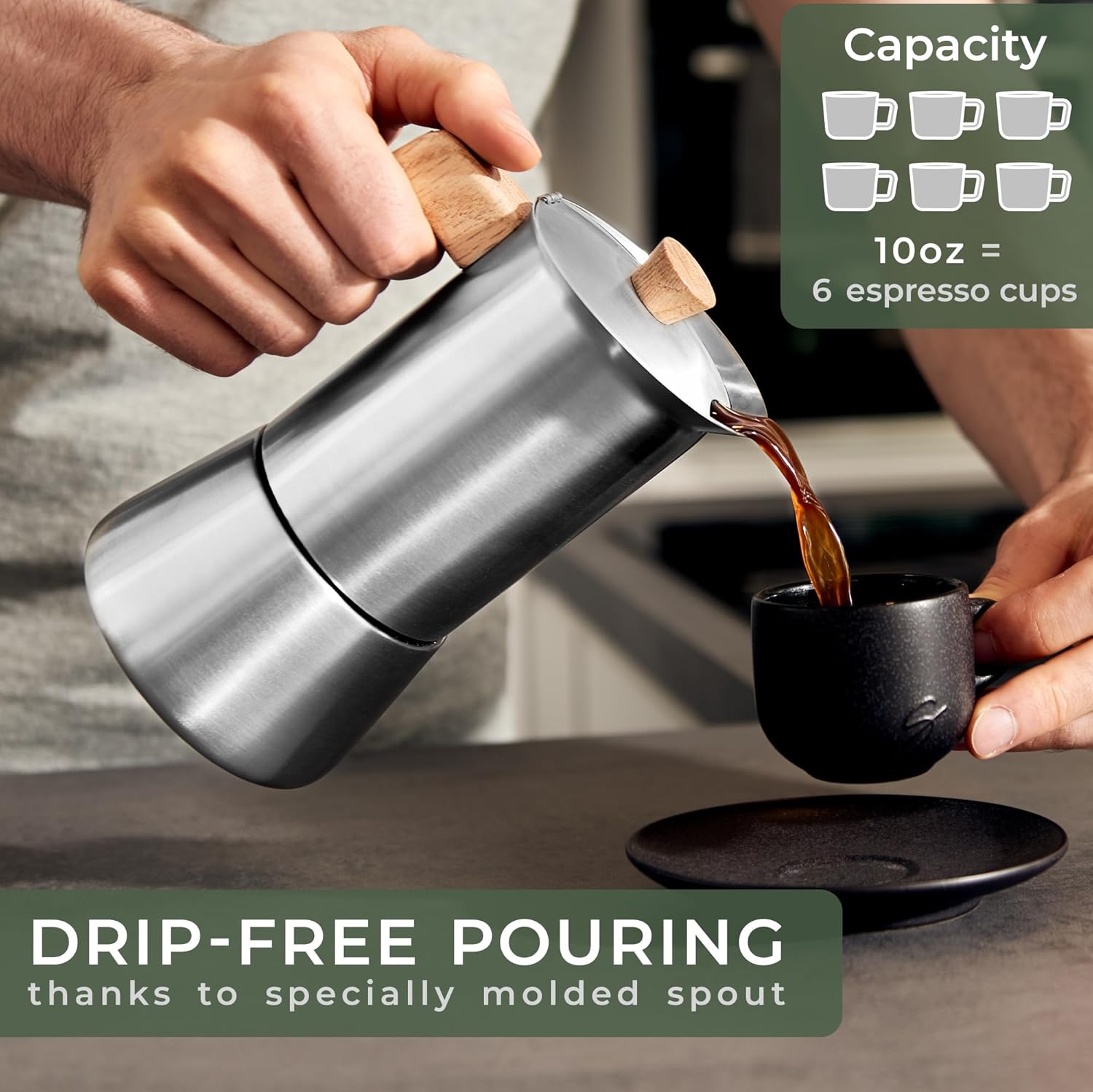
A 10oz capacity positions the WALDWERK moka pot in the small-to-medium range, typically producing two to three espresso-style servings depending on cup size and desired concentration. For households where single large cups or multiple simultaneous servings are common, this size requires repeated brewing cycles or alternative equipment. The filter basket and internal geometry determine the maximum dose and thus concentration for a single cycle. The pot’s portability and compact footprint suit small kitchens, travel scenarios, or couples seeking concentrated coffee without a full espresso machine. Capacity also informs maintenance frequency: smaller pots often mean quicker cleaning cycles but more frequent use if multiple servings are needed.

Practical Yield of a 10oz Moka Pot in Home Use
A 10oz output delivers a concentrated beverage that can be consumed straight or diluted with hot water or milk for longer drinks. In practice, the actual cup yield depends on preferred beverage size: for 1.5–2oz espresso-style shots, the pot will yield multiple servings; for 6–8oz long coffees, expect one to two servings per brew. Users should select grind and dose to match desired strength: heavier dosing produces richer, more intense extraction but increases clogging risk if the grind is too fine. For households that frequently entertain or require caffeinated drinks for several people simultaneously, a larger moka pot or alternate brew method may be more efficient.
Scaling and Serving Scenarios Compared to Other Brewers
Compared with single-serve espresso machines, a 10oz moka pot provides more flexible yield without reliance on electricity or capsules. Compared with French press or pour-over, moka yields a more concentrated, intense cup and uses less water per serving for similar flavor intensity. Scaling beyond two to three strong servings requires either multiple brews or choosing a larger moka pot model. The WALDWERK 10oz model fits well for individuals or couples who value concentrated coffee and portability, while larger households or those who prefer multiple full-size cups quickly may prefer alternate brewers.
Cleaning, Maintenance and Durability: Long-Term Ownership Considerations
Maintenance practices strongly influence lifespan for any moka pot. The WALDWERK’s 304 stainless surfaces are amenable to handwashing with mild detergents and offer resistance to corrosion, but mineral scaling and coffee oils still accumulate and require periodic descaling. The oak handle calls for handwashing and drying to preserve wood integrity. Replacement parts like rubber gaskets and metal filters are typical wear items; availability and ease of replacement affect long-term reliability. The stainless steel safety valve is less prone to corrosion than plated valves but should be inspected for clogging by coffee grounds or mineral buildup. Proper care—regular cleaning of chambers, drying after use, and occasional gasket replacement—helps maintain extraction consistency and safe operation over time.
Routine Cleaning, Gasket Care and Valve Maintenance
Routine cleaning involves disassembling the three main components and rinsing to remove coffee oils and grounds; mild dish soap is suitable for stainless surfaces, while the wooden handle should be cleaned gently and dried. The gasket between filter and upper chamber is a common maintenance point: rubber gaskets harden, crack, or compress with time and often require replacement to maintain a seal and prevent leaks. The safety valve must remain unobstructed; flushing with warm water after use reduces residue buildup. Many users follow a monthly deeper clean or de-scaling routine depending on water hardness to maintain flavor clarity and safe operation.
Long-Term Durability and Common Wear Points
Stainless 304 construction provides good resistance to corrosion and denting, though thin-walled pots can dent from impact. Wear points typically include the gasket, filter basket, and handle attachment hardware. The oak handle can endure years of use if not exposed to the dishwasher or prolonged soaking; drying and occasional oiling can preserve finish. Frequent users should budget for gasket replacement every several months to a few years depending on frequency and care. Overall, durability is tied to build quality and user maintenance: stainless materials and a solid safety valve support longevity, while routine part replacement and careful handling preserve performance.
Pros & Cons
Pros
- Toxic-free 304 stainless construction minimizes direct contact with aluminum or low-grade metals and reduces potential metallic off-notes. The material choice supports chemical stability and corrosion resistance for brewed coffee.
- Induction compatibility increases cooktop versatility, allowing use on modern induction hobs as well as gas, ceramic, and electric stoves. This widens the appliance’s applicability in varied kitchen setups.
- Solid oak wood handle provides natural insulation and a premium tactile feel, improving ergonomics during pouring and reducing reliance on plastic components that may degrade over time.
- Included metal filter and stainless steel safety valve follow standard moka safety and filtration designs, supporting consistent flow and a reduced risk of dangerous pressure accumulation when used correctly.
- Compact 10oz capacity is well suited to individuals or couples seeking concentrated, espresso-style coffee without a pump-driven machine, and the portability suits travel and small kitchens.
- Manufacturer-disclosed 60-day money-back guarantee provides a buyer reassurance window aligned with typical initial ownership evaluation periods.
- Stainless exterior simplifies cleaning compared with textured or anodized surfaces and resists staining when rinsed promptly after use.
Cons
- Stainless steel’s lower thermal conductivity compared to aluminum can require stove-specific heat adjustments to achieve the expected extraction profile, adding a modest learning curve for consistent results.
- Wooden handle requires handwashing and careful drying to prevent swelling or finish wear; dishwasher use is not recommended, which adds maintenance attention.
- Gasket and filter maintenance are ongoing needs; rubber gaskets will require periodic replacement and are a common fail point in moka pots if not inspected regularly.
- The 10oz capacity may be limiting for households needing multiple full-size cups quickly, necessitating repeated brewing cycles or a larger appliance for higher-volume use.
- Absence of automatic temperature control means the final flavor depends heavily on stove management; users desiring set-and-forget machines may prefer electric brewers with built-in temperature regulation.
Final Verdict: Who This Product Is Best For (and Who Should Skip It)
The WALDWERK 10oz stainless moka pot aligns with home brewers who prioritize material safety, induction compatibility, and a manual brewing experience that allows hands-on control of extraction. It suits individuals or couples seeking concentrated, espresso-style drinks without investing in a pump-driven espresso machine. The 304 stainless construction and stainless safety valve address concerns about aluminum exposure and contribute to a durable, corrosion-resistant brew chamber; the oak handle adds ergonomic benefits and aesthetic value for kitchens preferring natural materials. For users comfortable tuning grind, dose, and stovetop heat, this moka pot offers a reliable, portable option for consistent concentrated coffee when maintained properly.
This product is less suitable for households requiring high-volume, instant, set-and-forget brewing or for users who prefer dishwasher-safe components and minimal maintenance. Those who prioritize true pump-pressure espresso or automatic temperature control should consider alternatives such as pump espresso machines or automatic electric moka-style brewers. For 2026 home-brewing contexts, the WALDWERK 10oz moka pot represents a material-conscious, induction-ready choice that rewards users willing to engage with manual brewing technique and routine maintenance for steady, aluminum-free results.
Frequently Asked Questions (FAQs)
Is a 304 stainless moka pot safer than aluminum for coffee brewing?
304 stainless steel is chemically stable and resistant to corrosion, which reduces direct metal interaction with acidic coffee compared with untreated aluminum. For people concerned about aluminum contact, a 304 stainless interior and exterior present a neutral surface that minimizes metallic flavor transfer. Regular cleaning and descaling remain important for flavor and hygiene regardless of material.
Can the WALDWERK 10oz moka pot be used on induction cooktops?
Manufacturer disclosure indicates induction compatibility. Induction use depends on a ferromagnetic or magnetic base and full contact with the hob; the stainless base must be sufficiently magnetic and flat. Users should ensure stable contact on their specific induction element and monitor heat levels for proper extraction and safety.
What grind size and dose work best in a 10oz stainless moka pot?
A consistent moka-fine to medium-fine grind from a burr grinder yields the most reliable flow and extraction. Fill the filter basket without tamping and keep the lower chamber water level at the safety valve. Adjust grind slightly coarser if flow is slow or signs of clogging appear, and slightly finer if extraction finishes too quickly.
How should the oak handle be cared for to ensure longevity?
The oak handle benefits from handwashing and thorough drying to prevent swelling or finish degradation. Avoid dishwasher cycles and prolonged soaking. Occasional light oiling with a food-safe wood oil can maintain the finish, but follow the manufacturer’s care guidance if provided.
How often should gaskets and filters be replaced on a moka pot?
Replacement interval depends on frequency of use and maintenance habits. Rubber gaskets typically need replacement every several months to a few years; signs of hardening, cracking, or leakage indicate replacement. Metal filters can last longer but should be inspected and cleaned regularly; replacement is straightforward when wear or deformation occurs.
Does stainless construction change brewing temperature behavior compared to aluminum moka pots?
Yes. Stainless has lower thermal conductivity than aluminum, which can result in slower heat transfer and a different heating profile on the stovetop. This means users may need to adjust burner settings to achieve the desired extraction profile, typically favoring moderate, stable heat rather than high flames.
Is the WALDWERK moka pot suitable for making milk-based drinks like lattes?
The moka pot produces a concentrated, espresso-style brew that can be combined with steamed or heated milk to create lattes or cappuccino-style drinks. It does not produce steam or froth, so a separate milk frother or steam wand is required for textured milk.