
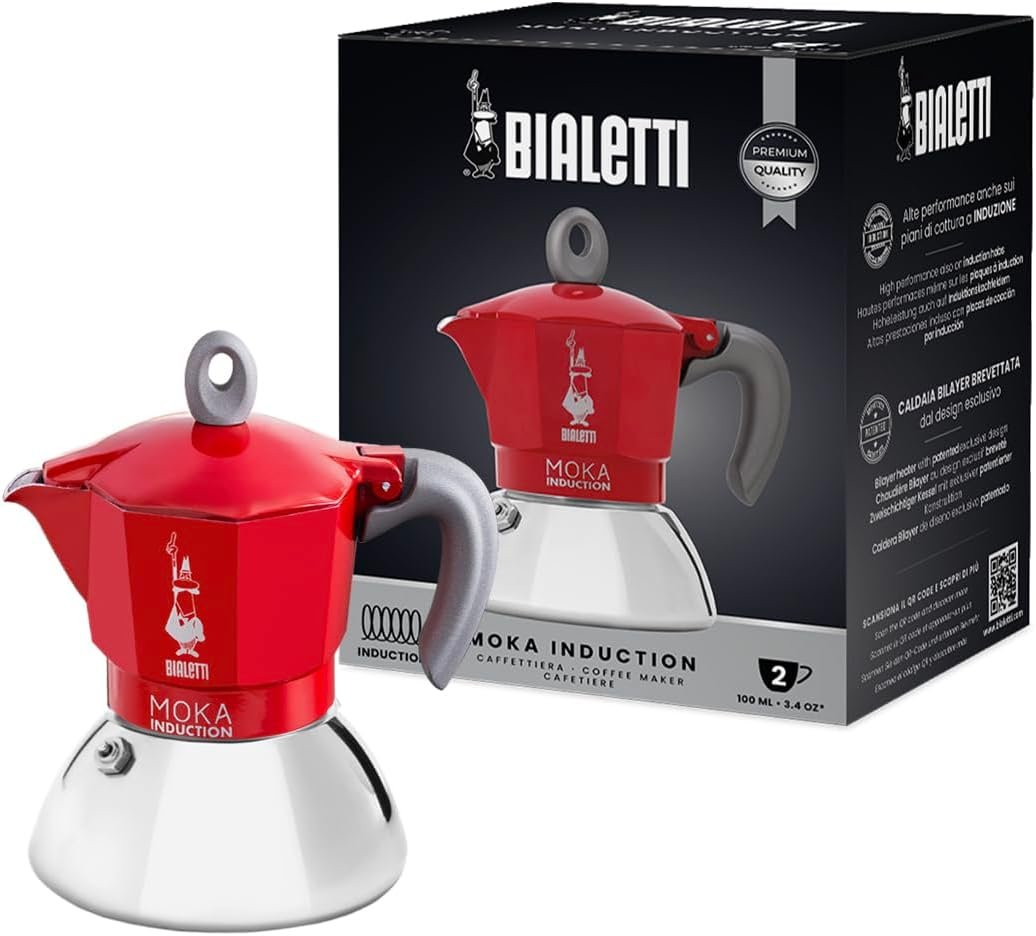
The Bialetti Moka Induction: A Legacy of Italian Craftsmanship
In the world of coffee and tea preparation, the choice of equipment can significantly influence the quality and consistency of the final brew. For home brewers and enthusiasts, a reliable coffee maker or tea appliance is essential for achieving the perfect cup. The Bialetti Moka Induction stands out as a modern evolution of the classic Moka pot, combining traditional Italian engineering with contemporary compatibility features. This 2-cup Moka pot, crafted from aluminum and stainless steel, is designed to work seamlessly with induction stovetops while maintaining the essence of its iconic predecessor. Its red exterior and classic design evoke a sense of tradition, yet its induction-ready construction ensures versatility for modern kitchens. Whether you’re a dedicated espresso lover or a casual coffee drinker, understanding the nuances of this product’s brewing method, materials, and usability can help determine if it aligns with your brewing needs. This review explores how the Bialetti Moka Induction balances heritage with innovation, offering insights into its performance, compatibility, and suitability for various user profiles.
Quick Overview
| Feature | Details |
|---|---|
| Product Category | Moka Pot |
| Brewing Method | Pressure-based espresso extraction |
| Capacity | 2 cups (2.8 oz) |
| Materials | Aluminum, stainless steel, silicone, thermoplastic |
| Compatibility | Induction stovetop, gas, and electric hobs |
| Filter Type | Reusable #4 filter |
| Best Suited For | Home brewers, espresso enthusiasts |
| Intended Use | Brewing concentrated espresso |
| Warranty | 2-year manufacturer warranty |
The Bialetti Moka Induction’s combination of durable materials and induction-ready design makes it a versatile choice for both traditional and modern kitchens. Its pressure-based brewing method ensures consistent extraction, while the red finish and classic shape maintain the brand’s recognizable aesthetic. The inclusion of a reusable filter and compatibility with multiple heat sources enhances its practicality. These features collectively contribute to a brewing experience that balances simplicity with reliability, making it a compelling option for those seeking a time-tested method with modern adaptability.

Brewing Method Compatibility: A Timeless Technique with Modern Versatility
The Bialetti Moka Induction employs a pressure-based brewing method that has been refined over decades, delivering a concentrated espresso-like brew through the natural steam pressure generated by heated water. This method relies on the principle of water heating and vapor pressure to force hot water through ground coffee, extracting oils and compounds that define the beverage’s flavor profile. The Moka pot’s design ensures even heat distribution and consistent pressure, which is critical for achieving a balanced extraction. While this technique is inherently suited for espresso, the pot’s capacity allows for flexibility in serving sizes, accommodating both single and double shots. The induction-ready construction further enhances its compatibility with modern stovetops, making it a practical choice for households with diverse cooking setups. These attributes make the Moka Induction an ideal candidate for users who value traditional brewing methods without compromising on contemporary usability.

Pressure Dynamics and Extraction Efficiency
The Moka Induction’s pressure-based system operates on the principle of vapor pressure, where water is heated to its boiling point and then vaporizes to create pressure that forces the liquid through the coffee grounds. This process mimics the extraction method used in traditional espresso machines, albeit on a smaller scale. The pot’s aluminum construction facilitates efficient heat transfer, ensuring that the water reaches the optimal temperature for extraction without overheating. However, the lack of a built-in temperature control means users must rely on manual regulation to maintain consistent brewing conditions. The resulting extraction is influenced by the grind size and coffee-to-water ratio, which are critical factors in determining the final cup’s strength and flavor. While the pot’s design allows for precise control over these variables, it requires a degree of expertise to achieve optimal results.
Heat Source Adaptability and Energy Efficiency
One of the most notable advancements of the Moka Induction is its compatibility with induction stovetops, a feature that sets it apart from its traditional counterparts. The stainless steel boiler and aluminum upper chamber are specifically engineered to work efficiently with induction heat sources, ensuring even heating and rapid temperature rise. This design choice enhances the pot’s usability in modern kitchens, where induction hobs are increasingly common. However, the reliance on external heat sources means that the brewing process is more dependent on the user’s control over the heat source. While this can be advantageous for precise temperature management, it also introduces variability in brewing times and heat distribution. The pot’s construction, while durable, requires careful handling to avoid thermal stress or damage to the materials.
Ease of Use and Workflow Complexity: A Simple Yet Effective Experience
The Bialetti Moka Induction is designed with user simplicity in mind, offering a straightforward workflow that minimizes the need for complex adjustments. The brewing process involves filling the boiler up to the safety valve, adding ground coffee to the filter, and placing the pot on a heat source. Once the water begins to gurgle, the pot is removed from heat, and the coffee is ready to be poured. This method eliminates the need for timers, pressure gauges, or additional controls, making it accessible for users with varying levels of coffee-making experience. However, the lack of automated features means that the user must closely monitor the brewing process to avoid over-extraction or under-extraction. The pot’s design, while intuitive, requires attention to detail to ensure consistent results, particularly when adjusting for different coffee types or grind sizes.

Manual Operation and User Engagement
As a manual coffee maker, the Moka Induction demands active participation from the user throughout the brewing process. Unlike automated espresso machines, which handle temperature regulation and pressure control, the Moka pot requires the user to manage heat application and timing. This hands-on approach can be seen as an advantage for those who prefer a more interactive brewing experience, as it allows for greater control over the final product. However, it also means that the user must be attentive to the pot’s behavior, such as the gurgling sound that signals the end of the brewing cycle. While this method ensures a more personalized experience, it may be less appealing to users who prioritize convenience or automation in their coffee preparation.
Cleaning and Maintenance: A Minimal Effort with Specific Requirements
The Moka Induction’s design simplifies cleaning, as the pot can be rinsed with water after use without the need for detergents or harsh chemicals. The materials used—aluminum, stainless steel, and silicone—are resistant to corrosion and can be easily wiped down to remove residue. However, the pot should not be washed in a dishwasher, as this could compromise the integrity of the materials and affect the taste of future brews. The reusable filter, while convenient, requires regular cleaning to prevent the buildup of coffee oils and grounds, which can impact the pot’s performance over time. These maintenance considerations make the Moka Induction a low-maintenance option, though users must be mindful of the specific cleaning guidelines to preserve its longevity and flavor consistency.
Temperature Control and Heat Stability: A Delicate Balance
The Moka Induction’s performance is heavily influenced by the temperature at which the water is heated and the rate at which it is brought to a boil. The pot’s aluminum construction facilitates rapid heat transfer, allowing the water to reach its boiling point quickly. However, the lack of an internal temperature control system means that the user must manually regulate the heat source to avoid overheating or underheating the water. This can lead to variations in extraction quality, particularly if the heat source is not consistently calibrated. The stainless steel boiler provides some insulation, but it does not offer the same level of temperature stability as more advanced coffee machines. As a result, users must be diligent in monitoring the brewing process to ensure that the water reaches the optimal temperature for extraction without overcooking the coffee.

Heat Retention and Brewing Consistency
The Moka Induction’s materials contribute to its heat retention properties, which are essential for maintaining a consistent brewing environment. The aluminum upper chamber and stainless steel boiler work together to retain heat, ensuring that the water remains at a stable temperature during the brewing process. However, this heat retention can also be a double-edged sword, as it may lead to over-extraction if the pot is left on the heat source for too long. The pot’s design allows for quick removal once the brewing cycle is complete, but users must be cautious not to leave it on heat for extended periods. This balance between heat retention and the need for manual intervention is a key factor in the Moka Induction’s performance, requiring users to strike a careful equilibrium to achieve the best results.
Impact of External Heat Sources on Brewing Results
The Moka Induction’s compatibility with induction stovetops introduces variability in how the heat is applied to the pot. Induction hobs provide precise temperature control, but the pot’s materials and design may influence how effectively this heat is transferred to the water. The stainless steel boiler, while efficient at conducting heat, may require a more powerful heat source to achieve the desired brewing temperature. Users with slower or less responsive stovetops may need to adjust their approach, such as using a higher heat setting or allowing more time for the water to reach its boiling point. These factors highlight the importance of understanding how external heat sources interact with the pot’s materials to ensure consistent and high-quality brewing outcomes.
Capacity and Serving Flexibility: A Compact Solution for Versatile Use
The Bialetti Moka Induction’s 2-cup capacity makes it an excellent choice for individuals or small households that require a concentrated espresso shot without excess coffee. This size is particularly well-suited for mornings when a single serving is sufficient, or for those who prefer to dilute the espresso into a larger cup. The pot’s design allows for easy pouring, making it convenient to serve the coffee directly from the pot or transfer it to a separate container. However, the 2-cup size may be limiting for users who require a larger quantity of coffee, as it does not offer the same flexibility as larger Moka pots. The compact size also means that the pot is more portable and easier to store, making it a practical option for those with limited counter space. These attributes make the Moka Induction a versatile choice for users who prioritize convenience and portability over the ability to brew larger quantities.

Serving Options and Customization Potential
While the Moka Induction’s 2-cup capacity is sufficient for a single serving, it also allows for creative customization. Users can add milk or sugar to dilute the espresso, creating a variety of coffee beverages such, as a cappuccino or latte. The pot’s design facilitates this by allowing for easy pouring and mixing without the need for additional equipment. However, the lack of a built-in milk frother or thermometer means that users must rely on manual techniques to achieve their desired results. This level of customization can be an advantage for those who enjoy experimenting with different coffee recipes, but it may require additional effort or tools to achieve consistent outcomes. The pot’s versatility in serving options makes it a flexible choice for users who value adaptability in their coffee preparation.
Limitations of the 2-Cup Size
The Moka Induction’s 2-cup capacity, while convenient, may not be suitable for all users. Those who require a larger quantity of coffee, such as for brewing multiple servings or for use in commercial settings, may find the size limiting. Additionally, the compact size may not be ideal for users who prefer to brew coffee in larger quantities for later consumption, as the pot’s design does not accommodate for extended heat retention or storage. These limitations highlight the importance of considering the intended use case when selecting a Moka pot. While the 2-cup size is well-suited for individuals or small households, it may not be the best choice for users with higher volume requirements.

Pros and Cons
Pros
- Induction Compatibility: The Moka Induction’s stainless steel boiler and aluminum upper chamber are specifically engineered to work efficiently with induction stovetops, offering greater versatility in modern kitchens.
- Classic Design: The red finish and traditional Moka pot shape maintain the brand’s iconic aesthetic, appealing to users who value heritage and craftsmanship.
- Ease of Use: The simple brewing process requires minimal setup, making it accessible for users with varying levels of coffee-making experience.
- Durable Materials: The combination of aluminum, stainless steel, and silicone ensures the pot is resistant to corrosion and wear, contributing to its longevity.
- Low Maintenance: The pot can be easily cleaned with water, and the reusable filter simplifies the overall maintenance process.
- Portability: The compact size and lightweight design make it convenient for storage and travel, ideal for users with limited counter space.
Cons
- Limited Capacity: The 2-cup size may not be sufficient for users who require a larger quantity of coffee, particularly in households or commercial settings.
- Manual Temperature Control: The lack of an internal temperature regulation system means users must manually manage the heat source, increasing the risk of over-extraction or under-extraction.
- Cleaning Restrictions: The pot should not be washed in a dishwasher, which may be inconvenient for users who prefer automated cleaning methods.
- Dependence on Heat Source: The pot’s performance is heavily influenced by the type and responsiveness of the heat source, which may affect brewing consistency across different setups.
- No Built-in Features: The absence of automated functions such as a timer or pressure gauge requires users to rely on manual observation for optimal results.
Final Verdict: Who This Product Is Best For (and Who Should Skip It)
The Bialetti Moka Induction is an excellent choice for users who value traditional brewing methods with modern adaptability. Its induction compatibility, durable construction, and simple design make it ideal for home brewers, espresso enthusiasts, and individuals with limited counter space. The pot’s ability to produce a concentrated espresso shot with minimal effort is particularly appealing for those who prioritize convenience and portability. However, it may not be the best option for users who require a larger quantity of coffee, prefer automated temperature control, or rely on dishwashers for cleaning. For those seeking a reliable and time-tested method with a touch of Italian craftsmanship, the Moka Induction is a compelling choice. Conversely, users with higher volume needs or a preference for advanced features in their coffee equipment may find this product less suitable.
The Moka Induction’s strengths lie in its ability to deliver a consistent espresso-like brew through a straightforward process, making it a practical solution for everyday use. Its limitations, such as the 2-cup capacity and reliance on manual heat management, are balanced by its durability and ease of maintenance. Ultimately, the product is best suited for users who appreciate a blend of tradition and innovation in their coffee preparation, offering a reliable and versatile option for those who prioritize simplicity and heritage in their brewing experience.
Frequently Asked Questions (FAQs)
Is the Bialetti Moka Induction compatible with induction stovetops?
Yes, the Bialetti Moka Induction is specifically designed to work with induction stovetops. Its stainless steel boiler and aluminum upper chamber are engineered to ensure efficient heat transfer and compatibility with modern induction hobs.
How long does it take to brew coffee with the Moka Induction?
The brewing time for the Moka Induction typically ranges from 4 to 6 minutes, depending on the heat source and the user’s monitoring of the gurgling sound that signals the end of the brewing cycle.
Can the Moka Induction be cleaned in a dishwasher?
No, the Bialetti Moka Induction should not be washed in a dishwasher. The manufacturer recommends rinsing it with water only after use to avoid damaging the materials and preserving the taste of future brews.
What is the capacity of the Moka Induction?
The Moka Induction has a capacity of 2 cups (2.8 oz), making it ideal for single servings or small households. It can be used to brew concentrated espresso or diluted into larger quantities.
How does the Moka Induction’s pressure-based brewing method work?
The Moka Induction uses pressure generated by heated water to force hot liquid through ground coffee, extracting oils and compounds that define the beverage’s flavor. This method mimics the extraction process used in traditional espresso machines.
Is the Moka Induction suitable for beginners?
Yes, the Moka Induction is user-friendly and requires minimal setup. Its straightforward brewing process makes it accessible for both novice and experienced coffee makers, though attention to detail is needed for consistent results.
What materials are used in the construction of the Moka Induction?
The Moka Induction is made from aluminum, stainless steel, silicone, and thermoplastic. These materials ensure durability, heat resistance, and ease of cleaning without the need for detergents.
Can the Moka Induction be used with gas or electric stovetops?
Yes, the Moka Induction is compatible with gas, electric, and induction stovetops. Its design allows for efficient heat transfer across various heat sources, making it a versatile choice for different kitchen setups.