
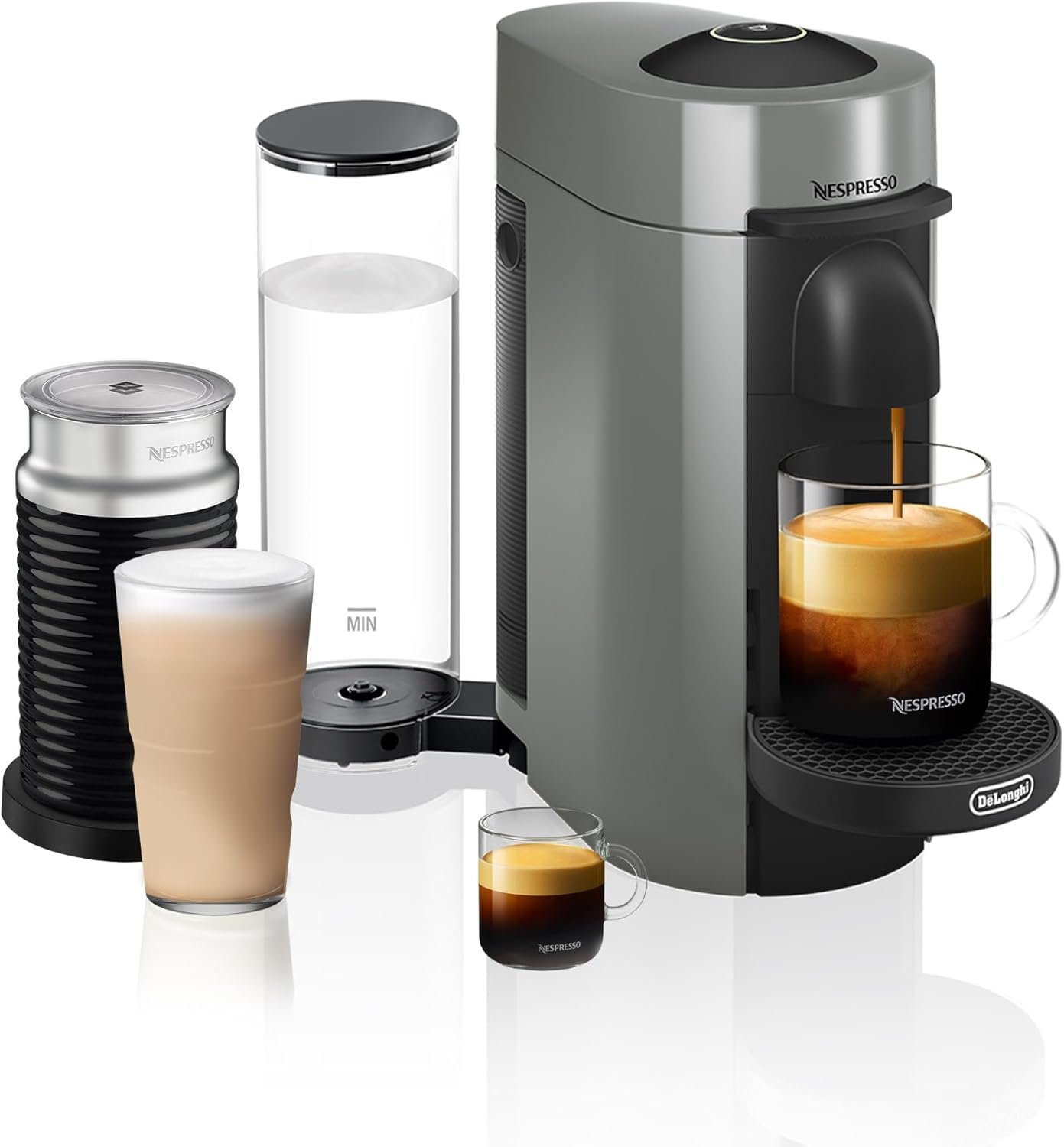
Choosing the right single-serve coffee and espresso appliance
Selecting a home coffee or tea appliance affects extraction, temperature control, workflow, and long-term convenience. For households and individuals who prioritize single-serve variety, predictable portioning, and rapid turnaround, system-level decisions—capsule compatibility, heating method, and milk-frothing options—determine everyday results. The De’Longhi Nespresso Vertuo Plus with Aeroccino positions itself as a capsule-driven solution that targets users seeking quick brewed coffee, crema-driven large cups, and straightforward milk-texturing for lattes and cappuccinos. Considerations for prospective buyers include how a centrifuge-based extraction system differs from pump-driven espresso machines, the implications of an aluminum capsule ecosystem for grind and dose control, and whether a semi-automatic, button-driven interface fits household routines. Performance expectations should be framed around the product’s specifications—water capacity, heat-up time, compatible capsule range—and common user feedback patterns regarding ease of use, cleaning frequency, and long-term reliability.
Quick Overview
| Feature | Details |
|---|---|
| Product category and brewing method | Single-serve capsule coffee and espresso maker using Nespresso Vertuo capsules and Centrifusion extraction |
| Capacity and output | 40.8 fluid ounce removable water reservoir; brews four programmable cup sizes (5 oz, 8 oz, single/double espresso) |
| Materials and construction | Exterior plastic body (gray finish), aluminum capsule system, included Aeroccino metal frother |
| Heating or pressure system | Rapid heat-up (25 seconds) with an electric heating system; Centrifusion rotation-based extraction rather than a high-pressure pump |
| Grind or filter compatibility | Designed for Nespresso Vertuo aluminum capsules only; not compatible with loose coffee grounds or third-party filters |
| Best suited users | Single-serve households, users who want consistent capsule-based drinks and fast milk frothing |
| Intended use cases | Hot brewed coffee, espresso-style shots, milk-based beverages, iced coffee made by pouring over ice |
| Warranty and support | Manufacturer warranty and support options vary by region; specific warranty terms not specified in product listing |
The table summarizes core hardware and ecosystem choices that influence brewing. The fixed capsule dosing and centrifuge extraction simplify grind and dose variables, delivering consistent single-serve volumes, while the removable high-capacity reservoir and included Aeroccino support short workflows for multiple servings and milk-based drinks. These design choices trade off grind control and replacable-brewing inputs for convenience and repeatability.

Brewing method compatibility and capsule ecosystem
The VertuoPlus uses the Nespresso Vertuo capsule platform and Centrifusion extraction, which pairs sealed aluminum capsules with machine-side barcode recognition and high-speed rotation to manage extraction profiles for different formats. Capsule-based systems remove grind-size and dosing variability from user responsibilities but also lock users into an ecosystem where extraction parameters—dose, tamping, and particle distribution—are controlled by the capsule fill. This model suits buyers who value repeatable results and a broad menu of pre-portioned blends, but it is less suitable for those who want manual control over grind or to use whole-bean grinders. Compatibility with Vertuo-only capsules also affects long-term cost, recycling logistics, and flavor selection compared with open systems that accept fresh grounds.

Centrifusion technology and what it means for extraction
Centrifusion relies on capsule rotation to force water through coffee at variable flow rates and centrifugal forces, creating an emulsion layer often described as crema on larger cups. Unlike pump-based espresso machines that regulate extraction via barometric pressure and volumetric flow, centrifuge systems tune extraction through capsule geometry and rotational speed. This results in predictable cup volumes and mouthfeel defined by capsule design rather than user-adjustable parameters. For consumers, that means consistent extraction across identical capsules but limited ability to tweak shots for dialing in extraction nuances tied to grind and dose.
Capsule ecosystem: variety, sourcing, and recycling considerations
Nespresso markets a wide range of Vertuo blends, including long coffees and espresso formats across various intensity profiles. The aluminum capsule preserves freshness and enables machine barcode reading for programmed brewing parameters. End-user considerations include sourcing preferred blends, access to seasonal or limited-edition capsules, and participation in Nespresso recycling programs for aluminum pods. Buyers who prioritize single-origin or micro-roaster options may find capsule selection more limited than the open-ground market.
Impact on iced and milk-based beverage compatibility
Capsule systems that provide programmed larger cup sizes simplify preparation of iced coffee by enabling measured brews poured over ice, while the included Aeroccino frother allows hot or cold milk texturing for lattes and similar drinks. The system’s capsule-defined extraction profiles are designed to produce balanced flavors at their intended volumes, which helps preserve taste when diluted over ice or combined with frothed milk. However, the fixed dosing means customization of strength for iced drinks depends on capsule choice or double-brewing rather than grind or tamp adjustments.
Ease of use, controls, and daily workflow
The Vertuo Plus is built around a one-touch, button-driven interface intended to reduce steps between selection and extraction, and the Aeroccino frother adds single-button milk-texturing. The machine’s semi-automatic operation highlights convenience for multi-user households and quick morning routines: insert capsule, lower head, then press the illuminated button. Water reservoir capacity and accessible capsule disposal compartments are designed to reduce refill and emptying frequency. Workflow complexity is minimized by capsule pre-dosing and auto-stop programming for four cup sizes, but the trade-off is limited custom programmability for temperature, pre-infusion time, or pressure profiling. For users prioritizing speed and simplicity, the system’s controls and included accessories streamline daily preparation.

User interface, controls, and programmability limitations
Buttons and machine indicators supply simple, high-level control over brew size and basic status notifications. The VertuoPlus does not offer granular user programming for variables such as precise temperature setpoints, manual pre-infusion timing, or adjustable flow rates—those functions are embedded in capsule profiles. This keeps operation straightforward and reduces learning curve, but it constrains users who expect to fine-tune extraction. For households with mixed beverage preferences, reliance on capsule selections and machine presets determines drink strength and style rather than manual tweaking.
Aeroccino milk frother workflow and integration
The included Aeroccino3 frother is a compact, dedicated device that produces hot or cold milk foam with a single control. Because it operates independently of the main brewer, the Aeroccino allows parallel workflows—one person can froth milk while another brews—reducing bottlenecks during peak use. Volume limits and froth style are determined by the Aeroccino’s whisk options and internal capacity, so larger milk-based beverages may require multiple frothing cycles or a separate milk heater for greater throughput. The frother’s metal jug is not dishwasher-safe according to product notes, so cleaning remains manual.
Water reservoir, pod handling, and serving flexibility
A 40.8 fluid ounce removable reservoir supports multiple brews before refilling, and the VertuoPlus design emphasizes accessible pod insertion and ejection. The capsule container and drip tray sizes affect how often users will empty spent pods or clean spills; some customer feedback highlights the need to monitor these compartments during heavy use. Serving flexibility is driven primarily by the programmed cup sizes available from the Vertuo capsule range, which accommodates espresso and larger coffee formats but does not provide continuous volume adjustment beyond the preset options.
Temperature stability, extraction mechanics, and brew consistency
Temperature behavior and extraction mechanics are central to perceived brew quality. The listed 25-second heat-up time indicates a rapid transition to brewing readiness, but steady-state temperature stability over multiple consecutive brews depends on internal heating design, reservoir size, and heat retention in the machine’s flow path. Centrifusion extraction sets flow dynamics via rotation rather than pump-pressure control, so extraction consistency is a function of capsule manufacturing tolerances and machine rotational accuracy. For users seeking stable extraction across back-to-back servings or variance across cup sizes, the combination of a sizable reservoir and capsule-specific programming helps maintain repeatability, while the lack of manual temperature or pressure controls limits custom dialing for precise extraction aims.

Heating system, heat-up time, and sustained temperature control
A rapid heat-up reduces idle time between powering on and brewing; however, temperature stability during consecutive extractions depends on the heating element type and thermal mass within the fluid path. Thermoblock-style or similar quick-heating systems bring water to brewing range quickly but can exhibit more fluctuation than larger boilers when producing multiple back-to-back drinks. The VertuoPlus’s reservoir capacity and internal heating design are intended to balance responsiveness with volume needs, but consumers should consider brew order and pacing for optimal thermal consistency when preparing multiple cups.
How centrifuge extraction affects crema and cup profile
Centrifusion produces crema-like emulsions on larger-format coffees by shearing oils and soluble compounds during rapid rotation. The resulting mouthfeel is often fuller on long cup sizes compared with other drip-style single-serve systems. Because the capsule contains a predefined dose and grind, cup profile consistency is primarily driven by capsule fill and machine rotational behavior rather than user-adjustable extraction parameters. This approach benefits those prioritizing predictable results, though it constrains control over variables used by skilled operators to fine-tune extraction balance.
Brew consistency across cup sizes and use cases
Programmed capsule profiles adjust rotational timing and flow to suit designated cup sizes, promoting consistent taste and strength across the offered formats. The machine’s auto-stop function combined with barcode recognition helps match water volume to capsule intent, which supports reliable strength and flavor for espresso and longer coffees. In scenarios such as iced coffee preparation or milk-based drinks where dilution and milk proportion change perceived strength, capsule selection and beverage assembly choices determine final balance rather than machine-level controls.
Cleaning, maintenance, durability, and long-term ownership considerations
Maintenance expectations for a capsule-based brewer revolve around descaling schedules, emptying spent-capsule bins, and cleaning removable components. The Aeroccino frother requires manual cleaning after use and is not dishwasher-safe. External plastic construction and internal moving parts—such as the centrifuge head and barcode reader—introduce wear points that affect long-term reliability; manufacturer servicing and replacement-part availability influence ownership costs. Capsule ecosystems also create steady consumable needs and recycling logistics. Aggregated user feedback often emphasizes straightforward day-to-day cleaning but notes that occasional troubleshooting or service may be required for mechanical components related to capsule handling and ejection.

Routine cleaning and descaling expectations
Removable elements like the water reservoir, drip tray, and used-capsule container facilitate routine cleaning; these components should be emptied and rinsed regularly to prevent buildup. Descaling intervals depend on local water hardness and frequency of use and follow manufacturer guidance to protect internal fluid paths and heating elements. The Aeroccino’s interior and whisk require immediate rinsing after frothing milk to prevent residue, and its non-dishwasher-safe note indicates hand washing for longevity.
Build materials, moving parts, and durability signals
The VertuoPlus uses a plastic exterior with metal components inside the frother and capsule mechanism. Moving assemblies—cap-opening mechanisms, capsule ejection, and the centrifuge rotor—are normal wear items in capsule machines. Durability expectations depend on usage patterns; regular high-volume use can accelerate mechanical wear compared with occasional domestic usage. Manufacturer support, parts availability, and clearly documented maintenance steps mitigate downtime and extend usable life.
Capsule recycling, consumable costs, and environmental considerations
Aluminum capsules preserve freshness and are recyclable through Nespresso’s collection and recycling options; participation requires following the manufacturer’s recycling process. Ongoing consumable costs for proprietary capsules and occasional part replacements represent a recurring ownership expense. For buyers weighing environmental impact and long-term cost, the closed-capsule model simplifies freshness and consistency while necessitating planning for pod recycling and consumable budgeting.

Pros & Cons
Pros
- Consistent single-serve brewing with minimal user input: The capsule-based system eliminates grind and dose variability by delivering pre-measured coffee portions and machine-programmed extraction profiles, supporting repeatable cup results across sessions.
- Fast readiness and convenient throughput: A 25-second heat-up time and a 40.8-ounce removable reservoir reduce wait times and refill frequency for morning routines and small households.
- Wide format support for single-serve sizes: Four programmed cup volumes, from espresso formats to larger 5 oz and 8 oz coffees, enable a variety of drink styles suited to both milk-based and iced preparations.
- Centrifusion crema for larger cups: Rotational extraction creates an emulsified layer and fuller mouthfeel on long coffees, differentiating the mouthfeel from typical drip-style single-serve systems.
- Included Aeroccino milk frother: The Aeroccino3 delivers hot or cold frothed milk for lattes and iced milk drinks without requiring a separate steam wand or barista technique.
- Removable, accessible components for cleaning: A detachable reservoir, drip tray, and capsule container streamline routine maintenance and reduce downtime between uses.
- Aluminum capsule recycling program: Manufacturer-provided recycling options for aluminum pods address freshness retention and environmental disposal when consumers participate in available programs.
Cons
- Closed capsule ecosystem limits customization: The machine accepts only Nespresso Vertuo capsules, preventing use of fresh grounds or non-compatible capsule formats, which restricts dial-in control for experienced brewers.
- Limited manual temperature and extraction controls: No user-accessible pressure profiling or temperature setpoints constrains advanced extraction tuning and professional-style shot modification.
- Ongoing consumable and recycling logistics: Recurring expense for proprietary capsules and the need to follow manufacturer recycling channels can increase long-term ownership complexity compared with whole-bean systems.
- Potential mechanical wear points: Moving parts associated with capsule handling and centrifuge rotation are normal wear items; heavy daily use may accelerate maintenance needs compared with simpler pump-based units.
- Aeroccino capacity and cleaning requirements: The included frother has a finite volume for milk frothing and is not dishwasher-safe, requiring hand cleaning and potentially multiple cycles for larger or multiple milk drinks.
Final Verdict: Who This Product Is Best For (and Who Should Skip It)
The De’Longhi Nespresso Vertuo Plus with Aeroccino is best for home users who prioritize convenience, consistent single-serve brewing, and a compact countertop workflow. It matches households that prefer capsule simplicity over grind-and-dose complexity, enjoy a catalog of pre-portioned blends, and value quick heat-up and a dedicated milk frother for lattes and cold milk beverages. The system’s programmed cup sizes and centrifuge-driven extraction reliably reproduce capsule-defined profiles, making it suitable for users who want repeatability without manual extraction management.
This product is less suitable for consumers who expect full control over grind size, dose, tamp, pump pressure, or temperature profiling. Enthusiasts seeking to experiment with fresh beans, custom dose adjustments, or commercial-pressure espresso machines should consider grinder-plus-pump alternatives. Additionally, buyers sensitive to ongoing consumable costs or those who prefer open systems for sustainability reasons should weigh the closed-capsule ecosystem and recycling logistics against the convenience benefits offered by the Vertuo Plus.

Frequently Asked Questions (FAQs)
Can the Vertuo Plus use ground coffee or non-Vertuo capsules?
The Vertuo Plus is designed for Nespresso Vertuo aluminum capsules and barcode-driven extraction profiles. It does not accept loose ground coffee or non-Vertuo capsule formats. The closed capsule design ensures consistent dose and extraction parameters but prevents use of fresh grounds or third-party capsule types that lack the Vertuo barcode and shape.
How often should the Vertuo Plus be descaled?
Descale frequency depends on local water hardness and usage volume; manufacturers typically recommend descaling every few months under regular use or more often in hard-water areas. Following the machine’s descaling guidance helps protect internal heating elements and fluid paths, maintaining temperature stability and extraction performance over time.
Does the Aeroccino frother produce hot and cold foam for different drinks?
The included Aeroccino frother supports both hot and cold milk frothing modes, enabling textured milk for lattes and cold foam for iced beverages. It operates independently of the main brewer and offers single-button controls for straightforward milk-texturing, though its internal capacity may require multiple cycles for larger servings.
Is the Vertuo Plus capable of producing authentic espresso with high pump pressure?
Vertuo Plus uses centrifuge-based extraction rather than a traditional high-pressure pump system. It produces espresso-style shots and an emulsified crema for larger cup formats via rotation-induced flow, but it does not replicate the pressure profiling and manual control found in pump-driven espresso machines used by specialty cafes.
What cleaning steps are needed after daily use?
Daily maintenance includes emptying the used-capsule container and drip tray, rinsing the removable water reservoir, and wiping external surfaces. The Aeroccino frother requires rinsing and washing the jug and whisk after frothing milk. Regular attention to these components prevents buildup and reduces the need for deeper cleaning between descaling intervals.
How does the Vertuo Plus handle iced coffee preparation?
Iced coffee can be prepared by brewing a larger programmed cup size over ice; the Vertuo capsule profiles and programmed volumes help maintain flavor balance when diluted. Users should select capsule blends suitable for iced preparation and consider double-brewing or adjusting milk proportions for desired strength, as machine-level dilution control is limited to capsule choices and volume presets.
Are Nespresso Vertuo aluminum capsules recyclable?
Nespresso sells aluminum capsules and operates recycling programs intended to collect used pods for aluminum recovery. Participation typically involves following manufacturer-provided recycling channels. Consumers should consult local Nespresso recycling options and guidelines to ensure used capsules are processed through the recommended recycling streams.