
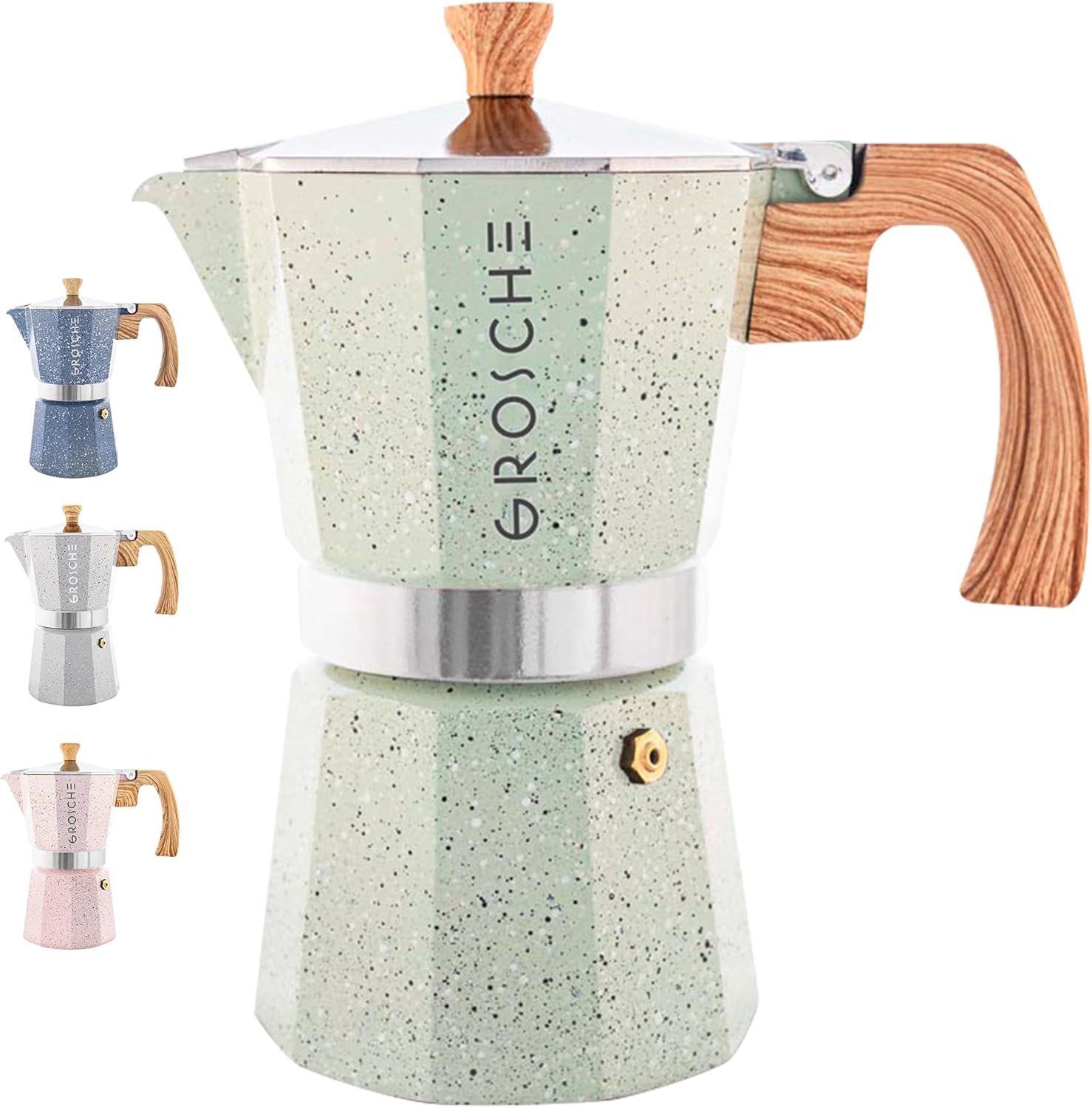
GROSCHE Milano Moka Pot: A Benchmark for Manual Espresso Craftsmanship
The GROSCHE Milano Moka pot represents a critical intersection between traditional coffee preparation methods and modern design innovations. For home brewers seeking to replicate the intensity of professional espresso without the complexity of electric machines, this stovetop espresso maker offers a compelling solution. Its 6-cup capacity caters to households and small gatherings, while the proprietary stone-finished construction balances durability with aesthetic appeal. The product’s design philosophy centers on simplicity—users interact with a single manual operation, yet the engineering behind temperature regulation and pressure control reflects decades of refinement in coffee science. This review evaluates how the GROSCHE Milano Moka pot aligns with the expectations of enthusiasts who prioritize craftsmanship, consistency, and the tactile satisfaction of manual brewing. By analyzing its performance across brewing method compatibility, heat stability, and user workflow, we establish whether this Italian-made appliance meets the standards of discerning coffee connoisseurs in 2026.
Quick Overview
| Feature | Details |
|---|---|
| Product Category | Stovetop Espresso Maker |
| Brewing Method | Manual pressure extraction |
| Capacity | 6 espresso cups (150–180ml each) |
| Materials | Aluminum body with stone-finished exterior |
| Dimensions | 4.13″D x 6.89″W x 8.27″H |
| Safety Features | Italian safety valve, heat-resistant handle |
| Cleaning | Hand wash only |
| Intended Use | Home espresso brewing, manual coffee extraction |
| Best For | Coffee enthusiasts, small households |
The GROSCHE Milano Moka pot’s design prioritizes accessibility without compromising quality. Its aluminum construction ensures efficient heat transfer, while the stone-finished exterior enhances longevity compared to standard enamel coatings. The integrated safety valve and heat-resistant handle address common user concerns, making it suitable for both novice and experienced brewers. These attributes collectively influence brewing outcomes, offering a balance between precision and ease of use for those who prefer manual methods.

Brewing Method Compatibility and Extraction Principles
The GROSCHE Milano Moka pot operates on a time-honored extraction principle: pressurized hot water forces coffee through ground beans, creating a concentrated brew akin to espresso. This method relies on precise temperature control and consistent pressure to achieve optimal extraction. Unlike electric espresso machines, which use pumps to regulate pressure, the moka pot’s design depends on stovetop heat to generate the necessary steam. The 6-cup capacity allows for multiple servings without sacrificing the intensity of the brew, though users must manage heat distribution carefully to avoid over-extraction.

Heat Stability and Pressure Dynamics
The moka pot’s aluminum body conducts heat efficiently, ensuring even temperature distribution across the brewing chamber. However, this material’s thermal conductivity requires careful monitoring to prevent overheating, which could lead to over-extracted bitterness. The stone-finished exterior acts as a thermal insulator, reducing direct heat transfer to the handle and minimizing the risk of burns. While the lack of a built-in temperature regulator means users must manually control heat intensity, the design mitigates the need for complex adjustments. The pressure dynamics are governed by the water level in the bottom chamber and the steam pressure generated as the water heats. If the water level is too low, the pot may overheat and risk damage, while an overfilled chamber can cause pressure buildup and potential safety issues. The Italian safety valve is engineered to release excess pressure, preventing the pot from rupturing and ensuring user safety during operation.
Brew Consistency and Grind Compatibility
Consistent extraction depends on uniform grind size and proper water-to-coffee ratio. The GROSCHE Milano Moka pot’s brewing chamber is designed to accommodate medium-fine grinds, a specification that aligns with traditional espresso preparation. Users must ensure the ground coffee is evenly distributed to prevent channeling, which can result in uneven extraction. The 6-cup capacity necessitates a precise grind-to-water ratio to maintain balance, though the manual operation allows for customization without the need for electronic calibration. For optimal results, the coffee should be ground to a consistency similar to granulated sugar, allowing for rapid extraction without over-extraction. A coarse grind may lead to under-extraction, producing a weak, watery brew, while a fine grind risks over-extraction, yielding a bitter, concentrated shot. The moka pot’s design does not include a built-in grind adjustment mechanism, so users must rely on pre-ground coffee or a manual grinder to achieve the desired consistency.
User Workflow and Manual Operation
The moka pot’s operation involves three primary steps: filling the water chamber, adding ground coffee, and heating on a stovetop. The process requires attention to detail, particularly in ensuring the water level remains below the safety valve to prevent pressure buildup. The water chamber is filled with water up to the designated mark, which is typically just below the safety valve. If the water level exceeds this, the pot may fail to function properly or risk damage. The coffee grounds are placed in the filter basket, ensuring even distribution to maximize contact with the water. The pot is then placed on a stovetop, where the heat source must be adjusted to maintain a steady temperature. The brewing time typically ranges from 5 to 7 minutes, depending on the heat intensity and the coffee’s grind size. Once the brewing process is complete, the pot is removed from the heat source, and the brewed coffee is poured into the upper chamber. The manual operation demands a balance between precision and patience, as improper heat management or grind inconsistency can compromise the final product. The removable tank simplifies cleaning, though the hand-wash requirement ensures long-term durability.
Durability and Material Longevity
The GROSCHE Milano Moka pot’s construction is a defining factor in its long-term reliability. The stone-finished exterior, which is 20 times more durable than standard enamel, resists chipping and wear over time. This finish also provides a tactile surface that enhances the user experience without compromising heat dissipation. The aluminum body, while conductive, is protected by the stone coating, which mitigates the risk of corrosion from frequent hand washing. However, the lack of a dishwasher-safe option means users must invest time in maintenance to preserve the pot’s appearance and functionality.

Wear and Tear Resistance
The stone-finished exterior demonstrates resilience against scratches and minor impacts, though it is not impervious to damage. Users should avoid abrasive cleaning agents, as these can compromise the finish over time. The handle, designed with a soft-touch grip, reduces the likelihood of burns but still requires careful handling due to its proximity to heat sources. The removable tank, while convenient for cleaning, may require periodic replacement if the seal deteriorates, though this is a rare occurrence with proper maintenance. The handle’s soft-touch design includes a burn guard, which is a critical safety feature for users who may inadvertently touch the handle during operation. This feature addresses a common complaint among moka pot users, who often report burns from hot handles, particularly when the pot is left unattended.
Long-Term Performance Expectations
The moka pot’s design prioritizes longevity through material selection and construction. The aluminum body, combined with the stone finish, ensures the appliance remains functional for years without significant degradation. However, the hand-wash requirement means users must balance convenience with maintenance to avoid premature wear. The absence of a warranty or extended service plan indicates that the product’s lifespan is largely dependent on user care, which is a common trait among high-quality stovetop espresso makers. The stone finish also contributes to the pot’s aesthetic appeal, as it develops a unique patina over time, reflecting the user’s interaction with the product. This patina is a result of the stone’s interaction with water and coffee, creating a subtle, personalized appearance that adds to the pot’s character. The durability of the stone finish ensures that this patina remains intact, preserving the pot’s visual and functional integrity for years.

Pros & Cons
Pros
- Durable Stone Finish: The 20x more durable stone coating resists chipping and wear compared to standard enamel finishes, ensuring long-term visual and functional integrity. This finish also provides a tactile surface that enhances the user experience without compromising heat dissipation. The stone coating is applied through a hand-painted process, resulting in a slightly uneven texture that adds to the pot’s unique appearance. This finish is particularly beneficial for users who prioritize longevity and aesthetic appeal, as it maintains its integrity even after repeated use.
- Safety Valve and Handle Design: The Italian safety valve prevents pressure buildup, while the heat-resistant handle minimizes the risk of burns during operation. The safety valve is engineered to release excess pressure, preventing the pot from rupturing and ensuring user safety during operation. The handle’s soft-touch grip and burn guard are critical safety features for users who may inadvertently touch the handle during operation. This design addresses a common complaint among moka pot users, who often report burns from hot handles, particularly when the pot is left unattended.
- Removable Tank for Cleaning: The detachable brewing chamber simplifies manual cleaning, though it requires careful handling to avoid damaging the seal. The removable tank allows for thorough cleaning without the need for disassembling the entire pot. This feature is particularly beneficial for users who prioritize hygiene and ease of maintenance, as it reduces the risk of coffee residue buildup in the brewing chamber. The tank’s design ensures a secure fit, preventing leaks during the cleaning process.
- Manual Operation Simplicity: The lack of electronic components reduces complexity and maintenance, appealing to users who prefer straightforward brewing methods. The manual operation requires users to manage heat intensity and water levels, but this simplicity reduces the need for electronic calibration or adjustments. This design is particularly appealing to users who enjoy the tactile experience of manual brewing and prefer a minimalist approach to coffee preparation.
- Consistent Extraction Potential: With proper grind size and water ratio, the moka pot can produce a concentrated espresso-like brew, though it demands user attention to detail. The moka pot’s design allows for consistent extraction when the user adheres to the recommended water-to-coffee ratio and grind size. This potential for consistency is a key advantage for users who prioritize precision in their brewing process, as it allows for customization without the need for electronic controls.
- Stylish Design and Craftsmanship: The mint-colored stone finish and classic aesthetic appeal to consumers seeking both functionality and visual appeal. The mint color is a subtle yet distinctive choice that sets the GROSCHE Milano Moka pot apart from other moka pots in the market. This color not only enhances the pot’s visual appeal but also provides a practical benefit by reducing the visibility of stains and residue over time. The craftsmanship of the pot is evident in its attention to detail, from the evenly applied stone finish to the precise engineering of the safety valve and handle.
Cons
- Hand-Wash Only Requirement: The aluminum body is not dishwasher-safe, necessitating manual cleaning that may be time-consuming for frequent users. The hand-wash requirement means users must dedicate time to cleaning the pot, which can be inconvenient for those who prioritize convenience. This limitation is a common drawback for moka pots, as the aluminum body is susceptible to damage from harsh detergents and high-temperature dishwashing cycles.
- Limited Heat Control: The reliance on stovetop heat means users must manually manage temperature, increasing the risk of over-extraction if not monitored closely. The lack of a built-in temperature regulator means users must rely on their ability to adjust the heat source to maintain optimal brewing conditions. This manual control can be challenging for novice users, as it requires a balance between heat intensity and brewing time to achieve the desired extraction.
- Not Suitable for Induction Stoves: The product’s design excludes compatibility with induction cooktops, limiting its usability in certain kitchen setups. The moka pot’s design is optimized for gas and electric stoves, which provide the consistent heat required for proper brewing. Induction stoves, which operate through electromagnetic heating, may not provide the same level of heat control, making them unsuitable for this product. This limitation is a significant drawback for users who rely on induction cooktops, as it restricts the pot’s versatility.
- Manual Operation Complexity: While simplicity is an advantage, the process requires precise steps to avoid issues like pressure buildup or uneven extraction. The manual operation demands a balance between precision and patience, as improper heat management or grind inconsistency can compromise the final product. This complexity may be daunting for users who are new to manual brewing methods, as it requires a learning curve to master the process.
- Fixed Capacity Limitation: The 6-cup size is ideal for small households but may not suit users requiring larger batches or more frequent use. The 6-cup capacity is well-suited for households or individuals who prefer to brew multiple servings without compromising the intensity of the brew. However, for users who require larger batches or more frequent use, this capacity may be a limitation. The fixed capacity means that users must manage their brewing sessions to accommodate the pot’s limitations, which can be inconvenient for those with higher coffee consumption needs.
Final Verdict: Who This Product Is Best For (and Who Should Skip It)
The GROSCHE Milano Moka pot is best suited for coffee enthusiasts who value manual brewing methods and prioritize durability in their equipment. Its stone-finished construction and safety features make it a reliable choice for households seeking a balance between traditional craftsmanship and modern design. The 6-cup capacity is ideal for small families or individuals who prefer to brew multiple servings without compromising the intensity of the brew. However, users with limited time for manual maintenance, those requiring automatic temperature control, or those using induction stovetops may find this product less suitable. For those who appreciate the artistry of manual espresso preparation and can commit to hand-washing, the GROSCHE Milano Moka pot offers a compelling alternative to electric espresso machines. Conversely, individuals prioritizing convenience or advanced automation may benefit more from electric brewers with built-in temperature regulation and programmable settings.

Frequently Asked Questions (FAQs)
Is the GROSCHE Milano Moka pot suitable for induction stovetops?
No, the GROSCHE Milano Moka pot is not compatible with induction stovetops. Its design relies on direct heat transfer from gas or electric stovetops, which may limit its usability in kitchens with only induction cooking options.
How does the stone-finished exterior affect the moka pot’s durability?
The stone finish is 20 times more durable than standard enamel, resisting scratches and wear over time. However, it requires careful cleaning to avoid damaging the surface, which enhances its longevity and aesthetic appeal.
Can the GROSCHE Milano Moka pot be used for non-espresso coffee brewing?
While the moka pot is designed for espresso-style extraction, it can also be used for stronger coffee by adjusting the grind size and water ratio. However, it is not optimized for regular drip-style coffee preparation.
What is the recommended water-to-coffee ratio for optimal extraction?
The GROSCHE Milano Moka pot requires a precise water-to-coffee ratio, typically around 1:8 to 1:10, to achieve balanced extraction. Users should experiment with grind size and water levels to match their preferred strength.
How often should the moka pot be cleaned?
Regular cleaning is recommended after each use to prevent residue buildup. The removable tank simplifies the process, though the hand-wash requirement ensures long-term durability without damaging the finish.
Does the moka pot come with a warranty?
The product does not include a warranty or extended service plan, indicating that its lifespan depends on proper maintenance and user care. This is common among high-quality stovetop espresso makers.
What are the key differences between the GROSCHE Milano and standard moka pots?
The GROSCHE Milano Moka pot stands out with its stone-finished exterior, enhanced safety valve, and heat-resistant handle. These features improve durability and user safety compared to traditional enamel-coated moka pots.