
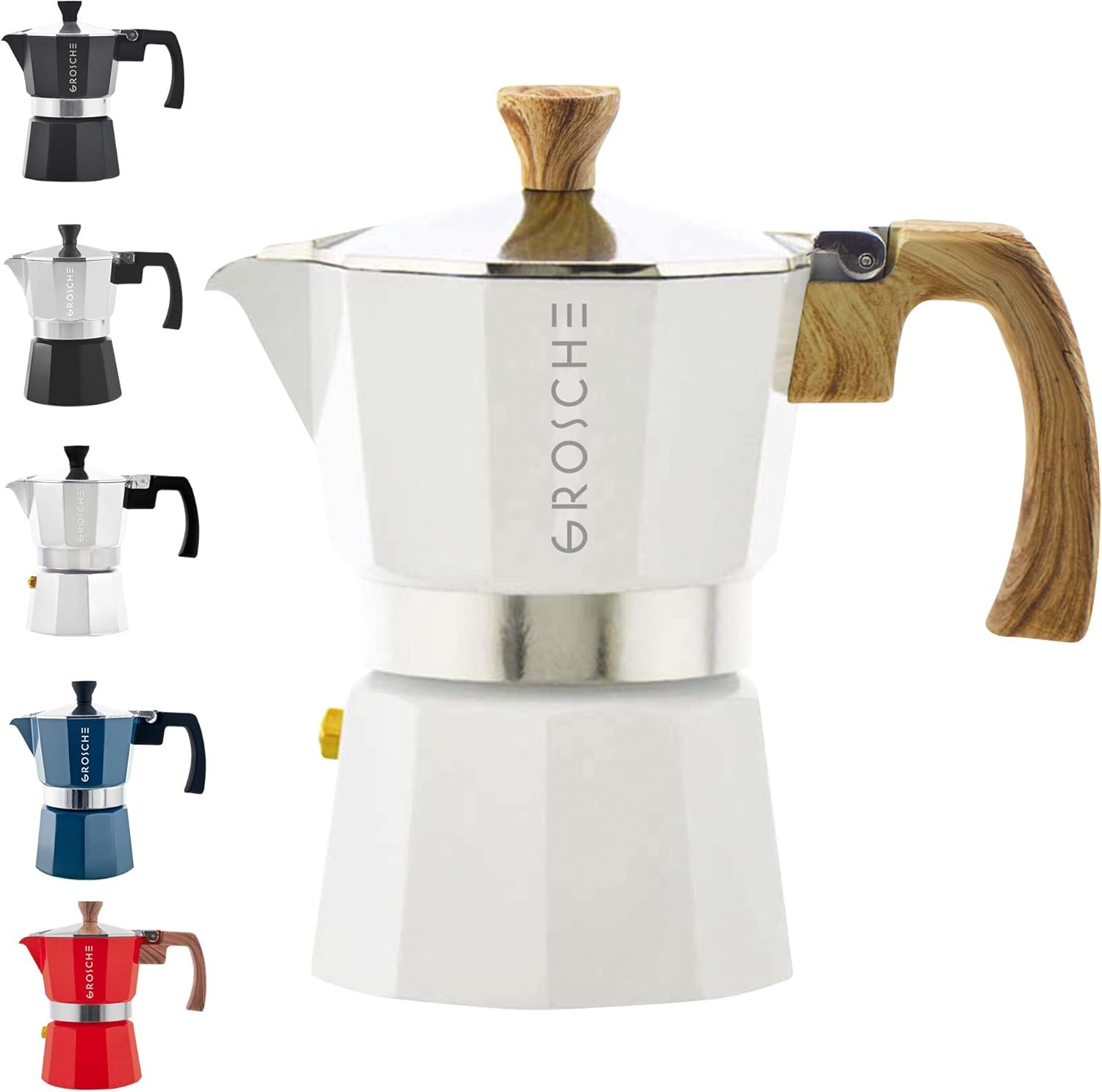
The GROSCHE Milano Moka Stovetop Espresso Coffee Maker stands out in the crowded stovetop espresso market with its Italian-inspired design, durable anodized aluminum construction, and safety-focused features. For home brewers seeking a compact, manual alternative to electric espresso machines, this 3-cup Moka pot delivers rich, full-bodied coffee using the classic percolation method. Its compatibility with gas, electric, and propane stoves makes it a versatile choice for households without dedicated espresso equipment. While not the most advanced in terms of automation, its straightforward operation and emphasis on quality materials make it a compelling option for those prioritizing simplicity and durability.
Quick Overview
| Feature | Details |
|---|---|
| Product Category | Stovetop Espresso Maker / Moka Pot |
| Brewing Method | Manual pressure-based percolation |
| Materials | Food-grade anodized aluminum, silicone gasket |
| Capacity | 3 cups (5 fluid ounces) |
| Compatibility | Gas, electric, and propane stoves; induction-compatible with limitations |
| Safety Features | Italian safety valve, insulated handle |
| Intended Use | Home espresso brewing, coffee percolation |
| Best For | Coffee enthusiasts prioritizing manual control and durability |
The combination of anodized aluminum for heat retention, a precision-engineered silicone gasket, and an Italian safety valve creates a balanced system that minimizes thermal stress while ensuring consistent pressure during brewing. These materials and design elements contribute to a stable extraction process, making it particularly well-suited for users who value simplicity over automation.

Brewing Method Compatibility: How the Moka Pot Works

Pressure Dynamics and Extraction Principles
The GROSCHE Milano operates on the same fundamental pressure dynamics as traditional Moka pots, using steam pressure generated by boiling water to force coffee through a filter. The 3-cup design allows for a balanced brew ratio of approximately 1:16 (coffee to water), aligning with standard espresso extraction parameters. While it doesn’t generate the high pressure of a commercial espresso machine, its design promotes a rich extraction profile by allowing water to interact with ground coffee at multiple points during the brewing cycle. For example, the pot’s unique chamber design ensures that water passes through the coffee bed in stages rather than all at once, which can enhance flavor development by allowing for more even extraction. This method is particularly effective for medium- to dark-roasted beans, as the extended contact time can bring out deeper notes of chocolate and caramel.
Heat Transfer and Thermal Efficiency
The anodized aluminum body conducts heat efficiently to the base of the pot, ensuring even temperature distribution. This material choice enhances thermal conductivity compared to stainless steel alternatives while maintaining structural integrity under repeated heating cycles. However, the pot’s compact size means it requires more frequent monitoring on stovetops to prevent overheating, which could affect the stability of temperature-sensitive extraction processes. For instance, when using a gas stove, users may need to adjust the flame size based on observed steam production from the safety valve. The pot’s thermal efficiency is further influenced by its 3-cup capacity, which allows for a shorter brewing time compared to larger Moka pots. This results in a more concentrated extraction, making it ideal for those who prefer a bold, espresso-like shot without the need for additional dilution.
Filter Compatibility and Grind Consistency
The included #4 permanent filter is designed for medium to fine grind coffee, making it ideal for espresso-style brews. While the pot doesn’t have adjustable settings to fine-tune grind size, its design encourages a relatively uniform extraction by minimizing channeling through the filter. Users should ensure their coffee is ground consistently to achieve optimal results, as uneven particle sizes can lead to under-extraction in lighter roasts or over-extraction in darker profiles. For example, a finer grind may increase the extraction time by 10-15 seconds, which can be critical for balancing acidity and body. Additionally, the silicone gasket’s airtight seal prevents water from bypassing the coffee bed entirely, ensuring that all liquid passes through the filter and contributing to a more uniform extraction.
Ease of Use and Workflow Complexity

Manual Operation and Learning Curve
As a stovetop espresso maker, the GROSCHE Milano requires users to manually monitor temperature and pressure throughout the brewing process. This involves adjusting heat levels based on the pot’s performance, which may take some trial and error for first-time users. The lack of digital displays or automation means the learning curve is steeper than with electric espresso machines, but this also aligns with the product’s emphasis on manual brewing control. For example, users must learn to recognize when steam pressure has built up sufficiently to indicate that the coffee is nearly complete. This requires familiarity with the pot’s behavior, as over-extraction can occur if the brewing time is extended beyond 2-3 minutes. The process is further influenced by external factors such as ambient kitchen temperature, which can affect the rate at which heat is transferred to the pot.
Cleaning and Maintenance Routine
The design simplifies cleaning by allowing the silicone gasket to be removed for thorough washing, though users should note that the anodized finish may require occasional reapplication of a food-safe sealant to prevent oxidation. The compact size means it occupies less counter space than larger espresso machines, but its small capacity may require multiple batches for high-volume use. Regular maintenance of the gasket is essential to ensure continued airtight performance and prevent leaks. For instance, a worn or compromised gasket can lead to pressure loss, resulting in under-extracted coffee. Additionally, the pot’s anodized aluminum body is resistant to corrosion but may develop a patina over time, which can be mitigated by occasional polishing with a soft cloth and mild detergent. The permanent filter, while reusable, should be cleaned regularly to avoid residue buildup that could affect flavor consistency.
User Experience with Different Stovetop Types
The pot’s compatibility with gas, electric, and propane stoves provides flexibility for users with varying cooking setups. However, its performance on induction cooktops is limited due to the non-magnetic nature of anodized aluminum. While it can still be used on induction stoves, users report slower heating times compared to magnetic-based pots. This limitation should be considered for households primarily using induction ranges. For example, when using an induction stove, users may need to preheat the pot on a lower setting before gradually increasing the heat to avoid thermal shock. This is particularly important for maintaining the integrity of the anodized finish, as prolonged exposure to extreme temperatures could degrade the material over time.
Temperature Control and Heat Stability

Thermal Conductivity of Materials
The choice of anodized aluminum over other materials like stainless steel enhances heat transfer efficiency, which is crucial for maintaining consistent pressure during brewing. However, this also means the pot requires constant attention to prevent overheating, as it can reach temperatures exceeding 212°F (100°C) within minutes. Users should avoid leaving the pot unattended during operation to maintain safety. The material’s thermal properties also affect the brewing time, as anodized aluminum conducts heat more rapidly than stainless steel. This can lead to shorter extraction times, which may be beneficial for users who prefer a more intense brew but requires careful monitoring to avoid under-extraction.
Heat Retention and Brewing Consistency
Despite its efficient thermal conductivity, the GROSCHE Milano does not retain heat as effectively as larger pots with thick walls. This means users may need to adjust their stovetop heat levels mid-brew to compensate for temperature fluctuations. The lack of insulation in the pot’s body could also lead to minor variations in brewing time depending on ambient kitchen conditions, which may affect the consistency of batches. For example, a colder kitchen environment could extend brewing times by several seconds, altering the extraction profile and resulting in a lighter body or increased acidity. Users should aim to maintain a stable kitchen temperature, ideally between 68-72°F (20-22°C), to ensure optimal brewing conditions.
Managing Pressure Buildup
The Italian safety valve is a critical component for maintaining pressure stability. When the internal pressure exceeds safe limits, it releases excess steam to prevent damage to the pot. While this ensures safety, some users have noted that the valve can slightly affect the final brew by allowing minor pressure fluctuations. This is a known trade-off in manual Moka pots and should be considered for those seeking precise pressure control. For instance, the valve’s release point may occur slightly earlier than desired in some cases, leading to a marginally shorter brewing time. This can be mitigated by adjusting the stovetop heat input to maintain a steady pressure level throughout the process.
Brew Consistency and Extraction Quality

Coffee Flavor Profile Analysis
The GROSCHE Milano produces a brew with a robust body and moderate acidity, characteristic of Moka-style espresso. The 3-cup size allows for a balanced extraction that avoids over-extraction, which is common in smaller pots. However, users of darker roasts may find the resulting coffee to be slightly under-extracted due to the pot’s limited capacity, as it doesn’t allow for the same level of water contact time as larger espresso machines. For example, a darker roast like French Roast may require a longer extraction time to develop its full body, which the 3-cup pot’s design may not accommodate. This can result in a lighter, less intense cup that lacks the deep chocolate notes typically associated with darker roasts. Conversely, a lighter roast such as Cinnamon or Colombia may benefit from the pot’s shorter brewing time, producing a cleaner cup with bright acidity and floral undertones.
Factors Affecting Extraction Stability
Consistent results depend on factors such as grind size, water temperature, and stovetop heat management. The pot’s design encourages a relatively even extraction by allowing water to flow through the filter in stages, but this can be influenced by inconsistent grind sizes or temperature variations. Users should monitor the brewing process closely to ensure optimal extraction. For instance, a finer grind may increase the extraction time by 10-15 seconds, which can be critical for balancing acidity and body. Additionally, water temperature plays a significant role in extraction efficiency; the pot’s performance is optimized when using water heated to between 195-205°F (90-96°C), as temperatures outside this range can lead to under or over-extraction. Users should verify their water temperature using a thermometer, as many standard stovetop pots lack this feature.
Comparison to Electric Espresso Machines
While electric espresso machines offer precise temperature control and pressure regulation, the GROSCHE Milano provides a more hands-on experience that appeals to those who prefer manual brewing methods. The lack of automation means users must manually adjust heat levels, which can lead to more variability in brew quality. However, this also allows for a greater degree of customization in the final product. For example, users can experiment with different grind sizes or water temperatures to fine-tune the extraction profile for their preferred coffee. Additionally, the pot’s manual operation encourages a more mindful brewing process, as users must pay attention to subtle changes in pressure and steam output to gauge the brewing progress. This contrasts with electric machines, which often prioritize consistency over user involvement.

Pros & Cons
Pros
- Durable anodized aluminum construction ensures long-term heat conductivity and structural integrity. The material’s resistance to corrosion makes it ideal for frequent use, especially in households where the pot may be exposed to varying temperature conditions. Additionally, anodized aluminum’s thermal efficiency helps maintain consistent pressure during brewing, contributing to a more stable extraction profile.
- The Italian safety valve provides added peace of mind during operation. This feature is particularly important for users who may be new to manual Moka pots, as it ensures that the pot does not overheat or build up excessive pressure. The valve’s design also allows for a controlled release of steam, which helps maintain the desired brewing time and prevents sudden pressure spikes.
- Compact 3-cup size is ideal for single servings or small households. This makes the GROSCHE Milano an excellent choice for individuals who want to brew espresso without committing to a larger machine. The small size also means that it occupies less counter space, making it suitable for kitchens with limited storage. Additionally, the 3-cup capacity allows for a more concentrated extraction, which can be ideal for those who prefer a bold, espresso-like shot.
- Compatibility with gas, electric, and propane stoves for versatility. The pot’s ability to work on multiple stove types makes it a versatile option for users with varying cooking setups. This flexibility is particularly beneficial for those who may not have access to a dedicated espresso machine but want to experiment with home brewing. The pot’s compatibility with propane stoves also makes it a convenient option for camping or outdoor use.
- Reusable permanent filter reduces waste compared to disposable options. The included #4 filter is designed for long-term use, eliminating the need for frequent replacements and reducing environmental impact. This makes the GROSCHE Milano an eco-friendly choice, as users can simply clean and reuse the filter after each brewing session.
- Premium silicone gasket ensures airtight performance and easy cleaning. The silicone material is resistant to high temperatures and chemical degradation, making it ideal for repeated use in the kitchen. Additionally, the gasket’s design allows for easy removal and cleaning, which helps maintain the pot’s performance over time. The airtight seal also prevents water from bypassing the coffee bed, ensuring that all liquid passes through the filter and contributing to a more uniform extraction.
Cons
- Small capacity may require multiple batches for larger groups. While the 3-cup size is ideal for single servings, it may be inconvenient for households with multiple coffee drinkers. This limitation means that users who require a higher capacity may need to invest in a larger Moka pot or consider alternative brewing methods. Additionally, the smaller size may not be suitable for those who want to brew multiple cups at once, which could lead to increased preparation time.
- Less temperature stability compared to electric espresso machines. The GROSCHE Milano’s reliance on manual heat management means that users must constantly monitor the stovetop to maintain consistent temperature. This can be challenging for those unfamiliar with manual brewing, as even minor fluctuations in heat can affect the extraction profile. Additionally, the pot’s anodized aluminum body conducts heat more rapidly than stainless steel, which can lead to shorter brewing times and a need for frequent adjustments.
- Induction stove compatibility is limited due to non-magnetic material. While the pot can be used on induction cooktops, its performance is slower compared to magnetic-based pots. This limitation may be a drawback for households that primarily use induction stoves, as it requires additional effort to preheat the pot and maintain a steady heat level. Users should consider this when selecting a stovetop for brewing.
- Requires more attention during operation than automated systems. The GROSCHE Milano’s manual design means that users must constantly monitor the brewing process to ensure optimal results. This can be time-consuming for those who prefer a more hands-off approach, as even minor adjustments in heat or pressure can affect the final cup. Additionally, the need for manual oversight may be a turnoff for users accustomed to electric machines with automated features.
- Not ideal for users seeking precise pressure control. While the Italian safety valve ensures basic pressure stability, it does not offer the same level of precision as commercial espresso machines. This can be a drawback for users who want to fine-tune the extraction process, as minor pressure fluctuations may affect the final brew. Additionally, the pot’s manual operation means that users must rely on their own judgment to determine when the brewing is complete, which can lead to variability in results.
- May not produce the same level of crema as commercial espresso machines. The GROSCHE Milano’s design does not generate the high pressure necessary to create a thick, creamy crema typically associated with espresso. Instead, it produces a more subdued foam that may not appeal to those who prioritize crema in their coffee. This can be a disadvantage for users who want a more traditional espresso experience.
Final Verdict: Who This Product Is Best For (and Who Should Skip It)
The GROSCHE Milano Moka Stovetop Espresso Coffee Maker is an excellent choice for home brewers who prioritize manual control, durability, and a classic brewing experience. Its compact size and compatibility with multiple stovetop types make it ideal for small households or individuals who want to experiment with espresso-style coffee without investing in a full electric machine. The anodized aluminum construction and Italian safety valve also make it a reliable option for those seeking long-term use in a home kitchen.
However, this product may not be suitable for users who require higher capacity or automation features. Its limited induction stove compatibility and lack of precise pressure control could be drawbacks for those who rely on specific brewing conditions. Additionally, the need for manual oversight during operation may be a turnoff for users accustomed to electric espresso machines with automated features. Overall, the GROSCHE Milano strikes a balance between tradition and practicality for home espresso enthusiasts.

Frequently Asked Questions (FAQs)
Is the GROSCHE Milano Moka Stovetop compatible with induction stoves?
The GROSCHE Milano Moka Stovetop is compatible with induction stoves, but it heats more slowly than magnetic-based pots. Users should expect longer preheating times and monitor temperature closely to maintain consistent extraction.
How does the anodized aluminum construction affect brewing performance?
Anodized aluminum conducts heat efficiently to the base of the pot, ensuring even temperature distribution. This enhances thermal conductivity compared to stainless steel alternatives but requires constant attention to prevent overheating during brewing.
Can the GROSCHE Milano Moka Stovetop be used for other types of coffee?
Yes, the Moka pot can produce a variety of coffee styles. While it’s designed for espresso-like extraction, users may adjust grind sizes or water ratios to achieve different flavor profiles, though this requires careful monitoring of the brewing process.
How does the safety valve function during operation?
The Italian safety valve releases excess pressure when internal levels exceed safe limits, preventing damage to the pot. While this ensures safety, it may slightly affect extraction consistency by allowing minor pressure fluctuations.
What are the limitations of using a Moka pot for espresso?
Moka pots produce a rich, full-bodied coffee but lack the high pressure of commercial espresso machines. This results in lower crema formation and a slightly different extraction profile, making them less ideal for those seeking traditional espresso characteristics.
How should I clean the GROSCHE Milano Moka Stovetop?
The silicone gasket can be removed for thorough cleaning, but the anodized finish may require occasional reapplication of a food-safe sealant. Always allow the pot to cool before cleaning, and avoid abrasive scrubbers that could damage the surface.
Is the Moka pot suitable for making cappuccino or lattes?
The GROSCHE Milano can be used to make cappuccino or lattes by adding steamed milk. However, the lack of a built-in steam wand means users will need an external milk frother or steamer to achieve the desired texture for these beverages.
What are the best practices for achieving consistent results with this Moka pot?
To ensure consistency, use a medium to fine grind coffee, maintain steady heat levels on the stove, and monitor brewing time closely. Avoid overfilling the pot to prevent pressure instability, and always use filtered water for optimal extraction.