
IMUSA 9 Cup Cast Aluminum Stovetop Review: Traditional Moka Pot Brewing Explained
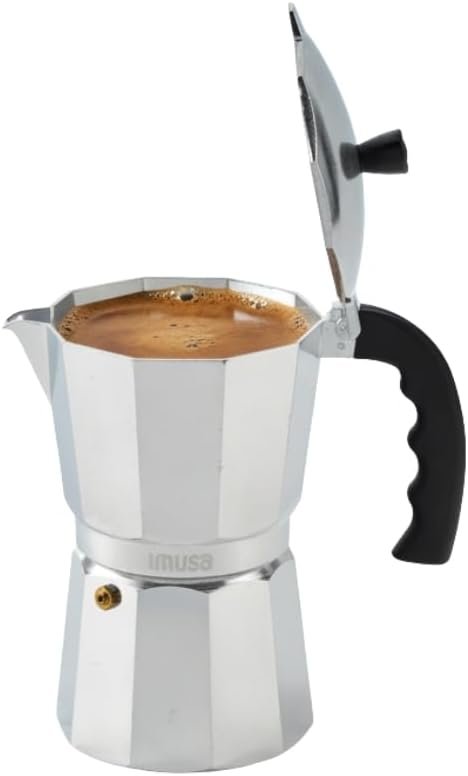
The IMUSA 9 Cup Cast Aluminum Stovetop Coffeemaker is a traditional moka-style brewer built for Cuban, Italian, and espresso-style coffee preparation, and this imusa 9 cup cast aluminum stovetop review looks at how its aluminum construction, nine-cup capacity, and manual pressure-brewing design perform for everyday stovetop use. Stovetop moka pots occupy a distinct category within home coffee equipment: rather than relying on electric pumps or programmable controls, they use heat applied through a gas, ceramic, or coil burner to push hot water through a bed of finely ground coffee, producing a concentrated brew that sits between espresso and strong drip coffee in body and intensity. Choosing a moka pot suited to a household means weighing capacity against burner compatibility, handle materials against heat safety, and aluminum construction against long-term maintenance habits. The IMUSA model is positioned for households, small offices, or coffee drinkers who want a larger-format Cuban or Italian-style brewer without the cost, footprint, or electrical dependence of a pump-driven espresso machine. Its nine-cup output, cast aluminum body, and bakelite handle place it in a specific niche built around shareable batch sizes and simple manual operation rather than programmable features or pressure gauges. The sections below examine brewing compatibility, capacity, extraction behavior, daily workflow, and maintenance to clarify who this coffeemaker fits best.
Quick Overview
| Feature | Details |
|---|---|
| Product Category | Stovetop espresso maker / moka pot |
| Brewing Method | Manual stovetop steam-pressure extraction |
| Capacity | 9 cups (demitasse-style servings) |
| Body Material | Cast aluminum |
| Handle & Knob | Bakelite, designed to stay cool during brewing |
| Heat Source Compatibility | Gas, ceramic, and coil stovetops |
| Coffee Input | Ground coffee, fine to medium-fine grind |
| Filter Type | Reusable internal metal funnel and filter plate |
| Dishwasher Safe | No, hand wash only |
| Item Weight | 1.1 pounds |
| Dimensions | 4.3″D x 5.9″W x 8.3″H |
| Power Source | Manual, no electricity required |
| Warranty | 90-day manufacturer warranty |
| Best Suited For | Cuban, Italian, and espresso-style coffee drinkers |
These specifications describe a lightweight, stovetop-dependent brewer rather than a self-contained appliance, meaning brewing results are shaped as much by burner heat and grind size as by the pot itself. The aluminum body, bakelite hardware, and reusable filter point to a design built for repeated manual use, while the absence of gauges or electronic controls means consistency depends on the user managing heat and timing.
Brewing Method and Stovetop Compatibility
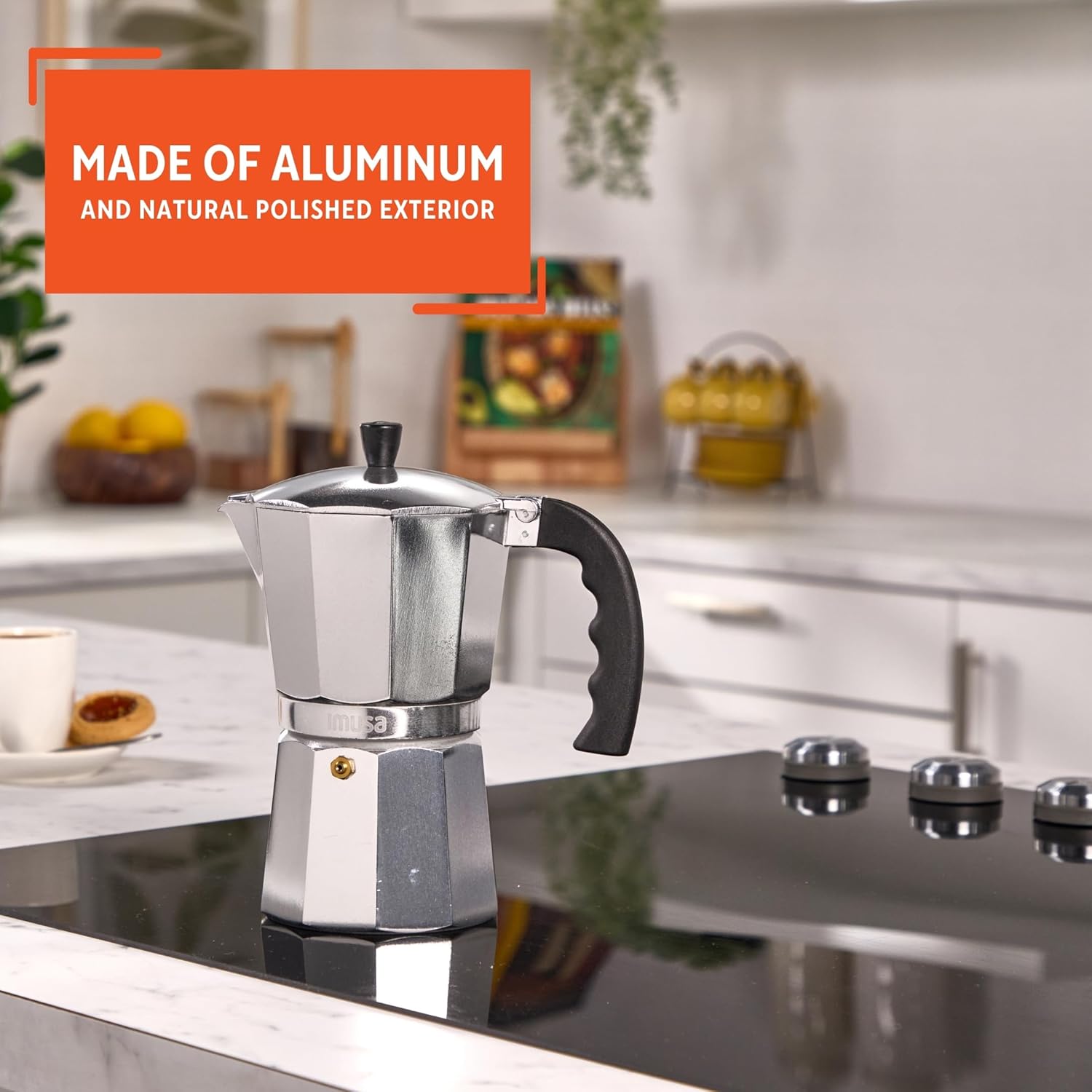
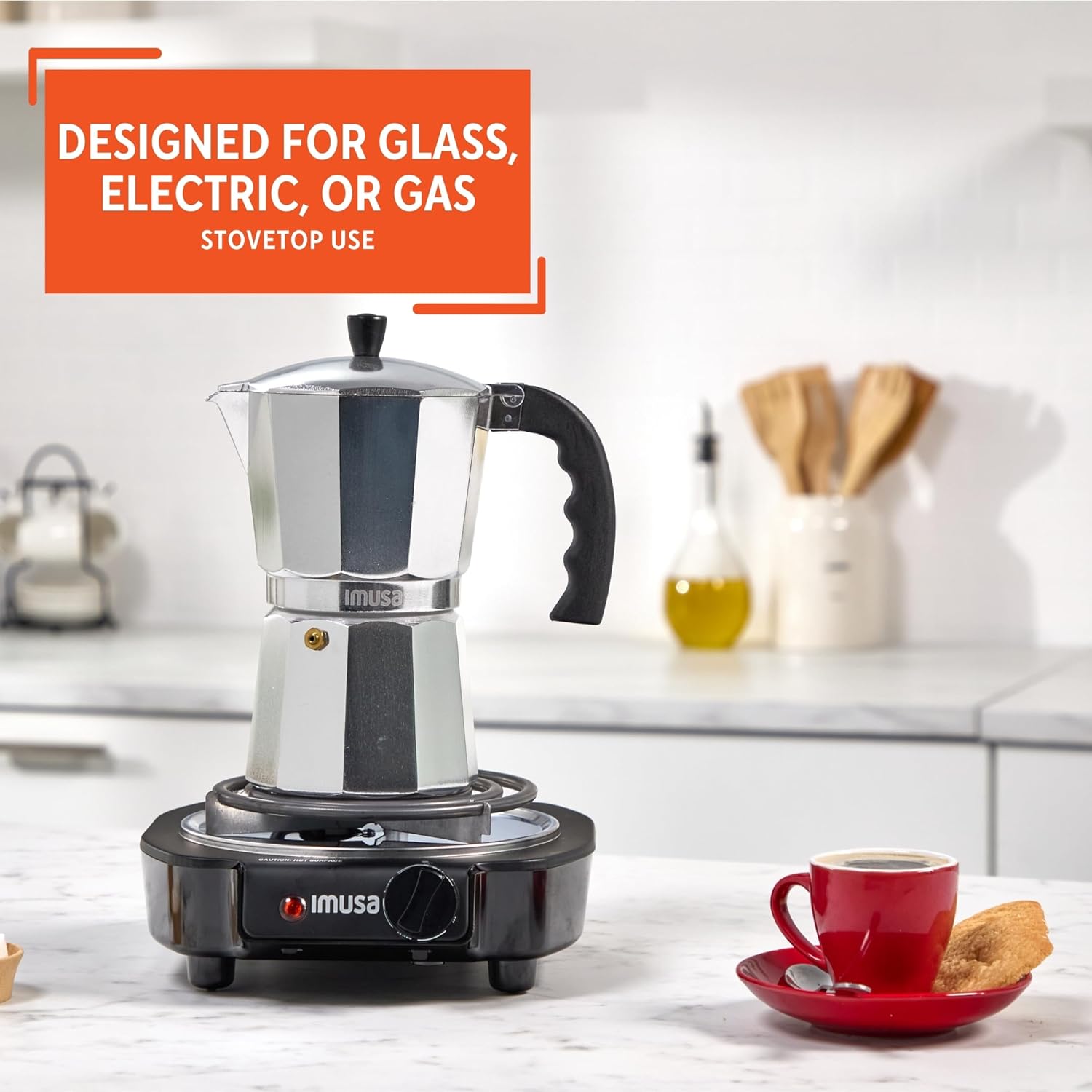
Moka pots brew by generating steam pressure in a sealed lower chamber, which forces heated water upward through a bed of packed ground coffee and into an upper collection chamber. The IMUSA coffeemaker follows this classic three-chamber design, and its cast aluminum construction is chosen specifically because aluminum conducts and distributes heat efficiently across the base, helping the water reach brewing temperature in a predictable window. Because the brewer has no internal heating element, its performance is directly tied to the stovetop surface it sits on. The listed compatibility with gas, ceramic, and coil burners covers the majority of residential kitchens, though the flat, wide base is a meaningful factor in how evenly heat is transferred during the brewing cycle.

Gas, Ceramic, and Coil Range Performance
Gas burners tend to suit moka pots well because flame height is easy to adjust in real time, allowing a brewer to moderate heat as steam pressure builds. Ceramic and coil ranges heat more gradually and retain residual heat after the burner is adjusted, which can extend the brewing window slightly. Across all three surface types, the aluminum base of this coffeemaker is designed to make consistent contact, supporting even heating as long as the burner size roughly matches the base diameter.
Induction Range Limitations
One notable exclusion from the compatibility list is induction cooktops, which require magnetic, typically stainless steel or cast iron cookware to generate heat. Cast aluminum is not ferromagnetic, so this coffeemaker will not function on an induction burner without a separate induction adapter plate. Households with induction ranges should treat this as a hard compatibility limitation rather than a minor inconvenience, since no amount of adjustment will allow the pot to heat directly on that surface type.
Base Diameter and Burner Sizing
Matching burner size to the pot’s base diameter has a measurable effect on how evenly the water chamber heats. A burner flame or coil noticeably wider than the base wastes heat around the sides and can warm the handle faster than intended, while a burner that is too small concentrates heat in the center of the base and can slow the overall brewing cycle. Centering the coffeemaker over a moderately sized burner, rather than the largest available ring, tends to produce more even results with this style of brewer.
Capacity, Output, and Serving Flexibility
The nine-cup capacity is one of the coffeemaker’s defining characteristics, positioning it as a batch brewer rather than a single-serving device. In moka pot terminology, a “cup” refers to a small demitasse-sized espresso pour of roughly two ounces rather than a standard eight-ounce mug, so the nine-cup designation translates to a modest but shareable total volume once brewed. This capacity level suits households or small gatherings that want to brew once and distribute servings across several people, rather than individuals seeking a single morning cup. The tradeoff for this larger output is a longer fill-to-pour cycle and a base that occupies more burner space than smaller two- or four-cup versions.

Nine-Cup Yield in Practical Terms
Because moka pot cups are concentrated and small, nine cups from this brewer typically yields enough finished coffee for three to five standard-sized mugs when diluted with hot water or milk, or a larger number of straight espresso-style pours for guests. This distinction matters for buyers comparing capacity numbers across brewer types, since a nine-cup moka pot is not directly equivalent to nine cups of drip coffee.
Sharing and Household Use
The larger chamber size makes the coffeemaker better suited to multi-person households, small offices, or gatherings where several people want Cuban or Italian-style coffee at once. Single-person households may find the nine-cup format larger than needed for daily solo use, since moka coffee is generally brewed fresh each time rather than reheated.
Footprint and Storage Considerations
At 4.3 inches in depth, 5.9 inches in width, and 8.3 inches in height, the coffeemaker has a compact base footprint relative to its output, though the taller upper chamber means it needs vertical clearance in a cabinet or under overhead shelving. The 1.1-pound weight makes it easy to lift, drain, and store without the bulk associated with larger stovetop percolators, which is a relevant consideration for kitchens with limited cabinet space or households that store coffee equipment away between uses rather than leaving it on the counter.
Brew Consistency, Extraction, and Temperature Control
Extraction quality in a moka pot depends heavily on three manual variables: grind size, coffee bed density, and heat applied during brewing, none of which this coffeemaker automates or regulates electronically. A fine to medium-fine grind, similar to that used for drip coffee but coarser than true espresso grind, is generally recommended to avoid excessive resistance that can lead to bitter, over-extracted results. Because there is no built-in temperature gauge or pressure indicator, consistency comes from repeatable technique: consistent grind size, an evenly tamped but not compressed coffee bed, and moderate, steady heat rather than maximum burner output. This places more responsibility on the user than an automated espresso machine would.

Grind Size and Extraction Quality
A grind that is too fine can clog the filter plate and cause excessive pressure buildup, while a grind that is too coarse allows water to pass through too quickly, producing weak, under-extracted coffee. Medium-fine, uniform grinds tend to give the most balanced results in this style of brewer, and grind consistency matters more in moka brewing than in many drip methods because there is no adjustable flow rate to compensate for uneven particle size.
Managing Heat to Prevent Over-Extraction
Because aluminum heats and holds temperature efficiently, brewing on excessively high heat can push water through the coffee bed too quickly and scorch the grounds against the hot metal, producing a burnt or bitter flavor profile. Moderate, steady heat that allows the steam-pressure cycle to proceed gradually tends to produce a smoother, more balanced extraction, and removing the pot from heat promptly once brewing sounds change helps avoid over-extraction at the tail end of the cycle.
Ease of Use, Handling, and Daily Workflow
Daily operation follows the same basic sequence common to moka pots: filling the base chamber with water up to the safety valve, filling the funnel with ground coffee, assembling the three sections, and placing the pot on a burner until the upper chamber fills. The bakelite handle and knob are intended to remain cool to the touch throughout this process, since bakelite is a heat-resistant plastic commonly used for cookware handles. The flip-up lid and side pour spout are functional design choices meant to simplify serving directly from the pot once brewing finishes, without requiring the coffee to be transferred to a separate carafe.

Assembly and Fill Process
Assembly requires screwing the upper and lower chambers together around the coffee-filled funnel, which should be finger-tight rather than forced, since over-tightening can be difficult to reverse once the aluminum has heated and cooled. This straightforward mechanical process has no electronic components to configure, which shortens the learning curve compared to programmable espresso machines.
Time to Brew and Workflow Fit
A full nine-cup batch generally takes several minutes longer to brew than a two- or four-cup moka pot, simply because there is more water to heat and more steam pressure required to complete the cycle. This makes the coffeemaker better suited to mornings or gatherings where coffee is prepared ahead of serving rather than brewed on demand for a single quick cup, and users should expect to stay near the stovetop to monitor the sound and timing of the brewing cycle rather than stepping away entirely.
Handle, Knob, and Pouring Design
The bakelite handle and knob are positioned to stay cooler than the aluminum body during brewing, supporting safer handling once the coffee is ready to pour. The side spout combined with the flip-up lid allows pouring without fully removing the top chamber, which streamlines serving multiple cups from a single brewing cycle.
Cleaning, Maintenance, and Long-Term Durability
The manufacturer specifies hand wash only, with no dishwasher compatibility, which is standard guidance for bare cast aluminum cookware since dishwasher detergents and prolonged moisture exposure can cause pitting, discoloration, or a dulled finish over time. The reusable metal filter plate eliminates the recurring cost of paper filters but requires manual cleaning after each use to prevent coffee oil buildup, which can affect flavor in subsequent brews if left unaddressed. Cast aluminum construction is generally durable against everyday stovetop use, though like most uncoated aluminum cookware, it benefits from gentle cleaning tools rather than abrasive scouring pads that can scratch the surface.
Hand-Wash Care Requirements
Rinsing the chambers and filter promptly after brewing, using a soft sponge and mild dish soap, helps prevent residue buildup without stripping the aluminum’s natural patina. Some moka pot users intentionally avoid heavy soap use altogether, preferring a water-only rinse to preserve seasoning that can develop on the interior surface over repeated use.
Long-Term Reliability Expectations
With consistent hand-wash care, cast aluminum moka pots are generally regarded as long-lasting kitchen tools, since the primary wear points are the rubber gasket seal and filter plate rather than the aluminum body itself. The gasket may eventually require replacement after extended use, which is a normal maintenance expectation for this style of brewer rather than a defect.
Avoiding Pitting and Discoloration
Uncoated aluminum can develop pitting or a chalky white residue if left wet for extended periods or exposed repeatedly to harsh alkaline detergents, since aluminum reacts more readily with certain cleaning chemicals than stainless steel does. Drying the chambers fully after washing, rather than air-drying with residual water pooled inside, is a simple habit that helps preserve the finish and reduces the likelihood of surface discoloration developing over months of regular use.

Pros & Cons
Pros
- Durable cast aluminum body: The construction is built to withstand repeated stovetop heating cycles, and aluminum’s efficient heat conduction supports predictable brewing behavior across gas, ceramic, and coil burners.
- Generous nine-cup capacity: The larger chamber size makes the coffeemaker well suited to households and small gatherings that want to brew once and share several servings of Cuban or Italian-style coffee.
- Broad stovetop compatibility: Support for gas, ceramic, and coil surfaces covers most common residential kitchen setups without requiring a dedicated appliance or outlet.
- Cool-touch bakelite handle and knob: The heat-resistant bakelite components are designed to remain safer to handle than the aluminum body during and immediately after brewing.
- Flip-up lid with side pour spout: This combination simplifies serving directly from the pot, reducing the need to transfer brewed coffee to another container.
- Reusable filter system: The built-in metal filter plate removes the ongoing cost and waste associated with paper filters used in other brewing methods.
- Lightweight and portable: At 1.1 pounds and a compact footprint, the coffeemaker is easy to store, transport, or use in small kitchens with limited counter space.
- Simple manual operation: With no electronic controls to learn, the brewing process is straightforward and consistent once basic technique is established.
Cons
- Not induction compatible: Cast aluminum does not work on induction cooktops without an added adapter plate, which excludes a growing segment of modern kitchens from direct use.
- Hand wash only: The dishwasher-unsafe designation adds a manual cleaning step after every use, which some buyers may find less convenient than dishwasher-safe alternatives.
- No temperature or pressure gauge: Brew consistency depends entirely on user technique and burner management, offering less built-in guidance than gauge-equipped or electric alternatives.
- Short 90-day warranty: The manufacturer coverage period is brief relative to the multi-year lifespan typically expected from cast aluminum stovetop cookware.
- Cup sizing can mislead capacity expectations: Buyers unfamiliar with moka pot terminology may expect nine standard mugs rather than nine small demitasse-style pours.
Final Verdict: Who This Product Is Best For (and Who Should Skip It)
The IMUSA 9 Cup Cast Aluminum Stovetop Coffeemaker suits households, small offices, and coffee drinkers who want an authentic Cuban, Italian, or espresso-style brewing experience without investing in an electric pump-driven machine. Its combination of a shareable nine-cup capacity, broad gas, ceramic, and coil stovetop compatibility, and straightforward manual assembly makes it a practical fit for multi-person settings where several concentrated servings are brewed and shared at once. Buyers who already understand moka pot brewing conventions, and who are comfortable managing grind size and burner heat manually, are likely to get the most consistent results from this design.
Buyers with induction cooktops, those seeking dishwasher-safe cleanup, or single-person households wanting a small single-serving brewer should look elsewhere, since the aluminum construction, hand-wash requirement, and larger nine-cup format work against those needs. Compared with other stovetop moka pots available in 2026, this coffeemaker occupies a traditional, no-frills segment of the category: it prioritizes classic styling, batch capacity, and stovetop versatility over digital controls or specialty coatings, making it best suited to buyers who value that traditional brewing approach over modern conveniences.

Frequently Asked Questions (FAQs)
How many actual cups of coffee does a 9 cup moka pot make?
A 9-cup moka pot designation refers to small demitasse-sized espresso pours of roughly two ounces each rather than standard mugs. In practical terms, this typically yields the equivalent of three to five regular-sized mugs once diluted with hot water or milk, or a larger number of concentrated straight pours for guests. Buyers should size expectations around espresso servings rather than drip-coffee cup volumes.
Can a cast aluminum stovetop coffeemaker be used on an induction stove?
No, cast aluminum is not magnetic, and induction cooktops require ferromagnetic cookware such as stainless steel or cast iron to generate heat. A cast aluminum moka pot placed directly on an induction surface will not heat, and a separate induction adapter plate would be required to use it on that type of range. Gas, ceramic, and coil burners remain directly compatible without any adapter.
What grind size works best for a stovetop moka pot?
A fine to medium-fine grind, coarser than true espresso grind but finer than standard drip grind, generally produces the most balanced extraction in a moka pot. Grinds that are too fine can clog the filter plate and cause excess pressure, while grinds that are too coarse allow water through too quickly, producing weak coffee. Consistent, evenly sized grounds matter more in this brewing method since there is no adjustable flow control.
Is a cast aluminum moka pot dishwasher safe?
No, cast aluminum stovetop coffeemakers are generally hand wash only, and this model follows that same guidance. Dishwasher detergents and prolonged moisture exposure can cause pitting, discoloration, or a dulled finish on uncoated aluminum surfaces over time. Hand washing with mild soap, a soft sponge, and thorough drying afterward helps preserve the aluminum finish and extends the coffeemaker’s usable lifespan.
How long does it take to brew a full batch in a 9 cup moka pot?
A full nine-cup batch takes longer than smaller two- or four-cup moka pots because more water must be heated and more steam pressure generated to complete the brewing cycle. Brewing time also varies by burner type, with gas typically brewing faster than ceramic or coil surfaces. Users should plan to stay near the stovetop to monitor sound and timing rather than expecting a fixed, unattended brew cycle.
Does a moka pot make coffee as strong as espresso?
Moka pot coffee is more concentrated than drip coffee but is generally not equivalent to true espresso, since it lacks the high-pressure pump extraction used in dedicated espresso machines. The steam-pressure method still produces a bold, intense brew often described as espresso-style, making it suitable for Cuban cafecito, Italian caffe, or diluted Americano-style drinks rather than pressure-crema espresso shots pulled from a pump machine.
What maintenance does the rubber gasket on a moka pot need?
The rubber gasket that seals the base and upper chambers is a normal wear component in moka pot design and may harden or lose its seal after extended repeated use. When brewing time increases noticeably or steam escapes from the seam during brewing, replacing the gasket typically restores normal function. This is considered routine maintenance for stovetop moka pots rather than a manufacturing defect.
Who should avoid buying a 9 cup stovetop moka pot?
Buyers with induction cooktops, those wanting dishwasher-safe cleanup, and single-person households seeking a quick single-serving brewer are generally better served by other coffee equipment. The nine-cup format, hand-wash requirement, and manual heat management involved in this brewing style suit multi-person households and coffee drinkers who value traditional Cuban or Italian brewing methods over automated convenience features found on electric machines.