SHARDOR Burr Grinder Review: 16 Settings for All Methods
Why grinder choice matters for home brewers
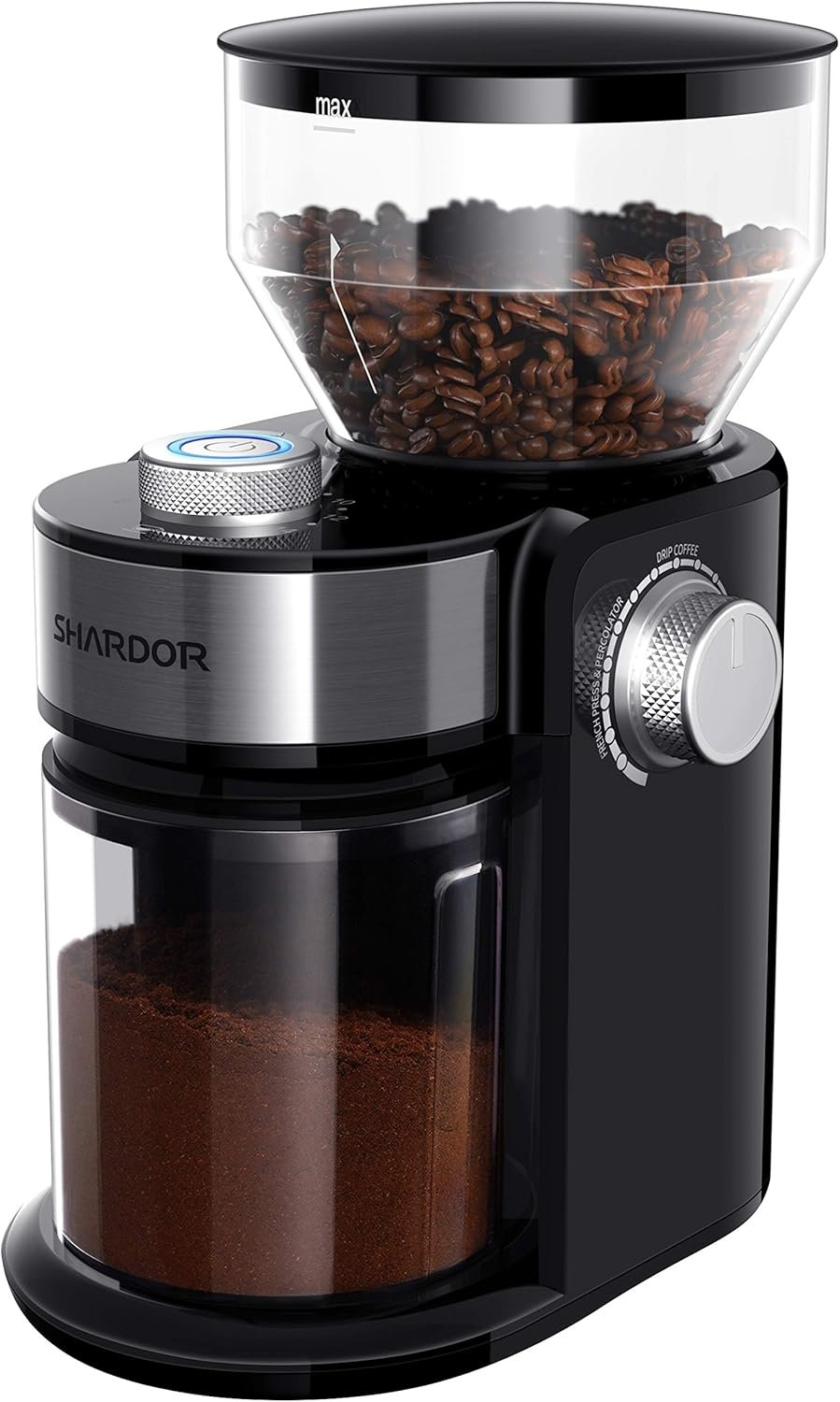
Choosing a grinder shapes extraction, flavor clarity, and daily workflow in home coffee preparation. For home brewers and households that prepare 2–14 cups at a time, grinder characteristics such as burr geometry, grind uniformity, dose control, and ease of cleaning directly influence brew consistency across methods from French press to espresso. This review focuses on the SHARDOR Electric Burr Coffee Grinder 2.0 in Glossy Black, using publicly available specifications, manufacturer disclosures, and aggregated customer feedback to explain how the machine’s design choices affect brewing outcomes. The target profile includes budget-conscious home users, small households, and beginning enthusiasts who need a compact, automatic grinder with adjustable grind size rather than commercial-grade precision. Product strengths and trade-offs are examined with reference to extraction principles, particle distribution effects on brew strength and clarity, and practical workflow considerations for common household coffee routines.
Quick Overview
| Feature | Details | |
|---|---|---|
| Product category | Electric flat-burr coffee grinder (household) | |
| Grind mechanism | Metallic flat burrs (removable top burr) | |
| Grind settings | 16 grind-size settings, coarse to ultra-fine | |
| Capacity/output | 2–14 cup selector; bean hopper and grind chamber | – |
| Materials and construction | Glossy black plastic housing; metallic burrs; removable components | |
| Power / Voltage | Manufacturer lists Voltage: 2 Volts (see manufacturer documentation) | |
| Heating / pressure system | Not applicable (passive grinding) | |
| Compatibility | Designed for drip, pour-over, French press, AeroPress, stovetop, and finer grind methods; not a commercial espresso-specific grinder | |
| Cleaning features | Removable top burr, removable bean hopper and grind chamber, included cleaning brush | |
| Best suited users | Small households, casual home brewers, compact-countertop kitchens | |
| Warranty | Not specified by manufacturer in provided product details |
The table condenses core specifications that influence grind distribution, dosing flexibility, and counter fit. Flat burr geometry and a 16-step stepped adjustment provide a broad range for most household brewing methods, while plastic housing and removable parts affect long-term handling, cleaning ease, and perceived durability. The 2–14 cup selector targets small-to-medium batch grinding rather than precise single-dose workflows used by espresso purists.

Grind range and brewing method compatibility
The grinder’s 16-step adjustment and metallic flat burrs deliver a practical range intended to accommodate a broad set of household brew methods. The stepped grind selector provides discrete increments suitable for coarse settings like French press and medium settings for pour-over or drip, while the finer steps aim toward finer AeroPress or Moka pot grinds. Stepped adjustments trade micro-adjustability for repeatability, which benefits casual users who prefer simple presets rather than continuous micrometers. Compatibility with espresso-style shots is limited by stepped fineness resolution and the motor and burr size: while an ultra-fine setting is present, high-pressure espresso extraction demands narrower particle distribution and dose control typically found in dedicated espresso grinders.

Which brewing methods are best matched to this grinder
The most appropriate methods for this grinder are drip coffee, pour-over, French press, AeroPress, and stovetop/Moka brewing. For immersion methods (French press, AeroPress), a coarser, consistent particle size helps avoid over-extraction and excessive fines that increase bitterness and sediment. For pour-over and drip, medium grind settings with stable particle distribution support balanced extraction: uniform particles allow predictable contact time and even flow through paper or cloth filters. Moka pot users can use finer stepped settings but should monitor dose and tamping technique to manage flow rate. Espresso purists may find the stepped range insufficient for stable, high-pressure micro-extraction.
Limitations for espresso and precision single-dose workflows
The stepped 16-setting system and flat burr geometry provide useful granularity for many household brews but lack the continuous micro-adjustment favored in precision single-dose espresso workflows. Espresso extraction relies on very tight particle distribution, precise dosing, and sometimes burrs engineered for finer tolerances; a grinder with stepped settings can introduce jump between preferred settings, making dialed-in espresso less reproducible. Additionally, motor torque, burr diameter, and retention characteristics influence heat buildup and static—factors that affect dose consistency for small single shots. For consistent, high-pressure espresso results, a purpose-built espresso grinder with micro-adjustment is typically recommended.
Grind consistency and extraction quality
Grind particle uniformity and distribution directly affect extraction kinetics and cup clarity. Flat burrs generally produce tighter particle size distributions compared with blade grinders and some conical designs at similar price points, reducing the proportion of very fine particles (fines) that accelerate extraction and contribute to over-extracted flavors. Uniform particles help maintain predictable flow rates through filters and extraction surfaces, which is crucial for balanced taste. The SHARDOR unit’s metallic flat burrs and stepped settings are designed to deliver repeatable coarse-to-fine ranges appropriate for household brewing; however, factors such as burr alignment, tolerance, and grinder speed influence distribution and static. Aggregated customer feedback often highlights acceptable consistency for drip and immersion brews, while noting variability when targeting espresso-like fineness.

How grind uniformity impacts flavor and extraction
Particle uniformity affects surface area exposed to water and the rate at which soluble compounds are extracted. A wide spread of particle sizes yields simultaneous under-extraction (large particles) and over-extraction (fines), producing muddled flavors and inconsistent mouthfeel. For paper-filter methods, tighter distributions promote clarity and balanced sweetness-acidity-bitter profiles by ensuring even extraction. For immersion methods, consistent coarse particles prevent rapid over-extraction of bitter compounds and reduce sediment. The metallic flat burr design is a positive indicator for improved uniformity compared with blade grinders, but actual performance depends on burr condition, calibration, and dosing workflow.
Static, retention, and dose consistency considerations
Static electricity and grounds retention in the grind chamber and burr area influence dose-to-dose repeatability. Plastic housings and chamber geometries can generate static that leads to clingy grounds and variable dosing, particularly with drier beans. The SHARDOR device includes a removable grind chamber and a cleaning brush to reduce retention, which helps stabilize dosing over time. Retention also affects freshness: retained grounds from prior grinds can mix with fresh grounds and influence flavor when switching bean types. Regular cleaning and settling of beans before grinding reduce cross-contamination and improve consistency across sessions.
Capacity, dosing, and serving flexibility
Capacity decisions balance convenience against freshness and dose control. The SHARDOR grinder’s 2–14 cup selector targets small batch to medium household use, enabling grinding volume aligned with common serving sizes without requiring repeated cycles. Automatic dispensing and the cup selector simplify workflow for users preparing multiple cups for family or guests. However, stepped cup selectors are batch-oriented and less suitable for single-serve precision dosing where weight-based dosing and small single-shot repeatability matter. For households prioritizing quick, repeatable batches for drip machines or carafes, the selector provides practical flexibility; for barista-style single-serve routines, the design favors convenience over micro-dose accuracy.

Practical implications of the 2–14 cup selector
The 2–14 cup selector reduces the need to estimate beans for each brew and lowers the risk of over-grinding for single sessions. For automatic drip machines and larger carafes, this feature speeds morning routines by aligning grind amount with brewer capacity. In contrast, the selector is less granular than weight-based dosing and can create waste if smaller amounts are needed frequently. Frequent small-batch users who prioritize freshness may prefer weighing beans for each brew or choosing a grinder with single-dose-friendly hopper removal and minimal retention.
Batch grinding versus single-dose workflows
Batch grinding improves speed and reduces the friction of frequent brewing but increases exposure of ground coffee to air, accelerating staling. For users who brew multiple cups at once, batch grinding with the 2–14 cup selector works well; for those who prefer single cups throughout the day, small-batch or single-dose grinding preserves volatile aromatics and flavor clarity. The SHARDOR’s removable hopper and chamber make it feasible to clear remaining beans and minimize retention when switching to smaller doses, though weight-based dosing remains a more precise approach for flavor-critical workflows.
Ease of use, workflow, and maintenance
Ease of use and straightforward maintenance are central for household appliances. The SHARDOR grinder features a fully automatic operation, a compact footprint (5″L x 7″W x 9.5″H), removable bean hopper and top burr, and an included cleaning brush—elements that simplify daily use and cleaning. The stepped control layout and cup selector favor uncomplicated workflows for users who value speed and repeatability over micro-adjustment. Removable components make access for cleaning easier and reduce grounds retention, but plastic housings and the size of the grind chamber affect how easily grounds are discarded and cleaned. User feedback commonly highlights the convenience of automatic dispensing alongside the need for routine cleaning to maintain consistent performance.

Daily workflow and user interface
The automatic grind-and-dispense function streamlines morning routines: beans are loaded, the desired grind size and cup amount selected, and the grinder runs to deliver grounds. The compact design conserves counter space and supports small kitchens. The stepped grind dial simplifies settings but may require trial-and-error to match specific brewing devices; clear incremental labeling aids repeatability for casual users. For households that switch frequently between brew methods, the removal of the hopper and burr assists quick reconfiguration, although switching requires wiping and occasional deeper cleaning to avoid flavor carryover.
Cleaning frequency and procedures
Routine cleaning maintains grind quality and reduces retention and static. The removable top burr, hopper, and chamber are intended for accessible cleaning, and the included brush supports dislodging trapped fines. Periodic disassembly to clean burrs and the chamber reduces build-up of oils and grounds that can affect flavor over time. Chemical cleaning agents are not required for dry cleaning; a soft brush and occasional dry wipe are commonly sufficient. Users should follow manufacturer guidance for reassembly to preserve burr alignment and consistent grinding.
Durability, materials, and long-term reliability
Material choices and construction details influence expected longevity and maintenance needs. The SHARDOR grinder combines a glossy black plastic housing with metallic flat burrs—a common approach for price-conscious household models that balances production cost and performance. Metallic burrs are durable components that maintain cutting geometry longer than steel-coated or low-grade alternatives, but the overall longevity depends on burr quality, motor torque, and housing tolerances. Plastic housings reduce weight and cost but can be more susceptible to wear, micro-cracks, or cosmetic damage over years of heavy use. Aggregated customer themes include satisfaction with short-term performance and questions about long-term robustness in high-frequency use environments.
Expected wear points and replacement considerations
Wear points typically include burr edges, motor bearings, and retention mechanisms. Metallic burrs will eventually require replacement if dulling occurs, and availability of compatible replacement burrs affects long-term upkeep. Motors operating at lower torque levels may heat more under heavy or continuous use, potentially affecting consistency over time; however, for typical household batch sizes, normal motor duty cycles are usually sufficient. Plastic components such as hopper lids, adjustment knobs, and housing clips are common sources of wear; careful handling and periodic inspection reduce the risk of damage.
Indicators that maintenance or part replacement is needed
Signs that maintenance or part replacement may be required include increased grind inconsistency, unusual motor noise, slipping or erratic adjustment clicks, increased grounds retention, or visible burr wear. Regular cleaning and monitoring of performance trends reduce the likelihood of unexpected failures. Because warranty details are not specified in manufacturer-provided product information, users should verify retailer or manufacturer warranty coverage at purchase if long-term support and part availability are important factors.
Pros & Cons
Pros
- Broad grind range with 16 settings: The stepped adjustment provides accessible coarse-to-fine options that cover French press, drip, pour-over, AeroPress, and stovetop methods; this versatility simplifies household brewing transitions.
- Metallic flat burrs for improved uniformity: Flat burr geometry typically yields a tighter particle distribution than blade grinders, improving extraction predictability and cup clarity for filter and immersion methods.
- 2–14 cup selector for batch flexibility: The automatic cup selector enables quick batch grinding aligned to common household serving sizes, reducing guesswork and speeding morning routines.
- Removable components ease cleaning: A removable top burr, hopper, and grind chamber plus a cleaning brush make routine maintenance more straightforward and reduce grounds retention that can affect flavor.
- Compact counter footprint: The smaller dimensions support limited-countertop kitchens and make it easy to store the grinder when not in use.
- User-friendly automatic operation: The fully automatic dispense operation reduces manual steps and supports consistent dosing for everyday household brewing.
Cons
- Stepped adjustments limit micro-tuning: The 16-step dial does not offer continuous micro-adjustment, which can be a shortcoming for users seeking precise espresso dialing or very fine tuning between close settings.
- Plastic housing may affect perceived durability: While lightweight and compact, plastic construction can be more prone to cosmetic wear and stress-related issues compared with metal-bodied grinders in higher-price tiers.
- Voltage specification ambiguity: Manufacturer-provided voltage listing (2 Volts) appears atypical for household appliances and may warrant verification with official manufacturer documentation or retailer listings.
- Limited single-dose precision: The batch-oriented cup selector and automatic dispensing are convenient for larger batches but less ideal for single-serve, weight-based dosing preferred by espresso and specialty brewing enthusiasts.
Final Verdict: Who This Product Is Best For (and Who Should Skip It)
The SHARDOR Electric Burr Coffee Grinder 2.0 targets everyday household users who prioritize convenience, a compact footprint, and a versatile grind range for common home brewing methods. It is well-suited for households preparing multiple cups for drip machines, pour-over routines, immersion methods like French press and AeroPress, and stovetop brewing. The metallic flat burrs and removable parts indicate a design focused on delivering acceptable grind uniformity and approachable maintenance for the average consumer. Those seeking a cost-effective, automatic batch grinder that minimizes daily friction while offering a range of grind sizes will find the feature set appropriate.
This grinder is not recommended for users who require precision micro-adjustment for high-pressure espresso dialing, weight-based single-dose workflows, or heavy commercial-like daily throughput. Prospective buyers who prioritize metal-bodied construction, professional-grade burrs, continuous grind adjustment, or clearly stated manufacturer warranty and voltage specifications should consider higher-tier alternatives. For 2026 household contexts, the SHARDOR model represents a pragmatic choice for entry-level to intermediate home brewers focused on convenience and broad method compatibility.
Frequently Asked Questions (FAQs)
What brew methods is this SHARDOR grinder best suited for?
The SHARDOR grinder’s 16-step adjustment and flat burrs make it well-suited for drip, pour-over, French press, AeroPress, and stovetop (Moka pot) methods. These brewing techniques benefit from the grinder’s ability to produce consistent coarse-to-medium-fine particles. While it can reach finer settings, the stepped adjustment and household-oriented motor design make it less ideal for precision espresso work that demands very tight particle distribution and micro-adjustability.
How does grind uniformity affect coffee extraction with this grinder?
Grind uniformity controls the rate at which soluble compounds dissolve during extraction; tighter particle distributions reduce simultaneous under- and over-extraction. The metallic flat burrs used in this grinder typically yield improved uniformity compared with blade grinders, supporting clearer filter brews and more predictable immersion extractions. However, grind consistency also depends on burr condition, calibration, and cleaning frequency, so maintaining burrs and clearing retained grounds is important for stable extraction.
Is the 2–14 cup selector practical for daily use and freshness?
The 2–14 cup selector is practical for households that brew multiple cups at once and want a quick, easy dose aligned with common brewer sizes. Batch grinding speeds up routines but increases surface area exposure of grounds, which can accelerate staling. Users prioritizing single-cup freshness may prefer weighing beans per brew or clearing the hopper and grind chamber between uses to limit exposure and retain aroma.
What cleaning and maintenance should users expect with this grinder?
Routine maintenance includes emptying the hopper, brushing the top burr and grind chamber to remove fines, and periodically disassembling removable components for deeper cleaning. The included cleaning brush and removable top burr reduce retention and ease upkeep. Regular cleaning helps prevent flavor transfer between beans and maintains consistent dosing. No solvents are required for normal use—dry brushing and wiping are typically sufficient.
Can this grinder reliably produce espresso-grade grounds?
While the grinder has ultra-fine settings, the stepped 16-position adjustment and household-oriented burr and motor configuration limit precision for true espresso-grade, high-pressure extraction. Espresso requires very narrow particle-size distribution and fine micro-adjustments; grinders with continuous adjustment, larger burrs, and higher torque motors generally perform better for consistent espresso. Users attempting espresso with this model may experience variability and should be prepared for manual experimentation.
Are replacement burrs and parts available for long-term maintenance?
Availability of replacement burrs and specific parts depends on manufacturer and retailer distribution channels. Metallic burrs are a durable component, but eventual replacement may be necessary after extended use. Prospective buyers concerned about long-term serviceability should confirm spare parts availability and warranty coverage with the manufacturer or authorized sellers before purchase.
Does the listed voltage of 2 Volts affect suitability for US households?
The manufacturer-supplied specification listing a 2 Volts rating is atypical for household appliances in the US, where standard mains voltage is higher. Buyers should verify official product documentation or retailer listings for correct voltage and safety certifications to ensure compatibility and safe operation in their locale. Confirming this detail helps avoid electrical compatibility issues.